West Virginia: Hazardous conditions and emergencies — Part 5 Practice Test
Questions in this part include: “Under the Good Samaritan Law, who is not liable for civil damages for giving emergency care at the scene of a crash?” · “Which service does the West Virginia Courtesy Patrol provide?”
Independent educational site · not affiliated with any government agency or DMV
Ready? Test yourself
Answer to start, or tap Start below:
Under the Good Samaritan Law, who is not liable for civil damages for giving emergency care at the scene of a crash?
- Instant feedback with an explanation
- Every answer cites its source in the manual
- Your best score is saved on this device
- Keyboard: press 1 to 4 to answer and Enter for the next question
Questions are original and based on the official manual "West Virginia Driver's Licensing Handbook" (Revised July 2026), West Virginia Division of Motor Vehicles (DMV).
All 18 questions in this practice test
Take the test above first, then use this list to study. Tap “Show answer” to see the correct answer and explanation.
Show the questions and answersHide the questions
-
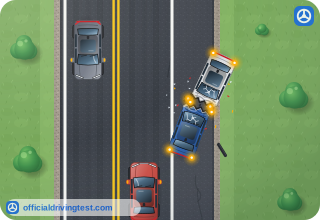
In what position does the handbook say to keep a crash victim?
- Sitting upright against a wall
- Standing with support
- Lying down and comfortable
- Walking slowly to stay warm
Show answer
Correct answer: Lying down and comfortable
The handbook's note says to keep the victim lying down and comfortable.
Source: West Virginia Driver's Licensing Handbook (Revised July 2026), page 73 · Open this page in the manual (Manual page 73)
-
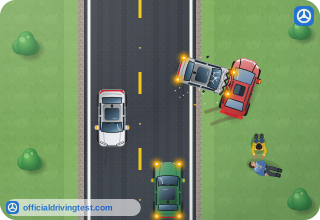
When does the handbook say you should administer first aid?
- If you think a delay in emergency care could cause death or further injury
- Only when you are licensed to practice medicine, dentistry, or nursing
- Only after the injured person has been moved safely off the road
- Only when the injured person asks you for help in a clear voice
Show answer
Correct answer: If you think a delay in emergency care could cause death or further injury
First aid should be given when waiting for emergency care could lead to death or further injury.
Source: West Virginia Driver's Licensing Handbook (Revised July 2026), page 73 · Open this page in the manual (Manual page 73)
-
Under the Good Samaritan Law, who is not liable for civil damages for giving emergency care at the scene of a crash?
- Only people licensed to practice medicine or dentistry
- Only police officers, firefighters, and ambulance crews
- Only people who have completed a first aid course
- Anyone who helps in good faith and without pay
Show answer
Correct answer: Anyone who helps in good faith and without pay
The law protects any person, even those licensed in medicine or dentistry, who gives emergency care at a crash scene in good faith and without pay.
Source: West Virginia Driver's Licensing Handbook (Revised July 2026), page 74 · Open this page in the manual (Manual page 74)
-
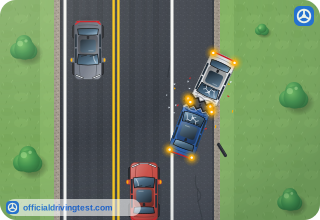
You are involved in a crash. What is the first thing you should do?
- Call your insurance company
- Stop immediately
- Drive to the nearest police station
- Look for witnesses
Show answer
Correct answer: Stop immediately
Stopping immediately is the first step the handbook lists for a driver involved in a crash.
Source: West Virginia Driver's Licensing Handbook (Revised July 2026), page 74 · Open this page in the manual (Manual page 74)
-
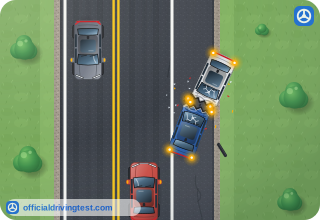
Why should you turn off the ignition after stopping at a crash?
- To keep the battery from going dead
- To prevent the danger of fire
- To keep the engine from overheating
- To keep the airbags from deploying
Show answer
Correct answer: To prevent the danger of fire
Turning off the ignition lowers the danger of fire.
Source: West Virginia Driver's Licensing Handbook (Revised July 2026), page 74 · Open this page in the manual (Manual page 74)
-
What should you do to protect the scene of a crash?
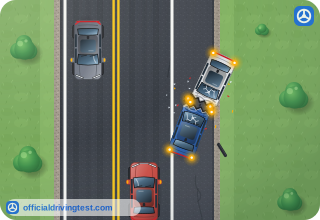
- Park your vehicle across the lane so traffic must stop
- Leave the scene quickly so that traffic can clear
- Leave all vehicles exactly where they are, with no warning
- Use flares, a flagman, or other means to prevent further crashes
Show answer
Correct answer: Use flares, a flagman, or other means to prevent further crashes
Flares, a flagman or other means warn approaching traffic and help prevent further crashes.
Source: West Virginia Driver's Licensing Handbook (Revised July 2026), page 74 · Open this page in the manual (Manual page 74)
-
After a crash with injured people, whom should you send for?
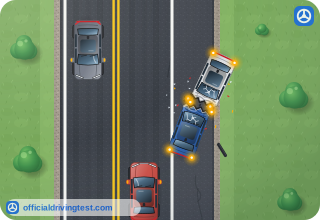
- An ambulance and/or law enforcement
- Only a tow truck
- Your insurance agent and the DMV
- Only a Courtesy Patrol driver
Show answer
Correct answer: An ambulance and/or law enforcement
The handbook says to send for necessary aid, meaning an ambulance and/or law enforcement.
Source: West Virginia Driver's Licensing Handbook (Revised July 2026), page 74 · Open this page in the manual (Manual page 74)
-
What should you do about spectators at a crash scene where people are injured?
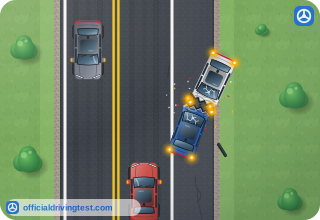
- Ask them to move the injured onto the shoulder
- Have them gather close around the injured
- Keep them away from the injured
- Ask them to direct traffic without any signals
Show answer
Correct answer: Keep them away from the injured
The handbook says to keep spectators away from the injured.
Source: West Virginia Driver's Licensing Handbook (Revised July 2026), page 74 · Open this page in the manual (Manual page 74)
-
If a crash results in injury or death of any person, whom must you notify?
- Only your insurance company
- The nearest DMV regional office
- The West Virginia Courtesy Patrol
- The nearest law enforcement agency
Show answer
Correct answer: The nearest law enforcement agency
A crash with injury or death must be reported to the nearest law enforcement agency.
Source: West Virginia Driver's Licensing Handbook (Revised July 2026), page 74 · Open this page in the manual (Manual page 74)
-
Which of these should be exchanged by persons involved in a traffic crash?
- Employer's name and work address
- Motor vehicle insurance information
- Social Security number and birth date
- Vehicle identification number and color
Show answer
Correct answer: Motor vehicle insurance information
Name, address, license plate number and motor vehicle insurance information are the items the handbook says to exchange.
Source: West Virginia Driver's Licensing Handbook (Revised July 2026), page 74 · Open this page in the manual (Manual page 74)
-
When should you stop at a crash scene?
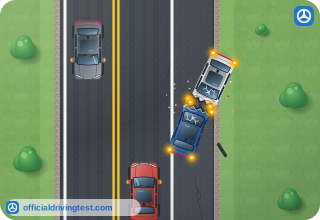
- Whenever traffic slows down so you can watch what happened
- Always, as a courtesy to the people involved in the crash
- Only if you are involved or can render assistance
- Only when a law enforcement officer waves you onto the shoulder
Show answer
Correct answer: Only if you are involved or can render assistance
You should not stop at a crash scene unless you are involved or can help.
Source: West Virginia Driver's Licensing Handbook (Revised July 2026), page 74 · Open this page in the manual (Manual page 74)
-
What does unnecessary stopping at a crash scene create?
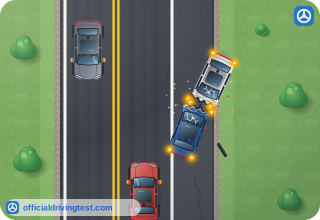
- Additional hazards at the scene
- Fewer injuries to people involved
- Better access for emergency vehicles
- A faster return to normal traffic
Show answer
Correct answer: Additional hazards at the scene
Stopping without a reason adds hazards at the scene.
Source: West Virginia Driver's Licensing Handbook (Revised July 2026), page 74 · Open this page in the manual (Manual page 74)
-
If you strike an unattended vehicle, what should you try to do first?
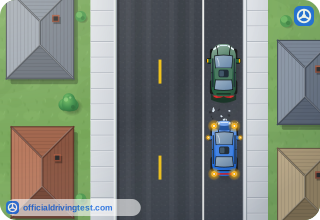
- Locate the owner
- Report it only to your insurance company
- Move the vehicle to a parking space
- Wait one hour and then leave
Show answer
Correct answer: Locate the owner
The handbook says to try to locate the owner of an unattended vehicle you strike.
Source: West Virginia Driver's Licensing Handbook (Revised July 2026), page 74 · Open this page in the manual (Manual page 74)
-
Which of these belongs in the written notice you leave on an unattended vehicle that you struck?
- Your Social Security number
- Your employer's name and phone number
- The circumstances of the crash
- Your date of birth
Show answer
Correct answer: The circumstances of the crash
The notice should contain your name, address, license plate number, insurance information and the circumstances of the crash.
Source: West Virginia Driver's Licensing Handbook (Revised July 2026), page 74 · Open this page in the manual (Manual page 74)
-
Which service does the West Virginia Courtesy Patrol provide?
- Issuing citations to drivers who break down
- Changing a flat tire
- Issuing driver's licenses at the roadside
- Collecting tolls on the interstate highways
Show answer
Correct answer: Changing a flat tire
The Courtesy Patrol assists stranded motorists, including by changing a flat tire or providing gas or directions.
Source: West Virginia Driver's Licensing Handbook (Revised July 2026), page 75 · Open this page in the manual (Manual page 75)
-
By removing hazards from the roadway, what does the West Virginia Courtesy Patrol reduce?
- The number of speeding tickets
- The price of gas for travelers
- The need for road signs
- The chance of secondary crashes
Show answer
Correct answer: The chance of secondary crashes
Removing hazards from the roadway reduces the chance of secondary crashes.
Source: West Virginia Driver's Licensing Handbook (Revised July 2026), page 75 · Open this page in the manual (Manual page 75)
-
Which group does the West Virginia Courtesy Patrol work alongside?
- The county health departments
- The Public Service Commission
- The State Police
- The Division of Natural Resources
Show answer
Correct answer: The State Police
The handbook says the Courtesy Patrol works alongside the State Police, 911 Centers and other emergency and highway personnel.
Source: West Virginia Driver's Licensing Handbook (Revised July 2026), page 75 · Open this page in the manual (Manual page 75)
-
If at all possible, from which side of your vehicle will a Courtesy Patrol driver approach you?
- The driver side
- The passenger side
- The front
- The rear
Show answer
Correct answer: The passenger side
The handbook says the driver will approach on the passenger side if at all possible.
Source: West Virginia Driver's Licensing Handbook (Revised July 2026), page 75 · Open this page in the manual (Manual page 75)