West Virginia: Hazardous conditions and emergencies — Part 1 Practice Test
Questions in this part include: “Within how long must a crash resulting in injury or death be reported?” · “To whom must a reportable crash be reported if it occurs outside a municipality?”
Independent educational site · not affiliated with any government agency or DMV
Ready? Test yourself
Answer to start, or tap Start below:
Within how long must a crash resulting in injury or death be reported?
- Instant feedback with an explanation
- Every answer cites its source in the manual
- Your best score is saved on this device
- Keyboard: press 1 to 4 to answer and Enter for the next question
Questions are original and based on the official manual "West Virginia Driver's Licensing Handbook" (Revised July 2026), West Virginia Division of Motor Vehicles (DMV).
All 19 questions in this practice test
Take the test above first, then use this list to study. Tap “Show answer” to see the correct answer and explanation.
Show the questions and answersHide the questions
-
Within how long must a crash resulting in injury or death be reported?
- Within 24 hours
- Within 10 days
- Within 30 days
- Within five days
Show answer
Correct answer: Within five days
A crash with injury or death must be reported within five days, by the quickest means possible.
Source: West Virginia Driver's Licensing Handbook (Revised July 2026), page 16 · Open this page in the manual (Manual page 16)
-
By what means must a crash that has to be reported be reported to the police within five days?
- By the quickest means possible, oral or written
- Only in person at the nearest regional office of the DMV
- Only by certified letter sent to the Commissioner
- Only through an online form on the DMV website
Show answer
Correct answer: By the quickest means possible, oral or written
The report can be oral or written, by the quickest means possible.
Source: West Virginia Driver's Licensing Handbook (Revised July 2026), page 16 · Open this page in the manual (Manual page 16)
-
To whom must a reportable crash be reported if it occurs outside a municipality?
- The local police department in the nearest municipality
- The regional office of the DMV that serves the county
- The county sheriff or the nearest West Virginia State Police office
- The insurance company that covers the vehicle in the crash
Show answer
Correct answer: The county sheriff or the nearest West Virginia State Police office
Outside a municipality, the crash goes to the county sheriff or the nearest West Virginia State Police office.
Source: West Virginia Driver's Licensing Handbook (Revised July 2026), page 16 · Open this page in the manual (Manual page 16)
-
To whom must a reportable crash be reported if it occurs within a municipality?
- The local police department
- The county circuit clerk's office
- The nearest DMV regional office
- The Commissioner of Motor Vehicles
Show answer
Correct answer: The local police department
Within a municipality, a reportable crash is reported to the local police department.
Source: West Virginia Driver's Licensing Handbook (Revised July 2026), page 16 · Open this page in the manual (Manual page 16)
-
A crash that causes no injury must be reported when property damage is more than what amount?
- $500
- $2,500
- $1,000
- $5,000
Show answer
Correct answer: $1,000
Crashes with property damage in excess of $1,000 must be reported, as must crashes with injury or death.
Source: West Virginia Driver's Licensing Handbook (Revised July 2026), page 16 · Open this page in the manual (Manual page 16)
-
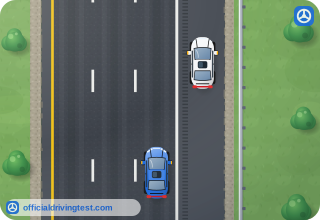
If your vehicle becomes disabled on an interstate, which lights should you turn on to show it is stopped?
- Your high beams
- Your parking lights
- Your four-way flashers
- Your turn signal on the traffic side
Show answer
Correct answer: Your four-way flashers
A disabled vehicle should have its four-way flashers on to show that it is stopped.
Source: West Virginia Driver's Licensing Handbook (Revised July 2026), page 60 · Open this page in the manual (Manual page 60)
-
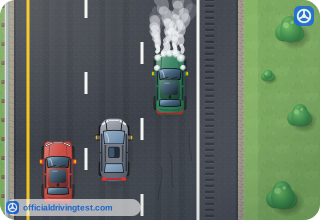
If your vehicle becomes disabled on an interstate, how far off the road should you move it?
- Just onto the edge line
- Only far enough to clear the through lane
- To the median crossover
- As far off the road as possible
Show answer
Correct answer: As far off the road as possible
You should move a disabled vehicle as far off the road as possible.
Source: West Virginia Driver's Licensing Handbook (Revised July 2026), page 60 · Open this page in the manual (Manual page 60)
-
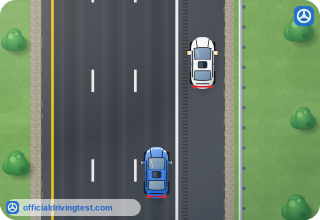
When you put out flares behind a disabled vehicle, where should the flare closest to your vehicle go?
- About 300 feet back from your own vehicle
- Directly beside your driver-side door
- About one vehicle length behind your vehicle
- On the roof of your vehicle
Show answer
Correct answer: About one vehicle length behind your vehicle
The first flare goes about one vehicle length behind the vehicle and the second about 300 feet back.
Source: West Virginia Driver's Licensing Handbook (Revised July 2026), page 60 · Open this page in the manual (Manual page 60)
-
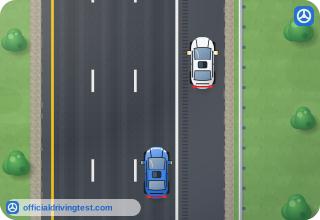
When you put out flares behind a disabled vehicle, how far back should the flare farther from your vehicle be placed?
- About 300 feet back
- About 100 feet back
- About 500 feet back
- About one vehicle length back
Show answer
Correct answer: About 300 feet back
The second flare goes about 300 feet back from the vehicle.
Source: West Virginia Driver's Licensing Handbook (Revised July 2026), page 60 · Open this page in the manual (Manual page 60)
-
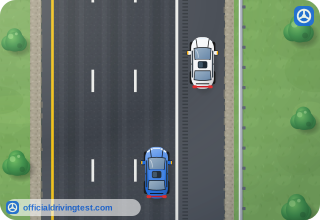
Where should each flare be placed behind a disabled vehicle?
- In the middle of the lane you are driving in
- On the median
- Against the guardrail far from traffic
- On the shoulder near the edge of the through lane
Show answer
Correct answer: On the shoulder near the edge of the through lane
Each flare is placed on the shoulder near the edge of the through lane.
Source: West Virginia Driver's Licensing Handbook (Revised July 2026), page 60 · Open this page in the manual (Manual page 60)
-
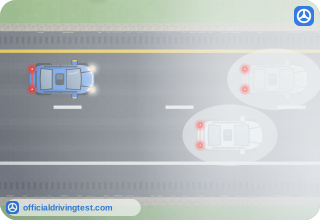
If fog on the interstate is very dense, what may be better?
- Driving faster to get out of it quickly
- Leaving the interstate and using slower roads
- Stopping in the left lane until it clears
- Following a truck closely
Show answer
Correct answer: Leaving the interstate and using slower roads
If fog is very dense, it may be better to leave the interstate and take slower roads to your destination.
Source: West Virginia Driver's Licensing Handbook (Revised July 2026), page 60 · Open this page in the manual (Manual page 60)
-
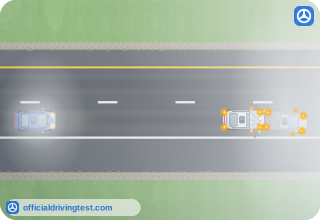
If you are involved in a crash in heavy fog, what should you try to do?
- Leave it in the road so others can see it
- Get your vehicle off the road as far as possible
- Wait in the through lane until police arrive
- Move it to the median crossover
Show answer
Correct answer: Get your vehicle off the road as far as possible
Leaving a vehicle on the road until the police arrive invites further crashes.
Source: West Virginia Driver's Licensing Handbook (Revised July 2026), page 60 · Open this page in the manual (Manual page 60)
-
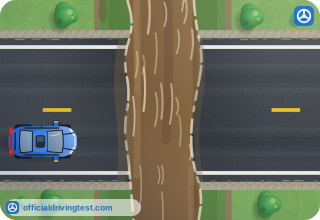
What does the handbook say about driving across a flooded roadway?
- Cross slowly in a low gear
- Cross only in the middle of the road
- Never attempt to drive across it
- Cross only if the water is below the doors
Show answer
Correct answer: Never attempt to drive across it
Flooded roadways are extremely hazardous, so you should never attempt to drive across one.
Source: West Virginia Driver's Licensing Handbook (Revised July 2026), page 63 · Open this page in the manual (Manual page 63)
-
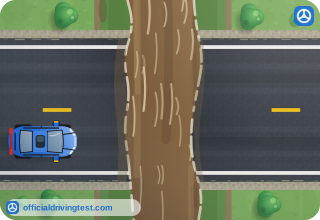
As little as how much water can float some smaller vehicles?
- Two inches
- Six inches
- Eighteen inches
- Three feet
Show answer
Correct answer: Six inches
As little as six inches of water can float some smaller vehicles.
Source: West Virginia Driver's Licensing Handbook (Revised July 2026), page 63 · Open this page in the manual (Manual page 63)
-
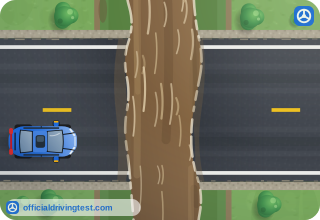
As little as how much water can carry away most vehicles?
- One foot
- Three feet
- Four feet
- Two feet
Show answer
Correct answer: Two feet
Two feet of water will carry away most vehicles.
Source: West Virginia Driver's Licensing Handbook (Revised July 2026), page 63 · Open this page in the manual (Manual page 63)
-
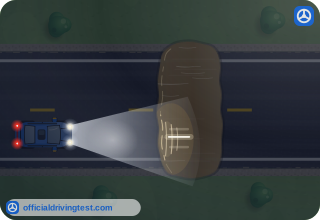
Why are flooded roadways especially dangerous at night?
- It is much harder to recognize flooding conditions
- Water is always deeper at night than in the day
- Fewer drivers are on the road to offer any help
- Headlights make water look like dry pavement
Show answer
Correct answer: It is much harder to recognize flooding conditions
At night it is much harder to see that a road is flooded.
Source: West Virginia Driver's Licensing Handbook (Revised July 2026), page 63 · Open this page in the manual (Manual page 63)
-
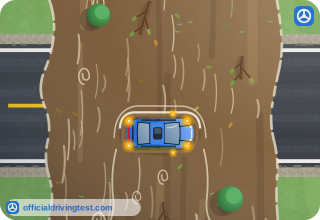
If your vehicle stalls in a flooded roadway, what should you do?
- Stay inside and wait for help
- Leave it immediately and seek higher ground
- Restart the engine repeatedly
- Close the windows and wait for the water to drop
Show answer
Correct answer: Leave it immediately and seek higher ground
The handbook says to leave a stalled vehicle in a flooded roadway immediately and seek higher ground.
Source: West Virginia Driver's Licensing Handbook (Revised July 2026), page 63 · Open this page in the manual (Manual page 63)
-
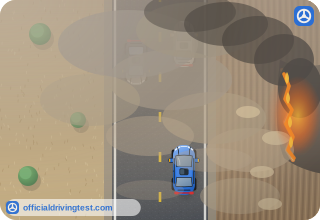
If fog or smoke impairs your vision, what does the handbook say to do?
- Stop in the travel lane with your lights off
- Keep driving at the same speed with your high beams on
- Turn off your headlights and use only your hazard lights
- Pull off and stop, leaving your lights and hazard lights on
Show answer
Correct answer: Pull off and stop, leaving your lights and hazard lights on
You pull off to the side of the road and stop, leaving your lights on and turning your hazard lights on too.
Source: West Virginia Driver's Licensing Handbook (Revised July 2026), page 64 · Open this page in the manual (Manual page 64)
-
What do the 8 simple steps to safe and happy driving say about your vehicle's doors and windows when driving or when parked?
- Keep the doors unlocked and the windows down
- Lock the doors but open the windows slightly
- Keep the doors locked and the windows up
- Keep the windows up but leave the doors unlocked
Show answer
Correct answer: Keep the doors locked and the windows up
The first of the 8 simple steps advises keeping the vehicle doors locked and the windows up when driving or when parked.
Source: West Virginia Driver's Licensing Handbook (Revised July 2026), page 69 · Open this page in the manual (Manual page 69)