West Virginia: Hazardous conditions and emergencies — Part 3 Practice Test
Questions in this part include: “If you suddenly lose steering control, what should you do first?” · “You lose steering control, but your vehicle stays in its lane. What should you do?”
Independent educational site · not affiliated with any government agency or DMV
Ready? Test yourself
Answer to start, or tap Start below:
If you suddenly lose steering control, what should you do first?
- Instant feedback with an explanation
- Every answer cites its source in the manual
- Your best score is saved on this device
- Keyboard: press 1 to 4 to answer and Enter for the next question
Questions are original and based on the official manual "West Virginia Driver's Licensing Handbook" (Revised July 2026), West Virginia Division of Motor Vehicles (DMV).
All 18 questions in this practice test
Take the test above first, then use this list to study. Tap “Show answer” to see the correct answer and explanation.
Show the questions and answersHide the questions
-
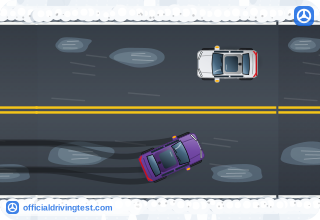
Your vehicle begins to skid. When should you use your brakes?
- Immediately, as hard as you can
- As soon as the rear of the vehicle moves sideways
- Only if you are in danger of hitting something
- Only after the vehicle has completely stopped skidding
Show answer
Correct answer: Only if you are in danger of hitting something
In a skid you concentrate on steering and do not use the brakes unless you are in danger of hitting something.
Source: West Virginia Driver's Licensing Handbook (Revised July 2026), page 71 · Open this page in the manual (Manual page 71)
-
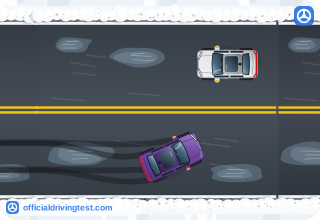
What is the first step to steer out of a skid?
- Press the brake pedal firmly
- Press the accelerator to power out
- Shift into neutral
- Take your foot off the gas pedal
Show answer
Correct answer: Take your foot off the gas pedal
The first step the handbook lists for steering out of a skid is to take your foot off the gas pedal.
Source: West Virginia Driver's Licensing Handbook (Revised July 2026), page 71 · Open this page in the manual (Manual page 71)
-
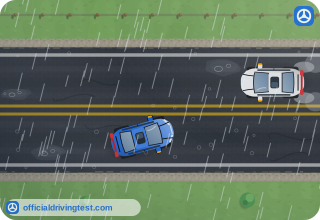
The rear of your vehicle is skidding to the right. Which way should you turn the steering wheel?
- To the left
- To the right
- Hold it straight and brake
- Turn it sharply left, then right
Show answer
Correct answer: To the right
You turn the steering wheel in the direction of the skid, so a skid to the right means turning right.
Source: West Virginia Driver's Licensing Handbook (Revised July 2026), page 71 · Open this page in the manual (Manual page 71)
-
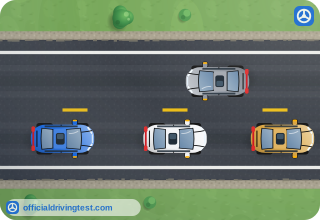
Your gas pedal sticks. What should you concentrate on?
- Pumping the brake pedal as fast as you can
- Shifting into park as soon as the pedal sticks
- Steering and keeping your eyes on the road
- Sounding the horn to warn all other drivers
Show answer
Correct answer: Steering and keeping your eyes on the road
With a stuck gas pedal you keep steering and keep your eyes on the road while you deal with the pedal.
Source: West Virginia Driver's Licensing Handbook (Revised July 2026), page 71 · Open this page in the manual (Manual page 71)
-
Your gas pedal is stuck and you cannot free it with your foot. What should you do?
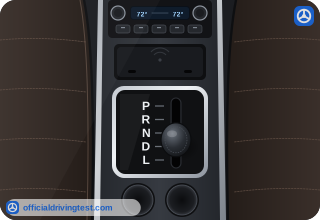
- Push in the clutch or shift into neutral
- Shift into reverse
- Shift into park
- Stomp on the gas pedal harder to free it
Show answer
Correct answer: Push in the clutch or shift into neutral
If the pedal cannot be freed with your foot, you disconnect the engine from the wheels by pushing in the clutch or shifting into neutral.
Source: West Virginia Driver's Licensing Handbook (Revised July 2026), page 71 · Open this page in the manual (Manual page 71)
-
With a stuck gas pedal, after you push in the clutch or shift into neutral, what should you do?
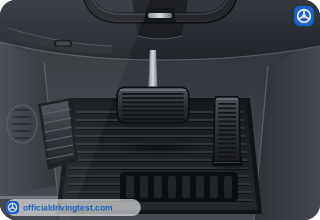
- Use your brakes, stop at the nearest safe place, and turn off the ignition
- Shift back into drive and continue to your destination slowly
- Pump the brake pedal quickly and stop in the middle of the lane
- Wait in the lane for the engine to slow down on its own
Show answer
Correct answer: Use your brakes, stop at the nearest safe place, and turn off the ignition
The last steps are to brake, stop at the nearest safe place and turn off the ignition.
Source: West Virginia Driver's Licensing Handbook (Revised July 2026), page 71 · Open this page in the manual (Manual page 71)
-
If you run off the road, what should you do with the accelerator and where should you stay?
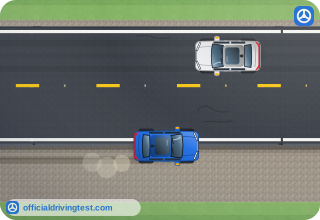
- Steer sharply back onto the pavement at once and speed up
- Brake hard to stop on the shoulder as quickly as possible
- Stay on the shoulder and ease off the accelerator
- Stay off the shoulder and press the accelerator
Show answer
Correct answer: Stay on the shoulder and ease off the accelerator
After gripping the wheel, you stay on the shoulder and ease off the accelerator.
Source: West Virginia Driver's Licensing Handbook (Revised July 2026), page 71 · Open this page in the manual (Manual page 71)
-
If your wheels run off the road, how should you brake?
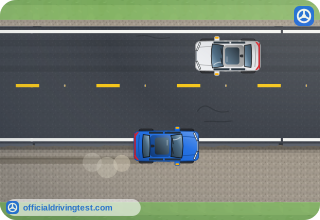
- Hard, to stop as quickly as possible
- Gently, and slow gradually
- Not at all until you reach the pavement
- In short, rapid pumps
Show answer
Correct answer: Gently, and slow gradually
The handbook tells you to brake gently and slow gradually after running off the road.
Source: West Virginia Driver's Licensing Handbook (Revised July 2026), page 71 · Open this page in the manual (Manual page 71)
-
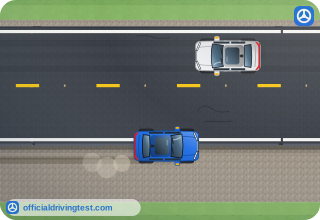
After you have slowed down with your wheels off the road, what should you check?
- Only the road ahead for traffic
- Your tires for damage before moving
- Whether the engine is still running
- Behind you, as well as ahead, for traffic
Show answer
Correct answer: Behind you, as well as ahead, for traffic
Once speed is reduced you look behind as well as ahead before returning to the pavement.
Source: West Virginia Driver's Licensing Handbook (Revised July 2026), page 71 · Open this page in the manual (Manual page 71)
-
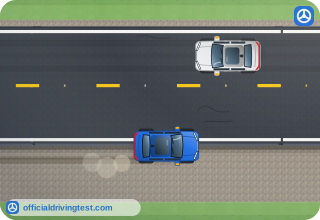
After you have reduced speed with your wheels off the road, how should you turn the wheels onto the pavement?
- Gradually, drifting onto the pavement
- Straight, with the wheels not turned
- Sharply
- Slowly, in short steps
Show answer
Correct answer: Sharply
The handbook says to turn the wheels sharply onto the pavement once the speed has been reduced.
Source: West Virginia Driver's Licensing Handbook (Revised July 2026), page 71 · Open this page in the manual (Manual page 71)
-
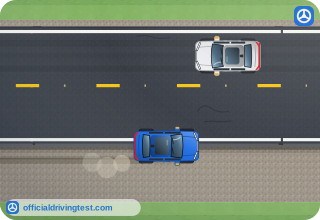
As soon as your wheels hit the edge of the pavement after you ran off the road, what should you do?
- Turn them the other way to keep your vehicle from heading across the highway
- Keep them turned sharply until you are in the center of the lane
- Brake hard with the wheels still turned toward the road
- Straighten them at once and press the accelerator hard
Show answer
Correct answer: Turn them the other way to keep your vehicle from heading across the highway
Turning the wheels back the other way keeps the vehicle from heading across the highway.
Source: West Virginia Driver's Licensing Handbook (Revised July 2026), page 71 · Open this page in the manual (Manual page 71)
-
If you suddenly lose steering control, what should you do first?
- Press the brake pedal as hard as you can
- Shift into reverse
- Shift into park
- Ease up on the accelerator
Show answer
Correct answer: Ease up on the accelerator
The handbook's first step when steering fails is to ease up on the accelerator.
Source: West Virginia Driver's Licensing Handbook (Revised July 2026), page 72 · Open this page in the manual (Manual page 72)
-
You lose steering control, but your vehicle stays in its lane. What should you do?
- Apply the brakes quickly, using maximum pressure
- Wait until it slows down, then gently apply the brakes
- Shift to a lower gear and turn the wheel hard
- Speed up to regain control by momentum
Show answer
Correct answer: Wait until it slows down, then gently apply the brakes
While the vehicle stays in its lane, you let it slow down and then brake gently so that it does not change direction.
Source: West Virginia Driver's Licensing Handbook (Revised July 2026), page 72 · Open this page in the manual (Manual page 72)
-
You lose steering control and your vehicle starts off the road or toward a pedestrian or another vehicle. What should you do?
- Wait until the vehicle slows down by itself
- Apply the brakes quickly, using maximum pressure
- Gently apply the brakes to avoid changing direction
- Ease up on the accelerator and do nothing else
Show answer
Correct answer: Apply the brakes quickly, using maximum pressure
When the vehicle is heading toward danger, you brake quickly using maximum pressure.
Source: West Virginia Driver's Licensing Handbook (Revised July 2026), page 72 · Open this page in the manual (Manual page 72)
-
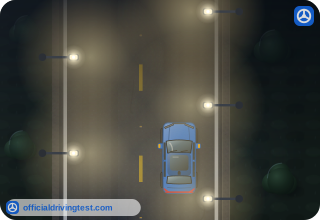
Your headlights fail on a lighted highway. What should you do?
- Keep driving at normal speed until you reach the next exit
- Stay in your lane and slow down until the lights come back
- Turn on your parking lights and continue driving normally
- Get off the roadway onto the shoulder as soon and safely as possible
Show answer
Correct answer: Get off the roadway onto the shoulder as soon and safely as possible
On a lighted highway you can leave the roadway for the shoulder or other available space as soon and as safely as possible.
Source: West Virginia Driver's Licensing Handbook (Revised July 2026), page 72 · Open this page in the manual (Manual page 72)
-
Your headlights fail on a dark highway. What should you try?
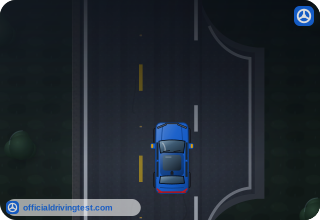
- Your parking lights, direction signals, or emergency flashers
- Your horn, your wipers and your interior dome light
- Your brake lights held on with your foot on the pedal
- Your fog lights and your interior dome light
Show answer
Correct answer: Your parking lights, direction signals, or emergency flashers
On a dark highway the handbook says to try the parking lights, direction signals or emergency flashers while you get off the roadway.
Source: West Virginia Driver's Licensing Handbook (Revised July 2026), page 72 · Open this page in the manual (Manual page 72)
-
All of your vehicle's lights fail. What should you do?
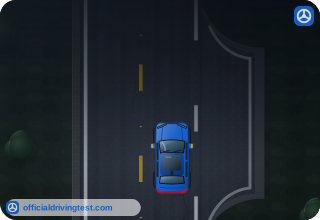
- Stop immediately in your lane and wait for daylight or help
- Pull onto the shoulder at once without slowing down
- Stay on the roadway and slow down enough to pull off safely
- Speed up to reach a lighted section of highway quickly
Show answer
Correct answer: Stay on the roadway and slow down enough to pull off safely
If every light fails, you stay on the roadway and slow down enough to pull off the roadway safely.
Source: West Virginia Driver's Licensing Handbook (Revised July 2026), page 72 · Open this page in the manual (Manual page 72)
-
Smoke comes from under the hood of your vehicle. What should you do?
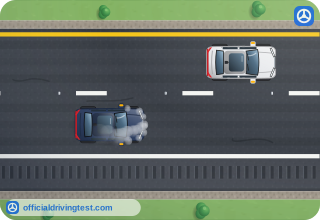
- Keep driving to the nearest repair shop
- Stay on the roadway and pour water on the hood
- Keep driving until the smoke clears, then stop
- Get off the roadway and turn off the ignition
Show answer
Correct answer: Get off the roadway and turn off the ignition
With smoke from under the hood, you leave the roadway and turn off the ignition.
Source: West Virginia Driver's Licensing Handbook (Revised July 2026), page 72 · Open this page in the manual (Manual page 72)