West Virginia: Hazardous conditions and emergencies — Part 2 Practice Test
Questions in this part include: “What do the 8 simple steps say you should familiarize yourself with?” · “Where do the 8 simple steps say you should always park?”
Independent educational site · not affiliated with any government agency or DMV
Ready? Test yourself
Answer to start, or tap Start below:
What do the 8 simple steps say you should familiarize yourself with?
- Instant feedback with an explanation
- Every answer cites its source in the manual
- Your best score is saved on this device
- Keyboard: press 1 to 4 to answer and Enter for the next question
Questions are original and based on the official manual "West Virginia Driver's Licensing Handbook" (Revised July 2026), West Virginia Division of Motor Vehicles (DMV).
All 19 questions in this practice test
Take the test above first, then use this list to study. Tap “Show answer” to see the correct answer and explanation.
Show the questions and answersHide the questions
-
What do the 8 simple steps say to do about hitchhikers?
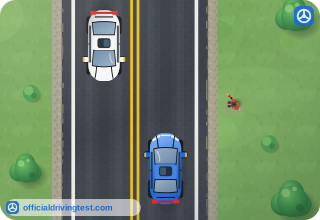
- Pick them up only in well-lit, populated places
- Avoid them, however innocent or needy they may appear
- Give them a ride only if they appear needy or innocent
- Stop for them only if they are standing near a service station
Show answer
Correct answer: Avoid them, however innocent or needy they may appear
The handbook warns that hitchhikers can mean bad news, no matter how innocent or needy they may appear, and says to avoid them.
Source: West Virginia Driver's Licensing Handbook (Revised July 2026), page 69 · Open this page in the manual (Manual page 69)
-
What do the 8 simple steps say you should familiarize yourself with?
- The opening hours of the nearest service stations
- The routes of the local public bus lines
- The names of all the roads in your area
- Your vehicle's controls and safety equipment
Show answer
Correct answer: Your vehicle's controls and safety equipment
One of the 8 simple steps is to know your vehicle by familiarizing yourself with its controls and safety equipment.
Source: West Virginia Driver's Licensing Handbook (Revised July 2026), page 69 · Open this page in the manual (Manual page 69)
-
Where do the 8 simple steps say to lock purses, wallets, luggage and valuables?
- Under the driver's seat, out of sight
- On the back seat, covered with a coat
- In the trunk or glove compartment
- In the center console, out of sight
Show answer
Correct answer: In the trunk or glove compartment
The steps say to hide valuables by locking them in the trunk or glove compartment.
Source: West Virginia Driver's Licensing Handbook (Revised July 2026), page 69 · Open this page in the manual (Manual page 69)
-
If you become lost, what do the 8 simple steps say you should do?
- Pull over on the side of the road to study your map
- Drive to the nearest well-lit, populated, public place
- Drive to a dark, quiet street to read your directions
- Pull into an empty parking lot to read your directions
Show answer
Correct answer: Drive to the nearest well-lit, populated, public place
Rather than pulling over on the side of the road, drive to a well-lit, populated, public place such as a service station or restaurant, and lock your vehicle and take the keys.
Source: West Virginia Driver's Licensing Handbook (Revised July 2026), page 69 · Open this page in the manual (Manual page 69)
-
Where do the 8 simple steps say you should always park?
- Near the lot's edge
- Beside a large truck
- At the back of lots
- In well-lit areas
Show answer
Correct answer: In well-lit areas
The steps say to always park in well-lit areas.
Source: West Virginia Driver's Licensing Handbook (Revised July 2026), page 69 · Open this page in the manual (Manual page 69)
-
What do the 8 simple steps say you should have in hand when approaching your vehicle?
- Your keys
- Your phone
- Your registration
- Your license
Show answer
Correct answer: Your keys
The steps advise having your keys in hand when you approach your vehicle.
Source: West Virginia Driver's Licensing Handbook (Revised July 2026), page 69 · Open this page in the manual (Manual page 69)
-
Before entering your vehicle, what do the 8 simple steps say to check?
- The tire pressure and the fuel level
- Only the trunk and the glove compartment
- Inside and underneath the vehicle
- The dashboard warning lights
Show answer
Correct answer: Inside and underneath the vehicle
Before entering, be sure to check inside and underneath your vehicle.
Source: West Virginia Driver's Licensing Handbook (Revised July 2026), page 69 · Open this page in the manual (Manual page 69)
-
If you feel you are being followed, what do the 8 simple steps say to do?
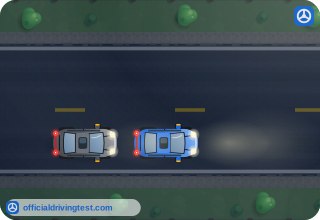
- Pull over on the roadside and wait for the vehicle to pass
- Proceed to a well-lit populated area and call the police
- Drive home as quickly as possible and park in the driveway
- Stop at the nearest place and confront the other driver
Show answer
Correct answer: Proceed to a well-lit populated area and call the police
The steps say to go to a well-lit populated area and call the police.
Source: West Virginia Driver's Licensing Handbook (Revised July 2026), page 69 · Open this page in the manual (Manual page 69)
-
A tire blows out. What should you do to regain control of the vehicle?
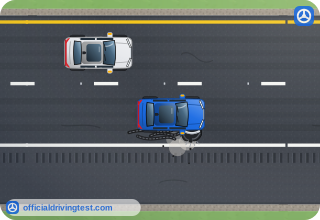
- Hold the wheel tightly, steer straight, and ease off the gas
- Brake as hard as you can and steer sharply toward the shoulder
- Turn the wheel toward the shoulder and press the brake pedal
- Shift into neutral and coast while steering from side to side
Show answer
Correct answer: Hold the wheel tightly, steer straight, and ease off the gas
After a blowout you hold the wheel tightly, steer straight ahead and ease up on the accelerator.
Source: West Virginia Driver's Licensing Handbook (Revised July 2026), page 70 · Open this page in the manual (Manual page 70)
-
After a tire blowout, when should you brake?
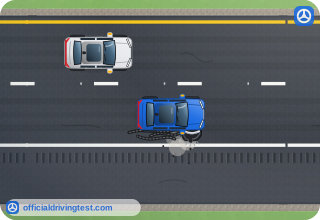
- Immediately, as hard as you possibly can
- As soon as you feel the tire collapse
- Only after the vehicle is under control
- Before you steer straight ahead, to slow down
Show answer
Correct answer: Only after the vehicle is under control
After a blowout, do not brake until the vehicle is under control; then pull all the way off the road into a safe area.
Source: West Virginia Driver's Licensing Handbook (Revised July 2026), page 70 · Open this page in the manual (Manual page 70)
-
After a blowout, it is impossible to get off the road immediately. What should you do?
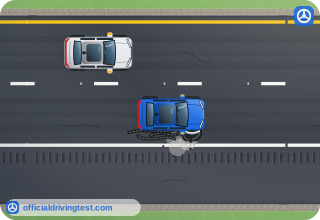
- Stop in your lane and turn on your headlights
- Continue driving slowly with your emergency flashers on
- Keep driving at normal speed with your headlights on
- Speed up to reach the nearest exit ramp
Show answer
Correct answer: Continue driving slowly with your emergency flashers on
If you cannot leave the road at once, you keep driving slowly with the emergency flashers on to warn others.
Source: West Virginia Driver's Licensing Handbook (Revised July 2026), page 70 · Open this page in the manual (Manual page 70)
-
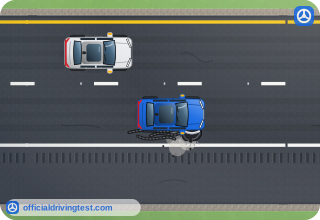
Which of these is one of the most common causes of blowouts?
- Tires with deep tread
- Cold brake fluid
- A loose gas cap
- Under-inflated tires
Show answer
Correct answer: Under-inflated tires
The handbook names under-inflated tires as one of the most common causes of blowouts, so tire air should be checked often.
Source: West Virginia Driver's Licensing Handbook (Revised July 2026), page 70 · Open this page in the manual (Manual page 70)
-
If your brakes fail, what should you do with the brake pedal?
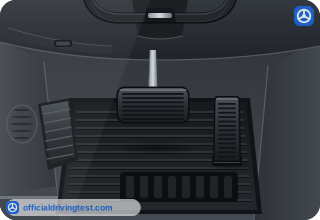
- Press it slowly and hold it steady
- Stay off it and rely on the horn
- Pump the brake pedal quickly
- Press it once and then release it
Show answer
Correct answer: Pump the brake pedal quickly
When the brakes fail, the first step the handbook gives is to pump the pedal quickly.
Source: West Virginia Driver's Licensing Handbook (Revised July 2026), page 71 · Open this page in the manual (Manual page 71)
-
If your brakes fail, what should you do with the transmission?
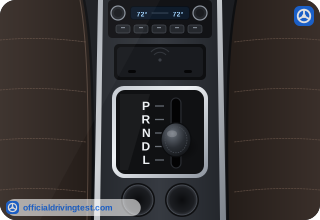
- Shift to a lower gear
- Shift into neutral
- Shift into reverse
- Shift to a higher gear
Show answer
Correct answer: Shift to a lower gear
A lower gear helps slow the vehicle while you look for a place to stop off the roadway.
Source: West Virginia Driver's Licensing Handbook (Revised July 2026), page 71 · Open this page in the manual (Manual page 71)
-
When your brakes fail and you look for a place to stop off the roadway, how should you warn other drivers?
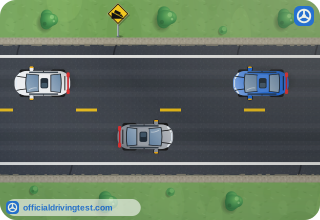
- Roll down the window and wave an arm
- Turn off your headlights to avoid glare
- Stay quiet and keep your lights off until stopped
- Use your horn and lights
Show answer
Correct answer: Use your horn and lights
The handbook says to use your horn and lights to warn other drivers when your brakes fail.
Source: West Virginia Driver's Licensing Handbook (Revised July 2026), page 71 · Open this page in the manual (Manual page 71)
-
If your brakes fail and you use the parking brake, what should you do with the brake release?
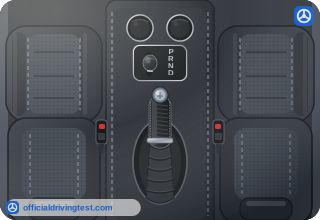
- Keep it locked down so the parking brake stays fully on
- Hold it so you can ease up if the rear wheels lock and cause a skid
- Leave it alone, since the parking brake releases by itself
- Hold it only after the vehicle has stopped completely
Show answer
Correct answer: Hold it so you can ease up if the rear wheels lock and cause a skid
Holding the release lets you ease up on the parking brake if the rear wheels lock and the vehicle starts to skid.
Source: West Virginia Driver's Licensing Handbook (Revised July 2026), page 71 · Open this page in the manual (Manual page 71)
-
How can you prevent your engine from overheating in slow-moving traffic?
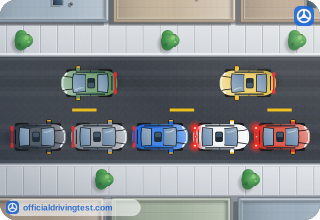
- Turn off the engine every time you stop and restart it
- Shift into neutral and race the engine briefly during stops
- Keep your foot on the brake with the engine in drive
- Shift into park and hold the brake pedal down
Show answer
Correct answer: Shift into neutral and race the engine briefly during stops
Shifting into neutral and racing the engine briefly speeds up the fan and the water pump.
Source: West Virginia Driver's Licensing Handbook (Revised July 2026), page 71 · Open this page in the manual (Manual page 71)
-
The warning light or gauge shows that your engine is overheating. What should you do?
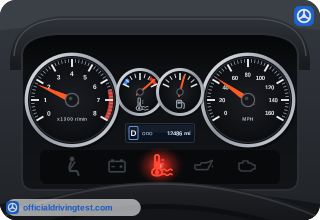
- Keep driving until the engine stops by itself
- Pull off the road and remove the radiator cap right away
- Shift into neutral and keep driving slowly
- Pull off the road and turn the engine off
Show answer
Correct answer: Pull off the road and turn the engine off
An overheating engine means you pull off the road and turn the engine off.
Source: West Virginia Driver's Licensing Handbook (Revised July 2026), page 71 · Open this page in the manual (Manual page 71)
-
When may you remove the radiator cap of an overheated engine?
- After the engine has cooled off
- As soon as the engine is turned off
- As soon as the warning light goes out
- Only while the engine is still running
Show answer
Correct answer: After the engine has cooled off
The cap should stay on until the engine has cooled off.
Source: West Virginia Driver's Licensing Handbook (Revised July 2026), page 71 · Open this page in the manual (Manual page 71)