West Virginia: Hazardous conditions and emergencies — Part 4 Practice Test
Questions in this part include: “After you turn off the engine because the oil pressure light came on, what should you check?” · “After connecting the jumper cables, what should you make sure of before starting the vehicle giving the jump?”
Independent educational site · not affiliated with any government agency or DMV
Ready? Test yourself
Answer to start, or tap Start below:
After you turn off the engine because the oil pressure light came on, what should you check?
- Instant feedback with an explanation
- Every answer cites its source in the manual
- Your best score is saved on this device
- Keyboard: press 1 to 4 to answer and Enter for the next question
Questions are original and based on the official manual "West Virginia Driver's Licensing Handbook" (Revised July 2026), West Virginia Division of Motor Vehicles (DMV).
All 18 questions in this practice test
Take the test above first, then use this list to study. Tap “Show answer” to see the correct answer and explanation.
Show the questions and answersHide the questions
-
If you have no chemical fire extinguisher, what can you use to smother a vehicle fire?
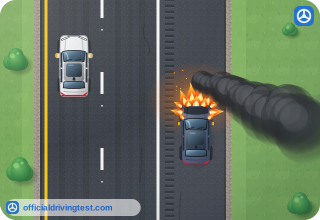
- Water
- Dirt or sand
- Motor oil
- A floor mat
Show answer
Correct answer: Dirt or sand
The handbook says to use dirt or sand to smother the fire when no chemical extinguisher is available.
Source: West Virginia Driver's Licensing Handbook (Revised July 2026), page 72 · Open this page in the manual (Manual page 72)
-
Why should you not use water on a vehicle fire?
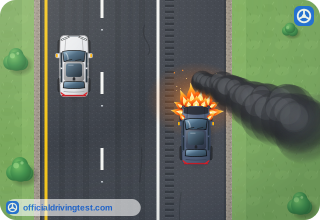
- Water would make the gas tank explode immediately
- Water freezes on a hot engine and cracks it
- Burning gasoline floats on water and spreads the fire
- Water is needed to cool the radiator instead
Show answer
Correct answer: Burning gasoline floats on water and spreads the fire
Gasoline floats on top of water, so water carries the burning fuel and spreads the fire.
Source: West Virginia Driver's Licensing Handbook (Revised July 2026), page 72 · Open this page in the manual (Manual page 72)
-
If a fire in your vehicle gets out of control, how far away from the vehicle should you move?
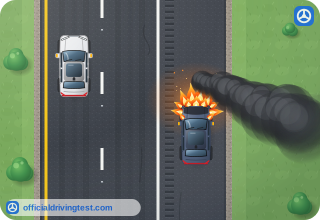
- At least 100 feet
- At least 25 feet
- At least 50 feet
- At least 300 feet
Show answer
Correct answer: At least 100 feet
The gas tank may explode, so you move at least 100 feet away from the vehicle.
Source: West Virginia Driver's Licensing Handbook (Revised July 2026), page 72 · Open this page in the manual (Manual page 72)
-
A vehicle is coming toward you in your lane. What should you do?
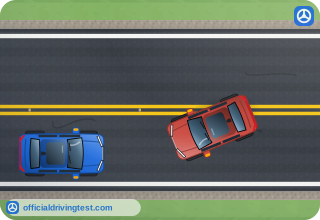
- Move to the right, slow down, sound your horn, and flash your headlights
- Stop in your lane and turn off your headlights to avoid glare
- Speed up and move to the left to pass the vehicle quickly
- Turn into the lane the vehicle has left and sound your horn
Show answer
Correct answer: Move to the right, slow down, sound your horn, and flash your headlights
You move to the right, slow down, and warn the other driver with your horn and headlights.
Source: West Virginia Driver's Licensing Handbook (Revised July 2026), page 72 · Open this page in the manual (Manual page 72)
-
A vehicle is coming toward you in your lane. Why should you not turn into the lane it has left?
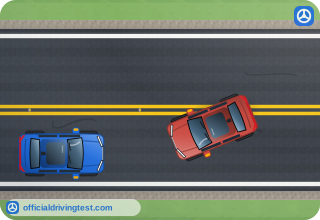
- Your headlights would not light up that lane for the other driver
- That lane has a lower speed limit than yours
- The driver may realize the mistake and turn back into that lane
- You could not sound your horn from that lane
Show answer
Correct answer: The driver may realize the mistake and turn back into that lane
The other driver may realize the mistake and turn back into the proper lane.
Source: West Virginia Driver's Licensing Handbook (Revised July 2026), page 72 · Open this page in the manual (Manual page 72)
-
The oil pressure light comes on. What should you do?
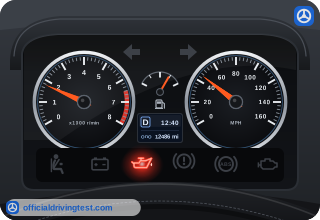
- Keep driving until the light goes out on its own
- Pull over and keep the engine idling for several minutes
- Check the tire pressure and keep driving slowly
- Get the vehicle off the road and immediately turn off the engine
Show answer
Correct answer: Get the vehicle off the road and immediately turn off the engine
An oil pressure warning means you get off the road and turn off the engine right away.
Source: West Virginia Driver's Licensing Handbook (Revised July 2026), page 72 · Open this page in the manual (Manual page 72)
-
After you turn off the engine because the oil pressure light came on, what should you check?
- The tread depth of the tires
- The wiper fluid container
- The engine oil level
- The battery vent wells
Show answer
Correct answer: The engine oil level
You check the engine oil level and add oil if it is needed.
Source: West Virginia Driver's Licensing Handbook (Revised July 2026), page 72 · Open this page in the manual (Manual page 72)
-
You are jump starting a vehicle from another vehicle's battery. What should you do with the vent caps?
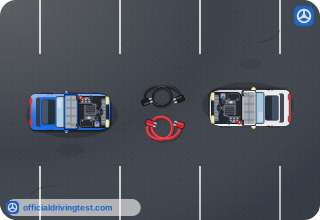
- Take them off both batteries and put a cloth over the open vent wells
- Take them off the live battery only and leave the dead one capped
- Take them off both batteries and leave the vent wells uncovered
- Leave them on both batteries and cover the hood with a cloth
Show answer
Correct answer: Take them off both batteries and put a cloth over the open vent wells
The handbook says to remove the vent caps from both batteries and cover the open vent wells with a cloth.
Source: West Virginia Driver's Licensing Handbook (Revised July 2026), page 72 · Open this page in the manual (Manual page 72)
-
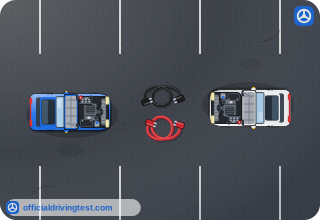
What should you turn off before jump starting a vehicle?
- Nothing; leave everything on to help the battery
- Only the radio
- The engine of the vehicle giving the jump
- Lights, heater, air conditioner, and radio
Show answer
Correct answer: Lights, heater, air conditioner, and radio
Lights, heater, air conditioner and radio should all be off before you connect the cables.
Source: West Virginia Driver's Licensing Handbook (Revised July 2026), page 72 · Open this page in the manual (Manual page 72)
-
When jump starting, to which post do you connect the positive post of the dead battery?
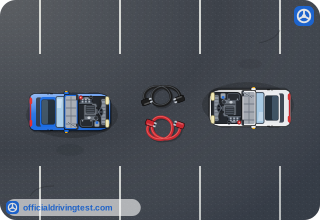
- The negative post of the live battery
- The positive post of the live battery
- The engine block of the dead vehicle
- The frame of the live vehicle
Show answer
Correct answer: The positive post of the live battery
Positive goes to positive: the dead battery's positive post connects to the live battery's positive post.
Source: West Virginia Driver's Licensing Handbook (Revised July 2026), page 72 · Open this page in the manual (Manual page 72)
-
When jump starting, where do you connect the negative post of the live battery?
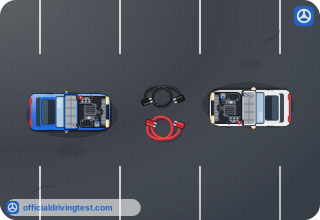
- To the positive post of the dead battery, next to the cable
- To the engine block or frame of the vehicle with the dead battery
- To the frame of the vehicle that is giving you the jump
- To the negative post of the dead battery
Show answer
Correct answer: To the engine block or frame of the vehicle with the dead battery
The negative cable from the live battery goes to the engine block or frame of the vehicle with the dead battery.
Source: West Virginia Driver's Licensing Handbook (Revised July 2026), page 72 · Open this page in the manual (Manual page 72)
-
After connecting the jumper cables, what should you make sure of before starting the vehicle giving the jump?
- Both engines are already running
- Both vehicles are in drive
- The hoods of both vehicles are closed
- The two vehicles are not touching
Show answer
Correct answer: The two vehicles are not touching
The two vehicles must not touch each other while you jump start.
Source: West Virginia Driver's Licensing Handbook (Revised July 2026), page 72 · Open this page in the manual (Manual page 72)
-
When jump starting a vehicle, which vehicle do you start first?
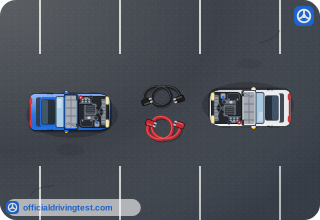
- The vehicle giving the jump
- The vehicle with the dead battery
- Both vehicles at the same time
- Whichever vehicle is closer to the road
Show answer
Correct answer: The vehicle giving the jump
You start the vehicle giving the jump, let it run for a few minutes, and then start the other vehicle.
Source: West Virginia Driver's Licensing Handbook (Revised July 2026), page 72 · Open this page in the manual (Manual page 72)
-
In what order do you take off jumper cables after jump starting?
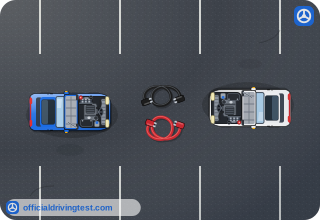
- In the same order in which you originally connected them
- In any order you like, as long as both vehicles keep running
- In the opposite order from the one in which you connected them
- Positive cables first, then negative cables
Show answer
Correct answer: In the opposite order from the one in which you connected them
The cables come off in the opposite order, and then the vent caps are replaced.
Source: West Virginia Driver's Licensing Handbook (Revised July 2026), page 72 · Open this page in the manual (Manual page 72)
-
Battery acid gets on your skin, eyes, or vehicle. What should you do?
- Wipe it off with a dry cloth and leave it
- Let it dry and then brush it off
- Cover it with a cloth until you reach home
- Wash it off immediately with water
Show answer
Correct answer: Wash it off immediately with water
Battery acid on skin, eyes or a vehicle should be washed off immediately with water.
Source: West Virginia Driver's Licensing Handbook (Revised July 2026), page 72 · Open this page in the manual (Manual page 72)
-
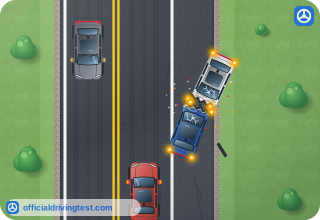
According to the handbook's general rules for giving first aid, what should you do about moving a crash victim?
- Move the victim into a vehicle to keep them warm and dry
- Always sit the victim upright against your vehicle's wheel
- Do not move the victim unless there is danger of further injury
- Always move the victim to the shoulder of the road
Show answer
Correct answer: Do not move the victim unless there is danger of further injury
Stay calm and do not move the victim unless there is danger of further injury.
Source: West Virginia Driver's Licensing Handbook (Revised July 2026), page 73 · Open this page in the manual (Manual page 73)
-
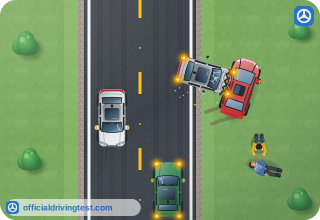
When you give first aid in order, what comes first?
- Restore breathing
- Control bleeding
- Treat for shock
- Protect broken bones
Show answer
Correct answer: Control bleeding
The handbook's first aid order starts with controlling bleeding.
Source: West Virginia Driver's Licensing Handbook (Revised July 2026), page 73 · Open this page in the manual (Manual page 73)
-
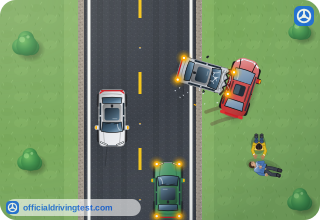
In the handbook's first aid order, what comes right after restoring breathing?
- Control bleeding
- Protect broken bones
- Move the victim to the shoulder
- Treat for shock
Show answer
Correct answer: Treat for shock
The order is control bleeding, restore breathing, treat for shock, then protect broken bones.
Source: West Virginia Driver's Licensing Handbook (Revised July 2026), page 73 · Open this page in the manual (Manual page 73)