West Virginia: Speed and space — Part 4 Practice Test
Questions in this part include: “If your vehicle has a manual transmission and you start on snow or ice, what should you do with the clutch?” · “What do road conditions primarily involve, according to the handbook?”
Independent educational site · not affiliated with any government agency or DMV
Ready? Test yourself
Answer to start, or tap Start below:
If your vehicle has a manual transmission and you start on snow or ice, what should you do with the clutch?
- Instant feedback with an explanation
- Every answer cites its source in the manual
- Your best score is saved on this device
- Keyboard: press 1 to 4 to answer and Enter for the next question
Questions are original and based on the official manual "West Virginia Driver's Licensing Handbook" (Revised July 2026), West Virginia Division of Motor Vehicles (DMV).
All 16 questions in this practice test
Take the test above first, then use this list to study. Tap “Show answer” to see the correct answer and explanation.
Show the questions and answersHide the questions
-
How should you apply the brakes when you stop or slow down on ice or packed snow?
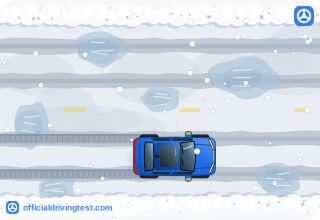
- Gently and smoothly
- Firmly and quickly
- With one hard push
- Only with the parking brake
Show answer
Correct answer: Gently and smoothly
On ice or packed snow you always apply the brakes gently and smoothly.
Source: West Virginia Driver's Licensing Handbook (Revised July 2026), page 64 · Open this page in the manual (Manual page 64)
-
On ice or packed snow, what do you maintain in a vehicle equipped with anti-lock brakes?
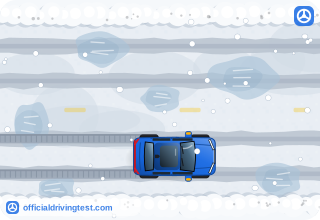
- A shorter stopping distance than on dry pavement
- The ability to brake without slowing down
- The ability to steer while braking
- A grip that stays constant at any speed
Show answer
Correct answer: The ability to steer while braking
With anti-lock brakes you keep the ability to steer while braking.
Source: West Virginia Driver's Licensing Handbook (Revised July 2026), page 64 · Open this page in the manual (Manual page 64)
-
On ice or packed snow in a vehicle without anti-lock brakes, how can you steer while braking?
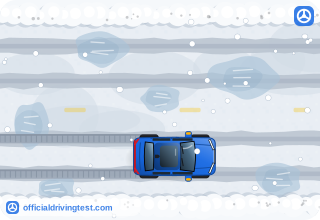
- Hold the brake pedal down as hard as you possibly can
- Pump the brakes, applying and releasing them several times
- Shift into neutral and coast until the car slows down
- Press the accelerator lightly while you keep braking
Show answer
Correct answer: Pump the brakes, applying and releasing them several times
Without anti-lock brakes you cannot steer unless you pump the brakes until the vehicle is under complete control.
Source: West Virginia Driver's Licensing Handbook (Revised July 2026), page 64 · Open this page in the manual (Manual page 64)
-
On ice or packed snow in a vehicle without anti-lock brakes, when should you release the brakes?
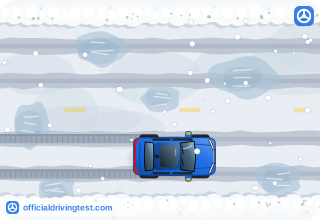
- At the first hint the wheels are slipping
- Only after the vehicle has stopped
- After the wheels have locked for a moment
- When the vehicle slows below 10 mph
Show answer
Correct answer: At the first hint the wheels are slipping
You should always release the brakes at the first hint that the wheels are slipping.
Source: West Virginia Driver's Licensing Handbook (Revised July 2026), page 64 · Open this page in the manual (Manual page 64)
-
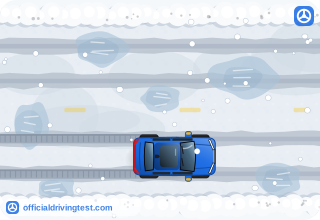
When starting on snow or ice, what should you do with the engine speed and acceleration?
- Use high engine speed and accelerate quickly to gain traction
- Keep engine speed low but accelerate quickly once moving
- Keep engine speed low and accelerate slowly and smoothly
- Use high engine speed to spin the wheels until they grip
Show answer
Correct answer: Keep engine speed low and accelerate slowly and smoothly
The handbook says to keep your engine speed low and accelerate slowly and smoothly when starting on snow or ice.
Source: West Virginia Driver's Licensing Handbook (Revised July 2026), page 64 · Open this page in the manual (Manual page 64)
-
If your vehicle has a manual transmission and you start on snow or ice, what should you do with the clutch?
- Release it all at once
- Let it out slowly
- Hold it down until the wheels spin
- Use it only to brake
Show answer
Correct answer: Let it out slowly
The clutch should be let out slowly when starting on snow or ice.
Source: West Virginia Driver's Licensing Handbook (Revised July 2026), page 64 · Open this page in the manual (Manual page 64)
-
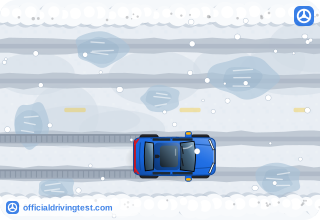
After you start on snow or ice, how can you learn how slippery the road is?
- Look at the color of the snow
- Accelerate quickly for a short distance
- Turn the wheel sharply from side to side
- Apply the brakes while driving slowly
Show answer
Correct answer: Apply the brakes while driving slowly
The handbook says to get the feel of the road by applying the brakes while driving slowly.
Source: West Virginia Driver's Licensing Handbook (Revised July 2026), page 64 · Open this page in the manual (Manual page 64)
-
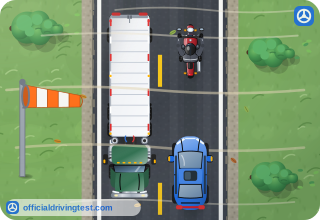
What can crosswinds on the road be strong enough to do?
- Lift the front tires of the vehicle off the pavement
- Freeze wet pavement into a sheet of black ice quickly
- Force your vehicle into the oncoming lane or off the roadway
- Stall the engine and shut off your power steering
Show answer
Correct answer: Force your vehicle into the oncoming lane or off the roadway
Strong crosswinds can push a vehicle into the oncoming lane or off the road.
Source: West Virginia Driver's Licensing Handbook (Revised July 2026), page 64 · Open this page in the manual (Manual page 64)
-
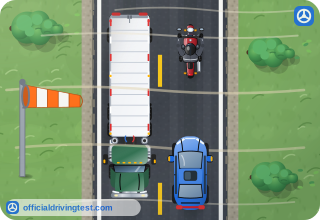
Strong winds can do which of the following, according to the handbook?
- Cause your tire pressure to drop sharply and quickly
- Down power lines and trees and blow debris into your path
- Lower the stopping distance of a vehicle on wet pavement
- Reduce the glare from other vehicles on the road
Show answer
Correct answer: Down power lines and trees and blow debris into your path
The handbook tells you to be alert for strong winds that can down power lines and trees and blow debris into your path.
Source: West Virginia Driver's Licensing Handbook (Revised July 2026), page 64 · Open this page in the manual (Manual page 64)
-
Which can produce conditions similar to fog, according to the handbook?
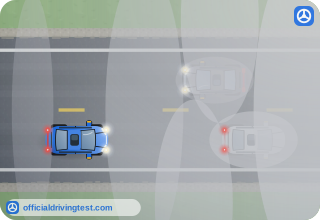
- Steam rising from a warm engine
- Dust from an unpaved shoulder
- Exhaust from heavy trucks
- Smoke from burning leaves
Show answer
Correct answer: Smoke from burning leaves
Smoke from factories, forest fires, and burning leaves can produce conditions similar to fog.
Source: West Virginia Driver's Licensing Handbook (Revised July 2026), page 64 · Open this page in the manual (Manual page 64)
-
If you must drive in fog or dense smoke, which headlights should you use?
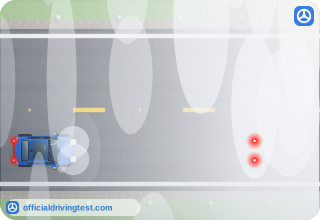
- Low-beam headlights
- High-beam headlights
- Parking lights only
- Hazard lights only
Show answer
Correct answer: Low-beam headlights
The handbook says to use your low-beam headlights in fog or dense smoke.
Source: West Virginia Driver's Licensing Handbook (Revised July 2026), page 64 · Open this page in the manual (Manual page 64)
-
If you must drive in fog or dense smoke, what should you use your windshield wipers for?
- To reduce glare from other vehicles
- To remove moisture
- To clear dust from the glass only
- To signal to following drivers
Show answer
Correct answer: To remove moisture
Windshield wipers are used to remove moisture from the glass in fog or dense smoke.
Source: West Virginia Driver's Licensing Handbook (Revised July 2026), page 64 · Open this page in the manual (Manual page 64)
-
Which of these is a road condition the handbook says to consider?
- Poorly marked or unmarked roads
- The volume of rush-hour traffic
- Worn tires and faulty brakes
- Fatigue of the driver at the wheel
Show answer
Correct answer: Poorly marked or unmarked roads
Road conditions include curves, hills, pavement width, multiple lanes, road surfaces, poorly marked or unmarked roads, shoulders, and drop-offs.
Source: West Virginia Driver's Licensing Handbook (Revised July 2026), page 64 · Open this page in the manual (Manual page 64)
-
What do road conditions primarily involve, according to the handbook?
- The weather on the day you drive
- The number of vehicles on the road
- The road's construction
- The mechanical condition of your vehicle
Show answer
Correct answer: The road's construction
Road conditions primarily involve how the road is built.
Source: West Virginia Driver's Licensing Handbook (Revised July 2026), page 64 · Open this page in the manual (Manual page 64)
-
What does the handbook say you should do to avoid a crash with the vehicle ahead of you, which may stop suddenly and without warning?
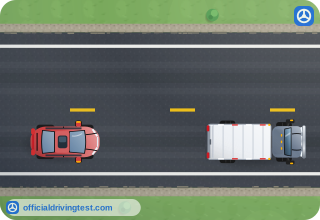
- Stay alert, anticipate a sudden stop and maintain a safe following distance
- Follow close behind so the other driver knows you are there
- Watch only the road far ahead and rely on the other driver's brake lights
- Slow down only after the vehicle ahead has actually begun to stop
Show answer
Correct answer: Stay alert, anticipate a sudden stop and maintain a safe following distance
The vehicle ahead may stop suddenly, so you should stay alert, expect a sudden stop and keep a safe following distance.
Source: West Virginia Driver's Licensing Handbook (Revised July 2026), page 66 · Open this page in the manual (Manual page 66)
-
What does the handbook say about exceeding the speed limit when you pass another vehicle?
- It is allowed on interstate highways only
- It is illegal
- It is allowed if the vehicle ahead is traveling slowly
- It is allowed when the passing zone is clear
Show answer
Correct answer: It is illegal
Going over the speed limit in order to pass is illegal, and if you must speed to pass you probably do not need to pass.
Source: West Virginia Driver's Licensing Handbook (Revised July 2026), page 66 · Open this page in the manual (Manual page 66)