West Virginia: Speed and space — Part 1 Practice Test
Questions in this part include: “During urban area driving, how fast should you drive?” · “Which of these is a driving situation in which the handbook says you should slow down?”
Independent educational site · not affiliated with any government agency or DMV
Ready? Test yourself
Answer to start, or tap Start below:
During urban area driving, how fast should you drive?
- Instant feedback with an explanation
- Every answer cites its source in the manual
- Your best score is saved on this device
- Keyboard: press 1 to 4 to answer and Enter for the next question
Questions are original and based on the official manual "West Virginia Driver's Licensing Handbook" (Revised July 2026), West Virginia Division of Motor Vehicles (DMV).
All 17 questions in this practice test
Take the test above first, then use this list to study. Tap “Show answer” to see the correct answer and explanation.
Show the questions and answersHide the questions
-
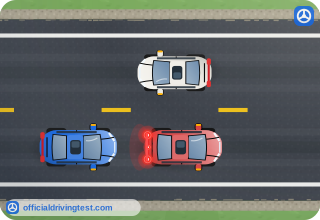
In the handbook’s definitions, what is following distance?
- The distance your vehicle travels after you press the brake pedal
- The distance between your vehicle and the vehicle in the next lane
- The distance you can see ahead on the road at night
- The space cushion between your vehicle and the vehicle directly ahead of you
Show answer
Correct answer: The space cushion between your vehicle and the vehicle directly ahead of you
Following distance is the space cushion between your vehicle and the vehicle directly ahead.
Source: West Virginia Driver's Licensing Handbook (Revised July 2026)
-
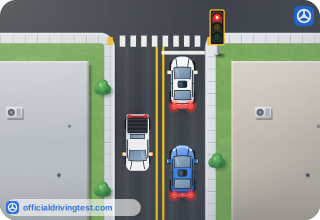
What is a safe gap when stopping behind another vehicle?
- Where you can see the rear tires of the vehicle ahead of you
- Where you can see the license plate of the vehicle ahead
- About one car length behind the vehicle ahead
- Where your hood touches the vehicle’s rear bumper
Show answer
Correct answer: Where you can see the rear tires of the vehicle ahead of you
A safe gap is to stop where you can see the rear tires of the vehicle ahead of you.
Source: West Virginia Driver's Licensing Handbook (Revised July 2026), page 29 · Open this page in the manual (Manual page 29)
-
During urban area driving, how fast should you drive?
- Faster than the flow of traffic, so the examiner sees good progress
- Ten miles per hour below the posted speed limit at all times
- At whatever speed the vehicle ahead travels, even above the limit
- Keep up with the flow of traffic, but do not exceed the posted speed limit
Show answer
Correct answer: Keep up with the flow of traffic, but do not exceed the posted speed limit
You should keep up with the flow of traffic without exceeding the posted speed limit.
Source: West Virginia Driver's Licensing Handbook (Revised July 2026), page 30 · Open this page in the manual (Manual page 30)
-
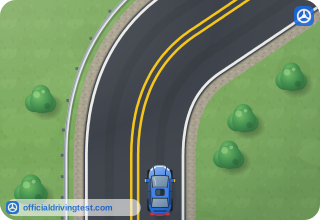
Before entering a curve, what should you do with your speed?
- Maintain it and brake in the middle of the curve
- Reduce it so further braking is not required in the curve
- Increase it slightly to keep the vehicle stable
- Reduce it only after reaching the middle of the curve
Show answer
Correct answer: Reduce it so further braking is not required in the curve
You reduce speed before the curve so that you do not need to brake again inside it.
Source: West Virginia Driver's Licensing Handbook (Revised July 2026), page 30 · Open this page in the manual (Manual page 30)
-
While driving through a curve, what should you follow?
- Posted warning signs
- The speed of the vehicle behind you
- The speed of the vehicle ahead of you
- The examiner’s hand signals
Show answer
Correct answer: Posted warning signs
In a curve you maintain a safe speed and follow posted warning signs.
Source: West Virginia Driver's Licensing Handbook (Revised July 2026), page 30 · Open this page in the manual (Manual page 30)
-
What is the maximum speed limit in a school zone when children are present or when specified?
- 10 m.p.h.
- 20 m.p.h.
- 25 m.p.h.
- 15 m.p.h.
Show answer
Correct answer: 15 m.p.h.
The maximum speed limit in a school zone is 15 m.p.h. when children are present or when specified.
Source: West Virginia Driver's Licensing Handbook (Revised July 2026), page 34 · Open this page in the manual (Manual page 34)
-
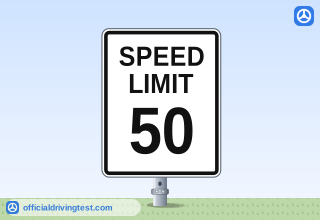
What does a speed limit sign show?
- The speed you must drive in any weather and road conditions
- The safest speed to drive when road conditions are at their worst
- The fastest speed you may drive under optimal weather and road conditions
- The average speed of the traffic that uses the road each day
Show answer
Correct answer: The fastest speed you may drive under optimal weather and road conditions
A speed limit sign shows the fastest speed you may drive under optimal weather and road conditions.
Source: West Virginia Driver's Licensing Handbook (Revised July 2026), page 35 · Open this page in the manual (Manual page 35)
-
Besides the fastest speed allowed, what does a speed limit sign sometimes also show?
- The average speed
- The minimum speed
- The speed for trucks
- The night speed
Show answer
Correct answer: The minimum speed
Speed limit signs sometimes also show the minimum speed.
Source: West Virginia Driver's Licensing Handbook (Revised July 2026), page 35 · Open this page in the manual (Manual page 35)
-
What do advisory speed signs at interstate entrances and exit ramps show?
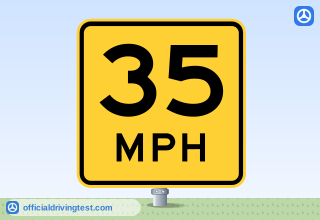
- The minimum speed required to enter the interstate
- The speed limit that police enforce on the ramp
- The maximum speed allowed on the interstate itself
- The maximum recommended safe speed for driving on the ramp
Show answer
Correct answer: The maximum recommended safe speed for driving on the ramp
Advisory speed signs on ramps show the maximum recommended safe speed for driving on the ramp.
Source: West Virginia Driver's Licensing Handbook (Revised July 2026), page 35 · Open this page in the manual (Manual page 35)
-
West Virginia law prohibits driving at a speed that is greater than what?
- Reasonable and prudent for existing conditions
- The average speed of the vehicles around you
- The speed of the vehicle directly ahead of you
- The speed that the most skilled drivers can handle
Show answer
Correct answer: Reasonable and prudent for existing conditions
State law bars driving faster than is reasonable and prudent for the existing conditions, even where a higher limit is posted.
Source: West Virginia Driver's Licensing Handbook (Revised July 2026), page 42 · Open this page in the manual (Manual page 42)
-
Which of these is a driving situation in which the handbook says you should slow down?
- Driving on a wide, straight road with no hazards
- Driving on a dry road in clear daylight with no traffic
- Approaching the top of a hill
- Driving on a road with no intersections or curves
Show answer
Correct answer: Approaching the top of a hill
The handbook lists approaching the top of a hill as a time to slow down.
Source: West Virginia Driver's Licensing Handbook (Revised July 2026), page 42 · Open this page in the manual (Manual page 42)
-
Which of these is a time when the handbook says you should reduce your speed?
- Driving straight on a long, open road with no traffic
- Approaching and going around a curve
- Driving in the right lane on a clear, dry day
- Driving past a long row of empty fields in daylight
Show answer
Correct answer: Approaching and going around a curve
The handbook lists approaching and going around a curve as a time to slow down.
Source: West Virginia Driver's Licensing Handbook (Revised July 2026), page 42 · Open this page in the manual (Manual page 42)
-
In which of these situations does the handbook say to slow down?
- When the road is dry and the view ahead is clear for a long way
- When you are driving below the speed of the traffic around you
- When no other vehicles are in sight on a straight road
- When weather or hazards limit visibility or stopping distance
Show answer
Correct answer: When weather or hazards limit visibility or stopping distance
You should slow down when traffic, weather, roadway hazards or other conditions limit your visibility or stopping distance.
Source: West Virginia Driver's Licensing Handbook (Revised July 2026), page 42 · Open this page in the manual (Manual page 42)
-
On an interstate, what is the maximum speed unless otherwise posted?
- 70 mph
- 60 mph
- 65 mph
- 75 mph
Show answer
Correct answer: 70 mph
Unless otherwise posted, the maximum speed on an interstate is 70 mph.
Source: West Virginia Driver's Licensing Handbook (Revised July 2026), page 42 · Open this page in the manual (Manual page 42)
-
On an open county highway, what is the designated speed limit unless otherwise posted?
- 45 mph
- 50 mph
- 55 mph
- 60 mph
Show answer
Correct answer: 55 mph
Unless it is posted otherwise, the designated speed on an open county highway is 55 mph.
Source: West Virginia Driver's Licensing Handbook (Revised July 2026), page 42 · Open this page in the manual (Manual page 42)
-
What is the designated speed limit in business or residential areas, unless otherwise posted or unreasonable for conditions?
- 20 mph
- 25 mph
- 30 mph
- 35 mph
Show answer
Correct answer: 25 mph
The designated speed in business or residential areas is 25 mph.
Source: West Virginia Driver's Licensing Handbook (Revised July 2026), page 42 · Open this page in the manual (Manual page 42)
-
What is the designated speed limit in a school zone while children are present along the roadway?
- 10 mph
- 20 mph
- 30 mph
- 15 mph
Show answer
Correct answer: 15 mph
While children are present along the roadway, the school zone speed is 15 mph.
Source: West Virginia Driver's Licensing Handbook (Revised July 2026), page 42 · Open this page in the manual (Manual page 42)