West Virginia: Seat belts and child safety Practice Test
West Virginia’s safety belt law, child safety seats, air bags and keeping infants and toddlers safe.
Independent educational site · not affiliated with any government agency or DMV
Ready? Test yourself
Answer to start, or tap Start below:
What must a GDL instruction permit holder require of all occupants of the vehicle?
- Instant feedback with an explanation
- Every answer cites its source in the manual
- Your best score is saved on this device
- Keyboard: press 1 to 4 to answer and Enter for the next question
Questions are original and based on the official manual "West Virginia Driver's Licensing Handbook" (Revised July 2026), West Virginia Division of Motor Vehicles (DMV).
All 19 questions in this practice test
Take the test above first, then use this list to study. Tap “Show answer” to see the correct answer and explanation.
Show the questions and answersHide the questions
-
What must a GDL instruction permit holder require of all occupants of the vehicle?
- To sit in the rear seat of the vehicle
- To be members of the driver's family
- To follow the safety belt law
- To hold a valid driver's license
Show answer
Correct answer: To follow the safety belt law
The permit holder must require all occupants to adhere to the safety belt law.
Source: West Virginia Driver's Licensing Handbook (Revised July 2026), page 10 · Open this page in the manual (Manual page 10)
-
Who is responsible for ensuring that all passengers are buckled into their safety belts?
- Each passenger
- The vehicle's owner
- The front-seat passenger
- The driver
Show answer
Correct answer: The driver
The handbook makes the driver responsible for making sure all passengers are buckled into their safety belts.
Source: West Virginia Driver's Licensing Handbook (Revised July 2026), page 67 · Open this page in the manual (Manual page 67)
-
According to the handbook, which persons are the legal exception to wearing a safety belt in a passenger vehicle?
- Persons 18 years or older riding in the back seat of a vehicle
- Persons 16 years or older riding in the back seat of a vehicle
- Persons 18 years or older riding in the front passenger seat
- Persons of any age riding in the back seat of a vehicle
Show answer
Correct answer: Persons 18 years or older riding in the back seat of a vehicle
The only legal exception named is for persons 18 or older riding in the back seat.
Source: West Virginia Driver's Licensing Handbook (Revised July 2026), page 67 · Open this page in the manual (Manual page 67)
-
For what reason may an exception to the safety belt rule be issued in some cases?
- Religious reasons
- Employment reasons
- Medical reasons
- The age of the vehicle
Show answer
Correct answer: Medical reasons
In some cases an exception can be issued for medical reasons, and the driver may be required to show proof of the condition.
Source: West Virginia Driver's Licensing Handbook (Revised July 2026), page 67 · Open this page in the manual (Manual page 67)
-
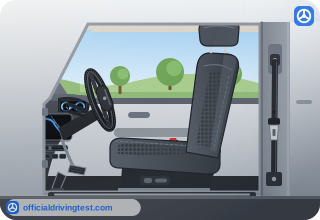
How should a lap belt be worn?
- Loosely across the stomach, leaving room to move
- Snugly and comfortably over the lower part of the hips
- Tightly across the stomach so the body cannot move at all
- High on the waist, over the ribs, with a little slack
Show answer
Correct answer: Snugly and comfortably over the lower part of the hips
A lap belt should fit snugly and comfortably over the lower part of the hips, which still allows normal bending of the body.
Source: West Virginia Driver's Licensing Handbook (Revised July 2026), page 67 · Open this page in the manual (Manual page 67)
-
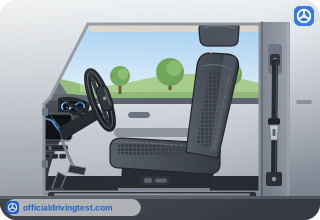
How should shoulder belts, which fit across the shoulder, be worn?
- Instead of the lap belt when it is more comfortable
- Only by the driver, because passengers need lap belts
- Under the arm closest to the door
- With the lap belts, for additional protection of the upper body
Show answer
Correct answer: With the lap belts, for additional protection of the upper body
Shoulder belts are worn together with lap belts to add restraint and protection for the upper body.
Source: West Virginia Driver's Licensing Handbook (Revised July 2026), page 67 · Open this page in the manual (Manual page 67)
-
What does the handbook say safety belts do when you drive on bumpy or twisting roads?
- Keep you in the proper driving position
- Reduce the bouncing of the vehicle
- Keep the steering wheel steady
- Lessen the wear on the tires
Show answer
Correct answer: Keep you in the proper driving position
Safety belts hold you in the proper driving position on bumpy or twisting roads.
Source: West Virginia Driver's Licensing Handbook (Revised July 2026), page 67 · Open this page in the manual (Manual page 67)
-
Under West Virginia law, a driver who transports a child under what age in a passenger automobile, van or pickup truck must place the child in a child passenger safety device system?
- 5 years
- 6 years
- 8 years
- 10 years
Show answer
Correct answer: 8 years
The law quoted in the handbook covers every child under the age of 8 years.
Source: West Virginia Driver's Licensing Handbook (Revised July 2026), page 67 · Open this page in the manual (Manual page 67)
-
A child under 8 years of age must be at least how tall for a safety belt to be sufficient instead of a child passenger safety device?
- 4 feet 0 inches
- 4 feet 9 inches
- 4 feet 5 inches
- 5 feet 0 inches
Show answer
Correct answer: 4 feet 9 inches
West Virginia law says a safety belt is sufficient when the child is under 8 but at least 4 feet 9 inches tall.
Source: West Virginia Driver's Licensing Handbook (Revised July 2026), page 67 · Open this page in the manual (Manual page 67)
-
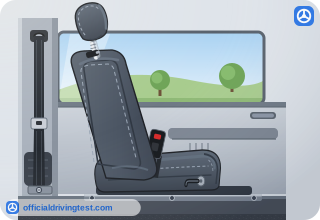
What are head restraints designed to do?
- Reduce the chance of whiplash injury in head-on collisions
- Keep the driver's head still while the vehicle is turning
- Hold the safety belt snugly against the shoulder
- Reduce the chance of whiplash injury in rear-end collisions
Show answer
Correct answer: Reduce the chance of whiplash injury in rear-end collisions
Head restraints are designed to reduce the chance of whiplash injury in rear-end collisions.
Source: West Virginia Driver's Licensing Handbook (Revised July 2026), page 68 · Open this page in the manual (Manual page 68)
-
If adjustable, where should a head restraint be positioned?
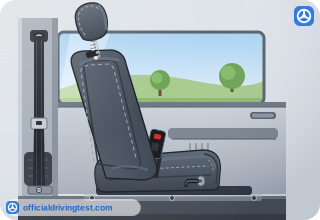
- Against the back of your head, not your neck
- Against the back of your neck, not your head
- Just below your shoulders
- Several inches behind your head
Show answer
Correct answer: Against the back of your head, not your neck
An adjustable head restraint should fit against the back of the head rather than the neck.
Source: West Virginia Driver's Licensing Handbook (Revised July 2026), page 68 · Open this page in the manual (Manual page 68)
-
What is the purpose of dual air bags?
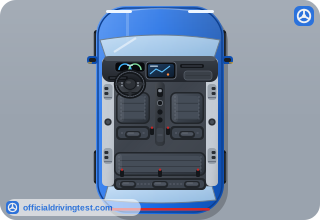
- To protect both the driver and the front passenger in a crash
- To protect the driver only, since passengers wear belts
- To replace the safety belts for front seat occupants
- To protect rear seat passengers in rear-end collisions
Show answer
Correct answer: To protect both the driver and the front passenger in a crash
Dual air bags are meant to protect both the driver and the front passenger of a vehicle in a crash.
Source: West Virginia Driver's Licensing Handbook (Revised July 2026), page 68 · Open this page in the manual (Manual page 68)
-
In a vehicle with air bags, when should the driver and all passengers have their seat belts secured?
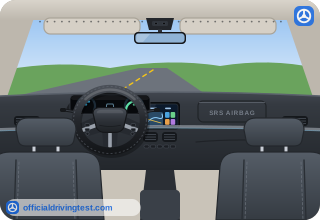
- Only on highways
- Only on long trips
- At all times
- Only in the front seat
Show answer
Correct answer: At all times
With air bags, the driver and all passengers should have their seat belts secured at all times.
Source: West Virginia Driver's Licensing Handbook (Revised July 2026), page 68 · Open this page in the manual (Manual page 68)
-
With air bags, how should the driver's seat and the front passenger's seat be positioned?
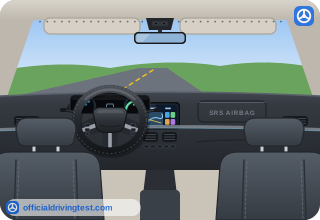
- Tilted forward, as close to the air bag as possible
- Upright, and moved as close to the dashboard as possible
- Tilted fully back, just touching the rear seat
- Slightly tilted backward, as far from the air bag as possible
Show answer
Correct answer: Slightly tilted backward, as far from the air bag as possible
A slight backward tilt and as much distance as possible from the air bag give it room to deploy before it contacts front-seat occupants.
Source: West Virginia Driver's Licensing Handbook (Revised July 2026), page 68 · Open this page in the manual (Manual page 68)
-
In a vehicle with a passenger-side air bag, where should an infant in a rear-facing safety seat under NO circumstances be placed?
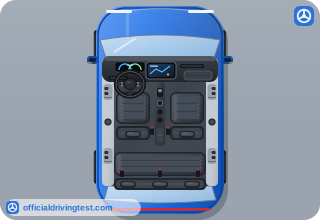
- In the front passenger seat
- In the rear seat behind the driver
- In the rear seat behind the passenger
- In the center of the rear seat
Show answer
Correct answer: In the front passenger seat
With a passenger-side air bag, an infant in a rear-facing safety seat should never be put in the front passenger seat.
Source: West Virginia Driver's Licensing Handbook (Revised July 2026), page 68 · Open this page in the manual (Manual page 68)
-
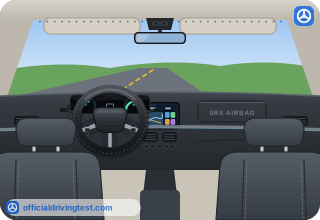
When there is no other mode of transportation and a child must ride in the front seat of a vehicle with a passenger-side air bag, what must the child's safety seat be?
- A rear-facing seat
- A seat with no safety belt
- A forward-facing seat
- A seat that is tilted backward
Show answer
Correct answer: A forward-facing seat
In that situation the handbook says the child's safety seat must be forward-facing, the child properly secured, and the seat pushed all the way back.
Source: West Virginia Driver's Licensing Handbook (Revised July 2026), page 68 · Open this page in the manual (Manual page 68)
-
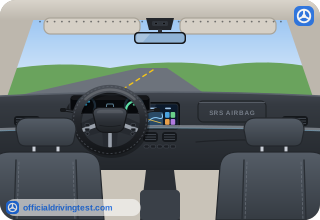
When a child must ride in the front seat of a vehicle with a passenger-side air bag, what must be done with the passenger side seat?
- Tilt it fully forward
- Push it all the way back
- Leave it in the middle position
- Raise it as high as it will go
Show answer
Correct answer: Push it all the way back
Pushing the seat all the way back maximizes the distance between the child and the air bag.
Source: West Virginia Driver's Licensing Handbook (Revised July 2026), page 68 · Open this page in the manual (Manual page 68)
-
The handbook recommends that all children of what age or younger should be buckled and placed in the rear seat?
- 8 and under
- 10 and under
- 14 and under
- 12 and under
Show answer
Correct answer: 12 and under
It is recommended that all children 12 and under be buckled and placed in the rear seat.
Source: West Virginia Driver's Licensing Handbook (Revised July 2026), page 68 · Open this page in the manual (Manual page 68)
-
Besides being buckled in the rear seat, what does the handbook say about younger children?
- They should be correctly seated in a child safety seat
- They should ride in the front seat with the air bag turned off
- They should wear only a lap belt
- They should be seated in the center of the rear seat only
Show answer
Correct answer: They should be correctly seated in a child safety seat
Younger children should also be correctly seated in a child safety seat.
Source: West Virginia Driver's Licensing Handbook (Revised July 2026), page 68 · Open this page in the manual (Manual page 68)