West Virginia: Vehicle controls and equipment — Part 5 Practice Test
Questions in this part include: “Because a vehicle has an anti-lock brake system (ABS), what should motorists not do, according to the handbook?” · “When should you check the radiator while looking under the hood?”
Independent educational site · not affiliated with any government agency or DMV
Ready? Test yourself
Answer to start, or tap Start below:
Because a vehicle has an anti-lock brake system (ABS), what should motorists not do, according to the handbook?
- Instant feedback with an explanation
- Every answer cites its source in the manual
- Your best score is saved on this device
- Keyboard: press 1 to 4 to answer and Enter for the next question
Questions are original and based on the official manual "West Virginia Driver's Licensing Handbook" (Revised July 2026), West Virginia Division of Motor Vehicles (DMV).
All 17 questions in this practice test
Take the test above first, then use this list to study. Tap “Show answer” to see the correct answer and explanation.
Show the questions and answersHide the questions
-
Because a vehicle has an anti-lock brake system (ABS), what should motorists not do, according to the handbook?
- Steer while pushing hard on the brake
- Learn the vehicle's safety equipment features
- Use the brake in a sudden stop
- Take risks they otherwise would not
Show answer
Correct answer: Take risks they otherwise would not
ABS does not provide super brakes that stop a vehicle on a dime in all circumstances, so motorists should not take risks they otherwise would not.
Source: West Virginia Driver's Licensing Handbook (Revised July 2026), page 68 · Open this page in the manual (Manual page 68)
-
Before driving, you push the brake pedal down to test it. How far should the pedal go?
- Not more than halfway to the floor
- All the way down to the floor
- At least three-quarters of the way down
- Almost to the floor, then back up
Show answer
Correct answer: Not more than halfway to the floor
The brake pedal should not go more than halfway to the floor and should feel like it is hitting something hard.
Source: West Virginia Driver's Licensing Handbook (Revised July 2026), page 70 · Open this page in the manual (Manual page 70)
-
While you check your brakes before driving, the pedal feels spongy. What may be the cause?
- The parking brake may be set too firmly
- The tires may be underinflated
- Air bubbles may be in the brake line
- The battery may be low
Show answer
Correct answer: Air bubbles may be in the brake line
A spongy brake pedal may mean air bubbles in the brake line.
Source: West Virginia Driver's Licensing Handbook (Revised July 2026), page 70 · Open this page in the manual (Manual page 70)
-
You push the brake pedal down and count to 10, and the pedal keeps going down. What may this mean?
- The brake pedal is working normally
- You may have a leak in the braking system
- The parking brake needs adjustment
- The brake lights have failed
Show answer
Correct answer: You may have a leak in the braking system
A pedal that keeps sinking while held down can mean the braking system has a leak.
Source: West Virginia Driver's Licensing Handbook (Revised July 2026), page 70 · Open this page in the manual (Manual page 70)
-
You set the parking brake firmly. How can you tell that it needs adjustment?
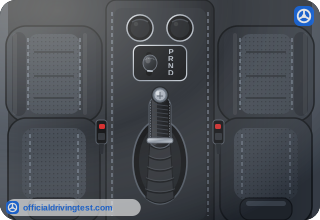
- The pedal feels like it is hitting something hard when pushed
- The vehicle does not move at all in drive or first gear
- The parking brake handle moves only halfway when you set it
- The vehicle moves easily in drive or first gear with the brake set
Show answer
Correct answer: The vehicle moves easily in drive or first gear with the brake set
A parking brake that is set firmly should hold the vehicle. If the vehicle moves easily in drive or first gear, the brake needs adjustment.
Source: West Virginia Driver's Licensing Handbook (Revised July 2026), page 70 · Open this page in the manual (Manual page 70)
-
How often should you check under your vehicle for signs of oil, coolant, brake fluid, or transmission leaks?
- Once a year
- Only when the engine overheats
- Frequently
- Only after a long trip
Show answer
Correct answer: Frequently
The handbook says to check under the vehicle frequently for signs of leaks.
Source: West Virginia Driver's Licensing Handbook (Revised July 2026), page 70 · Open this page in the manual (Manual page 70)
-
When should you check the radiator while looking under the hood?
- Only when it is cool
- Only while the engine is running
- Right after you shut off the engine
- Only while the warning light is on
Show answer
Correct answer: Only when it is cool
The radiator is one of the items to check under the hood, but only when it is cool.
Source: West Virginia Driver's Licensing Handbook (Revised July 2026), page 70 · Open this page in the manual (Manual page 70)
-
Which of these should you NOT do when checking under the hood?
- Check the engine oil
- Look at the belts and hoses
- Check the power steering
- Smoke or use any flames
Show answer
Correct answer: Smoke or use any flames
Smoking and open flames are dangerous near the engine, so the handbook says not to use them under the hood.
Source: West Virginia Driver's Licensing Handbook (Revised July 2026), page 70 · Open this page in the manual (Manual page 70)
-
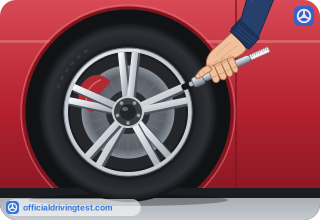
How often should you check your tire pressure with a gauge?
- Once a year
- Monthly
- Every day
- Only before long trips
Show answer
Correct answer: Monthly
The handbook says to check tire pressure with a gauge monthly.
Source: West Virginia Driver's Licensing Handbook (Revised July 2026), page 70 · Open this page in the manual (Manual page 70)
-
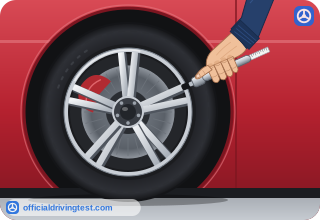
Where can you find the PSI number that shows the correct tire pressure for your vehicle?
- On a label inside the glove compartment
- On a sticker on the inside jamb of the car door
- On a plate under the hood next to the battery
- On the tire's valve stem cap
Show answer
Correct answer: On a sticker on the inside jamb of the car door
The sticker on the inside jamb of the car door shows the PSI number, which is the measurement for tire pressure.
Source: West Virginia Driver's Licensing Handbook (Revised July 2026), page 70 · Open this page in the manual (Manual page 70)
-
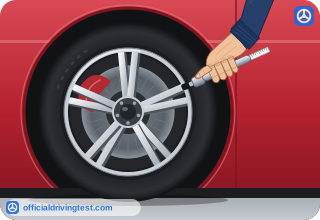
When should you check your tire pressure with a gauge?
- Right after a long highway drive
- When the tires are warm from driving
- Only after a rainstorm
- When the tires are cold
Show answer
Correct answer: When the tires are cold
The handbook says to make sure you check the pressure when the tires are cold.
Source: West Virginia Driver's Licensing Handbook (Revised July 2026), page 70 · Open this page in the manual (Manual page 70)
-
Your tire pressure gauge shows a number lower than the number on the door-jamb sticker. What should you do?
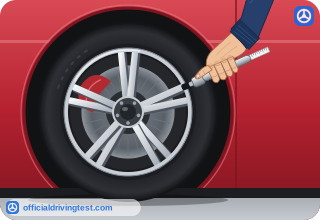
- Inflate the tires until the numbers match
- Let some air out of the tires and check again
- Drive on them until they warm up and recheck
- Replace the valve stem caps and drive on
Show answer
Correct answer: Inflate the tires until the numbers match
If the gauge reading is too low, the tires need air until they match the sticker.
Source: West Virginia Driver's Licensing Handbook (Revised July 2026), page 70 · Open this page in the manual (Manual page 70)
-
Your tire pressure gauge shows a number higher than the number on the door-jamb sticker. What should you do?
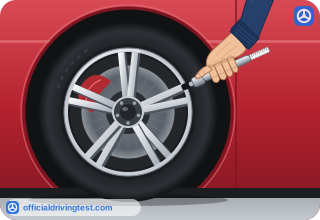
- Add more air to the tires
- Leave the tires as they are
- Let some air out of the tires
- Replace the tires with new ones
Show answer
Correct answer: Let some air out of the tires
If the gauge reading is too high, the handbook says to let some air out of the tires.
Source: West Virginia Driver's Licensing Handbook (Revised July 2026), page 70 · Open this page in the manual (Manual page 70)
-
In the penny tread test, you place Lincoln's head first into the deepest-looking groove and can see all of his head. What does this mean?
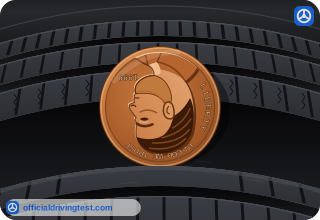
- The tires have the right amount of tread
- The tires are overinflated
- The tires are too cold to be checked
- The tires are too worn and should be replaced
Show answer
Correct answer: The tires are too worn and should be replaced
If all of Lincoln's head shows, the tread is too shallow and the tires should not be driven on.
Source: West Virginia Driver's Licensing Handbook (Revised July 2026), page 70 · Open this page in the manual (Manual page 70)
-
How often should you check all of your vehicle's exterior lights?
- Once a year
- Once a month
- Every week
- Only at the start of winter
Show answer
Correct answer: Once a month
The handbook says to check all exterior lights once a month.
Source: West Virginia Driver's Licensing Handbook (Revised July 2026), page 70 · Open this page in the manual (Manual page 70)
-
How often should you check your wiper blades, at a minimum?
- At least once a month
- Only when they stop working
- At least once a year
- Every time you fill the gas tank
Show answer
Correct answer: At least once a year
Wiper blades should be checked at least once a year, and the wiper fluid container kept full.
Source: West Virginia Driver's Licensing Handbook (Revised July 2026), page 70 · Open this page in the manual (Manual page 70)
-
What does the handbook say to make sure of regarding your interior warning devices?
- That all warning lights are working properly
- That the warning lights stay off while you drive
- That only the brake warning light works
- That the warning buzzers are muted
Show answer
Correct answer: That all warning lights are working properly
Before driving, you should confirm that all of the warning lights work.
Source: West Virginia Driver's Licensing Handbook (Revised July 2026), page 70 · Open this page in the manual (Manual page 70)