Washington: Vehicle controls and equipment — Part 5 Practice Test
Questions in this part include: “Whose responsibility is it to be aware of everything in your blind zones?” · “Which of these is part of checking inside your vehicle before you drive?”
Independent educational site · not affiliated with any government agency or DMV
Ready? Test yourself
Answer to start, or tap Start below:
Whose responsibility is it to be aware of everything in your blind zones?
- Instant feedback with an explanation
- Every answer cites its source in the manual
- Your best score is saved on this device
- Keyboard: press 1 to 4 to answer and Enter for the next question
Questions are original and based on the official manual "Washington Driver Guide" (© 2025), Washington State Department of Licensing (DOL).
All 17 questions in this practice test
Take the test above first, then use this list to study. Tap “Show answer” to see the correct answer and explanation.
Show the questions and answersHide the questions
-
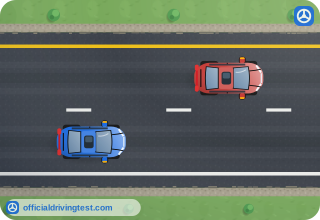
Why are blind zones dangerous?
- They make your mirrors fog up on cold days
- They turn off your vehicle safety technology
- They can fully hide another vehicle, motorcyclist, or bicyclist
- They shorten the time you have to see the road far ahead
Show answer
Correct answer: They can fully hide another vehicle, motorcyclist, or bicyclist
Another vehicle, motorcyclist, or bicyclist can be fully hidden in a blind zone.
Source: Washington Driver Guide (© 2025), page 63 · Open this page in the manual (Manual page 63)
-
Whose responsibility is it to be aware of everything in your blind zones?
- The driver of the nearest vehicle
- Yours, as the driver
- Your vehicle’s safety technology
- The vehicle manufacturer
Show answer
Correct answer: Yours, as the driver
The guide says the driver is responsible for being aware of everything in their blind zones.
Source: Washington Driver Guide (© 2025), page 63 · Open this page in the manual (Manual page 63)
-
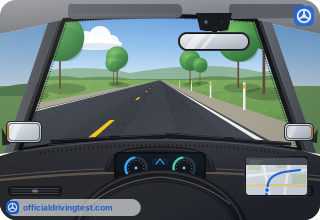
How should you adjust your rearview mirror to reduce your blind zone?
- So it points down at the rear bumper and trunk lid
- So it shows mostly the road beside the vehicle
- So it is tilted toward the side mirror and door
- So you can see out the back window without having to stretch
Show answer
Correct answer: So you can see out the back window without having to stretch
The rearview mirror should show the back window view without stretching.
Source: Washington Driver Guide (© 2025), page 63 · Open this page in the manual (Manual page 63)
-
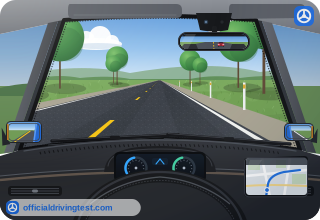
Whichever method you use to adjust your side mirrors, what must you also do to check your blind zones?
- A full visual search of the space around your vehicle
- Rely on the mirrors alone without looking
- Look only through the side windows once
- Check only the rearview mirror and speedometer
Show answer
Correct answer: A full visual search of the space around your vehicle
Mirror adjustment is not enough; you still need a full visual search around the vehicle, moving your head, neck, and body so both eyes can see.
Source: Washington Driver Guide (© 2025), page 63 · Open this page in the manual (Manual page 63)
-
When you turn your head to look at your blind zones, what should you do with the steering wheel?
- Turn it slightly toward the blind zone
- Loosen your grip so it can slide
- Keep it straight
- Turn it away from the blind zone
Show answer
Correct answer: Keep it straight
The guide notes to keep the steering wheel straight while turning your head to look.
Source: Washington Driver Guide (© 2025), page 63 · Open this page in the manual (Manual page 63)
-
If your vehicle has technology that alerts you to someone in your blind zone, what should you still do?
- Stop checking your mirrors completely
- Make a habit of checking with your own eyes
- Rely on the alert alone and not look
- Turn the system off while you are driving
Show answer
Correct answer: Make a habit of checking with your own eyes
The assistance is helpful, but you should still use your eyes to check.
Source: Washington Driver Guide (© 2025), page 63 · Open this page in the manual (Manual page 63)
-
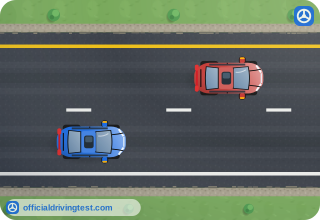
Which of these is part of regularly checking to stay aware of your surroundings?
- The vehicle’s fuel gauge
- The radio display
- The contents of the trunk
- Over your shoulder
Show answer
Correct answer: Over your shoulder
Regular checks cover the area in front, the rearview mirror, the side mirrors, and over your shoulder.
Source: Washington Driver Guide (© 2025), page 64 · Open this page in the manual (Manual page 64)
-
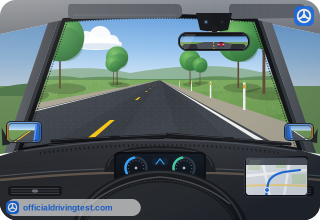
When should you recheck your mirrors?
- Only once a week or so
- Only when you change lanes
- Only when you are driving at night
- Every time you get behind the wheel
Show answer
Correct answer: Every time you get behind the wheel
The guide says to recheck your mirrors every time you get behind the wheel.
Source: Washington Driver Guide (© 2025), page 65 · Open this page in the manual (Manual page 65)
-
How often should you check your mirrors for changes to your driving situation?
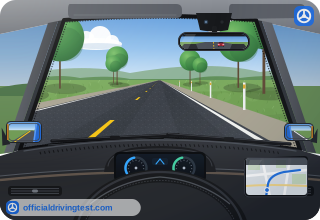
- Constantly
- Once at the start of each trip
- Only at intersections
- Only when you hear a horn
Show answer
Correct answer: Constantly
The guide says to constantly check your mirrors for any changes.
Source: Washington Driver Guide (© 2025), page 65 · Open this page in the manual (Manual page 65)
-
Which of these is part of checking outside your vehicle before you drive?
- Checking that your seat belt is buckled
- Looking for warnings on the instrument panel
- Looking for fluid leaks under the vehicle
- Making sure loose items are secured
Show answer
Correct answer: Looking for fluid leaks under the vehicle
The outside check covers foreign objects in the tires, broken glass, fluid leaks, and obstructions, children, pets, or weather.
Source: Washington Driver Guide (© 2025), page 66 · Open this page in the manual (Manual page 66)
-
Which of these is part of checking inside your vehicle before you drive?
- Looking for fluid leaks under the vehicle
- Making sure loose items are safely secured
- Looking for broken glass near the vehicle
- Checking for children or pets near the vehicle
Show answer
Correct answer: Making sure loose items are safely secured
The inside check covers warnings on the instrument panel, clear windows, and securing loose items.
Source: Washington Driver Guide (© 2025), page 66 · Open this page in the manual (Manual page 66)
-
Which of these is part of checking all internal adjustments before you drive?
- Whether there are fluid leaks under the vehicle
- Whether there are warnings on the instrument panel
- Whether any pets are near the vehicle
- Whether your seat belt is buckled
Show answer
Correct answer: Whether your seat belt is buckled
The internal adjustments check covers mirrors, seat and steering wheel position, seat belt, and phone.
Source: Washington Driver Guide (© 2025), page 66 · Open this page in the manual (Manual page 66)
-
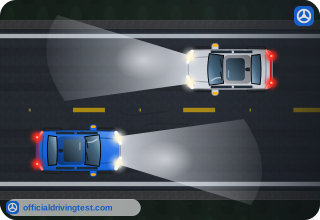
What can misaimed headlights do?
- Drain the battery faster and shorten the life of the headlight bulbs
- Make the headlights flash on and off by themselves at random times
- Make it hard for other drivers to see and reduce your ability to see the road
- Turn the high beams on automatically whenever it gets dark outside
Show answer
Correct answer: Make it hard for other drivers to see and reduce your ability to see the road
Misaimed headlights make it harder for other drivers to see and also reduce how well you can see the road.
Source: Washington Driver Guide (© 2025), page 70 · Open this page in the manual (Manual page 70)
-
According to the guide, how are smart drivers predictable to others?
- With quick lane changes and sudden stops
- By driving faster than the traffic around them
- By changing lanes without signaling when the road is clear
- With signaling and smooth movements
Show answer
Correct answer: With signaling and smooth movements
The guide says smart drivers are predictable through signaling and smooth movements.
Source: Washington Driver Guide (© 2025), page 86 · Open this page in the manual (Manual page 86)
-
Which set of things does the guide say a smart driver is able to control in their vehicle?
- Gas, brake, steering, and position
- Gas, brake, radio, and cruise control
- Speed, gears, fuel economy, and tire pressure
- Horn, wipers, headlights, and hazard flashers
Show answer
Correct answer: Gas, brake, steering, and position
The guide says smart drivers can control their vehicle’s gas, brake, steering, and position.
Source: Washington Driver Guide (© 2025), page 86 · Open this page in the manual (Manual page 86)
-
When you tow a boat, trailer, or camper, what are you responsible for following?
- Only the rules in the trailer’s sales contract
- Manufacturers’ agreements, state laws, and federal standards
- Only the laws of the county where you are registered
- Only federal standards for commercial vehicles
Show answer
Correct answer: Manufacturers’ agreements, state laws, and federal standards
A driver who tows is responsible for following manufacturers’ agreements, state laws and federal standards.
Source: Washington Driver Guide (© 2025), page 150 · Open this page in the manual (Manual page 150)
-
Which of these is a guideline a driver who is towing needs to know and follow?
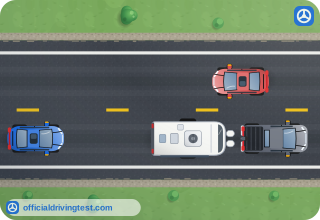
- Tow cables and taillight hookups
- Radio frequency band limits for trailers
- Seat cover materials and colors
- Tire brand and color requirements
Show answer
Correct answer: Tow cables and taillight hookups
Towing guidelines cover weight limits, vehicle restrictions, tow cables and taillight hookups, service brakes, and licensing and documentation.
Source: Washington Driver Guide (© 2025), page 150 · Open this page in the manual (Manual page 150)