Washington: Vehicle controls and equipment — Part 1 Practice Test
Questions in this part include: “What does the guide say is important to do for every vehicle you drive?” · “What does a driver monitoring system alert you to?”
Independent educational site · not affiliated with any government agency or DMV
Ready? Test yourself
Answer to start, or tap Start below:
What does the guide say is important to do for every vehicle you drive?
- Instant feedback with an explanation
- Every answer cites its source in the manual
- Your best score is saved on this device
- Keyboard: press 1 to 4 to answer and Enter for the next question
Questions are original and based on the official manual "Washington Driver Guide" (© 2025), Washington State Department of Licensing (DOL).
All 18 questions in this practice test
Take the test above first, then use this list to study. Tap “Show answer” to see the correct answer and explanation.
Show the questions and answersHide the questions
-
What does the guide say is important to do for every vehicle you drive?
- Read the manual for that vehicle
- Have it inspected by the Department of Licensing
- Register it in your own name
- Replace its tires before you drive it
Show answer
Correct answer: Read the manual for that vehicle
Vehicles differ in size, engine, safety devices and technology, so you should read the manual of each one you drive.
Source: Washington Driver Guide (© 2025), page 44 · Open this page in the manual (Manual page 44)
-
Every time you get into a vehicle, which items do you need to adjust so you have good visibility?
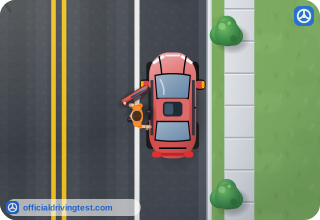
- The headlights, horn, and wipers
- The radio, vents, and window tint
- The tire pressure, gauges, and pedals
- The steering wheel, seat, and mirrors
Show answer
Correct answer: The steering wheel, seat, and mirrors
You adjust the steering wheel, seat, and mirrors for good visibility each time you get in.
Source: Washington Driver Guide (© 2025), page 44 · Open this page in the manual (Manual page 44)
-
Even with vehicle safety technology (VST) and advanced driver assistance systems (ADAS), who is still fully responsible for the operation of your vehicle?
- The vehicle manufacturer
- You, the driver
- The vehicle's safety systems
- The dealership that sold the vehicle
Show answer
Correct answer: You, the driver
These systems assist healthy driving habits but do not replace them, so the driver stays fully responsible.
Source: Washington Driver Guide (© 2025), page 45 · Open this page in the manual (Manual page 45)
-
According to the guide, what might a blind spot alert system fail to detect?
- A vehicle two lanes over that is also preparing to merge
- A vehicle in the adjacent lane
- A vehicle in your blind spot
- A vehicle in your blind spot during a lane change
Show answer
Correct answer: A vehicle two lanes over that is also preparing to merge
The guide says these systems can alert you to a vehicle in your blind spot but cannot detect a vehicle two lanes over that is also preparing to merge.
Source: Washington Driver Guide (© 2025), page 45 · Open this page in the manual (Manual page 45)
-
What can make it difficult for vehicle safety technology to function properly?
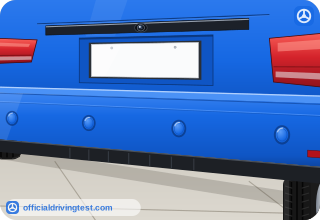
- Clean sensors and clear lane markings
- Having the features turned on all the time
- Dirty sensors or faded road markings
- Driving a vehicle with a manual transmission
Show answer
Correct answer: Dirty sensors or faded road markings
Sensors that get dirty or road markings that fade make it hard for the technology to work properly.
Source: Washington Driver Guide (© 2025), page 45 · Open this page in the manual (Manual page 45)
-
Under what condition does the guide say you might turn off VST and ADAS features?
- You are driving on a familiar road in light traffic
- Weather is so severe that alerts become a distraction
- You are driving at night on an unlit open road
- You feel confident and alert and want full control
Show answer
Correct answer: Weather is so severe that alerts become a distraction
The guide says to leave the features on unless severe weather makes their notifications a distraction.
Source: Washington Driver Guide (© 2025), page 45 · Open this page in the manual (Manual page 45)
-
What does adaptive cruise control (ACC) do?
- Monitors lane markings and gives steering input if the vehicle drifts out of its lane
- Uses cameras to read traffic signs and show speed limits to the driver
- Warns of approaching traffic from the side when backing out of a parking space
- Maintains a set speed but adjusts it based on the distance to the vehicle ahead
Show answer
Correct answer: Maintains a set speed but adjusts it based on the distance to the vehicle ahead
Adaptive cruise control keeps a set speed but changes it according to the gap to the vehicle in front, keeping a safe following distance.
Source: Washington Driver Guide (© 2025), page 46 · Open this page in the manual (Manual page 46)
-
What does lane keeping assistance do?
- Adjusts headlight brightness based on oncoming traffic and surrounding conditions
- Alerts the driver if there is a vehicle in the adjacent lane
- Gives steering input or alerts if the vehicle drifts out of its lane
- Alerts the driver if signs of drowsiness or distraction are detected
Show answer
Correct answer: Gives steering input or alerts if the vehicle drifts out of its lane
Lane keeping assistance watches lane markings and steers or alerts you if the vehicle starts to leave its lane.
Source: Washington Driver Guide (© 2025), page 46 · Open this page in the manual (Manual page 46)
-
Which vehicle technology can include automatic parallel parking?
- Parking assistance
- Cross traffic alert
- Lane keeping assistance
- Adaptive cruise control
Show answer
Correct answer: Parking assistance
Parking assistance uses sensors and cameras to guide you and can include automatic parallel parking.
Source: Washington Driver Guide (© 2025), page 46 · Open this page in the manual (Manual page 46)
-
What does traffic sign recognition help the driver stay aware of?
- Tire pressure and the fuel level in the tank
- The distance to the vehicle behind you
- Nearby parking spaces and garage exits
- Speed limits and other road regulations
Show answer
Correct answer: Speed limits and other road regulations
Traffic sign recognition uses cameras to read signs and helps you keep track of speed limits and other regulations.
Source: Washington Driver Guide (© 2025), page 46 · Open this page in the manual (Manual page 46)
-
What does a driver monitoring system alert you to?
- A vehicle in the adjacent lane
- Signs of drowsiness or distraction
- Low tire pressure
- Approaching traffic from the side
Show answer
Correct answer: Signs of drowsiness or distraction
Driver monitoring watches the driver's behavior and warns of drowsiness or distraction.
Source: Washington Driver Guide (© 2025), page 46 · Open this page in the manual (Manual page 46)
-
What does cross traffic alert warn you about?
- Approaching traffic from the side
- A vehicle two lanes over
- Signs of drowsiness
- A vehicle following too closely
Show answer
Correct answer: Approaching traffic from the side
Cross traffic alert warns of traffic approaching from the side, such as when you back out of a parking space.
Source: Washington Driver Guide (© 2025), page 46 · Open this page in the manual (Manual page 46)
-
Which of these is an example of a feature included in collision avoidance systems?
- Automatic parallel parking
- Traffic sign recognition
- Forward collision warning
- Automatic high beam control
Show answer
Correct answer: Forward collision warning
Collision avoidance systems include automatic emergency braking, forward collision warning, and lane departure warning.
Source: Washington Driver Guide (© 2025), page 46 · Open this page in the manual (Manual page 46)
-
What does automatic high beam control adjust?
- The brightness of the dashboard gauges
- Headlight brightness
- The volume of warning sounds
- The height of the headlights
Show answer
Correct answer: Headlight brightness
Automatic high beam control changes headlight brightness to suit oncoming traffic and conditions.
Source: Washington Driver Guide (© 2025), page 47 · Open this page in the manual (Manual page 47)
-
What does a collision mitigation system do?
- Detects obstacles and warns the driver to prevent collisions
- Maintains a safe following distance at a set speed
- Alerts the driver when drifting out of the lane
- Minimizes the impact if a collision is unavoidable
Show answer
Correct answer: Minimizes the impact if a collision is unavoidable
Collision mitigation goes beyond avoidance and works to reduce the impact when a collision cannot be avoided.
Source: Washington Driver Guide (© 2025), page 47 · Open this page in the manual (Manual page 47)
-
Where does the guide say to look for suggested routine maintenance for your vehicle?
- Your driver license card
- Your vehicle registration
- Your vehicle owner's manual
- Your Certificate of Ownership
Show answer
Correct answer: Your vehicle owner's manual
The guide says to consult the vehicle owner's manual for suggested routine maintenance.
Source: Washington Driver Guide (© 2025), page 47 · Open this page in the manual (Manual page 47)
-
Who is responsible for making sure your vehicle is safe to drive?
- You are
- The Department of Licensing
- The dealership that sold it
- The vehicle manufacturer
Show answer
Correct answer: You are
The guide states that making sure the vehicle is safe to drive is the driver's own responsibility.
Source: Washington Driver Guide (© 2025), page 47 · Open this page in the manual (Manual page 47)
-
What is the minimum tire tread the guide says you should have?
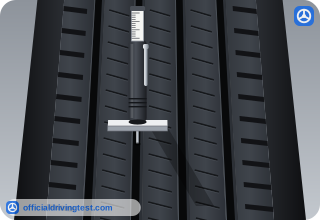
- 1/32 of an inch
- 4/32 of an inch
- 1/4 of an inch
- 2/32 of an inch
Show answer
Correct answer: 2/32 of an inch
Tire tread should not be less than 2/32 of an inch.
Source: Washington Driver Guide (© 2025), page 48 · Open this page in the manual (Manual page 48)