Pavement markings in Washington
The Washington Driver Guide shows or names everything on this page: 31 in all, on pages 125–126, 130–140, 144, 146, 149.
Independent educational site · not affiliated with any government agency or DMV
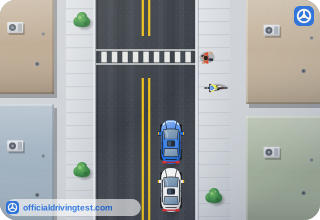
Mid-Block Crosswalk
These are crosswalks in the middle of the roadway. Pedestrians always have the right-of-way in a marked crosswalk. / Drivers should stop to allow pedestrians and bicyclists to cross, regardless of whether the crosswalk has a stop sign or not.
Manual page 125 · Open this page in the manual (Manual page 125)
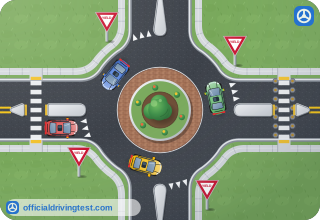
Roundabout
A roundabout is a circular intersection where all approaching vehicles yield on entry and travel counterclockwise around a raised center island. / Yield to all traffic in the roundabout.
Manual page 126 · Open this page in the manual (Manual page 126)
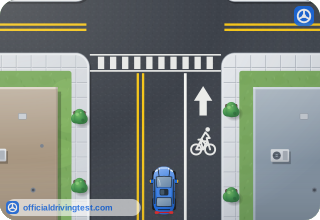
Solid White Lines at an Intersection
Solid white lines mark the edge of the road and separate bicycle lanes from other traffic.
Manual page 130 · Open this page in the manual (Manual page 130)
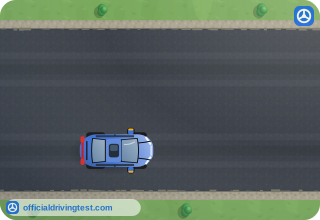
Road With No Markings
If there are no markings on the road, stay as close to the right side as safely possible.
Manual page 130 · Open this page in the manual (Manual page 130)
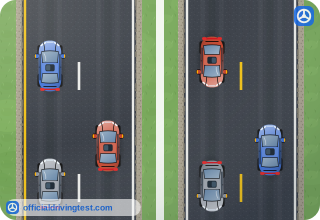
White and Yellow Lane Lines
White and yellow lines separating travel lanes or marking the center of the road tell you if traffic is traveling in one or two directions. / Yellow lines separate traffic in opposite directions. White lines separate traffic lanes moving in the same direction.
Manual page 131 · Open this page in the manual (Manual page 131)
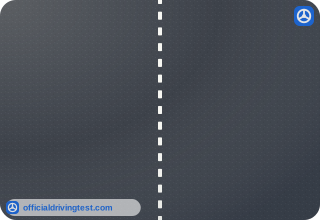
Short Dashed White Line
Shorter dashed white lines mean the lane is ending. You will either need to merge or exit. You can cross dashed lines if it is safe.
Manual page 131 · Open this page in the manual (Manual page 131)
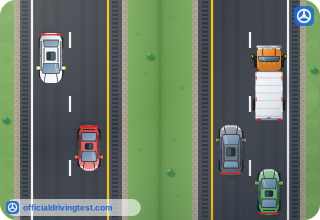
Median
Medians divide two or more roadways. They can be open spaces, cement dividers, or 18-inch solid yellow pavement markings with stripes. It’s illegal to drive within, over, or across medians.
Manual page 131 · Open this page in the manual (Manual page 131)
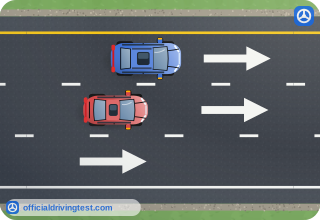
Dashed White Line
A dashed white line between lanes of traffic means you can cross it to change lanes if it is safe.
Manual page 132 · Open this page in the manual (Manual page 132)
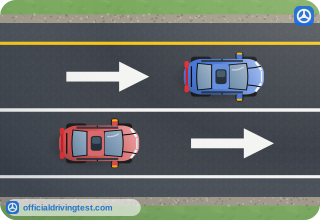
Solid White Line
A solid white line means you should stay in your lane unless a special situation requires you to change lanes.
Manual page 132 · Open this page in the manual (Manual page 132)
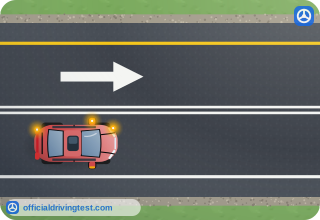
Double Solid White Lines
Double solid white lines are a barrier between lanes. It’s illegal to cross double white lines.
Manual page 132 · Open this page in the manual (Manual page 132)
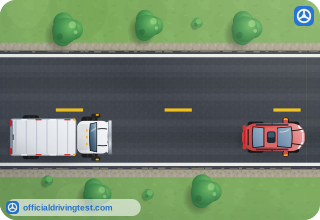
Dashed Yellow Center Line
A dashed yellow line shows the center of a two-way, two-lane road. If it’s safe, you may use the oncoming lane to pass another vehicle.
Manual page 132 · Open this page in the manual (Manual page 132)
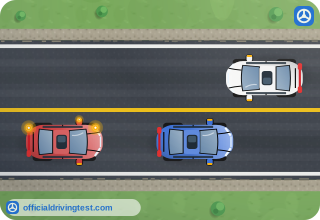
Solid Yellow Center Line
A solid yellow line can indicate the edge of the road or a no‑passing zone. Do not cross a solid yellow line to pass another vehicle.
Manual page 132 · Open this page in the manual (Manual page 132)
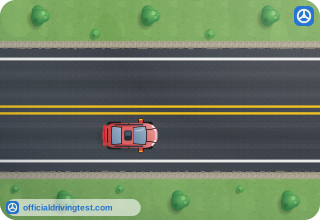
Double Solid Yellow Lines
Double solid yellow centerlines show the middle of a two-way road. You are not allowed to pass, in either direction, on roads with double yellow lines.
Manual page 132 · Open this page in the manual (Manual page 132)
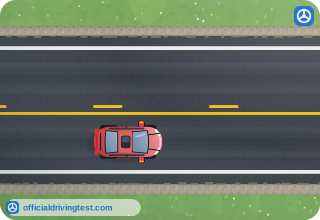
Solid and Dashed Yellow Lines
A solid yellow and a dashed yellow line also show the center of a two-way roadway. You’re not allowed to pass when the solid yellow line is on your side of the road. If the dashed line is on your side of the road, you may pass if it’s safe to do so.
Manual page 133 · Open this page in the manual (Manual page 133)
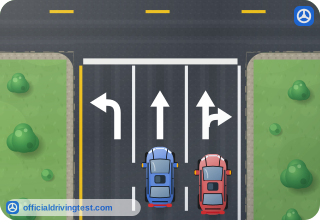
Turn Lane Arrows
Turn lanes are usually at major intersections. There are signs and road markings indicating these lanes. Sometimes an arrow signal helps control these lanes. Once you’re in a turn lane, you must follow through with the turn.
Manual page 133 · Open this page in the manual (Manual page 133)
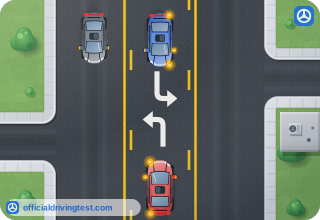
Center Turn Lane
You can cross a solid yellow line on your side of the road to get into a center lane. This lane is marked with left turn arrows. / These shared center lanes are reserved for vehicles making left turns in either direction from or into the roadway (or U-turns when they are permitted). / Keep your eyes on traffic coming the other direction because those cars also have the right to use the same turn lane. / These lanes must not be used for passing. You shouldn’t travel farther than 300 feet in a center lane.
Manual page 133 · Open this page in the manual (Manual page 133)
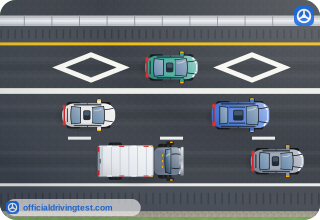
HOV Lane Diamond Markings
HOV lanes are reserved for carpools, vanpools, and buses. HOV lanes are identified by the diamond symbol on signs and on the pavement. These lanes are separated from the other lanes on the highway by a solid white line.
Manual page 134 · Open this page in the manual (Manual page 134)
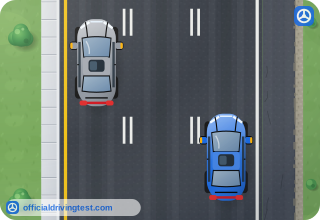
Double Dashed White Lines
Reversible lanes, like express lanes, help address traffic congestion by switching the travel direction of one or more lanes when additional capacity is needed. / These lanes are usually marked by double-dashed white lines.
Manual page 135 · Open this page in the manual (Manual page 135)
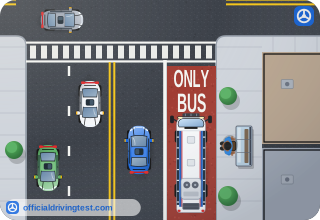
Reserved Lane
Reserved lanes are identified by signs and/or pavement markings indicating the lane is reserved for special uses. For example, transit lanes are for bus use only.
Manual page 136 · Open this page in the manual (Manual page 136)
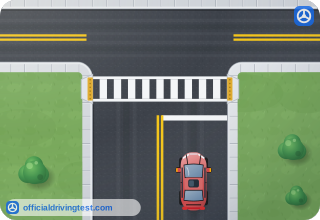
Crosswalk
Crosswalks provide a safe way for pedestrians and bicyclists to cross the road. You must yield to people in or about to enter a crosswalk. / Not all crosswalks are marked! Every intersection is legally defined as a crosswalk regardless of whether a crosswalk marking is present.
Manual page 137 · Open this page in the manual (Manual page 137)
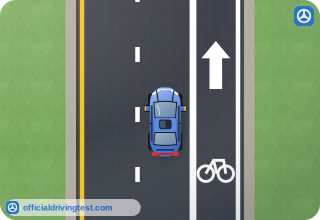
Bike Lane
Bike lanes are marked with solid white lines and bike symbols. / Watch for bicycle lanes, which are typically painted green, use solid white lines, and are marked with a bicycle symbol. Although bike lane markings vary in length, you should drive as though the markings continue. / Drive in bicycle lanes only when turning or crossing the lane to park near the curb.
Manual page 138 · Open this page in the manual (Manual page 138)
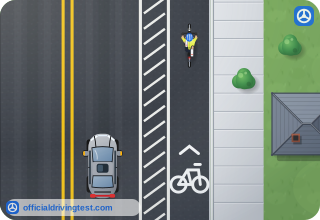
Buffered Bike Lane
Some bike lanes are separated from the adjacent travel lane with a buffer consisting of two solid white lines with diagonal crosshatching in between. This buffer is considered part of the bike lane and should not be entered unless you’re making a legal turn after checking that it’s safe to do so.
Manual page 138 · Open this page in the manual (Manual page 138)
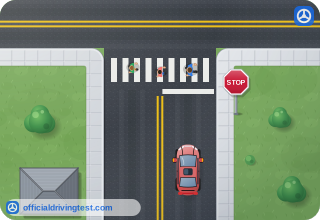
Stop Line
Stop lines appear at a stop sign or signal. You must stop before your vehicle reaches the stop line or crosswalk (if there is one).
Manual page 138 · Open this page in the manual (Manual page 138)
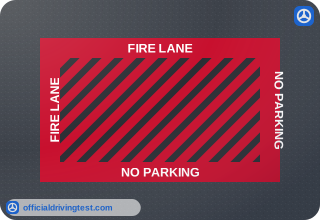
FIRE LANE NO PARKING
Fire lanes are usually marked with red stripes or a red curb. Don’t park or stop in fire lanes. In some communities, the road in front of a fire station is marked as a fire lane to keep the path clear for aid vehicles.
Manual page 138 · Open this page in the manual (Manual page 138)
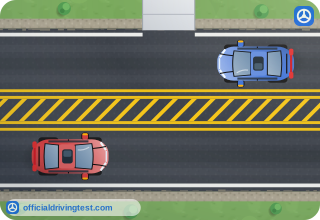
Yellow Striped Areas
Yellow stripes show where you’re not allowed to drive.
Manual page 139 · Open this page in the manual (Manual page 139)
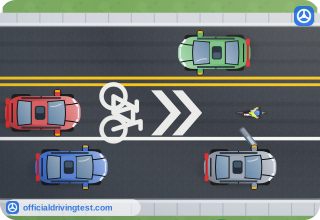
Shared Lane Marking (Sharrow)
If you see sharrow markings, watch for people riding bikes. Drive slowly and provide at least 3 feet of space when passing. / Bicycles should position themselves in line with the sharrow markings and ride in the direction the arrow is pointing.
Manual page 139 · Open this page in the manual (Manual page 139)
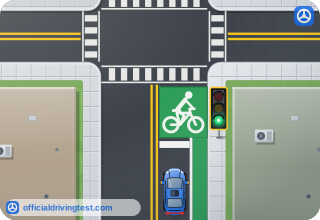
Bicycle Box
When the light turns green, bicyclists cross the intersection first and enter the bike lane on the other side of the intersection. You can’t turn right on red near a bicycle box. Stay behind the white line until the bicycle box is clear. / Bicycles should position themselves in front of vehicles at the intersection.
Manual page 140 · Open this page in the manual (Manual page 140)
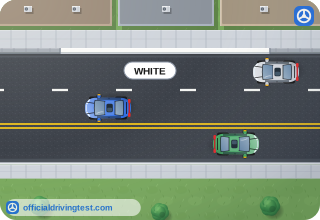
White Curb
Colored curb markings can indicate parking restrictions. / Signs or painted curbs might indicate other parking restrictions: / White means that only short stops are permitted.
Manual page 144 · Open this page in the manual (Manual page 144)
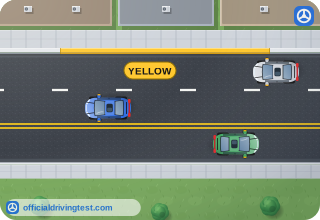
Yellow Curb
Colored curb markings can indicate parking restrictions. / Signs or painted curbs might indicate other parking restrictions: / Yellow or red indicates a loading zone or some other restriction.
Manual page 144 · Open this page in the manual (Manual page 144)
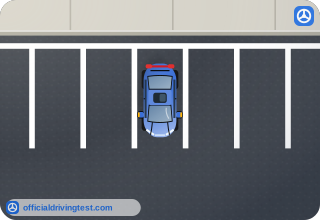
Parking Stall Lines
Center the vehicle between the painted lines.
Manual page 146 · Open this page in the manual (Manual page 146)
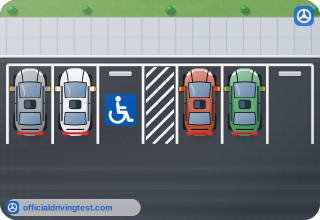
Access Aisle
The white stripes next to a reserved space, called an access aisle, must be kept clear.
Manual page 149 · Open this page in the manual (Manual page 149)