Vermont: Vehicle controls and equipment — Part 3 Practice Test
Questions in this part include: “How often must your vehicle be inspected?” · “What does the inspection sticker on a vehicle indicate?”
Independent educational site · not affiliated with any government agency or DMV
Ready? Test yourself
- Instant feedback with an explanation
- Every answer cites its source in the manual
- Your best score is saved on this device
- Keyboard: press 1 to 4 to answer and Enter for the next question
Questions are original and based on the official manual "Vermont Driver's Manual" (2025 edition (VN-007 07/2024)), Vermont Department of Motor Vehicles.
All 18 questions in this practice test
Take the test above first, then use this list to study. Tap “Show answer” to see the correct answer and explanation.
Show the questions and answersHide the questions
-
On the hill stop of the road test, after you drive to the right side of the road and stop, what are you told to do?
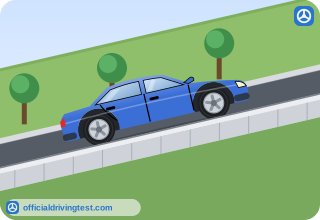
- Turn off the engine and remove the key
- Set your parking/emergency brake and shift to neutral
- Shift to reverse and release the parking brake
- Roll back slightly to test the brakes
Show answer
Correct answer: Set your parking/emergency brake and shift to neutral
The instructions are to drive to the right side, stop, set the parking/emergency brake and shift to neutral.
Source: Vermont Driver's Manual (2025 edition (VN-007 07/2024)), page 56 · Open this page in the manual (Manual page 56)
-
Which signal do you give when you drive to the right side of the road and stop for the hill start on your road test?
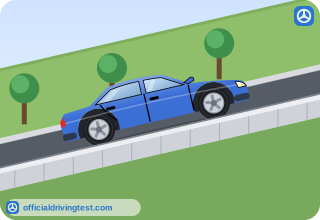
- Signal left
- Turn on your hazard lights
- Sound your horn once
- Signal right
Show answer
Correct answer: Signal right
The manual says to signal right to tell others you are pulling to the right to stop.
Source: Vermont Driver's Manual (2025 edition (VN-007 07/2024)), page 56 · Open this page in the manual (Manual page 56)
-
What must the parking/emergency brake do during the hill stop on the road test?
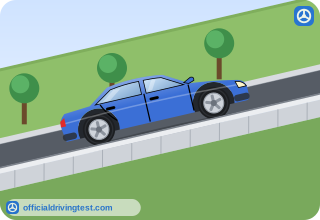
- Hold the vehicle from rolling back
- Release automatically after five seconds
- Be set only after the engine is off
- Be released before you shift to neutral
Show answer
Correct answer: Hold the vehicle from rolling back
The parking/emergency brake must hold the vehicle so it does not roll back.
Source: Vermont Driver's Manual (2025 edition (VN-007 07/2024)), page 56 · Open this page in the manual (Manual page 56)
-
Before driving up the hill on the road test, which signal do you give?
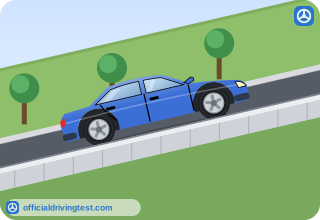
- Signal right
- Turn on your hazard lights
- Signal left
- Give no signal because the vehicle is parked
Show answer
Correct answer: Signal left
After putting the vehicle in gear, you signal left and check your mirrors and left blind spot before pulling out.
Source: Vermont Driver's Manual (2025 edition (VN-007 07/2024)), page 56 · Open this page in the manual (Manual page 56)
-
When starting up the hill on the road test, when do you release the parking brake if it is not designed to disengage automatically?
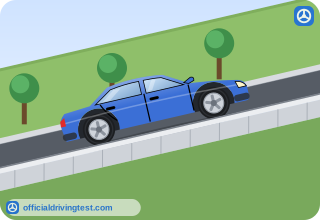
- Before you put the vehicle in gear
- Before you check your mirrors
- Only after the vehicle has started to roll backward
- After accelerating gently until the vehicle wants to move
Show answer
Correct answer: After accelerating gently until the vehicle wants to move
You accelerate gently until you feel the vehicle want to move, and then release the parking brake.
Source: Vermont Driver's Manual (2025 edition (VN-007 07/2024)), page 56 · Open this page in the manual (Manual page 56)
-
Just before driving out on the hill start, what does the manual say to do?
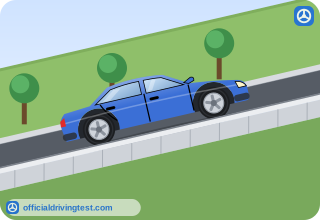
- Look over your right shoulder once
- Look over your left shoulder once again
- Sound your horn twice
- Turn your wheels toward the curb
Show answer
Correct answer: Look over your left shoulder once again
The manual says to look over your left shoulder once again before driving out.
Source: Vermont Driver's Manual (2025 edition (VN-007 07/2024)), page 56 · Open this page in the manual (Manual page 56)
-
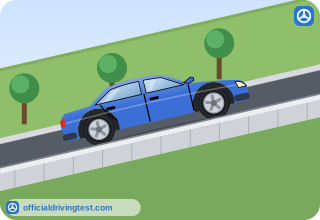
Some vehicles have a hill assist function and some parking brakes disengage automatically. How should you do the hill start?
- Always with the parking brake set by hand
- Always by rolling back slightly first
- The way your vehicle is meant to
- Always with the engine turned off
Show answer
Correct answer: The way your vehicle is meant to
The manual says to perform the hill start the way your vehicle is designed to work.
Source: Vermont Driver's Manual (2025 edition (VN-007 07/2024)), page 56 · Open this page in the manual (Manual page 56)
-
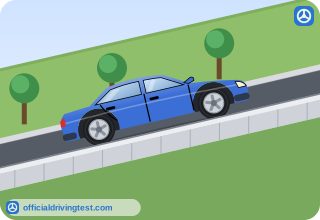
Which technique can a driver use to prevent a rollback when starting on a hill?
- Quickly move your foot from the brake to the gas
- Press the gas and brake at the same time
- Shift to neutral and wait
- Let the vehicle roll back and then accelerate hard
Show answer
Correct answer: Quickly move your foot from the brake to the gas
One technique in the manual is to move your foot quickly from the brake to the gas.
Source: Vermont Driver's Manual (2025 edition (VN-007 07/2024)), page 56 · Open this page in the manual (Manual page 56)
-
When driving downhill, what should you not do?
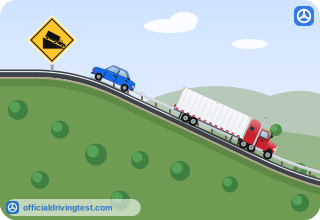
- Coast with the clutch to the floor or in neutral
- Use a lower gear to help control your speed
- Keep both hands on the steering wheel
- Check your mirrors before slowing down
Show answer
Correct answer: Coast with the clutch to the floor or in neutral
The manual says not to coast downhill with the clutch to the floor or the gearshift in neutral.
Source: Vermont Driver's Manual (2025 edition (VN-007 07/2024)), page 56 · Open this page in the manual (Manual page 56)
-
How often must your vehicle be inspected?
- Every two years
- Once a year
- Every six months
- Only when you sell it
Show answer
Correct answer: Once a year
Vermont requires every vehicle to be inspected once a year.
Source: Vermont Driver's Manual (2025 edition (VN-007 07/2024)), page 59 · Open this page in the manual (Manual page 59)
-
Within how many days of registration must all motor vehicles be inspected, unless they have a valid Vermont inspection sticker?
- 30 days
- 60 days
- 15 days
- 7 days
Show answer
Correct answer: 15 days
A vehicle without a valid Vermont inspection sticker has to be inspected within 15 days of registration.
Source: Vermont Driver's Manual (2025 edition (VN-007 07/2024)), page 59 · Open this page in the manual (Manual page 59)
-
What does the inspection sticker on a vehicle indicate?
- When you have to get the next inspection
- When the vehicle's registration expires
- When the vehicle last had an oil change
- When the vehicle's insurance must be renewed
Show answer
Correct answer: When you have to get the next inspection
The sticker shows the date by which the next inspection is due.
Source: Vermont Driver's Manual (2025 edition (VN-007 07/2024)), page 59 · Open this page in the manual (Manual page 59)
-
What may happen if your vehicle is not running properly and you are in a crash?
- Your inspection sticker is cancelled at once
- You may be found at fault in the crash
- You must retake the road test
- The other driver is found at fault automatically
Show answer
Correct answer: You may be found at fault in the crash
Passing inspection once a year does not excuse a vehicle that is not running properly, and you may be found at fault in a crash.
Source: Vermont Driver's Manual (2025 edition (VN-007 07/2024)), page 59 · Open this page in the manual (Manual page 59)
-
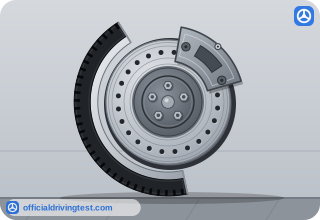
What is the most common cause of bad brakes?
- The pedal is set too high
- Brakes are used too gently
- The brake lights are burned out
- They do not operate together properly
Show answer
Correct answer: They do not operate together properly
Brakes that do not take hold together are the most common problem, and they make the vehicle swerve when braking suddenly.
Source: Vermont Driver's Manual (2025 edition (VN-007 07/2024)), page 59 · Open this page in the manual (Manual page 59)
-
To check yourself whether your brakes operate together, what should you note when traveling at a slow speed on a road with no other vehicles in sight?
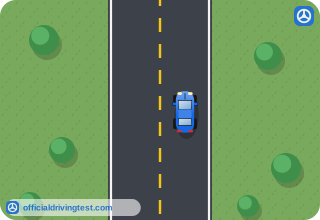
- Whether the vehicle swerves
- Whether the brake lights flash
- Whether the engine noise changes
- Whether the speedometer drops
Show answer
Correct answer: Whether the vehicle swerves
If one brake takes hold before the other, the vehicle swerves, so you watch for swerving at a slow speed with the wheel held lightly.
Source: Vermont Driver's Manual (2025 edition (VN-007 07/2024)), page 59 · Open this page in the manual (Manual page 59)
-
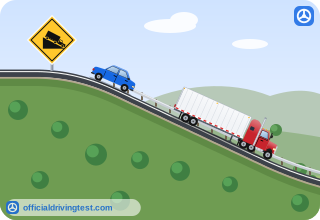
What happens if you use the brakes often on a long trip in hilly country?
- They wear evenly and last longer than normal
- They dry out and need extra brake fluid
- They overheat and will not work properly
- They adjust themselves and work better
Show answer
Correct answer: They overheat and will not work properly
Frequent braking on a long hilly trip overheats the brakes, and overheated brakes do not work properly.
Source: Vermont Driver's Manual (2025 edition (VN-007 07/2024)), page 59 · Open this page in the manual (Manual page 59)
-
What may happen if oil or grease leaks into the brakes?
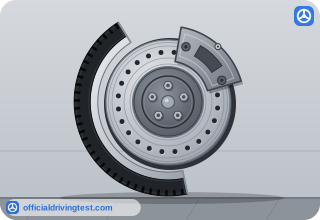
- They may grab
- They may wear out
- They may overheat
- They may fill with water
Show answer
Correct answer: They may grab
Oil or grease inside the brakes can make them grab.
Source: Vermont Driver's Manual (2025 edition (VN-007 07/2024)), page 59 · Open this page in the manual (Manual page 59)
-
If you notice that the brake pedal goes down too far, what should you do?
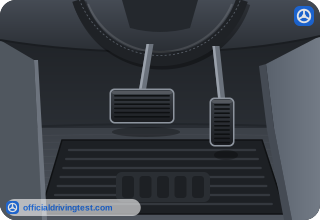
- Pump the pedal until it feels firm
- Have it checked at the next inspection
- Have the brake fluid checked at once
- Replace the brake linings yourself
Show answer
Correct answer: Have the brake fluid checked at once
A pedal that goes down too far may mean a leak, so the brake fluid should be checked right away.
Source: Vermont Driver's Manual (2025 edition (VN-007 07/2024)), page 60 · Open this page in the manual (Manual page 60)