Vermont: Vehicle controls and equipment
Mirrors, steering, turn and hand signals, headlights, and keeping the brakes, tires, lights, exhaust and other equipment in safe working order. Split into 5 shorter tests so you're not stuck in one long quiz.
Independent educational site · not affiliated with any government agency or DMV
Choose a part
Vehicle controls and equipment — Part 1
Questions in this part include: “Who is responsible for the safe operating condition of the vehicle used in the road test?”
StartVehicle controls and equipment — Part 2
Questions in this part include: “Which of these tells you whether your vehicle has anti-lock brakes (ABS)?”
StartVehicle controls and equipment — Part 3
Questions in this part include: “How often must your vehicle be inspected?”
StartVehicle controls and equipment — Part 4
Questions in this part include: “What is the minimum tread depth tires must have?”
StartVehicle controls and equipment — Part 5
Questions in this part include: “What must be true of the speedometer and odometer in your vehicle?”
StartAll 90 Vehicle controls and equipment questions with answers
Choose a part above to take a practice test, or study every question and answer here.
Show the questions and answersHide the questions
-
Who is responsible for the safe operating condition of the vehicle used in the road test?
- The operator
- The examiner
- The vehicle inspector
- The DMV
Show answer
Correct answer: The operator
The safe operating condition of the vehicle is the responsibility of the operator.
Source: Vermont Driver's Manual (2025 edition (VN-007 07/2024)), page 19 · Open this page in the manual (Manual page 19)
-
Which of these is listed as proper equipment that must be in good mechanical condition in a road test vehicle?
- Air conditioning
- Exhaust system
- A GPS unit
- A backup camera
Show answer
Correct answer: Exhaust system
The list of required equipment includes the exhaust system, among others such as headlights, horn and brakes.
Source: Vermont Driver's Manual (2025 edition (VN-007 07/2024)), page 19 · Open this page in the manual (Manual page 19)
-
Directional signals are required equipment on a road test vehicle manufactured or assembled after which date?
- January 1, 1945
- January 1, 1964
- January 1, 1975
- January 1, 1955
Show answer
Correct answer: January 1, 1955
A vehicle made or assembled after January 1, 1955 must have directional signals.
Source: Vermont Driver's Manual (2025 edition (VN-007 07/2024)), page 19 · Open this page in the manual (Manual page 19)
-
Safety belts and defrosters are required in which models of road test vehicles?
- 1964 and later models
- 1955 and later models
- 1974 and later models
- 1984 and later models
Show answer
Correct answer: 1964 and later models
Safety belts and defrosters are required in 1964 and later models.
Source: Vermont Driver's Manual (2025 edition (VN-007 07/2024)), page 19 · Open this page in the manual (Manual page 19)
-
How well must the emergency/parking brake of a road test vehicle hold the vehicle?
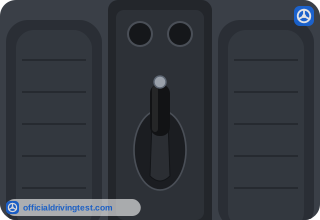
- On a level surface for at least one minute
- In neutral on any grade, uphill or downhill
- In gear on a hill facing downhill only
- In neutral only when headed uphill
Show answer
Correct answer: In neutral on any grade, uphill or downhill
The brake must hold the vehicle in neutral on any grade it is operated on, headed uphill or downhill.
Source: Vermont Driver's Manual (2025 edition (VN-007 07/2024)), page 19 · Open this page in the manual (Manual page 19)
-
What does the manual say about tinting of the front windows of a road test vehicle?
- Any tint is allowed if the vehicle is inspected
- Tint is allowed on the driver’s window only
- Tint is allowed if a parent signs a form
- Illegal tinting is not allowed
Show answer
Correct answer: Illegal tinting is not allowed
Illegal tinting of the front windows of the vehicle is not allowed.
Source: Vermont Driver's Manual (2025 edition (VN-007 07/2024)), page 19 · Open this page in the manual (Manual page 19)
-
If you look at the steering wheel as the face of a clock, which hand positions does the manual recommend?
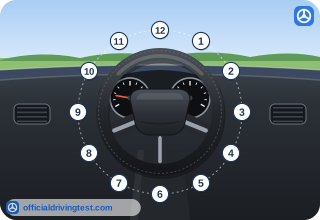
- 10 and 2 or 11 and 1
- 12 and 6 or 1 and 7
- 6 and 12 or 5 and 7
- 9 and 3 or 8 and 4
Show answer
Correct answer: 9 and 3 or 8 and 4
The manual recommends holding the wheel at 9 and 3 or at 8 and 4.
Source: Vermont Driver's Manual (2025 edition (VN-007 07/2024)), page 25 · Open this page in the manual (Manual page 25)
-
Which steering method does the manual say to use for turning?
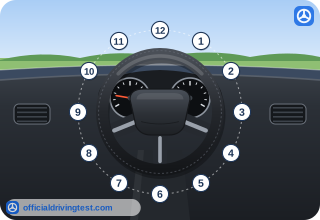
- Hand over hand steering
- One-handed steering at the top of the wheel
- Palm-of-the-hand steering on the rim
- Hand-sliding steering with one hand
Show answer
Correct answer: Hand over hand steering
The manual tells new drivers to use hand over hand steering when turning.
Source: Vermont Driver's Manual (2025 edition (VN-007 07/2024)), page 25 · Open this page in the manual (Manual page 25)
-
Which of these should you do before you drive your vehicle?
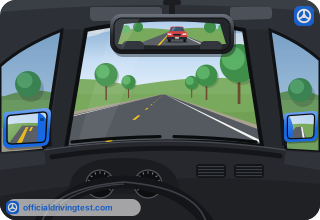
- Turn off the headlights to save the battery
- Unlock the doors so passengers can leave quickly
- Test the foot and parking/emergency brakes
- Remove the safety belt until you are moving
Show answer
Correct answer: Test the foot and parking/emergency brakes
Testing the foot brake and the parking/emergency brake is one of the readiness steps listed before driving.
Source: Vermont Driver's Manual (2025 edition (VN-007 07/2024)), page 25 · Open this page in the manual (Manual page 25)
-
Before you drive your vehicle, what should you do with the doors?
- Leave them unlocked
- Lock them
- Leave them slightly open
- Lock only the driver's door
Show answer
Correct answer: Lock them
Locking the doors is one of the readiness steps to do before driving.
Source: Vermont Driver's Manual (2025 edition (VN-007 07/2024)), page 25 · Open this page in the manual (Manual page 25)
-
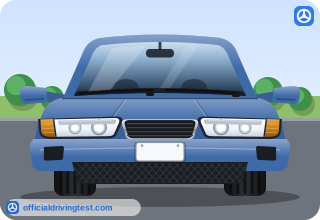
Before you drive your vehicle, what should you do with the headlights?
- Turn them off
- Set them to high beam
- Wipe them with a cloth
- Turn them on
Show answer
Correct answer: Turn them on
Turning on the headlights is one of the readiness steps to do before driving.
Source: Vermont Driver's Manual (2025 edition (VN-007 07/2024)), page 25 · Open this page in the manual (Manual page 25)
-
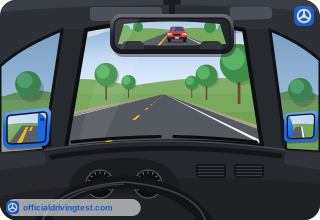
Before you drive your vehicle, which mirrors should you adjust?
- Only the rear view mirror
- Only the side mirrors
- All mirrors
- None, since mirrors are used only when backing
Show answer
Correct answer: All mirrors
The readiness list says to adjust all mirrors before driving.
Source: Vermont Driver's Manual (2025 edition (VN-007 07/2024)), page 25 · Open this page in the manual (Manual page 25)
-
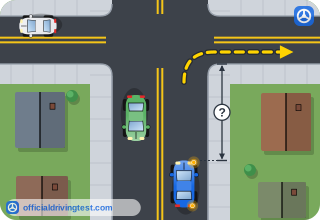
How far before making a turn or changing lanes must a driver use a turn signal, according to the law?
- Not less than 25 feet
- Not less than 50 feet
- Not less than 100 feet
- Not less than 300 feet
Show answer
Correct answer: Not less than 100 feet
The law requires a turn signal at least 100 feet before a turn or lane change.
Source: Vermont Driver's Manual (2025 edition (VN-007 07/2024)), page 26 · Open this page in the manual (Manual page 26)
-
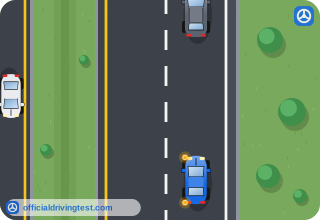
How many seconds before a turn or lane change does the manual say to signal?
- One to two seconds
- Three to five seconds
- Six to eight seconds
- Ten to twelve seconds
Show answer
Correct answer: Three to five seconds
Signaling three to five seconds ahead meets the requirement of signaling at least 100 feet before.
Source: Vermont Driver's Manual (2025 edition (VN-007 07/2024)), page 26 · Open this page in the manual (Manual page 26)
-
What does applying your brakes tell the vehicles behind you?
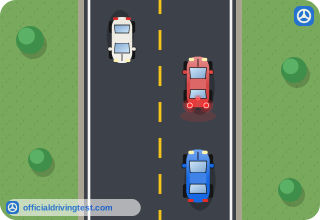
- That you are planning to turn left
- That you are planning to change lanes
- That you are about to speed up
- That you are planning to slow down or stop
Show answer
Correct answer: That you are planning to slow down or stop
Braking lets following drivers know you plan to slow down or stop.
Source: Vermont Driver's Manual (2025 edition (VN-007 07/2024)), page 26 · Open this page in the manual (Manual page 26)
-
What must you do if your vehicle's directional lights or brake lights are not working?
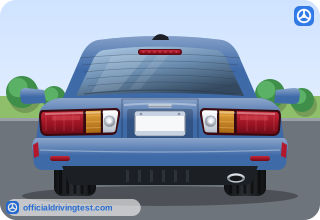
- Use hand signals to show you plan to stop or turn
- Drive only on roads with no other traffic
- Honk the horn before every stop or turn
- Keep the headlights flashing while you drive
Show answer
Correct answer: Use hand signals to show you plan to stop or turn
With broken signal or brake lights, you must use hand signals to tell others you plan to stop or turn.
Source: Vermont Driver's Manual (2025 edition (VN-007 07/2024)), page 26 · Open this page in the manual (Manual page 26)
-
How soon must directional lights or brake lights that do not work be fixed?
- Within one week
- Before the next inspection
- Immediately
- Within thirty days
Show answer
Correct answer: Immediately
Directional lights and brake lights that do not work must be fixed immediately.
Source: Vermont Driver's Manual (2025 edition (VN-007 07/2024)), page 26 · Open this page in the manual (Manual page 26)
-
What do anti-lock brakes allow you to do?
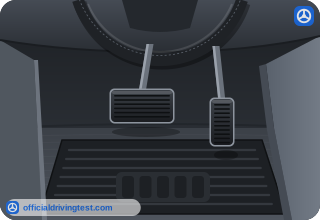
- Brake and steer at the same time
- Stop in the same distance on ice as on dry pavement
- Pump the brakes without any risk
- Drive faster on slippery roads
Show answer
Correct answer: Brake and steer at the same time
The manual calls anti-lock brakes a safety breakthrough because they let you brake and steer at the same time.
Source: Vermont Driver's Manual (2025 edition (VN-007 07/2024)), page 48 · Open this page in the manual (Manual page 48)
-
What should you expect in the brake pedal when anti-lock brakes are working?
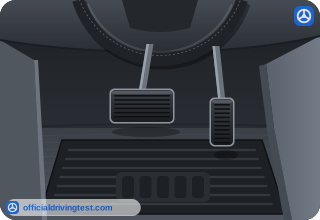
- Noise and vibration
- A sudden loss of braking power
- The pedal locking in place
- No change in the pedal at all
Show answer
Correct answer: Noise and vibration
Noise and vibration in the brake pedal are normal when the anti-lock system works.
Source: Vermont Driver's Manual (2025 edition (VN-007 07/2024)), page 48 · Open this page in the manual (Manual page 48)
-
Why should you not pump the brake or take your foot off the brake pedal in a vehicle with anti-lock brakes?
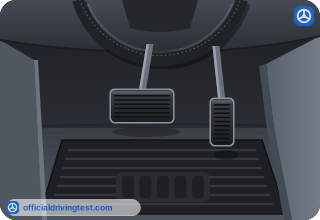
- It will lock all four wheels at once
- It will switch off the stability control
- It will disengage the anti-lock system
- It will turn on the parking brake
Show answer
Correct answer: It will disengage the anti-lock system
Pumping the brake or lifting your foot disengages the anti-lock system.
Source: Vermont Driver's Manual (2025 edition (VN-007 07/2024)), page 49 · Open this page in the manual (Manual page 49)
-
Which of these tells you whether your vehicle has anti-lock brakes (ABS)?
- The registration certificate
- Your owner’s manual
- The inspection sticker
- The tire sidewall markings
Show answer
Correct answer: Your owner’s manual
The manual says your owner's manual tells you if the vehicle has ABS.
Source: Vermont Driver's Manual (2025 edition (VN-007 07/2024)), page 49 · Open this page in the manual (Manual page 49)
-
What should the ABS warning light do when you start your vehicle?
- Stay on until you reach a certain speed
- Flash until the parking brake is released
- Stay off at all times
- Display briefly on the instrument panel
Show answer
Correct answer: Display briefly on the instrument panel
An ABS warning light normally shows briefly on the instrument panel at start-up.
Source: Vermont Driver's Manual (2025 edition (VN-007 07/2024)), page 49 · Open this page in the manual (Manual page 49)
-
Your ABS light stays on after you begin to drive. What does this mean?
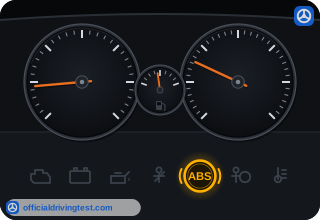
- The vehicle has no brakes at all and must be towed
- The ABS is working and has switched to emergency mode
- The ABS is working normally and the light can be ignored
- The ABS is not working, but you still have brakes
Show answer
Correct answer: The ABS is not working, but you still have brakes
A light that stays on means the ABS is not working, but the vehicle still has regular brakes.
Source: Vermont Driver's Manual (2025 edition (VN-007 07/2024)), page 49 · Open this page in the manual (Manual page 49)
-
When should parking lights be used?
- At night on any road
- Only when your vehicle is parked
- In fog, rain, or snow
- When following another vehicle
Show answer
Correct answer: Only when your vehicle is parked
The manual states that parking lights are to be used only when the vehicle is parked.
Source: Vermont Driver's Manual (2025 edition (VN-007 07/2024)), page 49 · Open this page in the manual (Manual page 49)
-
When snow, rain, and fog limit your visibility, what must you do?
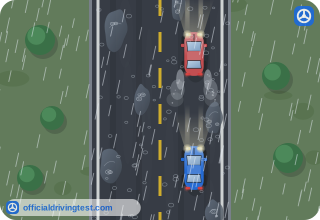
- Turn on only your parking lights
- Rely on your daytime running lights
- Turn your headlights on
- Switch to high beams only
Show answer
Correct answer: Turn your headlights on
Reduced visibility from snow, rain, or fog requires you to turn your headlights on.
Source: Vermont Driver's Manual (2025 edition (VN-007 07/2024)), page 49 · Open this page in the manual (Manual page 49)
-
What does the manual call the best practice for headlights during the day?
- Always drive with at least low beams on
- Turn headlights on only after dark
- Turn headlights on only in rain, snow, or fog
- Use daytime running lights instead of headlights
Show answer
Correct answer: Always drive with at least low beams on
The best practice is to always drive with at least your low beam headlights on, even in the daytime.
Source: Vermont Driver's Manual (2025 edition (VN-007 07/2024)), page 49 · Open this page in the manual (Manual page 49)
-
How do daytime running lights relate to your headlights?
- They come on automatically and should not be confused with headlights
- They are the same lights as the headlights, switched by hand
- They may be used instead of headlights at night
- They come on only when the parking lights are on
Show answer
Correct answer: They come on automatically and should not be confused with headlights
Daytime running lights come on by themselves and are not your headlights.
Source: Vermont Driver's Manual (2025 edition (VN-007 07/2024)), page 49 · Open this page in the manual (Manual page 49)
-
The law requires headlights to be turned on during which period?
- From sunset to sunrise
- From one hour after sunset to one hour before sunrise
- From a half hour after sunset to a half hour before sunrise
- From a half hour before sunset to a half hour after sunrise
Show answer
Correct answer: From a half hour after sunset to a half hour before sunrise
Headlights must be on from half an hour after sunset until half an hour before sunrise.
Source: Vermont Driver's Manual (2025 edition (VN-007 07/2024)), page 49 · Open this page in the manual (Manual page 49)
-
When should you use high beam headlights?
- When approaching other vehicles
- When driving in areas with streetlights
- In open country with few other vehicles
- When following another vehicle
Show answer
Correct answer: In open country with few other vehicles
High beams are for open country with few other vehicles; low beams are used near traffic, streetlights, and fog.
Source: Vermont Driver's Manual (2025 edition (VN-007 07/2024)), page 49 · Open this page in the manual (Manual page 49)
-
Which headlight setting should you always use when approaching other vehicles or pedestrians?
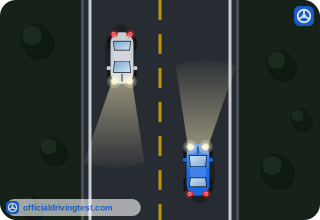
- Low beam
- High beam
- Parking lights
- Daytime running lights only
Show answer
Correct answer: Low beam
Low beam keeps you from blinding the other driver or pedestrian.
Source: Vermont Driver's Manual (2025 edition (VN-007 07/2024)), page 49 · Open this page in the manual (Manual page 49)
-
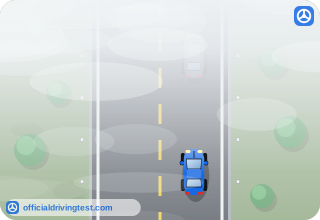
You are driving in fog. Which headlight setting does the manual say to use?
- High beam
- Parking lights
- Low beam
- Daytime running lights only
Show answer
Correct answer: Low beam
The manual says to use low beam in areas with streetlights or fog and when following another vehicle.
Source: Vermont Driver's Manual (2025 edition (VN-007 07/2024)), page 49 · Open this page in the manual (Manual page 49)
-
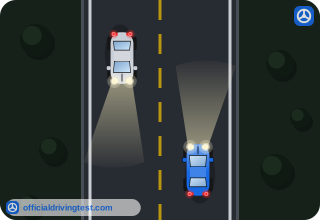
At night, what should you do with your headlights when meeting or following another vehicle?
- Leave them on high beam to see better
- Promptly dim them
- Turn them off until the vehicle passes
- Switch to parking lights only
Show answer
Correct answer: Promptly dim them
Courteous drivers promptly dim their headlights when meeting or following another vehicle at night.
Source: Vermont Driver's Manual (2025 edition (VN-007 07/2024)), page 49 · Open this page in the manual (Manual page 49)
-
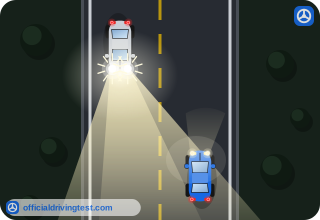
To avoid being temporarily blinded by oncoming bright lights, where should you look?
- Directly at the oncoming lights
- Toward the center line of the highway
- At your rearview mirror
- Ahead toward the right edge of the highway
Show answer
Correct answer: Ahead toward the right edge of the highway
Looking toward the right edge of the highway until the bright lights pass helps you keep your vision.
Source: Vermont Driver's Manual (2025 edition (VN-007 07/2024)), page 49 · Open this page in the manual (Manual page 49)
-
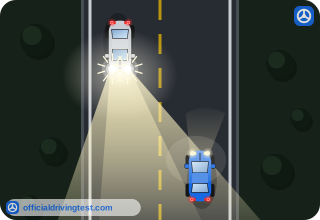
If you look directly at oncoming lights, for how long could you be blinded?
- A fraction of a second
- A few minutes
- About an hour
- Several seconds
Show answer
Correct answer: Several seconds
Looking straight at oncoming lights can blind you for several seconds.
Source: Vermont Driver's Manual (2025 edition (VN-007 07/2024)), page 49 · Open this page in the manual (Manual page 49)
-
Looking toward the right edge of the highway while bright lights go by also helps you do what?
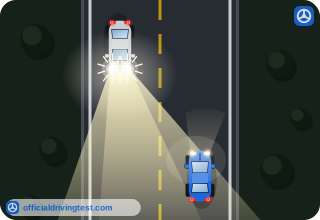
- Judge the speed of an oncoming vehicle accurately
- Detect bicyclists or pedestrians near the edge
- Find the next exit sign on the interstate sooner
- Stay in the center of your lane at night
Show answer
Correct answer: Detect bicyclists or pedestrians near the edge
This practice also helps you notice bicyclists or pedestrians who may be close to the edge of the road.
Source: Vermont Driver's Manual (2025 edition (VN-007 07/2024)), page 50 · Open this page in the manual (Manual page 50)
-
What will the examiner have you do on a hill during the road test?
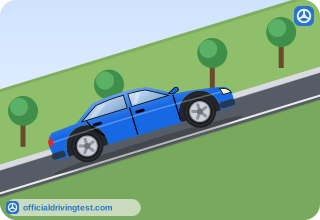
- Pass another vehicle
- Back down to the bottom of the hill
- Park and leave the vehicle
- Stop and start
Show answer
Correct answer: Stop and start
The road test includes stopping and starting on a hill.
Source: Vermont Driver's Manual (2025 edition (VN-007 07/2024)), page 56 · Open this page in the manual (Manual page 56)
-
On the hill stop of the road test, after you drive to the right side of the road and stop, what are you told to do?
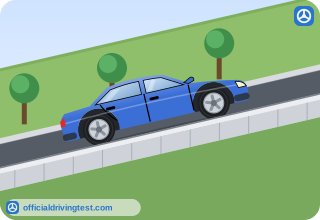
- Turn off the engine and remove the key
- Set your parking/emergency brake and shift to neutral
- Shift to reverse and release the parking brake
- Roll back slightly to test the brakes
Show answer
Correct answer: Set your parking/emergency brake and shift to neutral
The instructions are to drive to the right side, stop, set the parking/emergency brake and shift to neutral.
Source: Vermont Driver's Manual (2025 edition (VN-007 07/2024)), page 56 · Open this page in the manual (Manual page 56)
-
Which signal do you give when you drive to the right side of the road and stop for the hill start on your road test?
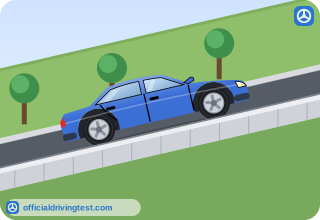
- Signal left
- Turn on your hazard lights
- Sound your horn once
- Signal right
Show answer
Correct answer: Signal right
The manual says to signal right to tell others you are pulling to the right to stop.
Source: Vermont Driver's Manual (2025 edition (VN-007 07/2024)), page 56 · Open this page in the manual (Manual page 56)
-
What must the parking/emergency brake do during the hill stop on the road test?
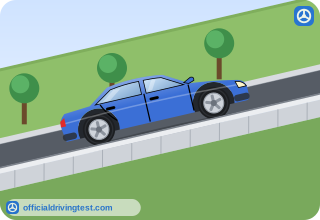
- Hold the vehicle from rolling back
- Release automatically after five seconds
- Be set only after the engine is off
- Be released before you shift to neutral
Show answer
Correct answer: Hold the vehicle from rolling back
The parking/emergency brake must hold the vehicle so it does not roll back.
Source: Vermont Driver's Manual (2025 edition (VN-007 07/2024)), page 56 · Open this page in the manual (Manual page 56)
-
Before driving up the hill on the road test, which signal do you give?
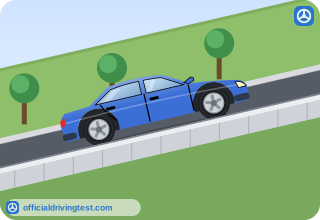
- Signal right
- Turn on your hazard lights
- Signal left
- Give no signal because the vehicle is parked
Show answer
Correct answer: Signal left
After putting the vehicle in gear, you signal left and check your mirrors and left blind spot before pulling out.
Source: Vermont Driver's Manual (2025 edition (VN-007 07/2024)), page 56 · Open this page in the manual (Manual page 56)
-
When starting up the hill on the road test, when do you release the parking brake if it is not designed to disengage automatically?
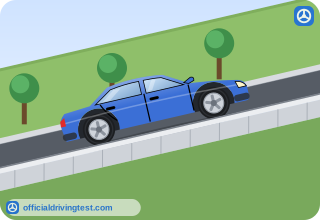
- Before you put the vehicle in gear
- Before you check your mirrors
- Only after the vehicle has started to roll backward
- After accelerating gently until the vehicle wants to move
Show answer
Correct answer: After accelerating gently until the vehicle wants to move
You accelerate gently until you feel the vehicle want to move, and then release the parking brake.
Source: Vermont Driver's Manual (2025 edition (VN-007 07/2024)), page 56 · Open this page in the manual (Manual page 56)
-
Just before driving out on the hill start, what does the manual say to do?
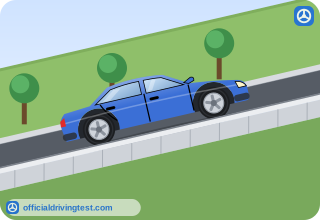
- Look over your right shoulder once
- Look over your left shoulder once again
- Sound your horn twice
- Turn your wheels toward the curb
Show answer
Correct answer: Look over your left shoulder once again
The manual says to look over your left shoulder once again before driving out.
Source: Vermont Driver's Manual (2025 edition (VN-007 07/2024)), page 56 · Open this page in the manual (Manual page 56)
-
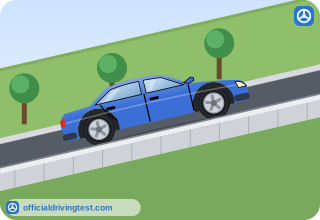
Some vehicles have a hill assist function and some parking brakes disengage automatically. How should you do the hill start?
- Always with the parking brake set by hand
- Always by rolling back slightly first
- The way your vehicle is meant to
- Always with the engine turned off
Show answer
Correct answer: The way your vehicle is meant to
The manual says to perform the hill start the way your vehicle is designed to work.
Source: Vermont Driver's Manual (2025 edition (VN-007 07/2024)), page 56 · Open this page in the manual (Manual page 56)
-
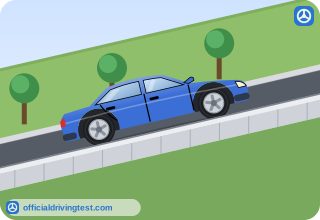
Which technique can a driver use to prevent a rollback when starting on a hill?
- Quickly move your foot from the brake to the gas
- Press the gas and brake at the same time
- Shift to neutral and wait
- Let the vehicle roll back and then accelerate hard
Show answer
Correct answer: Quickly move your foot from the brake to the gas
One technique in the manual is to move your foot quickly from the brake to the gas.
Source: Vermont Driver's Manual (2025 edition (VN-007 07/2024)), page 56 · Open this page in the manual (Manual page 56)
-
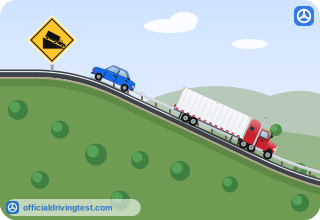
When driving downhill, what should you not do?
- Coast with the clutch to the floor or in neutral
- Use a lower gear to help control your speed
- Keep both hands on the steering wheel
- Check your mirrors before slowing down
Show answer
Correct answer: Coast with the clutch to the floor or in neutral
The manual says not to coast downhill with the clutch to the floor or the gearshift in neutral.
Source: Vermont Driver's Manual (2025 edition (VN-007 07/2024)), page 56 · Open this page in the manual (Manual page 56)
-
How often must your vehicle be inspected?
- Every two years
- Once a year
- Every six months
- Only when you sell it
Show answer
Correct answer: Once a year
Vermont requires every vehicle to be inspected once a year.
Source: Vermont Driver's Manual (2025 edition (VN-007 07/2024)), page 59 · Open this page in the manual (Manual page 59)
-
Within how many days of registration must all motor vehicles be inspected, unless they have a valid Vermont inspection sticker?
- 30 days
- 60 days
- 15 days
- 7 days
Show answer
Correct answer: 15 days
A vehicle without a valid Vermont inspection sticker has to be inspected within 15 days of registration.
Source: Vermont Driver's Manual (2025 edition (VN-007 07/2024)), page 59 · Open this page in the manual (Manual page 59)
-
What does the inspection sticker on a vehicle indicate?
- When you have to get the next inspection
- When the vehicle's registration expires
- When the vehicle last had an oil change
- When the vehicle's insurance must be renewed
Show answer
Correct answer: When you have to get the next inspection
The sticker shows the date by which the next inspection is due.
Source: Vermont Driver's Manual (2025 edition (VN-007 07/2024)), page 59 · Open this page in the manual (Manual page 59)
-
What may happen if your vehicle is not running properly and you are in a crash?
- Your inspection sticker is cancelled at once
- You may be found at fault in the crash
- You must retake the road test
- The other driver is found at fault automatically
Show answer
Correct answer: You may be found at fault in the crash
Passing inspection once a year does not excuse a vehicle that is not running properly, and you may be found at fault in a crash.
Source: Vermont Driver's Manual (2025 edition (VN-007 07/2024)), page 59 · Open this page in the manual (Manual page 59)
-
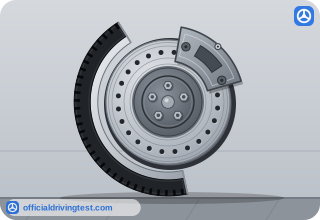
What is the most common cause of bad brakes?
- The pedal is set too high
- Brakes are used too gently
- The brake lights are burned out
- They do not operate together properly
Show answer
Correct answer: They do not operate together properly
Brakes that do not take hold together are the most common problem, and they make the vehicle swerve when braking suddenly.
Source: Vermont Driver's Manual (2025 edition (VN-007 07/2024)), page 59 · Open this page in the manual (Manual page 59)
-
To check yourself whether your brakes operate together, what should you note when traveling at a slow speed on a road with no other vehicles in sight?
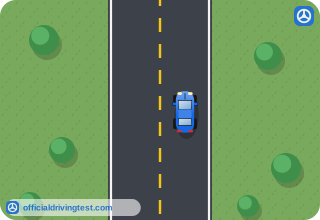
- Whether the vehicle swerves
- Whether the brake lights flash
- Whether the engine noise changes
- Whether the speedometer drops
Show answer
Correct answer: Whether the vehicle swerves
If one brake takes hold before the other, the vehicle swerves, so you watch for swerving at a slow speed with the wheel held lightly.
Source: Vermont Driver's Manual (2025 edition (VN-007 07/2024)), page 59 · Open this page in the manual (Manual page 59)
-
What happens if you use the brakes often on a long trip in hilly country?
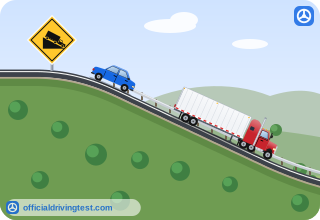
- They wear evenly and last longer than normal
- They dry out and need extra brake fluid
- They overheat and will not work properly
- They adjust themselves and work better
Show answer
Correct answer: They overheat and will not work properly
Frequent braking on a long hilly trip overheats the brakes, and overheated brakes do not work properly.
Source: Vermont Driver's Manual (2025 edition (VN-007 07/2024)), page 59 · Open this page in the manual (Manual page 59)
-
What may happen if oil or grease leaks into the brakes?
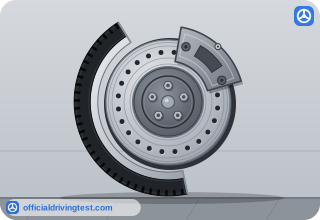
- They may grab
- They may wear out
- They may overheat
- They may fill with water
Show answer
Correct answer: They may grab
Oil or grease inside the brakes can make them grab.
Source: Vermont Driver's Manual (2025 edition (VN-007 07/2024)), page 59 · Open this page in the manual (Manual page 59)
-
If you notice that the brake pedal goes down too far, what should you do?
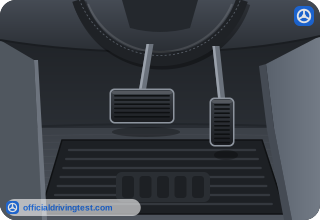
- Pump the pedal until it feels firm
- Have it checked at the next inspection
- Have the brake fluid checked at once
- Replace the brake linings yourself
Show answer
Correct answer: Have the brake fluid checked at once
A pedal that goes down too far may mean a leak, so the brake fluid should be checked right away.
Source: Vermont Driver's Manual (2025 edition (VN-007 07/2024)), page 60 · Open this page in the manual (Manual page 60)
-
What is the minimum tread depth tires must have?
- 1/32"
- 2/32"
- 4/32"
- 3/32"
Show answer
Correct answer: 2/32"
Tires must have at least 2/32 inch of tread depth.
Source: Vermont Driver's Manual (2025 edition (VN-007 07/2024)), page 60 · Open this page in the manual (Manual page 60)
-
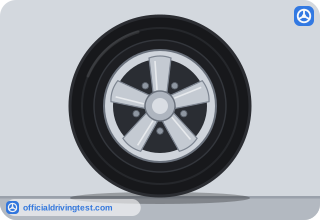
When is it not safe or legal to use a tire?
- After the tire has been repaired once
- After the tire has been moved to another wheel
- After the tire has been driven on a dirt road
- After the tread is worn down to the wear bars
Show answer
Correct answer: After the tread is worn down to the wear bars
A tire whose tread is worn off or worn down to the wear bars is neither safe nor legal to use.
Source: Vermont Driver's Manual (2025 edition (VN-007 07/2024)), page 60 · Open this page in the manual (Manual page 60)
-
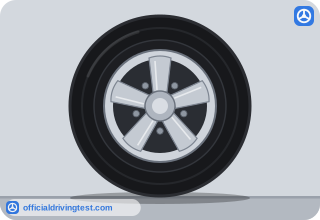
In the penny test, you place Abraham Lincoln's head first into the deepest-looking groove. If you can see all of his head, what does that mean?
- The tires have the right amount of tread
- The tires are overinflated
- The wheels are out of alignment
- The tires are too worn and should be replaced
Show answer
Correct answer: The tires are too worn and should be replaced
Seeing all of Lincoln's head means the tread is too shallow, so you should not drive on the tires and should replace them.
Source: Vermont Driver's Manual (2025 edition (VN-007 07/2024)), page 60 · Open this page in the manual (Manual page 60)
-
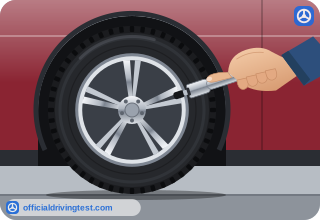
What do both overinflated and underinflated tires do?
- Improve traction and steering but wear out the brakes sooner
- Reduce traction, cause quicker tire wear, and affect steering
- Only affect steering, with no change to tire wear
- Reduce tire wear but make the wheels go out of alignment
Show answer
Correct answer: Reduce traction, cause quicker tire wear, and affect steering
Too much or too little air reduces traction, wears tires faster and affects steering.
Source: Vermont Driver's Manual (2025 edition (VN-007 07/2024)), page 60 · Open this page in the manual (Manual page 60)
-
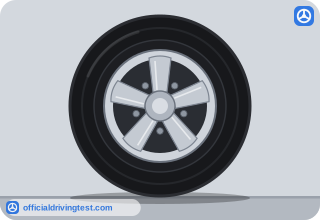
What may wavy marks on your front tires mean?
- The tires are overinflated
- The tread is worn to the wear bars
- The wheels may be out of alignment
- The brakes are overheating
Show answer
Correct answer: The wheels may be out of alignment
Wavy marks on the front tires can be a sign that the wheels are out of alignment.
Source: Vermont Driver's Manual (2025 edition (VN-007 07/2024)), page 60 · Open this page in the manual (Manual page 60)
-
If your vehicle pulls to one side or steers hard, what should you do?
- Look at your tires and have your wheels checked
- Look at your headlights and have them re-aimed
- Look at your exhaust and have it replaced
- Look at your brake fluid and have it topped up
Show answer
Correct answer: Look at your tires and have your wheels checked
A vehicle that pulls to one side or steers hard may have a tire or wheel problem, so check the tires and have the wheels checked.
Source: Vermont Driver's Manual (2025 edition (VN-007 07/2024)), page 60 · Open this page in the manual (Manual page 60)
-
What should you do if it becomes difficult to steer, or your steering wheel moves too loosely?
- Drive slowly until the problem goes away
- Have it checked by a qualified mechanic
- Wait for the next annual inspection
- Add air to all four tires
Show answer
Correct answer: Have it checked by a qualified mechanic
Hard steering or a loose steering wheel should be looked at by a qualified mechanic.
Source: Vermont Driver's Manual (2025 edition (VN-007 07/2024)), page 60 · Open this page in the manual (Manual page 60)
-
What is a good rule for how often to have your steering and "the front end" looked over?
- Once a year
- Every two years
- Every three months
- Two times a year
Show answer
Correct answer: Two times a year
The manual suggests having the steering and front end looked over twice a year.
Source: Vermont Driver's Manual (2025 edition (VN-007 07/2024)), page 60 · Open this page in the manual (Manual page 60)
-
What may happen if your headlights are aimed too high or do not go to low beam when a vehicle comes toward you?
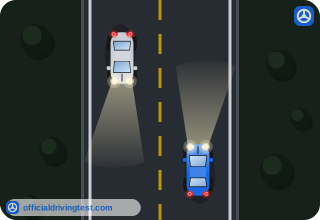
- They may blind the other driver
- Your headlights may burn out sooner
- Your tail lights may stop working
- The other driver may not see your signals
Show answer
Correct answer: They may blind the other driver
Lights aimed too high, or not dimmed for oncoming traffic, can blind the other driver.
Source: Vermont Driver's Manual (2025 edition (VN-007 07/2024)), page 60 · Open this page in the manual (Manual page 60)
-
What happens if your headlights are dim, aimed too low, or dirty?
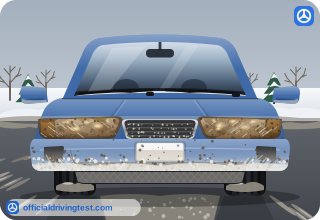
- Your headlights will blind oncoming drivers
- Your tail lights will stop working
- You cannot see as far ahead as you should
- Your high beams will turn on by themselves
Show answer
Correct answer: You cannot see as far ahead as you should
Dim, low-aimed or dirty headlights shorten how far ahead you can see.
Source: Vermont Driver's Manual (2025 edition (VN-007 07/2024)), page 60 · Open this page in the manual (Manual page 60)
-
The back license plate must be lighted so it can be seen and read from at least how far behind the vehicle?
- 50 feet
- 25 feet
- 100 feet
- 200 feet
Show answer
Correct answer: 50 feet
The rear plate light must make the plate readable from at least 50 feet behind the vehicle.
Source: Vermont Driver's Manual (2025 edition (VN-007 07/2024)), page 60 · Open this page in the manual (Manual page 60)
-
What should you do when a bulb burns out?
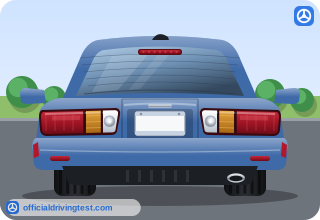
- Replace it at the next annual inspection with any similar bulb
- Replace it right away with the brightest bulb you can find
- Replace it right away with the manufacturer's recommended replacement
- Wait until it affects the other bulbs before replacing it
Show answer
Correct answer: Replace it right away with the manufacturer's recommended replacement
Burned-out bulbs should be replaced right away, using the replacements the manufacturer recommends.
Source: Vermont Driver's Manual (2025 edition (VN-007 07/2024)), page 60 · Open this page in the manual (Manual page 60)
-
Why should you keep your windshield clean?
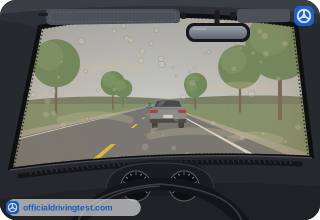
- It improves your vision only at night
- It improves your vision both day and night
- It makes the wipers last longer
- It helps the defrosters work faster
Show answer
Correct answer: It improves your vision both day and night
A clean windshield helps you see better in daytime and at night.
Source: Vermont Driver's Manual (2025 edition (VN-007 07/2024)), page 60 · Open this page in the manual (Manual page 60)
-
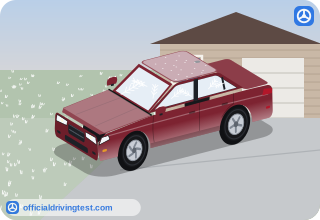
Which defrosters must be in good working order?
- Only the front defroster
- Only the rear defroster
- Only the defroster for the driver's window
- Both front and rear
Show answer
Correct answer: Both front and rear
The manual says all defrosters, front and rear, must work well.
Source: Vermont Driver's Manual (2025 edition (VN-007 07/2024)), page 60 · Open this page in the manual (Manual page 60)
-
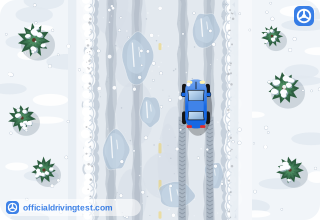
Which condition means you should not try to drive any vehicle?
- The inside of the windows has been cleaned
- The defrosters are turned on and working
- The windshield has just been washed and wiped
- Outside windows are covered with ice and snow
Show answer
Correct answer: Outside windows are covered with ice and snow
You should not drive until the window interiors are free of moisture and the outside windows are clear of ice and snow.
Source: Vermont Driver's Manual (2025 edition (VN-007 07/2024)), page 60 · Open this page in the manual (Manual page 60)
-
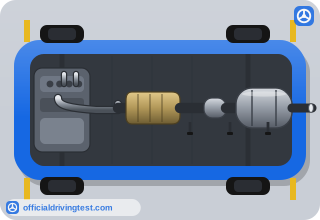
Why must the exhaust system not leak?
- The engine can overheat and stop running suddenly
- Carbon monoxide gas can enter the passenger area
- The tires can lose air and wear unevenly
- The headlights can go dim and fail to reach low beam
Show answer
Correct answer: Carbon monoxide gas can enter the passenger area
A leaking exhaust can let carbon monoxide into the passenger area, causing poisoning or death.
Source: Vermont Driver's Manual (2025 edition (VN-007 07/2024)), page 60 · Open this page in the manual (Manual page 60)
-
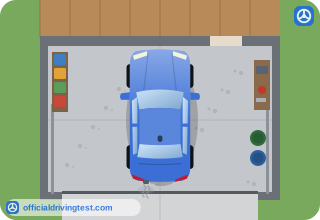
What is true about carbon monoxide gas?
- It has a strong smell of burning oil
- It only forms when the engine is cold
- You cannot smell it
- It has a sweet smell that warns you
Show answer
Correct answer: You cannot smell it
Carbon monoxide has no smell, so you cannot rely on your nose to detect it.
Source: Vermont Driver's Manual (2025 edition (VN-007 07/2024)), page 60 · Open this page in the manual (Manual page 60)
-
According to the manual, if you become drowsy or nauseous, what could it indicate?
- Carbon monoxide poisoning
- A problem with your brake linings
- Worn tires that need replacing
- Headlights that are aimed too low
Show answer
Correct answer: Carbon monoxide poisoning
Drowsiness or nausea can be a sign of carbon monoxide poisoning from a leaking exhaust.
Source: Vermont Driver's Manual (2025 edition (VN-007 07/2024)), page 60 · Open this page in the manual (Manual page 60)
-
What must be true of the speedometer and odometer in your vehicle?
- They must work properly, but only the speedometer must be visible
- They must work properly and be where the driver can see them
- They must be replaced at every annual inspection
- They must be reset to zero when the vehicle is sold
Show answer
Correct answer: They must work properly and be where the driver can see them
Both instruments have to work and be placed where the driver can see them.
Source: Vermont Driver's Manual (2025 edition (VN-007 07/2024)), page 61 · Open this page in the manual (Manual page 61)
-
What does federal law state about the numbers on an odometer?
- They must be reset when the vehicle is sold
- They must be changed every year at inspection
- They must be hidden from other drivers
- They must not be altered
Show answer
Correct answer: They must not be altered
Federal law forbids altering the numbers on an odometer.
Source: Vermont Driver's Manual (2025 edition (VN-007 07/2024)), page 61 · Open this page in the manual (Manual page 61)
-
When a vehicle is sold, who must sign an odometer statement?
- The seller and the purchaser
- Only the seller
- Only the purchaser
- The inspection mechanic and the seller
Show answer
Correct answer: The seller and the purchaser
An odometer statement has to be signed by both the seller and the purchaser.
Source: Vermont Driver's Manual (2025 edition (VN-007 07/2024)), page 61 · Open this page in the manual (Manual page 61)
-
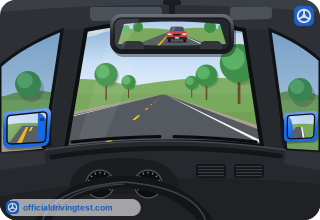
A driver has to be able to see clearly in which directions?
- To the front of the vehicle only
- To the sides of the vehicle only
- To the front and sides of the vehicle
- Through the rear window only
Show answer
Correct answer: To the front and sides of the vehicle
Nothing should be in the way of the driver's clear view to the front and sides.
Source: Vermont Driver's Manual (2025 edition (VN-007 07/2024)), page 61 · Open this page in the manual (Manual page 61)
-
Which two items must your vehicle have, according to the manual?
- A rearview mirror and a horn
- A backup camera and a rearview mirror
- A horn and a backup camera
- A radio and a horn
Show answer
Correct answer: A rearview mirror and a horn
The manual states you must have a rearview mirror and a horn.
Source: Vermont Driver's Manual (2025 edition (VN-007 07/2024)), page 61 · Open this page in the manual (Manual page 61)
-
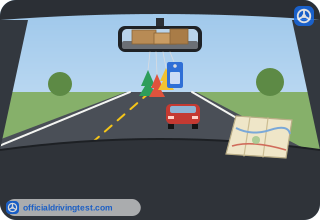
What does the law say about objects hanging from the rearview mirror or sun visors?
- Only small objects may hang from them
- Only lightweight objects may hang from them
- There shall not be anything hanging from them
- Objects may hang from the sun visors but not the mirror
Show answer
Correct answer: There shall not be anything hanging from them
The law bars anything from hanging from either the rearview mirror or the sun visors.
Source: Vermont Driver's Manual (2025 edition (VN-007 07/2024)), page 61 · Open this page in the manual (Manual page 61)
-
What is checked about the catalytic converter during the annual inspection?
- That it has been replaced within the last year
- That it is present on the vehicle
- That it is the same brand as the original
- That it was installed by a licensed mechanic
Show answer
Correct answer: That it is present on the vehicle
The inspection checks that a catalytic converter is present on vehicles that should have one.
Source: Vermont Driver's Manual (2025 edition (VN-007 07/2024)), page 61 · Open this page in the manual (Manual page 61)
-
Which of these is against federal and state law?
- Replacing a catalytic converter that has failed
- Having the gas cap examined at inspection
- Using the On Board Diagnostic system to find problems
- Disconnecting your vehicle's catalytic converter
Show answer
Correct answer: Disconnecting your vehicle's catalytic converter
Disconnecting a catalytic converter, or having a mechanic disconnect or tamper with it, is against federal and state law.
Source: Vermont Driver's Manual (2025 edition (VN-007 07/2024)), page 61 · Open this page in the manual (Manual page 61)
-
What must be done if your vehicle is supposed to have a catalytic converter and it is not present or it fails?
- It may be disconnected by a mechanic
- It may stay until the next annual inspection
- It must be inspected again in six months
- It must be replaced
Show answer
Correct answer: It must be replaced
A missing or failed catalytic converter has to be replaced.
Source: Vermont Driver's Manual (2025 edition (VN-007 07/2024)), page 61 · Open this page in the manual (Manual page 61)
-
What is examined during the annual inspection because gas can evaporate and cause air pollution?
- The vehicle's air filter
- The vehicle's gas cap
- The vehicle's oil cap
- The vehicle's fuel gauge
Show answer
Correct answer: The vehicle's gas cap
The gas cap is examined to make sure it is in good condition, since evaporating gas pollutes the air.
Source: Vermont Driver's Manual (2025 edition (VN-007 07/2024)), page 61 · Open this page in the manual (Manual page 61)
-
During the annual inspection, the On Board Diagnostic computer system (OBD) is checked to make sure what is working properly?
- The vehicle's braking and brake fluid system
- The vehicle's headlight and tail light system
- The vehicle's emissions control system
- The vehicle's steering and front end system
Show answer
Correct answer: The vehicle's emissions control system
The OBD is checked to confirm the emissions control system works, and it can pinpoint specific problem areas.
Source: Vermont Driver's Manual (2025 edition (VN-007 07/2024)), page 61 · Open this page in the manual (Manual page 61)
-
Which driving habit does the manual say conserves fuel?
- Making fast starts to reach your speed quickly
- Weaving in and out of traffic to keep moving
- Braking hard at the last possible moment
- Accelerating smoothly from a stop and braking softly
Show answer
Correct answer: Accelerating smoothly from a stop and braking softly
Smooth acceleration and soft braking conserve fuel, while fast starts, weaving and hard braking waste it.
Source: Vermont Driver's Manual (2025 edition (VN-007 07/2024)), page 68 · Open this page in the manual (Manual page 68)
-
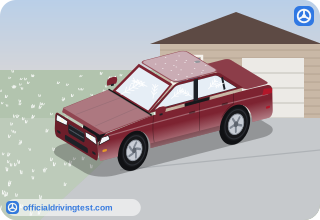
In winter weather, what does the manual say to do before starting the engine?
- Let the engine idle for 10 minutes
- Remove snow and ice from the windows
- Turn on the air conditioner
- Rev the engine to warm it faster
Show answer
Correct answer: Remove snow and ice from the windows
The manual says to remove snow and ice from the windows before starting the engine in winter weather.
Source: Vermont Driver's Manual (2025 edition (VN-007 07/2024)), page 68 · Open this page in the manual (Manual page 68)
-
The manual says to limit stationary warm-ups to how long when possible?
- 5 seconds
- 30 seconds
- 2 minutes
- 5 minutes
Show answer
Correct answer: 30 seconds
The manual advises limiting stationary warm-ups to 30 seconds when possible; driving slowly to moderately is the most efficient way to warm up.
Source: Vermont Driver's Manual (2025 edition (VN-007 07/2024)), page 68 · Open this page in the manual (Manual page 68)
-
If you are parked in town, idling for more than how long uses more fuel than shutting off and restarting?
- 1 minute
- 2 minutes
- 5 minutes
- 10 seconds
Show answer
Correct answer: 10 seconds
In town, idling for more than 10 seconds uses more fuel than turning the engine off and restarting it.
Source: Vermont Driver's Manual (2025 edition (VN-007 07/2024)), page 68 · Open this page in the manual (Manual page 68)
-
Where can you find a vehicle's recommended tire pressure, according to the manual?
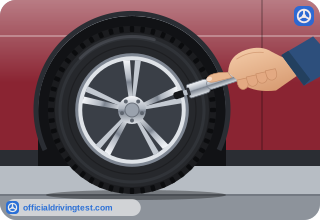
- On the placard in the driver's side door jam and in the owner's manual
- On the inspection sticker and on the registration certificate
- Under the hood, on the battery
- On the dashboard next to the odometer
Show answer
Correct answer: On the placard in the driver's side door jam and in the owner's manual
The manual says the recommended pressure is on the placard in the driver's side door jam and in the vehicle owner's manual.
Source: Vermont Driver's Manual (2025 edition (VN-007 07/2024)), page 68 · Open this page in the manual (Manual page 68)
-
What do under-inflated tires do, according to the manual?
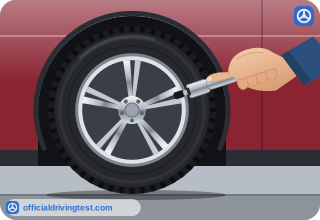
- Reduce rolling resistance, improve fuel economy and wear more rapidly
- Improve fuel economy but wear more rapidly
- Increase rolling resistance, reduce fuel economy and wear more rapidly
- Increase rolling resistance but wear more slowly
Show answer
Correct answer: Increase rolling resistance, reduce fuel economy and wear more rapidly
Under-inflated tires have more rolling resistance, which lowers fuel economy, and they wear out faster.
Source: Vermont Driver's Manual (2025 edition (VN-007 07/2024)), page 69 · Open this page in the manual (Manual page 69)
-
The manual says not to drive with the windows open unless you keep your speed under what?
- 30 mph
- 40 mph
- 60 mph
- 50 mph
Show answer
Correct answer: 50 mph
Open windows at highway speeds add aerodynamic drag and lower fuel economy, so the manual says to stay under 50 mph if you drive with them open.
Source: Vermont Driver's Manual (2025 edition (VN-007 07/2024)), page 69 · Open this page in the manual (Manual page 69)