Vermont: Sharing the road — Part 3 Practice Test
Questions in this part include: “How does the manual say to think of a motorcycle that is in motion?”
Independent educational site · not affiliated with any government agency or DMV
Ready? Test yourself
- Instant feedback with an explanation
- Every answer cites its source in the manual
- Your best score is saved on this device
- Keyboard: press 1 to 4 to answer and Enter for the next question
Questions are original and based on the official manual "Vermont Driver's Manual" (2025 edition (VN-007 07/2024)), Vermont Department of Motor Vehicles.
All 17 questions in this practice test
Take the test above first, then use this list to study. Tap “Show answer” to see the correct answer and explanation.
Show the questions and answersHide the questions
-
Why do motorcyclists often adjust their position within a lane?
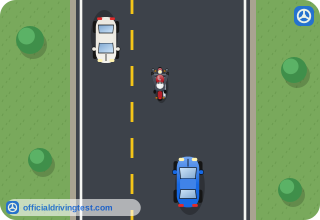
- To be seen more easily and to reduce the effects of wind and road debris
- To show off to the other drivers who are sharing the road with them
- To pass other vehicles that are sharing the same lane with them
- To avoid having to use their turn signals at turns
Show answer
Correct answer: To be seen more easily and to reduce the effects of wind and road debris
Lane position changes by motorcyclists have a purpose and are not reckless.
Source: Vermont Driver's Manual (2025 edition (VN-007 07/2024)), page 42 · Open this page in the manual (Manual page 42)
-
Because of its small size, how does a motorcycle seem to be moving?
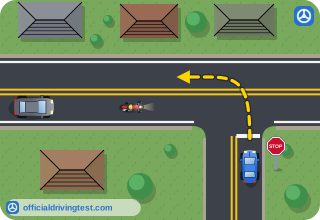
- Slower than it really is
- At the same speed as a car
- Faster than it really is
- Erratically
Show answer
Correct answer: Faster than it really is
Small size makes a motorcycle appear to move faster than it is.
Source: Vermont Driver's Manual (2025 edition (VN-007 07/2024)), page 42 · Open this page in the manual (Manual page 42)
-
Which of these does the manual list as something that can hide a motorcycle from a driver?
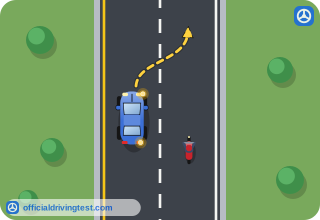
- Painted lane lines
- Reflective lane markers
- Rumble strips
- Door posts
Show answer
Correct answer: Door posts
Door posts, mirrors, passengers, bushes, trees, parked cars, fences, bridges and blind spots can hide a motorcycle.
Source: Vermont Driver's Manual (2025 edition (VN-007 07/2024)), page 42 · Open this page in the manual (Manual page 42)
-
What should you predict when you see two people on a motorcycle, especially near intersections?
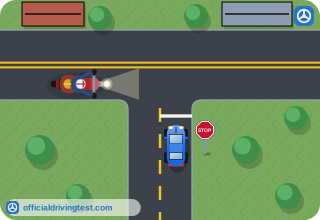
- Faster acceleration and shorter stopping distance
- Easier balance because of the added weight
- More problems, because balance and stopping are harder
- Fewer problems because the rider is more careful
Show answer
Correct answer: More problems, because balance and stopping are harder
A passenger makes balance harder, increases stopping distance and reduces maneuverability.
Source: Vermont Driver's Manual (2025 edition (VN-007 07/2024)), page 42 · Open this page in the manual (Manual page 42)
-
How do the small, usually convex mirrors on a motorcycle affect what the rider sees of you?
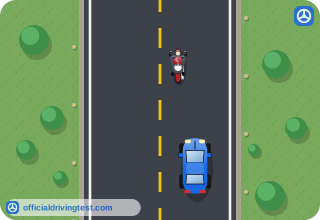
- They give a larger image of your vehicle and make you appear closer
- They give a smaller image and make you appear farther back than you are
- They make you appear closer to the motorcycle than you are
- They show the rider nothing of the traffic behind
Show answer
Correct answer: They give a smaller image and make you appear farther back than you are
Convex mirrors make you seem farther back than you actually are.
Source: Vermont Driver's Manual (2025 edition (VN-007 07/2024)), page 42 · Open this page in the manual (Manual page 42)
-
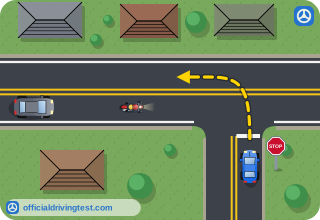
Why might some drivers not see a motorcycle?
- Motorcycles are not allowed to ride in traffic lanes
- Motorcycles have no headlights that other drivers can see
- Motorcyclists try to avoid being seen by other drivers
- They do not "recognize" it and ignore it, usually unintentionally
Show answer
Correct answer: They do not "recognize" it and ignore it, usually unintentionally
There are many more cars and trucks than motorcycles, so some drivers overlook them.
Source: Vermont Driver's Manual (2025 edition (VN-007 07/2024)), page 42 · Open this page in the manual (Manual page 42)
-
At night, why might you miss a motorcycle?
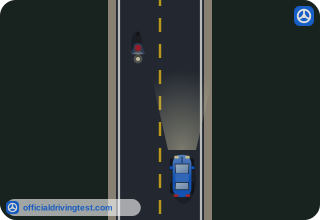
- Single lights can blend into the lights of other traffic
- Motorcycles are required to drive without any lights on
- Motorcycles must use only dim lights after dark
- Motorcycles are not allowed on the road at night
Show answer
Correct answer: Single lights can blend into the lights of other traffic
Odd lights in traffic could be a motorcycle.
Source: Vermont Driver's Manual (2025 edition (VN-007 07/2024)), page 42 · Open this page in the manual (Manual page 42)
-
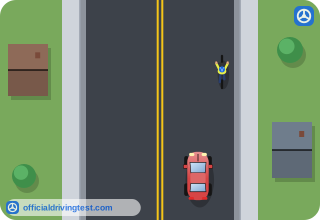
Compared with other vehicles, why are bicycles harder for drivers to notice?
- They use brighter lights than other vehicles
- They always ride on sidewalks
- They are required to stay out of travel lanes
- They are quieter and less visible, especially at night
Show answer
Correct answer: They are quieter and less visible, especially at night
The manual notes that bicycles are quieter and less visible.
Source: Vermont Driver's Manual (2025 edition (VN-007 07/2024)), page 40 · Open this page in the manual (Manual page 40)
-
How much of a lane is a motorcycle entitled to?
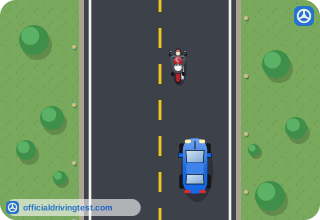
- A full lane
- Half of a lane
- Only the center of the lane
- Whatever room a car leaves it
Show answer
Correct answer: A full lane
The manual says motorcycles are entitled to a full lane.
Source: Vermont Driver's Manual (2025 edition (VN-007 07/2024)), page 43 · Open this page in the manual (Manual page 43)
-
When you pass a motorcycle, what should you do?
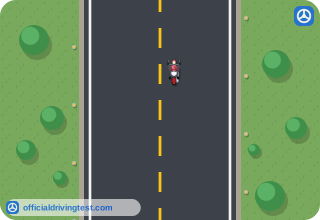
- Stay partly in its lane to pass faster
- Pass on the shoulder beside it
- Change lanes completely
- Pass at the same speed in the same lane
Show answer
Correct answer: Change lanes completely
The manual says to change lanes completely when passing a motorcycle, not to share its lane.
Source: Vermont Driver's Manual (2025 edition (VN-007 07/2024)), page 43 · Open this page in the manual (Manual page 43)
-
Just after you have overtaken a motorcycle, what should you never do?
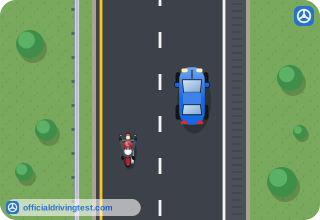
- Signal before you change lanes
- Cut in too closely in front of it
- Leave plenty of room
- Return to your lane gradually
Show answer
Correct answer: Cut in too closely in front of it
Pulling in right in front of the rider leaves too little room, so the manual says never to cut in too closely.
Source: Vermont Driver's Manual (2025 edition (VN-007 07/2024)), page 43 · Open this page in the manual (Manual page 43)
-
What should you use to alert a motorcycle rider that you intend to pass, change lanes or turn?
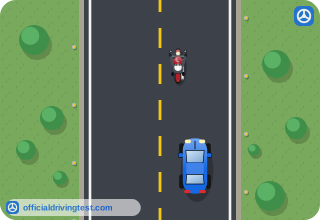
- Your horn
- Your high beams
- Your hazard lights
- Your turn signals
Show answer
Correct answer: Your turn signals
The manual tells drivers to use their turn signals to alert a rider of their intention to pass, change lanes or turn.
Source: Vermont Driver's Manual (2025 edition (VN-007 07/2024)), page 43 · Open this page in the manual (Manual page 43)
-
A motorcyclist is passing you. What should you never try to do?
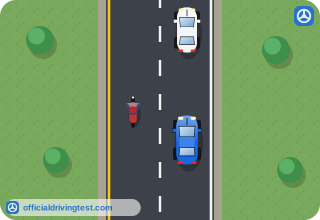
- Speed up to stay ahead of it
- Give the rider plenty of room to pass
- Stay in your own lane as it passes
- Keep a steady speed as it passes you
Show answer
Correct answer: Speed up to stay ahead of it
You should allow a passing motorcyclist plenty of room and never speed up to stay ahead of the motorcycle.
Source: Vermont Driver's Manual (2025 edition (VN-007 07/2024)), page 43 · Open this page in the manual (Manual page 43)
-
How does the manual say to think of a motorcycle that is in motion?
- As a small car
- As a bicycle
- As a person
- As a moving obstacle
Show answer
Correct answer: As a person
The manual reminds drivers that a rider is a person, not just a motorcycle.
Source: Vermont Driver's Manual (2025 edition (VN-007 07/2024)), page 43 · Open this page in the manual (Manual page 43)
-
Which statement about large trucks is true, according to the manual?
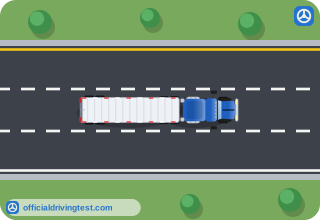
- The bigger the truck is, the smaller the driver's blind spots
- The bigger the truck is, the less room it needs to maneuver
- The bigger the truck is, the less time it takes you to pass it
- The bigger the truck is, the longer it takes the truck to stop
Show answer
Correct answer: The bigger the truck is, the longer it takes the truck to stop
A bigger truck has bigger blind spots, needs more room, takes longer to stop and takes longer to pass.
Source: Vermont Driver's Manual (2025 edition (VN-007 07/2024)), page 43 · Open this page in the manual (Manual page 43)
-
What are the "No-Zones" around a large truck?
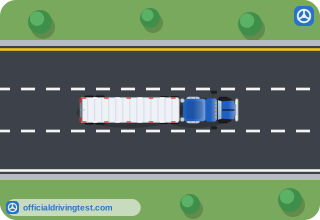
- Its blind spots at the front, back and sides
- The areas where trucks may not drive
- The lanes reserved for trucks
- Places where you may not pass a truck
Show answer
Correct answer: Its blind spots at the front, back and sides
No-Zones are the blind spots around the front, back and sides of a truck, where the driver cannot see you.
Source: Vermont Driver's Manual (2025 edition (VN-007 07/2024)), page 43 · Open this page in the manual (Manual page 43)
-
If you cannot see a large truck's rear (side) view mirrors, what does that mean?
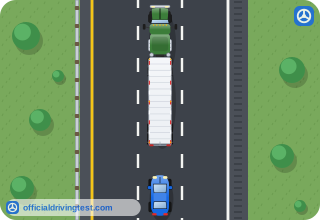
- The truck driver can see you in the mirrors
- The truck is about to stop
- The truck driver cannot see you
- The truck is slowing for a turn
Show answer
Correct answer: The truck driver cannot see you
If you cannot see the truck's mirrors, you are in a blind spot and the driver cannot see you.
Source: Vermont Driver's Manual (2025 edition (VN-007 07/2024)), page 43 · Open this page in the manual (Manual page 43)