Vermont: Sharing the road
Bicycles, motorcycles, large trucks and their No-Zones, school buses, farm and slow-moving vehicles, horses and animals. Split into 5 shorter tests so you're not stuck in one long quiz.
Independent educational site · not affiliated with any government agency or DMV
Choose a part
Sharing the road — Part 1
Questions in this part include: “What is a visual search pattern?”
StartSharing the road — Part 2
Questions in this part include: “Is a license required to ride a bicycle, according to the manual?”
StartSharing the road — Part 3
Questions in this part include: “How does the manual say to think of a motorcycle that is in motion?”
StartSharing the road — Part 4
Questions in this part include: “How is a slow moving vehicle such as a tractor identified?”
StartSharing the road — Part 5
Questions in this part include: “What rights does a person riding an animal or driving an animal drawn vehicle have on a public highway?”
StartAll 85 Sharing the road questions with answers
Choose a part above to take a practice test, or study every question and answer here.
Show the questions and answersHide the questions
-
If traffic is backing up behind you because you are driving slowly, what are you required by law to do?
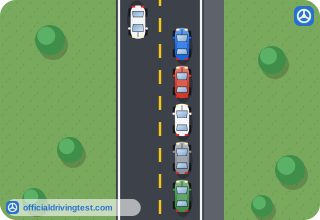
- Speed up to the posted limit until traffic clears
- Pull over when it is safe and let following vehicles go by
- Stop in your lane and wave the vehicles around you
- Turn on your hazard lights and stay in your lane
Show answer
Correct answer: Pull over when it is safe and let following vehicles go by
A slow driver who is holding up traffic must pull to the side when it is safe and let the vehicles behind pass.
Source: Vermont Driver's Manual (2025 edition (VN-007 07/2024)), page 25 · Open this page in the manual (Manual page 25)
-
What is a visual search pattern?
- An orderly way to search for hazards in all directions
- A way to read road signs from far away
- A method of judging the speed of other vehicles
- A routine for checking the vehicle's mirrors only
Show answer
Correct answer: An orderly way to search for hazards in all directions
A visual search pattern is an orderly way to look for hazards in every direction and notice changing conditions.
Source: Vermont Driver's Manual (2025 edition (VN-007 07/2024)), page 27 · Open this page in the manual (Manual page 27)
-
What does the manual say about passing a school bus that has stopped with its red warning lights on?
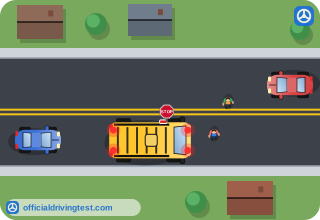
- It is allowed on a road with only two lanes
- It is allowed if you slow to 10 mph or less
- It is against the law to pass it from any direction
- It is allowed if no children are visible nearby
Show answer
Correct answer: It is against the law to pass it from any direction
Never pass a stopped school bus with red lights on, from any direction (with the divided-highway exception).
Source: Vermont Driver's Manual (2025 edition (VN-007 07/2024)), page 39 · Open this page in the manual (Manual page 39)
-
A school bus on the highway is about to pick up or discharge students. What does the driver activate first?
- Alternately flashing red lights
- Alternately flashing yellow lights
- Steady yellow hazard lights
- The horn
Show answer
Correct answer: Alternately flashing yellow lights
The yellow lights come first, while the bus slows, so you should prepare to stop.
Source: Vermont Driver's Manual (2025 edition (VN-007 07/2024)), page 39 · Open this page in the manual (Manual page 39)
-
You see the alternately flashing yellow lights of a school bus that is slowing down. What should you do?
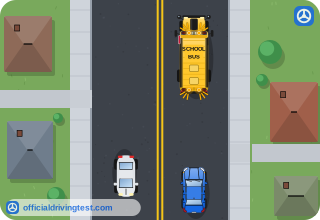
- Speed up to pass the bus
- Stop at once with your hazards on
- Ignore them, because the lights are only for the bus driver
- Prepare to stop
Show answer
Correct answer: Prepare to stop
The yellow lights warn that the bus will stop and the red lights will follow.
Source: Vermont Driver's Manual (2025 edition (VN-007 07/2024)), page 39 · Open this page in the manual (Manual page 39)
-
A school bus has stopped and its alternately flashing red warning lights have been activated. What must you do?
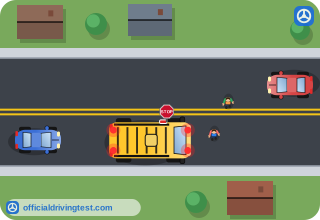
- Stop your vehicle
- Slow down and pass with care
- Stop only if students are in the road
- Pass if the bus is on your left
Show answer
Correct answer: Stop your vehicle
Once the red warning lights are on, you must stop.
Source: Vermont Driver's Manual (2025 edition (VN-007 07/2024)), page 40 · Open this page in the manual (Manual page 40)
-
You are in a school yard and a stopped school bus has its alternately flashing red warning lights activated. What does the manual say?
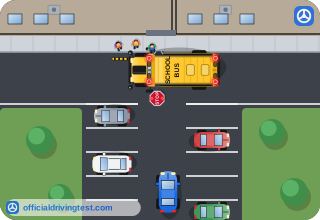
- You may pass if driving under 10 mph
- You may pass because it is not a public road
- You must not pass the bus
- You may pass if the children are on the other side
Show answer
Correct answer: You must not pass the bus
A school yard is no exception: you must not pass a stopped school bus with flashing red lights.
Source: Vermont Driver's Manual (2025 edition (VN-007 07/2024)), page 40 · Open this page in the manual (Manual page 40)
-
When do you NOT have to stop for a school bus with its red lights flashing?
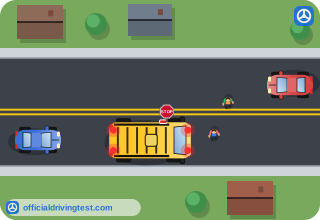
- On any road that has a posted speed limit above 40 mph
- On a divided highway when the bus is traveling in the opposite direction
- On a road with more than two lanes in each direction
- When the bus is stopped at a railroad crossing ahead of you on the road
Show answer
Correct answer: On a divided highway when the bus is traveling in the opposite direction
The manual names the divided highway with the bus going the other way as an exception.
Source: Vermont Driver's Manual (2025 edition (VN-007 07/2024)), page 40 · Open this page in the manual (Manual page 40)
-
Where do bicyclists have the right to operate under state law?
- On all roads, unless specially prohibited
- Only on roads with a bike lane
- Only on roads with a speed limit under 35 mph
- Only on roads with no sidewalk
Show answer
Correct answer: On all roads, unless specially prohibited
Bicyclists may use all roads except where prohibited, such as limited-access highways.
Source: Vermont Driver's Manual (2025 edition (VN-007 07/2024)), page 40 · Open this page in the manual (Manual page 40)
-
Which type of road is given as an example where bicyclists are prohibited?
- Residential streets with no sidewalks
- Roads that have a narrow bridge
- Limited-access highways like the Interstate
- Roads with a 25 mph speed limit
Show answer
Correct answer: Limited-access highways like the Interstate
The manual names limited-access highways such as the Interstate as places bicyclists are prohibited.
Source: Vermont Driver's Manual (2025 edition (VN-007 07/2024)), page 40 · Open this page in the manual (Manual page 40)
-
How do traffic rules and regulations apply to bicyclists?
- Bicyclists are exempt from most of the rules that drivers follow
- The same rules that apply to vehicle drivers apply to them
- Only the signal rules apply to bicyclists
- The rules apply only on roads without sidewalks
Show answer
Correct answer: The same rules that apply to vehicle drivers apply to them
Bicyclists have the same rights and duties as motor vehicle operators.
Source: Vermont Driver's Manual (2025 edition (VN-007 07/2024)), page 40 · Open this page in the manual (Manual page 40)
-
Why should you not honk at a bicyclist unless you have good cause to warn them?
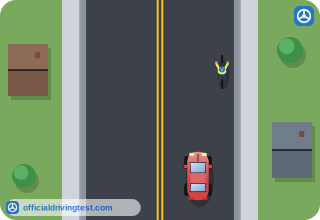
- Honking at a bicyclist is against the law
- Bicyclists are never able to hear a car horn
- The horn would make the driver lose attention on the road
- The loud noise could startle the rider and cause a loss of control
Show answer
Correct answer: The loud noise could startle the rider and cause a loss of control
A sudden loud noise may make the bicyclist lose control.
Source: Vermont Driver's Manual (2025 edition (VN-007 07/2024)), page 40 · Open this page in the manual (Manual page 40)
-
As a driver, why should you drive defensively around a bicyclist?
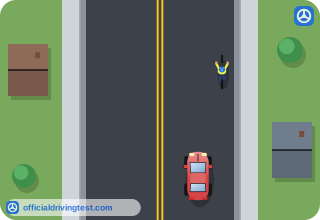
- Because the slightest mistake could cause serious injury or death
- Because bicyclists are required to ride on the shoulder
- Because bicyclists always travel faster than cars
- Because bicyclists may not use the road at night
Show answer
Correct answer: Because the slightest mistake could cause serious injury or death
Bicycles are quieter and less visible than other vehicles, so mistakes can be deadly.
Source: Vermont Driver's Manual (2025 edition (VN-007 07/2024)), page 40 · Open this page in the manual (Manual page 40)
-
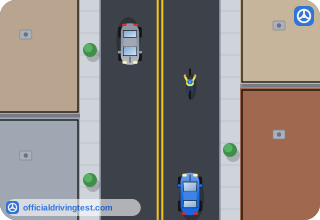
Which of these is given as a reason a bicyclist may ride toward the center of the lane?
- To keep drivers from passing at any time
- To avoid the need for hand signals
- Roadway hazards that motorists cannot see
- Because bicycles must always use the center of the lane
Show answer
Correct answer: Roadway hazards that motorists cannot see
Hazards not visible to motorists, or correct lane position, can be reasons to ride in the travel lane.
Source: Vermont Driver's Manual (2025 edition (VN-007 07/2024)), page 40 · Open this page in the manual (Manual page 40)
-
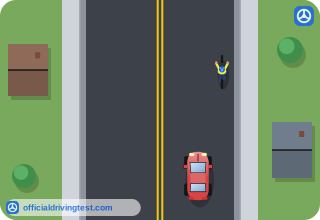
Which of these is named as a hazard for cyclists that you should give adequate space to maneuver around?
- Painted crosswalks
- Drain grates
- Wide shoulders
- Bike racks
Show answer
Correct answer: Drain grates
Potholes, drain grates, railroad tracks and narrow bridges or roadways are hazardous to cyclists.
Source: Vermont Driver's Manual (2025 edition (VN-007 07/2024)), page 40 · Open this page in the manual (Manual page 40)
-
What does the manual say a bicyclist making a left turn should do?
- Move to the right edge of the road and wait for traffic to clear
- Dismount at the curb and walk the bicycle across the intersection
- Stay in the right lane and turn from there
- Signal and move to the left side of the lane or into the turning lane
Show answer
Correct answer: Signal and move to the left side of the lane or into the turning lane
This is the proper maneuver, and the cyclist should be allowed to finish before motor vehicles overtake.
Source: Vermont Driver's Manual (2025 edition (VN-007 07/2024)), page 40 · Open this page in the manual (Manual page 40)
-
How much passing space does the manual say to leave between your vehicle and a bicyclist?
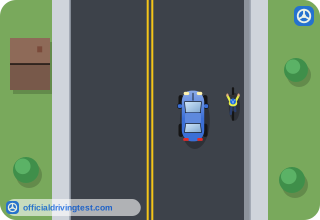
- At least four feet
- At least one foot
- At least two feet
- At least ten feet
Show answer
Correct answer: At least four feet
The manual calls for at least four feet of passing space.
Source: Vermont Driver's Manual (2025 edition (VN-007 07/2024)), page 40 · Open this page in the manual (Manual page 40)
-
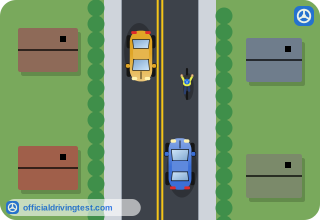
The road is too narrow for motor vehicles and bicycles to ride safely side by side. What should you do?
- Pass closely and sound your horn to warn the bicyclist
- Pass the bicyclist on the shoulder of the road
- Wait until it is safe to pass without forcing the bicyclist off the road
- Follow the bicyclist closely until you come to a wider road ahead
Show answer
Correct answer: Wait until it is safe to pass without forcing the bicyclist off the road
You may not squeeze the bicyclist off the road; wait for a safe chance to pass.
Source: Vermont Driver's Manual (2025 edition (VN-007 07/2024)), page 40 · Open this page in the manual (Manual page 40)
-
Two bicyclists are riding side by side ahead of you. What does the manual say?
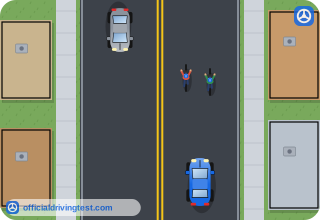
- It is illegal, so you may honk to make them separate and ride single file
- This is legal; slow down until it is safe to pass, or give them time to adjust
- You may pass at once on the right side of them
- They must stop at the side of the road until you pass
Show answer
Correct answer: This is legal; slow down until it is safe to pass, or give them time to adjust
Two bicyclists may legally ride side by side, so you slow down and pass only when it is safe.
Source: Vermont Driver's Manual (2025 edition (VN-007 07/2024)), page 41 · Open this page in the manual (Manual page 41)
-
Which of these is listed as a common error that could cause you to strike a bicyclist?
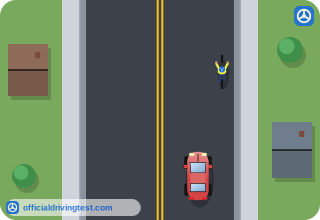
- Opening a vehicle door into the path of a bicyclist
- Passing a bicyclist with four feet of space
- Slowing down when you approach a bicyclist
- Yielding to an oncoming bicyclist when turning left
Show answer
Correct answer: Opening a vehicle door into the path of a bicyclist
Opening a car door into a bicyclist’s path is one of the four common vehicle-caused collisions.
Source: Vermont Driver's Manual (2025 edition (VN-007 07/2024)), page 41 · Open this page in the manual (Manual page 41)
-
Which is a common error when turning right at an intersection or driveway?
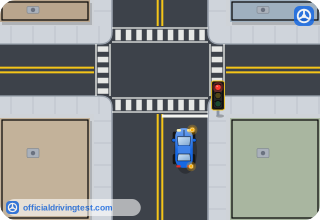
- Signaling your turn too early before you reach the intersection or driveway
- Turning from the right-hand lane when a bicyclist is behind you
- Not checking for a bicyclist on the right who is going straight or coming off a sidewalk
- Stopping before the crosswalk when you are about to turn right
Show answer
Correct answer: Not checking for a bicyclist on the right who is going straight or coming off a sidewalk
A bicyclist continuing straight ahead on your right is easy to miss when you turn.
Source: Vermont Driver's Manual (2025 edition (VN-007 07/2024)), page 41 · Open this page in the manual (Manual page 41)
-
Is a license required to ride a bicycle, according to the manual?
- Yes, a learner’s permit is required
- No, but bicyclists must obey all the rules of the road
- Yes, but only on roads with traffic signals
- No, and bicyclists are exempt from the rules of the road
Show answer
Correct answer: No, but bicyclists must obey all the rules of the road
No license is needed, yet bicyclists have the same rights and responsibilities as other drivers.
Source: Vermont Driver's Manual (2025 edition (VN-007 07/2024)), page 41 · Open this page in the manual (Manual page 41)
-
When are bicyclists allowed to ride two abreast?
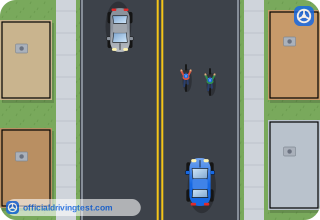
- Only on roads that have a marked bicycle lane
- Only on roads that have no other traffic at all
- Never, because riding two abreast is not allowed under any condition
- So long as they do not impede the normal and reasonable flow of traffic
Show answer
Correct answer: So long as they do not impede the normal and reasonable flow of traffic
Riding two abreast is permitted if it does not impede normal and reasonable traffic flow.
Source: Vermont Driver's Manual (2025 edition (VN-007 07/2024)), page 41 · Open this page in the manual (Manual page 41)
-
A bicyclist breaks a traffic law. What does the manual say?
- The bicyclist is subject to a ticket and fines
- Nothing, because the rules do not apply to bicycles
- The bicyclist loses points on a driver’s license
- The bicyclist only receives a warning
Show answer
Correct answer: The bicyclist is subject to a ticket and fines
Bicyclists must obey signals and signs and can be ticketed.
Source: Vermont Driver's Manual (2025 edition (VN-007 07/2024)), page 41 · Open this page in the manual (Manual page 41)
-
A bicyclist approaches a right turn lane but intends to go straight. What should the bicyclist do?
- Enter the right turn lane and signal
- Dismount and walk across the intersection
- Not enter the right turn lane
- Ride on the sidewalk
Show answer
Correct answer: Not enter the right turn lane
Bicyclists should ride with through traffic and not enter the right turn lane when going straight.
Source: Vermont Driver's Manual (2025 edition (VN-007 07/2024)), page 41 · Open this page in the manual (Manual page 41)
-
The road is too narrow for a bicycle and a vehicle to travel side by side. What should the bicyclist do?
- Speed up to stay ahead of the vehicle
- Occupy the lane until it is safe to move back to the right
- Stop and wait at the side for the vehicle to pass
- Ride on the sidewalk until the road becomes wider
Show answer
Correct answer: Occupy the lane until it is safe to move back to the right
The bicyclist occupies the lane until it is safe to move back to the right.
Source: Vermont Driver's Manual (2025 edition (VN-007 07/2024)), page 41 · Open this page in the manual (Manual page 41)
-
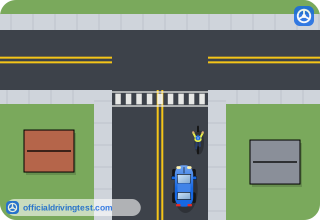
How often must a bicyclist signal an intent to turn?
- Only when riding at night
- Only when cars are behind the bicyclist
- Only on roads with a bike lane
- Always, using the proper hand signals
Show answer
Correct answer: Always, using the proper hand signals
Bicyclists must always signal turns with the proper hand signals.
Source: Vermont Driver's Manual (2025 edition (VN-007 07/2024)), page 41 · Open this page in the manual (Manual page 41)
-
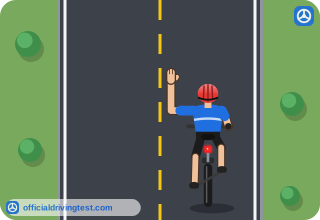
A bicyclist holds the left arm bent upward at the elbow, with the hand up. What does this hand signal mean?
- Right turn
- Left turn
- Stopping
- Alternate right turn
Show answer
Correct answer: Right turn
A left arm bent upward at the elbow is the bicyclist’s right turn signal.
Source: Vermont Driver's Manual (2025 edition (VN-007 07/2024)), page 41 · Open this page in the manual (Manual page 41)
-
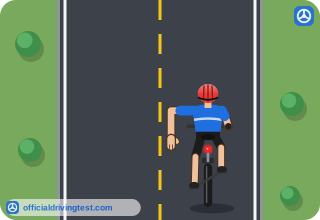
A bicyclist holds the left arm bent downward at the elbow, with the hand down. What does this hand signal mean?
- Left turn
- Right turn
- Stopping
- Alternate right turn
Show answer
Correct answer: Stopping
A left arm bent downward at the elbow is the bicyclist’s stopping signal.
Source: Vermont Driver's Manual (2025 edition (VN-007 07/2024)), page 41 · Open this page in the manual (Manual page 41)
-
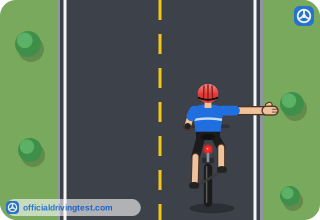
A bicyclist holds the right arm straight out to the side. What does this hand signal mean?
- Left turn
- Alternate right turn
- Stopping
- Slow down
Show answer
Correct answer: Alternate right turn
A right arm held straight out is the bicyclist’s alternate right turn signal.
Source: Vermont Driver's Manual (2025 edition (VN-007 07/2024)), page 41 · Open this page in the manual (Manual page 41)
-
A bicyclist holds the left arm straight out to the side. What does this hand signal mean?
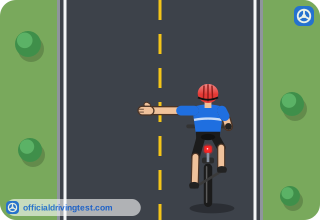
- Right turn
- Stopping
- Alternate right turn
- Left turn
Show answer
Correct answer: Left turn
A left arm held straight out is the bicyclist’s left turn signal.
Source: Vermont Driver's Manual (2025 edition (VN-007 07/2024)), page 41 · Open this page in the manual (Manual page 41)
-
What does the manual say about users of skateboards, scooters, roller blades and similar devices on the roadway?
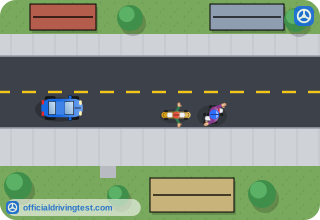
- They can move abruptly and change direction unexpectedly into your path
- They are not allowed to use any road in Vermont
- They always travel slower than bicyclists and keep a steady path
- They must yield to all other vehicles on the road
Show answer
Correct answer: They can move abruptly and change direction unexpectedly into your path
These users can be traveling at a significant speed and change direction without warning, so be especially alert.
Source: Vermont Driver's Manual (2025 edition (VN-007 07/2024)), page 42 · Open this page in the manual (Manual page 42)
-
How do the rights and responsibilities of a motorcyclist on the highway compare with those of drivers of other vehicles?
- Motorcyclists have the right-of-way
- Motorcyclists have fewer rights
- They are the same
- Motorcyclists are exempt from lane rules
Show answer
Correct answer: They are the same
Motorists should not crowd motorcycles or take the right-of-way from cyclists.
Source: Vermont Driver's Manual (2025 edition (VN-007 07/2024)), page 42 · Open this page in the manual (Manual page 42)
-
Why should you make sure that a motorcycle’s turn signal is "for real"?
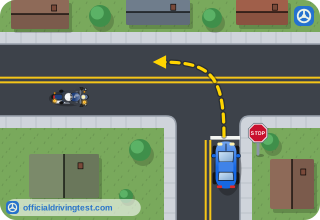
- Motorcycles are not able to signal left turns at all
- Motorcycle signals are always flashing by design
- Motorcycle turn signals stay on all the time while riding
- Signals usually are not self-canceling, so riders may forget them
Show answer
Correct answer: Signals usually are not self-canceling, so riders may forget them
Riders, especially beginners, sometimes leave the signal on after a turn or lane change.
Source: Vermont Driver's Manual (2025 edition (VN-007 07/2024)), page 42 · Open this page in the manual (Manual page 42)
-
Why do motorcyclists often adjust their position within a lane?
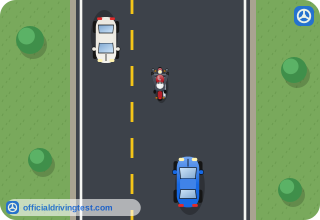
- To be seen more easily and to reduce the effects of wind and road debris
- To show off to the other drivers who are sharing the road with them
- To pass other vehicles that are sharing the same lane with them
- To avoid having to use their turn signals at turns
Show answer
Correct answer: To be seen more easily and to reduce the effects of wind and road debris
Lane position changes by motorcyclists have a purpose and are not reckless.
Source: Vermont Driver's Manual (2025 edition (VN-007 07/2024)), page 42 · Open this page in the manual (Manual page 42)
-
Because of its small size, how does a motorcycle seem to be moving?
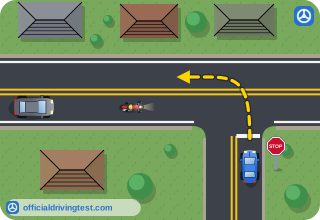
- Slower than it really is
- At the same speed as a car
- Faster than it really is
- Erratically
Show answer
Correct answer: Faster than it really is
Small size makes a motorcycle appear to move faster than it is.
Source: Vermont Driver's Manual (2025 edition (VN-007 07/2024)), page 42 · Open this page in the manual (Manual page 42)
-
Which of these does the manual list as something that can hide a motorcycle from a driver?
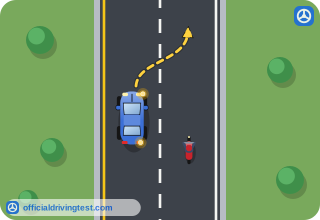
- Painted lane lines
- Reflective lane markers
- Rumble strips
- Door posts
Show answer
Correct answer: Door posts
Door posts, mirrors, passengers, bushes, trees, parked cars, fences, bridges and blind spots can hide a motorcycle.
Source: Vermont Driver's Manual (2025 edition (VN-007 07/2024)), page 42 · Open this page in the manual (Manual page 42)
-
What should you predict when you see two people on a motorcycle, especially near intersections?
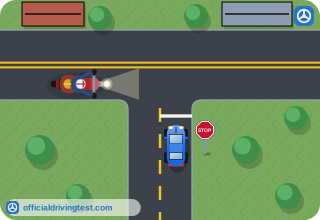
- Faster acceleration and shorter stopping distance
- Easier balance because of the added weight
- More problems, because balance and stopping are harder
- Fewer problems because the rider is more careful
Show answer
Correct answer: More problems, because balance and stopping are harder
A passenger makes balance harder, increases stopping distance and reduces maneuverability.
Source: Vermont Driver's Manual (2025 edition (VN-007 07/2024)), page 42 · Open this page in the manual (Manual page 42)
-
How do the small, usually convex mirrors on a motorcycle affect what the rider sees of you?
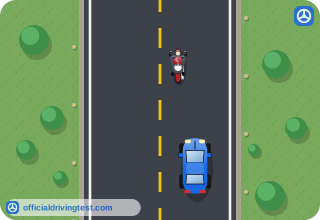
- They give a larger image of your vehicle and make you appear closer
- They give a smaller image and make you appear farther back than you are
- They make you appear closer to the motorcycle than you are
- They show the rider nothing of the traffic behind
Show answer
Correct answer: They give a smaller image and make you appear farther back than you are
Convex mirrors make you seem farther back than you actually are.
Source: Vermont Driver's Manual (2025 edition (VN-007 07/2024)), page 42 · Open this page in the manual (Manual page 42)
-
Why might some drivers not see a motorcycle?
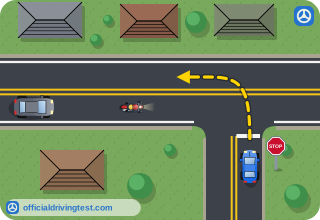
- Motorcycles are not allowed to ride in traffic lanes
- Motorcycles have no headlights that other drivers can see
- Motorcyclists try to avoid being seen by other drivers
- They do not "recognize" it and ignore it, usually unintentionally
Show answer
Correct answer: They do not "recognize" it and ignore it, usually unintentionally
There are many more cars and trucks than motorcycles, so some drivers overlook them.
Source: Vermont Driver's Manual (2025 edition (VN-007 07/2024)), page 42 · Open this page in the manual (Manual page 42)
-
At night, why might you miss a motorcycle?
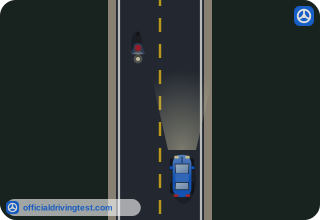
- Single lights can blend into the lights of other traffic
- Motorcycles are required to drive without any lights on
- Motorcycles must use only dim lights after dark
- Motorcycles are not allowed on the road at night
Show answer
Correct answer: Single lights can blend into the lights of other traffic
Odd lights in traffic could be a motorcycle.
Source: Vermont Driver's Manual (2025 edition (VN-007 07/2024)), page 42 · Open this page in the manual (Manual page 42)
-
Compared with other vehicles, why are bicycles harder for drivers to notice?
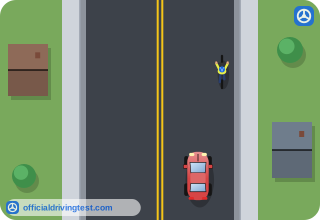
- They use brighter lights than other vehicles
- They always ride on sidewalks
- They are required to stay out of travel lanes
- They are quieter and less visible, especially at night
Show answer
Correct answer: They are quieter and less visible, especially at night
The manual notes that bicycles are quieter and less visible.
Source: Vermont Driver's Manual (2025 edition (VN-007 07/2024)), page 40 · Open this page in the manual (Manual page 40)
-
How much of a lane is a motorcycle entitled to?
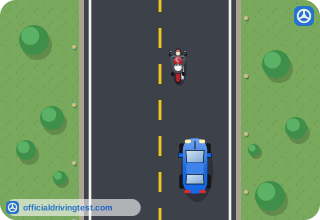
- A full lane
- Half of a lane
- Only the center of the lane
- Whatever room a car leaves it
Show answer
Correct answer: A full lane
The manual says motorcycles are entitled to a full lane.
Source: Vermont Driver's Manual (2025 edition (VN-007 07/2024)), page 43 · Open this page in the manual (Manual page 43)
-
When you pass a motorcycle, what should you do?
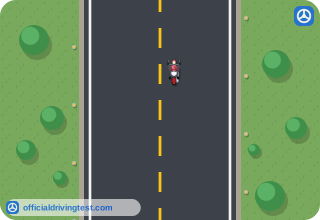
- Stay partly in its lane to pass faster
- Pass on the shoulder beside it
- Change lanes completely
- Pass at the same speed in the same lane
Show answer
Correct answer: Change lanes completely
The manual says to change lanes completely when passing a motorcycle, not to share its lane.
Source: Vermont Driver's Manual (2025 edition (VN-007 07/2024)), page 43 · Open this page in the manual (Manual page 43)
-
Just after you have overtaken a motorcycle, what should you never do?
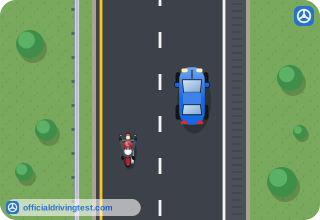
- Signal before you change lanes
- Cut in too closely in front of it
- Leave plenty of room
- Return to your lane gradually
Show answer
Correct answer: Cut in too closely in front of it
Pulling in right in front of the rider leaves too little room, so the manual says never to cut in too closely.
Source: Vermont Driver's Manual (2025 edition (VN-007 07/2024)), page 43 · Open this page in the manual (Manual page 43)
-
What should you use to alert a motorcycle rider that you intend to pass, change lanes or turn?
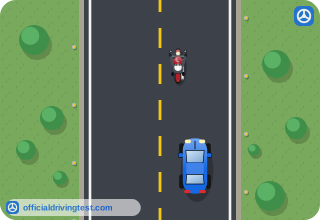
- Your horn
- Your high beams
- Your hazard lights
- Your turn signals
Show answer
Correct answer: Your turn signals
The manual tells drivers to use their turn signals to alert a rider of their intention to pass, change lanes or turn.
Source: Vermont Driver's Manual (2025 edition (VN-007 07/2024)), page 43 · Open this page in the manual (Manual page 43)
-
A motorcyclist is passing you. What should you never try to do?
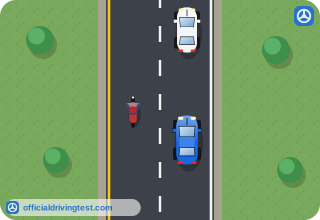
- Speed up to stay ahead of it
- Give the rider plenty of room to pass
- Stay in your own lane as it passes
- Keep a steady speed as it passes you
Show answer
Correct answer: Speed up to stay ahead of it
You should allow a passing motorcyclist plenty of room and never speed up to stay ahead of the motorcycle.
Source: Vermont Driver's Manual (2025 edition (VN-007 07/2024)), page 43 · Open this page in the manual (Manual page 43)
-
How does the manual say to think of a motorcycle that is in motion?
- As a small car
- As a bicycle
- As a person
- As a moving obstacle
Show answer
Correct answer: As a person
The manual reminds drivers that a rider is a person, not just a motorcycle.
Source: Vermont Driver's Manual (2025 edition (VN-007 07/2024)), page 43 · Open this page in the manual (Manual page 43)
-
Which statement about large trucks is true, according to the manual?
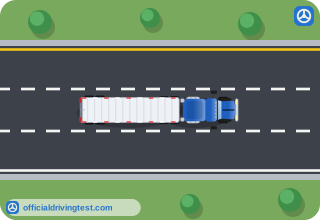
- The bigger the truck is, the smaller the driver's blind spots
- The bigger the truck is, the less room it needs to maneuver
- The bigger the truck is, the less time it takes you to pass it
- The bigger the truck is, the longer it takes the truck to stop
Show answer
Correct answer: The bigger the truck is, the longer it takes the truck to stop
A bigger truck has bigger blind spots, needs more room, takes longer to stop and takes longer to pass.
Source: Vermont Driver's Manual (2025 edition (VN-007 07/2024)), page 43 · Open this page in the manual (Manual page 43)
-
What are the "No-Zones" around a large truck?
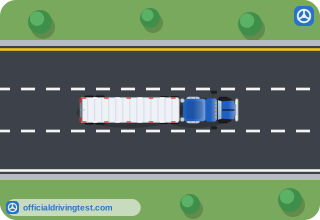
- Its blind spots at the front, back and sides
- The areas where trucks may not drive
- The lanes reserved for trucks
- Places where you may not pass a truck
Show answer
Correct answer: Its blind spots at the front, back and sides
No-Zones are the blind spots around the front, back and sides of a truck, where the driver cannot see you.
Source: Vermont Driver's Manual (2025 edition (VN-007 07/2024)), page 43 · Open this page in the manual (Manual page 43)
-
If you cannot see a large truck's rear (side) view mirrors, what does that mean?
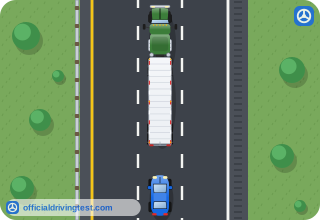
- The truck driver can see you in the mirrors
- The truck is about to stop
- The truck driver cannot see you
- The truck is slowing for a turn
Show answer
Correct answer: The truck driver cannot see you
If you cannot see the truck's mirrors, you are in a blind spot and the driver cannot see you.
Source: Vermont Driver's Manual (2025 edition (VN-007 07/2024)), page 43 · Open this page in the manual (Manual page 43)
-
How should you drive while passing a large truck?
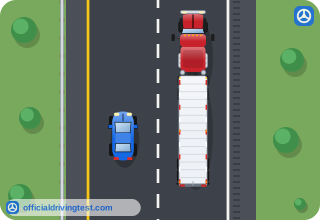
- Speed up and then slow down
- Maintain a consistent speed
- Slow down beside the truck
- Stay beside the truck for a while
Show answer
Correct answer: Maintain a consistent speed
Passing a large truck takes longer, so you should keep a consistent speed while you pass.
Source: Vermont Driver's Manual (2025 edition (VN-007 07/2024)), page 43 · Open this page in the manual (Manual page 43)
-
After passing a large truck, when is it safe to return to the right lane?
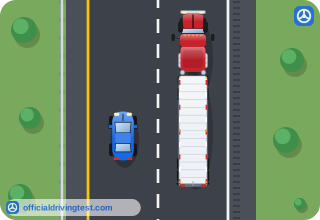
- As soon as your bumper is past the truck's cab
- When the truck's right turn signal comes on
- After you have counted two seconds beside it
- When you can see the cab in your inside rearview mirror
Show answer
Correct answer: When you can see the cab in your inside rearview mirror
You should see the truck's cab in your inside rearview mirror before returning to the right lane, so you do not pull in too soon.
Source: Vermont Driver's Manual (2025 edition (VN-007 07/2024)), page 43 · Open this page in the manual (Manual page 43)
-
What may a truck driver have to do when vehicles pull in front of a truck too soon?
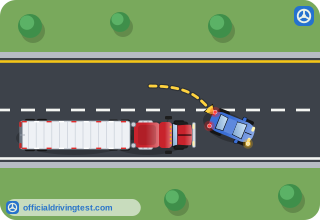
- Act quickly to avoid a crash
- Pull over to the shoulder at once
- Honk and keep the same speed
- Turn on the hazard lights and wait
Show answer
Correct answer: Act quickly to avoid a crash
A vehicle that pulls in front of a truck too soon may force the truck driver to act quickly to avoid a crash.
Source: Vermont Driver's Manual (2025 edition (VN-007 07/2024)), page 43 · Open this page in the manual (Manual page 43)
-
What should you never do when a truck is preparing to back up or is backing up?
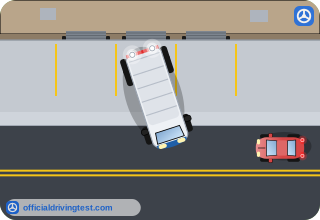
- Wait behind the truck
- Stay well back from the truck
- Go around the truck
- Watch the truck's signals
Show answer
Correct answer: Go around the truck
A backing truck may have to block the street, and if you go around it you can enter a blind spot where the driver cannot see you.
Source: Vermont Driver's Manual (2025 edition (VN-007 07/2024)), page 43 · Open this page in the manual (Manual page 43)
-
Where do trucks have long blind spots, unlike other motor vehicles?
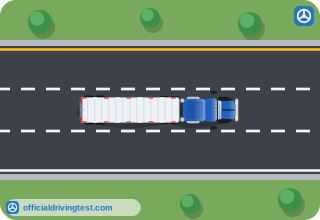
- Only directly in front of them
- Directly behind them
- Only above the trailer
- Only at intersections
Show answer
Correct answer: Directly behind them
Trucks have long blind spots directly behind them, and the driver cannot see a vehicle there.
Source: Vermont Driver's Manual (2025 edition (VN-007 07/2024)), page 44 · Open this page in the manual (Manual page 44)
-
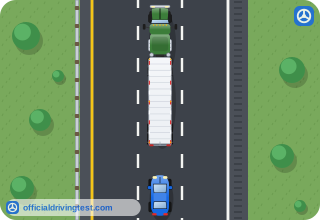
What greatly increases your chance of a rear-end collision with a truck?
- Following at a safe distance
- Driving in the right lane
- Driving with your headlights on
- Following too closely
Show answer
Correct answer: Following too closely
Following a truck too closely puts you in its rear blind spot and greatly increases the chance of a rear-end collision.
Source: Vermont Driver's Manual (2025 edition (VN-007 07/2024)), page 44 · Open this page in the manual (Manual page 44)
-
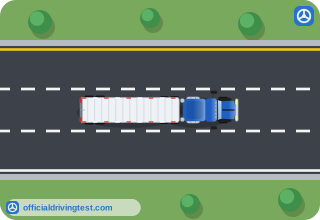
Compared with passenger vehicles, how large are the blind spots on the sides of a truck?
- Much larger
- Slightly smaller
- About the same size
- Larger on the left side only
Show answer
Correct answer: Much larger
Trucks have much larger blind spots on both sides than passenger vehicles do.
Source: Vermont Driver's Manual (2025 edition (VN-007 07/2024)), page 44 · Open this page in the manual (Manual page 44)
-
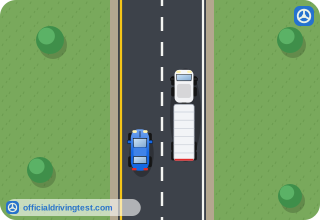
Why could a serious crash occur if your vehicle is in a truck driver's side blind spot?
- Trucks always drift out of their own lane
- Truck drivers cannot hear the horns of cars
- The driver may change lanes quickly and not see you
- Trucks cannot slow down on a highway road
Show answer
Correct answer: The driver may change lanes quickly and not see you
If the truck driver needs to change lanes quickly while you are in the blind spot, the driver cannot see you and a serious crash could result.
Source: Vermont Driver's Manual (2025 edition (VN-007 07/2024)), page 44 · Open this page in the manual (Manual page 44)
-
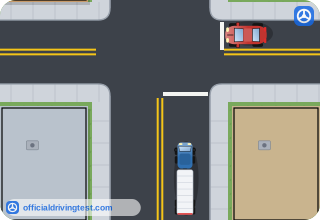
A large truck is about to make a right turn. What do truck drivers often need to do?
- Swing wide to the right
- Swing wide to the left
- Stop in the middle of the intersection
- Turn from the far right lane only
Show answer
Correct answer: Swing wide to the left
Truck drivers often swing wide to the left in order to make a right turn.
Source: Vermont Driver's Manual (2025 edition (VN-007 07/2024)), page 44 · Open this page in the manual (Manual page 44)
-
A truck is making a wide right turn. What should you not do?
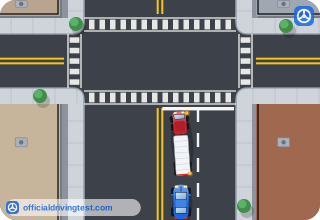
- Look for the truck's turn signals
- Stay well behind the turning truck
- Allow the truck extra room to swing
- Cut in between the truck and the curb
Show answer
Correct answer: Cut in between the truck and the curb
Squeezing between the truck and the curb increases the possibility of a crash.
Source: Vermont Driver's Manual (2025 edition (VN-007 07/2024)), page 44 · Open this page in the manual (Manual page 44)
-
How is a slow moving vehicle such as a tractor identified?
- By an orange and red triangular sign
- By a flashing blue light on its roof
- By a yellow square sign on its front
- By a white rectangular sign on its side
Show answer
Correct answer: By an orange and red triangular sign
A slow moving vehicle carries an orange and red triangular sign on the rear so that drivers can recognize it sooner.
Source: Vermont Driver's Manual (2025 edition (VN-007 07/2024)), page 44 · Open this page in the manual (Manual page 44)
-
Why does the orange and red triangular sign on a slow moving vehicle help you?
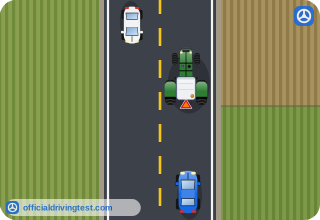
- It shows the vehicle will stop at the next corner
- It means other vehicles may pass at any time
- You recognize the vehicle sooner and have time to slow
- It shows the vehicle is on a government job
Show answer
Correct answer: You recognize the vehicle sooner and have time to slow
The sooner you identify a slow moving vehicle, the more time you have to respond by reducing your speed.
Source: Vermont Driver's Manual (2025 edition (VN-007 07/2024)), page 44 · Open this page in the manual (Manual page 44)
-
Where may slow moving vehicles make wide turns?
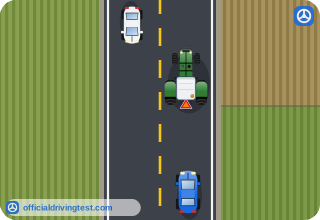
- Only at marked intersections of two roads
- At unmarked entrances to the right or left
- Only at traffic signals on busy streets
- Only on roads with two lanes each way
Show answer
Correct answer: At unmarked entrances to the right or left
The manual warns that slow moving vehicles may make wide turns at unmarked entrances on either side of the road.
Source: Vermont Driver's Manual (2025 edition (VN-007 07/2024)), page 44 · Open this page in the manual (Manual page 44)
-
What may the operator of a slow moving vehicle do when it causes traffic delays?
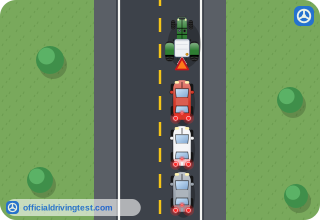
- Stop in the travel lane to let others by
- Drive faster until traffic has cleared
- Drive on the shoulder at all times
- Pull over if and when it is possible and safe
Show answer
Correct answer: Pull over if and when it is possible and safe
The operator may pull over, when and if it is possible and safe, to let others go by.
Source: Vermont Driver's Manual (2025 edition (VN-007 07/2024)), page 44 · Open this page in the manual (Manual page 44)
-
Do agricultural vehicle operators have a right to drive their vehicles on the road?
- Yes
- No, only on private roads
- No, only at night
- Yes, but only on roads with a shoulder
Show answer
Correct answer: Yes
The manual states that agricultural vehicle operators have a right to drive their vehicles on the road.
Source: Vermont Driver's Manual (2025 edition (VN-007 07/2024)), page 44 · Open this page in the manual (Manual page 44)
-
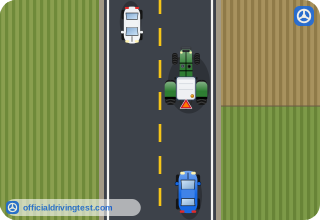
How much following distance may be needed behind a slow moving vehicle?
- Less than a two second following distance
- Exactly one car length
- More than a four second following distance
- No more than three seconds
Show answer
Correct answer: More than a four second following distance
The manual says it may be necessary to allow for more than a four second following distance behind slow moving vehicles.
Source: Vermont Driver's Manual (2025 edition (VN-007 07/2024)), page 44 · Open this page in the manual (Manual page 44)
-
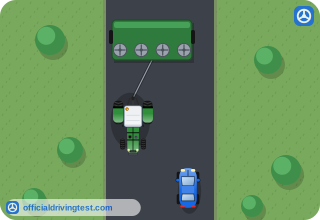
What should you do on a narrow road when you meet wide equipment?
- Speed up to pass it quickly
- Yield to it
- Flash your high beams
- Stay as close as you can behind it
Show answer
Correct answer: Yield to it
The manual says to yield to wide equipment on narrow roads.
Source: Vermont Driver's Manual (2025 edition (VN-007 07/2024)), page 44 · Open this page in the manual (Manual page 44)
-
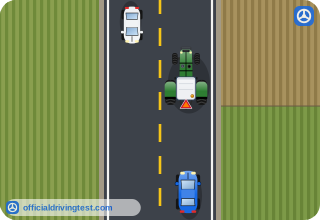
When may you pass a slow moving vehicle?
- Whenever you are in a great hurry to arrive
- Only when you can see the driver's face clearly
- Only when you are approaching a curve ahead
- Only if conditions are safe and no traffic is coming
Show answer
Correct answer: Only if conditions are safe and no traffic is coming
Pass slow moving vehicles cautiously, only when conditions are safe and no traffic is coming from the other direction.
Source: Vermont Driver's Manual (2025 edition (VN-007 07/2024)), page 44 · Open this page in the manual (Manual page 44)
-
An aggressive driver cuts you off. What should you do?
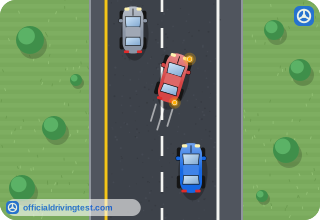
- Stay calm and get out of the driver's way
- Try to get even
- Honk and flash your lights at the driver
- Challenge the driver
Show answer
Correct answer: Stay calm and get out of the driver's way
The manual says not to try to get even; stay calm, get out of the way and do not challenge the driver.
Source: Vermont Driver's Manual (2025 edition (VN-007 07/2024)), page 45 · Open this page in the manual (Manual page 45)
-
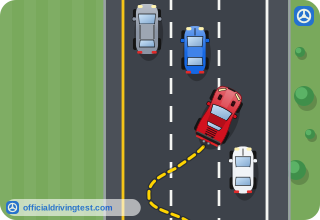
The manual says that actions such as driving too fast, failing to signal lane changes, weaving, following too closely and cutting off cars are what?
- Legal whenever traffic is light
- Legal if they do not cause a crash
- Unlawful and can result in tickets or worse
- Allowed on highways but not on roads
Show answer
Correct answer: Unlawful and can result in tickets or worse
Aggressive driving actions are unlawful and can lead to traffic tickets or worse.
Source: Vermont Driver's Manual (2025 edition (VN-007 07/2024)), page 45 · Open this page in the manual (Manual page 45)
-
What rights does a person riding an animal or driving an animal drawn vehicle have on a public highway?
- The right to use only the shoulder
- All the rights of a driver of a motor vehicle
- The right of way at every intersection
- No special rights
Show answer
Correct answer: All the rights of a driver of a motor vehicle
A rider or animal-drawn vehicle driver on a public highway has the same rights as a motor vehicle driver.
Source: Vermont Driver's Manual (2025 edition (VN-007 07/2024)), page 45 · Open this page in the manual (Manual page 45)
-
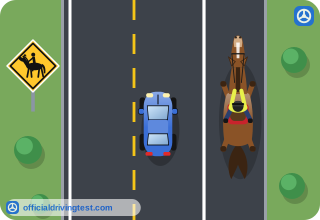
What is necessary when a motor vehicle operator comes upon a person riding an animal on the road?
- To pass quickly
- To move to the left of the center line
- To keep the same speed unless the animal moves
- To reduce speed, and possibly even stop
Show answer
Correct answer: To reduce speed, and possibly even stop
The operator must reduce speed and possibly stop so the animal is not frightened and the rider is safe.
Source: Vermont Driver's Manual (2025 edition (VN-007 07/2024)), page 45 · Open this page in the manual (Manual page 45)
-
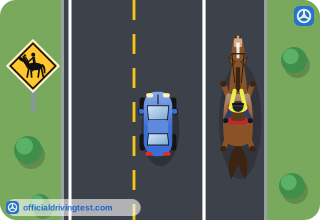
When meeting, following or passing horses or other animals, what should a motor vehicle operator never do?
- Blow their horn or rev their engine
- Use the full traffic lane to pass
- Reduce speed
- Leave a following distance of at least 4 seconds
Show answer
Correct answer: Blow their horn or rev their engine
A horn or revving engine can startle the animals, so the manual says never to do either.
Source: Vermont Driver's Manual (2025 edition (VN-007 07/2024)), page 45 · Open this page in the manual (Manual page 45)
-
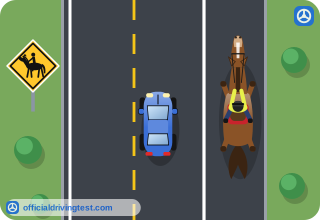
How should you pass a horse and rider on the road?
- Pass on the right shoulder at your normal speed
- Pass close to the horse in the same lane
- Use the full lane to pass and never cut quickly back
- Pass while sounding the horn at the rider
Show answer
Correct answer: Use the full lane to pass and never cut quickly back
Use the full traffic lane to completely pass the animal, and never cut quickly back into your lane.
Source: Vermont Driver's Manual (2025 edition (VN-007 07/2024)), page 45 · Open this page in the manual (Manual page 45)
-
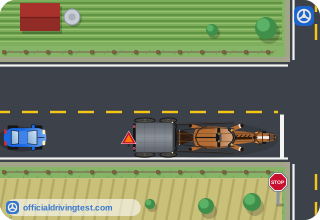
What is the minimum following distance when you are behind a horse with a rider, a horse and wagon, or herded animals?
- At least 1 second
- At least 4 seconds
- At least 2 seconds
- At least 3 seconds
Show answer
Correct answer: At least 4 seconds
The manual says to leave at least a 4 second following distance behind horses and herded animals.
Source: Vermont Driver's Manual (2025 edition (VN-007 07/2024)), page 45 · Open this page in the manual (Manual page 45)
-
What may happen to a motor vehicle operator for negligent operation around riders and driven animals?
- The operator may only receive a warning
- The operator may only lose the right to drive at night
- Nothing, because animals have no right of way
- The operator may be fined or imprisoned
Show answer
Correct answer: The operator may be fined or imprisoned
The manual states that negligent operation around such animals may bring a fine or imprisonment.
Source: Vermont Driver's Manual (2025 edition (VN-007 07/2024)), page 45 · Open this page in the manual (Manual page 45)
-
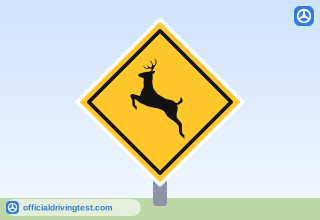
When is the presence of moose and deer on highways most likely?
- Late evening, night time and early morning
- During midday and the early afternoon
- During the afternoon rush hour only
- Mainly in the middle of a sunny day
Show answer
Correct answer: Late evening, night time and early morning
Moose and deer roam and feed mostly in late evening, at night and early in the morning, so extra caution is needed then.
Source: Vermont Driver's Manual (2025 edition (VN-007 07/2024)), page 45 · Open this page in the manual (Manual page 45)
-
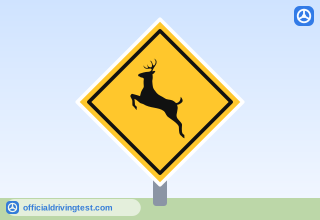
How does the manual say you can save lives and prevent injuries in areas marked with deer and moose crossing signs?
- By driving faster to clear the area
- By flashing your headlights
- By driving cautiously
- By driving only on the shoulder
Show answer
Correct answer: By driving cautiously
Driving cautiously where deer and moose crossing signs are posted can save lives and prevent injuries.
Source: Vermont Driver's Manual (2025 edition (VN-007 07/2024)), page 45 · Open this page in the manual (Manual page 45)
-
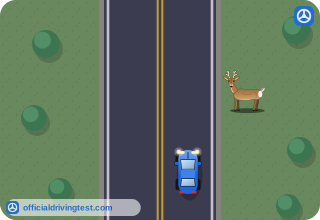
What may the light from a vehicle's headlights cause a deer to do?
- Walk slowly toward the vehicle’s headlights
- Temporarily freeze in front of the vehicle
- Lie down at the side of the road
- Stay calm and walk calmly off
Show answer
Correct answer: Temporarily freeze in front of the vehicle
Headlights can cause a deer to freeze for a moment, so it may not get out of the way.
Source: Vermont Driver's Manual (2025 edition (VN-007 07/2024)), page 45 · Open this page in the manual (Manual page 45)
-
A deer may bound toward its habitat at speeds up to how many miles per hour?
- 20 miles per hour
- 30 miles per hour
- 60 miles per hour
- 40 miles per hour
Show answer
Correct answer: 40 miles per hour
The manual says a deer may bound at speeds up to 40 miles per hour toward its habitat.
Source: Vermont Driver's Manual (2025 edition (VN-007 07/2024)), page 45 · Open this page in the manual (Manual page 45)
-
Why may a deer on the opposite side of the road from its habitat bolt in front of a vehicle?
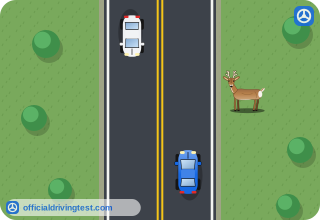
- It may turn and run toward its habitat
- It is attracted to the engine noise
- It is trying to cross to find a mate
- It cannot see anything in the dark
Show answer
Correct answer: It may turn and run toward its habitat
A deer bounding toward its habitat may turn and dash in front of a vehicle if it is on the opposite side of the road.
Source: Vermont Driver's Manual (2025 edition (VN-007 07/2024)), page 45 · Open this page in the manual (Manual page 45)
-
After you see one deer or moose, what should you be prepared for?
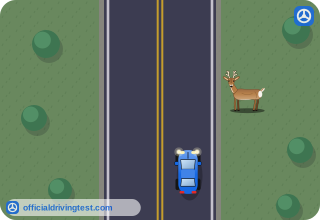
- That the area is clear
- That the animal will wait for you
- To see a second one
- That the second animal will cross behind you
Show answer
Correct answer: To see a second one
Animals travel in pairs, so a second animal is likely to be nearby.
Source: Vermont Driver's Manual (2025 edition (VN-007 07/2024)), page 45 · Open this page in the manual (Manual page 45)
-
In a collision, why can a moose be more deadly to motorists than a deer?
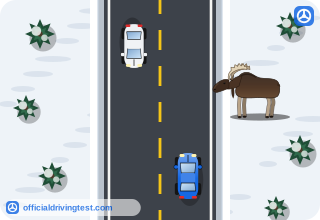
- It is much smaller and harder to see in the daytime
- It is much heavier and taller and can land on the car
- It runs much faster than a deer on a highway
- It always crosses the road in a large group
Show answer
Correct answer: It is much heavier and taller and can land on the car
Moose weigh more than a thousand pounds and are much taller than deer, so in a collision they can land on the vehicle with crushing force.
Source: Vermont Driver's Manual (2025 edition (VN-007 07/2024)), page 45 · Open this page in the manual (Manual page 45)
-
Why may a moose's eyes not reflect in a vehicle's headlights?
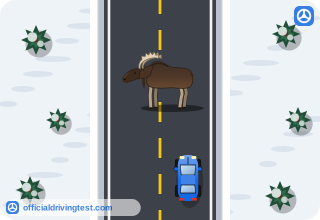
- Because moose are lighter in color
- Because moose are smaller than deer
- Because moose roam only in daylight
- Because moose are taller
Show answer
Correct answer: Because moose are taller
Moose are taller than deer, so their eyes may not reflect headlights, which makes them hard to see in the evening.
Source: Vermont Driver's Manual (2025 edition (VN-007 07/2024)), page 45 · Open this page in the manual (Manual page 45)