Utah: Emergencies and crashes — Winter Survival Kit, Stranded, Freezing Brakes Practice Test
Questions in this part include: “What should you do with the emergency survival kit in your vehicle?” · “Which of these does the handbook list as a supply for an emergency survival kit?”
Independent educational site · not affiliated with any government agency or DMV
Ready? Test yourself
- Instant feedback with an explanation
- Every answer cites its source in the manual
- Your best score is saved on this device
- Keyboard: press 1 to 4 to answer and Enter for the next question
Questions are original and based on the official manual "Utah Driver Handbook" (2026 edition (new 2026 laws effective May 6, 2026)), Utah Department of Public Safety, Driver License Division.
All 19 questions in this practice test
Take the test above first, then use this list to study. Tap “Show answer” to see the correct answer and explanation.
Show the questions and answersHide the questions
-
What should you do with the emergency survival kit in your vehicle?
- Store it at home until winter arrives
- Replace it only once each spring season
- Take it out once winter is over
- Keep it in the vehicle, restock after use
Show answer
Correct answer: Keep it in the vehicle, restock after use
The survival kit should always remain in the vehicle and be restocked after each use.
Source: Utah Driver Handbook (2026 edition (new 2026 laws effective May 6, 2026)), page 63 · Open this page in the manual (Manual page 63)
-
Which of these does the handbook list as a supply for an emergency survival kit?
- A bag of salt or sand
- A portable generator
- A can of gasoline
- A folding table
Show answer
Correct answer: A bag of salt or sand
The kit includes a spare tire, shovel, jumper cables, tire chains, salt or sand and a tool kit.
Source: Utah Driver Handbook (2026 edition (new 2026 laws effective May 6, 2026)), page 63 · Open this page in the manual (Manual page 63)
-
Which food does the handbook suggest for a winter survival kit?
- Fresh sandwiches
- Frozen dinners
- Unsalted canned nuts
- Salted potato chips
Show answer
Correct answer: Unsalted canned nuts
The kit should hold non-perishable energy foods such as unsalted canned nuts, dried fruits and hard candy.
Source: Utah Driver Handbook (2026 edition (new 2026 laws effective May 6, 2026)), page 63 · Open this page in the manual (Manual page 63)
-
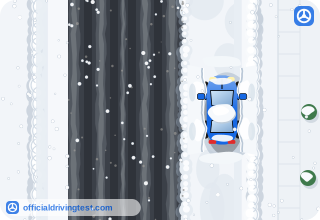
If you become stranded while traveling in cold weather, what should you do?
- Walk to find help
- Stay with your vehicle
- Leave in the direction of the nearest town
- Split up to search for help
Show answer
Correct answer: Stay with your vehicle
The handbook says to stay with your vehicle when stranded in the cold.
Source: Utah Driver Handbook (2026 edition (new 2026 laws effective May 6, 2026)), page 63 · Open this page in the manual (Manual page 63)
-
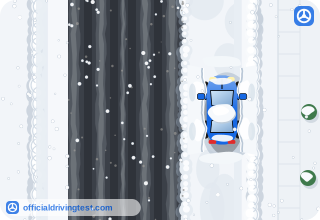
When may you leave your vehicle if you are stranded in cold weather?
- Whenever the weather finally clears up
- After you have waited for at least one hour
- Whenever you see a light in the distance
- Only if you know where you are and how far help is
Show answer
Correct answer: Only if you know where you are and how far help is
Leave only when you know exactly where you are and the distance to help.
Source: Utah Driver Handbook (2026 edition (new 2026 laws effective May 6, 2026)), page 63 · Open this page in the manual (Manual page 63)
-
According to the handbook, when do most deaths occur for people stranded in cold weather?
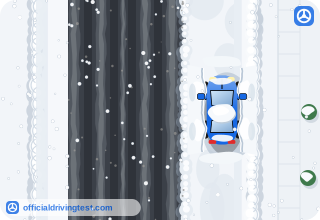
- They get out, become lost and suffer exposure to cold
- They run out of fuel while sitting inside the vehicle
- They stay awake inside the vehicle through the night
- They wait inside the vehicle for help to arrive
Show answer
Correct answer: They get out, become lost and suffer exposure to cold
Most deaths happen after people leave their vehicles, get lost, and stay out in the cold.
Source: Utah Driver Handbook (2026 edition (new 2026 laws effective May 6, 2026)), page 63 · Open this page in the manual (Manual page 63)
-
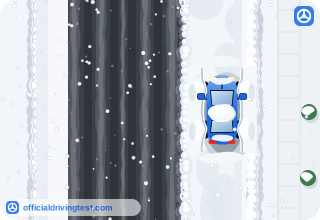
If you become stranded in cold weather, which lights should you turn on?
- Your high beams
- Your fog lights
- Your hazard warning lights
- Your interior lights only
Show answer
Correct answer: Your hazard warning lights
Turning on the hazard warning lights is the first stranded-in-cold-weather tip.
Source: Utah Driver Handbook (2026 edition (new 2026 laws effective May 6, 2026)), page 63 · Open this page in the manual (Manual page 63)
-
If you are stranded in cold weather, how many flares should you light to attract attention?
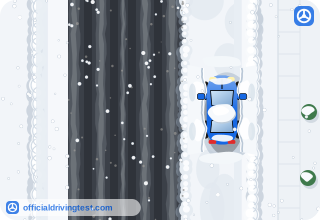
- One, at the front of the vehicle
- Two, one at each end of the vehicle
- Three, at the rear of the vehicle
- Four, one at each corner
Show answer
Correct answer: Two, one at each end of the vehicle
Light two flares and put one at each end of the vehicle a safe distance away.
Source: Utah Driver Handbook (2026 edition (new 2026 laws effective May 6, 2026)), page 63 · Open this page in the manual (Manual page 63)
-
If you are stranded in cold weather, what should you hang from your driver-side window, mirror or door handle?
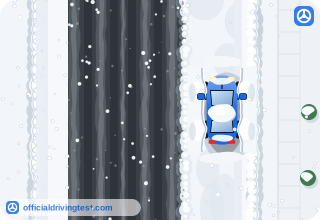
- A dark blanket
- A set of keys
- A folded paper road map
- A brightly colored cloth
Show answer
Correct answer: A brightly colored cloth
A brightly colored cloth helps attract attention.
Source: Utah Driver Handbook (2026 edition (new 2026 laws effective May 6, 2026)), page 63 · Open this page in the manual (Manual page 63)
-
If you are stranded in cold weather, what should you keep clear of snow and debris?
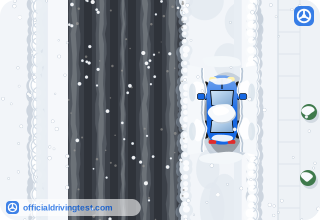
- The exhaust pipe
- The glove box
- The hood latch
- The fuel cap
Show answer
Correct answer: The exhaust pipe
A blocked exhaust pipe can leak fumes into the vehicle, causing you to black out or even die.
Source: Utah Driver Handbook (2026 edition (new 2026 laws effective May 6, 2026)), page 63 · Open this page in the manual (Manual page 63)
-
When stranded in cold weather, how should you use the engine and heater?
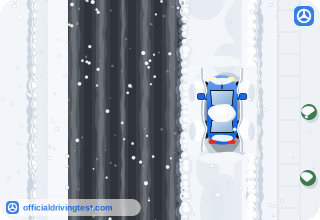
- Run them nonstop until help arrives
- Keep them off and use only the horn
- Run them until warm, then turn them off
- Run them only after dark
Show answer
Correct answer: Run them until warm, then turn them off
Run the engine and heater until warm, turn them off, and repeat as long as fuel is available.
Source: Utah Driver Handbook (2026 edition (new 2026 laws effective May 6, 2026)), page 63 · Open this page in the manual (Manual page 63)
-
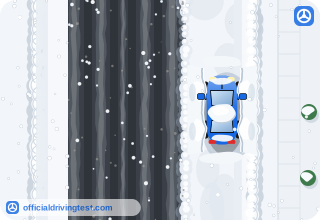
When stranded in cold weather, about how long is running the engine each hour recommended?
- About 2 minutes
- About 10 minutes
- About 30 minutes
- About 45 minutes
Show answer
Correct answer: About 10 minutes
The handbook recommends roughly 10 minutes of running each hour to charge the battery and warm the interior.
Source: Utah Driver Handbook (2026 edition (new 2026 laws effective May 6, 2026)), page 63 · Open this page in the manual (Manual page 63)
-
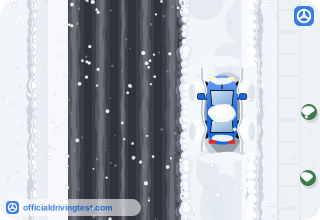
When stranded in an idling vehicle in frigid temperatures, what should you do with the windows?
- Keep all the windows closed
- Open all of the windows
- Keep the windows closed but turn up the heater
- Leave at least one window open
Show answer
Correct answer: Leave at least one window open
Occupants of an idling vehicle can suffer carbon monoxide poisoning if ventilation is inadequate.
Source: Utah Driver Handbook (2026 edition (new 2026 laws effective May 6, 2026)), page 64 · Open this page in the manual (Manual page 64)
-
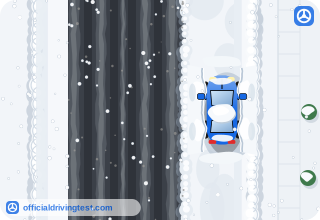
If several people are stranded in a vehicle in cold weather, how many should stay awake?
- At least one person
- Everyone at all times
- No one needs to stay awake
- Only the driver at night
Show answer
Correct answer: At least one person
At least one person should remain awake at all times.
Source: Utah Driver Handbook (2026 edition (new 2026 laws effective May 6, 2026)), page 64 · Open this page in the manual (Manual page 64)
-
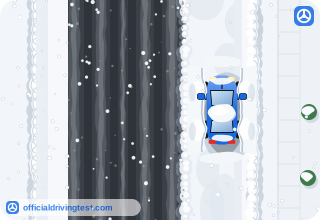
What does the handbook say to use to protect yourself from frostbite and hypothermia when stranded?
- The seat belt
- The engine running all night
- Blankets
- The heater at full blast all night
Show answer
Correct answer: Blankets
Use blankets to keep warm and avoid frostbite and hypothermia.
Source: Utah Driver Handbook (2026 edition (new 2026 laws effective May 6, 2026)), page 64 · Open this page in the manual (Manual page 64)
-
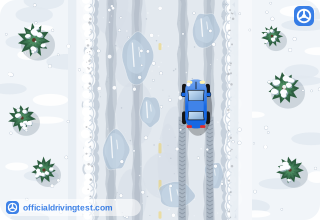
In freezing weather, what may happen to your brakes?
- They may work better than normal for a while
- They may fail for several hundred feet, then grab
- They may stay cool and quiet all winter
- They may grab at first, then slowly fade away
Show answer
Correct answer: They may fail for several hundred feet, then grab
In freezing weather, brakes may be ineffective for several hundred feet, then suddenly grab as the friction dries them out.
Source: Utah Driver Handbook (2026 edition (new 2026 laws effective May 6, 2026)), page 64 · Open this page in the manual (Manual page 64)
-
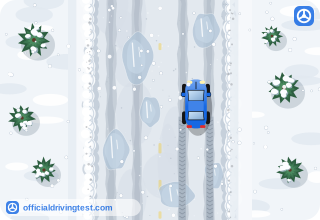
In freezing weather, what can happen if all moving parts freeze solid?
- Complete loss of steering only
- Complete loss of tire pressure
- Complete loss of headlights
- Complete loss of brakes
Show answer
Correct answer: Complete loss of brakes
Frozen moving parts can result in the complete loss of brakes.
Source: Utah Driver Handbook (2026 edition (new 2026 laws effective May 6, 2026)), page 64 · Open this page in the manual (Manual page 64)
-
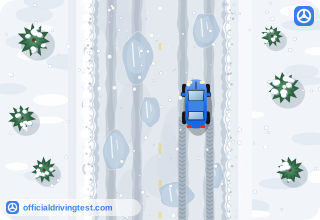
In freezing weather, what may happen once you apply the brakes?
- They may not release
- They may release too quickly
- They may become much stronger
- They may vibrate and then reset
Show answer
Correct answer: They may not release
Freezing can keep the brakes from releasing after you apply them.
Source: Utah Driver Handbook (2026 edition (new 2026 laws effective May 6, 2026)), page 64 · Open this page in the manual (Manual page 64)
-
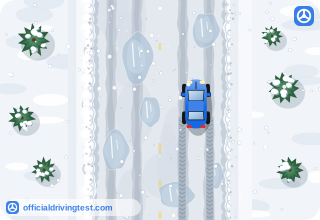
How can you help prevent brake problems from occurring in freezing weather?
- Never use your brakes in cold weather
- Press the pedal hard every few minutes
- Touch your brakes lightly now and then
- Use only the parking brake while stopped
Show answer
Correct answer: Touch your brakes lightly now and then
Lightly touching the brakes now and then helps prevent freezing problems.
Source: Utah Driver Handbook (2026 edition (new 2026 laws effective May 6, 2026)), page 64 · Open this page in the manual (Manual page 64)