Pennsylvania road sign library
Every sign, signal and marking the Pennsylvania driver manual shows or names, with its meaning in the manual's words and its page.
Independent educational site · not affiliated with any government agency or DMV
Regulatory signs - Pennsylvania
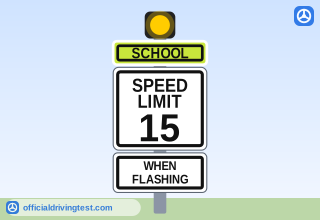
SCHOOL SPEED LIMIT 15 WHEN FLASHING
School zone signals are flashing yellow signals placed on the school zone speed limit signs. You must travel no faster than 15 mph when the yellow signals are flashing or during the time periods indicated on the sign. Exceeding the speed limit in a school zone will result in three (3) points on your driving record, and you will also be fined.
Manual page 9 · Open this page in the manual (Manual page 9)
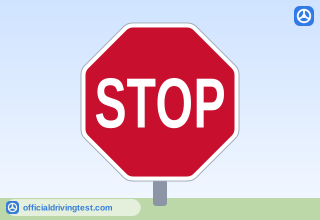
STOP
The STOP sign is the only octagon-shaped (8-sided) sign you see on the highway. At an intersection with a STOP sign, you must stop completely, check for pedestrians and cross traffic to clear the intersection before you go again. Slowing down without coming to a full stop is illegal.
Manual page 10 · Open this page in the manual (Manual page 10)
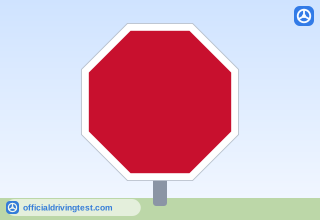
Plain red octagon
Stop completely, check for pedestrians, and cross traffic
Manual page 23 · Open this page in the manual (Manual page 23)
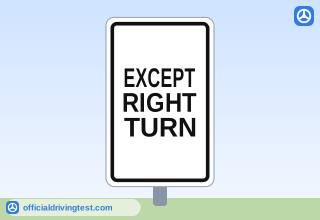
EXCEPT RIGHT TURN
This sign is also used in conjunction with stop signs. This sign allows motorists to make the right turn without stopping.
Manual page 10 · Open this page in the manual (Manual page 10)
See them all (40) · Regulatory signs →
Warning signs - Pennsylvania
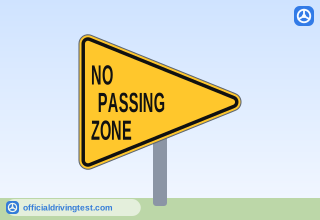
NO PASSING ZONE
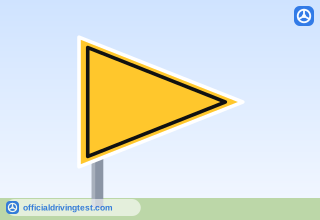
This is the only pennant-shaped warning sign. This sign marks the beginning of a no passing zone and is placed on the left side of the road facing the driver.
Manual page 13 · Open this page in the manual (Manual page 13)
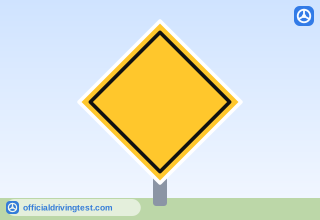
Plain yellow diamond
Warns you about conditions on or near the road
Manual page 24 · Open this page in the manual (Manual page 24)
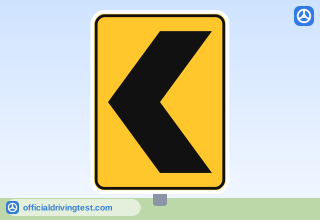
Chevron (left)
There is a sharp change in the direction of the road, such as a curve to the left or right. The road bends in the direction the chevron points. When used in a curve, there will be an advanced curve warning sign, and there may be several chevron signs placed throughout the curve.
Manual page 13 · Open this page in the manual (Manual page 13)
See them all (54) · Warning signs →
Work zone signs - Pennsylvania
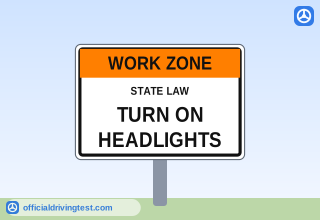
WORK ZONE STATE LAW TURN ON HEADLIGHTS
Turn on your headlights when traveling through a work zone, no matter what time of day. This is the law for all posted work zones, not just for active ones. Using your headlights makes your vehicle more visible to other traffic as well as to highway workers. If you are pulled over by police for a traffic violation in a work zone and your vehicle's headlights are not turned on, you will be fined an additional $25.
Manual page 18 · Open this page in the manual (Manual page 18)
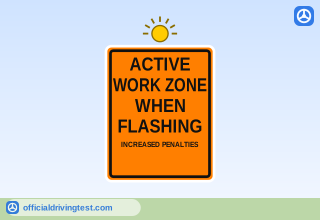
ACTIVE WORK ZONE WHEN FLASHING
These WORK ZONE signs are placed at the beginning and end of an active work zone. An active work zone is the portion of a work zone where construction, maintenance or utility workers are on the roadway, or on the shoulder of the highway next to an open travel lane.
Manual page 18 · Open this page in the manual (Manual page 18)
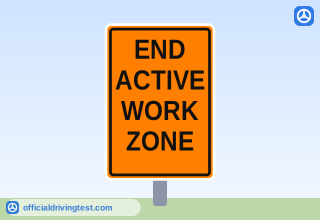
END ACTIVE WORK ZONE
These WORK ZONE signs are placed at the beginning and end of an active work zone. An active work zone is the portion of a work zone where construction, maintenance or utility workers are on the roadway, or on the shoulder of the highway next to an open travel lane.
Manual page 18 · Open this page in the manual (Manual page 18)
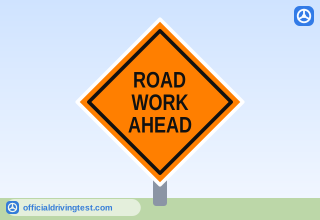
ROAD WORK AHEAD
This sign informs you there is road work ahead and also cautions you to slow down.
Manual page 18 · Open this page in the manual (Manual page 18)
See them all (19) · Work zone signs →
Guide, railroad and other signs - Pennsylvania
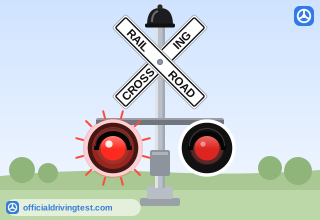
Railroad crossing signal with gate
You are required to stop at all railroad crossings when there is a signal of an approaching train. These signals include flashing red lights, a lowered crossing gate, a flagger signaling or a train's audible signal of warning. Do not move forward or attempt to go around any gate or ignore any signal of an approaching train. If there are no signals at the railroad crossing, you should slow down and prepare to stop, if you see or hear a train approaching.
Manual page 9 · Open this page in the manual (Manual page 9)
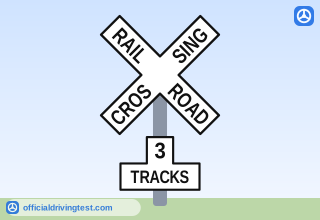
3 TRACKS plate
The manual does not state it
Manual page 9 · Open this page in the manual (Manual page 9)
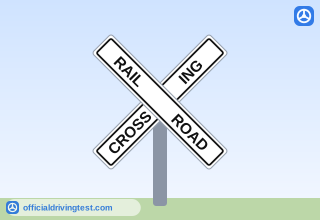
RAILROAD CROSSING crossbuck
This sign is placed at a railroad crossing where the tracks cross the roadway. You should treat the crossbuck sign as a YIELD sign; slow down and prepare to stop, if you see or hear a train approaching.
Manual page 10 · Open this page in the manual (Manual page 10)
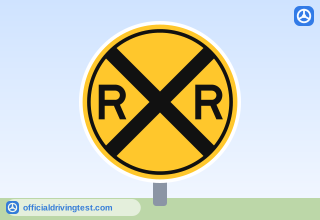
RAILROAD CROSSING AHEAD
You are approaching a railroad crossing. When you see this sign, begin looking and listening for a train. This sign is placed far enough in advance to allow you to stop before you reach the tracks, if necessary.
Manual page 16 · Open this page in the manual (Manual page 16)
See them all (34) · Guide, railroad and other signs →
Traffic signals - Pennsylvania
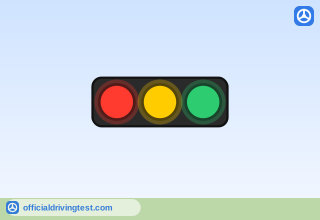
Horizontal traffic signal
Traffic signals are arranged in either vertical lines or horizontal lines. When they are arranged vertically, red is always on top and green on the bottom. When they are arranged horizontally, red is always on the left and green on the right.
Manual page 7 · Open this page in the manual (Manual page 7)
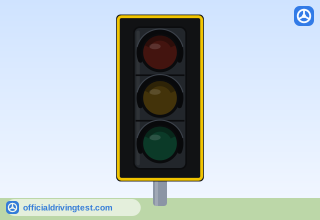
Vertical traffic signal
Traffic signals are arranged in either vertical lines or horizontal lines. When they are arranged vertically, red is always on top and green on the bottom. When they are arranged horizontally, red is always on the left and green on the right.
Manual page 7 · Open this page in the manual (Manual page 7)
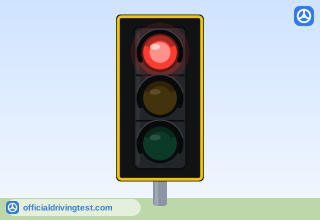
STEADY RED LIGHT
When there is a STEADY RED LIGHT, you must stop before crossing the marked stop line or crosswalk. If you do not see any lines, stop before entering the intersection. Wait for a green light before you start. You may turn right while the light is red, unless a NO TURN ON RED sign is posted at the intersection. You must first stop, check for and yield to pedestrians and other traffic.
Manual page 7 · Open this page in the manual (Manual page 7)
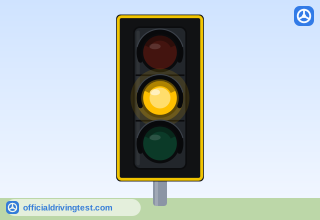
STEADY YELLOW LIGHT
A STEADY YELLOW LIGHT tells you a steady red light will soon appear. If you are driving toward an intersection and a yellow light appears, slow down and prepare to stop. If you are within the intersection or cannot stop safely before entering the intersection, continue through carefully.
Manual page 7 · Open this page in the manual (Manual page 7)
See them all (24) · Traffic signals →
Pavement markings - Pennsylvania
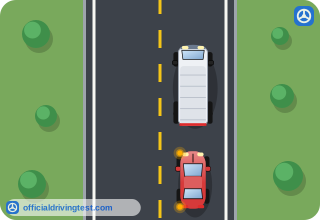
Broken yellow center line
A single, broken yellow centerline shows the center of a two-way, two-lane road. Passing is permitted on either side, if safe conditions exist. When passing, you must use the lane belonging to oncoming traffic.
Manual page 22 · Open this page in the manual (Manual page 22)
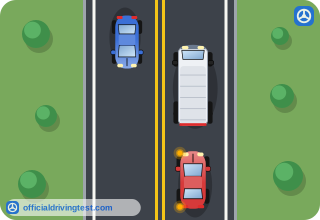
Double solid yellow lines
A double, solid yellow centerline shows the center of a two-way road. Even if it is not marked with a NO PASSING sign, passing by traffic traveling in either direction is not allowed on roads marked in this manner.
Manual page 22 · Open this page in the manual (Manual page 22)
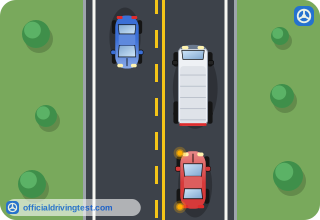
Solid and broken yellow lines
The combination of a solid yellow and a broken yellow centerline also shows the center of a two-way roadway. You may pass if the broken line is on your side of the road and safe conditions exist, but you may not pass when a solid yellow line is on your side of the road.
Manual page 22 · Open this page in the manual (Manual page 22)
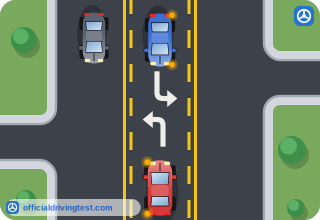
TURNING LANE ONLY (center lane)
Marking patterns like these may be found on many three-lane or five-lane highways. The outside, solid yellow centerline means you cannot use the center lane for passing. The inside, broken yellow and solid yellow centerlines show vehicles traveling in either direction may use the center lane only to make left turns.
Manual page 22 · Open this page in the manual (Manual page 22)
See them all (17) · Pavement markings →
More signs from our practice questions
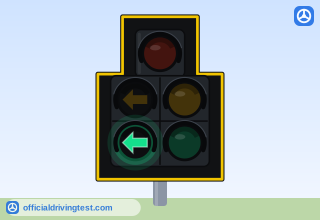
Why is a turn made during a steady green arrow phase called a "protected" turn?
Because oncoming traffic is stopped by a red light
Source: Pennsylvania Driver's Manual (Pub 95), page 7 · Open this page in the manual (Manual page 7)
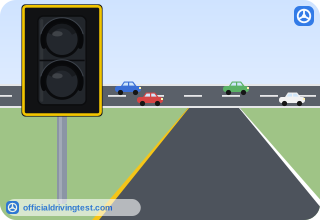
What is the purpose of ramp-metering signals on highway entrance ramps?
To control traffic flow onto congested highways
Source: Pennsylvania Driver's Manual (Pub 95), page 8 · Open this page in the manual (Manual page 8)
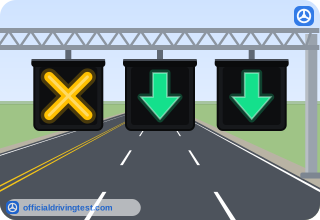
What does a steady yellow "X" displayed over a traffic lane mean?
You must change lanes; the lane is about to reverse direction
Source: Pennsylvania Driver's Manual (Pub 95), page 8 · Open this page in the manual (Manual page 8)
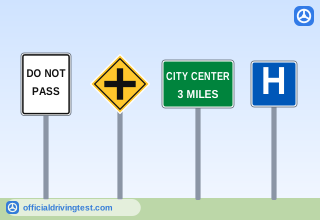
What do regulatory signs tell drivers?
What you must do, or must not do, according to the law
Source: Pennsylvania Driver's Manual (Pub 95), page 10 · Open this page in the manual (Manual page 10)
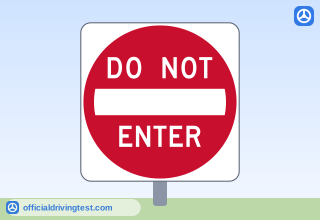
Where is a DO NOT ENTER sign placed?
At the beginning of a one-way street or ramp
Source: Pennsylvania Driver's Manual (Pub 95), page 11 · Open this page in the manual (Manual page 11)
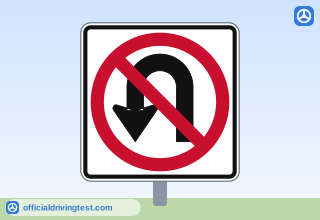
What does a NO U-TURN sign prohibit?
Making a complete turn to go in the opposite direction
Source: Pennsylvania Driver's Manual (Pub 95), page 11 · Open this page in the manual (Manual page 11)
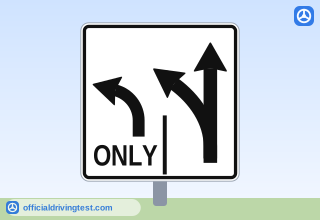
A lane use control sign showing an arrow pointing left, posted over the left lane at an intersection where the adjoining lane may turn left or go straight, means:
traffic in the left lane must turn left
Source: Pennsylvania Driver's Manual (Pub 95), page 11 · Open this page in the manual (Manual page 11)
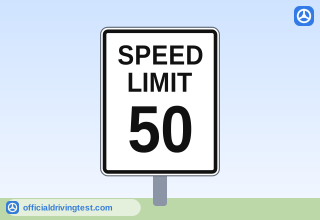
A SPEED LIMIT sign indicates:
The maximum legal speed under ideal conditions
Source: Pennsylvania Driver's Manual (Pub 95), page 12 · Open this page in the manual (Manual page 12)
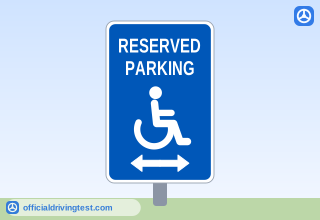
A RESERVED PARKING sign, even though it is not black and white, is classified as which type of sign?
A regulatory sign
Source: Pennsylvania Driver's Manual (Pub 95), page 12 · Open this page in the manual (Manual page 12)
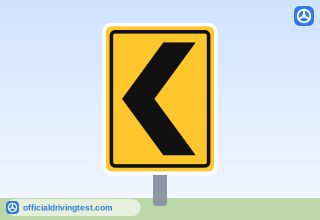
CHEVRON signs, used along a curve, indicate that:
the road bends in the direction the chevron points
Source: Pennsylvania Driver's Manual (Pub 95), page 13 · Open this page in the manual (Manual page 13)
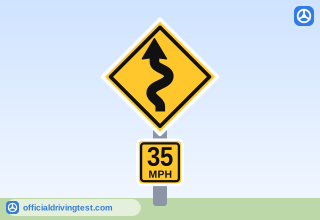
A WINDING ROAD sign indicates that the road ahead has:
three or more curves in a row
Source: Pennsylvania Driver's Manual (Pub 95), page 14 · Open this page in the manual (Manual page 14)
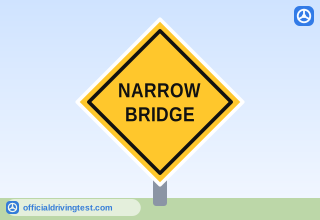
A NARROW BRIDGE OR UNDERPASS AHEAD sign warns that:
each lane narrows and there is generally no shoulder
Source: Pennsylvania Driver's Manual (Pub 95), page 15 · Open this page in the manual (Manual page 15)
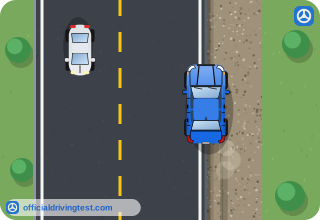
If one of your wheels drops off the roadway onto a low or soft shoulder, what should you do?
Do not slam on the brakes or steer sharply to get back on the road
Source: Pennsylvania Driver's Manual (Pub 95), page 16 · Open this page in the manual (Manual page 16)
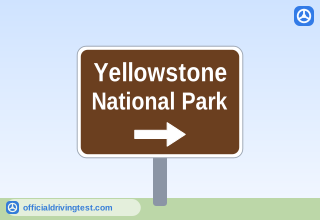
Square or rectangular signs, colored blue or brown with white lettering, that direct motorists to museums, historical landmarks, or state or national parks are called:
Tourist-oriented directional signs
Source: Pennsylvania Driver's Manual (Pub 95), page 21 · Open this page in the manual (Manual page 21)
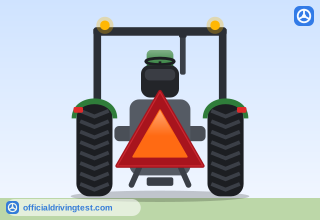
In rural Pennsylvania, an orange triangle displayed on the back of a farm tractor or horse-drawn vehicle indicates the vehicle is designed to operate at:
25 mph or less
Source: Pennsylvania Driver's Manual (Pub 95), page 44 · Open this page in the manual (Manual page 44)
When following a slow-moving farm tractor or horse-drawn vehicle marked with an orange triangle, what should you do?
Stay a safe distance back and do not honk to pass
Source: Pennsylvania Driver's Manual (Pub 95), page 44 · Open this page in the manual (Manual page 44)
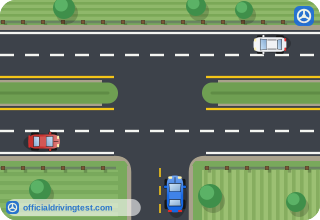
What sign will you typically see posted on your road as you approach an intersection with a divided highway?
DIVIDED HIGHWAY
Source: Pennsylvania Driver's Manual (Pub 95), page 49 · Open this page in the manual (Manual page 49)
Besides ONE WAY signs, what other signs will you typically see together where a road intersects a divided highway?
WRONG WAY and DO NOT ENTER signs
Source: Pennsylvania Driver's Manual (Pub 95), page 49 · Open this page in the manual (Manual page 49)
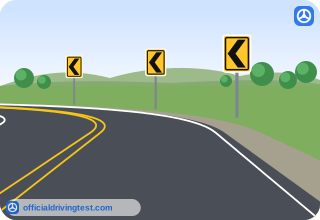
What are chevron warning signs, sometimes placed throughout a sharp curve, especially helpful for?
Driving at night or in poor visibility
Source: Pennsylvania Driver's Manual (Pub 95), page 51 · Open this page in the manual (Manual page 51)
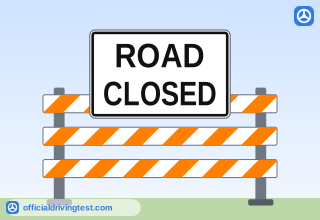
Under Pennsylvania law, what must a driver do when a road or highway is closed by signs or traffic control devices because of a hazardous condition?
Find another route, never around or through the closure
Source: Pennsylvania Driver's Manual (Pub 95), page 62 · Open this page in the manual (Manual page 62)