Pavement markings in Pennsylvania
The Pennsylvania Driver's Manual shows or names everything on this page: 17 in all, on pages 10, 22, 48, 50.
Independent educational site · not affiliated with any government agency or DMV
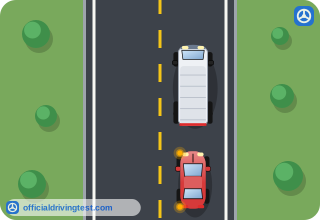
Broken yellow center line
A single, broken yellow centerline shows the center of a two-way, two-lane road. Passing is permitted on either side, if safe conditions exist. When passing, you must use the lane belonging to oncoming traffic.
Manual page 22 · Open this page in the manual (Manual page 22)
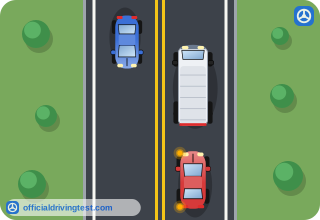
Double solid yellow lines
A double, solid yellow centerline shows the center of a two-way road. Even if it is not marked with a NO PASSING sign, passing by traffic traveling in either direction is not allowed on roads marked in this manner.
Manual page 22 · Open this page in the manual (Manual page 22)
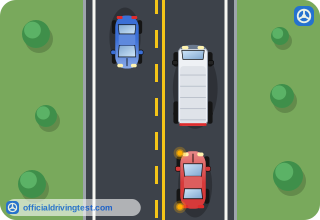
Solid and broken yellow lines
The combination of a solid yellow and a broken yellow centerline also shows the center of a two-way roadway. You may pass if the broken line is on your side of the road and safe conditions exist, but you may not pass when a solid yellow line is on your side of the road.
Manual page 22 · Open this page in the manual (Manual page 22)
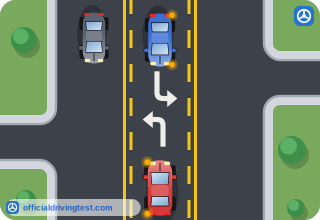
TURNING LANE ONLY (center lane)
Marking patterns like these may be found on many three-lane or five-lane highways. The outside, solid yellow centerline means you cannot use the center lane for passing. The inside, broken yellow and solid yellow centerlines show vehicles traveling in either direction may use the center lane only to make left turns.
Manual page 22 · Open this page in the manual (Manual page 22)
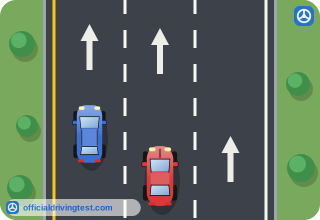
Broken white lane lines
Multi-lane highways without medians (center dividers) are often marked as shown. Broken white lines show which lanes can be used by vehicles traveling the same way. You may cross the broken white lines to pass, (be sure the passing lane is clear) but you may not cross the double yellow centerlines to pass. Traffic is traveling in the opposite direction in the lane to the left of the yellow centerline.
Manual page 22 · Open this page in the manual (Manual page 22)
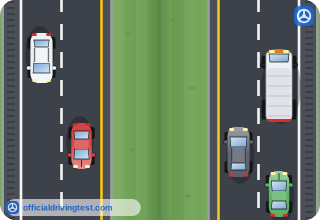
Divided roadways with median
This pattern is used on most limited access highways with medians (center dividers). The right edge of the road is marked with a solid white line. The left edge of each side is marked by a solid yellow line. The traffic lanes for each side are marked by broken white lines, which may be crossed.
Manual page 22 · Open this page in the manual (Manual page 22)
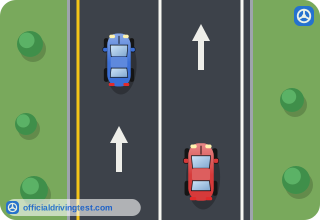
Solid white line
Solid white lines divide lanes of traffic traveling in the same direction. Solid white lines are also used to mark the right edge of the road. As a general rule, broken traffic lines can be crossed and solid lines cannot, except when making a turn.
Manual page 22 · Open this page in the manual (Manual page 22)
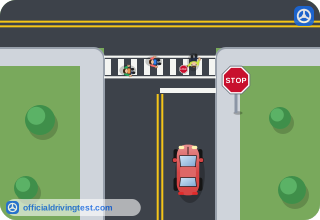
Stop line
When you see a crosswalk or a stop line (white top bar), stop before the front of your vehicle reaches the first painted line. If you cannot see traffic, yield to any pedestrians and then carefully pull forward past the line until you can see clearly. Check for traffic and pedestrians and then go ahead when the intersection is clear.
Manual page 10 · Open this page in the manual (Manual page 10)
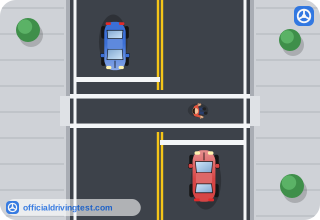
Crosswalk
When you see a crosswalk or a stop line (white top bar), stop before the front of your vehicle reaches the first painted line.
Manual page 50 · Open this page in the manual (Manual page 50)
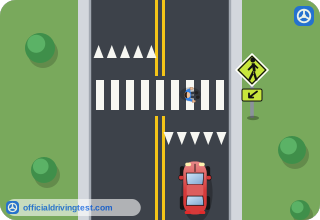
Yield line (white triangles)
YIELD or white triangles painted across the lane to indicate you must yield to approaching traffic
Manual page 22 · Open this page in the manual (Manual page 22)
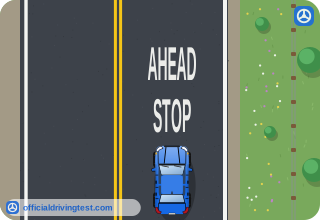
STOP AHEAD (pavement)
Pavement markings also include words painted on the pavement and arrows that supplement messages posted on regulatory and warning signs. Examples include the words STOP AHEAD before an intersection with a STOP sign
Manual page 22 · Open this page in the manual (Manual page 22)
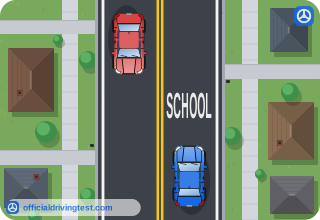
SCHOOL (pavement)
Pavement markings also include words painted on the pavement and arrows that supplement messages posted on regulatory and warning signs. ... SCHOOL before a school zone
Manual page 22 · Open this page in the manual (Manual page 22)
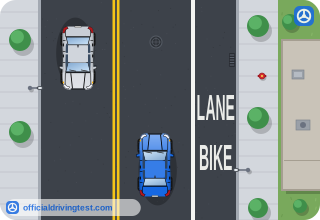
BIKE LANE (pavement)
Pavement markings also include words painted on the pavement and arrows that supplement messages posted on regulatory and warning signs. ... BIKE LANE for a lane reserved for bicyclists
Manual page 22 · Open this page in the manual (Manual page 22)
Large white arrows
Pavement markings also include words painted on the pavement and arrows that supplement messages posted on regulatory and warning signs. ... large white arrows to indicate the direction of travel on one-way streets and highway off-ramps.
Manual page 22 · Open this page in the manual (Manual page 22)
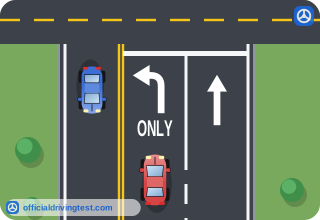
Left-turn arrow ONLY (pavement)
Many streets have signs or pavement markings indicating a particular lane is to be used for a particular traffic movement. If you end up in a lane marked for turns only when you want to go straight through the intersection, you must make the turn. If you want to turn, but end up in a lane marked for through traffic, you must continue straight through the intersection.
Manual page 48 · Open this page in the manual (Manual page 48)
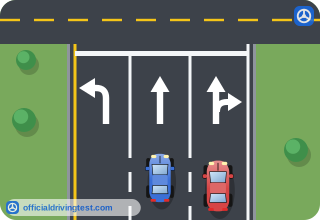
Straight-or-left arrow (pavement)
Many streets have signs or pavement markings indicating a particular lane is to be used for a particular traffic movement. If you end up in a lane marked for turns only when you want to go straight through the intersection, you must make the turn. If you want to turn, but end up in a lane marked for through traffic, you must continue straight through the intersection.
Manual page 48 · Open this page in the manual (Manual page 48)
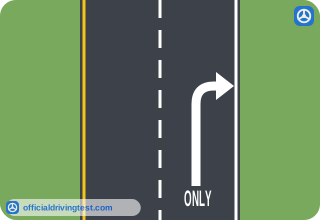
Right-turn arrow ONLY (pavement)
Many streets have signs or pavement markings indicating a particular lane is to be used for a particular traffic movement. If you end up in a lane marked for turns only when you want to go straight through the intersection, you must make the turn. If you want to turn, but end up in a lane marked for through traffic, you must continue straight through the intersection.
Manual page 48 · Open this page in the manual (Manual page 48)