Pennsylvania: Emergencies and special situations — Part 3 Practice Test
Skids, breakdowns, floods, and being stopped by police. — Part 3
Independent educational site · not affiliated with any government agency or DMV
Ready? Test yourself
- Instant feedback with an explanation
- Every answer cites its source in the manual
- Your best score is saved on this device
- Keyboard: press 1 to 4 to answer and Enter for the next question
Questions are original and based on the official manual "Pennsylvania Driver's Manual" (Pub 95), Pennsylvania Department of Transportation (PennDOT), Bureau of Driver Licensing.
All 18 questions in this practice test
Take the test above first, then use this list to study. Tap “Show answer” to see the correct answer and explanation.
Show the questions and answersHide the questions
-
How far away from your air bag should you be positioned, at minimum, according to the manual?
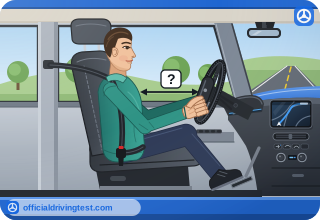
- 30 inches
- 20 inches
- 10 inches
- 5 inches
Show answer
Correct answer: 10 inches
The manual advises being positioned at least ten inches away from your air bag.
Source: Pennsylvania Driver's Manual (Pub 95), page 61 · Open this page in the manual (Manual page 61)
-
If your vehicle does NOT have anti-lock brakes (ABS) and you must brake suddenly, what should you do?
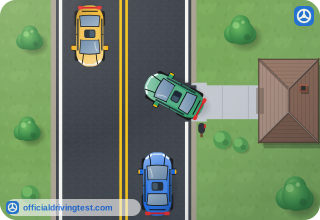
- Press and release the brakes repeatedly
- Slam on the brakes and hold them down
- Pump the accelerator instead
- Shift into neutral first
Show answer
Correct answer: Press and release the brakes repeatedly
Without ABS, press and release the brakes repeatedly; pumping the brakes slows the vehicle and keeps it under control, while slamming on the brakes can lock the wheels and cause a skid.
Source: Pennsylvania Driver's Manual (Pub 95), page 61 · Open this page in the manual (Manual page 61)
-
If your vehicle HAS anti-lock brakes (ABS), what should you do when braking suddenly?
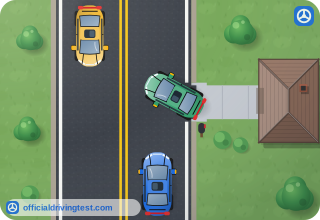
- Maintain firm, continuous pressure on the brake
- Avoid using the brakes at all
- Tap the brake lightly, then release it
- Pump the brake pedal repeatedly and quickly
Show answer
Correct answer: Maintain firm, continuous pressure on the brake
With ABS, maintain firm and continuous pressure on the brake pedal; the vehicle will not skid, and you should not pump the brake pedal.
Source: Pennsylvania Driver's Manual (Pub 95), page 61 · Open this page in the manual (Manual page 61)
-
When braking hard with ABS, what should you NOT be alarmed by?
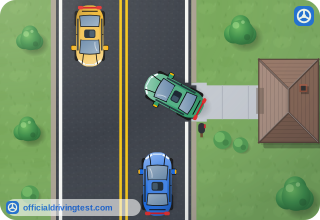
- Mechanical noises or slight pulsations
- A sudden, complete loss of braking power
- The engine shutting off
- The steering wheel locking
Show answer
Correct answer: Mechanical noises or slight pulsations
The manual reassures drivers not to be alarmed by mechanical noises and/or slight pulsations when ABS engages.
Source: Pennsylvania Driver's Manual (Pub 95), page 61 · Open this page in the manual (Manual page 61)
-
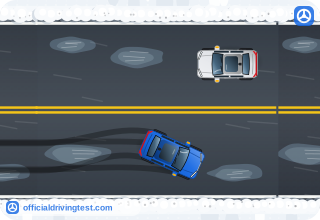
If the rear of your vehicle is skidding to the left, which way should you turn the steering wheel?
- To the right
- To the left
- It does not matter
- Keep it perfectly straight
Show answer
Correct answer: To the left
If the rear of your vehicle is skidding to the left, turn the wheel to the left, in the direction you want to go.
Source: Pennsylvania Driver's Manual (Pub 95), page 61 · Open this page in the manual (Manual page 61)
-
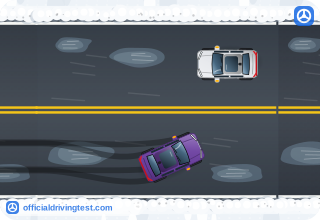
After correcting a skid, what does the manual say might happen next?
- The vehicle will always stop skidding permanently
- The vehicle will accelerate uncontrollably
- A milder second skid may occur in the opposite direction
- The engine will stall automatically
Show answer
Correct answer: A milder second skid may occur in the opposite direction
When you steer to correct a skid, another skid may result in the opposite direction, but it will not be as bad as the first; be ready to correct it the same way.
Source: Pennsylvania Driver's Manual (Pub 95), page 61 · Open this page in the manual (Manual page 61)
-
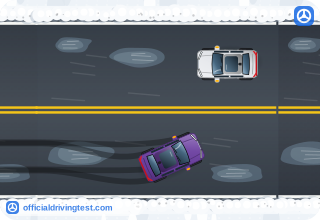
What should you NOT do while your vehicle is skidding?
- Keep both hands on the wheel
- Use your brakes
- Look in the direction you want to go
- Steer in the direction the rear of the vehicle is skidding
Show answer
Correct answer: Use your brakes
The manual warns not to use your brakes while skidding; hitting the brakes will make the skid worse and risks locking your wheels and losing steering control.
Source: Pennsylvania Driver's Manual (Pub 95), page 61 · Open this page in the manual (Manual page 61)
-
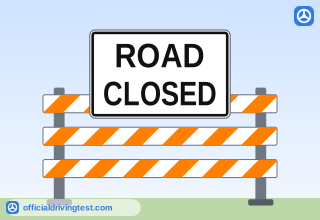
Under Pennsylvania law, what must a driver do when a road or highway is closed by signs or traffic control devices because of a hazardous condition?
- Find another route, never around or through the closure
- Drive around the signs if no workers are visible
- Follow other vehicles that go around the closure
- Proceed through slowly if the road looks passable
Show answer
Correct answer: Find another route, never around or through the closure
It is against the law to drive around or through signs or devices that close a road due to hazardous conditions; find another route instead.
Source: Pennsylvania Driver's Manual (Pub 95), page 62 · Open this page in the manual (Manual page 62)
-
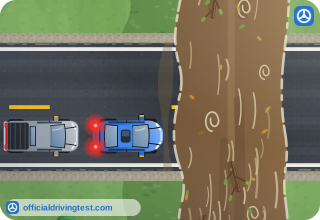
According to the Pennsylvania Driver's Manual, what should a driver do upon reaching a flooded roadway?
- Drive through slowly in the center of the road
- Find another route and do not attempt to cross
- Follow another vehicle that has already crossed
- Cross quickly before the water rises further
Show answer
Correct answer: Find another route and do not attempt to cross
The manual advises "Turn Around, Don't Drown" - find another travel route and never attempt to cross a flooded roadway.
Source: Pennsylvania Driver's Manual (Pub 95), page 62 · Open this page in the manual (Manual page 62)
-
What does Pennsylvania law say about flood control barriers?

- They may be passed if the water looks shallow
- They may be passed only during daylight hours
- It is against the law to pass any flood control barrier
- They may be passed if no other route is available
Show answer
Correct answer: It is against the law to pass any flood control barrier
It is against the law to pass any flood control barrier, regardless of how the water appears.
Source: Pennsylvania Driver's Manual (Pub 95), page 62 · Open this page in the manual (Manual page 62)
-
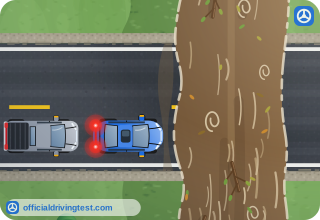
How much floodwater can cause some cars to lose control or stall, according to the Pennsylvania Driver's Manual?
- Twelve inches
- Two feet
- Three inches
- Six inches
Show answer
Correct answer: Six inches
Six inches of water - about the length of a dollar bill - can cause some cars to lose control or stall.
Source: Pennsylvania Driver's Manual (Pub 95), page 62 · Open this page in the manual (Manual page 62)
-
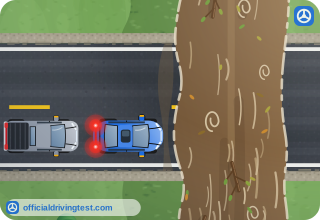
How much moving water can float many cars, according to the manual?
- Twelve inches
- Six inches
- Three feet
- Eighteen inches
Show answer
Correct answer: Twelve inches
Twelve inches of moving water can float many cars.
Source: Pennsylvania Driver's Manual (Pub 95), page 62 · Open this page in the manual (Manual page 62)
-
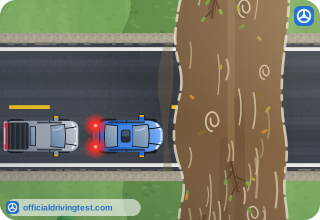
How much moving water can move most SUVs and pickup trucks?
- One foot
- Two feet
- Six inches
- Three feet
Show answer
Correct answer: Two feet
Two feet of moving water can move most SUVs and pickup trucks.
Source: Pennsylvania Driver's Manual (Pub 95), page 62 · Open this page in the manual (Manual page 62)
-
If you get stuck in floodwaters, what should you do?

- Stay inside your vehicle and wait for rescue
- Rev the engine to try to drive out
- Quickly get out of the vehicle and move to higher ground
- Open the windows and wait for the water to recede
Show answer
Correct answer: Quickly get out of the vehicle and move to higher ground
If you get stuck in floodwaters, quickly get out of your vehicle and move to higher ground.
Source: Pennsylvania Driver's Manual (Pub 95), page 62 · Open this page in the manual (Manual page 62)
-
If your accelerator (gas pedal) sticks, what should you avoid doing?
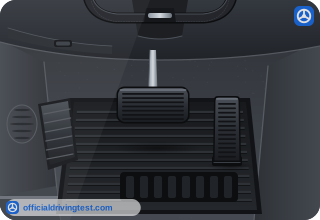
- Tapping the pedal a few times
- Trying to lift it with your toe
- Keeping your eyes on the road
- Reaching down to free it by hand
Show answer
Correct answer: Reaching down to free it by hand
If the accelerator sticks, do not reach down to try to free the pedal with your hand; keep your eyes on the road and try tapping it or lifting it with your toe instead.
Source: Pennsylvania Driver's Manual (Pub 95), page 62 · Open this page in the manual (Manual page 62)
-
If your accelerator remains stuck after trying to free it, what should you do next?
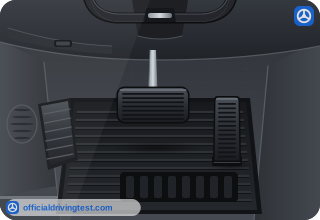
- Shift to neutral at once and brake
- Turn on the radio to stay calm
- Pump the accelerator repeatedly
- Turn the steering wheel sharply
Show answer
Correct answer: Shift to neutral at once and brake
If the pedal remains stuck, shift to neutral immediately and use the brakes; this causes the engine to race but removes power from the wheels.
Source: Pennsylvania Driver's Manual (Pub 95), page 62 · Open this page in the manual (Manual page 62)
-
After pulling off the road because your accelerator stuck, what should you do?
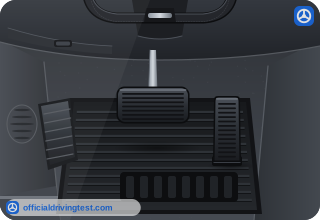
- Leave the engine running in case you need to move again
- Stop, turn off the engine, and put on your emergency flashers
- Immediately try to restart the engine
- Leave the vehicle in gear with the engine off
Show answer
Correct answer: Stop, turn off the engine, and put on your emergency flashers
After pulling off the road and slowing to a safe speed, stop, turn off the engine, and put on your emergency flashers.
Source: Pennsylvania Driver's Manual (Pub 95), page 62 · Open this page in the manual (Manual page 62)
-
If you need to slow or stop quickly and must turn off your ignition, what position should you use?
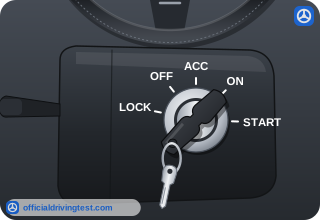
- "LOCK," to secure the steering wheel
- "ACC," to keep accessories running
- "OFF," never "LOCK"
- Either "OFF" or "LOCK," whichever is faster
Show answer
Correct answer: "OFF," never "LOCK"
Turn your ignition to "OFF" - never "LOCK" - because "LOCK" will cause you to lose steering ability.
Source: Pennsylvania Driver's Manual (Pub 95), page 62 · Open this page in the manual (Manual page 62)