North Carolina: Speed & following distance
Speed limits, following distance, scanning ahead and driving in different conditions. Split into 5 shorter tests so you're not stuck in one long quiz.
Independent educational site · not affiliated with any government agency or DMV
Choose a part
Speed & following distance — Part 1
Questions in this part include: “What is the maximum speed limit for a school bus in North Carolina?”
StartSpeed & following distance — Part 2
Questions in this part include: “What is a leading cause of traffic crashes?”
StartSpeed & following distance — Part 3
Questions in this part include: “On open roads, what should you scan for on the roadsides?”
StartSpeed & following distance — Part 4
Questions in this part include: “While checking the mirrors, how long may you take your eyes off the road?”
StartSpeed & following distance — Part 5
Questions in this part include: “How much farther can stopping distances be on slippery pavement than on dry pavement?”
StartAll 90 Speed & following distance questions with answers
Choose a part above to take a practice test, or study every question and answer here.
Show the questions and answersHide the questions
-
What is the maximum speed limit for a school bus in North Carolina?
- 25 mph
- 35 mph
- 55 mph
- 45 mph
Show answer
Correct answer: 45 mph
The manual states that the maximum speed limit for a school bus is 45 mph.
Source: North Carolina Driver Handbook (Revised May 2025), page 47 · Open this page in the manual (Manual page 47)
-
On a multi-lane highway, which lane should you use when moving slower than the posted speed limit, unless you are passing, turning left or avoiding an obstruction?
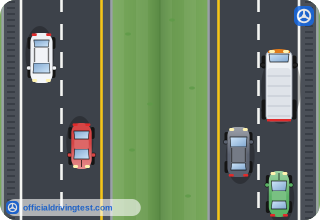
- The extreme left lane
- The center lane
- The extreme right lane
- Whichever lane has the least traffic
Show answer
Correct answer: The extreme right lane
A driver moving slower than the posted limit on a multi-lane highway should stay in the extreme right lane.
Source: North Carolina Driver Handbook (Revised May 2025), page 52 · Open this page in the manual (Manual page 52)
-
Why are stopping distances longer at higher speeds?
- Tires grip the road less firmly whenever the vehicle is moving quickly
- Drivers cannot see the brake lights of vehicles ahead as well
- The brakes take longer to heat up when traveling at high speeds
- The vehicle travels farther during reaction time and needs more braking distance
Show answer
Correct answer: The vehicle travels farther during reaction time and needs more braking distance
At higher speeds the vehicle covers more ground during the driver's reaction time and needs more braking distance to stop completely.
Source: North Carolina Driver Handbook (Revised May 2025), page 52 · Open this page in the manual (Manual page 52)
-
In ideal conditions, about how many feet does a vehicle traveling 55 miles per hour need to stop completely?
- Approximately 111 feet
- Approximately 211 feet
- Approximately 155 feet
- Approximately 311 feet
Show answer
Correct answer: Approximately 211 feet
The manual states that at 55 mph in ideal conditions a vehicle needs approximately 211 feet to stop completely.
Source: North Carolina Driver Handbook (Revised May 2025), page 53 · Open this page in the manual (Manual page 53)
-
What happens as each additional mile per hour is traveled?
- The stopping distance stays the same for the vehicle
- The driver's reaction time becomes shorter and quicker
- The driver's ability to control the vehicle is reduced
- The vehicle needs less room to turn in a curve
Show answer
Correct answer: The driver's ability to control the vehicle is reduced
Each additional mile per hour reduces the driver's ability to control the vehicle.
Source: North Carolina Driver Handbook (Revised May 2025), page 53 · Open this page in the manual (Manual page 53)
-
What does speed also increase, according to the manual?
- The likelihood that a crash will result in serious injury or death
- The distance at which other drivers can see your vehicle
- The traction available on a wet road
- The chance that other drivers will pass you safely
Show answer
Correct answer: The likelihood that a crash will result in serious injury or death
Higher speed makes a crash more likely to cause serious injury or death.
Source: North Carolina Driver Handbook (Revised May 2025), page 53 · Open this page in the manual (Manual page 53)
-
If you must drive slower than the traffic around you, what should you still observe?
- The posted minimum speed limit
- The advisory speed for the next curve
- The average speed of the vehicles behind you
- The speed limit for school buses
Show answer
Correct answer: The posted minimum speed limit
The manual says that if you must drive slower, you should still observe the posted minimum speed limit.
Source: North Carolina Driver Handbook (Revised May 2025), page 53 · Open this page in the manual (Manual page 53)
-
When is very slow driving especially dangerous?
- When you are driving on a straight, flat road with good sight
- When you are driving on a wide, straight highway in daylight
- Just after you have passed the crest of a hill or rounded a curve
- When the road is dry, well lit and free of any other traffic
Show answer
Correct answer: Just after you have passed the crest of a hill or rounded a curve
Faster vehicles can crash into a slow vehicle before they can slow down just after a hill crest or a curve.
Source: North Carolina Driver Handbook (Revised May 2025), page 53 · Open this page in the manual (Manual page 53)
-
What is wise to do if traffic is collecting behind you because you must drive slowly?
- Turn on your hazard lights and continue driving at the same speed
- Pull over to the side of the road, stop and allow the vehicles to pass
- Speed up until you reach the posted speed limit for the road
- Move toward the center of the road so no one can try to pass
Show answer
Correct answer: Pull over to the side of the road, stop and allow the vehicles to pass
When traffic collects behind a slow driver, it is wise to pull over, stop and let the vehicles pass.
Source: North Carolina Driver Handbook (Revised May 2025), page 53 · Open this page in the manual (Manual page 53)
-
According to studies, which vehicle is much more likely to cause or be involved in a crash?
- A vehicle moving at a normal speed for the road and conditions
- A vehicle traveling exactly at the posted limit at all times
- A vehicle following another at a distance of two seconds
- A vehicle moving at a speed considerably below the posted limit
Show answer
Correct answer: A vehicle moving at a speed considerably below the posted limit
The manual says studies show a vehicle moving well below the posted limit is much more likely to cause or be in a crash than one at a normal speed.
Source: North Carolina Driver Handbook (Revised May 2025), page 53 · Open this page in the manual (Manual page 53)
-
Besides driving faster than the posted speed limit, what speed must you never drive?
- A speed that is 5 mph below the posted limit on a clear day
- A speed that is lower than the speed of the vehicles behind you
- A speed that is unreasonable or unwise given the existing conditions
- A speed that is higher than the speed of the vehicle ahead of you
Show answer
Correct answer: A speed that is unreasonable or unwise given the existing conditions
One of the most important rules about speed is never to drive at a speed that is unreasonable or unwise for the conditions.
Source: North Carolina Driver Handbook (Revised May 2025), page 53 · Open this page in the manual (Manual page 53)
-
As your speed increases, how far ahead must you be able to see?
- Farther ahead, to allow enough distance for stopping
- The same distance, as long as you are under the speed limit
- Less far ahead, because you pass hazards more quickly
- Only as far as the vehicle directly in front of you
Show answer
Correct answer: Farther ahead, to allow enough distance for stopping
The faster you move, the farther ahead you must see to allow enough distance to stop.
Source: North Carolina Driver Handbook (Revised May 2025), page 53 · Open this page in the manual (Manual page 53)
-
Unless otherwise posted, what is the speed limit in cities and towns?
- 25 mph
- 45 mph
- 55 mph
- 35 mph
Show answer
Correct answer: 35 mph
The manual says the speed limit is 35 mph in cities and towns unless otherwise posted.
Source: North Carolina Driver Handbook (Revised May 2025), page 53 · Open this page in the manual (Manual page 53)
-
According to the Maximum Speed Limits table, what is the maximum speed limit for school buses?
- 35 mph
- 45 mph
- 55 mph
- 65 mph
Show answer
Correct answer: 45 mph
The Maximum Speed Limits table lists 45 mph for school buses.
Source: North Carolina Driver Handbook (Revised May 2025), page 53 · Open this page in the manual (Manual page 53)
-
According to the Maximum Speed Limits table, what is the maximum speed limit for school activity buses?
- 35 mph
- 55 mph
- 45 mph
- 70 mph
Show answer
Correct answer: 55 mph
The Maximum Speed Limits table lists 55 mph for school activity buses.
Source: North Carolina Driver Handbook (Revised May 2025), page 53 · Open this page in the manual (Manual page 53)
-
According to the Maximum Speed Limits table, what is the maximum speed limit outside cities and towns?
- 35 mph
- 45 mph
- 65 mph
- 55 mph
Show answer
Correct answer: 55 mph
The Maximum Speed Limits table lists 55 mph outside cities and towns.
Source: North Carolina Driver Handbook (Revised May 2025), page 53 · Open this page in the manual (Manual page 53)
-
According to the Maximum Speed Limits table, what is the maximum speed limit for interstates?
- 70 mph
- 55 mph
- 60 mph
- 65 mph
Show answer
Correct answer: 70 mph
The Maximum Speed Limits table lists 70 mph for interstates.
Source: North Carolina Driver Handbook (Revised May 2025), page 53 · Open this page in the manual (Manual page 53)
-
When approaching a curve, what should you do before you enter it?
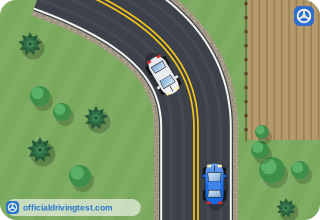
- Brake firmly once you are in the middle of the curve to slow down
- Maintain your speed and brake only after you leave the curve
- Slow down, so that you will not need to brake while in the curve
- Speed up before the curve so the vehicle stays steady in it
Show answer
Correct answer: Slow down, so that you will not need to brake while in the curve
The first step for handling a curve is to slow down before entering so you will not need to brake in the curve.
Source: North Carolina Driver Handbook (Revised May 2025), page 53 · Open this page in the manual (Manual page 53)
-
As you round a curve, what should you do with your speed?
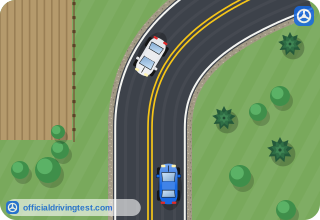
- Gradually decrease it until you are out of the curve
- Keep it exactly the same and avoid touching the pedals
- Hold the brake pedal down lightly the whole way around
- Gradually increase it to maintain traction for good control
Show answer
Correct answer: Gradually increase it to maintain traction for good control
The manual says to gradually increase speed as you round the curve to keep the traction needed for good control.
Source: North Carolina Driver Handbook (Revised May 2025), page 53 · Open this page in the manual (Manual page 53)
-
If you must brake while in a curve, how should you apply the brakes?
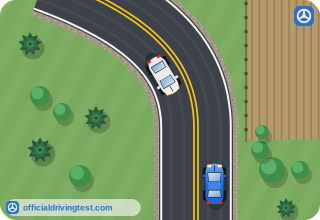
- Firmly and quickly, then release them completely before exiting
- Gradually, until you are sure it is safe to keep continuous pressure
- In short, repeated taps until the vehicle leaves the curve
- Not at all; take your foot off the accelerator and coast through
Show answer
Correct answer: Gradually, until you are sure it is safe to keep continuous pressure
The manual says to apply the brakes gradually until it is safe to keep continuous pressure on the brake pedal.
Source: North Carolina Driver Handbook (Revised May 2025), page 54 · Open this page in the manual (Manual page 54)
-
When should you begin to turn the vehicle for a curve?
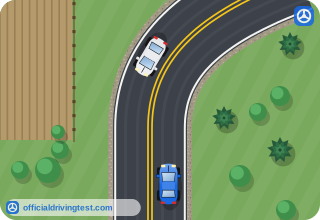
- As soon as the front of your vehicle enters the curve
- Once the vehicle is halfway around the curve
- Just before the point where the road begins to turn
- After the road has started to turn, once you see it
Show answer
Correct answer: Just before the point where the road begins to turn
You begin turning just prior to the point where the road begins to turn.
Source: North Carolina Driver Handbook (Revised May 2025), page 54 · Open this page in the manual (Manual page 54)
-
Where should you drive while rounding a curve?
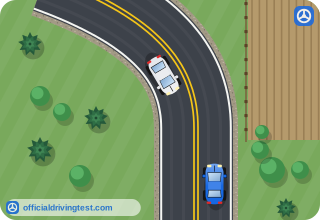
- On your side of the road, as far to the right as you can
- In the center of the road, to keep the curve wide
- On the left side of the road, to cut the curve short
- On whichever side gives you the straightest path
Show answer
Correct answer: On your side of the road, as far to the right as you can
The manual says to stay on your side of the road and drive as far to the right as you can.
Source: North Carolina Driver Handbook (Revised May 2025), page 54 · Open this page in the manual (Manual page 54)
-
On a downhill curve, when should you begin to brake compared with a level roadway?
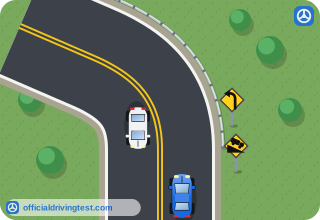
- Later, since gravity slows the vehicle
- At the same point you would on a level road
- Earlier, approaching the curve more slowly
- Only after you enter the curve
Show answer
Correct answer: Earlier, approaching the curve more slowly
Because of the pull of gravity, you should brake earlier and approach a downhill curve more slowly.
Source: North Carolina Driver Handbook (Revised May 2025), page 54 · Open this page in the manual (Manual page 54)
-
What is a leading cause of traffic crashes?
- Following too closely
- Driving too far to the right
- Stopping too early at signals
- Signaling too early before turns
Show answer
Correct answer: Following too closely
The manual states that following too closely is a leading cause of traffic crashes.
Source: North Carolina Driver Handbook (Revised May 2025), page 54 · Open this page in the manual (Manual page 54)
-
On the open road, how much distance should you keep between you and the vehicle ahead?
- Enough so that no vehicle could ever pass between you
- Only one car length, at any speed on the road
- As little as possible, so the space is never used
- Enough so that a passing vehicle can safely move into the space
Show answer
Correct answer: Enough so that a passing vehicle can safely move into the space
On the open road you should leave enough room for a passing vehicle to safely move into and occupy the space.
Source: North Carolina Driver Handbook (Revised May 2025), page 54 · Open this page in the manual (Manual page 54)
-
How much time does the "two-second rule" say to allow between the vehicle ahead passing a given point and your vehicle reaching it?
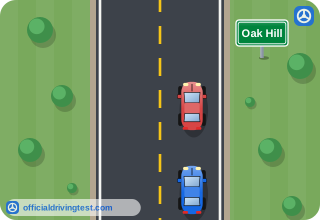
- One second
- Two seconds
- Four seconds
- Six seconds
Show answer
Correct answer: Two seconds
The two-second rule says to allow two seconds between the vehicle ahead passing a point and you reaching it.
Source: North Carolina Driver Handbook (Revised May 2025), page 54 · Open this page in the manual (Manual page 54)
-
When driving in heavy city traffic, how can you avoid a rear-end crash by another vehicle?
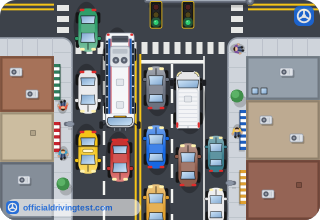
- Stay close behind the vehicle ahead of you
- Check your rear-view mirror often
- Brake sooner than everyone else at every corner
- Keep your eyes fixed only on the road directly ahead
Show answer
Correct answer: Check your rear-view mirror often
The manual says to check your rear-view mirror often and stay aware of dangerous situations behind you.
Source: North Carolina Driver Handbook (Revised May 2025), page 63 · Open this page in the manual (Manual page 63)
-
When driving in cities, what should you leave around your vehicle?
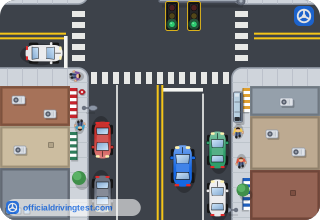
- A gap of exactly one car length
- A clear lane on both sides at all times
- A “margin of safety”
- A gap of one full block
Show answer
Correct answer: A “margin of safety”
The manual says to give yourself plenty of space to make decisions and leave a “margin of safety” around your vehicle.
Source: North Carolina Driver Handbook (Revised May 2025), page 63 · Open this page in the manual (Manual page 63)
-
When driving in cities, how far ahead should you watch the road?
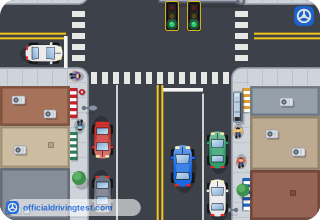
- Far enough to detect possibly dangerous situations earlier
- Only as far as the vehicle directly in front of you
- Only as far as the next traffic signal on the street
- Only far enough to see the taillights of one vehicle
Show answer
Correct answer: Far enough to detect possibly dangerous situations earlier
Watch the road far enough ahead to detect possibly dangerous situations earlier and take proper defensive actions.
Source: North Carolina Driver Handbook (Revised May 2025), page 63 · Open this page in the manual (Manual page 63)
-
If you cannot see the inside rear-view mirror of the car ahead, what does the manual say about your position?
- You are driving too fast for the road
- You are in the safest position to pass
- You are probably in the driver's blind spot
- You are following at the proper distance
Show answer
Correct answer: You are probably in the driver's blind spot
If you cannot see the inside rear-view mirror of the car ahead, you are probably in that driver's blind spot.
Source: North Carolina Driver Handbook (Revised May 2025), page 63 · Open this page in the manual (Manual page 63)
-
When driving in city traffic, what should you never do?
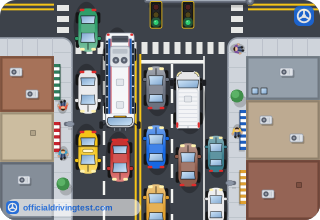
- Signal before changing lanes
- Weave in and out of traffic
- Check your mirrors often
- Plan your lane changes ahead of time
Show answer
Correct answer: Weave in and out of traffic
The manual says never to weave in and out of traffic; stay in one lane if you can and plan lane changes ahead.
Source: North Carolina Driver Handbook (Revised May 2025), page 63 · Open this page in the manual (Manual page 63)
-
What should you watch for near parked vehicles in a city?
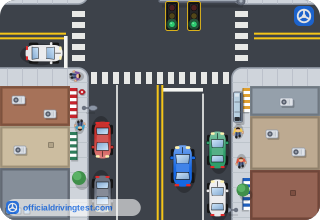
- Only vehicles that are idling with their lights turned on at night
- Drivers who plan to park in the exact space you are passing
- Only pedestrians who are waiting at a marked crosswalk nearby
- Vehicles pulling out and pedestrians darting out from between them
Show answer
Correct answer: Vehicles pulling out and pedestrians darting out from between them
Watch for parked vehicles that might be pulling out and pedestrians who might dart onto the street from between them.
Source: North Carolina Driver Handbook (Revised May 2025), page 63 · Open this page in the manual (Manual page 63)
-
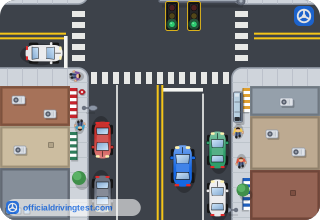
What can parked vehicles block your view of in the city?
- Traffic signals but not driveways
- Only the road signs on the right side
- Intersecting traffic, driveways and alleys
- Only the lane markings on the road
Show answer
Correct answer: Intersecting traffic, driveways and alleys
Parked vehicles can block your view of intersecting traffic, driveways and alleys.
Source: North Carolina Driver Handbook (Revised May 2025), page 63 · Open this page in the manual (Manual page 63)
-
Which is a reason driving on rural roads is often more dangerous than driving in heavy city traffic?
- Rural roads are always wider and carry more vehicles
- Rural roads have more traffic signals to watch
- Rural roads have more cars parked along the edges
- The lighting is often not as good
Show answer
Correct answer: The lighting is often not as good
Rural driving is often more dangerous because the road may be narrower, the lighting is often not as good and speeds may be higher.
Source: North Carolina Driver Handbook (Revised May 2025), page 63 · Open this page in the manual (Manual page 63)
-
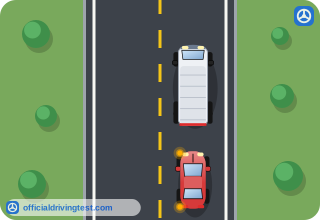
On rural roads, what may be higher, making them more dangerous than heavy city traffic?
- The number of traffic signals
- The travel speeds
- The number of pedestrians
- The amount of traffic
Show answer
Correct answer: The travel speeds
One reason rural driving is often more dangerous than heavy city traffic is that the travel speeds may be higher.
Source: North Carolina Driver Handbook (Revised May 2025), page 63 · Open this page in the manual (Manual page 63)
-
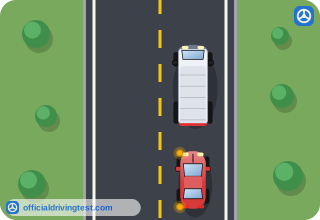
How may a rural road compare to a city street, making it more dangerous?
- The road may have more lanes
- The road may not be as wide
- The road may have more signals
- The road may be better lit
Show answer
Correct answer: The road may not be as wide
One reason rural roads are often more dangerous than heavy city traffic is that the road may not be as wide.
Source: North Carolina Driver Handbook (Revised May 2025), page 63 · Open this page in the manual (Manual page 63)
-
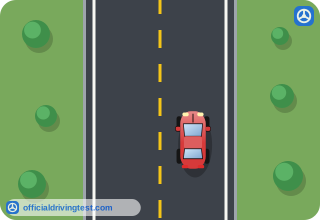
On open roads, what should you stay alert for?
- Drivers who are certain to travel above the posted speed limit
- Drivers who are certain to stop at every railroad crossing
- Vehicles that are always parked along the road at night
- Drivers who might be driving slower than the posted speed limit
Show answer
Correct answer: Drivers who might be driving slower than the posted speed limit
On open roads you should stay alert for drivers who might be driving slower than the posted speed limit.
Source: North Carolina Driver Handbook (Revised May 2025), page 63 · Open this page in the manual (Manual page 63)
-
On open roads, what should you scan for on the roadsides?
- Unpredictable wildlife
- Loose gravel or debris
- Broken-down vehicles
- Pedestrians on shoulders
Show answer
Correct answer: Unpredictable wildlife
The manual says to scan for unpredictable wildlife on roadsides.
Source: North Carolina Driver Handbook (Revised May 2025), page 63 · Open this page in the manual (Manual page 63)
-
For what is a paved secondary road not always designed?
- Light rain or wet weather conditions
- Vehicles under 4,000 pounds in weight
- Heavy traffic or regular highway speed
- Driving during daylight hours only
Show answer
Correct answer: Heavy traffic or regular highway speed
A paved secondary road is not always designed for heavy traffic or regular highway speed.
Source: North Carolina Driver Handbook (Revised May 2025), page 63 · Open this page in the manual (Manual page 63)
-
Most secondary roads are built for what?
- Main highway travel
- Heavy truck traffic
- Regular highway speed
- Local transportation
Show answer
Correct answer: Local transportation
Most secondary roads are built for local transportation, and not as main highways.
Source: North Carolina Driver Handbook (Revised May 2025), page 63 · Open this page in the manual (Manual page 63)
-
Compared with primary roads, what are hills and curves likely to be on secondary roads?
- Gentler hills and wider curves
- Steeper hills and sharper curves
- The same as on primary roads
- Fewer but longer hills and curves
Show answer
Correct answer: Steeper hills and sharper curves
On secondary roads, hills are likely to be steeper and curves likely to be sharper than on primary roads.
Source: North Carolina Driver Handbook (Revised May 2025), page 63 · Open this page in the manual (Manual page 63)
-
How are sight distances on secondary roads often described?
- Very long
- Unlimited
- Very short
- Better than on primary roads
Show answer
Correct answer: Very short
The manual says sight distances on secondary roads are often very short.
Source: North Carolina Driver Handbook (Revised May 2025), page 63 · Open this page in the manual (Manual page 63)
-
Secondary roads cannot be traveled safely at speeds that would be proper for what?
- Primary highways
- Rural interstates
- Residential streets
- School zones
Show answer
Correct answer: Primary highways
Secondary roads cannot be traveled safely at speeds that would be proper for primary highways.
Source: North Carolina Driver Handbook (Revised May 2025), page 63 · Open this page in the manual (Manual page 63)
-
What should you do to watch for crossing wildlife on secondary roads?
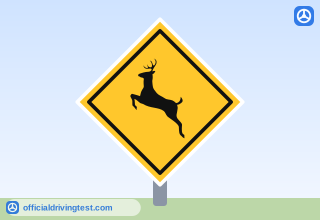
- Slow down and stay alert
- Speed up to pass the area quickly
- Use your horn continuously
- Drive on the shoulder
Show answer
Correct answer: Slow down and stay alert
The manual says to slow down and stay alert for crossing wildlife on secondary roads and all roads.
Source: North Carolina Driver Handbook (Revised May 2025), page 63 · Open this page in the manual (Manual page 63)
-
According to the driving tips, what should you do as your speed increases?
- Look closer to the front of your vehicle
- Watch only the vehicle directly in front of you
- Look farther ahead
- Check your mirrors more often than the road ahead
Show answer
Correct answer: Look farther ahead
The manual tells drivers to look farther ahead as their speed increases.
Source: North Carolina Driver Handbook (Revised May 2025), page 64 · Open this page in the manual (Manual page 64)
-
According to the driving tips, to which places should you give particular attention?
- Roadside billboards and business signs
- Hidden intersections and driveways
- Vehicles that are far behind you
- Empty parking lots and open fields
Show answer
Correct answer: Hidden intersections and driveways
The manual says to give particular attention to hidden intersections and driveways.
Source: North Carolina Driver Handbook (Revised May 2025), page 64 · Open this page in the manual (Manual page 64)
-
According to the driving tips, which vehicles should you watch for in particular?
- Vehicles with only one passenger
- Vehicles that are the same color as yours
- Vehicles that are parked beside the road
- Oversized and slow-moving vehicles
Show answer
Correct answer: Oversized and slow-moving vehicles
The manual says to watch for other vehicles, especially oversized and slow-moving ones.
Source: North Carolina Driver Handbook (Revised May 2025), page 64 · Open this page in the manual (Manual page 64)
-
Why should you be especially alert to oncoming vehicles on some two-lane, undivided highways?
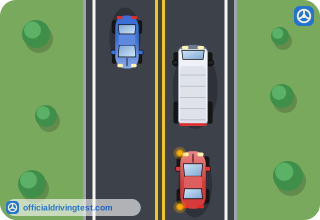
- They are only a few feet away
- They always travel faster than the posted speed limit
- They are hidden by the center line
- They are not required to use headlights
Show answer
Correct answer: They are only a few feet away
The manual says oncoming vehicles are only a few feet away on some two-lane, undivided highways.
Source: North Carolina Driver Handbook (Revised May 2025), page 64 · Open this page in the manual (Manual page 64)
-
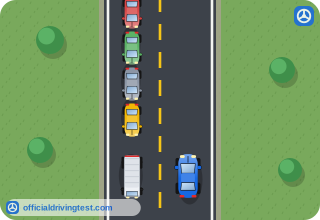
If you see a line of vehicles approaching, what should you watch for?
- Drivers who might be about to stop
- Drivers who might be about to park
- Drivers who might be trying to pass
- Drivers who might be lost
Show answer
Correct answer: Drivers who might be trying to pass
The manual says to watch for drivers who might be trying to pass when a line of vehicles approaches.
Source: North Carolina Driver Handbook (Revised May 2025), page 64 · Open this page in the manual (Manual page 64)
-
What should you always have in order to avoid colliding with an oncoming vehicle or crossing wildlife?
- A faster speed
- A possible escape route
- A wider following distance only
- A second driver in the vehicle
Show answer
Correct answer: A possible escape route
The manual says to always have a possible “escape route” to avoid colliding with an oncoming vehicle or crossing wildlife.
Source: North Carolina Driver Handbook (Revised May 2025), page 64 · Open this page in the manual (Manual page 64)
-
Which of these is one of the two important types of driving skills the handbook describes?
- Skills that let you drive faster than the other vehicles
- Skills to avoid a crash despite the driving errors of others
- Skills that let you avoid all contact with other drivers
- Skills that let you drive without using any mirrors
Show answer
Correct answer: Skills to avoid a crash despite the driving errors of others
The manual says driving involves skills for driving defensively and avoiding a crash despite errors by others, and skills for basic rules about turning, passing, backing and parking.
Source: North Carolina Driver Handbook (Revised May 2025), page 68 · Open this page in the manual (Manual page 68)
-
How far ahead on the roadway do good drivers try to see?
- 2 to 4 seconds ahead, about one car length
- 20 to 30 seconds ahead, about one mile
- 5 to 6 seconds ahead, about two car lengths
- 10 to 15 seconds ahead, about one city block
Show answer
Correct answer: 10 to 15 seconds ahead, about one city block
The manual says good drivers try to see 10 to 15 seconds ahead, about one city block.
Source: North Carolina Driver Handbook (Revised May 2025), page 68 · Open this page in the manual (Manual page 68)
-
Why is it good to look ahead 10 to 15 seconds on the roadway?
- You might avoid last minute moves such as sudden stops
- You can drive without checking the mirrors as often
- You can drive closer to the vehicle ahead of you
- You can pass other vehicles more often and more safely
Show answer
Correct answer: You might avoid last minute moves such as sudden stops
The manual says by looking ahead you might avoid last minute moves such as sudden stops or quick lane changes.
Source: North Carolina Driver Handbook (Revised May 2025), page 68 · Open this page in the manual (Manual page 68)
-
About how often should you check the mirrors to see if a vehicle is following too closely?
- About every 2 seconds
- About every 30 seconds
- About every 10 seconds
- About every 60 seconds
Show answer
Correct answer: About every 10 seconds
The manual says to check the mirrors about every 10 seconds to see whether any vehicle is following too closely.
Source: North Carolina Driver Handbook (Revised May 2025), page 68 · Open this page in the manual (Manual page 68)
-
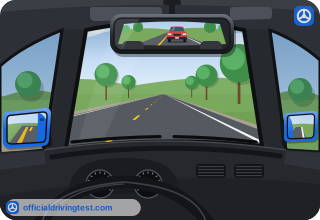
When is it especially important to check for traffic behind you and in your blind spots?
- When driving on a straight, flat road with no other traffic
- When changing lanes, backing, slowing down or going down a long hill
- When following another vehicle closely on a two-lane road
- When driving at a steady speed on an interstate highway
Show answer
Correct answer: When changing lanes, backing, slowing down or going down a long hill
The manual says to check for traffic from behind and in your blind spots when changing lanes, backing, slowing down or driving down a long hill.
Source: North Carolina Driver Handbook (Revised May 2025), page 68 · Open this page in the manual (Manual page 68)
-
While checking the mirrors, how long may you take your eyes off the road?
- No more than two seconds
- No more than five seconds
- As long as the road ahead is clear
- No more than an instant
Show answer
Correct answer: No more than an instant
The manual says not to take your eyes off the road for more than an instant while checking the mirrors.
Source: North Carolina Driver Handbook (Revised May 2025), page 68 · Open this page in the manual (Manual page 68)
-
What should you always leave yourself when scanning the road?
- An "out"
- A stopping distance of at least four seconds
- A clear view of the road behind you only
- A lane to your left for passing
Show answer
Correct answer: An "out"
The manual says to always leave yourself an “out.”
Source: North Carolina Driver Handbook (Revised May 2025), page 68 · Open this page in the manual (Manual page 68)
-
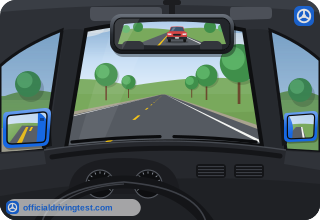
What are blind spots?
- The areas directly in front of the vehicle that you cannot see over the hood
- The areas behind the vehicle that show up in the rear-view mirror
- The areas near the left and right rear corners that the mirrors do not show
- The areas that are hidden by your headlights at night
Show answer
Correct answer: The areas near the left and right rear corners that the mirrors do not show
The manual defines blind spots as the areas near the left and right rear corners of the vehicle that you cannot see using the mirrors.
Source: North Carolina Driver Handbook (Revised May 2025), page 68 · Open this page in the manual (Manual page 68)
-
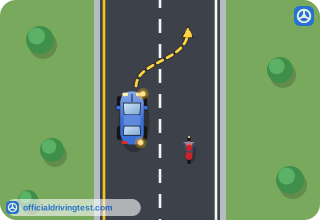
What should you do before you make any lane change or turn to check the blind spot?
- Rely on the side mirrors alone to see the blind spot
- Quickly turn your head and look over your shoulder
- Rely on the rear-view mirror alone to see the blind spot
- Slow down and sound the horn before you move over
Show answer
Correct answer: Quickly turn your head and look over your shoulder
The manual says to quickly turn your head and look over your shoulder to see what is in the blind spot.
Source: North Carolina Driver Handbook (Revised May 2025), page 68 · Open this page in the manual (Manual page 68)
-
Which of these can create additional blind spots?
- Clean windshields and properly adjusted mirrors on your vehicle
- Vehicles that are following you at a safe distance behind
- Empty lanes and wide shoulders on the roadway ahead
- Glaring lights, dirty windshields or bushes and buildings
Show answer
Correct answer: Glaring lights, dirty windshields or bushes and buildings
The manual says additional blind spots can be created by glaring lights, dirty windshields, vehicles parked too closely to an intersection, bushes and/or buildings.
Source: North Carolina Driver Handbook (Revised May 2025), page 68 · Open this page in the manual (Manual page 68)
-
If your view is blocked by parked vehicles, bushes or buildings, what should you do?
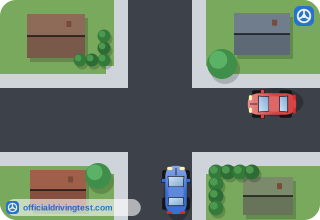
- Ease your vehicle forward until you can see clearly
- Sound your horn and continue forward at your current speed
- Stop and wait for another driver to signal you to go
- Speed up to clear the intersection as quickly as you can
Show answer
Correct answer: Ease your vehicle forward until you can see clearly
The manual says in these cases to ease your vehicle forward until you can see clearly.
Source: North Carolina Driver Handbook (Revised May 2025), page 68 · Open this page in the manual (Manual page 68)
-
Where should you avoid driving with respect to other drivers?
- In the right-hand lane of the road
- In the left lane
- In other drivers' blind spots
- Beside parked vehicles
Show answer
Correct answer: In other drivers' blind spots
The manual says to avoid driving in other drivers' blind spots where it is more difficult for them to see you.
Source: North Carolina Driver Handbook (Revised May 2025), page 68 · Open this page in the manual (Manual page 68)
-
How should you allow a margin of safety around your vehicle?
- Stay close to other vehicles so that they can see you clearly at all times
- Drive next to other vehicles so that they cannot pass you
- Stay close behind the vehicle ahead to keep up with its pace
- Stay clear of other vehicles, with room ahead and behind to pass or stop safely
Show answer
Correct answer: Stay clear of other vehicles, with room ahead and behind to pass or stop safely
The manual says to allow a margin of safety by staying clear of other vehicles, with enough room ahead and behind to pass or stop safely.
Source: North Carolina Driver Handbook (Revised May 2025), page 69 · Open this page in the manual (Manual page 69)
-
To warn other drivers from following too closely, what should you do when slowing down or stopping?
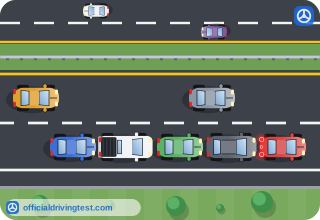
- Drive at a steady speed and signal well in advance
- Brake suddenly at the last moment and sound your horn
- Move to the shoulder and stop until traffic has cleared
- Slow down without using any signal so you do not confuse drivers
Show answer
Correct answer: Drive at a steady speed and signal well in advance
The manual says to drive at a steady speed and signal well in advance whenever slowing down or stopping.
Source: North Carolina Driver Handbook (Revised May 2025), page 69 · Open this page in the manual (Manual page 69)
-
If another vehicle follows you too closely, what should you do?
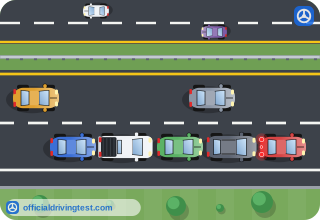
- Speed up to increase the distance
- Slow down to make the driver back off
- Move to another lane and signal for the driver to pass you
- Stop in your lane and wait for the driver to pass
Show answer
Correct answer: Move to another lane and signal for the driver to pass you
The manual says to move to another lane and signal for the driver to pass you.
Source: North Carolina Driver Handbook (Revised May 2025), page 69 · Open this page in the manual (Manual page 69)
-
Where should you stay within a lane to keep a margin of safety?
- Close to the left edge of the lane so you can see ahead
- In the middle of the lane, with space on both sides
- Close to the right edge of the lane to leave room for passing
- Over the center line to leave extra space for parked vehicles
Show answer
Correct answer: In the middle of the lane, with space on both sides
The manual says to stay in the middle of the lane and leave space on both sides of your vehicle.
Source: North Carolina Driver Handbook (Revised May 2025), page 69 · Open this page in the manual (Manual page 69)
-
According to the handbook, what is the key to successful driving?
- Driving faster than traffic
- Driving only on interstates
- Avoiding all night driving
- Adjusting to road conditions
Show answer
Correct answer: Adjusting to road conditions
The manual says adjusting to road conditions is the key to successful driving.
Source: North Carolina Driver Handbook (Revised May 2025), page 69 · Open this page in the manual (Manual page 69)
-
According to the manual, what is the most important thing to know about road conditions?
- When conditions are too dangerous to risk driving at all
- When conditions are safe enough to speed up
- When conditions allow you to use cruise control
- When conditions require the use of high beams
Show answer
Correct answer: When conditions are too dangerous to risk driving at all
The manual says most importantly you should know when conditions are too dangerous to risk driving at all.
Source: North Carolina Driver Handbook (Revised May 2025), page 69 · Open this page in the manual (Manual page 69)
-
If you face two or more unavoidable dangers at the same time, how should you adjust?
- Give an equal amount of room to each of the dangers
- Give the most room to whichever vehicle is nearest to you
- Give the most room to the greatest or most likely danger
- Speed up to pass both of the dangers as quickly as possible
Show answer
Correct answer: Give the most room to the greatest or most likely danger
The manual says to give the most room to the greatest or most likely danger.
Source: North Carolina Driver Handbook (Revised May 2025), page 69 · Open this page in the manual (Manual page 69)
-
Oncoming vehicles are to your left and a child on a bicycle is to your right. Whom should you give more room?
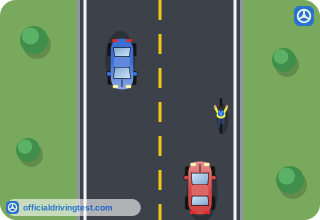
- The oncoming vehicles
- The child on the bicycle
- Both equally
- Neither, you should keep to the center of the road
Show answer
Correct answer: The child on the bicycle
The manual says the child is most likely to make a sudden move, so give the child more room, even if it means moving closer to the oncoming vehicles.
Source: North Carolina Driver Handbook (Revised May 2025), page 69 · Open this page in the manual (Manual page 69)
-
If two dangers are equally hazardous, such as oncoming vehicles and parked vehicles, what should you do?
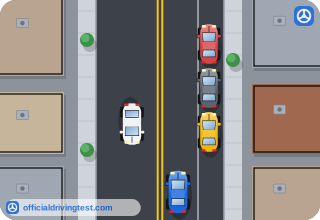
- Speed up and pass the parked vehicles before oncoming traffic arrives
- Continue at the same speed and use the horn to warn them
- Move into the oncoming lane to go around the parked vehicles
- Stop and let the oncoming vehicles pass safely before proceeding
Show answer
Correct answer: Stop and let the oncoming vehicles pass safely before proceeding
The manual says if the dangers are equally hazardous, you should stop and allow the oncoming vehicles to pass before proceeding.
Source: North Carolina Driver Handbook (Revised May 2025), page 69 · Open this page in the manual (Manual page 69)
-
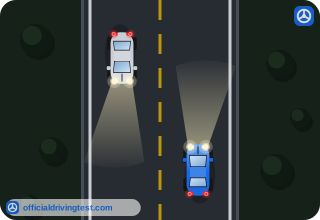
Why is night driving more dangerous than daytime driving?
- There are fewer drivers on the road to watch out for you
- Headlights make the road brighter than it is in the daytime
- Drivers tend to be more alert than they are in the daytime
- You cannot see as well and more impaired drivers are on the road
Show answer
Correct answer: You cannot see as well and more impaired drivers are on the road
The manual lists that you cannot see as well, more impaired drivers are on the road, and drivers tend to be tired and less alert.
Source: North Carolina Driver Handbook (Revised May 2025), page 71 · Open this page in the manual (Manual page 71)
-
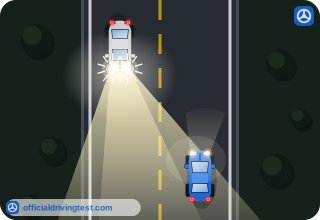
When driving at night, where should you look to avoid looking directly into oncoming headlights?
- Slightly to the left
- Slightly to the right
- Straight into the headlights
- Down at the hood of your vehicle
Show answer
Correct answer: Slightly to the right
The manual says to look slightly to the right so you will not be looking directly into the headlights of oncoming traffic.
Source: North Carolina Driver Handbook (Revised May 2025), page 71 · Open this page in the manual (Manual page 71)
-
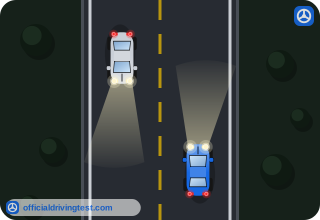
At night, what is the guide to use while staying on the right side of the road?
- The center line
- The taillights of the vehicle ahead
- The headlights of oncoming traffic
- The edge of the road
Show answer
Correct answer: The edge of the road
The manual says to stay on the right side of the road and use the edge of the road as a guide.
Source: North Carolina Driver Handbook (Revised May 2025), page 71 · Open this page in the manual (Manual page 71)
-
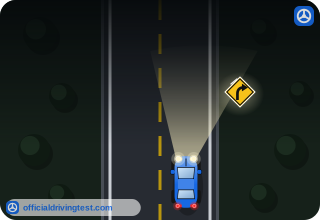
At what speed should you never drive at night?
- A speed too fast to stop within the distance you can see
- A speed slower than the flow of the traffic around you
- A speed below 40 mph on any road at night
- A speed above 45 mph on any road at night
Show answer
Correct answer: A speed too fast to stop within the distance you can see
The manual says never to drive at a speed at which you cannot stop within the distance you can see on the road ahead.
Source: North Carolina Driver Handbook (Revised May 2025), page 71 · Open this page in the manual (Manual page 71)
-
Why should you keep a lookout at all times when driving at night?
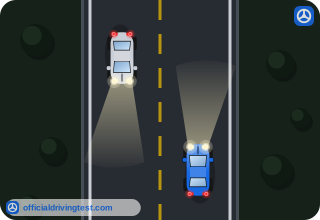
- Dim headlights make oncoming vehicles easier to see clearly
- Other drivers can always see your vehicle very clearly
- Bright headlights from another vehicle make it hard to see past them
- Oncoming lights make the road much brighter for you
Show answer
Correct answer: Bright headlights from another vehicle make it hard to see past them
The manual says bright headlights from another vehicle make it difficult to see beyond their source.
Source: North Carolina Driver Handbook (Revised May 2025), page 71 · Open this page in the manual (Manual page 71)
-
What should you do to reduce the problem of sun glare?
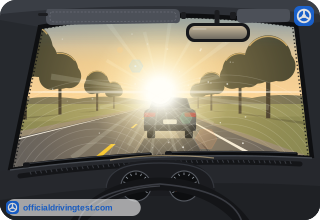
- Adjust your sun visor and wear sunglasses
- Turn on your high beams
- Look directly at the sun to adjust your eyes
- Drive faster to leave the glare behind
Show answer
Correct answer: Adjust your sun visor and wear sunglasses
The manual says to adjust your sun visor and wear sunglasses to reduce sun glare.
Source: North Carolina Driver Handbook (Revised May 2025), page 72 · Open this page in the manual (Manual page 72)
-
If a visor and sunglasses do not help with sun glare, what should you do?
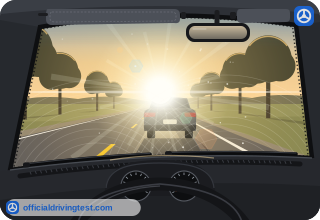
- Slow to 10 mph below the speed limit and continue
- Close your eyes for a few seconds
- Stop on the roadside until you can drive safely
- Continue driving while keeping to the center of the road
Show answer
Correct answer: Stop on the roadside until you can drive safely
The manual says if these do not help, stop on the roadside until you can drive safely.
Source: North Carolina Driver Handbook (Revised May 2025), page 72 · Open this page in the manual (Manual page 72)
-
What must you use when driving in the rain?
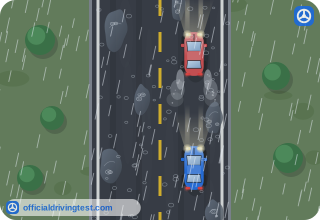
- Your high-beam headlights and your cruise control
- Your headlights and your windshield wipers
- Your emergency flashers and your parking lights only
- Your cruise control and your emergency flashers
Show answer
Correct answer: Your headlights and your windshield wipers
The manual says you must use your headlights and windshield wipers in rain.
Source: North Carolina Driver Handbook (Revised May 2025), page 72 · Open this page in the manual (Manual page 72)
-
How much farther can stopping distances be on slippery pavement than on dry pavement?
- One to two times farther
- Three to four times farther
- Twenty times farther
- Two to 10 times farther
Show answer
Correct answer: Two to 10 times farther
The manual says stopping distances on slippery pavement increase from two to 10 times farther than on dry pavement.
Source: North Carolina Driver Handbook (Revised May 2025), page 72 · Open this page in the manual (Manual page 72)
-
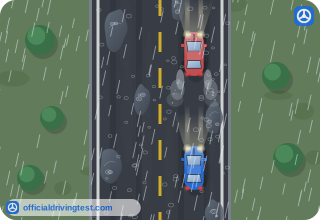
In the rain, how much following distance should you allow?
- At least twice the normal following distance
- The normal following distance
- At least half the normal following distance
- At least ten times the normal following distance
Show answer
Correct answer: At least twice the normal following distance
The manual says to slow down and allow yourself at least twice the normal following distance.
Source: North Carolina Driver Handbook (Revised May 2025), page 72 · Open this page in the manual (Manual page 72)
-
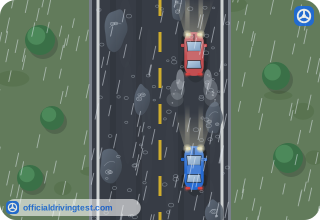
When are roads more dangerous during rain?
- After it has been raining steadily for several hours
- After the rain has stopped and a full day has passed
- Just after rain has begun to fall
- When the rain is very light and the road is only damp
Show answer
Correct answer: Just after rain has begun to fall
The manual says roads are more dangerous just after rain has begun, especially if it has not rained for a while.
Source: North Carolina Driver Handbook (Revised May 2025), page 72 · Open this page in the manual (Manual page 72)
-
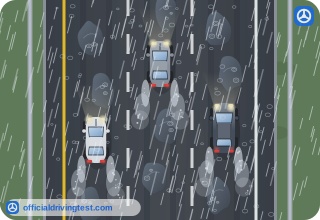
For the first 10 to 15 minutes of rain, what combines to create a slick surface?
- Rain and snow that has piled up along the shoulder
- Rain, oil from asphalt and vehicles, dirt, dust and rubber
- Rain and fallen leaves that are on the pavement
- Rain and sand that has blown from the shoulder
Show answer
Correct answer: Rain, oil from asphalt and vehicles, dirt, dust and rubber
The manual says for the first 10 to 15 minutes rain combines with oil from asphalt and vehicles, and with dirt, dust and rubber to create a slick surface.
Source: North Carolina Driver Handbook (Revised May 2025), page 72 · Open this page in the manual (Manual page 72)
-
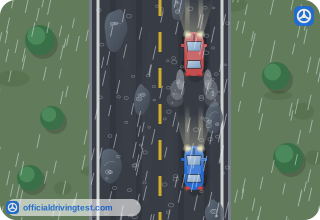
How much slower should you drive on wet pavement than on dry pavement?
- At least one to two miles per hour slower
- At least 20 to 25 miles per hour slower
- At least 30 to 35 miles per hour slower
- At least five to 10 miles per hour slower
Show answer
Correct answer: At least five to 10 miles per hour slower
The manual says to drive at least five to 10 miles per hour slower on wet pavement than on dry pavement.
Source: North Carolina Driver Handbook (Revised May 2025), page 72 · Open this page in the manual (Manual page 72)
-
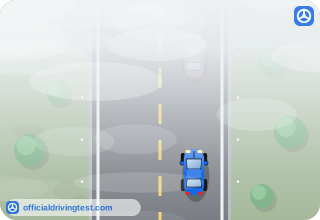
If you must drive during fog, what should you do about your speed?
- Keep your speed steady and follow closely to stay in sight of the car ahead
- Slow down but pay no attention to vehicles behind you
- Speed up to get through the fog as quickly as possible
- Reduce your speed and watch for the tail lights of the vehicle ahead
Show answer
Correct answer: Reduce your speed and watch for the tail lights of the vehicle ahead
The manual advises reducing speed and staying alert for the tail lights of the vehicle in front of you.
Source: North Carolina Driver Handbook (Revised May 2025), page 73 · Open this page in the manual (Manual page 73)
-
How much is it recommended that you reduce speed for packed snow?
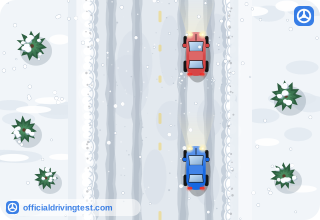
- By more than half
- By about one tenth
- By about one quarter
- By 5 mph only
Show answer
Correct answer: By more than half
The manual recommends cutting your speed by more than half for packed snow.
Source: North Carolina Driver Handbook (Revised May 2025), page 73 · Open this page in the manual (Manual page 73)
-
What speed does the manual recommend when you are driving on ice?
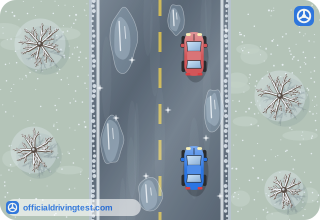
- Half of your normal speed
- Two thirds of your normal speed
- Slow to a crawl
- The posted speed limit
Show answer
Correct answer: Slow to a crawl
The manual recommends slowing to a crawl on ice.
Source: North Carolina Driver Handbook (Revised May 2025), page 73 · Open this page in the manual (Manual page 73)
-
When slowing down on snowy or icy roads, how much stopping distance should you allow?
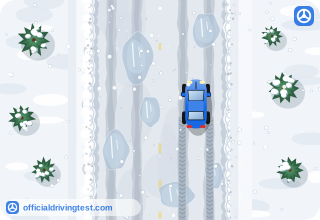
- Half of the normal stopping distance
- The same as the normal stopping distance
- At least one and a half times the normal stopping distance
- At least three times the normal stopping distance
Show answer
Correct answer: At least three times the normal stopping distance
The manual says to allow at least three times the normal stopping distance on snowy or icy roads.
Source: North Carolina Driver Handbook (Revised May 2025), page 73 · Open this page in the manual (Manual page 73)
-
A deer hit at which speed has a much lower fatality rate than one hit at 55+ mph?
- 60 mph
- 35 mph
- 45 mph
- 50 mph
Show answer
Correct answer: 35 mph
The manual says a deer hit at 35 mph has a much lower fatality rate than at 55+ mph, and so does the driver.
Source: North Carolina Driver Handbook (Revised May 2025), page 74 · Open this page in the manual (Manual page 74)
-
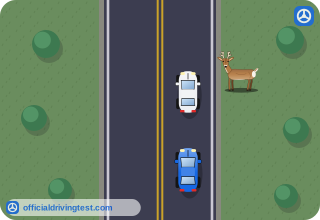
Why does the manual say to leave extra space between your vehicle and the one in front when wildlife may be nearby?
- It keeps animals from running between the two vehicles on the road
- It lets you pass the car ahead more easily
- It lowers the noise your engine makes near animals
- It gives you more time to stop if the car ahead brakes hard for an animal
Show answer
Correct answer: It gives you more time to stop if the car ahead brakes hard for an animal
Extra following distance gives you more time to stop if the car ahead brakes hard for an animal.
Source: North Carolina Driver Handbook (Revised May 2025), page 74 · Open this page in the manual (Manual page 74)