Regulatory signs in Iowa
The Iowa Driver’s License Manual shows or names everything on this page: 24 in all, on pages 7–8, 15–17, 21, 43, 54.
Independent educational site · not affiliated with any government agency or DMV
Regulatory signs
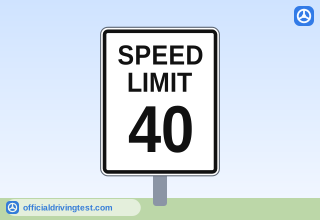
SPEED LIMIT 40
Speed limit signs indicate the maximum or minimum safe speed that is allowed. Maximum speed limits are for ideal driving conditions. Sometimes you must reduce your speed when conditions require it, such as when the roadway is slippery (during rain or snow) or it is difficult to see clearly down the road (during fog).
Manual page 8
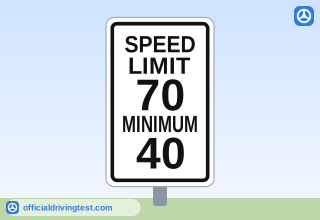
SPEED LIMIT 70 / MINIMUM 40
Some high-speed roads have minimum speed limits. If this minimum speed is too fast for you, then you should use another route.
Manual page 8
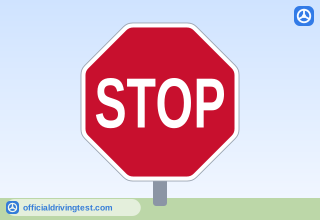
STOP
A stop sign means you must come to a full stop and wait until crossing vehicles and the cross-walk are clear before proceeding. Stop at the stop line if one is present. If necessary, you may then pull forward to the stop sign or the edge of the intersection and then proceed when it is safe to do so.
Manual page 7
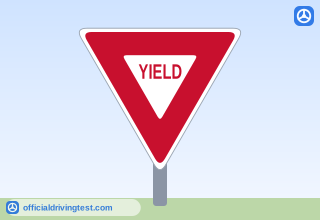
YIELD
A yield sign means you must slow down and yield the right of way to traffic in the intersection you are crossing or roadway you are entering.
Manual page 7
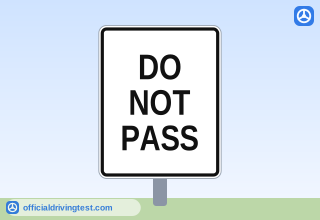
DO NOT PASS
These signs mark where it is not safe to pass another vehicle. The no passing zone sign is located at the beginning of the no passing zone. Passing areas are based on how far you can see ahead. Where passing is allowed, you may do so only if it is safe.
Manual page 8
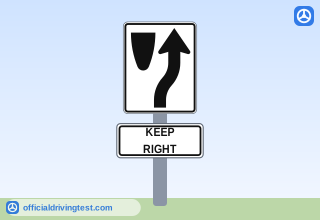
KEEP RIGHT (Divided Highway)
The road ahead is divided. This sign directs traffic around an island or barrier.
Manual page 8
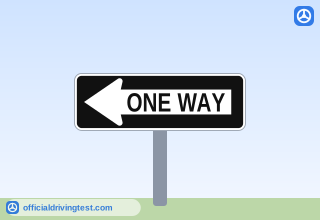
ONE WAY
Traffic moves only in the direction of the arrow.
Manual page 8
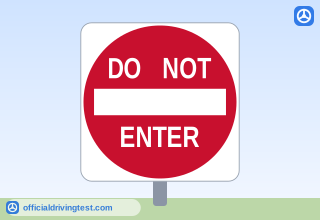
DO NOT ENTER
You will see this sign at roadway openings you are not to enter. You will see them at exit ramps, in crossovers on divided roadways, and at numerous locations on one-way roads.
Manual page 8
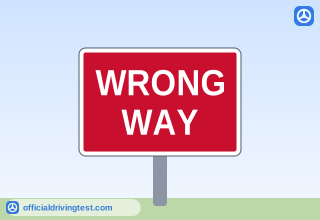
WRONG WAY
You made a wrong turn and have entered a lane of oncoming traffic. Remove your vehicle from the traveled portion of the road and get stopped and turned around as quickly and safely as possible.
Manual page 8
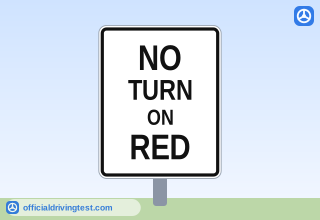
NO TURN ON RED
At a traffic signal, you may make a right turn at a red light unless there is a "NO TURN ON RED" sign. Prior to safely turning, you must come to a complete stop and yield to all other traffic.
Manual page 43
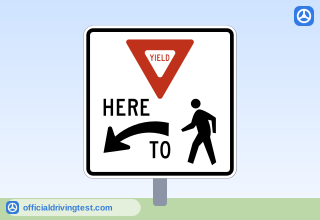
YIELD HERE TO PEDESTRIANS
Yield lines consist of a row of solid white triangles pointing toward approaching vehicles. These lines extend across a travel lane to indicate the point where vehicles should yield in compliance with "Yield," "Yield Here To Pedestrians,"or "Yield Here to Pedestrians and Bicycles" signs.
Manual page 15
Yield Here to Pedestrians and Bicycles
Yield lines consist of a row of solid white triangles pointing toward approaching vehicles. These lines extend across a travel lane to indicate the point where vehicles should yield in compliance with "Yield," "Yield Here To Pedestrians,"or "Yield Here to Pedestrians and Bicycles" signs.
Manual page 15
TO REQUEST GREEN WAIT ON (Bicycle Detector)
A symbol may be placed on the pavement indicating the optimum position for a bicyclist to activate/trigger the traffic signal.
Manual page 17
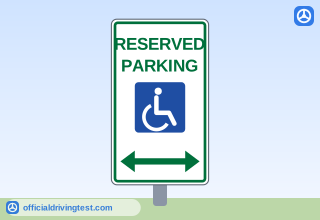
RESERVED PARKING
Only park in a space reserved for persons with disabilities if you have a Persons with Disabilities Parking Permit.
Manual page 21
Lane-use control signals
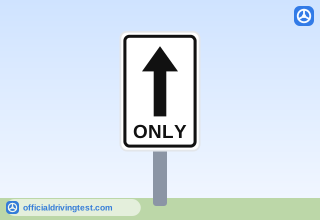
Straight ONLY (Lane Control)
These signs mark where you can go and where you can turn, and often use an arrow symbol. The signs are along the road or hanging over the road. Sometimes white arrows may also be painted on the road.
Manual page 8
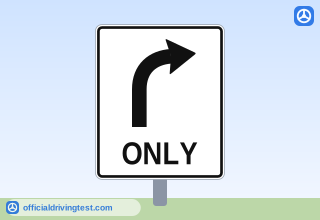
Right Turn ONLY (Lane Control)
These signs mark where you can go and where you can turn, and often use an arrow symbol. The signs are along the road or hanging over the road. Sometimes white arrows may also be painted on the road.
Manual page 8
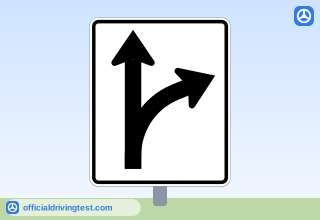
Straight or Right Turn Lane
These signs mark where you can go and where you can turn, and often use an arrow symbol. The signs are along the road or hanging over the road. Sometimes white arrows may also be painted on the road.
Manual page 8
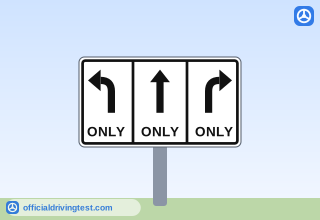
Left, Straight, Right ONLY
These signs mark where you can go and where you can turn, and often use an arrow symbol. The signs are along the road or hanging over the road. Sometimes white arrows may also be painted on the road.
Manual page 8
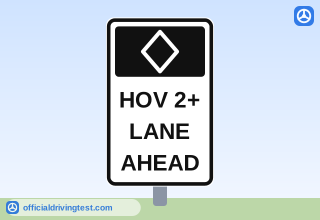
HOV 2+ LANE AHEAD
On various roadways one or more lanes may be reserved for special vehicles. Reserved lanes are marked by signs stating that the lane is reserved for special use, and often have a white diamond posted at the side of the road and/or painted on the road surface. Do not travel in one of these lanes unless operating that type of vehicle.
Manual page 16
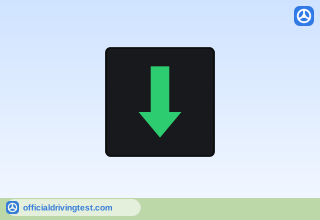
Green Arrow Lane Signal
A green arrow means you can use the lane beneath it
Manual page 15
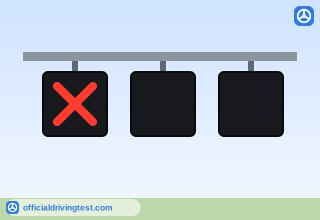
Red X Lane Signal
a red "X" means you may not.
Manual page 15
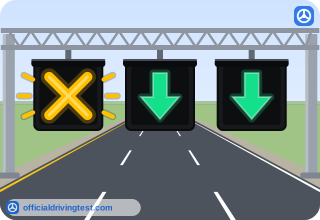
Flashing Yellow X Lane Signal
A flashing yellow "X" means the lane is only for turning.
Manual page 15
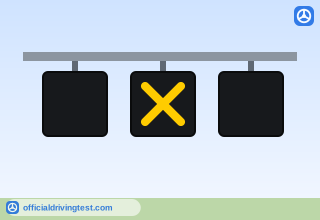
Steady Yellow X Lane Signal
A steady yellow "X" means that the use of the lane is changing and you should move out of it as soon as it is safe to do so.
Manual page 15
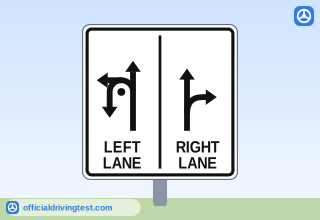
LEFT LANE / RIGHT LANE (Roundabout Lane Control)
As you approach the roundabout, and in advance of the yield line, select the appropriate lane according to the lane control signs and pavement markings.
Manual page 54