Warning and work zone signs in Iowa
The Iowa Driver’s License Manual shows or names everything on this page: 29 in all, on pages 6–7, 9, 14, 55.
Independent educational site · not affiliated with any government agency or DMV
Warning signs
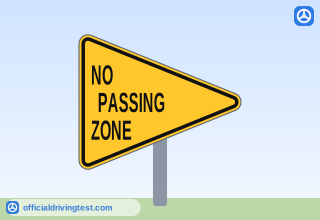
NO PASSING ZONE
These signs mark where it is not safe to pass another vehicle. The no passing zone sign is located at the beginning of the no passing zone. Passing areas are based on how far you can see ahead. Where passing is allowed, you may do so only if it is safe.
Manual page 7
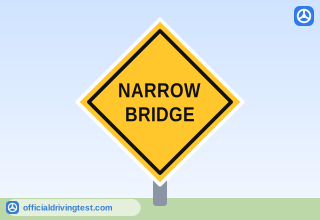
NARROW BRIDGE
Warning. Alerts you to special road hazards. Words or pictures on the sign will show you why you need to slow down or use extra caution.
Manual page 7
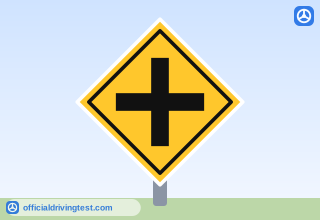
Crossroad
There is another road ahead that crosses the road you are on. Watch carefully for cross traffic in your path.
Manual page 9
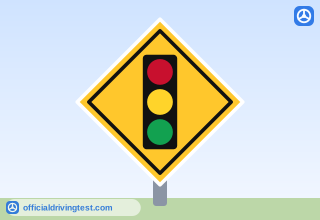
Signal Ahead
These signs are used on roads with higher speeds. Be ready for an intersection and a stop light.
Manual page 9
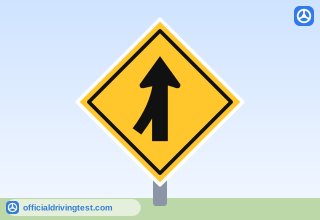
Merging Traffic
If you are on the main road and see this sign, be prepared for other vehicles blending into your lane.
Manual page 9
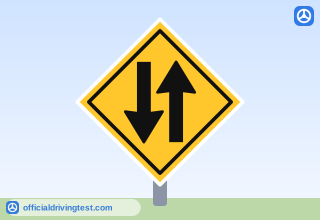
Two-Way Traffic
Keep to the right because you are leaving a one-way road and entering a two-way road.
Manual page 9
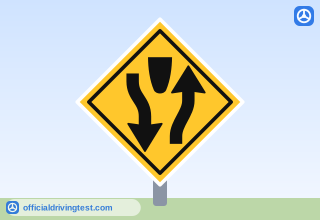
Divided Highway Begins
You are getting close to the place where two-way traffic will be divided by a center strip.
Manual page 9
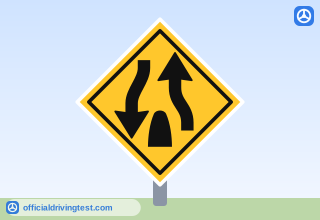
Divided Highway Ends
Two-way traffic will no longer be divided by a center strip. Watch out for oncoming vehicles.
Manual page 9
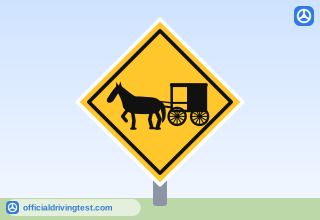
Horse-Drawn Vehicle
Be alert for slow-moving, horse-drawn vehicles on the roadways. Reduce your speed and pass slowly.
Manual page 9
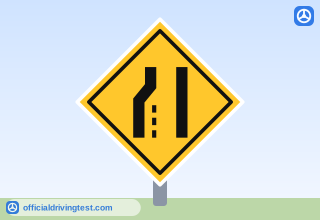
Lane Ends
Two lanes of traffic will soon become one lane of traffic. Traffic must yield when merging.
Manual page 9
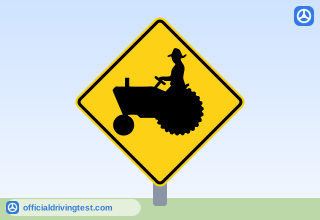
Farm Machinery
Be alert for slow-moving, farm equipment on the roadways. Reduce your speed and pass slowly.
Manual page 9
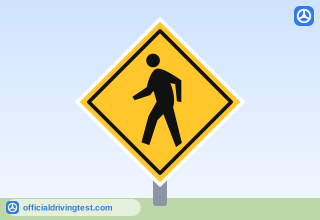
Pedestrian Crossing
Watch out for people walking, running, riding, or using wheelchairs or low-speed micromobility devices. See section 2.4 for information on pedestrian conveyance.
Manual page 9
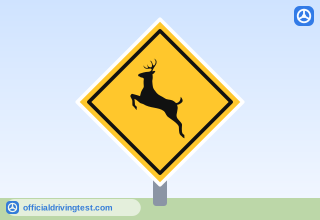
Deer Crossing
There may be deer trying to cross the roadway in the area. Slow down and watch carefully.
Manual page 9
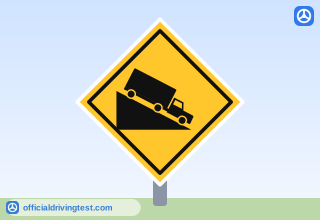
Hill
This sign is a warning to all vehicles that the road ahead goes down a hill. You should check your brakes before going down the hill.
Manual page 9
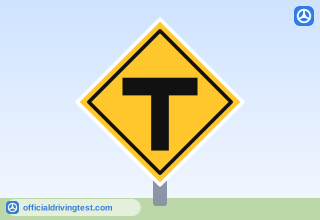
T-Intersection Ahead
The road you are on does not go straight ahead. Prepare to turn right or left.
Manual page 9
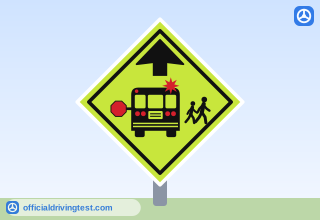
School Bus Stop Ahead
You are nearing an area where a stopped school bus will pick up or drop off passengers. Watch for children. Be prepared to stop.
Manual page 9
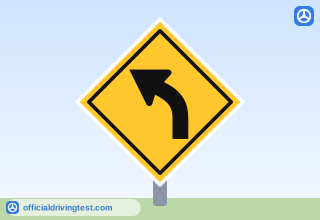
Gradual Curve
Road ahead curves gradually. Be prepared for the change in direction.
Manual page 9
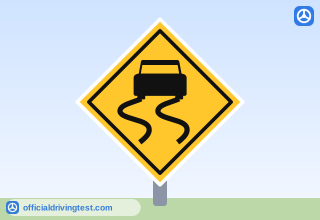
Slippery When Wet
Road ahead becomes slippery in wet weather. Slow down under these conditions.
Manual page 9
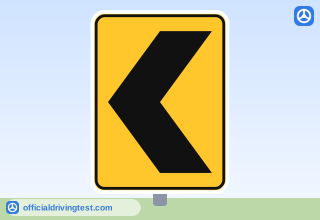
Chevron (Left)
Used in addition to the curve signs when there is a need to draw added attention to a change in the road's direction.
Manual page 9
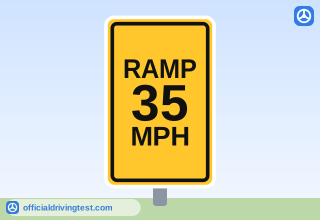
RAMP 35 MPH
The recommended speed on an exit ramp.
Manual page 9
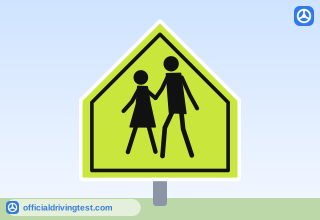
School Crossing
School crossing. Signs mark school areas and school crossings.
Manual page 7
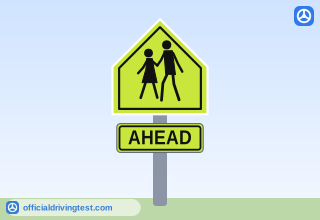
Advance School Crossing (AHEAD / 200 FT / 200 FEET)
You are nearing a school area with a crossing. Watch for children and the marked school crossing. The color of this sign may be yellow.
Manual page 9
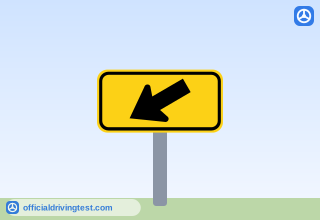
Diagonal Arrow Plaque
The manual does not state it
Manual page 55
Work zone signs
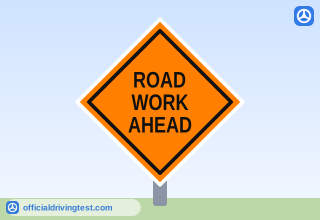
ROAD WORK AHEAD
Most signs in work areas are diamond-shaped, although a few signs are rectangular. Orange is the basic color of these signs and warning devices.
Manual page 6
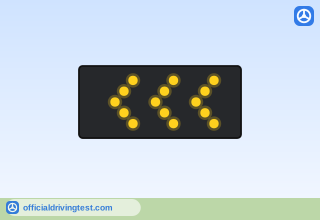
Arrow Board (Chevrons)
Large flashing arrow panels are typically used when a lane or shoulder is closed.
Manual page 14
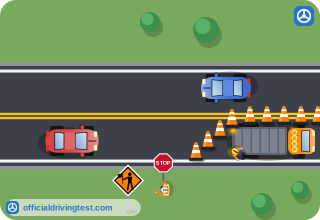
Flagger with STOP Paddle
People with stop/slow paddles help control traffic in work zones. Follow their instructions. They should be wearing fluorescent yellow green or orange vests, shirts or jackets. They will normally use stop/slow signs. Red flags may be used occasionally.
Manual page 14
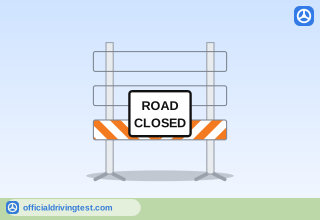
Barricade with ROAD CLOSED
Barricades, vertical panels, drums, cones, and tubular markers are the most common devices used to alert drivers of unusual and potentially dangerous conditions, and to guide drivers safely through the work zone.
Manual page 14
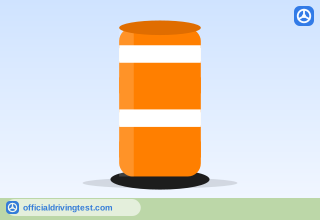
Channelizing Drum
Barricades, vertical panels, drums, cones, and tubular markers are the most common devices used to alert drivers of unusual and potentially dangerous conditions, and to guide drivers safely through the work zone.
Manual page 14
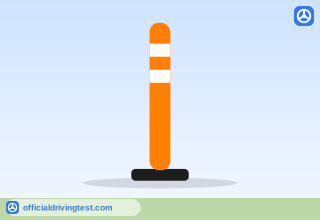
Tubular Marker
Barricades, vertical panels, drums, cones, and tubular markers are the most common devices used to alert drivers of unusual and potentially dangerous conditions, and to guide drivers safely through the work zone.
Manual page 14