Pavement markings in Iowa
The Iowa Driver’s License Manual shows or names everything on this page: 16 in all, on pages 13, 15–17, 21, 45, 56.
Independent educational site · not affiliated with any government agency or DMV
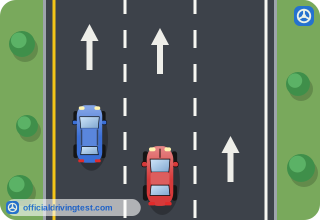
One-Direction Roadway
White lines separate traffic moving in the same direction.
Manual page 15
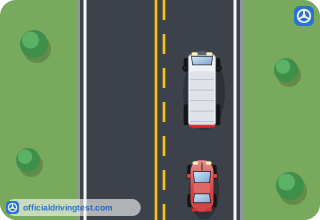
Two-Direction Roadway
Yellow lines separate traffic moving in opposite directions. On two-way roads you will see a solid yellow line with a dashed line beside it in some places. Passing is not allowed on the side with the solid yellow line. Vehicles on the side with the dashed line may pass when safe to do so.
Manual page 15
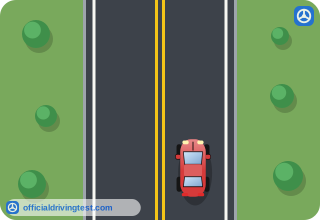
DOUBLE YELLOW CENTER LINE
No passing in either lane.
Manual page 45
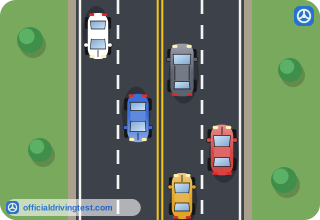
Double Yellow Center Line with Broken White Lane Lines
No passing either way over center yellow lines. Broken white lines separate traffic traveling in the same direction. Passing is allowed when a broken white line is in your lane.
Manual page 45
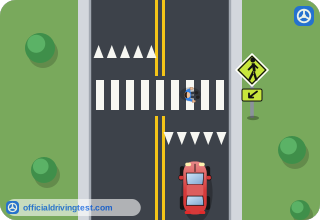
Yield Lines
Yield lines consist of a row of solid white triangles pointing toward approaching vehicles. These lines extend across a travel lane to indicate the point where vehicles should yield in compliance with "Yield," "Yield Here To Pedestrians,"or "Yield Here to Pedestrians and Bicycles" signs.
Manual page 15
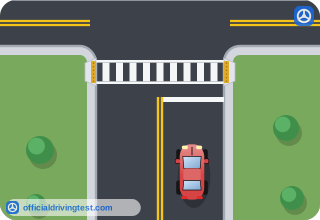
Stop Line
When required to stop because of a sign or signal, you must stop before your vehicle reaches the stop line, or a crosswalk if there is one.
Manual page 13
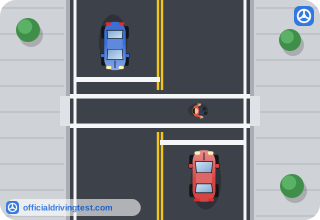
Crosswalk Styles
Crosswalks define the area where pedestrians are to cross the roadway. You must yield to anyone in or about to enter a crosswalk. Not all crosswalks are marked. Be alert for pedestrians when crossing intersections that do not have defined crosswalks.
Manual page 15
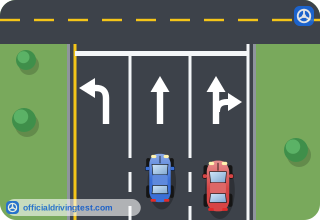
Directional Arrow Markings
Special arrow markings may be present and when used show the movements that are allowed or required when driving in that lane.
Manual page 15
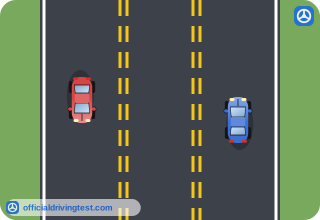
Reversible Lanes (Double Broken Yellow)
Some travel lanes are designed to carry traffic in one direction at certain times and in the opposite direction at other times. These lanes are usually marked by double-dashed yellow lines.
Manual page 15
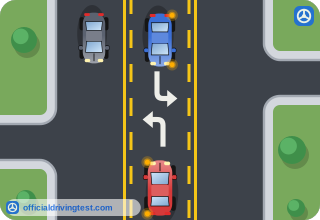
Shared Left-Turn Lane
Shared left-turn lanes are reserved for vehicles making left turns from either direction. On the pavement, left-turn arrows for traffic in one direction alternate with left-hand arrows for traffic coming from the other direction. These lanes are marked on each side by a solid yellow and dashed yellow line. Vehicles may enter and stop in the lane before making a left turn, but the lane cannot be used for passing.
Manual page 16
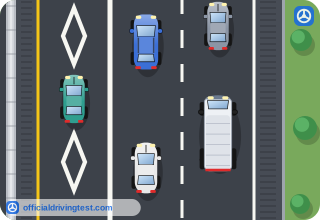
Reserved Lane Diamond Marking
Reserved lanes are marked by signs stating that the lane is reserved for special use, and often have a white diamond posted at the side of the road and/or painted on the road surface. Do not travel in one of these lanes unless operating that type of vehicle.
Manual page 16
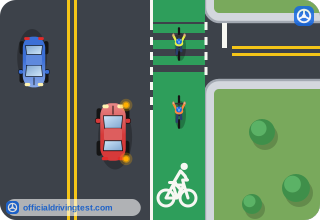
Green Bicycle Lane
Bicycle lanes are portions of the roadway that are intended for use by bicyclists and are marked by solid white lines, along with bicycle pavement markings and signs. ... Bicycle lanes may be filled with green paint and motorists should pay close attention and look for bicyclists before crossing green pavement. Motorists should not stop on green pavement.
Manual page 17
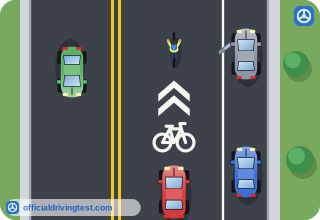
Shared Lane Marking (Sharrow)
Shared lane pavement markings, also called "sharrows" alert motorists of the presence of bicyclists, encourage safe passing of bicyclists by motorists, and reduce incidences of wrong-way bicycling and the potential for door crashes. Unlike bike lanes, sharrows do not designate a particular portion of the roadway for the exclusive use of bicycles.
Manual page 17
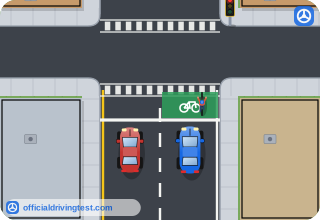
Bicycle Box
Bicycle boxes are pavement markings that are installed to allow bicyclists a safe way to turn at a signalized intersection. Bicycle boxes are solid green and have an image of a bicyclist. They are located adjacent to the crosswalk and they cover the entire width of the travel lane.
Manual page 17
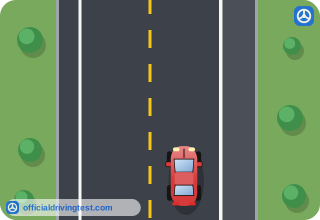
White Edge Line
If you are blinded by another vehicle's headlights, slow down and watch the white stripe at the right edge of the pavement.
Manual page 56
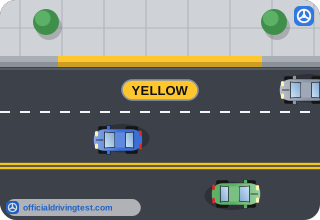
Yellow Curb
Do not park: ... In "NO PARKING ZONES" which are usually marked with signs, yellow painted curbs, or pavement markings/lines.
Manual page 21