Indiana: Emergencies
Equipment failures, skids, running off the road, vehicles in water, winter emergencies, carbon monoxide and what to do after an accident. Split into 4 shorter tests so you're not stuck in one long quiz.
Independent educational site · not affiliated with any government agency or DMV
Choose a part
Emergencies — Part 1
Questions in this part include: “What does the manual say is the most important factor in reducing the chance of a rollover?”
StartEmergencies — Part 2
Questions in this part include: “Instead of triangles, a disabled truck, bus, or tractor-trailer driver may display at least how many fuses?”
StartEmergencies — Part 3
Questions in this part include: “What does the manual say usually happens when a vehicle plunges into water?”
StartEmergencies — Part 4
Questions in this part include: “If you use the parking brake after your brakes fail, what should you do?”
StartAll 79 Emergencies questions with answers
Choose a part above to take a practice test, or study every question and answer here.
Show the questions and answersHide the questions
-
Which of these can cause a vehicle to skid?
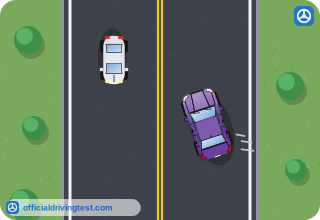
- Sudden turns, lane changes, or hard braking
- Steady acceleration on a dry, straight road
- Driving slowly with the cruise control set
- Gradual turns made at a low speed
Show answer
Correct answer: Sudden turns, lane changes, or hard braking
The manual says sudden turns, lane changes, or hard braking can cause a vehicle to skid.
Source: Indiana Driver’s Manual (July 2026), page 42 · Open this page in the manual (Manual page 42)
-
How does the procedure for correcting a skid differ between front-wheel-drive and rear-wheel-drive vehicles?
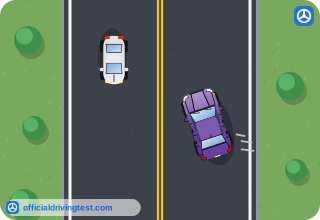
- Front-wheel-drive vehicles must brake hard, rear-wheel-drive must not
- Rear-wheel-drive vehicles must accelerate, front-wheel-drive must not
- It does not differ: the procedure is the same for both
- It depends only on the weight of the vehicle
Show answer
Correct answer: It does not differ: the procedure is the same for both
The manual states the procedure for correcting a skid is the same for both types of vehicles.
Source: Indiana Driver’s Manual (July 2026), page 42 · Open this page in the manual (Manual page 42)
-
What should you do first if your vehicle begins to lose traction or the rear wheels slide sideways?
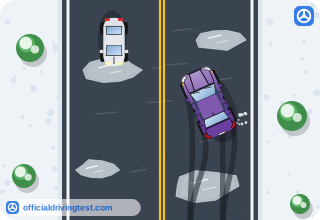
- Accelerate to regain traction
- Ease off the gas pedal
- Make a fast turn away from the skid
- Steer as far as the wheel will turn
Show answer
Correct answer: Ease off the gas pedal
The manual says to ease off the gas pedal and not to make a fast turn away from the skid or steer too far.
Source: Indiana Driver’s Manual (July 2026), page 42 · Open this page in the manual (Manual page 42)
-
In a vehicle with conventional brakes, which way should you steer during a skid?
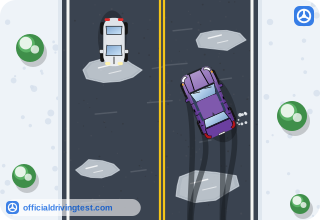
- Opposite to the direction the rear is sliding
- Straight ahead, holding the wheel firmly
- Toward the nearest side of the road
- In the direction the rear of the car is sliding
Show answer
Correct answer: In the direction the rear of the car is sliding
With conventional brakes, turn the steering wheel in a controlled manner in the direction the rear of the car is sliding.
Source: Indiana Driver’s Manual (July 2026), page 42 · Open this page in the manual (Manual page 42)
-
What should you do with the brake pedal in a skid if your vehicle has an anti-lock brake system (ABS)?
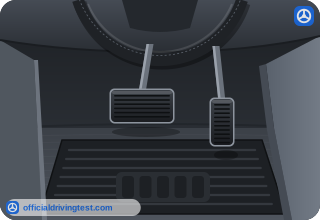
- Keep firm, continuous pressure on it while steering normally
- Pump it rapidly several times while steering normally
- Release it completely and coast until the skid ends
- Tap it lightly several times until the car stops sliding
Show answer
Correct answer: Keep firm, continuous pressure on it while steering normally
With ABS, keep your foot on the brake with firm and continuous pressure while steering normally, and do not pump the brakes.
Source: Indiana Driver’s Manual (July 2026), page 42 · Open this page in the manual (Manual page 42)
-
What indicates that your anti-lock brake system (ABS) is working?
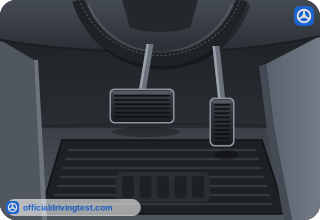
- The brake pedal slowly sinking toward the floor as you press
- The brake pedal becoming completely silent, soft, and still
- A mechanical noise, vibration, or increased resistance in the pedal
- A burning smell coming from the wheels as the car slows
Show answer
Correct answer: A mechanical noise, vibration, or increased resistance in the pedal
The manual says a mechanical sound or noise and vibration or increased resistance in the brake pedal indicates ABS is working.
Source: Indiana Driver’s Manual (July 2026), page 42 · Open this page in the manual (Manual page 42)
-
Many rollovers occur when drivers do what?
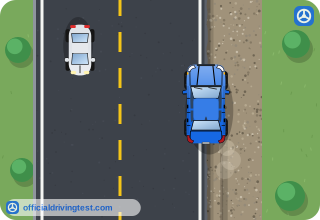
- Brake too gently after leaving the roadway
- Overcorrect their steering in a panicked reaction
- Drive too slowly on the highway
- Use the turn signal too early
Show answer
Correct answer: Overcorrect their steering in a panicked reaction
The manual says many rollovers occur when drivers overcorrect their steering as a panicked reaction to an emergency.
Source: Indiana Driver’s Manual (July 2026), page 42 · Open this page in the manual (Manual page 42)
-
If your vehicle leaves the roadway, what should you do to reduce the risk of a rollover?
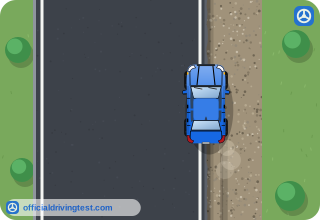
- Turn back onto the pavement right away to avoid the ditch
- Brake hard and turn sharply back toward the pavement
- Accelerate to climb back onto the pavement quickly
- Ease up on the gas and gradually turn back when it is safe
Show answer
Correct answer: Ease up on the gas and gradually turn back when it is safe
The manual says not to turn back onto the pavement right away, but to ease up on the gas and gradually turn back when safe.
Source: Indiana Driver’s Manual (July 2026), page 42 · Open this page in the manual (Manual page 42)
-
What does the manual say is the most important factor in reducing the chance of a rollover?
- Maintaining vehicle control
- Staying on interstate highways
- Using cruise control at all times
- Driving only in daylight hours
Show answer
Correct answer: Maintaining vehicle control
Improperly inflated and worn tires inhibit vehicle control, which is the most important factor in reducing the chance of rollover.
Source: Indiana Driver’s Manual (July 2026), page 42 · Open this page in the manual (Manual page 42)
-
Where can you find the maximum safe load and proper load distribution for your vehicle?
- On your vehicle registration
- On your vehicle title
- In your vehicle's owner manual
- In the Indiana Driver's Manual
Show answer
Correct answer: In your vehicle's owner manual
The manual says the maximum safe load and proper load distribution are in the vehicle's owner manual.
Source: Indiana Driver’s Manual (July 2026), page 42 · Open this page in the manual (Manual page 42)
-
On which kind of roads are rollovers more likely to occur?
- Divided roads that have barriers along the median
- Undivided, two-way roads or divided roads with no barriers
- Interstate highways with wide paved shoulders
- Straight, level roads inside towns and cities
Show answer
Correct answer: Undivided, two-way roads or divided roads with no barriers
The manual says rollovers are more likely on undivided, two-way roads or divided roads with no barriers.
Source: Indiana Driver’s Manual (July 2026), page 42 · Open this page in the manual (Manual page 42)
-
What does the manual say about advisory speeds on curves and ramps?
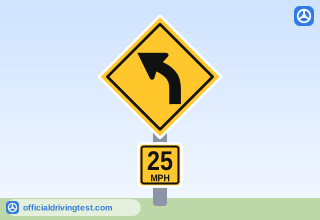
- They may be exceeded in good weather
- They apply only at night
- They apply only to trucks
- They should not be exceeded
Show answer
Correct answer: They should not be exceeded
Advisory speeds are provided on curves and ramps, and these advisory speeds should not be exceeded.
Source: Indiana Driver’s Manual (July 2026), page 42 · Open this page in the manual (Manual page 42)
-
What happens to the rollover risk of a 15-passenger van as the number of occupants increases?
- It increases dramatically
- It decreases slightly
- It stays the same
- It decreases dramatically
Show answer
Correct answer: It increases dramatically
The manual says the rollover risk of a 15-passenger van increases dramatically as the number of occupants increases.
Source: Indiana Driver’s Manual (July 2026), page 42 · Open this page in the manual (Manual page 42)
-
Why does the manual advise driving with a full tank of gas in very cold conditions?

- So the heater can stay on as long as possible if stranded
- So the fuel line cannot freeze while you are driving
- So the car has more weight for traction
- So the engine needs less time to warm up
Show answer
Correct answer: So the heater can stay on as long as possible if stranded
A full tank means that if stranded, the heater can remain in use for as long as possible.
Source: Indiana Driver’s Manual (July 2026), page 43 · Open this page in the manual (Manual page 43)
-
Which item does the manual say to consider carrying in a winter survival kit?
- A spare set of windshield wipers
- A tow rope and a tire jack
- A portable air compressor
- Sand or strips of carpet for traction
Show answer
Correct answer: Sand or strips of carpet for traction
The winter survival kit the manual describes includes sand or strips of carpet for traction, booster cables, blankets and more.
Source: Indiana Driver’s Manual (July 2026), page 43 · Open this page in the manual (Manual page 43)
-
What should you do if fog closes in completely and visibility is reduced to near zero?

- Slow down and keep following the road carefully
- Carefully pull off the road as far as possible and stop
- Stop in your lane and wait for the fog to lift
- Speed up to drive out of the fog as quickly as you can
Show answer
Correct answer: Carefully pull off the road as far as possible and stop
The manual says to carefully pull off the road as far as possible and stop.
Source: Indiana Driver’s Manual (July 2026), page 44 · Open this page in the manual (Manual page 44)
-
Which roadway weather event causes more deaths each year than any other?
- Fog
- Ice and snow
- Flash flooding
- High winds
Show answer
Correct answer: Flash flooding
The manual says flash flooding causes more deaths than any other roadway weather event each year.
Source: Indiana Driver’s Manual (July 2026), page 44 · Open this page in the manual (Manual page 44)
-
What should you do about traffic barricades and road closed signs during a flash flood?
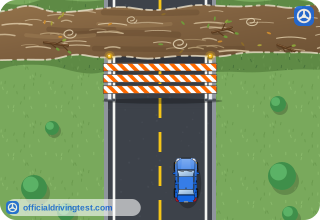
- Drive around them if the water looks shallow
- Do not drive around the barricades or past the signs
- Move the barricade if you are alone
- Pass them only at a very low speed
Show answer
Correct answer: Do not drive around the barricades or past the signs
The manual says not to drive around traffic barricades or past road closed signs.
Source: Indiana Driver’s Manual (July 2026), page 44 · Open this page in the manual (Manual page 44)
-
During flash flooding, which of these may be washed away or undermined by floodwaters?
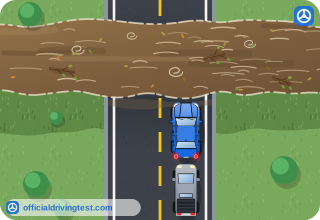
- Traffic signals and utility poles
- Guardrails and road signs
- Railroad crossing gates
- Bridges, culverts, and roadbeds
Show answer
Correct answer: Bridges, culverts, and roadbeds
The manual says to watch for bridges, culverts, and roadbeds that may be washed away or undermined by floodwaters.
Source: Indiana Driver’s Manual (July 2026), page 44 · Open this page in the manual (Manual page 44)
-
Why should you not drive where water is over the road?
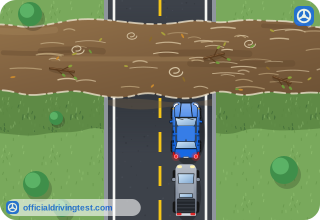
- The depth of the water is not always obvious, and it may hide washouts
- The water may make your horn and headlights stop working at once
- The water will always be deeper than the height of your tires
- Driving through standing water is illegal under Indiana law
Show answer
Correct answer: The depth of the water is not always obvious, and it may hide washouts
The manual says the depth of the water is not always obvious and the water may hide washouts.
Source: Indiana Driver’s Manual (July 2026), page 44 · Open this page in the manual (Manual page 44)
-
If your car stalls in a flooded area, what should you do?
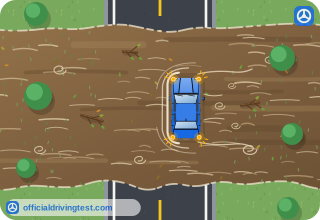
- Stay inside and wait for the water to drop
- Restart the engine repeatedly
- Abandon it as soon as possible
- Roll up the windows and wait for help
Show answer
Correct answer: Abandon it as soon as possible
The manual says to abandon the car as soon as possible because flood waters can rise rapidly and sweep a car and its occupants away.
Source: Indiana Driver’s Manual (July 2026), page 44 · Open this page in the manual (Manual page 44)
-
If your car becomes disabled and you pull onto the shoulder, what should be turned on if available?
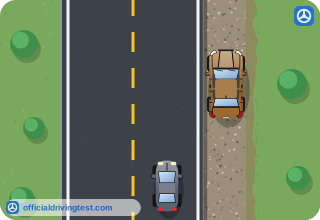
- The interior dome light
- The high beams
- The vehicle's hazard lights
- The parking brake light
Show answer
Correct answer: The vehicle's hazard lights
The manual says the disabled vehicle's hazard lights, if available, should be turned on.
Source: Indiana Driver’s Manual (July 2026), page 57 · Open this page in the manual (Manual page 57)
-
In the daytime, how many red flags must drivers of disabled cars display?
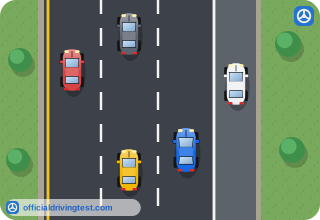
- One
- Three
- Two
- Four
Show answer
Correct answer: Two
The manual says drivers of disabled cars must display two red flags in the daytime.
Source: Indiana Driver’s Manual (July 2026), page 57 · Open this page in the manual (Manual page 57)
-
If your car is stopped within 500 feet of a curve, hilltop, or other obstruction, how far from your car must a warning device be displayed at least?
- At least 250 feet
- At least 500 feet
- At least 300 feet
- At least 750 feet
Show answer
Correct answer: At least 500 feet
The manual says a warning device must be displayed at least 500 feet from your car in that situation.
Source: Indiana Driver’s Manual (July 2026), page 57 · Open this page in the manual (Manual page 57)
-
How many bi-directional emergency reflective triangles must the driver of a disabled truck, bus, or tractor-trailer display on a traveled roadway or its shoulder?
- Two
- Four
- Six
- Three
Show answer
Correct answer: Three
The manual says the driver must display three bi-directional emergency reflective triangles, or at least six fuses or three liquid-burning flares.
Source: Indiana Driver’s Manual (July 2026), page 57 · Open this page in the manual (Manual page 57)
-
Instead of triangles, a disabled truck, bus, or tractor-trailer driver may display at least how many fuses?
- Two
- Six
- Three
- Four
Show answer
Correct answer: Six
The manual says the driver may display at least six fuses instead of three triangles or three liquid-burning flares.
Source: Indiana Driver’s Manual (July 2026), page 57 · Open this page in the manual (Manual page 57)
-
During times when headlights are not needed, what may you use in place of flares, reflectors, or electric lanterns?
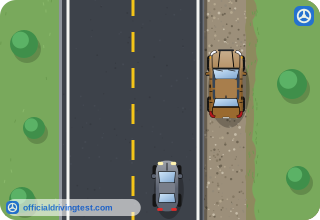
- Orange traffic cones or pieces of white cloth on the road
- Bright headlights aimed toward the approaching traffic
- Only the vehicle's hazard lights shown at the roadside
- Bi-directional emergency reflective triangles or red flags
Show answer
Correct answer: Bi-directional emergency reflective triangles or red flags
The manual says to use bi-directional emergency reflective triangles or red flags in place of flares, reflectors, or electric lanterns when headlights are not needed.
Source: Indiana Driver’s Manual (July 2026), page 57 · Open this page in the manual (Manual page 57)
-
Where must the driver of a vehicle involved in an accident stop?
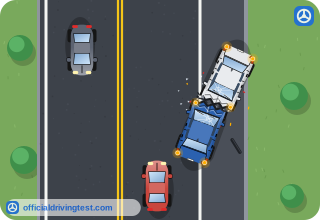
- Immediately, or as close to the scene as possible without blocking traffic more than necessary
- At the next exit or parking lot, at least a mile from the scene of the accident
- Only if the accident causes an injury; otherwise the driver may continue on
- Wherever the vehicle can be stopped quickly, even if it blocks a traffic lane
Show answer
Correct answer: Immediately, or as close to the scene as possible without blocking traffic more than necessary
The driver must stop immediately or as close as possible to the scene, without obstructing traffic more than necessary.
Source: Indiana Driver’s Manual (July 2026), page 58 · Open this page in the manual (Manual page 58)
-
An accident occurs on the traveled portion of a highway and nobody is hurt. What must the driver do with the vehicle?
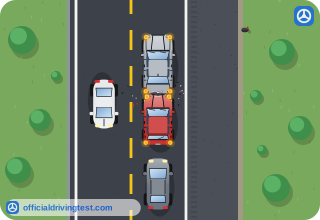
- Leave it where it stopped until police arrive and give directions
- Turn off its engine and push it to the next exit on the highway
- Move it off the highway to a location as close to the accident as possible
- Move it to the left lane and turn on the hazard lights until help comes
Show answer
Correct answer: Move it off the highway to a location as close to the accident as possible
If the accident occurs on the traveled portion of a highway, the driver must move the vehicle off the highway as close to the accident as possible.
Source: Indiana Driver’s Manual (July 2026), page 58 · Open this page in the manual (Manual page 58)
-
In which situation should a driver not move the vehicle after an accident?
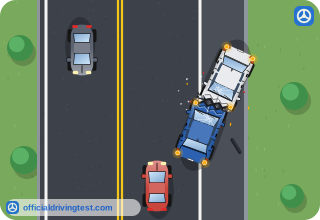
- When the vehicle is blocking a lane of traffic on the highway
- When it involves hazardous materials, injury, death, or entrapment
- When the other driver asks to wait for an insurance agent
- When the accident happens during rain, snow, or poor light
Show answer
Correct answer: When it involves hazardous materials, injury, death, or entrapment
The driver should not move the motor vehicle if the accident involves hazardous materials or results in injury, death, or entrapment.
Source: Indiana Driver’s Manual (July 2026), page 58 · Open this page in the manual (Manual page 58)
-
Besides showing a driver's license, what must a driver who stays at the scene of an accident give to everyone involved?
- Name, phone number, and the number of the insurance policy
- Name, date of birth, and the title number of the vehicle
- Name, employer, and the date of the vehicle's last inspection
- Name, address, and the registration number of the motor vehicle
Show answer
Correct answer: Name, address, and the registration number of the motor vehicle
The driver must give their name, address, and the vehicle's registration number to everyone involved, and show their driver's license.
Source: Indiana Driver’s Manual (July 2026), page 58 · Open this page in the manual (Manual page 58)
-
If an accident injures or kills another person, what is the driver required to provide?
- Reasonable assistance to those injured or trapped, as directed by law enforcement, medical personnel, or a 911 operator
- Transportation to the nearest hospital for each person who is injured, using the driver's own vehicle
- Medical treatment for injured people, but only if the driver has first aid training
- Nothing further, once the police have been told the location of the accident
Show answer
Correct answer: Reasonable assistance to those injured or trapped, as directed by law enforcement, medical personnel, or a 911 operator
The driver must give reasonable assistance to people injured or trapped in vehicles, as directed by law enforcement, medical personnel, or a 911 operator.
Source: Indiana Driver’s Manual (July 2026), page 58 · Open this page in the manual (Manual page 58)
-
After an accident, who should the driver make sure is notified as soon as possible?
- Only the BMV, which must be told in person at a branch
- The owner of the nearest property along the roadway
- Law enforcement: local police, sheriff, or state police
- A towing company, before any other agency is told
Show answer
Correct answer: Law enforcement: local police, sheriff, or state police
As soon as possible, the driver should make sure law enforcement (local police, sheriff, or state police) are notified of the accident.
Source: Indiana Driver’s Manual (July 2026), page 58 · Open this page in the manual (Manual page 58)
-
You hit an unattended vehicle and cannot find its owner. What must you do after stopping and staying at the scene?
- Drive away if the damage to the unattended vehicle looks minor
- Take reasonable steps to notify the owner, then call law enforcement
- Wait 24 hours and then report the damage to the BMV by mail
- Move the damaged vehicle to a safe place nearby and then leave
Show answer
Correct answer: Take reasonable steps to notify the owner, then call law enforcement
If the owner cannot be located, the driver must call a law enforcement agency to provide information.
Source: Indiana Driver’s Manual (July 2026), page 58 · Open this page in the manual (Manual page 58)
-
What does the manual say about accelerating when it appears your car will hit something?
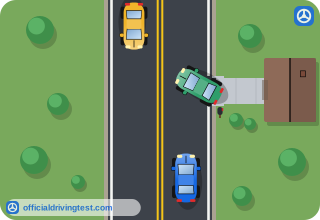
- Accelerating should never be used as a way to avoid a collision
- Accelerating may sometimes be the best or only way to avoid a collision
- Accelerating is allowed only when you are driving on a freeway
- Accelerating is allowed only after your brakes have already failed
Show answer
Correct answer: Accelerating may sometimes be the best or only way to avoid a collision
Speeding up is one of three possible actions, and accelerating may sometimes be the best or only way to avoid a collision.
Source: Indiana Driver’s Manual (July 2026), page 58 · Open this page in the manual (Manual page 58)
-
If you feel you cannot stop in time to avoid a collision, what should you do?
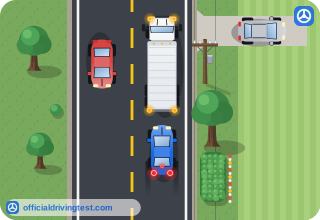
- Hold the steering wheel straight and brake as hard as you can
- Sound your horn and keep going in a straight line
- Shift into reverse and back away
- Turn your vehicle away from the potential collision
Show answer
Correct answer: Turn your vehicle away from the potential collision
If you cannot stop in time, the manual says to turn your vehicle away from the potential collision.
Source: Indiana Driver’s Manual (July 2026), page 58 · Open this page in the manual (Manual page 58)
-
If a collision looks possible, which way should you turn?
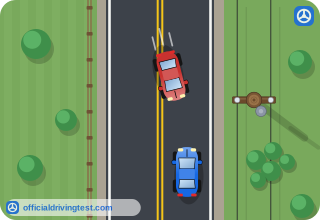
- Away from oncoming traffic, even if it means leaving the road
- Toward oncoming traffic, because it is moving
- Straight ahead, staying on the pavement no matter what
- Toward the center of the road, to keep both wheels on the pavement
Show answer
Correct answer: Away from oncoming traffic, even if it means leaving the road
The manual says to turn away from oncoming traffic, even if it means leaving the road.
Source: Indiana Driver’s Manual (July 2026), page 58 · Open this page in the manual (Manual page 58)
-
If you must leave the road to avoid a collision, how should you do it?
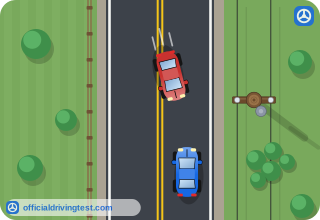
- Skid off the road, because skidding quickly helps you lose speed
- Lock the brakes before leaving the pavement to slow down fully
- Drive off the road rather than skid off, which allows more control
- Turn off the engine and coast off the road to avoid accelerating
Show answer
Correct answer: Drive off the road rather than skid off, which allows more control
Driving rather than skidding off the road allows for more control.
Source: Indiana Driver’s Manual (July 2026), page 58 · Open this page in the manual (Manual page 58)
-
If you cannot avoid hitting something, which should you choose?
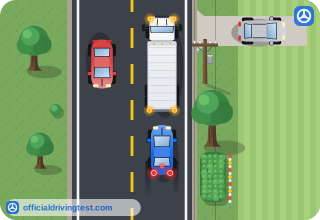
- A solid object, such as a wall or a large tree
- Something that will give way, such as brush or shrubs
- A parked vehicle, because it will not move
- Any object, as long as it is straight ahead
Show answer
Correct answer: Something that will give way, such as brush or shrubs
The manual says to choose to hit something that will give way, such as brush or shrubs, rather than something hard.
Source: Indiana Driver’s Manual (July 2026), page 58 · Open this page in the manual (Manual page 58)
-
Rather than hitting something that is not moving, you should try to hit something that is
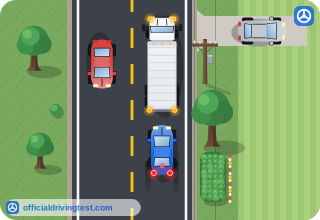
- moving toward you in the opposite direction
- parked beside the road and not moving at all
- made of a hard material that will not give way
- moving in the same direction as you
Show answer
Correct answer: moving in the same direction as you
The manual says to hit something moving in the same direction rather than something that is not moving.
Source: Indiana Driver’s Manual (July 2026), page 58 · Open this page in the manual (Manual page 58)
-
According to the manual, it is safer to hit something that is not moving than to hit something
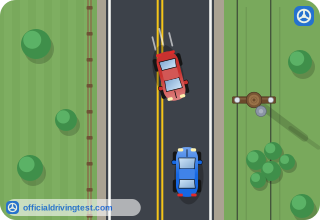
- head-on
- moving in the same direction as you
- that will give way, such as shrubs
- with a sideswipe
Show answer
Correct answer: head-on
The manual states that hitting something that is not moving is safer than hitting something head-on.
Source: Indiana Driver’s Manual (July 2026), page 58 · Open this page in the manual (Manual page 58)
-
What may a sideswipe do when a collision cannot be avoided?
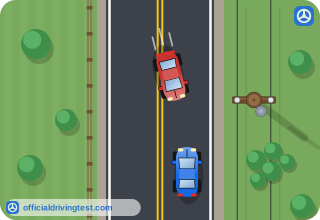
- Throw your vehicle off balance
- Make the collision head-on
- Help you slow down
- Lock your steering wheel
Show answer
Correct answer: Help you slow down
The manual says a sideswipe may help you slow down.
Source: Indiana Driver’s Manual (July 2026), page 58 · Open this page in the manual (Manual page 58)
-
If your vehicle's wheels drift onto the shoulder, what should you do?
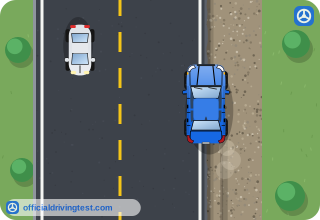
- Steer sharply back onto the pavement right away to regain the lane quickly
- Drive along the shoulder and ease up on the gas, then turn back gradually
- Brake hard to stop on the shoulder at once, then pull back out
- Speed up to get back onto the road quickly before traffic arrives
Show answer
Correct answer: Drive along the shoulder and ease up on the gas, then turn back gradually
Turn back only after slowing down, driving along the shoulder and easing up on the gas pedal.
Source: Indiana Driver’s Manual (July 2026), page 59 · Open this page in the manual (Manual page 59)
-
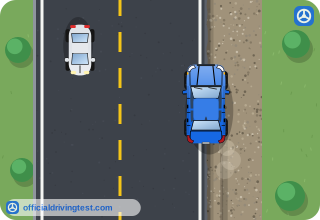
Why should you not turn back onto the pavement right away after your wheels drift onto the shoulder?
- The shoulder is always safer than the pavement
- The tires would lose air pressure
- It would automatically lock the steering wheel
- It might throw your vehicle off balance
Show answer
Correct answer: It might throw your vehicle off balance
Turning back onto the pavement right away might throw your vehicle off balance.
Source: Indiana Driver’s Manual (July 2026), page 59 · Open this page in the manual (Manual page 59)
-
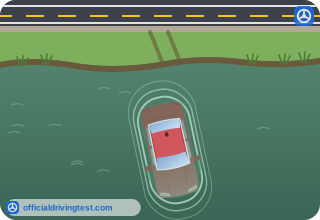
What does the manual say usually happens when a vehicle plunges into water?
- It will usually float several minutes before sinking
- It sinks completely within only a few seconds
- It floats for several hours before it sinks
- It stays level and its doors open easily under water
Show answer
Correct answer: It will usually float several minutes before sinking
The vehicle will usually float several minutes before sinking, allowing escape through an open window.
Source: Indiana Driver’s Manual (July 2026), page 59 · Open this page in the manual (Manual page 59)
-
If your vehicle plunges into water, why should you not attempt to open a door?
- Doors lock automatically when the engine is off and the vehicle is wet
- Door handles stop working once the vehicle is in water, so they are useless
- The weight of the water makes a door nearly impossible to open
- The doors are always held shut by the seat belts of the passengers
Show answer
Correct answer: The weight of the water makes a door nearly impossible to open
The weight of the water makes it nearly impossible to open a door, and water will flood the passenger compartment through an open door.
Source: Indiana Driver’s Manual (July 2026), page 59 · Open this page in the manual (Manual page 59)
-
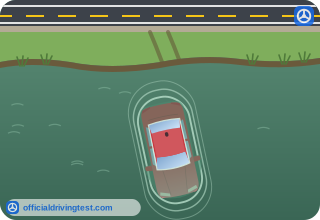
If your vehicle plunges into water, what should you do right after removing your seat belt?
- Open a door
- Open a window
- Swim for shore
- Wait inside until the vehicle sinks
Show answer
Correct answer: Open a window
The manual lists removing your seat belt and then opening a window.
Source: Indiana Driver’s Manual (July 2026), page 59 · Open this page in the manual (Manual page 59)
-
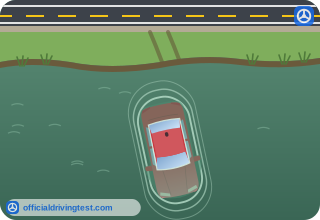
After a vehicle plunges into water, when might automatic windows not open?
- If the vehicle floats level on the surface of the water
- If the seat belts have not yet been removed by the driver
- If the doors of the vehicle have already been opened
- If the impact is so severe that it damages the electrical system
Show answer
Correct answer: If the impact is so severe that it damages the electrical system
Automatic windows will open unless the impact is so severe that it damages the electrical system.
Source: Indiana Driver’s Manual (July 2026), page 59 · Open this page in the manual (Manual page 59)
-
If your vehicle plunges into water with children in the rear seat, what should you do?
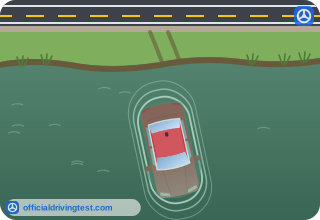
- Get them out of rear seat belts and child restraints, with older children helping
- Leave them buckled in the rear seat until rescuers arrive to help them
- Exit first yourself, then pull the children out through the nearest door
- Tell the children to stay in the rear seat while you open a window
Show answer
Correct answer: Get them out of rear seat belts and child restraints, with older children helping
The manual says to get children out of rear seat belts and child restraints, asking older children to assist the younger ones.
Source: Indiana Driver’s Manual (July 2026), page 59 · Open this page in the manual (Manual page 59)
-
If your vehicle plunges into water, where should you move passengers as calmly as possible?
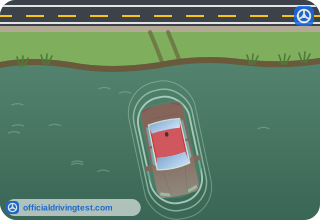
- To the rear seats
- To the cargo area
- To the front seats
- To the floor behind the front seats
Show answer
Correct answer: To the front seats
The manual says to move passengers to the front seats as calmly as possible.
Source: Indiana Driver’s Manual (July 2026), page 59 · Open this page in the manual (Manual page 59)
-
After exiting a vehicle that has plunged into water, where should you go?
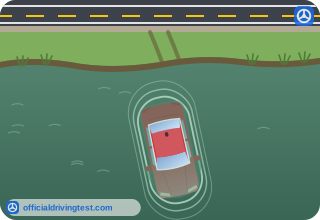
- Straight into the water to swim ashore
- Onto the roof of the vehicle
- Back inside to wait with the windows open
- To the front bumper
Show answer
Correct answer: Onto the roof of the vehicle
The manual says to exit the vehicle and move to the roof, which keeps you as dry as possible.
Source: Indiana Driver’s Manual (July 2026), page 59 · Open this page in the manual (Manual page 59)
-
Once you are on the roof of a vehicle that has plunged into water, what should you do?
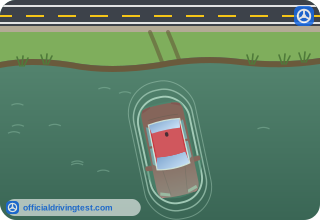
- Swim for shore at once
- Wave for help without calling anyone
- Climb back inside to get your phone
- Call 911 and locate the nearest dry land
Show answer
Correct answer: Call 911 and locate the nearest dry land
The manual says that once on the roof you should call 911 and locate the nearest dry land.
Source: Indiana Driver’s Manual (July 2026), page 59 · Open this page in the manual (Manual page 59)
-
When should you swim for shore after your vehicle plunges into water?
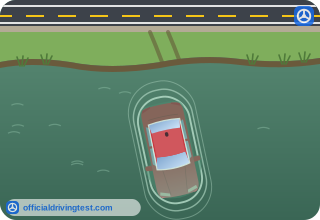
- Only as a last resort, if help has not arrived by the time the vehicle sinks
- As soon as you have managed to climb out of the sinking vehicle
- Before you call 911, to reach dry land as fast as you can
- Only after you have first tried to open each door of the vehicle
Show answer
Correct answer: Only as a last resort, if help has not arrived by the time the vehicle sinks
Swimming for shore is only a last resort, if no help has arrived by the time the vehicle sinks below the waterline.
Source: Indiana Driver’s Manual (July 2026), page 59 · Open this page in the manual (Manual page 59)
-
After escaping a vehicle that plunged into water, what should you never do?
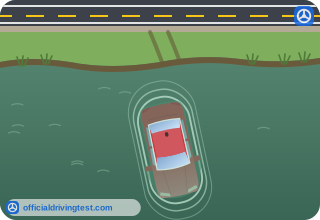
- Move to the roof of the vehicle while you wait
- Call 911 once you are out of the water
- Re-enter the vehicle to gather possessions
- Look for the nearest dry land to reach later
Show answer
Correct answer: Re-enter the vehicle to gather possessions
The manual says never to re-enter the vehicle to gather possessions.
Source: Indiana Driver’s Manual (July 2026), page 59 · Open this page in the manual (Manual page 59)
-
During a roadside emergency, what should you do if possible?
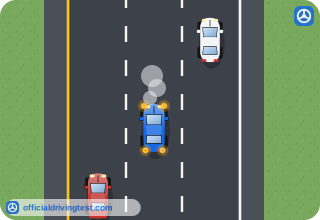
- Stop in the center of your lane so others see you
- Stop just past the crest of a hill
- Pull your vehicle onto the roadside shoulder
- Stay in the left lane with your engine running
Show answer
Correct answer: Pull your vehicle onto the roadside shoulder
The manual says that if possible you should always pull your vehicle onto the roadside shoulder.
Source: Indiana Driver’s Manual (July 2026), page 60 · Open this page in the manual (Manual page 60)
-
Which lights should you turn on during a roadside emergency?
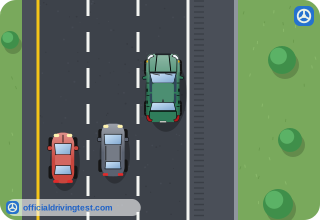
- Your high beam headlights
- Your flashing hazard lights
- Your fog lights
- Your left turn signal
Show answer
Correct answer: Your flashing hazard lights
The manual says to turn on your flashing hazard lights.
Source: Indiana Driver’s Manual (July 2026), page 60 · Open this page in the manual (Manual page 60)
-
What does the manual say to keep within reach of the vehicle operator for a roadside emergency?
- A spare set of keys for the vehicle
- A tire pressure gauge and a spare fuse
- A paper road map of your region
- A flashlight with fresh batteries
Show answer
Correct answer: A flashlight with fresh batteries
A flashlight with fresh batteries should be within reach of the vehicle operator.
Source: Indiana Driver’s Manual (July 2026), page 60 · Open this page in the manual (Manual page 60)
-
Which items does the manual say to store in your vehicle so you are more visible to passing motorists?
- A reflective vest and a red emergency reflective triangle
- An orange traffic cone and a white warning flag
- A flashing amber beacon and a loud whistle
- A reflective bumper sticker and a spare headlight
Show answer
Correct answer: A reflective vest and a red emergency reflective triangle
A reflective safety vest and a red emergency reflective triangle make you more visible to passing motorists.
Source: Indiana Driver’s Manual (July 2026), page 60 · Open this page in the manual (Manual page 60)
-
What should you pack in your vehicle during winter months in case you must wait for emergency responders or a tow?
- A tow rope and an ice scraper
- Extra fuel and a set of tire chains
- Blankets, extra gloves, and warm hats
- Road salt and a portable heater
Show answer
Correct answer: Blankets, extra gloves, and warm hats
The manual says to pack blankets, extra gloves, and warm hats in winter.
Source: Indiana Driver’s Manual (July 2026), page 60 · Open this page in the manual (Manual page 60)
-
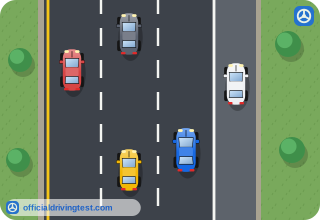
If you must exit your vehicle while on a roadside shoulder, how should you do it?
- On the driver side, after checking your side mirror for oncoming traffic
- Exit on the passenger side, after checking your immediate vicinity first
- On whichever side is closer to traffic, after turning off the hazard lights
- On the passenger side, after walking around the front of the vehicle first
Show answer
Correct answer: Exit on the passenger side, after checking your immediate vicinity first
The manual says to exit on the passenger side and only after checking your immediate vicinity.
Source: Indiana Driver’s Manual (July 2026), page 60 · Open this page in the manual (Manual page 60)
-
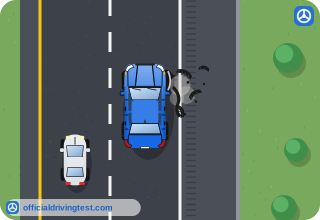
What should you do first if you have a flat tire or blowout?
- Brake hard right away so that the car stops as soon as possible
- Steer sharply toward the shoulder to leave the traffic lane quickly
- Shift into neutral and turn off the engine to slow down quickly
- Hold the steering wheel firmly and keep the car going straight
Show answer
Correct answer: Hold the steering wheel firmly and keep the car going straight
In a flat tire or blowout, hold the steering wheel firmly and keep the car going straight.
Source: Indiana Driver’s Manual (July 2026), page 60 · Open this page in the manual (Manual page 60)
-
During a tire blowout, when should you apply the brakes?
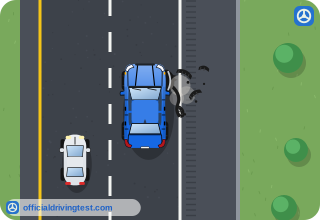
- When the car is almost stopped, after it has slowed and you have pulled off the road
- Immediately, as hard as you can, to stop the car in the shortest distance
- Never, because the brakes must stay off until the engine is turned off
- As soon as you begin steering toward the shoulder of the road
Show answer
Correct answer: When the car is almost stopped, after it has slowed and you have pulled off the road
The manual says to take your foot off the gas, not brake, let the car slow, pull off the road, and apply the brakes when the car is almost stopped.
Source: Indiana Driver’s Manual (July 2026), page 60 · Open this page in the manual (Manual page 60)
-
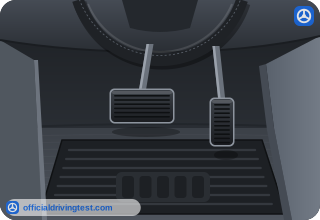
If a vehicle's conventional disc or drum brakes suddenly fail, what should you do?
- Shift into neutral and let the vehicle coast to a stop on its own
- Turn the ignition to the lock position to switch the engine off
- Shift to a lower gear if possible and pump the brake pedal fast and hard
- Press the brake pedal slowly and hold it down firmly to the floor
Show answer
Correct answer: Shift to a lower gear if possible and pump the brake pedal fast and hard
The manual says to shift to a lower gear if possible and pump the brake pedal fast and hard several times.
Source: Indiana Driver’s Manual (July 2026), page 60 · Open this page in the manual (Manual page 60)
-
If you use the parking brake after your brakes fail, what should you do?
- Pull the parking brake all the way up and keep it there until you stop
- Hold the brake release so it can be released if the rear wheels lock
- Use it only after you have turned off the engine of the vehicle
- Apply it at the same time as the foot brake, as hard as you can
Show answer
Correct answer: Hold the brake release so it can be released if the rear wheels lock
The manual says to hold the brake release so it can be released to avoid skidding if the rear wheels lock.
Source: Indiana Driver’s Manual (July 2026), page 60 · Open this page in the manual (Manual page 60)
-
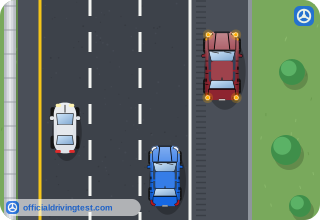
After a vehicle with failed brakes has come to a stop, what should the driver do?
- Drive slowly to the nearest repair shop
- Test the brakes again, then continue
- Drive to the nearest BMV branch
- Call for help and not try to drive anywhere
Show answer
Correct answer: Call for help and not try to drive anywhere
After the vehicle has stopped, the driver should call for help but not try to drive anywhere.
Source: Indiana Driver’s Manual (July 2026), page 60 · Open this page in the manual (Manual page 60)
-
Why should you never turn the ignition to the lock position while the vehicle is in motion, in a vehicle with a steering wheel interlock system?
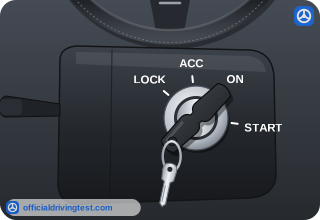
- The steering will lock when the wheel is turned, causing a loss of control
- The brakes will lock and the vehicle will begin to skid at once
- The headlights will turn off and the engine will restart by itself
- The doors will lock and trap the occupants inside the vehicle
Show answer
Correct answer: The steering will lock when the wheel is turned, causing a loss of control
With a steering wheel interlock system, the steering locks as the wheel is turned, causing a loss of control.
Source: Indiana Driver’s Manual (July 2026), page 60 · Open this page in the manual (Manual page 60)
-
In an emergency on the highway, what should a driver not try to do?
- Slow down gradually
- Look for a place to stop off the roadway
- Turn off the vehicle while it is still moving
- Turn on the hazard lights
Show answer
Correct answer: Turn off the vehicle while it is still moving
Drivers in an emergency situation on the highway should not try to turn off the vehicle while it is still moving.
Source: Indiana Driver’s Manual (July 2026), page 60 · Open this page in the manual (Manual page 60)
-
Which action may reduce the chance of having your vehicle stolen?
- Hiding a second set of keys somewhere in or on the vehicle
- Never leaving the vehicle unattended with the engine running
- Leaving the doors unlocked when you stop for a short time
- Parking in dark, quiet areas where fewer people walk by
Show answer
Correct answer: Never leaving the vehicle unattended with the engine running
The manual lists never leaving a vehicle unattended with the engine running as a precaution against theft.
Source: Indiana Driver’s Manual (July 2026), page 60 · Open this page in the manual (Manual page 60)
-
What does the manual say about a second set of keys?
- Hide it under the bumper where only you know
- Keep it in the glove box of the vehicle
- Leave it under the driver's seat for emergencies
- Do not hide it in or around the vehicle
Show answer
Correct answer: Do not hide it in or around the vehicle
To reduce the chance of theft, the manual says not to hide a second set of keys in or around the vehicle.
Source: Indiana Driver’s Manual (July 2026), page 60 · Open this page in the manual (Manual page 60)
-
Where should you park, whenever possible, to reduce the chance of having your vehicle stolen?
- In well-lit, well-patrolled areas
- Near the entrance of a shopping area
- In quiet side streets
- Behind a building, out of sight
Show answer
Correct answer: In well-lit, well-patrolled areas
The manual lists parking in well-lit, well-patrolled areas whenever possible.
Source: Indiana Driver’s Manual (July 2026), page 60 · Open this page in the manual (Manual page 60)
-
To reduce the chance of vehicle theft, what should you always do?
- Leave the windows slightly open
- Leave the headlights on
- Lock the vehicle's doors
- Leave the keys under the floor mat
Show answer
Correct answer: Lock the vehicle's doors
Always locking a vehicle's doors is one of the manual's anti-theft precautions.
Source: Indiana Driver’s Manual (July 2026), page 60 · Open this page in the manual (Manual page 60)
-
Carbon monoxide is most likely to leak into a vehicle in which situation?
- When the heater is running, the exhaust is faulty, or in heavy traffic
- When the vehicle is parked beside the road with all the windows open
- When the vehicle is parked outdoors with the engine switched off
- When driving at highway speed with the fresh-air vent fully open
Show answer
Correct answer: When the heater is running, the exhaust is faulty, or in heavy traffic
Carbon monoxide is most likely to leak in when the heater is running, the exhaust system is faulty, or in heavy traffic.
Source: Indiana Driver’s Manual (July 2026), page 62 · Open this page in the manual (Manual page 62)
-
Which statement about carbon monoxide gas is correct?
- It has a strong smell you notice quickly
- It is visible as a gray haze near the exhaust
- It cannot be seen, smelled, or tasted
- It leaves a sour taste in your mouth
Show answer
Correct answer: It cannot be seen, smelled, or tasted
The manual states that you cannot see, smell, or taste carbon monoxide.
Source: Indiana Driver’s Manual (July 2026), page 62 · Open this page in the manual (Manual page 62)
-
Which is a symptom of carbon monoxide poisoning?
- Ringing in the ears that comes and goes
- A bluish tinge to your skin or lips
- A sudden, dry cough that lasts for days
- Blurred hearing in one ear at a time
Show answer
Correct answer: A bluish tinge to your skin or lips
Symptoms can include drowsiness or dizziness, a bluish tinge to your skin or lips, a headache, and increased sensitivity to light.
Source: Indiana Driver’s Manual (July 2026), page 62 · Open this page in the manual (Manual page 62)
-
What should you do with the fresh-air vent in congested traffic to avoid carbon monoxide poisoning?
- Open it
- Leave it half open
- Switch it off and open the windows
- Close it
Show answer
Correct answer: Close it
In congested traffic, close the fresh-air vent.
Source: Indiana Driver’s Manual (July 2026), page 62 · Open this page in the manual (Manual page 62)
-
What should you do with the fresh-air vent on highways in cold weather to avoid carbon monoxide poisoning?
- Open it
- Close it
- Close it and turn the heater up
- Switch it off and recirculate the air
Show answer
Correct answer: Open it
On highways in cold weather, open the fresh-air vent.
Source: Indiana Driver’s Manual (July 2026), page 62 · Open this page in the manual (Manual page 62)
-
To avoid carbon monoxide poisoning, what should you never let your vehicle's engine do?
- Idle for more than a minute
- Run with the windows closed
- Run in a closed garage
- Run while parked in the sun
Show answer
Correct answer: Run in a closed garage
The manual says never to let your vehicle's engine run in a closed garage.
Source: Indiana Driver’s Manual (July 2026), page 62 · Open this page in the manual (Manual page 62)
-
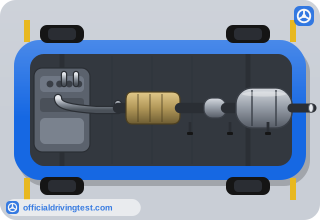
To avoid carbon monoxide poisoning, what should you be alert for?
- A sweet smell from the heater
- Any unusual roar from under the car
- A loud noise from the engine only when parked
- Any change in the color of the exhaust
Show answer
Correct answer: Any unusual roar from under the car
The manual says to be alert for any unusual roar from under the car.
Source: Indiana Driver’s Manual (July 2026), page 62 · Open this page in the manual (Manual page 62)
-
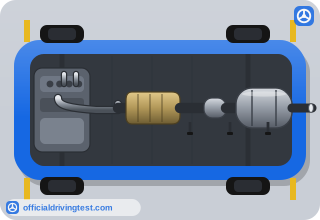
To avoid carbon monoxide poisoning, how often should your vehicle's exhaust system be checked?
- Only after an accident
- Only when it makes noise
- Once a year at a BMV branch
- Regularly
Show answer
Correct answer: Regularly
The manual says to have your vehicle's exhaust system checked regularly.
Source: Indiana Driver’s Manual (July 2026), page 62 · Open this page in the manual (Manual page 62)