West Virginia: Sharing the road
School buses, motorcycles, heavy trucks and their No-Zones, bicycles, animal riders, joggers, slow vehicles and public buses. Split into 4 shorter tests so you're not stuck in one long quiz.
Independent educational site · not affiliated with any government agency or DMV
Choose a part
Sharing the road — Part 1
Questions in this part include: “In the handbook’s definitions, what is a farm tractor?”
Sharing the road — Part 2
Questions in this part include: “What must slow-moving vehicles such as farm vehicles display to warn approaching drivers?”
Sharing the road — Part 3
Questions in this part include: “Whether or not a bicyclist is operating lawfully, what should drivers always give the bicyclist?”
Sharing the road — Part 4
Questions in this part include: “In which places should you also be aware of high jogging traffic?”
Questions are original and based on the official manual "West Virginia Driver's Licensing Handbook" (Revised July 2026), West Virginia Division of Motor Vehicles (DMV).
All 71 Sharing the road questions with answers
Choose a part above to take a practice test, or study every question and answer here.
Show the questions and answersHide the questions
1Part 118 questions
-
In the handbook’s definitions, what are blind spots?
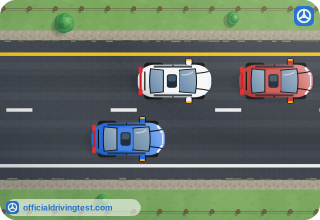
- Areas on both sides of vehicles where you cannot see without turning your head
- Areas on both sides of vehicles that you can see only in the mirrors
- Areas of the road lit only by your high-beam headlights
- Spots on the windshield where the wipers do not reach
Show answer
Correct answer: Areas on both sides of vehicles where you cannot see without turning your head
Blind spots are the areas on both sides of a vehicle that you cannot see without turning your head.
Source: West Virginia Driver's Licensing Handbook (Revised July 2026)
-
In the handbook’s definitions, what is a farm tractor?
- A motor vehicle designed and used mainly to haul harvested crops on public highways
- A vehicle adapted to farm work and used by its owner on private farm land only
- A motor vehicle designed and used mainly in agriculture for drawing plows and mowing machines
- A truck designed and used mainly to carry farm animals and products to market
Show answer
Correct answer: A motor vehicle designed and used mainly in agriculture for drawing plows and mowing machines
A farm tractor is designed and used mainly in agriculture for drawing plows, mowing machines, and other implements of husbandry.
Source: West Virginia Driver's Licensing Handbook (Revised July 2026)
-
In the handbook’s definitions, what is an implement of husbandry?
- A vehicle designed only for drawing plows and mowing machines and used by its owner on public highways
- A vehicle designed for or adapted to agricultural purposes and used by its owner in agricultural operations
- A motor vehicle owned by a public agency and used to maintain farm access roads
- A vehicle owned by a dealer and used mainly to carry farm products for sale
Show answer
Correct answer: A vehicle designed for or adapted to agricultural purposes and used by its owner in agricultural operations
An implement of husbandry is a vehicle designed for or adapted to farm work and used by its owner mainly in agricultural operations.
Source: West Virginia Driver's Licensing Handbook (Revised July 2026)
-
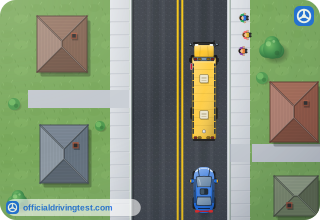
In the handbook’s definitions, what is a school bus?
- A motor vehicle owned only by a public governmental agency to transport students
- A motor vehicle, publicly or privately owned, operated to transport children to or from school
- A motor vehicle designed to carry more than seven passengers for compensation
- A motor vehicle that carries children only on field trips
Show answer
Correct answer: A motor vehicle, publicly or privately owned, operated to transport children to or from school
A school bus can be owned by a public agency or privately, and is operated to carry children to or from school.
Source: West Virginia Driver's Licensing Handbook (Revised July 2026)
-
What does a right side up triangular sign identify?
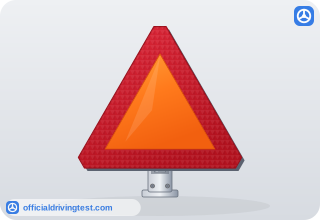
- A slow moving vehicle or a vehicle that has made an emergency stop
- A vehicle that is carrying hazardous or oversized cargo
- A vehicle that is turning left onto a cross street ahead
- A school bus that is loading or unloading children
Show answer
Correct answer: A slow moving vehicle or a vehicle that has made an emergency stop
A right side up triangle identifies a slow moving vehicle or one that has made an emergency stop.
Source: West Virginia Driver's Licensing Handbook (Revised July 2026), page 34 · Open this page in the manual (Manual page 34)
-
Who are often the victims of improper turns by vehicle operators?
- Motorcyclists and truck drivers
- Passengers in the turning vehicle
- Pedestrians and bicyclists
- Drivers of parked vehicles
Show answer
Correct answer: Pedestrians and bicyclists
The handbook says pedestrians and bicyclists are often victims of improper turns.
Source: West Virginia Driver's Licensing Handbook (Revised July 2026), page 44 · Open this page in the manual (Manual page 44)
-
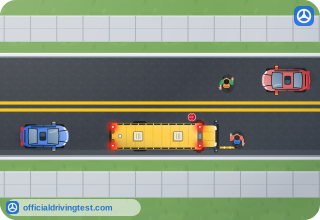
Which traffic must stop before reaching a school bus that has its red lights flashing and is receiving or discharging students on a street?
- Only traffic following the bus
- Only traffic coming toward the bus
- Only traffic in the bus's lane
- Traffic in both directions
Show answer
Correct answer: Traffic in both directions
On all highways, streets, parking lots, private roads and driveways, traffic in both directions must stop before reaching a school bus that has its red lights flashing and is receiving or discharging students.
Source: West Virginia Driver's Licensing Handbook (Revised July 2026), page 50 · Open this page in the manual (Manual page 50)
-
After stopping for a school bus with its red lights flashing, when may you proceed?
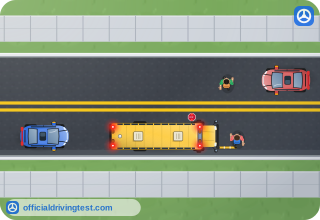
- As soon as you see that no students are in your lane
- When the bus moves again, the driver signals you to go, or its signals go off
- After waiting 30 seconds with the bus stopped
- When the vehicle ahead of you starts to drive around the stopped bus
Show answer
Correct answer: When the bus moves again, the driver signals you to go, or its signals go off
You may not proceed until the bus resumes motion, the school bus driver signals you to proceed, or the visual signals are no longer actuated.
Source: West Virginia Driver's Licensing Handbook (Revised July 2026), page 50 · Open this page in the manual (Manual page 50)
-
On what type of road does traffic coming toward a school bus stopped on the other side of the median not have to stop?
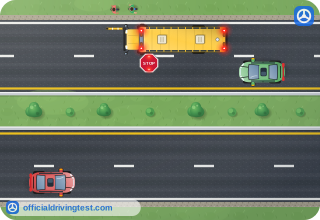
- Any road with a grass median
- Any four-lane highway
- Interstate highways
- Any road with a speed limit of 55 mph or higher
Show answer
Correct answer: Interstate highways
Only on interstate highways does traffic coming toward a school bus stopped on the other side of the median not have to stop.
Source: West Virginia Driver's Licensing Handbook (Revised July 2026), page 50 · Open this page in the manual (Manual page 50)
-
A stopped school bus is receiving students on school property or private property. What must you do?
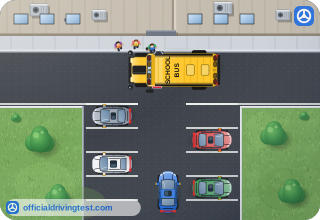
- Stop for the bus, as you would on a public road
- Pass slowly, since it is not a public road
- Pass only if no students are visible
- Pass on the left at walking speed
Show answer
Correct answer: Stop for the bus, as you would on a public road
You must also stop for a stopped school bus that is receiving or discharging students on school property or private property.
Source: West Virginia Driver's Licensing Handbook (Revised July 2026), page 50 · Open this page in the manual (Manual page 50)
-
What is the minimum driver's license suspension for a first offense of passing a stopped school bus?
- 30 days
- 60 days
- 90 days
- 180 days
Show answer
Correct answer: 60 days
The penalty for passing a stopped school bus is a minimum of 60 days of driver's license suspension.
Source: West Virginia Driver's Licensing Handbook (Revised July 2026), page 50 · Open this page in the manual (Manual page 50)
-
What is the minimum fine for a first offense of passing a stopped school bus?
- $100
- $250
- $1,000
- $500
Show answer
Correct answer: $500
The first-offense penalty for passing a stopped school bus includes a minimum fine of $500.
Source: West Virginia Driver's Licensing Handbook (Revised July 2026), page 50 · Open this page in the manual (Manual page 50)
-
For a first offense of passing a stopped school bus, the penalty can include jail for no more than:
- Six months
- Thirty days
- Ninety days
- One year
Show answer
Correct answer: Six months
The first offense can bring confinement in jail for not more than six months.
Source: West Virginia Driver's Licensing Handbook (Revised July 2026), page 50 · Open this page in the manual (Manual page 50)
-
If the driver of a vehicle that passes a stopped school bus cannot be identified, who is guilty of a misdemeanor?
- The school bus driver
- The school district
- The owner or lessee of the vehicle
- No one, because the driver is unknown
Show answer
Correct answer: The owner or lessee of the vehicle
When the driver's identity cannot be ascertained, the owner or lessee of the vehicle in violation is guilty of a misdemeanor and subject to fines on conviction.
Source: West Virginia Driver's Licensing Handbook (Revised July 2026), page 50 · Open this page in the manual (Manual page 50)
-
How much of a lane are motorcyclists entitled to and in need of?
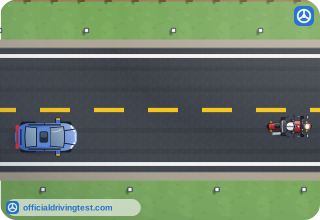
- The entire lane
- Half of the lane
- Only the center of the lane
- One-third of the lane
Show answer
Correct answer: The entire lane
Motorcyclists are entitled to and will need the entire lane to maneuver around hazards and traffic situations.
Source: West Virginia Driver's Licensing Handbook (Revised July 2026), page 51 · Open this page in the manual (Manual page 51)
-
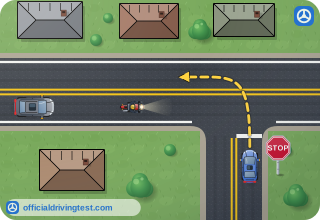
When you leave a corner where you were waiting, how should you look for motorcycles?
- Check carefully and keep looking all the way across the intersection
- Look once to the left, then accelerate through the intersection
- Watch only for vehicles and trucks, which are the usual hazards
- Rely on the motorcycle's headlight to see it coming
Show answer
Correct answer: Check carefully and keep looking all the way across the intersection
Motorcycles can be hidden by parked vehicles and trees, so you check carefully as you leave the corner and keep looking all the way across the intersection.
Source: West Virginia Driver's Licensing Handbook (Revised July 2026), page 52 · Open this page in the manual (Manual page 52)
-
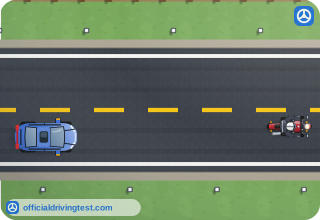
How far back should you stay when following a motorcycle?
- The same distance as behind a vehicle
- Closer than behind a vehicle, since they are small
- Just far enough that you can see the rider's face
- Farther back than if you were behind a vehicle
Show answer
Correct answer: Farther back than if you were behind a vehicle
Motorcycles do not perform like vehicles and can slow or stop much faster, so you stay farther back than behind a vehicle.
Source: West Virginia Driver's Licensing Handbook (Revised July 2026), page 52 · Open this page in the manual (Manual page 52)
-
How does a motorcycle's ability to slow or stop compare with a vehicle's?
- It stops more slowly because it has only two wheels
- It can usually slow or stop much faster than you can
- It needs the same distance as a vehicle
- It cannot slow down without leaving the lane
Show answer
Correct answer: It can usually slow or stop much faster than you can
The handbook says a motorcycle can usually slow or stop much faster than a vehicle.
Source: West Virginia Driver's Licensing Handbook (Revised July 2026), page 52 · Open this page in the manual (Manual page 52)
2Part 218 questions
-
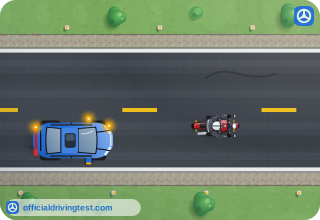
When passing a motorcycle, how far into the other lane should you go?
- All the way into the other lane
- Halfway, so the rider keeps part of the lane
- Only far enough to clear the rider's mirror
- Not at all; stay in your own lane beside the rider
Show answer
Correct answer: All the way into the other lane
The motorcyclist has the legal right to an entire lane and may need to swerve, so you go all the way into the other lane to pass.
Source: West Virginia Driver's Licensing Handbook (Revised July 2026), page 52 · Open this page in the manual (Manual page 52)
-
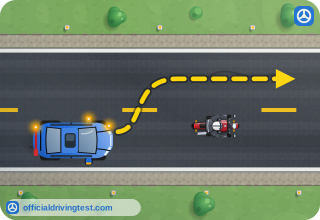
After passing a motorcycle, when should you move back into the other lane?
- As soon as the rider is in your mirror
- Right after your bumper is past the rider
- Not until you are well down the road
- Only after the rider signals you to merge
Show answer
Correct answer: Not until you are well down the road
Once you have passed a motorcycle, you should wait until you are well down the road before moving back into the lane.
Source: West Virginia Driver's Licensing Handbook (Revised July 2026), page 52 · Open this page in the manual (Manual page 52)
-
What must slow-moving vehicles such as farm vehicles display to warn approaching drivers?
- A flashing blue beacon
- A special triangular emblem
- A rectangular red banner
- A white octagonal sign
Show answer
Correct answer: A special triangular emblem
Slow-moving vehicles are required to display a special triangular emblem that means Slow-Moving Vehicle.
Source: West Virginia Driver's Licensing Handbook (Revised July 2026), page 52 · Open this page in the manual (Manual page 52)
-
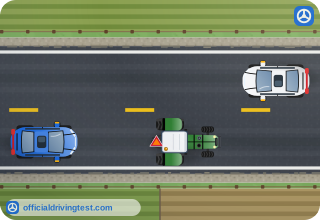
Before you try to pass a slow-moving farm vehicle or construction equipment, what must you make sure of?
- That the vehicle has stopped completely
- That its driver has signaled you to go around
- That its emblem is clearly visible
- That you can pass it safely
Show answer
Correct answer: That you can pass it safely
Regular traffic must be aware of the slow speed of these vehicles and make sure it can pass safely before making the attempt.
Source: West Virginia Driver's Licensing Handbook (Revised July 2026), page 52 · Open this page in the manual (Manual page 52)
-
Compared with vehicles, how much room do trucks need to turn?
- About the same room
- Slightly less room
- Much more room
- Only a little more room
Show answer
Correct answer: Much more room
Trucks are more difficult to maneuver, are longer and heavier, and require much more room to turn.
Source: West Virginia Driver's Licensing Handbook (Revised July 2026), page 52 · Open this page in the manual (Manual page 52)
-
What is a heavy truck's "No-Zone"?
- Its blind spots, where the driver cannot see vehicles
- Roads where heavy trucks are not allowed to travel
- The space around it where vehicles may not park
- The distance at which its brakes can stop it
Show answer
Correct answer: Its blind spots, where the driver cannot see vehicles
A truck's blind spots are called the No-Zone, and they are dangerous because truck drivers cannot see vehicles in these areas.
Source: West Virginia Driver's Licensing Handbook (Revised July 2026), page 52 · Open this page in the manual (Manual page 52)
-
Typically, how do blind spots change as a vehicle gets larger?
- They get smaller
- They get larger
- They stay the same size
- They disappear once it has large mirrors
Show answer
Correct answer: They get larger
The handbook says that typically the larger the vehicle, the larger the blind spots.
Source: West Virginia Driver's Licensing Handbook (Revised July 2026), page 52 · Open this page in the manual (Manual page 52)
-
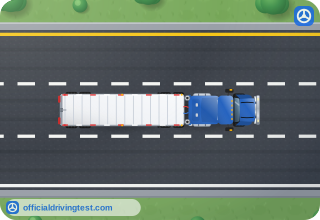
How can you tell whether you are in a truck driver's blind spot?
- You can see the truck's headlights in your own mirror
- The truck's turn signal is on and the driver slows down
- You are more than two car lengths from the truck
- You cannot see the driver's reflection in the side mirror
Show answer
Correct answer: You cannot see the driver's reflection in the side mirror
If you cannot see the truck driver's reflection in the side mirror, you are in the driver's blind spot.
Source: West Virginia Driver's Licensing Handbook (Revised July 2026), page 52 · Open this page in the manual (Manual page 52)
-
How long should you stay in a heavy truck's No-Zone when passing?
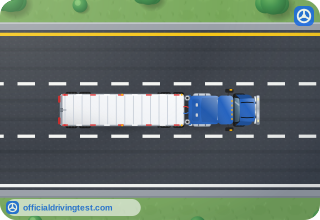
- No longer than needed to pass safely
- Until the truck driver waves you on
- Long enough to match the truck's speed
- As long as you keep a steady speed
Show answer
Correct answer: No longer than needed to pass safely
It is impossible to avoid blind spots completely, but drivers should not remain in the No-Zone any longer than needed to safely pass a heavy truck.
Source: West Virginia Driver's Licensing Handbook (Revised July 2026), page 52 · Open this page in the manual (Manual page 52)
-
The handbook says to give trucks extra room for which kind of turns?
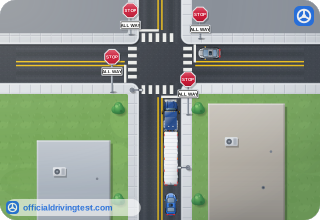
- Right turns
- Left turns
- U-turns
- Turns onto a one-way street
Show answer
Correct answer: Right turns
The truck safety list says to give trucks extra room for right turns.
Source: West Virginia Driver's Licensing Handbook (Revised July 2026), page 53 · Open this page in the manual (Manual page 53)
-
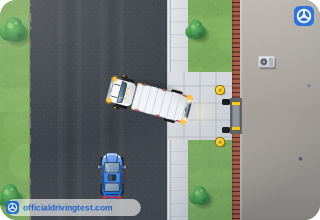
What should you give a truck that is backing up?
- A short blast of your horn
- The right-of-way only at night
- A clear view by moving close behind
- Extra space and time
Show answer
Correct answer: Extra space and time
The truck safety list says to give trucks extra space and time for backing up.
Source: West Virginia Driver's Licensing Handbook (Revised July 2026), page 53 · Open this page in the manual (Manual page 53)
-
What should you do if you see unsafe truck driving?
- Follow the truck to get its plate number
- Call authorities
- Flash your high beams at the driver
- Pass the truck and signal the driver to pull over
Show answer
Correct answer: Call authorities
The truck safety list says to call authorities if you see unsafe truck driving.
Source: West Virginia Driver's Licensing Handbook (Revised July 2026), page 53 · Open this page in the manual (Manual page 53)
-
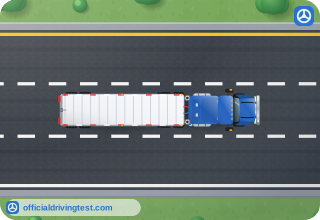
Which action does the handbook say you should never do around a heavy truck?
- Slam on your brakes in front of it
- Give it extra room for right turns
- Allow extra space and time when it backs up
- Call authorities about unsafe truck driving
Show answer
Correct answer: Slam on your brakes in front of it
The truck safety DON'Ts say never to slam on your brakes in front of a truck.
Source: West Virginia Driver's Licensing Handbook (Revised July 2026), page 53 · Open this page in the manual (Manual page 53)
-
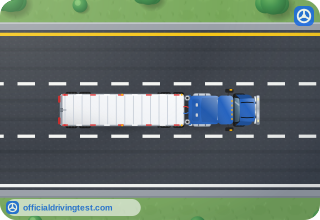
What does the handbook say about cutting off a truck to reach your exit or turn?
- It is fine if you signal first
- It is fine on an interstate
- Never do it
- It is fine if the truck is slow
Show answer
Correct answer: Never do it
Never cut off a truck in traffic or on the highway to reach your exit or turn.
Source: West Virginia Driver's Licensing Handbook (Revised July 2026), page 53 · Open this page in the manual (Manual page 53)
-
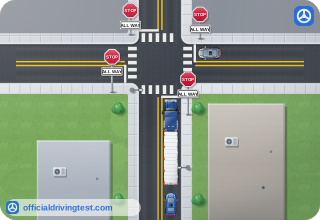
When may you pass a truck on the right while it is turning?
- When it signals a left turn
- Never
- When the shoulder is wide enough
- When it slows below 10 mph
Show answer
Correct answer: Never
Never pass a truck on the right during a turn.
Source: West Virginia Driver's Licensing Handbook (Revised July 2026), page 53 · Open this page in the manual (Manual page 53)
-
What does the handbook say about tailgating a truck?
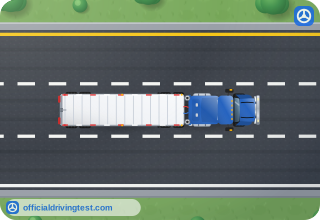
- It is safe at low speeds
- It saves fuel on long trips
- It is fine on dry roads
- Never tailgate a truck
Show answer
Correct answer: Never tailgate a truck
The handbook’s truck safety rules say never tailgate a truck.
Source: West Virginia Driver's Licensing Handbook (Revised July 2026), page 53 · Open this page in the manual (Manual page 53)
-
What does the handbook say you should never underestimate about a truck?
- Its number of axles
- Its fuel economy
- Its cargo value
- Its size or speed
Show answer
Correct answer: Its size or speed
Never underestimate the size or speed of a truck.
Source: West Virginia Driver's Licensing Handbook (Revised July 2026), page 53 · Open this page in the manual (Manual page 53)
-
Where may animal riders not ride?
- On most public highways
- On interstate highways
- On rural two-lane roads
- On roads with a speed limit above 25 mph
Show answer
Correct answer: On interstate highways
Animal riders may use most public highways, but they may not use interstate highways.
Source: West Virginia Driver's Licensing Handbook (Revised July 2026), page 53 · Open this page in the manual (Manual page 53)
3Part 318 questions
-
What rights and rules apply to persons riding animals on the road?
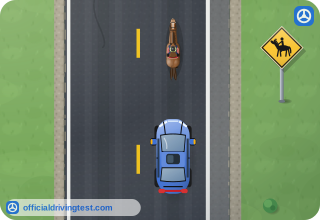
- They have the right-of-way over motor vehicles at all times
- They must keep off the roadway and use only the shoulder
- The same rights as motor vehicle users and the same rules
- They are exempt from most rules of the road
Show answer
Correct answer: The same rights as motor vehicle users and the same rules
Persons riding animals have the same rights as motor vehicle users and are subject to the same rules.
Source: West Virginia Driver's Licensing Handbook (Revised July 2026), page 53 · Open this page in the manual (Manual page 53)
-
Why should you never sound your horn when approaching or near a horse?
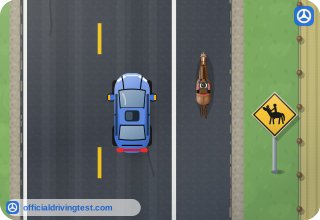
- It may frighten the horse and cause a crash
- Horses can only be warned with hand signals
- The rider may mistake it for a siren
- It may startle other drivers on the road
Show answer
Correct answer: It may frighten the horse and cause a crash
A horn may frighten the horse and cause a crash, so you must never sound it near a horse.
Source: West Virginia Driver's Licensing Handbook (Revised July 2026), page 53 · Open this page in the manual (Manual page 53)
-
What should you do when passing a bicyclist?
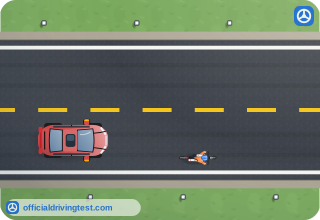
- Speed up and pass quickly so you spend less time near the cyclist
- Slow down, make sure the bicyclist is aware of you, and leave plenty of room
- Stay close to the bicyclist so oncoming drivers can see both of you
- Pass at your normal speed, staying in the center of the lane
Show answer
Correct answer: Slow down, make sure the bicyclist is aware of you, and leave plenty of room
When passing a bicyclist you slow down, make sure he or she is aware of you, and leave plenty of room.
Source: West Virginia Driver's Licensing Handbook (Revised July 2026), page 53 · Open this page in the manual (Manual page 53)
-
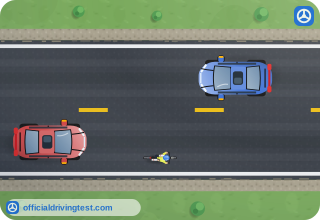
If there is no room to pass a bicyclist and traffic is approaching, what should you do?
- Pass anyway, staying close to the bicyclist
- Sound your horn so oncoming traffic will slow
- Squeeze between the bicyclist and the oncoming traffic
- Wait until the traffic has gone by
Show answer
Correct answer: Wait until the traffic has gone by
If there is no room to pass and traffic is approaching, you should wait until the traffic has gone by before passing the bicyclist.
Source: West Virginia Driver's Licensing Handbook (Revised July 2026), page 53 · Open this page in the manual (Manual page 53)
-
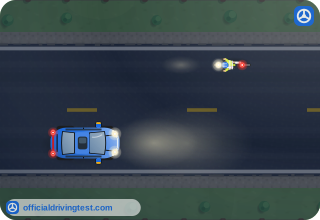
When meeting an oncoming bicyclist at night, what should you do with your lights?
- Always dim them
- Keep your high beams on so the bicyclist sees you
- Turn them off briefly
- Flash them repeatedly
Show answer
Correct answer: Always dim them
When meeting an oncoming bicyclist at night you should always dim your lights.
Source: West Virginia Driver's Licensing Handbook (Revised July 2026), page 53 · Open this page in the manual (Manual page 53)
-
Whether or not a bicyclist is operating lawfully, what should drivers always give the bicyclist?
- A warning from the horn
- The lane on the left
- The benefit of the doubt
- Nothing more than any other driver would get
Show answer
Correct answer: The benefit of the doubt
The handbook says that whether or not a bicyclist is operating lawfully, you should always give the bicyclist the benefit of the doubt.
Source: West Virginia Driver's Licensing Handbook (Revised July 2026), page 53 · Open this page in the manual (Manual page 53)
-
A bicyclist does not have to signal a turn or stop when:
- The bicyclist is riding in the right-most lane
- There is no traffic within 100 feet of the bicyclist
- Both hands are required on the handlebars for balance
- The bicyclist is traveling at a slow speed
Show answer
Correct answer: Both hands are required on the handlebars for balance
Bicyclists must signal turns and stops unless both hands are required on the handlebars for balance.
Source: West Virginia Driver's Licensing Handbook (Revised July 2026), page 54 · Open this page in the manual (Manual page 54)
-
When bicyclists ride side by side, what must they do?
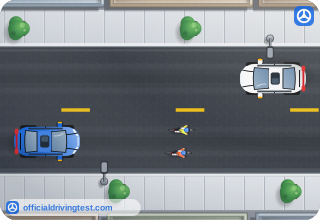
- Keep within a single lane and not hold up traffic
- Ride in the left lane so they can be seen
- Stay on the shoulder and let traffic pass
- Spread across the lane so cars cannot pass
Show answer
Correct answer: Keep within a single lane and not hold up traffic
Bicyclists riding side by side must keep within a single lane and not hold up traffic.
Source: West Virginia Driver's Licensing Handbook (Revised July 2026), page 54 · Open this page in the manual (Manual page 54)
-
What must a bicyclist never do with other vehicles?
- Ride in the same direction as them
- Signal a turn when near them
- Obey the same rules of the road as them
- Hang on to them in any manner
Show answer
Correct answer: Hang on to them in any manner
Bicyclists must never hang on to any other vehicles in any manner.
Source: West Virginia Driver's Licensing Handbook (Revised July 2026), page 54 · Open this page in the manual (Manual page 54)
-
What must bicyclists do about pedestrians?
- Expect them to yield in crosswalks
- Yield the right-of-way to them
- Sound a siren to clear their path
- Ride around them on the sidewalk
Show answer
Correct answer: Yield the right-of-way to them
Bicyclists must yield the right-of-way to pedestrians.
Source: West Virginia Driver's Licensing Handbook (Revised July 2026), page 54 · Open this page in the manual (Manual page 54)
-
A bicyclist may never carry a passenger unless:
- An attached seat is available
- The passenger is a child
- The passenger holds on to the rider
- It is during daylight hours
Show answer
Correct answer: An attached seat is available
Bicyclists must never carry a passenger unless an attached seat is available.
Source: West Virginia Driver's Licensing Handbook (Revised July 2026), page 54 · Open this page in the manual (Manual page 54)
-
What must a bicyclist never carry?
- Any article at all, even a very small and light one
- A bell or other signaling device
- Articles that interfere with control of the bicycle
- A rear reflector
Show answer
Correct answer: Articles that interfere with control of the bicycle
Bicyclists must never carry articles that interfere with control of the bicycle or prevent keeping at least one hand on the handlebars.
Source: West Virginia Driver's Licensing Handbook (Revised July 2026), page 54 · Open this page in the manual (Manual page 54)
-
In which direction must bicyclists ride?
- Against traffic so they can see it
- In the same direction as other vehicles
- Toward oncoming traffic on the shoulder
- In either direction on roads without a center line
Show answer
Correct answer: In the same direction as other vehicles
Bicyclists must ride in the same direction as other vehicles.
Source: West Virginia Driver's Licensing Handbook (Revised July 2026), page 54 · Open this page in the manual (Manual page 54)
-
What color reflector is required on the rear of all bicycles?
- White
- Yellow
- Amber
- Red
Show answer
Correct answer: Red
All bicycles are required to have a red reflector on the rear.
Source: West Virginia Driver's Licensing Handbook (Revised July 2026), page 54 · Open this page in the manual (Manual page 54)
-
Bicycle brakes must be strong enough to stop one wheel on what kind of pavement?
- Wet pavement on a slight hill
- Any pavement, wet or dry
- Gravel or dirt surfaces
- Dry, level, clean pavement
Show answer
Correct answer: Dry, level, clean pavement
Bicycles must have brakes strong enough to stop one wheel on dry, level, clean pavement.
Source: West Virginia Driver's Licensing Handbook (Revised July 2026), page 54 · Open this page in the manual (Manual page 54)
-
A bicycle must have a bell or other device that can be heard for what distance?
- At least 50 feet
- At least 100 feet
- At least 200 feet
- At least 500 feet
Show answer
Correct answer: At least 100 feet
A bicycle must have a bell or other device audible for at least 100 feet; a siren or whistle is not permitted.
Source: West Virginia Driver's Licensing Handbook (Revised July 2026), page 54 · Open this page in the manual (Manual page 54)
-
For riding after dark, a bicycle must have a white headlight visible for at least what distance to the front?
- 100 feet
- 200 feet
- 500 feet
- 1,000 feet
Show answer
Correct answer: 500 feet
For riding after dark, a bicycle needs a white headlight that is visible for at least 500 feet to the front.
Source: West Virginia Driver's Licensing Handbook (Revised July 2026), page 54 · Open this page in the manual (Manual page 54)
-
Where should you be especially alert for joggers?
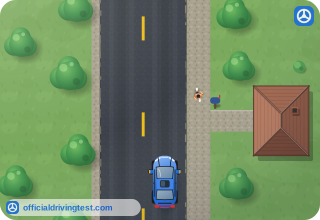
- In unexpected places such as curves, hilltops and around corners
- Only on straight roads where they can be seen far ahead
- Only on roads where signs warn of pedestrian traffic
- Only in school zones when children are walking to school
Show answer
Correct answer: In unexpected places such as curves, hilltops and around corners
Drivers should be alert for joggers in unexpected places such as curves, on the top of a hill or around a corner.
Source: West Virginia Driver's Licensing Handbook (Revised July 2026), page 54 · Open this page in the manual (Manual page 54)
4Part 417 questions
-
In which places should you also be aware of high jogging traffic?
- Freeway shoulders and ramps
- Parks or jogging paths
- Bridges
- Railroad crossings
Show answer
Correct answer: Parks or jogging paths
The handbook says to be aware of high jogging traffic in places such as parks or jogging paths.
Source: West Virginia Driver's Licensing Handbook (Revised July 2026), page 54 · Open this page in the manual (Manual page 54)
-
A public bus is loading passengers. Is traffic required to stop?
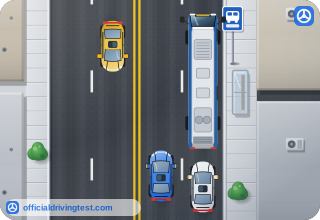
- Yes, traffic in both directions must stop
- Yes, but only traffic behind the bus
- No, but watch for passengers crossing
- Yes, if the bus is at a bus stop
Show answer
Correct answer: No, but watch for passengers crossing
Traffic does not have to stop for a public bus, but drivers should watch for passengers crossing the street as they get on and off.
Source: West Virginia Driver's Licensing Handbook (Revised July 2026), page 54 · Open this page in the manual (Manual page 54)
-
Rush-hour traffic is usually inbound to metropolitan areas between which times?
- 5 am and 7 am
- 8 am and 10 am
- 7 am and 9 am
- 9 am and 11 am
Show answer
Correct answer: 7 am and 9 am
Inbound rush-hour traffic is usually between 7 am and 9 am.
Source: West Virginia Driver's Licensing Handbook (Revised July 2026), page 65 · Open this page in the manual (Manual page 65)
-
Rush-hour traffic is usually outbound from metropolitan areas between which times?
- 3 pm and 5 pm
- 5 pm and 7 pm
- 6 pm and 8 pm
- 4 pm and 6 pm
Show answer
Correct answer: 4 pm and 6 pm
Outbound rush-hour traffic is usually between 4 pm and 6 pm.
Source: West Virginia Driver's Licensing Handbook (Revised July 2026), page 65 · Open this page in the manual (Manual page 65)
-
When do rush hours in industrial areas usually occur?
- During changes in work shifts
- During the middle of each work shift
- Only on weekends
- Between 7 am and 9 am only
Show answer
Correct answer: During changes in work shifts
Rush hours in industrial areas usually occur during changes in work shifts.
Source: West Virginia Driver's Licensing Handbook (Revised July 2026), page 65 · Open this page in the manual (Manual page 65)
-
When is rush-hour traffic heaviest?
- During weekends
- On holiday weekends only
- During weekdays
- In the summer months only
Show answer
Correct answer: During weekdays
Rush-hour traffic is heaviest during weekdays.
Source: West Virginia Driver's Licensing Handbook (Revised July 2026), page 65 · Open this page in the manual (Manual page 65)
-
What may you encounter on weekends, according to the handbook?
- Heavier rush-hour traffic than during the weekdays
- Drivers making longer trips and driving longer hours
- Fewer vehicles than at any other time of the week
- Mostly commuters who are in a hurry to reach work
Show answer
Correct answer: Drivers making longer trips and driving longer hours
On weekends you may meet drivers making longer trips and driving longer hours.
Source: West Virginia Driver's Licensing Handbook (Revised July 2026), page 65 · Open this page in the manual (Manual page 65)
-
Why are summer months associated with an increase in traffic?
- Vacation travel
- School bus schedules
- Road construction work
- Farm harvest traffic
Show answer
Correct answer: Vacation travel
Summer months bring an increase in traffic due to vacation travel.
Source: West Virginia Driver's Licensing Handbook (Revised July 2026), page 65 · Open this page in the manual (Manual page 65)
-
What do holiday periods also produce on the roadway?
- A decrease in the number of tired drivers
- A decrease in heavy trucks and buses
- An increase in the number of drunk drivers
- An increase in slow-moving farm machinery
Show answer
Correct answer: An increase in the number of drunk drivers
The handbook says holiday periods also produce an increase in the number of drunk drivers.
Source: West Virginia Driver's Licensing Handbook (Revised July 2026), page 65 · Open this page in the manual (Manual page 65)
-
Which may you encounter when driving in rural areas, according to the handbook?
- Stop-and-go traffic
- Hazards from game animals
- More intersections
- More pedestrians and bicycles
Show answer
Correct answer: Hazards from game animals
In rural areas you may meet slow-moving farm machinery, stray livestock, game animals, and faster motorists.
Source: West Virginia Driver's Licensing Handbook (Revised July 2026), page 65 · Open this page in the manual (Manual page 65)
-
Which may you encounter when driving in urban areas, according to the handbook?
- Slow-moving farm machinery
- Hazards from stray livestock
- Hazards from game animals
- Stop-and-go traffic
Show answer
Correct answer: Stop-and-go traffic
In urban areas you may meet more pedestrians, bicycles, intersections, and stop-and-go traffic.
Source: West Virginia Driver's Licensing Handbook (Revised July 2026), page 65 · Open this page in the manual (Manual page 65)
-
Why should a defensive driver be aware of the number of heavy trucks and buses in traffic?
- They always travel faster than passenger cars on hills
- They cannot be seen in the rear view mirror of a car
- They can cause problems in passing and slow traffic on hills
- They are not allowed to use the left lane at any time
Show answer
Correct answer: They can cause problems in passing and slow traffic on hills
Heavy trucks and buses can cause problems in passing and slow traffic on hills and grades.
Source: West Virginia Driver's Licensing Handbook (Revised July 2026), page 65 · Open this page in the manual (Manual page 65)
-
Which of these does the handbook give as a reason an oncoming driver may cross into your lane?
- Responding to a traffic signal turning green
- Recovering from a drop off the pavement
- Yielding to a vehicle approaching from behind
- Adjusting the air conditioning in the vehicle
Show answer
Correct answer: Recovering from a drop off the pavement
The handbook lists recovering from a drop off the pavement among the reasons an oncoming driver may come into your lane.
Source: West Virginia Driver's Licensing Handbook (Revised July 2026), page 66 · Open this page in the manual (Manual page 66)
-
To avoid a crash with a vehicle passing you, what does the handbook say to do?
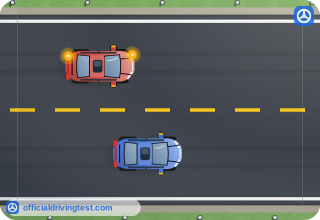
- Slow down and keep as close to the right side of the road as possible
- Speed up and move toward the center of the road to block the pass
- Stay in the center of your lane and hold your speed steady
- Move onto the shoulder and stop until the vehicle has passed
Show answer
Correct answer: Slow down and keep as close to the right side of the road as possible
Slowing down and staying as far to the right as possible makes it easier for the other vehicle to pass.
Source: West Virginia Driver's Licensing Handbook (Revised July 2026), page 66 · Open this page in the manual (Manual page 66)
-
How does the handbook say you should view it when another driver passes you?
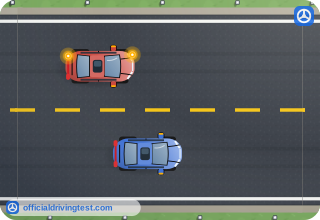
- As a challenge to stay ahead by speeding up
- As a reason to move into the left lane beside it
- As something not to be treated as a challenge
- As a chance to follow closely behind the passing vehicle
Show answer
Correct answer: As something not to be treated as a challenge
Being passed is not a challenge. Many sideswipe and run-off-the-road crashes result from being passed.
Source: West Virginia Driver's Licensing Handbook (Revised July 2026), page 66 · Open this page in the manual (Manual page 66)
-
According to the handbook, what does passing do to your vehicle?
- Lowers fuel consumption because speed stays steady
- Reduces wear on the engine and the tires
- Has no effect on the vehicle when done legally and smoothly
- Puts wear and tear on it and increases fuel consumption
Show answer
Correct answer: Puts wear and tear on it and increases fuel consumption
Even when done legally, passing puts wear and tear on your vehicle and increases fuel consumption.
Source: West Virginia Driver's Licensing Handbook (Revised July 2026), page 66 · Open this page in the manual (Manual page 66)
-
In the handbook's steps for passing another vehicle safely, what comes right after signaling before a lane change?
- Turn on your hazard lights
- Slow down to the speed of the vehicle ahead
- Move to the left lane
- Pull onto the right shoulder
Show answer
Correct answer: Move to the left lane
After signaling before the lane change, the next step is to move to the left lane.
Source: West Virginia Driver's Licensing Handbook (Revised July 2026), page 67 · Open this page in the manual (Manual page 67)