Washington: Hazardous conditions and collisions
Night, rain, snow, ice and fog, skids and vehicle failures, and what to do after a collision. Split into 4 shorter tests so you're not stuck in one long quiz.
Independent educational site · not affiliated with any government agency or DMV
Choose a part
Hazardous conditions and collisions — Part 1
Questions in this part include: “What are the four steps of the OODA Loop, in order?”
Hazardous conditions and collisions — Part 2
Questions in this part include: “How far behind your disabled vehicle should you place emergency flares?”
Hazardous conditions and collisions — Part 3
Questions in this part include: “How should you brake if the engine shuts off while you are driving?”
Hazardous conditions and collisions — Part 4
Questions in this part include: “After you jump clear of a vehicle in contact with power lines, how should you move away 35 feet?”
Questions are original and based on the official manual "Washington Driver Guide" (© 2025), Washington State Department of Licensing (DOL).
All 70 Hazardous conditions and collisions questions with answers
Choose a part above to take a practice test, or study every question and answer here.
Show the questions and answersHide the questions
1Part 118 questions
-
How should you report an in-progress road rage incident?
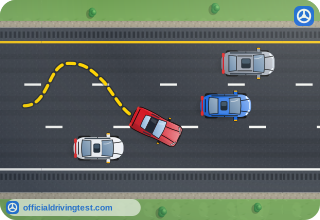
- By mailing a written report afterward
- Immediately by calling 911
- By asking the other driver to stop and explain
- By waiting until the next day to call
Show answer
Correct answer: Immediately by calling 911
The guide says to report in-progress road rage incidents immediately by calling 911.
Source: Washington Driver Guide (© 2025), page 80 · Open this page in the manual (Manual page 80)
-
When you call 911 about an aggressive driving act, which piece of information does the guide ask you to provide?
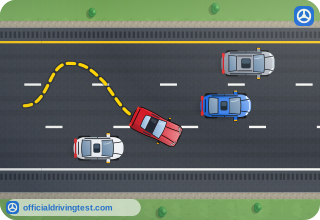
- The other driver’s full name
- The other driver’s phone number
- Your own driver license number
- The plate number, if known
Show answer
Correct answer: The plate number, if known
The guide lists the plate number, if known, among the information to give when you call 911 about aggressive driving.
Source: Washington Driver Guide (© 2025), page 80 · Open this page in the manual (Manual page 80)
-
Which change might solving a problem on the road require?
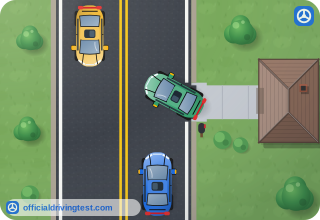
- Stopping immediately in the travel lane to reassess the situation
- Changing your direction to get to a safe place to reassess the situation
- Increasing your speed to leave the problem behind you quickly
- Turning off your headlights to avoid glare from other vehicles
Show answer
Correct answer: Changing your direction to get to a safe place to reassess the situation
The guide lists changing your direction or path of travel to reach a safe place and reassess as one possible change.
Source: Washington Driver Guide (© 2025), page 82 · Open this page in the manual (Manual page 82)
-
What are the four steps of the OODA Loop, in order?
- Observe, Decide, Orient, Act
- Orient, Observe, Act, Decide
- Observe, Act, Orient, Decide
- Observe, Orient, Decide, Act
Show answer
Correct answer: Observe, Orient, Decide, Act
The guide presents the OODA Loop as observe, orient, decide, and act, repeating as each situation leads to another.
Source: Washington Driver Guide (© 2025), page 83 · Open this page in the manual (Manual page 83)
-
Why is the OODA Loop called a loop?
- Because every situation leads to another
- Because you repeat each step three times
- Because it always ends where you started the trip
- Because it applies only on roundabouts
Show answer
Correct answer: Because every situation leads to another
The guide says it is a loop because every situation leads to another.
Source: Washington Driver Guide (© 2025), page 83 · Open this page in the manual (Manual page 83)
-
In the OODA Loop, which step asks you to look at what changed, such as a swerving car, a sudden obstacle, or a change in traffic flow?
- Orient
- Decide
- Observe
- Act
Show answer
Correct answer: Observe
In the Observe step you look at the situation and ask what changed.
Source: Washington Driver Guide (© 2025), page 83 · Open this page in the manual (Manual page 83)
-
In the OODA Loop, which step uses your knowledge and experience to understand what a change means?
- Observe
- Orient
- Decide
- Act
Show answer
Correct answer: Orient
In the Orient step you use knowledge and experience to understand what the change means for safety.
Source: Washington Driver Guide (© 2025), page 83 · Open this page in the manual (Manual page 83)
-
In the OODA Loop, which step has you choose the safest course of action?
- Observe
- Orient
- Act
- Decide
Show answer
Correct answer: Decide
In the Decide step you choose the safest course of action based on what you observed and understood.
Source: Washington Driver Guide (© 2025), page 83 · Open this page in the manual (Manual page 83)
-
In the OODA Loop, which step has you smoothly and decisively carry out your chosen action?
- Act
- Observe
- Orient
- Decide
Show answer
Correct answer: Act
In the Act step you execute your chosen action smoothly and decisively, communicating clearly with others.
Source: Washington Driver Guide (© 2025), page 83 · Open this page in the manual (Manual page 83)
-
What can rain, snow, or ice do to friction in curves?
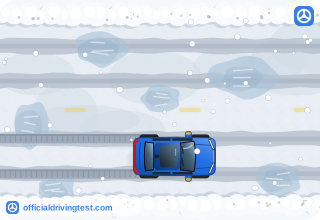
- Slightly increase it
- Remove the need to steer
- Significantly reduce it
- Have no effect on it
Show answer
Correct answer: Significantly reduce it
Slippery roads reduce friction a lot, so you should slow down even more and avoid sudden movements.
Source: Washington Driver Guide (© 2025), page 169 · Open this page in the manual (Manual page 169)
-
Why can the pavement be very slippery during the first few minutes of rain on a hot day?
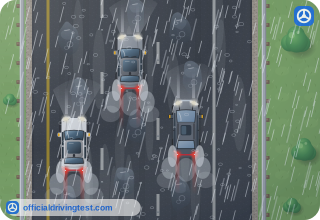
- Hot pavement turns the rain into ice
- Heat brings oil in the asphalt to the surface
- Rain washes the lane markings onto the road
- Hot tires cannot grip wet pavement
Show answer
Correct answer: Heat brings oil in the asphalt to the surface
Heat brings oil in the asphalt to the surface, and the road stays slippery until the oil washes away.
Source: Washington Driver Guide (© 2025), page 170 · Open this page in the manual (Manual page 170)
-
How can you improve traction in the winter months?
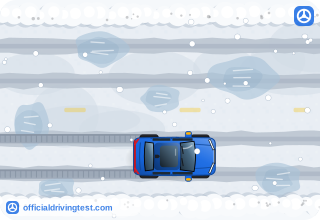
- Add chains or change to studded tires
- Reduce the air pressure in your tires
- Drive with the headlights off
- Brake harder on slippery spots
Show answer
Correct answer: Add chains or change to studded tires
The guide says chains or studded tires can improve traction during winter months.
Source: Washington Driver Guide (© 2025), page 171 · Open this page in the manual (Manual page 171)
-
What should you do if you must drive on icy roads?
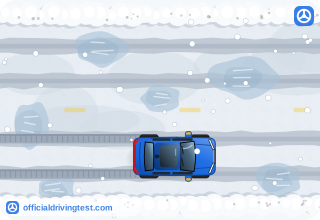
- Keep your speed up so you do not lose momentum
- Tailgate a vehicle that has already crossed the ice
- Slow down and leave extra space around your vehicle
- Brake firmly when you see ice
Show answer
Correct answer: Slow down and leave extra space around your vehicle
The guide advises slowing down and leaving extra room, and avoiding icy roads when you can.
Source: Washington Driver Guide (© 2025), page 171 · Open this page in the manual (Manual page 171)
-
On cold, wet days, where can ice be found even when the rest of the road is not icy?
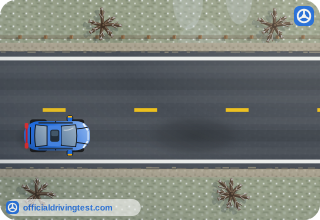
- Only on straight roads with no trees nearby
- Only on roads with painted center lines
- In shady spots and on overpasses and other bridges
- Only on the left side of the road
Show answer
Correct answer: In shady spots and on overpasses and other bridges
Shady spots can be icy, and bridges and overpasses can have icy spots even when the rest of the road does not.
Source: Washington Driver Guide (© 2025), page 171 · Open this page in the manual (Manual page 171)
-
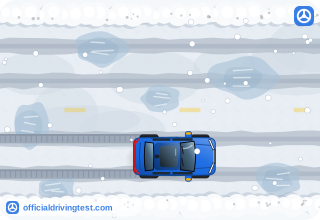
Why can the road become more slippery when below-freezing temperatures warm up to near-freezing?
- Ice can melt and become wet
- Ice becomes thicker and rougher
- Snow turns into black ice instantly
- Tires lose air pressure
Show answer
Correct answer: Ice can melt and become wet
Melting ice leaves a wet layer, which makes the road more slippery.
Source: Washington Driver Guide (© 2025), page 171 · Open this page in the manual (Manual page 171)
-
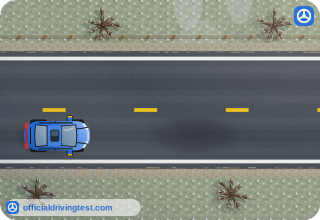
What is black ice?
- Ice that has been darkened by road dirt and is easy to see
- A thick layer of packed snow
- Water frozen on the inside of your windshield
- A thin coating of ice that is hard for drivers to see
Show answer
Correct answer: A thin coating of ice that is hard for drivers to see
Black ice is a thin ice coating that drivers often cannot see, so be careful near or below freezing.
Source: Washington Driver Guide (© 2025), page 171 · Open this page in the manual (Manual page 171)
-
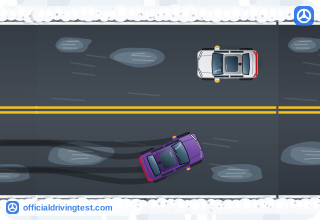
What causes a skid?
- The engine is running too cool
- The tires can no longer grip the road
- The steering wheel is held too loosely
- The vehicle is moving too slowly
Show answer
Correct answer: The tires can no longer grip the road
A skid happens when the tires lose their grip on the road surface.
Source: Washington Driver Guide (© 2025), page 171 · Open this page in the manual (Manual page 171)
-
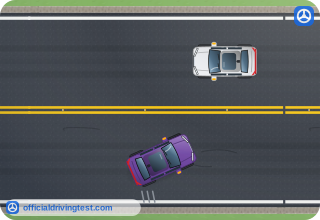
What increases the possibility of skidding if you turn or stop suddenly?
- High speeds and slippery roads
- Low speeds and dry roads
- Wide lanes and gentle curves
- Daylight and clear weather
Show answer
Correct answer: High speeds and slippery roads
Fast driving and slippery pavement make a sudden turn or stop more likely to cause a skid.
Source: Washington Driver Guide (© 2025), page 171 · Open this page in the manual (Manual page 171)
2Part 218 questions
-
What is the first thing to do if your vehicle is skidding?
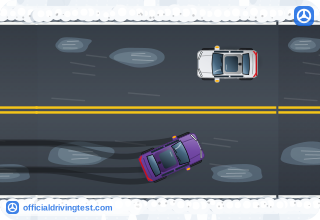
- Turn the wheel sharply away from the skid
- Shift into reverse
- Take your foot off the accelerator
- Press the accelerator to pull out of the skid
Show answer
Correct answer: Take your foot off the accelerator
The guide lists taking your foot off the accelerator as the first step in a skid.
Source: Washington Driver Guide (© 2025), page 171 · Open this page in the manual (Manual page 171)
-
If your vehicle does not have antilock brakes and you are skidding, what could quickly pressing the brake pedal down do?
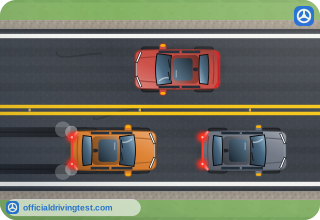
- Stop the skid right away
- Cause you to skid more
- Lock the steering for a smoother recovery
- Improve your steering control
Show answer
Correct answer: Cause you to skid more
Without antilock brakes, quickly pressing the brake pedal down could make the skid worse.
Source: Washington Driver Guide (© 2025), page 171 · Open this page in the manual (Manual page 171)
-
What do antilock brakes do in a skid?
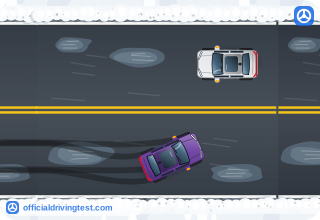
- Prevent the vehicle from ever skidding again
- Keep the tires from touching the road
- Take over the steering for you
- Control wheel rotation and let you keep steering
Show answer
Correct answer: Control wheel rotation and let you keep steering
Antilock brakes control the rotation of the wheels and let you keep steering.
Source: Washington Driver Guide (© 2025), page 171 · Open this page in the manual (Manual page 171)
-
In which direction should you steer if your vehicle is skidding?
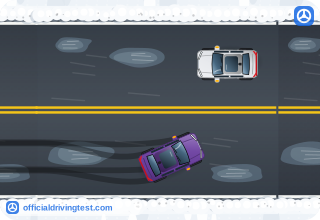
- In the opposite direction from the way the vehicle is moving
- Toward the nearest curb
- Straight ahead without adjusting
- In the same direction your vehicle is moving
Show answer
Correct answer: In the same direction your vehicle is moving
The guide says to steer the way the vehicle is moving and keep correcting until the tires regain traction.
Source: Washington Driver Guide (© 2025), page 172 · Open this page in the manual (Manual page 172)
-
What is hydroplaning?
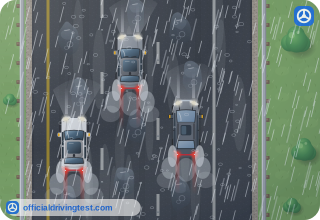
- Ice builds up between the tires and the road, causing a spin
- Water builds up between the tires and the road, causing a skid
- The tires overheat and lose air pressure on a hot road
- The brakes stick on a wet road and the wheels lock up
Show answer
Correct answer: Water builds up between the tires and the road, causing a skid
Hydroplaning is a loss of traction caused by water between the tires and the road.
Source: Washington Driver Guide (© 2025), page 172 · Open this page in the manual (Manual page 172)
-
What is the best way to keep from hydroplaning?
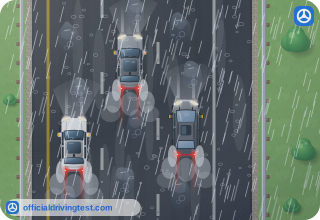
- Drive faster to push the water aside
- Brake firmly as soon as the road is wet
- Slow down when the road is wet
- Use your high beams
Show answer
Correct answer: Slow down when the road is wet
Slowing down on a wet road is the guide's best way to avoid hydroplaning.
Source: Washington Driver Guide (© 2025), page 172 · Open this page in the manual (Manual page 172)
-
If you hydroplane, how should you handle the steering wheel?
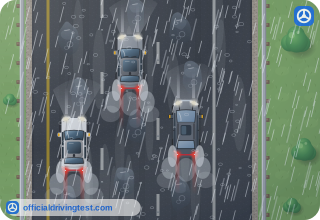
- Keep it steady; do not overcorrect or jerk it
- Turn it sharply in the direction of the skid
- Turn it back and forth to find traction
- Let go of it until the tires grip
Show answer
Correct answer: Keep it steady; do not overcorrect or jerk it
A steady wheel without overcorrection helps you regain control when the tires get traction again.
Source: Washington Driver Guide (© 2025), page 172 · Open this page in the manual (Manual page 172)
-
If you hydroplane, how should you press the brakes?
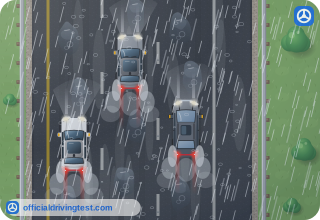
- Forcefully
- Gently
- Not at all, under any circumstances
- In short, rapid stabs
Show answer
Correct answer: Gently
The guide says to press the brakes gently; forceful pressing without antilock brakes could cause more hydroplaning.
Source: Washington Driver Guide (© 2025), page 172 · Open this page in the manual (Manual page 172)
-
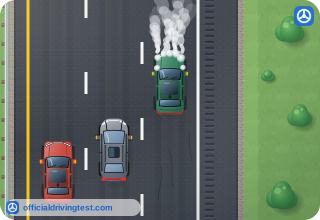
If you have vehicle trouble on the road, where should you try to get your vehicle?
- To the middle of the lane so others see it
- Just over the top of a hill
- Around the nearest curve
- Off the road and away from traffic, if possible
Show answer
Correct answer: Off the road and away from traffic, if possible
Getting off the road and away from traffic is the first tip for vehicle trouble.
Source: Washington Driver Guide (© 2025), page 173 · Open this page in the manual (Manual page 173)
-
If you cannot get your disabled vehicle off the road, where should you stop?
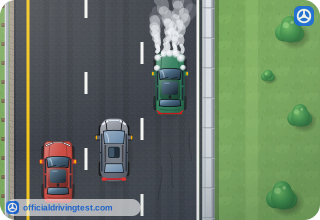
- Where other drivers have a clear view of your vehicle
- Just over a hill, off the side of the road
- Just around a curve, as close to the edge as possible
- Under a tree or bridge, in the shade
Show answer
Correct answer: Where other drivers have a clear view of your vehicle
Avoid stopping over a hill or around a curve so other drivers can see your vehicle.
Source: Washington Driver Guide (© 2025), page 173 · Open this page in the manual (Manual page 173)
-
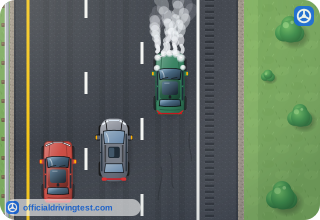
What should you turn on when your vehicle has trouble on the road?
- Only your interior lights, to save the battery
- Your high beams only, without the flashers
- Your emergency flashers and headlights
- Nothing, so the battery does not run down
Show answer
Correct answer: Your emergency flashers and headlights
The guide says to turn on emergency flashers and headlights to warn others.
Source: Washington Driver Guide (© 2025), page 173 · Open this page in the manual (Manual page 173)
-
How far behind your disabled vehicle should you place emergency flares?
- 10 to 20 feet
- 50 to 75 feet
- 200 to 300 feet
- 500 to 600 feet
Show answer
Correct answer: 200 to 300 feet
Flares 200 to 300 feet behind the vehicle warn other road users.
Source: Washington Driver Guide (© 2025), page 173 · Open this page in the manual (Manual page 173)
-
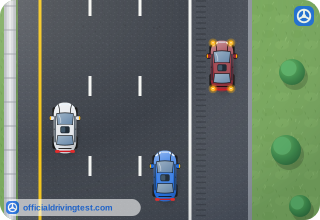
If you have no emergency flares or other warning device, what should you do when your vehicle is disabled?
- Stand somewhere safe and wave traffic around the vehicle
- Stand behind the vehicle in the lane to warn drivers
- Wave traffic from the middle of the road
- Sit in the vehicle with all lights turned off
Show answer
Correct answer: Stand somewhere safe and wave traffic around the vehicle
The guide says to stand in a safe place and wave traffic around the vehicle.
Source: Washington Driver Guide (© 2025), page 173 · Open this page in the manual (Manual page 173)
-
How can you signal an emergency if your vehicle is disabled?
- Honk the horn continuously until help comes
- Tie a red cloth to the license plate and wait
- Open all the doors and turn on the interior light
- Lift the hood or tie a white cloth to the vehicle
Show answer
Correct answer: Lift the hood or tie a white cloth to the vehicle
A raised hood or a white cloth tied to the vehicle signals that you need help.
Source: Washington Driver Guide (© 2025), page 173 · Open this page in the manual (Manual page 173)
-
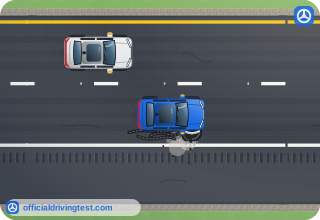
What should you do first if a tire blows out or suddenly goes flat?
- Brake hard to stop as quickly as you can
- Grip the wheel firmly and keep the vehicle straight
- Steer sharply toward the shoulder right away
- Shift into park and turn off the engine
Show answer
Correct answer: Grip the wheel firmly and keep the vehicle straight
The guide says to hold the wheel firmly, keep straight, and slow down gradually.
Source: Washington Driver Guide (© 2025), page 173 · Open this page in the manual (Manual page 173)
-
After a tire blowout, how should you slow your vehicle?
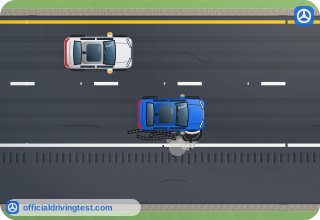
- Let it slow by itself, braking gently only if needed
- Brake as hard as you can to stop quickly
- Accelerate until you reach the road shoulder
- Turn the engine off and coast to a stop
Show answer
Correct answer: Let it slow by itself, braking gently only if needed
Hard braking is not advised after a blowout; the vehicle should slow gradually.
Source: Washington Driver Guide (© 2025), page 173 · Open this page in the manual (Manual page 173)
-
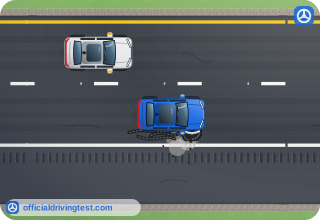
If a tire blows out and you cannot get to a safe place to change it, what should you do?
- Get out and change the tire beside the traffic lane
- Turn off all lights and walk to find a phone
- Use hazard lights, stay in your vehicle, and call for help
- Leave the vehicle and flag down passing drivers
Show answer
Correct answer: Use hazard lights, stay in your vehicle, and call for help
When there is no safe place to change the tire, you stay inside with hazard lights on and call for help.
Source: Washington Driver Guide (© 2025), page 173 · Open this page in the manual (Manual page 173)
-
If the engine shuts off while you are driving, what should you know about the steering wheel?
- It will lock up and cannot be turned at all
- It might be hard to turn, but you can turn it
- It will turn more easily than usual
- It will turn only to the right side
Show answer
Correct answer: It might be hard to turn, but you can turn it
Keep a strong grip: the steering wheel might be difficult to turn, but you can still turn it.
Source: Washington Driver Guide (© 2025), page 174 · Open this page in the manual (Manual page 174)
3Part 317 questions
-
How should you brake if the engine shuts off while you are driving?
- As hard as you can, to stop in a short distance
- By standing on the pedal and holding it down hard
- By shifting into park to stop the engine
- With steady pressure, slowing down before pulling off
Show answer
Correct answer: With steady pressure, slowing down before pulling off
The guide says not to brake hard but to brake with steady pressure and pull off the roadway.
Source: Washington Driver Guide (© 2025), page 174 · Open this page in the manual (Manual page 174)
-
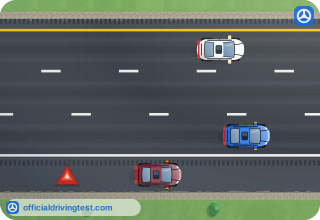
If you cannot restart the engine after it shuts off while you are driving, what should you do?
- Keep trying to start it until the battery is empty
- Leave the vehicle and walk along the lane
- Turn off the headlights and wait
- Raise the hood, use hazard lights, and call for help
Show answer
Correct answer: Raise the hood, use hazard lights, and call for help
After an unsuccessful restart, the hood and hazard lights signal trouble while you call for help.
Source: Washington Driver Guide (© 2025), page 174 · Open this page in the manual (Manual page 174)
-
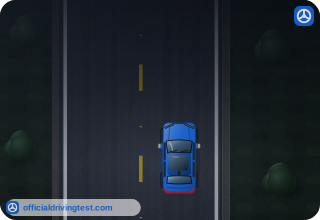
What should you do if your headlights suddenly go out?
- Keep driving at the same speed until you get home or reach a service station
- Use hazard lights, turn signals, or fog lights, and pull off the road soon
- Turn on the interior lights and continue driving normally
- Stop in the lane and wait until they come back on
Show answer
Correct answer: Use hazard lights, turn signals, or fog lights, and pull off the road soon
Use whatever lights you still have to be seen, and get off the road quickly.
Source: Washington Driver Guide (© 2025), page 174 · Open this page in the manual (Manual page 174)
-
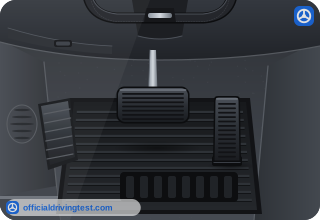
If your vehicle keeps going faster and faster, what should you do?
- Turn the engine off while driving at speed
- Shift into park
- Quickly shift to neutral
- Press the brake pedal and the accelerator together
Show answer
Correct answer: Quickly shift to neutral
Quickly shift to neutral, pull off the road when it is safe, and then turn off the engine.
Source: Washington Driver Guide (© 2025), page 174 · Open this page in the manual (Manual page 174)
-
After shifting to neutral when your vehicle keeps accelerating, what should you do?
- Pull off the road when safe, then turn off the engine
- Turn off the engine right away while still moving
- Stay on the road and coast until it slows
- Shift back into drive and drive on
Show answer
Correct answer: Pull off the road when safe, then turn off the engine
The order in the guide is neutral, pull off when safe, then turn off the engine.
Source: Washington Driver Guide (© 2025), page 174 · Open this page in the manual (Manual page 174)
-
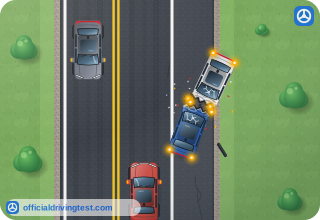
Which of these is one of the typical causes of collisions?
- Too much traffic on the road
- Too little space
- Too many passengers
- Too much daylight
Show answer
Correct answer: Too little space
The guide names too much speed, too little space, and insufficient situational awareness.
Source: Washington Driver Guide (© 2025), page 175 · Open this page in the manual (Manual page 175)
-
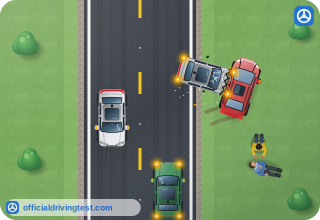
If anyone is injured or killed in a crash, what must you do?
- Move on and report it later
- Drive to the nearest police station
- Wait for a passing driver to call
- Call 911 and not drive away
Show answer
Correct answer: Call 911 and not drive away
Law enforcement must be notified when anyone is hurt or killed, and you must not leave.
Source: Washington Driver Guide (© 2025), page 175 · Open this page in the manual (Manual page 175)
-
After a crash, where should you move your vehicle if you can?
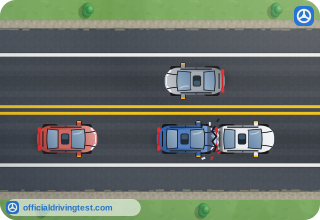
- To the side of the road, near the collision site
- To a parking lot far from the collision site
- To the middle of the road, to block traffic
- Several blocks away, before calling anyone
Show answer
Correct answer: To the side of the road, near the collision site
The guide says to move to the side of the road near the collision site as soon as possible.
Source: Washington Driver Guide (© 2025), page 175 · Open this page in the manual (Manual page 175)
-
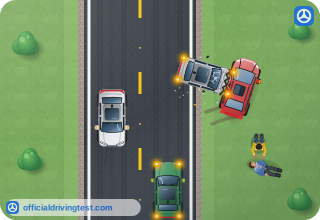
Why should you not stand or walk in traffic lanes after a collision?
- It blocks your phone signal
- It makes it harder to see the damage
- You could be struck by another vehicle
- It is a violation of the collision report law
Show answer
Correct answer: You could be struck by another vehicle
Standing in lanes puts you in the path of other traffic.
Source: Washington Driver Guide (© 2025), page 175 · Open this page in the manual (Manual page 175)
-
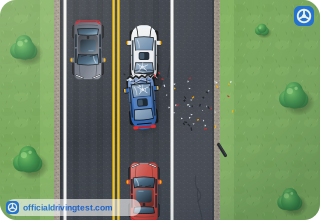
How can you alert other drivers of a collision?
- Turn off your hazard lights
- Flash your high beams at all traffic
- Use flares or other warning devices
- Park across the lane
Show answer
Correct answer: Use flares or other warning devices
Flares or similar devices warn drivers of the collision ahead.
Source: Washington Driver Guide (© 2025), page 176 · Open this page in the manual (Manual page 176)
-
What should you do with wrecked vehicles after a collision?
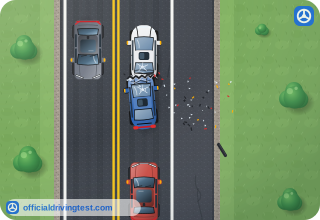
- Turn them off
- Keep the engines running for heat
- Restart them to see if they work
- Leave the ignition on to run the lights
Show answer
Correct answer: Turn them off
The guide says to turn off wrecked vehicles.
Source: Washington Driver Guide (© 2025), page 176 · Open this page in the manual (Manual page 176)
-
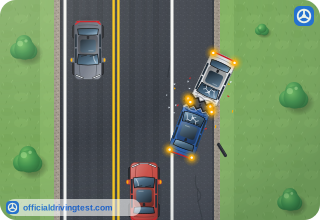
Why should you not smoke around wrecked vehicles?
- Smoke can block the view of other drivers on the road
- Smoking distracts police officers
- The smell of smoke hides gas leaks
- Fuel could have spilled, and fire is a real danger
Show answer
Correct answer: Fuel could have spilled, and fire is a real danger
Spilled fuel and fire are a real danger around wrecked vehicles.
Source: Washington Driver Guide (© 2025), page 176 · Open this page in the manual (Manual page 176)
-
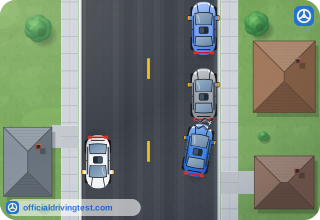
If your collision involves a parked vehicle and you cannot find its owner, what must you do?
- Leave without a note, since no one was injured in the collision
- Leave a note in plain view with the date, time, and contact information
- Take photos of the damage and leave without telling anyone
- Move the parked vehicle to another street, then leave the scene
Show answer
Correct answer: Leave a note in plain view with the date, time, and contact information
You must try to find the owner; if you cannot, a note with the date, time of the collision and your contact information is required.
Source: Washington Driver Guide (© 2025), page 176 · Open this page in the manual (Manual page 176)
-
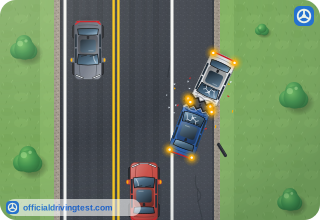
What does the guide suggest you do to document damage after a collision?
- Move the vehicles so the damage can be seen
- Wait several days before looking at the damage
- Take photos or videos of any damage to the vehicles
- Repair the damage before talking to anyone
Show answer
Correct answer: Take photos or videos of any damage to the vehicles
Photos or videos help you report the incident.
Source: Washington Driver Guide (© 2025), page 176 · Open this page in the manual (Manual page 176)
-
Within how many days of a crash must you file a collision report form if a law enforcement officer does not file one for you?
- 24 hours
- 4 days
- 10 days
- 30 days
Show answer
Correct answer: 4 days
State law requires the form within 4 days when no officer files it.
Source: Washington Driver Guide (© 2025), page 176 · Open this page in the manual (Manual page 176)
-
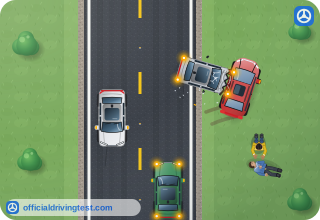
After a crash, when may you move an injured person?
- When they say they are able to walk on their own
- When they are not wearing a seatbelt anymore
- When the ambulance has not yet been called
- When in a burning vehicle or in immediate danger
Show answer
Correct answer: When in a burning vehicle or in immediate danger
Do not move injured people unless they are in a burning vehicle or otherwise in immediate danger.
Source: Washington Driver Guide (© 2025), page 176 · Open this page in the manual (Manual page 176)
-
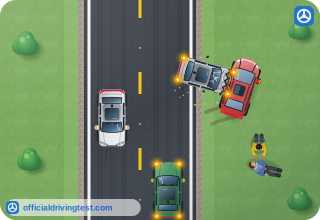
When helping injured people after a crash, what should you check for first, before bleeding?
- A pulse in the wrist
- Broken bones
- Whether they can stand
- Breathing
Show answer
Correct answer: Breathing
The guide says to check for breathing, then check for bleeding.
Source: Washington Driver Guide (© 2025), page 177 · Open this page in the manual (Manual page 177)
4Part 417 questions
-
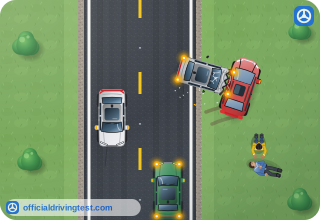
What is the first step if you see an injured person bleeding?
- Give the person water to drink
- Apply pressure with hands
- Have the person walk around
- Rinse the wound with water
Show answer
Correct answer: Apply pressure with hands
The first step in the guide's bleeding list is to apply pressure with your hands.
Source: Washington Driver Guide (© 2025), page 177 · Open this page in the manual (Manual page 177)
-
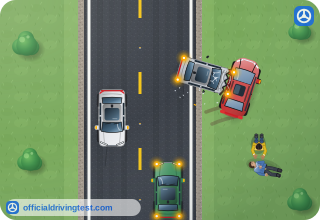
What should you give injured people to drink after a crash?
- Only small sips of water
- Warm tea or coffee
- Nothing, not even water
- Water, if they ask for it
Show answer
Correct answer: Nothing, not even water
The guide says not to give injured people anything to drink.
Source: Washington Driver Guide (© 2025), page 177 · Open this page in the manual (Manual page 177)
-
Why should you cover injured people with a blanket or coat?
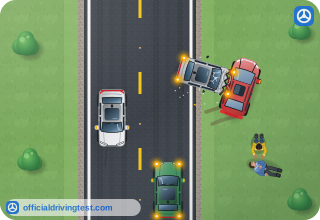
- To keep them warm and help prevent shock
- To protect them from broken glass
- To signal to other drivers that help is needed
- To stop bleeding
Show answer
Correct answer: To keep them warm and help prevent shock
Keeping an injured person warm helps prevent shock.
Source: Washington Driver Guide (© 2025), page 177 · Open this page in the manual (Manual page 177)
-
What should you tell a 911 dispatcher first after a crash?
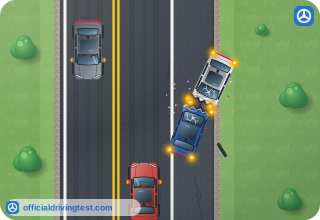
- Only the name of your insurance company
- Your location, with any landmarks or mile markers
- Only your home address, then hang up
- Nothing until the dispatcher asks you twice
Show answer
Correct answer: Your location, with any landmarks or mile markers
Clearly giving your location, with landmarks or mile markers, helps responders find you.
Source: Washington Driver Guide (© 2025), page 177 · Open this page in the manual (Manual page 177)
-
When you describe the crash to a 911 dispatcher, what should you include?
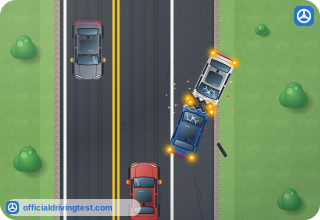
- The names of the drivers' employers and their ages
- The speed limit and the forecast for the day
- Who you think caused the crash and who is at fault
- The number of vehicles, the damage, and any injuries
Show answer
Correct answer: The number of vehicles, the damage, and any injuries
The guide says to give a brief description including vehicles, damage, and injuries.
Source: Washington Driver Guide (© 2025), page 177 · Open this page in the manual (Manual page 177)
-
How long should you stay on the phone with a 911 dispatcher after a crash?
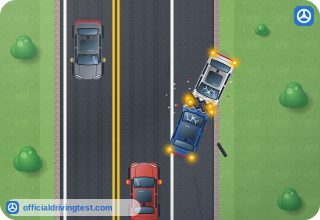
- Until help arrives
- Until you have given your location
- Until the first officer calls you back
- For no more than one minute
Show answer
Correct answer: Until help arrives
The guide says to stay on the phone with the dispatcher until help arrives.
Source: Washington Driver Guide (© 2025), page 178 · Open this page in the manual (Manual page 178)
-
If a power line comes in contact with your vehicle, what should you do?
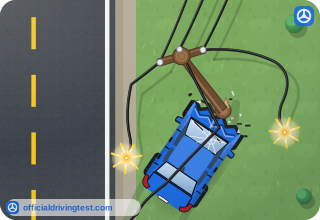
- Get out and run away from the vehicle
- Step out and move the line with a stick
- Do not get out of the vehicle
- Open the doors and wait outside
Show answer
Correct answer: Do not get out of the vehicle
Do not get out if a power line touches your vehicle. The one exception is a fire, when you must jump clear.
Source: Washington Driver Guide (© 2025), page 178 · Open this page in the manual (Manual page 178)
-
If a collision involves power lines, what should you do?
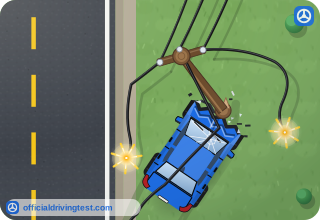
- Leave the engine running and walk to a safe place
- Drive away from the lines as fast as you can
- Turn off the engine, call 911, and stay inside
- Get out and check whether the lines are live
Show answer
Correct answer: Turn off the engine, call 911, and stay inside
If a collision involves power lines, turn off your engine, call 911, and stay inside until emergency responders arrive.
Source: Washington Driver Guide (© 2025), page 178 · Open this page in the manual (Manual page 178)
-
How should you treat downed or hanging power lines?
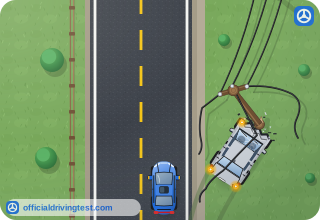
- Assume they are all energized
- Assume they are safe if they are not sparking
- Assume they are safe if the wires are on the ground
- Assume they are safe if the power is off in the area
Show answer
Correct answer: Assume they are all energized
The guide says you never know if a line is charged, so assume all of them are.
Source: Washington Driver Guide (© 2025), page 178 · Open this page in the manual (Manual page 178)
-
What should you do if you accidentally drive over a power line?
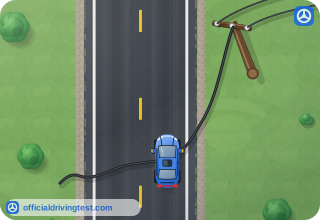
- Reverse off the line
- Drive forward quickly to clear it
- Get out and look at it
- Stop immediately
Show answer
Correct answer: Stop immediately
Moving forward or reversing puts you at risk of being electrocuted.
Source: Washington Driver Guide (© 2025), page 178 · Open this page in the manual (Manual page 178)
-
If power lines fall on your vehicle or you hit a transformer box, how far away should you encourage people to stay, when possible?
- At least 5 feet
- At least 35 feet
- At least 10 feet
- At least 100 feet
Show answer
Correct answer: At least 35 feet
The ground around the vehicle could also be energized, so bystanders should keep at least 35 feet away.
Source: Washington Driver Guide (© 2025), page 178 · Open this page in the manual (Manual page 178)
-
If your vehicle touches power lines and a fire starts, how should you get out of the vehicle?
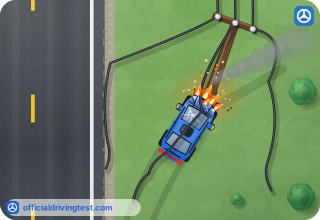
- Jump clear, arms at your sides, landing with both feet together
- Step out with one foot on the ground and one on the car
- Climb out slowly while holding on to the door frame
- Run out of the vehicle with your arms outstretched
Show answer
Correct answer: Jump clear, arms at your sides, landing with both feet together
The guide describes jumping away from the vehicle with feet together to avoid electric shock.
Source: Washington Driver Guide (© 2025), page 178 · Open this page in the manual (Manual page 178)
-
After you jump clear of a vehicle in contact with power lines, how should you move away 35 feet?
- Run
- Walk with long steps
- Shuffle
- Hop on one foot
Show answer
Correct answer: Shuffle
Shuffling is described as the way to avoid electric shock while moving away.
Source: Washington Driver Guide (© 2025), page 178 · Open this page in the manual (Manual page 178)
-
After escaping from a vehicle that touched power lines, when may you go back inside for belongings?
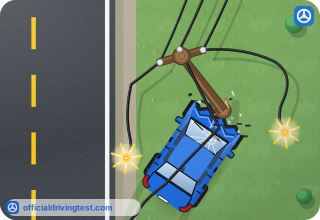
- Once the flames appear to be out
- Not until you are advised it is safe
- When the power line stops moving
- After one minute has passed
Show answer
Correct answer: Not until you are advised it is safe
The guide says not to return until you are told it is safe.
Source: Washington Driver Guide (© 2025), page 178 · Open this page in the manual (Manual page 178)
-
When you witness a crash, what should you do as you pass?
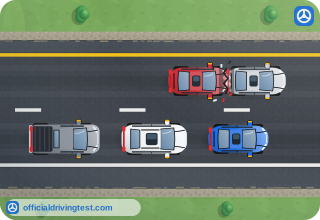
- Slow down so you can see how serious the crash is
- Stop in your lane to take photos of the scene
- Honk to let the drivers involved know you are there
- Focus on your driving instead of slowing down to stare
Show answer
Correct answer: Focus on your driving instead of slowing down to stare
Slowing down to stare creates traffic congestion; focus on driving instead.
Source: Washington Driver Guide (© 2025), page 179 · Open this page in the manual (Manual page 179)
-
What should you do when you witness a crash and emergency responders are at the scene?
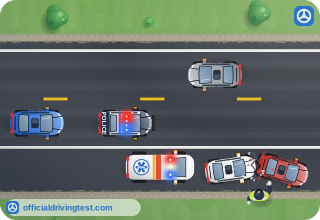
- Stop your vehicle near them and offer to help the officers
- Pass them while sounding your horn to warn others
- Drive around them using the shoulder to save time
- Do not block them; follow directions from police and firefighters
Show answer
Correct answer: Do not block them; follow directions from police and firefighters
The guide says not to block responders and to follow directions from authorized persons.
Source: Washington Driver Guide (© 2025), page 179 · Open this page in the manual (Manual page 179)
-
Why does the guide suggest keeping a paper copy of important numbers in your vehicle?
- It is required by state law if you carry a phone
- It helps if your phone dies and you must use another phone
- It lets you skip calling 911 in an emergency
- It replaces your proof of insurance if you lose it
Show answer
Correct answer: It helps if your phone dies and you must use another phone
A paper list of family and insurance numbers still works when your phone is dead.
Source: Washington Driver Guide (© 2025), page 179 · Open this page in the manual (Manual page 179)