Rhode Island: Emergencies and collisions — Part 1 Practice Test
Questions in this part include: “How does the manual describe the methods it gives for handling common driving emergencies?” · “Why may different skid-control techniques be required?”
Independent educational site · not affiliated with any government agency or DMV
Ready? Test yourself
- Instant feedback with an explanation
- Every answer cites its source in the manual
- Your best score is saved on this device
- Keyboard: press 1 to 4 to answer and Enter for the next question
Questions are original and based on the official manual "Rhode Island Driver’s Manual" (April 2024), Rhode Island Division of Motor Vehicles (DMV).
All 20 questions in this practice test
Take the test above first, then use this list to study. Tap “Show answer” to see the correct answer and explanation.
Show the questions and answersHide the questions
-
If you must make repairs along a highway, where should you move the vehicle?
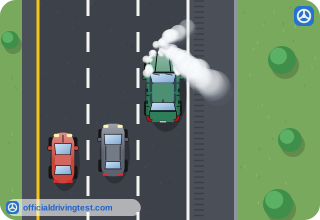
- To a place where all four wheels are off the main pavement
- To the far-left lane next to the median
- To a place where two wheels are off the main pavement
- As close to the next exit as you can get in the right lane
Show answer
Correct answer: To a place where all four wheels are off the main pavement
The manual says to move the vehicle so all four wheels are off the main pavement and to turn on the hazard flashing lights.
Source: Rhode Island Driver’s Manual (April 2024), page 35
-
If you must stop on a highway and you need help, what does the manual say to do?
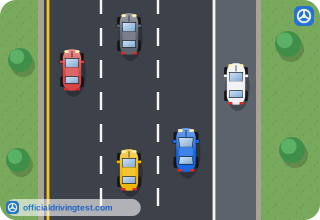
- Raise the hood, tie a white cloth to the door handle, and stay locked inside
- Stand beside the vehicle and wave at passing drivers to get attention
- Leave the hazard lights off and wait outside the vehicle on the shoulder
- Walk along the edge of the traffic lane to the nearest exit ramp
Show answer
Correct answer: Raise the hood, tie a white cloth to the door handle, and stay locked inside
The manual says to raise the hood, tie a white cloth to the door handle and stay in your locked vehicle.
Source: Rhode Island Driver’s Manual (April 2024), page 36
-
How does the manual describe the methods it gives for handling common driving emergencies?
- As suggested methods that may not be applicable to all emergencies
- As laws that apply in exactly the same way to every emergency
- As methods meant only for drivers of vehicles with anti-lock brakes
- As steps to be followed in a fixed order in every emergency
Show answer
Correct answer: As suggested methods that may not be applicable to all emergencies
The manual calls them suggested methods and says every emergency varies, so they may not fit every situation.
Source: Rhode Island Driver’s Manual (April 2024), page 43
-
On a slippery road, in a vehicle with conventional brakes, how should you apply the brakes?

- By pressing the pedal as hard as you can and holding it down
- By braking once, hard, and then releasing the pedal completely
- By very gently pumping them while keeping a proper speed
- By staying off the brakes until the vehicle stops by itself
Show answer
Correct answer: By very gently pumping them while keeping a proper speed
For vehicles with conventional brakes, the manual says to pump the brakes very gently and keep a proper speed for the road conditions.
Source: Rhode Island Driver’s Manual (April 2024), page 43
-
According to the manual, what causes most skids?

- The tires on the vehicle are too new for the road surface
- The driver fails to adjust speed to road and traffic conditions in time
- The road surface is poorly built or badly maintained at the time
- The vehicle is too light for the weather conditions it meets
Show answer
Correct answer: The driver fails to adjust speed to road and traffic conditions in time
The manual says most skids come from the driver not adjusting the vehicle's speed to road and traffic conditions in time.
Source: Rhode Island Driver’s Manual (April 2024), page 43
-
On roads that are wet or icy, what should you never make?

- Any use of your turn signals
- Any gentle steering correction
- Any use of your headlights
- Sudden changes in speed or direction
Show answer
Correct answer: Sudden changes in speed or direction
On wet or icy roads the manual says never to make sudden changes in speed or direction.
Source: Rhode Island Driver’s Manual (April 2024), page 43
-
Why should you not pump the brake pedal of a vehicle that has anti-lock brakes?
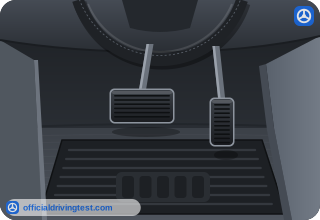
- Pumping wears the brake pads out much faster than firm pressure
- Pumping makes the pedal stop pulsating and the car roll freely
- Pumping could cancel the feature and make the brakes lock up and skid
- Pumping drains the brake fluid out of the system
Show answer
Correct answer: Pumping could cancel the feature and make the brakes lock up and skid
The manual warns that pumping anti-lock brakes could cancel the feature and let the brakes lock up and skid.
Source: Rhode Island Driver’s Manual (April 2024), page 43
-
What does an anti-lock braking system (ABS) do during emergency braking?
- It keeps the wheels turning so the vehicle does not skid and can steer
- It locks the front wheels so the vehicle stops in a shorter distance
- It releases the brakes completely after a few seconds of braking
- It applies the parking brake automatically to help stop the vehicle
Show answer
Correct answer: It keeps the wheels turning so the vehicle does not skid and can steer
ABS is a computer-controlled system that keeps the wheels turning during emergency braking, so the vehicle does not skid and the driver can still steer.
Source: Rhode Island Driver’s Manual (April 2024), page 43
-
The brake pedal pulsates when you brake hard in a vehicle with anti-lock brakes. What does the manual say about this?
- It means the brakes are about to fail
- It means a tire has lost air pressure
- It means the system has been cancelled
- It is normal for ABS systems
Show answer
Correct answer: It is normal for ABS systems
A pulsating pedal is normal while ABS is working.
Source: Rhode Island Driver’s Manual (April 2024), page 43
-
As soon as a vehicle begins to skid, what is the first thing the manual says to do?

- Brake as hard as you can
- Let off the gas
- Downshift to a lower gear
- Engage the parking brake
Show answer
Correct answer: Let off the gas
The first step in controlling a skid is to let off the gas.
Source: Rhode Island Driver’s Manual (April 2024), page 43
-
When a vehicle begins to skid, what should you do with the brake pedal and the clutch?

- Press both of them firmly and hold
- Keep your foot away from them
- Tap them quickly several times
- Press the clutch and pump the brake
Show answer
Correct answer: Keep your foot away from them
To control a skid the manual says to keep your foot away from the brake pedal and the clutch, and let the vehicle slow gradually.
Source: Rhode Island Driver’s Manual (April 2024), page 43
-
In which direction should you look and turn the steering wheel while controlling a skid?

- Away from the direction you want the vehicle to go
- Toward the nearest curb or shoulder
- Straight ahead, holding the wheel still
- In the direction you want the vehicle to go
Show answer
Correct answer: In the direction you want the vehicle to go
The manual says to look and turn the steering wheel toward where you want the vehicle to go.
Source: Rhode Island Driver’s Manual (April 2024), page 43
-
While recovering from a skid, what should you be prepared to do with the steering wheel?

- Steer left and right a few times until you have full control
- Hold the wheel in one fixed position until the vehicle stops
- Turn the wheel sharply once and then release it completely
- Lock the wheel and brake in short bursts until you stop
Show answer
Correct answer: Steer left and right a few times until you have full control
The manual says to be ready to steer left and right a few times until the vehicle is completely under control.
Source: Rhode Island Driver’s Manual (April 2024), page 43
-
Why may different skid-control techniques be required?
- They depend on whether it is daytime or nighttime when the skid begins
- They depend on how many passengers are riding in the vehicle at the time
- They depend on whether the vehicle is front-wheel, rear-wheel or all-wheel drive
- They depend on the age of the driver who is behind the wheel
Show answer
Correct answer: They depend on whether the vehicle is front-wheel, rear-wheel or all-wheel drive
The manual says there are no set rules for vehicle control; techniques may differ by drive type, so check the owner's manual.
Source: Rhode Island Driver’s Manual (April 2024), page 43
-
If the brake pedal goes right to the floor, what might pumping it do?
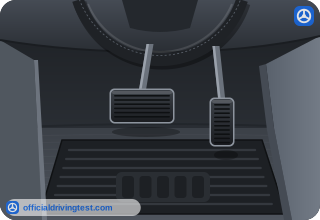
- Refill the brake fluid reservoir while you keep on driving down the road
- Switch on the anti-lock brakes for the rest of the trip
- Cool the brake pads so the pedal comes back up
- Temporarily restore enough fluid pressure to slow or stop the vehicle
Show answer
Correct answer: Temporarily restore enough fluid pressure to slow or stop the vehicle
The manual says pumping might temporarily bring back enough brake fluid pressure to slow or stop the vehicle, even with anti-lock brakes.
Source: Rhode Island Driver’s Manual (April 2024), page 43
-
After how many pumps of the brake pedal will you know whether your brakes are going to hold?
- One or two
- Three or four
- Six or seven
- Ten or more
Show answer
Correct answer: Three or four
The manual says that after three or four pumps you will know if the brakes will hold.
Source: Rhode Island Driver’s Manual (April 2024), page 43
-
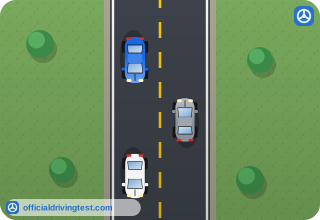
What does downshifting to a lower gear do when your brakes have failed completely?
- It restores the pressure inside the brake lines
- It releases the parking brake automatically
- It uses the braking power of the engine to slow the vehicle
- It stops the vehicle from being steered by the driver at all
Show answer
Correct answer: It uses the braking power of the engine to slow the vehicle
Downshifting uses the engine's braking power to help slow the vehicle.
Source: Rhode Island Driver’s Manual (April 2024), page 43
-
During total brake failure you engage the parking brake and the vehicle begins to skid. What can you do?
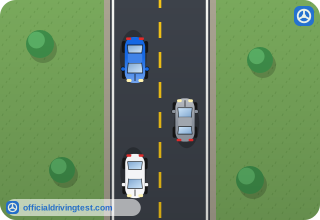
- Quickly release the parking brake for a moment
- Pull the parking brake harder and hold it
- Shift into reverse at once
- Turn the ignition off and coast
Show answer
Correct answer: Quickly release the parking brake for a moment
The manual says you can quickly release the parking brake for a moment if the vehicle begins to skid.
Source: Rhode Island Driver’s Manual (April 2024), page 43
-
As a last resort, what can you do to reduce speed when your brakes have failed?
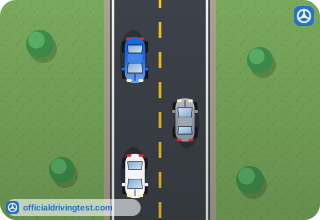
- Rub the wheels against a curb
- Switch off the engine and coast
- Shift into reverse gear
- Swerve across several lanes
Show answer
Correct answer: Rub the wheels against a curb
When other steps fail, the manual says to rub the wheels against a curb to reduce speed.
Source: Rhode Island Driver’s Manual (April 2024), page 43
-
With brakes that have failed and a collision that cannot be avoided, what should you steer for?
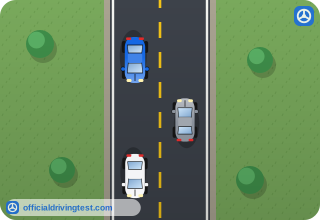
- The largest solid object, to stop as quickly as possible
- The center of the lane, holding your line
- A sideswipe rather than hitting something solid head-on
- A head-on impact with the softest object nearby
Show answer
Correct answer: A sideswipe rather than hitting something solid head-on
The manual says to steer for a sideswipe instead of colliding head-on into something solid.
Source: Rhode Island Driver’s Manual (April 2024), page 43