Rhode Island: Emergencies and collisions
Skids, brake failure, blowouts, a stuck accelerator, collision threats, fire, water, bad weather, carbon monoxide and what to do after a collision. Split into 5 shorter tests so you're not stuck in one long quiz.
Independent educational site · not affiliated with any government agency or DMV
Choose a part
Emergencies and collisions — Part 1
Questions in this part include: “How does the manual describe the methods it gives for handling common driving emergencies?”
StartEmergencies and collisions — Part 2
Questions in this part include: “What kind of escape path should you choose when your accelerator is stuck?”
StartEmergencies and collisions — Part 3
Questions in this part include: “Which type of crash is more likely to result in death than any other type of crash, according to the manual?”
StartEmergencies and collisions — Part 4
Questions in this part include: “When can carbon monoxide poisoning occur, according to the manual?”
StartEmergencies and collisions — Part 5
Questions in this part include: “Which of these may help avoid the effects of carbon monoxide poisoning?”
StartAll 97 Emergencies and collisions questions with answers
Choose a part above to take a practice test, or study every question and answer here.
Show the questions and answersHide the questions
-
If you must make repairs along a highway, where should you move the vehicle?
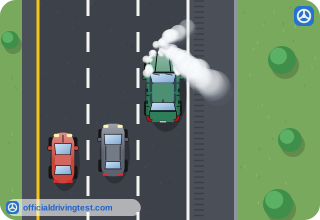
- To a place where all four wheels are off the main pavement
- To the far-left lane next to the median
- To a place where two wheels are off the main pavement
- As close to the next exit as you can get in the right lane
Show answer
Correct answer: To a place where all four wheels are off the main pavement
The manual says to move the vehicle so all four wheels are off the main pavement and to turn on the hazard flashing lights.
Source: Rhode Island Driver’s Manual (April 2024), page 35
-
If you must stop on a highway and you need help, what does the manual say to do?
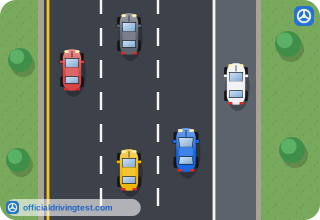
- Raise the hood, tie a white cloth to the door handle, and stay locked inside
- Stand beside the vehicle and wave at passing drivers to get attention
- Leave the hazard lights off and wait outside the vehicle on the shoulder
- Walk along the edge of the traffic lane to the nearest exit ramp
Show answer
Correct answer: Raise the hood, tie a white cloth to the door handle, and stay locked inside
The manual says to raise the hood, tie a white cloth to the door handle and stay in your locked vehicle.
Source: Rhode Island Driver’s Manual (April 2024), page 36
-
How does the manual describe the methods it gives for handling common driving emergencies?
- As suggested methods that may not be applicable to all emergencies
- As laws that apply in exactly the same way to every emergency
- As methods meant only for drivers of vehicles with anti-lock brakes
- As steps to be followed in a fixed order in every emergency
Show answer
Correct answer: As suggested methods that may not be applicable to all emergencies
The manual calls them suggested methods and says every emergency varies, so they may not fit every situation.
Source: Rhode Island Driver’s Manual (April 2024), page 43
-
On a slippery road, in a vehicle with conventional brakes, how should you apply the brakes?
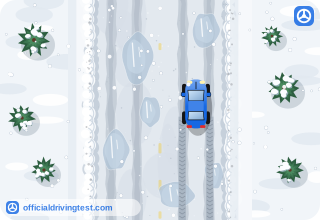
- By pressing the pedal as hard as you can and holding it down
- By braking once, hard, and then releasing the pedal completely
- By very gently pumping them while keeping a proper speed
- By staying off the brakes until the vehicle stops by itself
Show answer
Correct answer: By very gently pumping them while keeping a proper speed
For vehicles with conventional brakes, the manual says to pump the brakes very gently and keep a proper speed for the road conditions.
Source: Rhode Island Driver’s Manual (April 2024), page 43
-
According to the manual, what causes most skids?
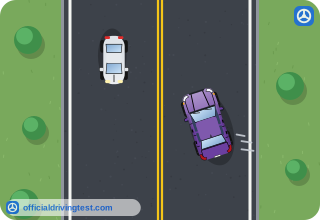
- The tires on the vehicle are too new for the road surface
- The driver fails to adjust speed to road and traffic conditions in time
- The road surface is poorly built or badly maintained at the time
- The vehicle is too light for the weather conditions it meets
Show answer
Correct answer: The driver fails to adjust speed to road and traffic conditions in time
The manual says most skids come from the driver not adjusting the vehicle's speed to road and traffic conditions in time.
Source: Rhode Island Driver’s Manual (April 2024), page 43
-
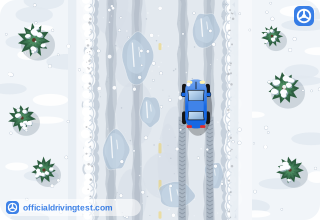
On roads that are wet or icy, what should you never make?
- Any use of your turn signals
- Any gentle steering correction
- Any use of your headlights
- Sudden changes in speed or direction
Show answer
Correct answer: Sudden changes in speed or direction
On wet or icy roads the manual says never to make sudden changes in speed or direction.
Source: Rhode Island Driver’s Manual (April 2024), page 43
-
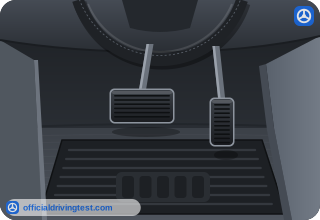
Why should you not pump the brake pedal of a vehicle that has anti-lock brakes?
- Pumping wears the brake pads out much faster than firm pressure
- Pumping makes the pedal stop pulsating and the car roll freely
- Pumping could cancel the feature and make the brakes lock up and skid
- Pumping drains the brake fluid out of the system
Show answer
Correct answer: Pumping could cancel the feature and make the brakes lock up and skid
The manual warns that pumping anti-lock brakes could cancel the feature and let the brakes lock up and skid.
Source: Rhode Island Driver’s Manual (April 2024), page 43
-
What does an anti-lock braking system (ABS) do during emergency braking?
- It keeps the wheels turning so the vehicle does not skid and can steer
- It locks the front wheels so the vehicle stops in a shorter distance
- It releases the brakes completely after a few seconds of braking
- It applies the parking brake automatically to help stop the vehicle
Show answer
Correct answer: It keeps the wheels turning so the vehicle does not skid and can steer
ABS is a computer-controlled system that keeps the wheels turning during emergency braking, so the vehicle does not skid and the driver can still steer.
Source: Rhode Island Driver’s Manual (April 2024), page 43
-
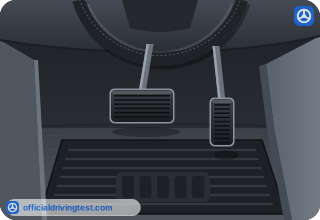
The brake pedal pulsates when you brake hard in a vehicle with anti-lock brakes. What does the manual say about this?
- It means the brakes are about to fail
- It means a tire has lost air pressure
- It means the system has been cancelled
- It is normal for ABS systems
Show answer
Correct answer: It is normal for ABS systems
A pulsating pedal is normal while ABS is working.
Source: Rhode Island Driver’s Manual (April 2024), page 43
-
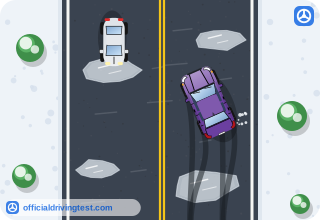
As soon as a vehicle begins to skid, what is the first thing the manual says to do?
- Brake as hard as you can
- Let off the gas
- Downshift to a lower gear
- Engage the parking brake
Show answer
Correct answer: Let off the gas
The first step in controlling a skid is to let off the gas.
Source: Rhode Island Driver’s Manual (April 2024), page 43
-
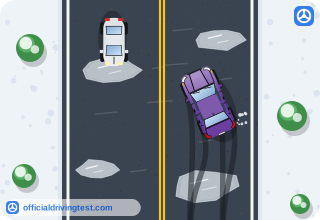
When a vehicle begins to skid, what should you do with the brake pedal and the clutch?
- Press both of them firmly and hold
- Keep your foot away from them
- Tap them quickly several times
- Press the clutch and pump the brake
Show answer
Correct answer: Keep your foot away from them
To control a skid the manual says to keep your foot away from the brake pedal and the clutch, and let the vehicle slow gradually.
Source: Rhode Island Driver’s Manual (April 2024), page 43
-
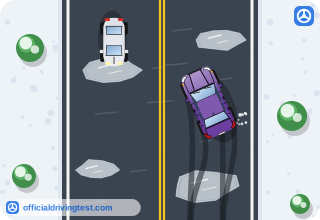
In which direction should you look and turn the steering wheel while controlling a skid?
- Away from the direction you want the vehicle to go
- Toward the nearest curb or shoulder
- Straight ahead, holding the wheel still
- In the direction you want the vehicle to go
Show answer
Correct answer: In the direction you want the vehicle to go
The manual says to look and turn the steering wheel toward where you want the vehicle to go.
Source: Rhode Island Driver’s Manual (April 2024), page 43
-
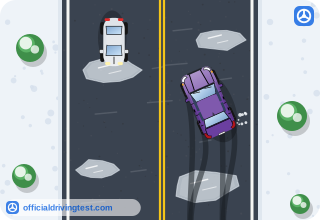
While recovering from a skid, what should you be prepared to do with the steering wheel?
- Steer left and right a few times until you have full control
- Hold the wheel in one fixed position until the vehicle stops
- Turn the wheel sharply once and then release it completely
- Lock the wheel and brake in short bursts until you stop
Show answer
Correct answer: Steer left and right a few times until you have full control
The manual says to be ready to steer left and right a few times until the vehicle is completely under control.
Source: Rhode Island Driver’s Manual (April 2024), page 43
-
Why may different skid-control techniques be required?
- They depend on whether it is daytime or nighttime when the skid begins
- They depend on how many passengers are riding in the vehicle at the time
- They depend on whether the vehicle is front-wheel, rear-wheel or all-wheel drive
- They depend on the age of the driver who is behind the wheel
Show answer
Correct answer: They depend on whether the vehicle is front-wheel, rear-wheel or all-wheel drive
The manual says there are no set rules for vehicle control; techniques may differ by drive type, so check the owner's manual.
Source: Rhode Island Driver’s Manual (April 2024), page 43
-
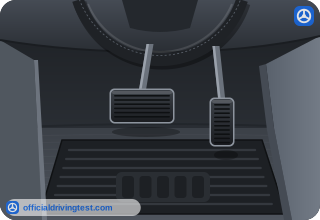
If the brake pedal goes right to the floor, what might pumping it do?
- Refill the brake fluid reservoir while you keep on driving down the road
- Switch on the anti-lock brakes for the rest of the trip
- Cool the brake pads so the pedal comes back up
- Temporarily restore enough fluid pressure to slow or stop the vehicle
Show answer
Correct answer: Temporarily restore enough fluid pressure to slow or stop the vehicle
The manual says pumping might temporarily bring back enough brake fluid pressure to slow or stop the vehicle, even with anti-lock brakes.
Source: Rhode Island Driver’s Manual (April 2024), page 43
-
After how many pumps of the brake pedal will you know whether your brakes are going to hold?
- One or two
- Three or four
- Six or seven
- Ten or more
Show answer
Correct answer: Three or four
The manual says that after three or four pumps you will know if the brakes will hold.
Source: Rhode Island Driver’s Manual (April 2024), page 43
-
What does downshifting to a lower gear do when your brakes have failed completely?
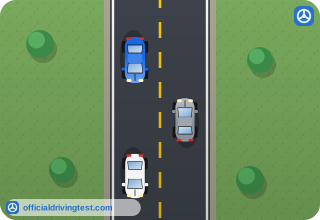
- It restores the pressure inside the brake lines
- It releases the parking brake automatically
- It uses the braking power of the engine to slow the vehicle
- It stops the vehicle from being steered by the driver at all
Show answer
Correct answer: It uses the braking power of the engine to slow the vehicle
Downshifting uses the engine's braking power to help slow the vehicle.
Source: Rhode Island Driver’s Manual (April 2024), page 43
-
During total brake failure you engage the parking brake and the vehicle begins to skid. What can you do?
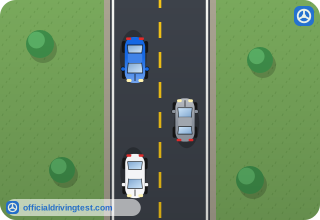
- Quickly release the parking brake for a moment
- Pull the parking brake harder and hold it
- Shift into reverse at once
- Turn the ignition off and coast
Show answer
Correct answer: Quickly release the parking brake for a moment
The manual says you can quickly release the parking brake for a moment if the vehicle begins to skid.
Source: Rhode Island Driver’s Manual (April 2024), page 43
-
As a last resort, what can you do to reduce speed when your brakes have failed?
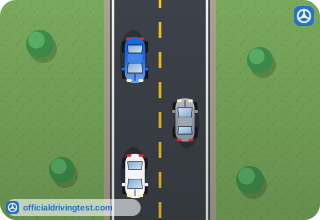
- Rub the wheels against a curb
- Switch off the engine and coast
- Shift into reverse gear
- Swerve across several lanes
Show answer
Correct answer: Rub the wheels against a curb
When other steps fail, the manual says to rub the wheels against a curb to reduce speed.
Source: Rhode Island Driver’s Manual (April 2024), page 43
-
With brakes that have failed and a collision that cannot be avoided, what should you steer for?
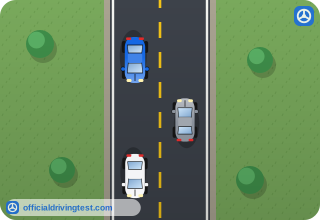
- The largest solid object, to stop as quickly as possible
- The center of the lane, holding your line
- A sideswipe rather than hitting something solid head-on
- A head-on impact with the softest object nearby
Show answer
Correct answer: A sideswipe rather than hitting something solid head-on
The manual says to steer for a sideswipe instead of colliding head-on into something solid.
Source: Rhode Island Driver’s Manual (April 2024), page 43
-
If a tire fails, what does the manual say your task is?
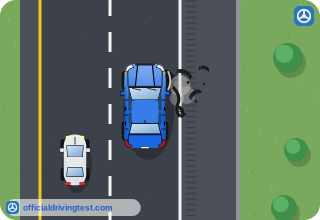
- To stop in the lane right away
- To drive to safety
- To brake as hard as you can
- To repair the tire quickly
Show answer
Correct answer: To drive to safety
The manual says the failed tire is already a total loss, so your task is to drive to safety.
Source: Rhode Island Driver’s Manual (April 2024), page 43
-
If a tire fails, how should you hold the steering wheel?
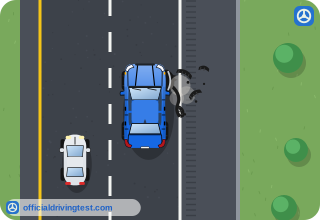
- Loosely with one hand
- Lightly with your fingertips
- With one hand while you brake
- Firmly with two hands
Show answer
Correct answer: Firmly with two hands
The first step for a blowout or flat tire is to grip the steering wheel firmly with two hands.
Source: Rhode Island Driver’s Manual (April 2024), page 43
-
Right after a tire blows out, what should you do about the brake?
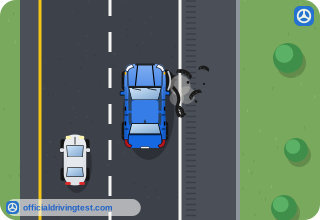
- Brake hard at once to stop as quickly as possible
- Pump the brake pedal rapidly until you stop
- Do not brake; ease up on the accelerator and let the vehicle slow
- Brake gently with your left foot while you steer the vehicle
Show answer
Correct answer: Do not brake; ease up on the accelerator and let the vehicle slow
Braking can make the vehicle swerve, so the manual says to ease off the accelerator and not brake.
Source: Rhode Island Driver’s Manual (April 2024), page 43
-
After a blowout, what should you turn on as soon as possible?
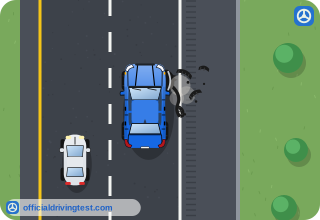
- Your hazard warning lights
- Your high beams
- Your fog lights
- Your windshield wipers
Show answer
Correct answer: Your hazard warning lights
The manual says to turn on the hazard warning lights as soon as possible after tire failure.
Source: Rhode Island Driver’s Manual (April 2024), page 44
-
After a blowout, how should you leave the roadway once you reach a safe place?
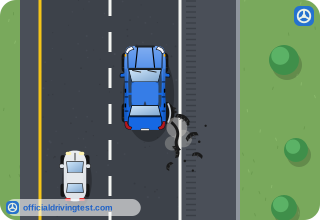
- Brake hard as you pull off the roadway
- Accelerate smoothly onto the shoulder
- Coast off the roadway without using any brakes
- Drive off the roadway slowly, braking gently
Show answer
Correct answer: Drive off the roadway slowly, braking gently
The last step for a blowout is to drive off the roadway slowly and brake gently.
Source: Rhode Island Driver’s Manual (April 2024), page 44
-
If your accelerator pedal sticks to the floor, what should you try first?
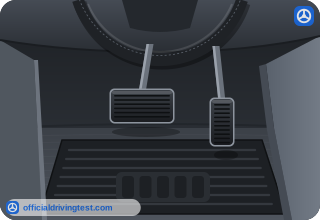
- Turn off the ignition right away
- Kick the side of the pedal once or twice to jar it free
- Shift into reverse and apply the brake
- Pump the brake pedal until the engine finally stops
Show answer
Correct answer: Kick the side of the pedal once or twice to jar it free
The first step is to kick the side of the accelerator once or twice to try to jar it free.
Source: Rhode Island Driver’s Manual (April 2024), page 44
-
What should you do at the same time as you apply the brake when the accelerator is stuck?
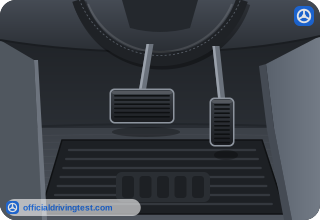
- Shift the car to park
- Shift the car to neutral
- Shift the car to reverse
- Turn off the ignition
Show answer
Correct answer: Shift the car to neutral
With a stuck accelerator the manual says to shift to neutral at the same time you apply the brake.
Source: Rhode Island Driver’s Manual (April 2024), page 44
-
What kind of escape path should you choose when your accelerator is stuck?
- One that leads to the center of the next lane
- One that follows the vehicle ahead of you
- One that leads toward the nearest intersection
- One that leads to an open zone off the roadway
Show answer
Correct answer: One that leads to an open zone off the roadway
The manual says to choose an escape path to an open zone off the roadway and keep braking.
Source: Rhode Island Driver’s Manual (April 2024), page 44
-
What happens when you shift to neutral while the accelerator is stuck?
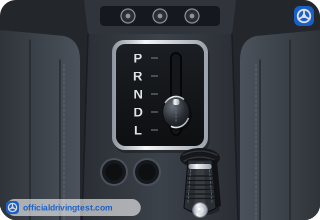
- The engine races, but power is removed from the drive wheels
- The engine stops and the steering wheel locks
- The accelerator pedal frees itself by itself
- The brakes lose all of their power assist right away
Show answer
Correct answer: The engine races, but power is removed from the drive wheels
In neutral the engine will race, but the drive wheels no longer receive power, which may help you avoid a collision.
Source: Rhode Island Driver’s Manual (April 2024), page 44
-
When should you turn off the ignition after your accelerator sticks?
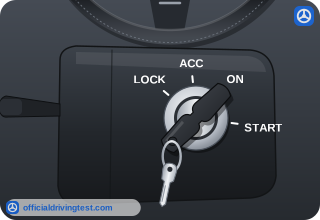
- As soon as the pedal sticks
- Before you shift to neutral
- Once you are off the roadway
- Right after you kick the pedal
Show answer
Correct answer: Once you are off the roadway
The manual's last step says to turn off the ignition once you are off the roadway.
Source: Rhode Island Driver’s Manual (April 2024), page 44
-
If your engine suddenly shuts off or sputters while you are driving, what should you do when it first happens?
- Brake hard and stop in the lane
- Turn the ignition off and coast
- Shift to reverse and steer slowly to the curb
- Shift to neutral and try to restart the vehicle
Show answer
Correct answer: Shift to neutral and try to restart the vehicle
The manual says to shift to neutral and try to restart the vehicle when the engine first sputters or stops.
Source: Rhode Island Driver’s Manual (April 2024), page 44
-
If your engine fails and you begin moving out of traffic, what should you turn on, and what should you not do?
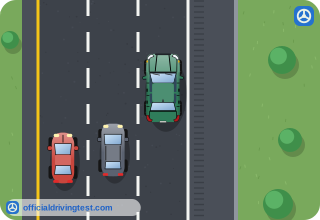
- Turn on the high beams and brake gently
- Turn on the hazard flashers and do not brake
- Turn on the hazard flashers and brake firmly
- Turn on the interior light and do not steer
Show answer
Correct answer: Turn on the hazard flashers and do not brake
The manual says to turn on the hazard flashers and not to brake when the engine fails.
Source: Rhode Island Driver’s Manual (April 2024), page 44
-
How does the steering change when power is lost by engine failure?
- It becomes easier
- It does not change
- It becomes harder
- It locks completely
Show answer
Correct answer: It becomes harder
The manual says steering will be harder when power is lost by engine failure.
Source: Rhode Island Driver’s Manual (April 2024), page 44
-
If the engine will not start and you have pulled to the side of the road, what should you do with the hood and the hazard flashers?
- Raise the hood and leave the hazard flashers on
- Keep the hood down and turn the hazard flashers off
- Raise the hood and turn the hazard flashers off
- Keep the hood down and turn on the high beams
Show answer
Correct answer: Raise the hood and leave the hazard flashers on
After stopping at the side of the road the manual says to raise the hood and leave the hazard flashers on.
Source: Rhode Island Driver’s Manual (April 2024), page 44
-
When returning to the roadway after driving off the shoulder, how should you hold the steering wheel?
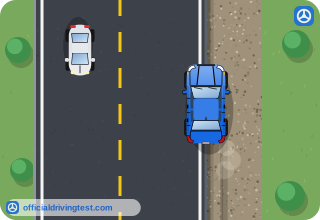
- Firmly, on the top half with both hands
- Loosely, on the bottom half with one hand
- Lightly, with only your fingertips
- On the bottom half with both hands
Show answer
Correct answer: Firmly, on the top half with both hands
The off-road recovery steps begin with holding the wheel firmly on the top half with both hands.
Source: Rhode Island Driver’s Manual (April 2024), page 44
-
What does a greater drop-off between the roadway and the shoulder require?
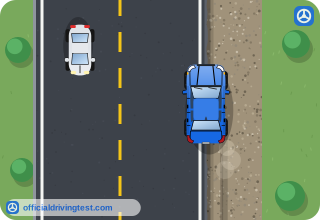
- A higher speed on the shoulder
- Harder braking before you turn
- A greater amount of steering control
- A lighter grip on the wheel
Show answer
Correct answer: A greater amount of steering control
The manual says the greater the drop-off, the more steering control you need.
Source: Rhode Island Driver’s Manual (April 2024), page 44
-
What should you do with the accelerator and the brake when you are recovering from driving off the road?
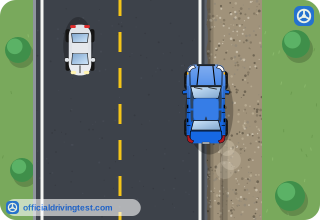
- Brake firmly and keep the accelerator pressed
- Ease up on the accelerator and avoid braking, if possible
- Accelerate hard to climb back onto the pavement
- Brake and accelerate alternately to keep control
Show answer
Correct answer: Ease up on the accelerator and avoid braking, if possible
The manual says to ease up on the accelerator, let the vehicle slow gradually and avoid braking if possible.
Source: Rhode Island Driver’s Manual (April 2024), page 44
-
During off-road recovery, how should you position your vehicle before returning to the roadway?
- Parallel to the roadway, fully on the shoulder
- Angled away from the roadway
- Fully off the shoulder and stopped
- So that it straddles the roadway edge
Show answer
Correct answer: So that it straddles the roadway edge
The manual says to position the vehicle so it straddles the roadway edge.
Source: Rhode Island Driver’s Manual (April 2024), page 44
-
Where should you choose to return to the roadway after driving off it?
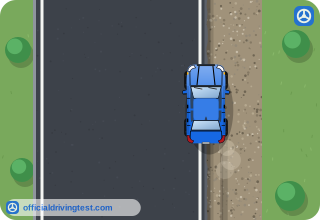
- Where the drop-off to the shoulder is greatest
- Where the shoulder is narrowest
- Where the shoulder is nearest the level of the roadway
- Right where your vehicle left the roadway
Show answer
Correct answer: Where the shoulder is nearest the level of the roadway
A shoulder that is close to the roadway's level makes returning easier, so the manual says to select such a place.
Source: Rhode Island Driver’s Manual (April 2024), page 44
-
Before you return to the roadway during off-road recovery, what should you do?
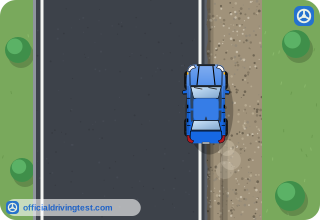
- Check for traffic, signal and check your blind spot
- Sound the horn and return immediately
- Stop completely and wait for another driver to pass
- Flash your headlights and return
Show answer
Correct answer: Check for traffic, signal and check your blind spot
The manual says to check for traffic, signal, check your blind spot and then return to the roadway.
Source: Rhode Island Driver’s Manual (April 2024), page 44
-
When should you counter-steer while returning to the roadway?
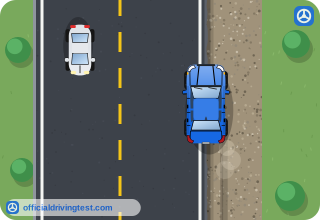
- Just before the front tires reach the pavement
- After the rear tires are on the pavement
- After you have accelerated to full speed
- The instant the front tires touch the roadway
Show answer
Correct answer: The instant the front tires touch the roadway
The manual says to counter-steer sharply the moment the front tires touch the roadway.
Source: Rhode Island Driver’s Manual (April 2024), page 44
-
After you are back on the pavement following off-road recovery, what should you do with your signal and your speed?
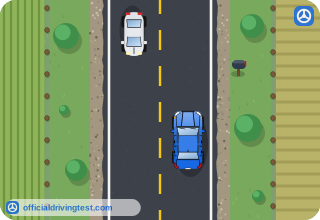
- Keep your signal on and stop at the edge of the lane
- Cancel your signal and accelerate to match the flow of traffic
- Cancel your signal and stop on the shoulder
- Keep your signal on and slow below the traffic flow
Show answer
Correct answer: Cancel your signal and accelerate to match the flow of traffic
The last step is to center the vehicle in the lane, cancel your signal and accelerate to match the flow of traffic.
Source: Rhode Island Driver’s Manual (April 2024), page 44
-
Which type of crash is more likely to result in death than any other type of crash, according to the manual?
- A rear-end collision
- A head-on collision
- A side-impact collision
- A parking-lot collision
Show answer
Correct answer: A head-on collision
The manual says head-on collisions are more likely to result in death than any other type of crash.
Source: Rhode Island Driver’s Manual (April 2024), page 44
-
When you face the threat of a head-on collision, how should you brake?
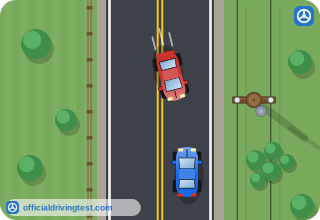
- Brake lightly so the vehicle does not skid
- Lock the wheels to stop in the shortest distance
- Do not brake and accelerate away instead
- Brake hard, but do not lock the wheels
Show answer
Correct answer: Brake hard, but do not lock the wheels
Slowing lessens the force of the impact and gives the other driver time to recover, but locked wheels mean lost control.
Source: Rhode Island Driver’s Manual (April 2024), page 44
-
What might alert an impaired or distracted driver who is heading toward you?
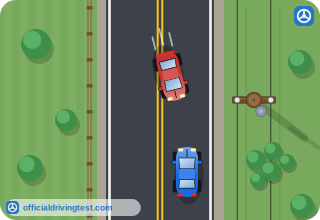
- Sounding the horn and flashing the headlights
- Turning on your hazard flashers and slowing down
- Steering into the oncoming lane
- Braking hard and turning off your lights
Show answer
Correct answer: Sounding the horn and flashing the headlights
The manual says sounding the horn and flashing the headlights might alert an impaired or distracted driver.
Source: Rhode Island Driver’s Manual (April 2024), page 44
-
If a head-on collision threatens and the other driver does not heed your warning, which way should you steer?
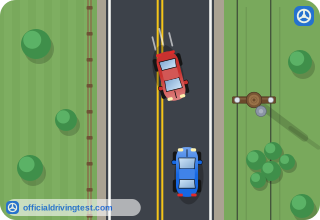
- To the left, into the oncoming lane
- To the left, toward the center line
- To the right, toward the shoulder or curb-line
- Straight ahead, holding your lane and braking
Show answer
Correct answer: To the right, toward the shoulder or curb-line
The manual says to steer right toward the shoulder or curb-line and not to steer left, because the other driver will likely steer back into the proper lane.
Source: Rhode Island Driver’s Manual (April 2024), page 45
-
If you are threatened with a side-impact collision, what does the manual say to do about braking and accelerating?
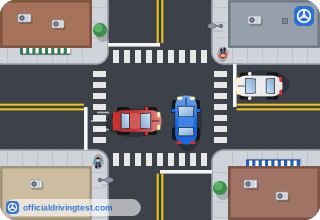
- Always brake, because braking is safer than accelerating
- Always accelerate, because it moves you out of the way
- Do neither, because both make the impact worse
- Brake or accelerate quickly, whichever seems more likely to help
Show answer
Correct answer: Brake or accelerate quickly, whichever seems more likely to help
The manual tells you to do whichever of the two seems more likely to reduce the impact.
Source: Rhode Island Driver’s Manual (April 2024), page 45
-
What should you do to alert the other driver when a side-impact collision threatens?
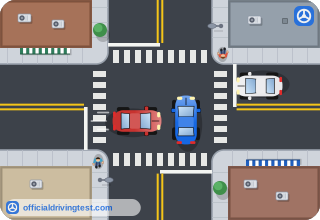
- Turn on the hazard flashers
- Sound the horn
- Roll down the window and wave
- Flash the brake lights
Show answer
Correct answer: Sound the horn
The manual says to sound the horn to alert the other driver.
Source: Rhode Island Driver’s Manual (April 2024), page 45
-
If a side-impact collision threatens, which way should you try to move?
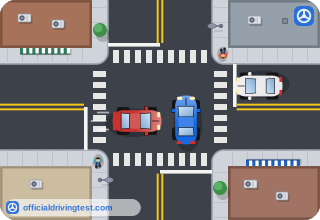
- Steer toward the impact to reduce its force
- Stop in your lane and wait
- Change lanes or swerve away from the impact
- Hold your lane and sound the horn only
Show answer
Correct answer: Change lanes or swerve away from the impact
The manual says to change lanes or swerve away from the impact while watching the changing traffic around you.
Source: Rhode Island Driver’s Manual (April 2024), page 45
-
What should you do early if you are threatened with a rear-end collision?
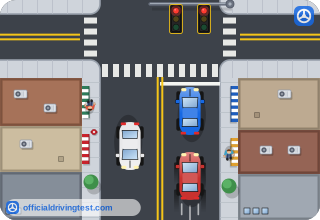
- Flash your brake lights to alert the driver behind you
- Sound the horn continuously
- Flash your headlights at the driver behind you
- Brake hard to stop as soon as possible
Show answer
Correct answer: Flash your brake lights to alert the driver behind you
Flashing your brake lights early warns the driver behind you.
Source: Rhode Island Driver’s Manual (April 2024), page 45
-
As a vehicle approaching from behind comes near, what should you check and do?
- Check your front zones for open space and move forward
- Check your mirrors and back up to give it room
- Check the left lane and move into oncoming traffic
- Check the shoulder and stop on it at once
Show answer
Correct answer: Check your front zones for open space and move forward
Moving forward into open space gives the driver approaching from the rear more time and space to stop.
Source: Rhode Island Driver’s Manual (April 2024), page 45
-
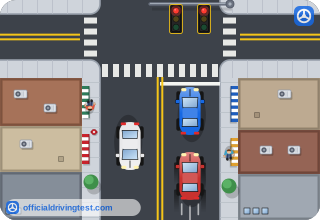
With a rear-end collision threatening and your path not clear, what does the manual say to do?
- Turn left
- Brake hard
- Turn right
- Stop in your lane
Show answer
Correct answer: Turn right
If the intersection is clear you accelerate; if your path is not clear, the manual says to turn right.
Source: Rhode Island Driver’s Manual (April 2024), page 45
-
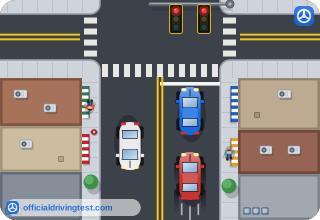
If a rear-end collision cannot be avoided, what should you do with your brakes just before it occurs?
- Press them harder to take up the impact
- Release them, which helps soften the impact
- Pump them rapidly
- Hold them at the same pressure
Show answer
Correct answer: Release them, which helps soften the impact
Releasing the brakes just before the collision helps soften the impact.
Source: Rhode Island Driver’s Manual (April 2024), page 45
-
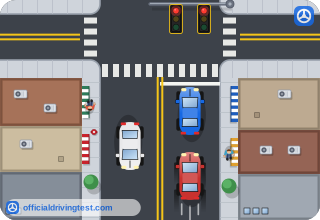
What should you do immediately after a rear-end collision that you could not avoid?
- Keep the brakes released and coast to a stop
- Accelerate away from the collision
- Turn off the engine and then release the brakes
- Brake immediately, to avoid sliding into another lane
Show answer
Correct answer: Brake immediately, to avoid sliding into another lane
The manual says to brake right after the collision so you do not slide into another traffic lane.
Source: Rhode Island Driver’s Manual (April 2024), page 45
-
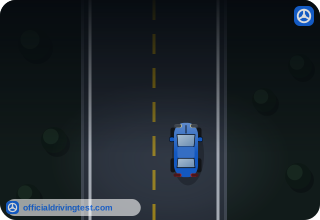
If your headlights suddenly go out, why does the manual say to try the high beam switch?
- Because it uses a different battery
- Because it turns on the fog lights as well
- Because it may be on a separate circuit
- Because it is always brighter than low beams
Show answer
Correct answer: Because it may be on a separate circuit
The high beams may work even when the headlights fail, because they may be on a separate circuit.
Source: Rhode Island Driver’s Manual (April 2024), page 45
-
If your headlights go out and you cannot get them working, what should you do?
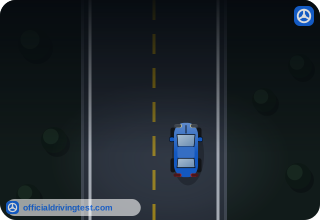
- Pull off the road as quickly as possible with your flashers on
- Keep driving slowly to the next exit with your flashers on
- Pull off the road and turn your flashers off
- Keep driving with only your high beams on
Show answer
Correct answer: Pull off the road as quickly as possible with your flashers on
The last step for headlight failure is to pull off the road as quickly as possible with the emergency flashers on.
Source: Rhode Island Driver’s Manual (April 2024), page 45
-
When you see smoke coming from under the hood, what should you do first?
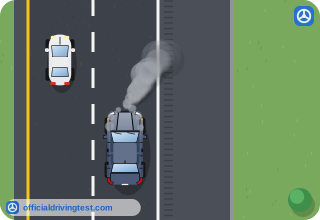
- Open the hood to find where the smoke comes from
- Keep driving to the nearest garage with the windows open
- Pull immediately off the road, turn the ignition off, and move away
- Turn the ignition off but stay inside the vehicle
Show answer
Correct answer: Pull immediately off the road, turn the ignition off, and move away
The first step for smoke under the hood is to pull off the road at once, switch off the ignition and get away from the vehicle.
Source: Rhode Island Driver’s Manual (April 2024), page 46
-
Whom should you call when your vehicle catches fire?
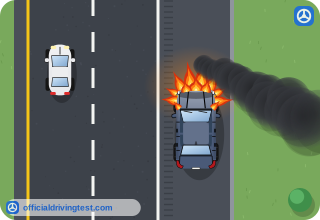
- Dial 911 for police and fire personnel
- Call a tow company before anyone else
- Call the Division of Motor Vehicles
- Call your insurance agent first
Show answer
Correct answer: Dial 911 for police and fire personnel
After moving away from the vehicle, the manual says to dial 911 for police and fire personnel.
Source: Rhode Island Driver’s Manual (April 2024), page 46
-
If the fire is under the hood and flames are shooting, what should you NOT do?
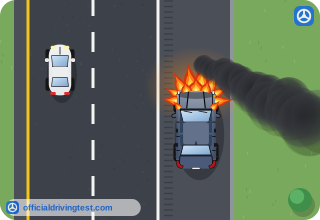
- Open the hood of the vehicle
- Dial 911
- Turn off the ignition
- Move away from the vehicle
Show answer
Correct answer: Open the hood of the vehicle
The manual says do not open the hood when flames are shooting from the fire under it.
Source: Rhode Island Driver’s Manual (April 2024), page 46
-
If a vehicle fire is out of control, how far away should you move?
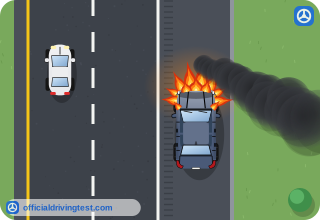
- At least 10 feet
- At least 25 feet
- At least 100 feet
- At least 50 feet
Show answer
Correct answer: At least 100 feet
A fuel fire can cause the fuel tank to explode, so the manual says to move at least 100 feet away.
Source: Rhode Island Driver’s Manual (April 2024), page 46
-
What does the manual say about trying to put out a vehicle fire that is out of control?
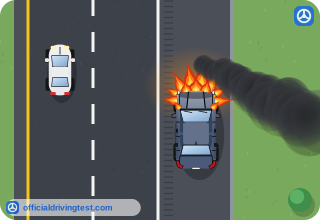
- Use water from a nearby source to put it out
- Do not attempt to put out the fire
- Cover the engine with a blanket
- Put it out only if you stay upwind
Show answer
Correct answer: Do not attempt to put out the fire
For an out-of-control fire the manual says to move away and not to try to put it out.
Source: Rhode Island Driver’s Manual (April 2024), page 46
-
If your vehicle drives into water or stalls in a rain-swollen roadway, what should you do immediately?
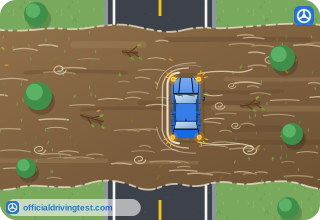
- Open the driver's door
- Turn the ignition off and wait
- Dial 911 from inside the vehicle
- Remove your seat belt
Show answer
Correct answer: Remove your seat belt
Removing your seat belt is the first step the manual lists for a vehicle in water.
Source: Rhode Island Driver’s Manual (April 2024), page 46
-
If your vehicle has power windows and is in water, when should you open a window?
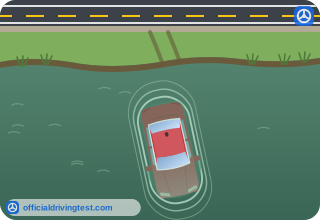
- After the vehicle has stopped sinking in the water
- After you have called 911
- Before the water damages the electrical system
- Only after the passengers are out
Show answer
Correct answer: Before the water damages the electrical system
The manual says to open the window before the water damages the electrical system.
Source: Rhode Island Driver’s Manual (April 2024), page 46
-
When your vehicle is in water, what does the manual say to do about children in the rear seat?
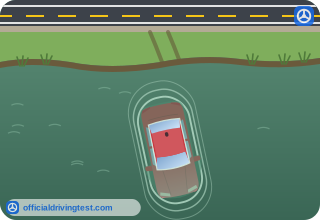
- Help them out of seat belts and restraints, asking older children to help the younger
- Leave them buckled in the rear seat until the vehicle stops moving in the water
- Send the youngest child out of the window alone first
- Ask them to wait inside the vehicle while you swim for help
Show answer
Correct answer: Help them out of seat belts and restraints, asking older children to help the younger
The manual says to help children out of the rear belts and restraints and to ask older children to assist the younger ones.
Source: Rhode Island Driver’s Manual (April 2024), page 46
-
After you get out of a vehicle that has driven into water, where does the manual say to move?
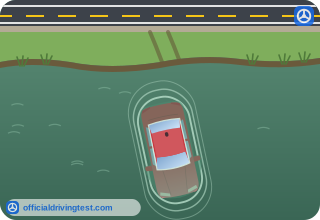
- Under the vehicle's rear bumper
- Into the water to swim to shore
- Back into the front seat
- To the roof of the vehicle
Show answer
Correct answer: To the roof of the vehicle
Moving to the roof keeps you as dry as possible, and the vehicle can float like a boat for a short time.
Source: Rhode Island Driver’s Manual (April 2024), page 46
-
Once you are on the roof of a vehicle that is in water, what should you do?
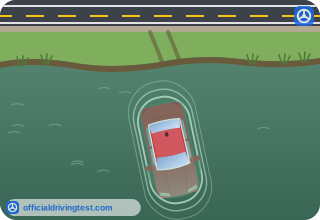
- Swim to shore right away
- Call 911 and locate the nearest dry land
- Climb back in to retrieve your phone
- Wait for the vehicle to stop floating
Show answer
Correct answer: Call 911 and locate the nearest dry land
The manual says to call 911 and find the nearest dry land once you are on the roof.
Source: Rhode Island Driver’s Manual (April 2024), page 46
-
Why should you avoid opening your door when your vehicle is in water?
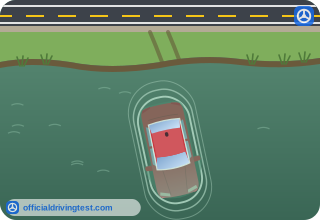
- The door will lock itself and trap everyone inside the vehicle
- Water will fill the inside and could flip the vehicle onto its roof
- The airbags will deploy and block the exit
- The open door will let the vehicle sink faster
Show answer
Correct answer: Water will fill the inside and could flip the vehicle onto its roof
Opening the door lets water fill the vehicle, which could cause it to flip onto its roof.
Source: Rhode Island Driver’s Manual (April 2024), page 46
-
If your vehicle sinks before you can get out, where should you go?
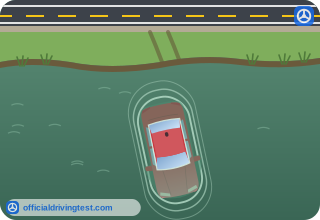
- Into the trunk
- Under the dashboard
- Stay in the driver's seat
- Into the rear seat
Show answer
Correct answer: Into the rear seat
The engine's weight sinks the vehicle nose first, so a pocket of air may remain in the rear.
Source: Rhode Island Driver’s Manual (April 2024), page 46
-
What must you never do after leaving a vehicle that is in water?
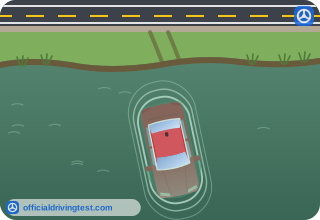
- Re-enter the vehicle to gather possessions
- Move to the roof of the vehicle
- Call 911 for help
- Look for the nearest area of dry land
Show answer
Correct answer: Re-enter the vehicle to gather possessions
The manual says never to re-enter the vehicle to gather possessions.
Source: Rhode Island Driver’s Manual (April 2024), page 46
-
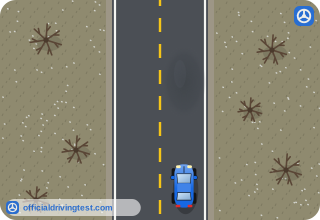
What is another name for black ice?
- Clear frost
- Invisible ice
- Frozen fog
- Slush
Show answer
Correct answer: Invisible ice
The manual says black ice is also known as invisible ice and roads that seem dry may be slippery.
Source: Rhode Island Driver’s Manual (April 2024), page 46
-
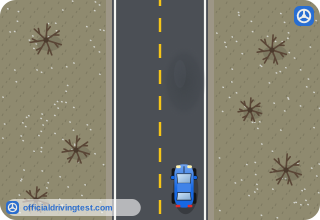
Which of these is listed as an increased area for black ice?
- Sunny stretches
- Dry gravel roads
- Shady areas
- Open parking fields
Show answer
Correct answer: Shady areas
The manual lists intersections, off-ramps, bridges and shady areas as places where black ice is more likely.
Source: Rhode Island Driver’s Manual (April 2024), page 46
-
What braking advice does the manual give for winter driving?
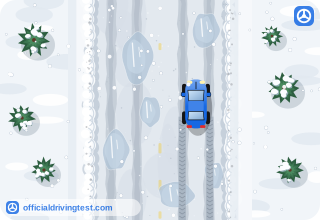
- Brake early, brake slowly, and never slam on the brakes
- Brake late and hard so you stop in less distance
- Brake only at the last moment before a stop
- Brake suddenly and then release the pedal
Show answer
Correct answer: Brake early, brake slowly, and never slam on the brakes
The manual says to brake early, slowly and correctly, and never to slam on the brakes.
Source: Rhode Island Driver’s Manual (April 2024), page 46
-
Why does the manual say never to drive in the rain or snow with your cruise control on?
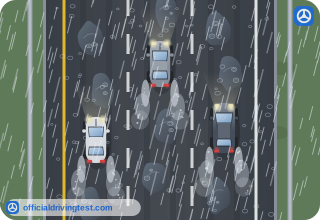
- If the car hydroplanes, it will speed up and you will lose control
- The cruise control will turn off the anti-lock brakes
- The cruise control will drain the battery much faster than normal
- The cruise control will stop the wipers from working
Show answer
Correct answer: If the car hydroplanes, it will speed up and you will lose control
If the cruise control is on when the tires lose contact with the pavement, the car speeds up and you lose control.
Source: Rhode Island Driver’s Manual (April 2024), page 47
-
When can carbon monoxide poisoning occur, according to the manual?
- Only in hot weather when the air conditioner is on
- Only when you drive for a long time on the highway at night
- Anytime, but especially in cold weather with all windows closed
- Only when the engine is idling inside a garage
Show answer
Correct answer: Anytime, but especially in cold weather with all windows closed
The manual says it can occur anytime but is most likely in cold weather with the windows closed.
Source: Rhode Island Driver’s Manual (April 2024), page 47
-
Which of these may be a symptom of carbon monoxide poisoning?
- Ringing in your ears
- Feeling dizzy
- Itchy skin
- A sore throat
Show answer
Correct answer: Feeling dizzy
The manual says yawning, feeling dizzy or feeling nauseous may be symptoms of the poisoning.
Source: Rhode Island Driver’s Manual (April 2024), page 47
-
What can let carbon monoxide enter the inside of a vehicle?
- A cracked windshield
- Worn brake pads
- Low tire pressure
- A leaking muffler
Show answer
Correct answer: A leaking muffler
The manual says a leaking muffler can allow escaping carbon monoxide to enter the interior.
Source: Rhode Island Driver’s Manual (April 2024), page 47
-
What does the manual say about the smell of carbon monoxide fumes?
- The fumes smell like burning rubber
- The fumes have a sweet smell
- The fumes are odorless
- The fumes smell strongly of gasoline
Show answer
Correct answer: The fumes are odorless
Carbon monoxide is odorless, so you cannot rely on smell to detect it.
Source: Rhode Island Driver’s Manual (April 2024), page 47
-
What does the manual say is the only cure for carbon monoxide poisoning in a vehicle?
- Open your windows and let fresh air circulate inside
- Turn the heater up to its maximum setting
- Keep the windows closed and use the defroster
- Drive faster with all of the vents closed
Show answer
Correct answer: Open your windows and let fresh air circulate inside
The manual says the only cure is to open the windows and let fresh air circulate inside the vehicle.
Source: Rhode Island Driver’s Manual (April 2024), page 47
-
Which of these may help avoid the effects of carbon monoxide poisoning?
- Idling your vehicle with the windows closed for a long time
- Checking your tire pressure every week
- Changing the battery once a year
- Having your exhaust system checked periodically
Show answer
Correct answer: Having your exhaust system checked periodically
The manual says to have the exhaust system checked periodically and not to idle for long with the windows closed.
Source: Rhode Island Driver’s Manual (April 2024), page 47
-
What may untreated carbon monoxide poisoning cause?
- A mild headache only
- Death
- Temporary loss of hearing
- Permanent loss of vision
Show answer
Correct answer: Death
The manual says carbon monoxide poisoning may cause death if it is untreated.
Source: Rhode Island Driver’s Manual (April 2024), page 47
-
After a collision, what must you do at the scene?
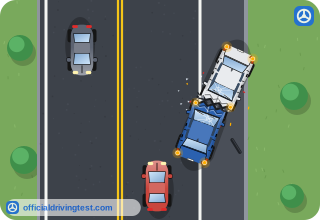
- Remain and make your identity known
- Leave and report the collision later by phone
- Remain only if someone is injured
- Leave once the other driver has your insurance details
Show answer
Correct answer: Remain and make your identity known
The manual tells drivers to stay at the scene and identify themselves to any interested person.
Source: Rhode Island Driver’s Manual (April 2024), page 65
-
What does the manual say is imposed on drivers who leave the scene of a collision without properly identifying themselves?
- A written warning only
- A small fine only
- Severe penalties
- Nothing, if no one was hurt
Show answer
Correct answer: Severe penalties
The manual says severe penalties are imposed on drivers who leave the scene (hit and run) without identifying themselves.
Source: Rhode Island Driver’s Manual (April 2024), page 65
-
To whom should you report all collisions immediately?
- The nearest state or local police
- Your insurance company
- The nearest DMV office
- The Department of Transportation
Show answer
Correct answer: The nearest state or local police
The manual says to report all collisions immediately to the nearest state or local police.
Source: Rhode Island Driver’s Manual (April 2024), page 65
-
What should you do after a collision if personal injury is involved?
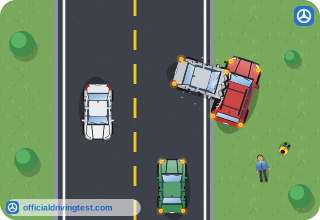
- Move the injured people into your vehicle
- Wait for the other driver to call for help
- Drive to the nearest hospital yourself
- Request rescue assistance
Show answer
Correct answer: Request rescue assistance
The manual lists requesting rescue assistance as the step to take when someone is injured.
Source: Rhode Island Driver’s Manual (April 2024), page 65
-
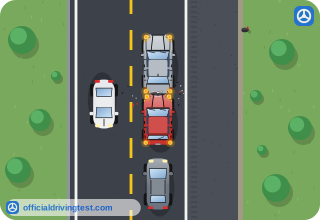
In the event of a minor collision, what does the manual say to do if possible?
- Leave the vehicle in the travel lane until the police arrive
- Drive your vehicle to the side of the roadway and notify the police
- Drive away and report it the next day
- Wait for a tow truck before calling anyone
Show answer
Correct answer: Drive your vehicle to the side of the roadway and notify the police
For a minor collision the manual says to move the vehicle off to the side of the road, if possible, and notify the police.
Source: Rhode Island Driver’s Manual (April 2024), page 65
-
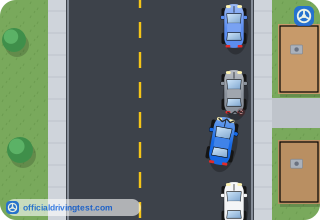
If you collide with or damage a parked vehicle, what must you do?
- Leave only your phone number on the windshield
- Attach a written note with your name and address
- Drive away if the damage is not visible
- Wait at least an hour for the owner to return
Show answer
Correct answer: Attach a written note with your name and address
The manual requires a written note with your name and address attached securely to the parked vehicle or property, and you must also report the collision to the police.
Source: Rhode Island Driver’s Manual (April 2024), page 65
-
A police report is required for a collision if the property damage is over what amount?
- $500
- $2,500
- $5,000
- $1,000
Show answer
Correct answer: $1,000
The manual's list of cases that need a police report includes property damage over $1,000.
Source: Rhode Island Driver’s Manual (April 2024), page 65
-
Which of these situations is listed as requiring a police report?
- You hit a domesticated animal
- Your vehicle breaks down on the shoulder
- Another driver honks at you at a green light
- An officer gives you a verbal warning
Show answer
Correct answer: You hit a domesticated animal
The manual says a police report is required if you hit a domesticated animal, along with injuries, damage over $1,000 and hitting an unattended vehicle.
Source: Rhode Island Driver’s Manual (April 2024), page 65
-
If a collision happens on an interstate highway, what should you note as part of its exact location?
- The number of lanes at the location
- The posted speed limit at that spot
- The nearest mile marker number
- The name of the nearest town
Show answer
Correct answer: The nearest mile marker number
The manual says to note the house number nearest the collision or, on an interstate highway, the nearest mile marker number.
Source: Rhode Island Driver’s Manual (April 2024), page 65
-
Which information should you record about the other driver after a collision?
- Insurance carrier and policy number
- Employer and work phone number
- Date of birth and Social Security number
- Date the vehicle was purchased
Show answer
Correct answer: Insurance carrier and policy number
The manual lists the other driver's name, address, license, insurance carrier and policy number, and registration state and number.
Source: Rhode Island Driver’s Manual (April 2024), page 65
-
What does the manual say about getting the other driver's information after a collision?
- Only the driver who was not at fault may ask for it
- Only the police may collect it
- It is your right and the other driver's right to get it
- It is optional and may be refused
Show answer
Correct answer: It is your right and the other driver's right to get it
The manual states that you and the other driver each have the right to get this information.
Source: Rhode Island Driver’s Manual (April 2024), page 65
-
Whose names and addresses should you record after a collision?
- Only the people who were in your own vehicle
- All witnesses and the persons in the other vehicle
- Only the other driver and the police officer
- Only the officers who respond to the scene
Show answer
Correct answer: All witnesses and the persons in the other vehicle
The manual says to record the names and addresses of everyone who witnessed the collision as well as the people in the other vehicle.
Source: Rhode Island Driver’s Manual (April 2024), page 65
-
Which of these should you record if a police officer arrives at the scene of a collision?
- The officer's home address
- The name of the officer's supervisor
- The make of the patrol car
- The name of the police officer
Show answer
Correct answer: The name of the police officer
The manual lists the name of the police officer at the scene, if one arrives, among the details to record.
Source: Rhode Island Driver’s Manual (April 2024), page 65
-
Which of these is listed as a common cause of motor vehicle collisions?
- Driving with the headlights on in daylight
- Signaling a turn too early
- Keeping a three-second following distance
- Not looking when driving away from the curb
Show answer
Correct answer: Not looking when driving away from the curb
Not looking when driving away from the curb appears in the manual's list of the most common causes of collisions.
Source: Rhode Island Driver’s Manual (April 2024), page 65
-
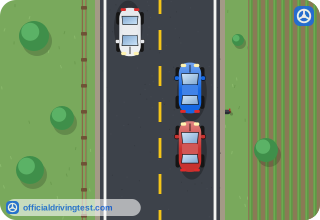
In the manual's list of common causes of collisions, what is driving too close to the vehicle in front of you called?
- Weaving
- Tailgating
- Merging
- Hydroplaning
Show answer
Correct answer: Tailgating
The list names driving too close to the vehicle in front of you as tailgating.
Source: Rhode Island Driver’s Manual (April 2024), page 65
-
In the manual's list of common causes of collisions, driving to the left of the centerline is described as what?
- An improper lane change at an intersection
- An illegal U-turn on a divided highway
- Driving on the wrong side of the road
- Passing on the shoulder of the road
Show answer
Correct answer: Driving on the wrong side of the road
The list describes driving to the left of the centerline as driving on the wrong side of the road.
Source: Rhode Island Driver’s Manual (April 2024), page 65
-
The manual lists the duty to stop in a collision resulting in personal injury or death. What does it label a violation of that duty?
- A felony
- A civil infraction
- A court appearance only
- A misdemeanor
Show answer
Correct answer: A felony
The violations list labels failing to stop after a collision with personal injury or death a felony.
Source: Rhode Island Driver’s Manual (April 2024), page 66