Rhode Island: Emergencies and collisions — Part 3 Practice Test
Questions in this part include: “Which type of crash is more likely to result in death than any other type of crash, according to the manual?” · “As a vehicle approaching from behind comes near, what should you check and do?”
Independent educational site · not affiliated with any government agency or DMV
Ready? Test yourself
- Instant feedback with an explanation
- Every answer cites its source in the manual
- Your best score is saved on this device
- Keyboard: press 1 to 4 to answer and Enter for the next question
Questions are original and based on the official manual "Rhode Island Driver’s Manual" (April 2024), Rhode Island Division of Motor Vehicles (DMV).
All 19 questions in this practice test
Take the test above first, then use this list to study. Tap “Show answer” to see the correct answer and explanation.
Show the questions and answersHide the questions
-
When should you counter-steer while returning to the roadway?
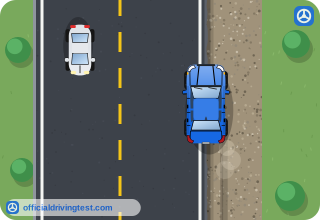
- Just before the front tires reach the pavement
- After the rear tires are on the pavement
- After you have accelerated to full speed
- The instant the front tires touch the roadway
Show answer
Correct answer: The instant the front tires touch the roadway
The manual says to counter-steer sharply the moment the front tires touch the roadway.
Source: Rhode Island Driver’s Manual (April 2024), page 44
-
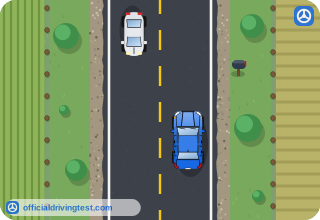
After you are back on the pavement following off-road recovery, what should you do with your signal and your speed?
- Keep your signal on and stop at the edge of the lane
- Cancel your signal and accelerate to match the flow of traffic
- Cancel your signal and stop on the shoulder
- Keep your signal on and slow below the traffic flow
Show answer
Correct answer: Cancel your signal and accelerate to match the flow of traffic
The last step is to center the vehicle in the lane, cancel your signal and accelerate to match the flow of traffic.
Source: Rhode Island Driver’s Manual (April 2024), page 44
-
Which type of crash is more likely to result in death than any other type of crash, according to the manual?
- A rear-end collision
- A head-on collision
- A side-impact collision
- A parking-lot collision
Show answer
Correct answer: A head-on collision
The manual says head-on collisions are more likely to result in death than any other type of crash.
Source: Rhode Island Driver’s Manual (April 2024), page 44
-
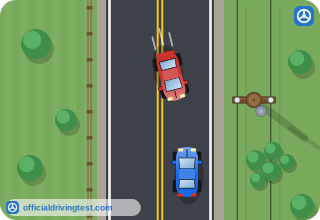
When you face the threat of a head-on collision, how should you brake?
- Brake lightly so the vehicle does not skid
- Lock the wheels to stop in the shortest distance
- Do not brake and accelerate away instead
- Brake hard, but do not lock the wheels
Show answer
Correct answer: Brake hard, but do not lock the wheels
Slowing lessens the force of the impact and gives the other driver time to recover, but locked wheels mean lost control.
Source: Rhode Island Driver’s Manual (April 2024), page 44
-
What might alert an impaired or distracted driver who is heading toward you?
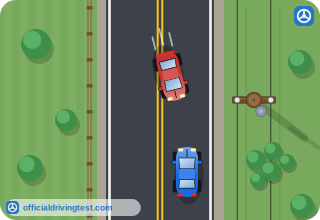
- Sounding the horn and flashing the headlights
- Turning on your hazard flashers and slowing down
- Steering into the oncoming lane
- Braking hard and turning off your lights
Show answer
Correct answer: Sounding the horn and flashing the headlights
The manual says sounding the horn and flashing the headlights might alert an impaired or distracted driver.
Source: Rhode Island Driver’s Manual (April 2024), page 44
-
If a head-on collision threatens and the other driver does not heed your warning, which way should you steer?
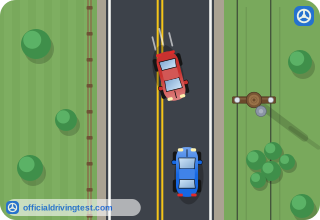
- To the left, into the oncoming lane
- To the left, toward the center line
- To the right, toward the shoulder or curb-line
- Straight ahead, holding your lane and braking
Show answer
Correct answer: To the right, toward the shoulder or curb-line
The manual says to steer right toward the shoulder or curb-line and not to steer left, because the other driver will likely steer back into the proper lane.
Source: Rhode Island Driver’s Manual (April 2024), page 45
-
If you are threatened with a side-impact collision, what does the manual say to do about braking and accelerating?
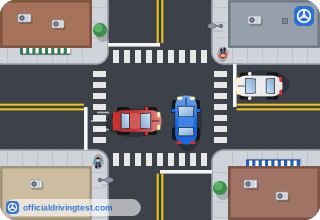
- Always brake, because braking is safer than accelerating
- Always accelerate, because it moves you out of the way
- Do neither, because both make the impact worse
- Brake or accelerate quickly, whichever seems more likely to help
Show answer
Correct answer: Brake or accelerate quickly, whichever seems more likely to help
The manual tells you to do whichever of the two seems more likely to reduce the impact.
Source: Rhode Island Driver’s Manual (April 2024), page 45
-
What should you do to alert the other driver when a side-impact collision threatens?
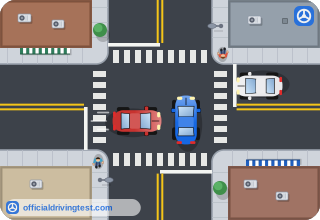
- Turn on the hazard flashers
- Sound the horn
- Roll down the window and wave
- Flash the brake lights
Show answer
Correct answer: Sound the horn
The manual says to sound the horn to alert the other driver.
Source: Rhode Island Driver’s Manual (April 2024), page 45
-
If a side-impact collision threatens, which way should you try to move?
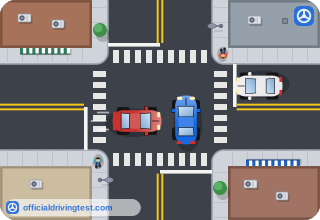
- Steer toward the impact to reduce its force
- Stop in your lane and wait
- Change lanes or swerve away from the impact
- Hold your lane and sound the horn only
Show answer
Correct answer: Change lanes or swerve away from the impact
The manual says to change lanes or swerve away from the impact while watching the changing traffic around you.
Source: Rhode Island Driver’s Manual (April 2024), page 45
-
What should you do early if you are threatened with a rear-end collision?
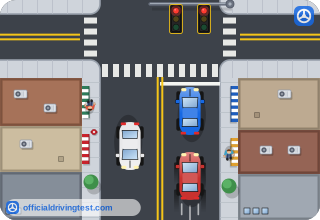
- Flash your brake lights to alert the driver behind you
- Sound the horn continuously
- Flash your headlights at the driver behind you
- Brake hard to stop as soon as possible
Show answer
Correct answer: Flash your brake lights to alert the driver behind you
Flashing your brake lights early warns the driver behind you.
Source: Rhode Island Driver’s Manual (April 2024), page 45
-
As a vehicle approaching from behind comes near, what should you check and do?
- Check your front zones for open space and move forward
- Check your mirrors and back up to give it room
- Check the left lane and move into oncoming traffic
- Check the shoulder and stop on it at once
Show answer
Correct answer: Check your front zones for open space and move forward
Moving forward into open space gives the driver approaching from the rear more time and space to stop.
Source: Rhode Island Driver’s Manual (April 2024), page 45
-
With a rear-end collision threatening and your path not clear, what does the manual say to do?
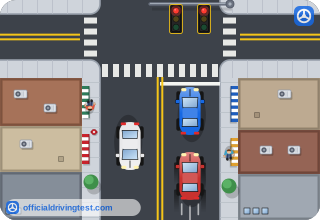
- Turn left
- Brake hard
- Turn right
- Stop in your lane
Show answer
Correct answer: Turn right
If the intersection is clear you accelerate; if your path is not clear, the manual says to turn right.
Source: Rhode Island Driver’s Manual (April 2024), page 45
-
If a rear-end collision cannot be avoided, what should you do with your brakes just before it occurs?
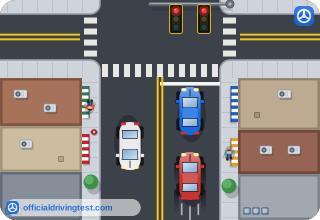
- Press them harder to take up the impact
- Release them, which helps soften the impact
- Pump them rapidly
- Hold them at the same pressure
Show answer
Correct answer: Release them, which helps soften the impact
Releasing the brakes just before the collision helps soften the impact.
Source: Rhode Island Driver’s Manual (April 2024), page 45
-
What should you do immediately after a rear-end collision that you could not avoid?
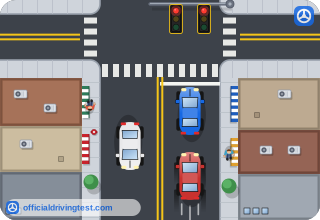
- Keep the brakes released and coast to a stop
- Accelerate away from the collision
- Turn off the engine and then release the brakes
- Brake immediately, to avoid sliding into another lane
Show answer
Correct answer: Brake immediately, to avoid sliding into another lane
The manual says to brake right after the collision so you do not slide into another traffic lane.
Source: Rhode Island Driver’s Manual (April 2024), page 45
-
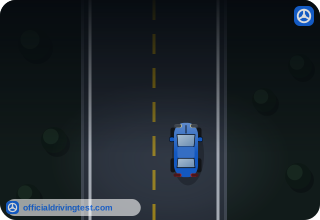
If your headlights suddenly go out, why does the manual say to try the high beam switch?
- Because it uses a different battery
- Because it turns on the fog lights as well
- Because it may be on a separate circuit
- Because it is always brighter than low beams
Show answer
Correct answer: Because it may be on a separate circuit
The high beams may work even when the headlights fail, because they may be on a separate circuit.
Source: Rhode Island Driver’s Manual (April 2024), page 45
-
If your headlights go out and you cannot get them working, what should you do?
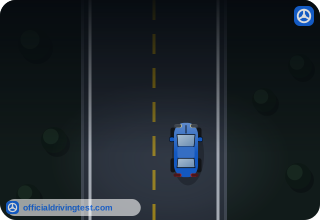
- Pull off the road as quickly as possible with your flashers on
- Keep driving slowly to the next exit with your flashers on
- Pull off the road and turn your flashers off
- Keep driving with only your high beams on
Show answer
Correct answer: Pull off the road as quickly as possible with your flashers on
The last step for headlight failure is to pull off the road as quickly as possible with the emergency flashers on.
Source: Rhode Island Driver’s Manual (April 2024), page 45
-
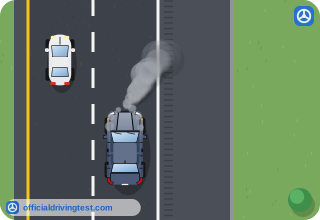
When you see smoke coming from under the hood, what should you do first?
- Open the hood to find where the smoke comes from
- Keep driving to the nearest garage with the windows open
- Pull immediately off the road, turn the ignition off, and move away
- Turn the ignition off but stay inside the vehicle
Show answer
Correct answer: Pull immediately off the road, turn the ignition off, and move away
The first step for smoke under the hood is to pull off the road at once, switch off the ignition and get away from the vehicle.
Source: Rhode Island Driver’s Manual (April 2024), page 46
-
Whom should you call when your vehicle catches fire?
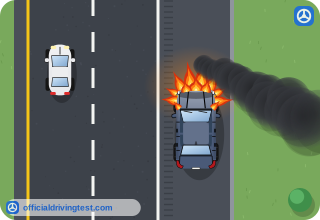
- Dial 911 for police and fire personnel
- Call a tow company before anyone else
- Call the Division of Motor Vehicles
- Call your insurance agent first
Show answer
Correct answer: Dial 911 for police and fire personnel
After moving away from the vehicle, the manual says to dial 911 for police and fire personnel.
Source: Rhode Island Driver’s Manual (April 2024), page 46
-
If the fire is under the hood and flames are shooting, what should you NOT do?
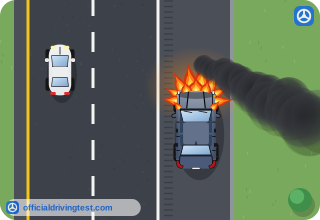
- Open the hood of the vehicle
- Dial 911
- Turn off the ignition
- Move away from the vehicle
Show answer
Correct answer: Open the hood of the vehicle
The manual says do not open the hood when flames are shooting from the fire under it.
Source: Rhode Island Driver’s Manual (April 2024), page 46