New Hampshire: Signals and vehicle controls — Part 3 Practice Test
Questions in this part include: “What does the manual say about wearing sunglasses or colored lenses when driving at night or on overcast days?” · “What does a curve speed warning do?”
Independent educational site · not affiliated with any government agency or DMV
Ready? Test yourself
- Instant feedback with an explanation
- Every answer cites its source in the manual
- Your best score is saved on this device
- Keyboard: press 1 to 4 to answer and Enter for the next question
Questions are original and based on the official manual "New Hampshire Driver’s Manual" (DSMV 360 (Rev. 11/25)), New Hampshire Division of Motor Vehicles (DMV).
All 19 questions in this practice test
Take the test above first, then use this list to study. Tap “Show answer” to see the correct answer and explanation.
Show the questions and answersHide the questions
-
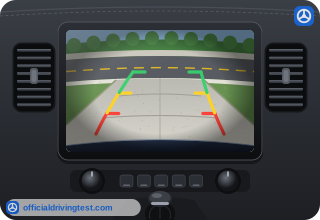
How should back-up cameras be used when backing a vehicle?
- As the primary tool, with mirrors used only when needed
- Together with mirrors and head checks, never as the primary tool
- Instead of mirrors and head checks, to reduce glare in the mirrors
- Only once the vehicle has already come to a complete stop
Show answer
Correct answer: Together with mirrors and head checks, never as the primary tool
Back-up cameras can help drivers back up safely when used together with the mirrors and proper head checks, but should never be used as the primary tool for backing safely.
Source: New Hampshire Driver’s Manual (DSMV 360 (Rev. 11/25)), page 17 · Open this page in the manual (Manual page 17)
-
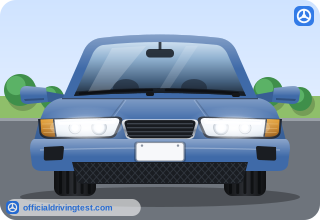
When should a driver use the high beams at night?
- When following another vehicle
- In fog, rain or snow
- Whenever there are no oncoming vehicles
- Only on roads with no lane markings
Show answer
Correct answer: Whenever there are no oncoming vehicles
Drivers should use the high beams whenever there are no oncoming vehicles. They should use the low beams when following another vehicle and in fog, rain or snow.
Source: New Hampshire Driver’s Manual (DSMV 360 (Rev. 11/25)), page 18 · Open this page in the manual (Manual page 18)
-
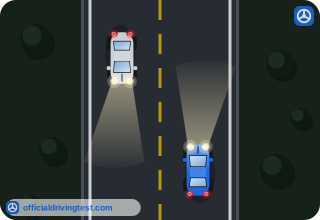
For which vehicles should a driver dim the high beams at night?
- Only approaching vehicles that flash their lights
- All approaching traffic
- Only approaching trucks and buses
- Only vehicles that also have their high beams on
Show answer
Correct answer: All approaching traffic
Drivers should dim the high beams for all approaching traffic.
Source: New Hampshire Driver’s Manual (DSMV 360 (Rev. 11/25)), page 18 · Open this page in the manual (Manual page 18)
-
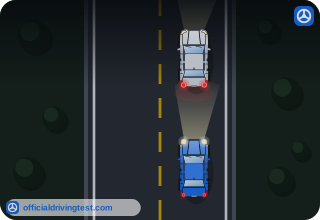
Which headlight beams should be used when following another vehicle at night?
- High beams
- Fog lights only
- Parking lights
- Low beams
Show answer
Correct answer: Low beams
Drivers should use the low beams when following another vehicle.
Source: New Hampshire Driver’s Manual (DSMV 360 (Rev. 11/25)), page 18 · Open this page in the manual (Manual page 18)
-
Which headlight beams should be used in fog, rain or snow?

- Low beams
- High beams
- Parking lights only
- Hazard flashers only
Show answer
Correct answer: Low beams
In fog, rain, or snow drivers should use the low beams, because light from the high beams may cause glare and make it more difficult to see ahead.
Source: New Hampshire Driver’s Manual (DSMV 360 (Rev. 11/25)), page 18 · Open this page in the manual (Manual page 18)
-
At night, where should a driver look if an oncoming vehicle has its high beams on?
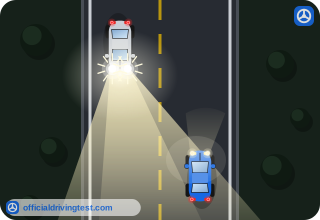
- Directly at the oncoming headlights
- At the center line
- Toward the right side of the road
- Into the rearview mirror
Show answer
Correct answer: Toward the right side of the road
If a vehicle coming from the opposite direction has its high beams on, the driver should look toward the right side of the road to avoid being distracted or momentarily blinded.
Source: New Hampshire Driver’s Manual (DSMV 360 (Rev. 11/25)), page 18 · Open this page in the manual (Manual page 18)
-
What does the manual say about wearing sunglasses or colored lenses when driving at night or on overcast days?
- They reduce glare, so they should be worn at night
- Do not wear them, because tinted lenses reduce vision
- They are recommended on overcast days to reduce glare
- They are acceptable if the tint is only slight
Show answer
Correct answer: Do not wear them, because tinted lenses reduce vision
Tinted or colored lenses reduce vision, so drivers should not wear sunglasses or colored lenses when driving at night or on overcast days.
Source: New Hampshire Driver’s Manual (DSMV 360 (Rev. 11/25)), page 18 · Open this page in the manual (Manual page 18)
-
At night, what should a driver look for while searching well ahead of the headlight beams?
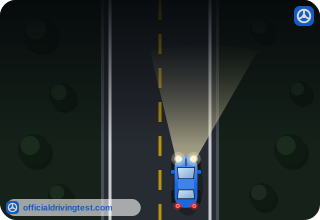
- Only the painted center line markings on the road
- Only reflective signs along the side of the road
- Dark shapes on the roadway, like pedestrians or animals
- Only the taillights of vehicles far ahead of them
Show answer
Correct answer: Dark shapes on the roadway, like pedestrians or animals
Drivers should search well ahead of the headlight beams, looking for dark shapes on the roadway such as pedestrians or animals.
Source: New Hampshire Driver’s Manual (DSMV 360 (Rev. 11/25)), page 18 · Open this page in the manual (Manual page 18)
-
Why should a driver glance occasionally to the right and left when driving at night?
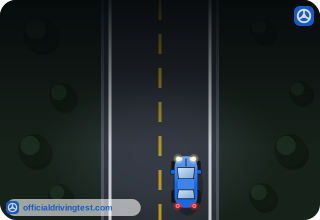
- To read road signs before they are close enough
- To find the pavement edge and hazards from the sides
- To rest the eyes from looking at the road ahead
- To check for glare from headlights behind them
Show answer
Correct answer: To find the pavement edge and hazards from the sides
Drivers should glance occasionally to the right and left to determine the location of the edge of the pavement and hazards that may come from the sides.
Source: New Hampshire Driver’s Manual (DSMV 360 (Rev. 11/25)), page 18 · Open this page in the manual (Manual page 18)
-
Most vehicle warning system technologies are passive. What does that mean?
- They work only while the vehicle is parked or idling
- They automatically brake or steer to prevent a collision
- They only record events so a mechanic can read them later
- They warn but do not automatically prevent a problem or collision
Show answer
Correct answer: They warn but do not automatically prevent a problem or collision
Most warning technologies are passive, meaning they warn the driver of a potential issue but do not automatically prevent a problem or collision.
Source: New Hampshire Driver’s Manual (DSMV 360 (Rev. 11/25)), page 19 · Open this page in the manual (Manual page 19)
-
How should drivers treat vehicle warning system technologies?
- As an additional resource to mirrors and head checks, not alone
- As a full replacement for mirrors, head checks and other monitoring
- As a tool needed only when driving at night or in heavy rain or snow
- As a way to avoid checking blind spots when driving on highways
Show answer
Correct answer: As an additional resource to mirrors and head checks, not alone
These technologies are intended to provide an additional monitoring resource to mirrors and head checks, and drivers should not depend on them alone.
Source: New Hampshire Driver’s Manual (DSMV 360 (Rev. 11/25)), page 19 · Open this page in the manual (Manual page 19)
-
Which of these should drivers check while backing?
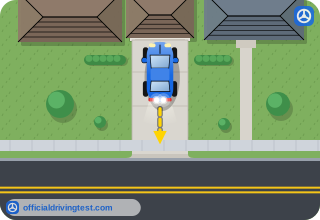
- The speedometer reading
- The fuel gauge needle
- Head checks over the shoulders
- The hazard flasher switch light
Show answer
Correct answer: Head checks over the shoulders
Drivers should check the side mirrors, the rear view mirror, over the shoulders (head checks) and camera(s), if equipped, when backing.
Source: New Hampshire Driver’s Manual (DSMV 360 (Rev. 11/25)), page 19 · Open this page in the manual (Manual page 19)
-
When does a rear camera activate to show the area behind the vehicle?
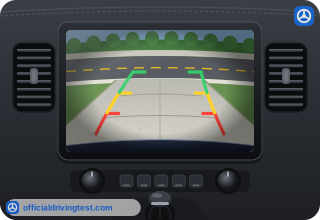
- When the vehicle passes 5 mph
- When the driver shifts into reverse
- When the headlights are turned on
- When the brake pedal is pressed
Show answer
Correct answer: When the driver shifts into reverse
The rear camera activates when the driver shifts into reverse.
Source: New Hampshire Driver’s Manual (DSMV 360 (Rev. 11/25)), page 19 · Open this page in the manual (Manual page 19)
-
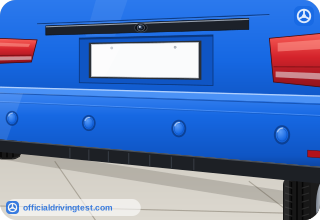
How can a back-up warning feature alert the driver to an object or car directly behind?
- Only through a spoken message
- By braking the vehicle automatically
- Only through a flashing light on the bumper
- Through a sound, a vibration, or a mix of both
Show answer
Correct answer: Through a sound, a vibration, or a mix of both
The back-up warning feature lets the driver know, through a sound, vibration, or a mix, if there is an object or car directly behind.
Source: New Hampshire Driver’s Manual (DSMV 360 (Rev. 11/25)), page 19 · Open this page in the manual (Manual page 19)
-
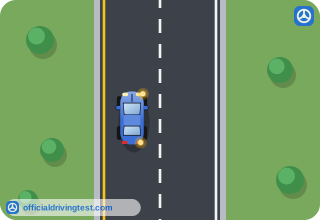
What should a driver still do before changing lanes when the vehicle has a blind spot monitor?
- Check mirrors and look over the shoulders
- Rely on the monitor warnings alone
- Tap the horn before moving over
- Turn off the monitor before moving over
Show answer
Correct answer: Check mirrors and look over the shoulders
The blind spot monitor warnings can help with lane changes, but the driver should still always check their mirrors and look over their shoulders before changing lanes.
Source: New Hampshire Driver’s Manual (DSMV 360 (Rev. 11/25)), page 19 · Open this page in the manual (Manual page 19)
-
What does a curve speed warning do?
- Warns the driver when drifting out of the lane
- Warns the driver when following too closely
- Warns when approaching a curve or exit too quickly
- Slows the vehicle automatically in a curve
Show answer
Correct answer: Warns when approaching a curve or exit too quickly
A curve speed warning warns the driver when they are approaching a curve or exit on the road too quickly.
Source: New Hampshire Driver’s Manual (DSMV 360 (Rev. 11/25)), page 19 · Open this page in the manual (Manual page 19)
-
What does a surround or around-view monitor system display?
- Only a view of the area behind the vehicle
- A bird's-eye view of the vehicle from overhead
- A map of the nearest exits and rest areas
- A list of recent vehicle malfunctions and alerts
Show answer
Correct answer: A bird's-eye view of the vehicle from overhead
A surround or around-view monitor system displays a birds-eye view of the vehicle from overhead and shows a moving image on the vehicle's display monitor.
Source: New Hampshire Driver’s Manual (DSMV 360 (Rev. 11/25)), page 19 · Open this page in the manual (Manual page 19)
-
What does a forward collision warning system not do by itself?
- Alert the driver of an impending collision
- Scan the road ahead while driving
- Detect a slower moving or stationary vehicle ahead
- Automatically brake for the driver
Show answer
Correct answer: Automatically brake for the driver
A forward collision warning alerts drivers to an impending collision, but the warning alone will not automatically brake for the driver.
Source: New Hampshire Driver’s Manual (DSMV 360 (Rev. 11/25)), page 19 · Open this page in the manual (Manual page 19)
-
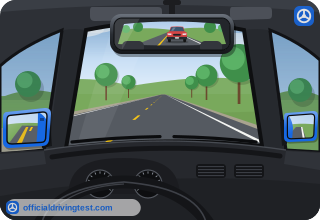
Drivers need to be aware of traffic behind their vehicle. When should they check their mirrors continually?
- Only after the vehicle has already stopped or turned
- Only when another vehicle is seen coming from behind
- Before slowing down, stopping, turning or changing lanes
- Only before starting the engine at the start of a trip
Show answer
Correct answer: Before slowing down, stopping, turning or changing lanes
Drivers should check their mirrors continually before slowing down, stopping, turning or changing lanes.
Source: New Hampshire Driver’s Manual (DSMV 360 (Rev. 11/25)), page 30 · Open this page in the manual (Manual page 30)