New Hampshire: Signals and vehicle controls
Checking the vehicle, adjusting the seat and mirrors, steering, signaling with lights, horn and hand signals, changing lanes, backing, headlights and vehicle warning systems. Split into 3 shorter tests so you're not stuck in one long quiz.
Independent educational site · not affiliated with any government agency or DMV
Choose a part
Signals and vehicle controls — Part 1
Questions in this part include: “What must the wheels of every trailer be covered with?”
StartSignals and vehicle controls — Part 2
Questions in this part include: “During what period does New Hampshire law require every motor vehicle to display lighted lamps on the front?”
StartSignals and vehicle controls — Part 3
Questions in this part include: “What does the manual say about wearing sunglasses or colored lenses when driving at night or on overcast days?”
StartAll 57 Signals and vehicle controls questions with answers
Choose a part above to take a practice test, or study every question and answer here.
Show the questions and answersHide the questions
-
How often does the manual recommend that drivers have the tire pressure checked?
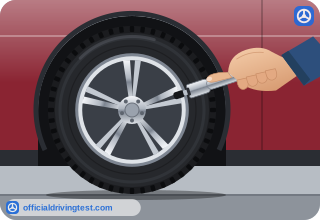
- Once a week
- Once a month
- Every 6 months
- Once a year
Show answer
Correct answer: Once a month
The manual recommends having the tire pressure checked once a month.
Source: New Hampshire Driver’s Manual (DSMV 360 (Rev. 11/25)), page 11 · Open this page in the manual (Manual page 11)
-
What can improper seating positions, such as slouching, result in?
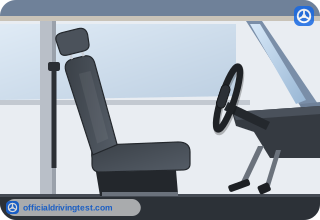
- Faster wear on the vehicle’s brake and steering parts
- Poorer sound quality from the vehicle’s audio system
- Less heat reaching the driver from the vehicle’s vents
- Reduced effectiveness of the vehicle’s restraint system
Show answer
Correct answer: Reduced effectiveness of the vehicle’s restraint system
The manual says improper seating positions, such as slouching, can reduce the effectiveness of the vehicle’s restraint system.
Source: New Hampshire Driver’s Manual (DSMV 360 (Rev. 11/25)), page 11 · Open this page in the manual (Manual page 11)
-
What is the proper seat position, according to the manual?
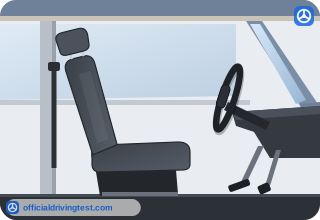
- Reclined, with the legs stretched out
- Leaning back, with the knees raised
- Slouched, with one foot on the seat
- Upright, with the driver’s feet on the floor
Show answer
Correct answer: Upright, with the driver’s feet on the floor
The manual says proper seat position is upright with the driver’s feet on the floor.
Source: New Hampshire Driver’s Manual (DSMV 360 (Rev. 11/25)), page 11 · Open this page in the manual (Manual page 11)
-
While the driver’s foot pivots smoothly from the brake to the accelerator, where should the heel be?
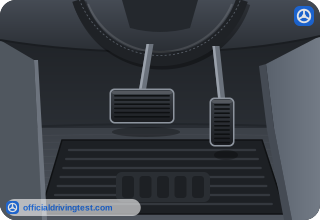
- On the brake pedal
- On the floor
- On the accelerator
- Raised in the air
Show answer
Correct answer: On the floor
The manual says the foot should pivot from brake to accelerator while the heel is kept on the floor.
Source: New Hampshire Driver’s Manual (DSMV 360 (Rev. 11/25)), page 11 · Open this page in the manual (Manual page 11)
-
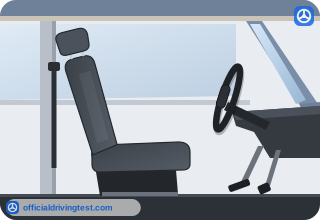
The top of the steering wheel should be no higher than which part of the driver?
- The top of the driver’s head
- The driver’s eye level
- The top of the driver’s shoulders
- The driver’s ears
Show answer
Correct answer: The top of the driver’s shoulders
The manual says the top of the steering wheel should be no higher than the top of the driver’s shoulders and below chin level.
Source: New Hampshire Driver’s Manual (DSMV 360 (Rev. 11/25)), page 11 · Open this page in the manual (Manual page 11)
-
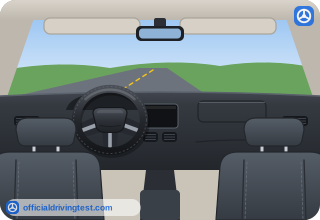
How much space does the manual say there should be between the driver’s chest and the steering wheel?
- 10 inches
- 3 inches
- 5 inches
- 20 inches
Show answer
Correct answer: 10 inches
The manual says there should be 10 inches between the driver’s chest and the steering wheel.
Source: New Hampshire Driver’s Manual (DSMV 360 (Rev. 11/25)), page 11 · Open this page in the manual (Manual page 11)
-
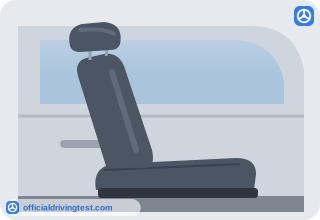
What are head restraints, also known as head rests, designed to prevent in the event of an accident?
- Whiplash
- Skidding
- Rollover
- Glare
Show answer
Correct answer: Whiplash
The manual says head restraints are designed to prevent whiplash in the event of an accident.
Source: New Hampshire Driver’s Manual (DSMV 360 (Rev. 11/25)), page 11 · Open this page in the manual (Manual page 11)
-
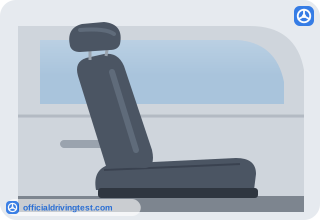
How should a head rest be adjusted?
- To touch the back of the neck, just below the ears and jaw
- To sit well above the top of the head, just over the eyes
- To contact the back of the driver’s head, but not below the ears
- To rest behind the shoulders, well below the neck line
Show answer
Correct answer: To contact the back of the driver’s head, but not below the ears
The manual says the head rest should come in contact with the back of the driver’s head, but not below the ears.
Source: New Hampshire Driver’s Manual (DSMV 360 (Rev. 11/25)), page 11 · Open this page in the manual (Manual page 11)
-
According to the manual, how should the inside mirror be adjusted?
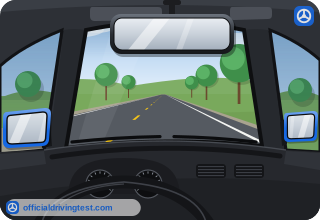
- So that it shows the rear passengers
- So that it frames the rear window
- So that it shows the left lane
- So that it points toward the roof
Show answer
Correct answer: So that it frames the rear window
The manual says the inside mirror should be adjusted so that it frames the rear window when the driver looks at it.
Source: New Hampshire Driver’s Manual (DSMV 360 (Rev. 11/25)), page 11 · Open this page in the manual (Manual page 11)
-
If a vehicle has a day/night mirror, what should the driver ensure?
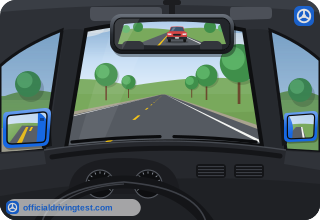
- That it is always set to the night position
- That it is folded in while the car is moving
- That it is tilted down toward the dashboard
- That it is set for the current time of day
Show answer
Correct answer: That it is set for the current time of day
The manual says to ensure a day/night mirror is set for the current time of day.
Source: New Hampshire Driver’s Manual (DSMV 360 (Rev. 11/25)), page 11 · Open this page in the manual (Manual page 11)
-
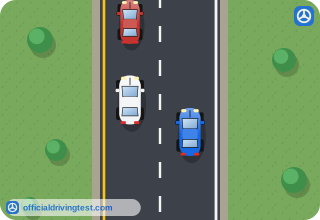
Even properly adjusted mirrors will not eliminate all blind spots. What should be incorporated whenever possible?
- A louder horn
- Wider mirrors
- Brighter headlights
- Proper head checks
Show answer
Correct answer: Proper head checks
The manual says properly adjusted mirrors do not eliminate all blind spots, so proper head checks should be used whenever possible.
Source: New Hampshire Driver’s Manual (DSMV 360 (Rev. 11/25)), page 11 · Open this page in the manual (Manual page 11)
-
What does the manual say about driving with an unsecured load?
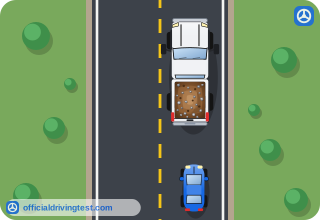
- It is both against the law and extremely dangerous
- It is allowed on roads with low speed limits
- It is allowed if the load is lighter than the vehicle
- It is allowed if the driver stays in the right lane
Show answer
Correct answer: It is both against the law and extremely dangerous
The manual says driving with an unsecured load is both against the law and extremely dangerous.
Source: New Hampshire Driver’s Manual (DSMV 360 (Rev. 11/25)), page 12 · Open this page in the manual (Manual page 12)
-
When is a load considered secure, according to the manual?
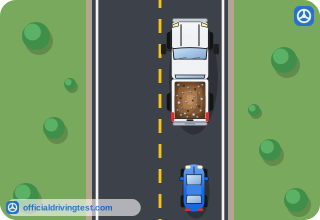
- When nothing can slide, shift, fall or sift onto the roadway
- When it is covered by a loose tarp tied at one corner
- When it is lighter than the vehicle that carries it
- When it has not fallen off during the first mile driven
Show answer
Correct answer: When nothing can slide, shift, fall or sift onto the roadway
The manual says a load is only considered secure when nothing can slide, shift, fall or sift onto the roadway, or become airborne.
Source: New Hampshire Driver’s Manual (DSMV 360 (Rev. 11/25)), page 12 · Open this page in the manual (Manual page 12)
-
What must the wheels of every trailer be covered with?
- Locking wheel covers
- Plastic hubcap covers
- Fenders or mud guards
- Reflective tape strips
Show answer
Correct answer: Fenders or mud guards
The manual says all trailers must have properly mounted, lubricated wheels covered with fenders or mud guards.
Source: New Hampshire Driver’s Manual (DSMV 360 (Rev. 11/25)), page 12 · Open this page in the manual (Manual page 12)
-
Which set of lamps and reflectors must a trailer have, according to the manual?
- Tail, fog, cornering, license plate and side marker lamps
- Tail, stop, turn signal, license plate and side marker lamps and reflectors
- Stop, turn signal, driving, and hazard lamps with no reflectors
- Tail, spot, interior, and license plate lamps with reflectors
Show answer
Correct answer: Tail, stop, turn signal, license plate and side marker lamps and reflectors
The manual says a trailer must have the proper tail, stop, turn signal, license plate and side marker lamps and reflectors.
Source: New Hampshire Driver’s Manual (DSMV 360 (Rev. 11/25)), page 12 · Open this page in the manual (Manual page 12)
-
Since what year have New Hampshire drivers been legally required to clear snow and ice off their vehicles before getting on the road?
- 1982
- 1992
- 2012
- 2002
Show answer
Correct answer: 2002
The manual says that since 2002, New Hampshire drivers have been legally required to clear snow and ice off their vehicles before getting on the road.
Source: New Hampshire Driver’s Manual (DSMV 360 (Rev. 11/25)), page 13 · Open this page in the manual (Manual page 13)
-
Who is responsible for ensuring that all snow and ice are removed from a vehicle prior to driving?

- The passenger
- A police officer
- The vehicle’s dealer
- The driver
Show answer
Correct answer: The driver
The manual says it is the responsibility of a driver to ensure that all snow and ice are removed from a vehicle prior to driving.
Source: New Hampshire Driver’s Manual (DSMV 360 (Rev. 11/25)), page 13 · Open this page in the manual (Manual page 13)
-
What may snow and ice left on a vehicle do, according to the manual?

- Improve the vehicle’s traction when driving on slippery roads
- Impair the driver’s ability to see and become loose on the roadway
- Keep the vehicle’s interior warmer during the whole trip
- Protect the windshield and roof from other falling road debris
Show answer
Correct answer: Impair the driver’s ability to see and become loose on the roadway
The manual says snow and ice on a vehicle may impair a driver’s ability to see and may become loose on a roadway and endanger other drivers.
Source: New Hampshire Driver’s Manual (DSMV 360 (Rev. 11/25)), page 13 · Open this page in the manual (Manual page 13)
-
The penalty for a first offense of Negligent Driving can be what range?
- $50.00 to $100.00
- $100.00 to $200.00
- $250.00 to $500.00
- $500.00 to $1,000.00
Show answer
Correct answer: $250.00 to $500.00
The manual says penalties for Negligent Driving can be $250.00 to $500.00 for the first offense, with increased penalties for subsequent offenses.
Source: New Hampshire Driver’s Manual (DSMV 360 (Rev. 11/25)), page 13 · Open this page in the manual (Manual page 13)
-
Where should a driver's hands be placed on the steering wheel?
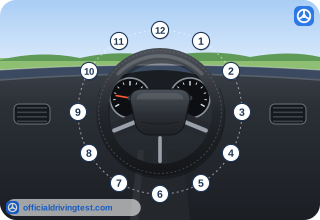
- At 9 and 3 o'clock, or 8 and 4 o'clock
- At 10 and 2 o'clock, or 11 and 1 o'clock
- At 12 and 6 o'clock
- Both hands together at the 12 o'clock position
Show answer
Correct answer: At 9 and 3 o'clock, or 8 and 4 o'clock
The manual says drivers' hands should be in the 9 o'clock and 3 o'clock, or the 8 o'clock and 4 o'clock positions.
Source: New Hampshire Driver’s Manual (DSMV 360 (Rev. 11/25)), page 14 · Open this page in the manual (Manual page 14)
-
While steering, where should a driver's knuckles and thumbs stay?
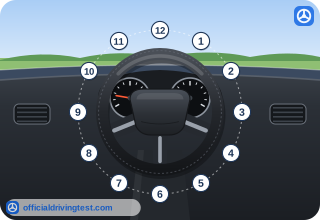
- On the inside of the wheel
- Hooked over the top of the wheel
- On the outside of the wheel
- Off the wheel when driving straight
Show answer
Correct answer: On the outside of the wheel
Knuckles and thumbs should stay on the outside of the wheel.
Source: New Hampshire Driver’s Manual (DSMV 360 (Rev. 11/25)), page 14 · Open this page in the manual (Manual page 14)
-
Which steering method may a driver use for greater steering inputs?
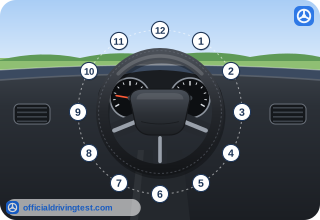
- Hand-to-hand steering
- Hand-over-hand steering
- One-handed steering
- Palm-of-hand steering
Show answer
Correct answer: Hand-over-hand steering
Drivers may use hand-to-hand steering for slight steering and hand-over-hand for greater steering inputs.
Source: New Hampshire Driver’s Manual (DSMV 360 (Rev. 11/25)), page 14 · Open this page in the manual (Manual page 14)
-
How far before a turn should drivers signal?
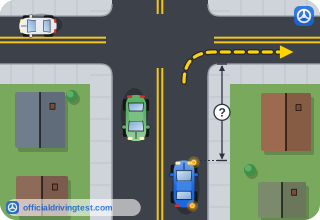
- At least 25 feet
- At least 50 feet
- At least 100 feet
- At least 200 feet
Show answer
Correct answer: At least 100 feet
Drivers should signal at least 100 feet before a turn.
Source: New Hampshire Driver’s Manual (DSMV 360 (Rev. 11/25)), page 15 · Open this page in the manual (Manual page 15)
-
How should a driver adjust the timing of the turn signal when it is raining, snowy or foggy?

- Use the turn signal later when turning
- Use the hazard flashers instead of the turn signal
- Use the turn signal at the usual time, with no change
- Use the turn signal sooner when turning
Show answer
Correct answer: Use the turn signal sooner when turning
Drivers should use the turn signal sooner when turning in rain, snow or fog, to allow other vehicles greater stopping distances.
Source: New Hampshire Driver’s Manual (DSMV 360 (Rev. 11/25)), page 15 · Open this page in the manual (Manual page 15)
-
In which situation must a driver use the appropriate turn signal?
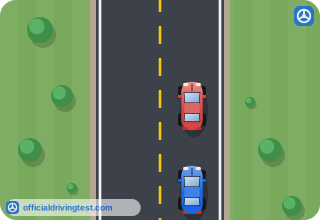
- Pulling away from a curb
- Driving straight ahead in the same lane
- Slowing for a stop sign in the same lane
- Staying in the same lane through an intersection
Show answer
Correct answer: Pulling away from a curb
Drivers must use the appropriate turn signal when pulling away from a curb, as well as when changing lanes, turning, entering or leaving a roadway, merging, pulling over and passing.
Source: New Hampshire Driver’s Manual (DSMV 360 (Rev. 11/25)), page 15 · Open this page in the manual (Manual page 15)
-
During what period does New Hampshire law require every motor vehicle to display lighted lamps on the front?
- From sunset to sunrise
- From 1 hour after sunset to 1 hour before sunrise
- From 1/2 hour after sunset to 1/2 hour before sunrise
- From 1/2 hour before sunset to 1/2 hour after sunrise
Show answer
Correct answer: From 1/2 hour after sunset to 1/2 hour before sunrise
The law requires lighted front lamps from 1/2 hour after sunset to 1/2 hour before sunrise, and whenever rain, snow or fog keeps persons and vehicles from being clearly seen at 1000 feet.
Source: New Hampshire Driver’s Manual (DSMV 360 (Rev. 11/25)), page 15 · Open this page in the manual (Manual page 15)
-
Headlights are also required whenever rain, snow or fog keeps persons and vehicles from being clearly discernible at what distance ahead?
- 250 feet
- 1000 feet
- 300 feet
- 750 feet
Show answer
Correct answer: 1000 feet
Lamps must be displayed whenever rain, snow or fog interferes so that persons and vehicles are not clearly discernible at a distance of 1000 feet ahead.
Source: New Hampshire Driver’s Manual (DSMV 360 (Rev. 11/25)), page 15 · Open this page in the manual (Manual page 15)
-
When headlights are required, how many lighted lamps on the front must a motor vehicle other than a motorcycle display?
- At least 1
- At least 3
- At least 4
- At least 2
Show answer
Correct answer: At least 2
New Hampshire law requires at least 2 lighted lamps on the front, but one suitable lighted lamp is enough on a motorcycle.
Source: New Hampshire Driver’s Manual (DSMV 360 (Rev. 11/25)), page 15 · Open this page in the manual (Manual page 15)
-
When headlights are required, how many lighted lamps on the front are sufficient for a motorcycle?
- One suitable lighted lamp
- At least 2 lighted lamps
- At least 3 lighted lamps
- None, if the motorcycle has reflectors
Show answer
Correct answer: One suitable lighted lamp
The law allows one suitable lighted lamp on the front of a motorcycle to be sufficient.
Source: New Hampshire Driver’s Manual (DSMV 360 (Rev. 11/25)), page 15 · Open this page in the manual (Manual page 15)
-
When should drivers use the horn?
- Whenever approaching an intersection
- Whenever passing another vehicle
- Only when needed to communicate with others
- Whenever another driver is following closely
Show answer
Correct answer: Only when needed to communicate with others
Drivers should only use the horn when it is needed to communicate with other road users, because using it inappropriately could scare or anger another road user.
Source: New Hampshire Driver’s Manual (DSMV 360 (Rev. 11/25)), page 15 · Open this page in the manual (Manual page 15)
-
When should drivers not use the horn?
- When a pedestrian or bicyclist begins to move into the driver's lane
- When near blind pedestrians or when approaching or near a horse
- When another driver crosses the center lane into the driver's lane of travel
- When a driver is unaware a vehicle is approaching while backing up
Show answer
Correct answer: When near blind pedestrians or when approaching or near a horse
Drivers should not use the horn when near blind pedestrians or when approaching or near a horse, as it may frighten the horse and cause a crash.
Source: New Hampshire Driver’s Manual (DSMV 360 (Rev. 11/25)), page 16 · Open this page in the manual (Manual page 16)
-
How should the horn normally be used?
- A long continuous blast
- Several short blasts in a row
- Two long blasts
- A light tap
Show answer
Correct answer: A light tap
A light tap on the horn should be all that is needed under normal circumstances.
Source: New Hampshire Driver’s Manual (DSMV 360 (Rev. 11/25)), page 16 · Open this page in the manual (Manual page 16)
-
In which situation may a driver want to give the horn a light tap?
- A pedestrian or bicyclist moves into the driver's lane
- A blind pedestrian is waiting at the roadside
- A horse is walking along the side of the road
- A vehicle ahead is slowing down to make a turn
Show answer
Correct answer: A pedestrian or bicyclist moves into the driver's lane
Drivers may want to give the horn a light tap when pedestrians or bicyclists begin to move into the lane they are travelling in. The horn should not be used near blind pedestrians or horses.
Source: New Hampshire Driver’s Manual (DSMV 360 (Rev. 11/25)), page 16 · Open this page in the manual (Manual page 16)
-
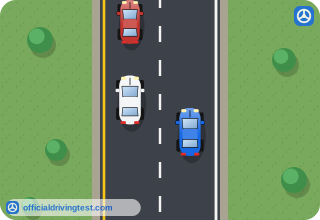
Before changing lanes, how should a driver check the blind spots?
- By glancing at the side mirrors only
- By relying on a blind spot monitor alone
- By using head checks
- By signaling and moving over
Show answer
Correct answer: By using head checks
Before changing lanes, a driver should check all blind spots, the areas around the vehicle that cannot be seen, by using head checks.
Source: New Hampshire Driver’s Manual (DSMV 360 (Rev. 11/25)), page 16 · Open this page in the manual (Manual page 16)
-
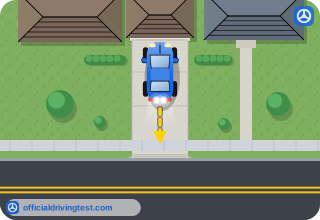
Which area do mirrors and head checks not show when backing up?
- The area beside the front doors
- The area immediately behind the vehicle
- The lane to the left of the vehicle
- The area in front of the hood
Show answer
Correct answer: The area immediately behind the vehicle
Mirrors and head checks should be used for backing, but they do not show the area immediately behind the vehicle.
Source: New Hampshire Driver’s Manual (DSMV 360 (Rev. 11/25)), page 17 · Open this page in the manual (Manual page 17)
-
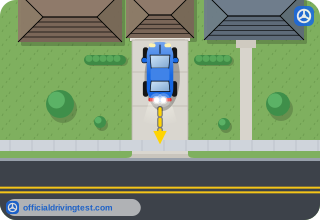
How should a driver accelerate when backing up a vehicle?
- Quickly to finish the maneuver sooner
- At a moderate speed, to keep traffic moving
- Sharply, then coast
- Gently and smoothly, keeping speed slow
Show answer
Correct answer: Gently and smoothly, keeping speed slow
When backing up, drivers should accelerate gently and smoothly, keeping speed slow, because the vehicle is much harder to steer while backing.
Source: New Hampshire Driver’s Manual (DSMV 360 (Rev. 11/25)), page 17 · Open this page in the manual (Manual page 17)
-
While backing up, in which direction should a driver steer?
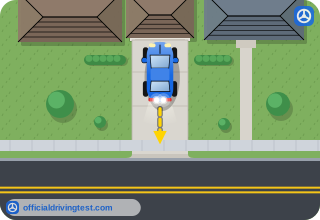
- Slightly in the direction the rear of the vehicle should move
- Slightly in the direction opposite to where the rear should move
- Hard in the direction the front of the vehicle should go
- Not at all; the wheel should be kept straight
Show answer
Correct answer: Slightly in the direction the rear of the vehicle should move
While backing, drivers should steer slightly in the direction the rear of the vehicle should move.
Source: New Hampshire Driver’s Manual (DSMV 360 (Rev. 11/25)), page 17 · Open this page in the manual (Manual page 17)
-
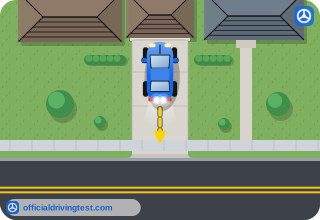
While backing up, how long should a driver continue looking to the rear?
- Until the vehicle has moved 10 feet
- Until the rear wheels clear the curb
- Until coming to a complete stop
- Until the vehicle speed drops below 5 mph
Show answer
Correct answer: Until coming to a complete stop
When backing, drivers should continue looking to the rear until coming to a complete stop.
Source: New Hampshire Driver’s Manual (DSMV 360 (Rev. 11/25)), page 17 · Open this page in the manual (Manual page 17)
-
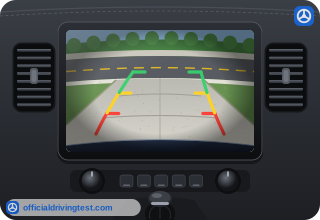
How should back-up cameras be used when backing a vehicle?
- As the primary tool, with mirrors used only when needed
- Together with mirrors and head checks, never as the primary tool
- Instead of mirrors and head checks, to reduce glare in the mirrors
- Only once the vehicle has already come to a complete stop
Show answer
Correct answer: Together with mirrors and head checks, never as the primary tool
Back-up cameras can help drivers back up safely when used together with the mirrors and proper head checks, but should never be used as the primary tool for backing safely.
Source: New Hampshire Driver’s Manual (DSMV 360 (Rev. 11/25)), page 17 · Open this page in the manual (Manual page 17)
-
When should a driver use the high beams at night?
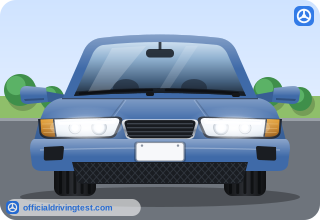
- When following another vehicle
- In fog, rain or snow
- Whenever there are no oncoming vehicles
- Only on roads with no lane markings
Show answer
Correct answer: Whenever there are no oncoming vehicles
Drivers should use the high beams whenever there are no oncoming vehicles. They should use the low beams when following another vehicle and in fog, rain or snow.
Source: New Hampshire Driver’s Manual (DSMV 360 (Rev. 11/25)), page 18 · Open this page in the manual (Manual page 18)
-
For which vehicles should a driver dim the high beams at night?
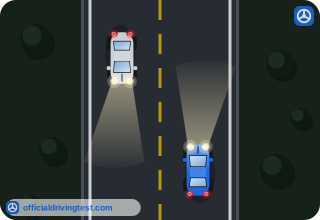
- Only approaching vehicles that flash their lights
- All approaching traffic
- Only approaching trucks and buses
- Only vehicles that also have their high beams on
Show answer
Correct answer: All approaching traffic
Drivers should dim the high beams for all approaching traffic.
Source: New Hampshire Driver’s Manual (DSMV 360 (Rev. 11/25)), page 18 · Open this page in the manual (Manual page 18)
-
Which headlight beams should be used when following another vehicle at night?
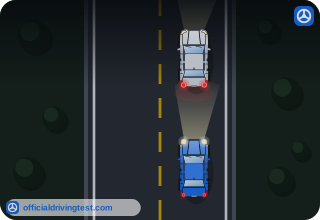
- High beams
- Fog lights only
- Parking lights
- Low beams
Show answer
Correct answer: Low beams
Drivers should use the low beams when following another vehicle.
Source: New Hampshire Driver’s Manual (DSMV 360 (Rev. 11/25)), page 18 · Open this page in the manual (Manual page 18)
-
Which headlight beams should be used in fog, rain or snow?

- Low beams
- High beams
- Parking lights only
- Hazard flashers only
Show answer
Correct answer: Low beams
In fog, rain, or snow drivers should use the low beams, because light from the high beams may cause glare and make it more difficult to see ahead.
Source: New Hampshire Driver’s Manual (DSMV 360 (Rev. 11/25)), page 18 · Open this page in the manual (Manual page 18)
-
At night, where should a driver look if an oncoming vehicle has its high beams on?
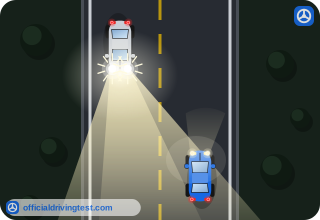
- Directly at the oncoming headlights
- At the center line
- Toward the right side of the road
- Into the rearview mirror
Show answer
Correct answer: Toward the right side of the road
If a vehicle coming from the opposite direction has its high beams on, the driver should look toward the right side of the road to avoid being distracted or momentarily blinded.
Source: New Hampshire Driver’s Manual (DSMV 360 (Rev. 11/25)), page 18 · Open this page in the manual (Manual page 18)
-
What does the manual say about wearing sunglasses or colored lenses when driving at night or on overcast days?
- They reduce glare, so they should be worn at night
- Do not wear them, because tinted lenses reduce vision
- They are recommended on overcast days to reduce glare
- They are acceptable if the tint is only slight
Show answer
Correct answer: Do not wear them, because tinted lenses reduce vision
Tinted or colored lenses reduce vision, so drivers should not wear sunglasses or colored lenses when driving at night or on overcast days.
Source: New Hampshire Driver’s Manual (DSMV 360 (Rev. 11/25)), page 18 · Open this page in the manual (Manual page 18)
-
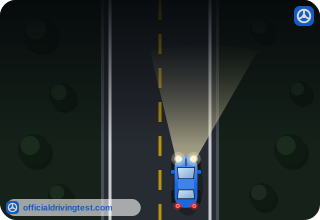
At night, what should a driver look for while searching well ahead of the headlight beams?
- Only the painted center line markings on the road
- Only reflective signs along the side of the road
- Dark shapes on the roadway, like pedestrians or animals
- Only the taillights of vehicles far ahead of them
Show answer
Correct answer: Dark shapes on the roadway, like pedestrians or animals
Drivers should search well ahead of the headlight beams, looking for dark shapes on the roadway such as pedestrians or animals.
Source: New Hampshire Driver’s Manual (DSMV 360 (Rev. 11/25)), page 18 · Open this page in the manual (Manual page 18)
-
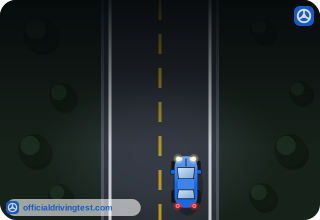
Why should a driver glance occasionally to the right and left when driving at night?
- To read road signs before they are close enough
- To find the pavement edge and hazards from the sides
- To rest the eyes from looking at the road ahead
- To check for glare from headlights behind them
Show answer
Correct answer: To find the pavement edge and hazards from the sides
Drivers should glance occasionally to the right and left to determine the location of the edge of the pavement and hazards that may come from the sides.
Source: New Hampshire Driver’s Manual (DSMV 360 (Rev. 11/25)), page 18 · Open this page in the manual (Manual page 18)
-
Most vehicle warning system technologies are passive. What does that mean?
- They work only while the vehicle is parked or idling
- They automatically brake or steer to prevent a collision
- They only record events so a mechanic can read them later
- They warn but do not automatically prevent a problem or collision
Show answer
Correct answer: They warn but do not automatically prevent a problem or collision
Most warning technologies are passive, meaning they warn the driver of a potential issue but do not automatically prevent a problem or collision.
Source: New Hampshire Driver’s Manual (DSMV 360 (Rev. 11/25)), page 19 · Open this page in the manual (Manual page 19)
-
How should drivers treat vehicle warning system technologies?
- As an additional resource to mirrors and head checks, not alone
- As a full replacement for mirrors, head checks and other monitoring
- As a tool needed only when driving at night or in heavy rain or snow
- As a way to avoid checking blind spots when driving on highways
Show answer
Correct answer: As an additional resource to mirrors and head checks, not alone
These technologies are intended to provide an additional monitoring resource to mirrors and head checks, and drivers should not depend on them alone.
Source: New Hampshire Driver’s Manual (DSMV 360 (Rev. 11/25)), page 19 · Open this page in the manual (Manual page 19)
-
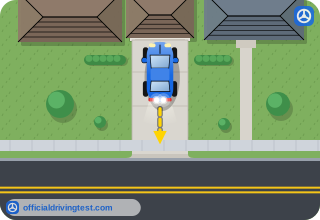
Which of these should drivers check while backing?
- The speedometer reading
- The fuel gauge needle
- Head checks over the shoulders
- The hazard flasher switch light
Show answer
Correct answer: Head checks over the shoulders
Drivers should check the side mirrors, the rear view mirror, over the shoulders (head checks) and camera(s), if equipped, when backing.
Source: New Hampshire Driver’s Manual (DSMV 360 (Rev. 11/25)), page 19 · Open this page in the manual (Manual page 19)
-
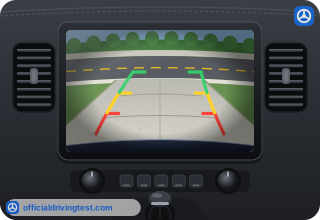
When does a rear camera activate to show the area behind the vehicle?
- When the vehicle passes 5 mph
- When the driver shifts into reverse
- When the headlights are turned on
- When the brake pedal is pressed
Show answer
Correct answer: When the driver shifts into reverse
The rear camera activates when the driver shifts into reverse.
Source: New Hampshire Driver’s Manual (DSMV 360 (Rev. 11/25)), page 19 · Open this page in the manual (Manual page 19)
-
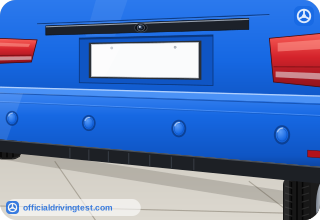
How can a back-up warning feature alert the driver to an object or car directly behind?
- Only through a spoken message
- By braking the vehicle automatically
- Only through a flashing light on the bumper
- Through a sound, a vibration, or a mix of both
Show answer
Correct answer: Through a sound, a vibration, or a mix of both
The back-up warning feature lets the driver know, through a sound, vibration, or a mix, if there is an object or car directly behind.
Source: New Hampshire Driver’s Manual (DSMV 360 (Rev. 11/25)), page 19 · Open this page in the manual (Manual page 19)
-
What should a driver still do before changing lanes when the vehicle has a blind spot monitor?
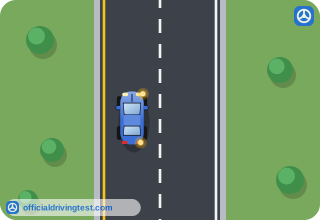
- Check mirrors and look over the shoulders
- Rely on the monitor warnings alone
- Tap the horn before moving over
- Turn off the monitor before moving over
Show answer
Correct answer: Check mirrors and look over the shoulders
The blind spot monitor warnings can help with lane changes, but the driver should still always check their mirrors and look over their shoulders before changing lanes.
Source: New Hampshire Driver’s Manual (DSMV 360 (Rev. 11/25)), page 19 · Open this page in the manual (Manual page 19)
-
What does a curve speed warning do?
- Warns the driver when drifting out of the lane
- Warns the driver when following too closely
- Warns when approaching a curve or exit too quickly
- Slows the vehicle automatically in a curve
Show answer
Correct answer: Warns when approaching a curve or exit too quickly
A curve speed warning warns the driver when they are approaching a curve or exit on the road too quickly.
Source: New Hampshire Driver’s Manual (DSMV 360 (Rev. 11/25)), page 19 · Open this page in the manual (Manual page 19)
-
What does a surround or around-view monitor system display?
- Only a view of the area behind the vehicle
- A bird's-eye view of the vehicle from overhead
- A map of the nearest exits and rest areas
- A list of recent vehicle malfunctions and alerts
Show answer
Correct answer: A bird's-eye view of the vehicle from overhead
A surround or around-view monitor system displays a birds-eye view of the vehicle from overhead and shows a moving image on the vehicle's display monitor.
Source: New Hampshire Driver’s Manual (DSMV 360 (Rev. 11/25)), page 19 · Open this page in the manual (Manual page 19)
-
What does a forward collision warning system not do by itself?
- Alert the driver of an impending collision
- Scan the road ahead while driving
- Detect a slower moving or stationary vehicle ahead
- Automatically brake for the driver
Show answer
Correct answer: Automatically brake for the driver
A forward collision warning alerts drivers to an impending collision, but the warning alone will not automatically brake for the driver.
Source: New Hampshire Driver’s Manual (DSMV 360 (Rev. 11/25)), page 19 · Open this page in the manual (Manual page 19)
-
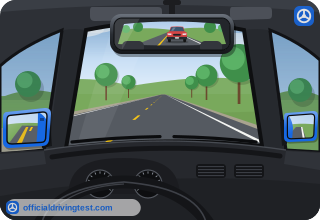
Drivers need to be aware of traffic behind their vehicle. When should they check their mirrors continually?
- Only after the vehicle has already stopped or turned
- Only when another vehicle is seen coming from behind
- Before slowing down, stopping, turning or changing lanes
- Only before starting the engine at the start of a trip
Show answer
Correct answer: Before slowing down, stopping, turning or changing lanes
Drivers should check their mirrors continually before slowing down, stopping, turning or changing lanes.
Source: New Hampshire Driver’s Manual (DSMV 360 (Rev. 11/25)), page 30 · Open this page in the manual (Manual page 30)