New Hampshire: Signals and vehicle controls — Part 1 Practice Test
Questions in this part include: “What must the wheels of every trailer be covered with?” · “Which set of lamps and reflectors must a trailer have, according to the manual?”
Independent educational site · not affiliated with any government agency or DMV
Ready? Test yourself
- Instant feedback with an explanation
- Every answer cites its source in the manual
- Your best score is saved on this device
- Keyboard: press 1 to 4 to answer and Enter for the next question
Questions are original and based on the official manual "New Hampshire Driver’s Manual" (DSMV 360 (Rev. 11/25)), New Hampshire Division of Motor Vehicles (DMV).
All 19 questions in this practice test
Take the test above first, then use this list to study. Tap “Show answer” to see the correct answer and explanation.
Show the questions and answersHide the questions
-
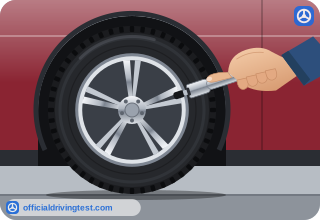
How often does the manual recommend that drivers have the tire pressure checked?
- Once a week
- Once a month
- Every 6 months
- Once a year
Show answer
Correct answer: Once a month
The manual recommends having the tire pressure checked once a month.
Source: New Hampshire Driver’s Manual (DSMV 360 (Rev. 11/25)), page 11 · Open this page in the manual (Manual page 11)
-
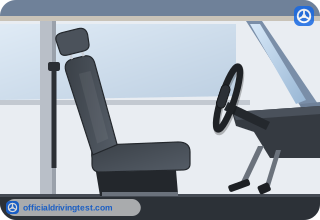
What can improper seating positions, such as slouching, result in?
- Faster wear on the vehicle’s brake and steering parts
- Poorer sound quality from the vehicle’s audio system
- Less heat reaching the driver from the vehicle’s vents
- Reduced effectiveness of the vehicle’s restraint system
Show answer
Correct answer: Reduced effectiveness of the vehicle’s restraint system
The manual says improper seating positions, such as slouching, can reduce the effectiveness of the vehicle’s restraint system.
Source: New Hampshire Driver’s Manual (DSMV 360 (Rev. 11/25)), page 11 · Open this page in the manual (Manual page 11)
-
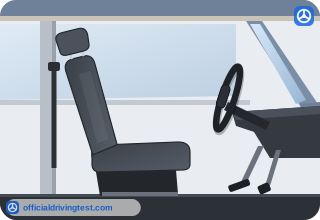
What is the proper seat position, according to the manual?
- Reclined, with the legs stretched out
- Leaning back, with the knees raised
- Slouched, with one foot on the seat
- Upright, with the driver’s feet on the floor
Show answer
Correct answer: Upright, with the driver’s feet on the floor
The manual says proper seat position is upright with the driver’s feet on the floor.
Source: New Hampshire Driver’s Manual (DSMV 360 (Rev. 11/25)), page 11 · Open this page in the manual (Manual page 11)
-
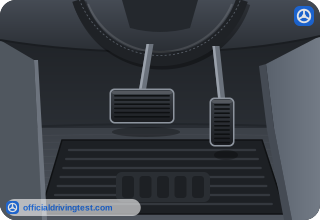
While the driver’s foot pivots smoothly from the brake to the accelerator, where should the heel be?
- On the brake pedal
- On the floor
- On the accelerator
- Raised in the air
Show answer
Correct answer: On the floor
The manual says the foot should pivot from brake to accelerator while the heel is kept on the floor.
Source: New Hampshire Driver’s Manual (DSMV 360 (Rev. 11/25)), page 11 · Open this page in the manual (Manual page 11)
-
The top of the steering wheel should be no higher than which part of the driver?
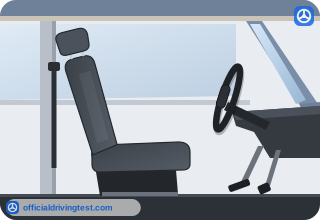
- The top of the driver’s head
- The driver’s eye level
- The top of the driver’s shoulders
- The driver’s ears
Show answer
Correct answer: The top of the driver’s shoulders
The manual says the top of the steering wheel should be no higher than the top of the driver’s shoulders and below chin level.
Source: New Hampshire Driver’s Manual (DSMV 360 (Rev. 11/25)), page 11 · Open this page in the manual (Manual page 11)
-
How much space does the manual say there should be between the driver’s chest and the steering wheel?
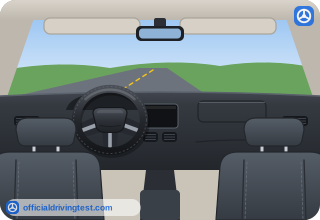
- 10 inches
- 3 inches
- 5 inches
- 20 inches
Show answer
Correct answer: 10 inches
The manual says there should be 10 inches between the driver’s chest and the steering wheel.
Source: New Hampshire Driver’s Manual (DSMV 360 (Rev. 11/25)), page 11 · Open this page in the manual (Manual page 11)
-
What are head restraints, also known as head rests, designed to prevent in the event of an accident?
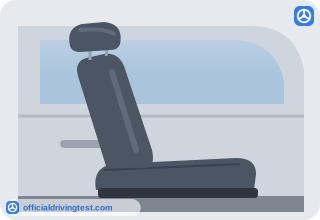
- Whiplash
- Skidding
- Rollover
- Glare
Show answer
Correct answer: Whiplash
The manual says head restraints are designed to prevent whiplash in the event of an accident.
Source: New Hampshire Driver’s Manual (DSMV 360 (Rev. 11/25)), page 11 · Open this page in the manual (Manual page 11)
-
How should a head rest be adjusted?
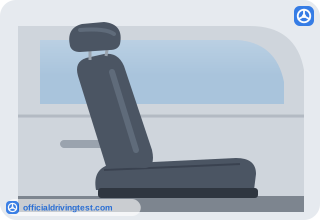
- To touch the back of the neck, just below the ears and jaw
- To sit well above the top of the head, just over the eyes
- To contact the back of the driver’s head, but not below the ears
- To rest behind the shoulders, well below the neck line
Show answer
Correct answer: To contact the back of the driver’s head, but not below the ears
The manual says the head rest should come in contact with the back of the driver’s head, but not below the ears.
Source: New Hampshire Driver’s Manual (DSMV 360 (Rev. 11/25)), page 11 · Open this page in the manual (Manual page 11)
-
According to the manual, how should the inside mirror be adjusted?
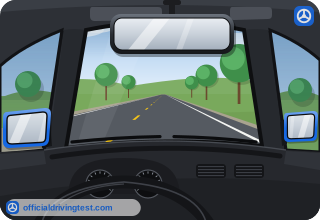
- So that it shows the rear passengers
- So that it frames the rear window
- So that it shows the left lane
- So that it points toward the roof
Show answer
Correct answer: So that it frames the rear window
The manual says the inside mirror should be adjusted so that it frames the rear window when the driver looks at it.
Source: New Hampshire Driver’s Manual (DSMV 360 (Rev. 11/25)), page 11 · Open this page in the manual (Manual page 11)
-
If a vehicle has a day/night mirror, what should the driver ensure?
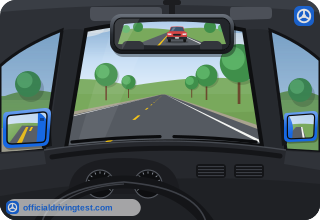
- That it is always set to the night position
- That it is folded in while the car is moving
- That it is tilted down toward the dashboard
- That it is set for the current time of day
Show answer
Correct answer: That it is set for the current time of day
The manual says to ensure a day/night mirror is set for the current time of day.
Source: New Hampshire Driver’s Manual (DSMV 360 (Rev. 11/25)), page 11 · Open this page in the manual (Manual page 11)
-
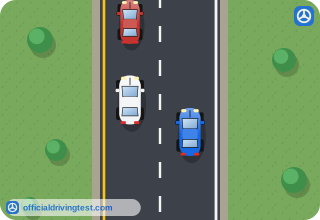
Even properly adjusted mirrors will not eliminate all blind spots. What should be incorporated whenever possible?
- A louder horn
- Wider mirrors
- Brighter headlights
- Proper head checks
Show answer
Correct answer: Proper head checks
The manual says properly adjusted mirrors do not eliminate all blind spots, so proper head checks should be used whenever possible.
Source: New Hampshire Driver’s Manual (DSMV 360 (Rev. 11/25)), page 11 · Open this page in the manual (Manual page 11)
-
What does the manual say about driving with an unsecured load?
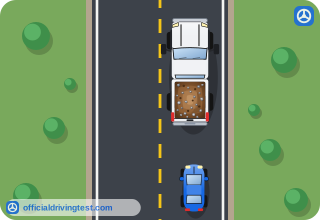
- It is both against the law and extremely dangerous
- It is allowed on roads with low speed limits
- It is allowed if the load is lighter than the vehicle
- It is allowed if the driver stays in the right lane
Show answer
Correct answer: It is both against the law and extremely dangerous
The manual says driving with an unsecured load is both against the law and extremely dangerous.
Source: New Hampshire Driver’s Manual (DSMV 360 (Rev. 11/25)), page 12 · Open this page in the manual (Manual page 12)
-
When is a load considered secure, according to the manual?
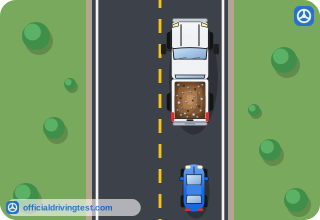
- When nothing can slide, shift, fall or sift onto the roadway
- When it is covered by a loose tarp tied at one corner
- When it is lighter than the vehicle that carries it
- When it has not fallen off during the first mile driven
Show answer
Correct answer: When nothing can slide, shift, fall or sift onto the roadway
The manual says a load is only considered secure when nothing can slide, shift, fall or sift onto the roadway, or become airborne.
Source: New Hampshire Driver’s Manual (DSMV 360 (Rev. 11/25)), page 12 · Open this page in the manual (Manual page 12)
-
What must the wheels of every trailer be covered with?
- Locking wheel covers
- Plastic hubcap covers
- Fenders or mud guards
- Reflective tape strips
Show answer
Correct answer: Fenders or mud guards
The manual says all trailers must have properly mounted, lubricated wheels covered with fenders or mud guards.
Source: New Hampshire Driver’s Manual (DSMV 360 (Rev. 11/25)), page 12 · Open this page in the manual (Manual page 12)
-
Which set of lamps and reflectors must a trailer have, according to the manual?
- Tail, fog, cornering, license plate and side marker lamps
- Tail, stop, turn signal, license plate and side marker lamps and reflectors
- Stop, turn signal, driving, and hazard lamps with no reflectors
- Tail, spot, interior, and license plate lamps with reflectors
Show answer
Correct answer: Tail, stop, turn signal, license plate and side marker lamps and reflectors
The manual says a trailer must have the proper tail, stop, turn signal, license plate and side marker lamps and reflectors.
Source: New Hampshire Driver’s Manual (DSMV 360 (Rev. 11/25)), page 12 · Open this page in the manual (Manual page 12)
-
Since what year have New Hampshire drivers been legally required to clear snow and ice off their vehicles before getting on the road?
- 1982
- 1992
- 2012
- 2002
Show answer
Correct answer: 2002
The manual says that since 2002, New Hampshire drivers have been legally required to clear snow and ice off their vehicles before getting on the road.
Source: New Hampshire Driver’s Manual (DSMV 360 (Rev. 11/25)), page 13 · Open this page in the manual (Manual page 13)
-
Who is responsible for ensuring that all snow and ice are removed from a vehicle prior to driving?

- The passenger
- A police officer
- The vehicle’s dealer
- The driver
Show answer
Correct answer: The driver
The manual says it is the responsibility of a driver to ensure that all snow and ice are removed from a vehicle prior to driving.
Source: New Hampshire Driver’s Manual (DSMV 360 (Rev. 11/25)), page 13 · Open this page in the manual (Manual page 13)
-
What may snow and ice left on a vehicle do, according to the manual?

- Improve the vehicle’s traction when driving on slippery roads
- Impair the driver’s ability to see and become loose on the roadway
- Keep the vehicle’s interior warmer during the whole trip
- Protect the windshield and roof from other falling road debris
Show answer
Correct answer: Impair the driver’s ability to see and become loose on the roadway
The manual says snow and ice on a vehicle may impair a driver’s ability to see and may become loose on a roadway and endanger other drivers.
Source: New Hampshire Driver’s Manual (DSMV 360 (Rev. 11/25)), page 13 · Open this page in the manual (Manual page 13)
-
The penalty for a first offense of Negligent Driving can be what range?
- $50.00 to $100.00
- $100.00 to $200.00
- $250.00 to $500.00
- $500.00 to $1,000.00
Show answer
Correct answer: $250.00 to $500.00
The manual says penalties for Negligent Driving can be $250.00 to $500.00 for the first offense, with increased penalties for subsequent offenses.
Source: New Hampshire Driver’s Manual (DSMV 360 (Rev. 11/25)), page 13 · Open this page in the manual (Manual page 13)