Nevada: Vehicle controls and equipment
Getting ready to drive, anti-lock brakes, driver assistance systems, hand signals and towing a trailer safely. Split into 6 shorter tests so you're not stuck in one long quiz.
Independent educational site · not affiliated with any government agency or DMV
Choose a part
Vehicle controls and equipment — Getting Ready to Drive, Tire Safety and ABS
Questions in this part include: “What should you make sure of regarding the windshield and windows before you start the engine?”
StartVehicle controls and equipment — Signals, Lane Changes and Headlights
Questions in this part include: “If the turn signals or brake lights on your car are temporarily out of order, which hand signal shows a left turn?”
StartVehicle controls and equipment — Warning Systems, Cameras and Detection
Questions in this part include: “According to the handbook, what do Advanced Driver Assistance Systems (ADAS) do?”
StartVehicle controls and equipment — Collision Warning, Driver Assistance, Automation
Questions in this part include: “Will a forward collision warning system alone automatically brake for the driver?”
StartVehicle controls and equipment — Trailer Weight, Loading and Hitch Types
Questions in this part include: “What is the gross vehicle weight (GVW)?”
StartVehicle controls and equipment — Hitching a Fifth-Wheel, Inspection, Backing
Questions in this part include: “What should you make sure of before backing your vehicle under a fifth-wheel trailer?”
StartAll 136 Vehicle controls and equipment questions with answers
Choose a part above to take a practice test, or study every question and answer here.
Show the questions and answersHide the questions
-
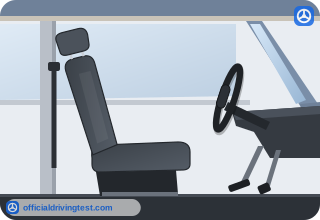
Before you start the engine, how should you adjust the driver’s seat?
- As far back as possible so you can stretch your legs fully
- High enough that your head touches the roof of the car
- Low enough that the dashboard blocks glare from the sun
- To improve visibility and so all controls can be comfortably reached
Show answer
Correct answer: To improve visibility and so all controls can be comfortably reached
The driver’s seat should be adjusted to improve visibility and so all controls can be comfortably reached.
Source: Nevada Driver's Handbook (March 2024 (DMV 700)), page 27 · Open this page in the manual (Manual page 27)
-
What should you make sure of regarding the windshield and windows before you start the engine?
- They are tinted
- They are clean
- They are fully open
- They are partly fogged
Show answer
Correct answer: They are clean
Before starting the engine, make sure the windshield and windows are clean.
Source: Nevada Driver's Handbook (March 2024 (DMV 700)), page 27 · Open this page in the manual (Manual page 27)
-
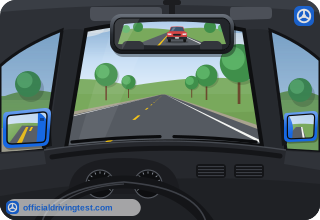
What should you check about the rear and side mirrors before you start the engine?
- That they are folded in against the car
- That they are properly adjusted
- That they are tilted down toward the road surface
- That they are covered to cut glare
Show answer
Correct answer: That they are properly adjusted
Before starting the engine, check the rear and side mirrors and make sure they are properly adjusted.
Source: Nevada Driver's Handbook (March 2024 (DMV 700)), page 27 · Open this page in the manual (Manual page 27)
-
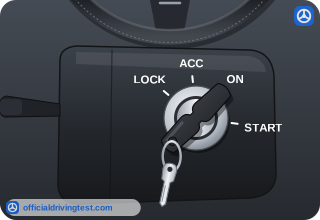
When you turn on the engine, what should you check?
- Oil filter and spark plug condition
- Brake fluid color and battery age
- Fuel level and warning lights
- Wiper blade wear and window tint
Show answer
Correct answer: Fuel level and warning lights
When you turn on the engine, check the fuel level and warning lights.
Source: Nevada Driver's Handbook (March 2024 (DMV 700)), page 27 · Open this page in the manual (Manual page 27)
-
When you turn on the engine, which of these should you turn on if needed?
- Hazard flashers, cruise control and rear defroster
- Headlights, turn signal and windshield wipers
- High beams, fog lights and the horn
- Parking brake, emergency lights and cruise control
Show answer
Correct answer: Headlights, turn signal and windshield wipers
When you turn on the engine, turn on headlights, turn signal and windshield wipers if needed.
Source: Nevada Driver's Handbook (March 2024 (DMV 700)), page 27 · Open this page in the manual (Manual page 27)
-
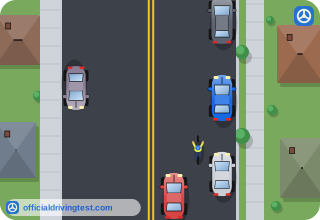
Before you move your vehicle, what should you do?
- Turn on the hazard flashers and wait for traffic to stop
- Check only the rear mirror and then pull out smoothly
- Stop, look and listen for traffic, bicyclists and pedestrians
- Sound your horn to warn bicyclists and pedestrians first
Show answer
Correct answer: Stop, look and listen for traffic, bicyclists and pedestrians
Before moving the vehicle, stop, look and listen for traffic, bicyclists and pedestrians.
Source: Nevada Driver's Handbook (March 2024 (DMV 700)), page 27 · Open this page in the manual (Manual page 27)
-
Where is the recommended tire pressure (psi) located?
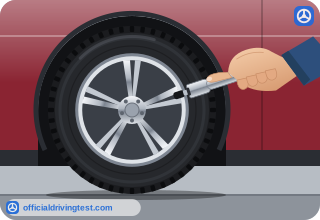
- The vehicle owner’s manual or the driver’s side door jamb
- The registration card or the insurance card kept in the glove box
- The dashboard warning light panel and the fuel gauge only
- The spare tire cover or the floor of the trunk compartment
Show answer
Correct answer: The vehicle owner’s manual or the driver’s side door jamb
Check tire pressure with a gauge using the recommended psi in the vehicle owner’s manual or on the driver’s side door jamb.
Source: Nevada Driver's Handbook (March 2024 (DMV 700)), page 27 · Open this page in the manual (Manual page 27)
-
How often should you check your tires for wear and damage problems?
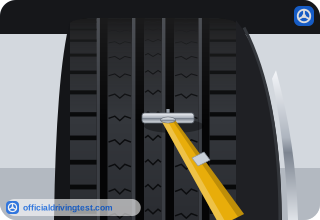
- Once every month, or before a long road trip
- Once every year, or at each oil change
- Only when a tire looks flat or a warning light comes on
- Once every three months, or after every long trip
Show answer
Correct answer: Once every month, or before a long road trip
Check tires for wear and damage once every month, or before you go on a long road trip.
Source: Nevada Driver's Handbook (March 2024 (DMV 700)), page 27 · Open this page in the manual (Manual page 27)
-
In the penny test for tire wear, where on the tire do you place Lincoln’s head into a groove?
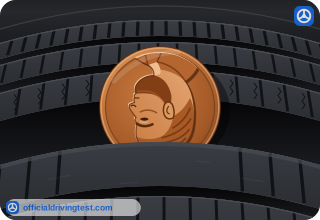
- At a point where the tread appears to be highest
- On the sidewall next to the tire’s rim
- At a point where the tread appears to be lowest
- Along the outer edge of the tire only
Show answer
Correct answer: At a point where the tread appears to be lowest
In the penny test, select the point on the tire where the tread appears to be lowest and place Lincoln’s head into one of the grooves.
Source: Nevada Driver's Handbook (March 2024 (DMV 700)), page 27 · Open this page in the manual (Manual page 27)
-
In the penny test, the tire has a safe amount of tread if what is true?
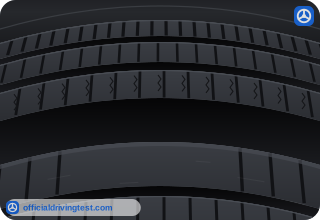
- None of Lincoln’s head is covered by the tread
- Any part of Lincoln’s head is covered by the tread
- Lincoln’s whole head can be seen above the tread
- The penny falls out of the groove when you let go
Show answer
Correct answer: Any part of Lincoln’s head is covered by the tread
If any part of Lincoln’s head is covered by the tread, the tire has a safe amount of tread.
Source: Nevada Driver's Handbook (March 2024 (DMV 700)), page 27 · Open this page in the manual (Manual page 27)
-
In the penny test, what happens when the tread goes below the safe level?
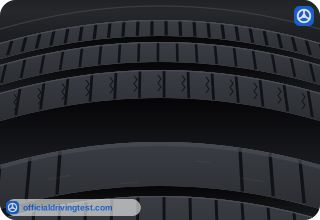
- The car’s fuel use rises, but its grip on the road is not affected
- The tire pressure rises until the car’s warning lights come on
- The tire’s wear is only cosmetic and the car handles the same
- The car’s grip on the road in adverse conditions is greatly reduced
Show answer
Correct answer: The car’s grip on the road in adverse conditions is greatly reduced
If the tread goes below the safe level, the car’s ability to grip the road in adverse conditions is greatly reduced.
Source: Nevada Driver's Handbook (March 2024 (DMV 700)), page 27 · Open this page in the manual (Manual page 27)
-
What does an anti-lock braking system (ABS) do?
- Lets the driver stop without pressing the brake pedal
- Prevents skidding and lets you steer during emergency braking
- Keeps the vehicle at a steady speed on slippery roads
- Warns the driver when the brake pads are worn out
Show answer
Correct answer: Prevents skidding and lets you steer during emergency braking
Anti-lock brakes prevent skidding and allow drivers to steer during an emergency braking situation.
Source: Nevada Driver's Handbook (March 2024 (DMV 700)), page 40 · Open this page in the manual (Manual page 40)
-
How can you find out whether your car has ABS?
- Check the tire sidewall for an ABS marking
- Press the brake pedal and listen for a clicking sound
- Ask the DMV office to check your car's registration
- Check for a lit ABS symbol just after starting the engine
Show answer
Correct answer: Check for a lit ABS symbol just after starting the engine
You can look for an illuminated ABS symbol on the dashboard right after starting the engine, check the owner's manual, or ask the dealer.
Source: Nevada Driver's Handbook (March 2024 (DMV 700)), page 40 · Open this page in the manual (Manual page 40)
-
How do you know your ABS is not working?
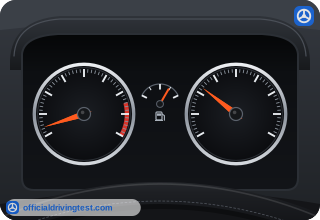
- The ABS symbol stays lit long after the engine has started
- The ABS symbol never lights up when you start the engine
- The brake pedal feels firm during every stop
- The brakes stop working completely
Show answer
Correct answer: The ABS symbol stays lit long after the engine has started
If the ABS symbol stays lighted on the dashboard long after the car has started, the ABS is not working.
Source: Nevada Driver's Handbook (March 2024 (DMV 700)), page 40 · Open this page in the manual (Manual page 40)
-
If your ABS stops working, what happens to your conventional brakes?
- They stop working as well
- They lock up every time you brake
- They continue to work
- They work only at speeds under 25 mph
Show answer
Correct answer: They continue to work
The conventional brakes continue to work even when the ABS does not.
Source: Nevada Driver's Handbook (March 2024 (DMV 700)), page 40 · Open this page in the manual (Manual page 40)
-
What are the two types of ABS?
- Front-wheel ABS and rear-wheel ABS
- Four-wheel ABS and rear-wheel ABS
- Four-wheel ABS and all-wheel ABS
- Front-wheel ABS and four-wheel ABS
Show answer
Correct answer: Four-wheel ABS and rear-wheel ABS
The handbook describes two types of ABS: four-wheel ABS and rear-wheel ABS.
Source: Nevada Driver's Handbook (March 2024 (DMV 700)), page 40 · Open this page in the manual (Manual page 40)
-
What does rear-wheel anti-lock braking prevent?
- The rear wheels from locking up, so the back end does not skid
- The front wheels from locking up when you brake hard in a turn
- The engine from stalling when you brake hard on slippery roads
- The vehicle from rolling backward when stopped on a steep hill
Show answer
Correct answer: The rear wheels from locking up, so the back end does not skid
Rear-wheel anti-lock brakes prevent the rear wheels from locking up so the back end of the vehicle does not skid sideways.
Source: Nevada Driver's Handbook (March 2024 (DMV 700)), page 40 · Open this page in the manual (Manual page 40)
-
On which vehicles is rear-wheel anti-lock braking found?
- On all passenger cars
- On all motorcycles and trailers
- Only on some light trucks
- On every vehicle sold in Nevada
Show answer
Correct answer: Only on some light trucks
Rear-wheel anti-lock brakes are found only on some light trucks.
Source: Nevada Driver's Handbook (March 2024 (DMV 700)), page 40 · Open this page in the manual (Manual page 40)
-
What happens to ABS if you pump the brakes or remove steady pressure from the brake pedal?
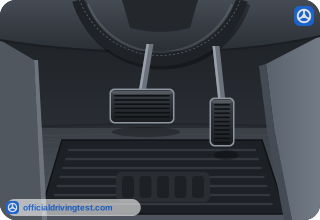
- It works faster
- It pumps harder
- It locks the wheels
- It turns off
Show answer
Correct answer: It turns off
Removing steady pressure from the brake pedal or pumping the brakes will disengage, or turn off, the ABS.
Source: Nevada Driver's Handbook (March 2024 (DMV 700)), page 40 · Open this page in the manual (Manual page 40)
-
Which turn signal should you use when exiting a roundabout?
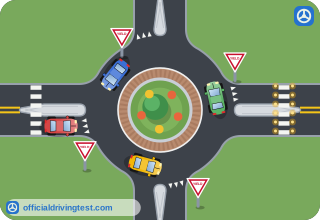
- Your left turn signal
- Your right turn signal
- Your hazard lights
- No signal, because you are already turning
Show answer
Correct answer: Your right turn signal
The handbook says to use your right turn signal when exiting a roundabout.
Source: Nevada Driver's Handbook (March 2024 (DMV 700)), page 44 · Open this page in the manual (Manual page 44)
-
Why must you use signals to show you are changing lanes, turning, slowing down, stopping or parking?
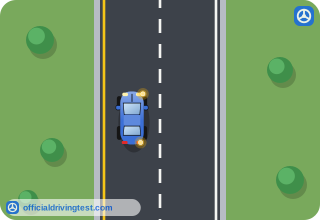
- It is only a courtesy and is never required
- It is not just common courtesy; it is also the law
- It is required only at night
- It is required only on highways
Show answer
Correct answer: It is not just common courtesy; it is also the law
Using signals to tell others what you are going to do is not just common courtesy, it is also the law.
Source: Nevada Driver's Handbook (March 2024 (DMV 700)), page 45 · Open this page in the manual (Manual page 45)
-
If the turn signals or brake lights on your car are temporarily out of order, which hand signal shows a left turn?
- Extend your left arm downward, with the palm to the rear
- Extend your left arm with the elbow bent upward at about 90 degrees
- Extend your right arm out of the open window
- Extend your left arm horizontally out of the open window
Show answer
Correct answer: Extend your left arm horizontally out of the open window
A left turn is signaled by extending the left arm horizontally out of the open window.
Source: Nevada Driver's Handbook (March 2024 (DMV 700)), page 45 · Open this page in the manual (Manual page 45)
-
If the turn signals or brake lights on your car are temporarily out of order, which hand signal shows a right turn?
- Extend your left arm, elbow bent upward at about 90 degrees
- Extend your left arm horizontally out of the open window
- Extend your left arm downward, with the palm to the rear
- Extend your left arm straight up with the palm forward
Show answer
Correct answer: Extend your left arm, elbow bent upward at about 90 degrees
A right turn is signaled by extending the left arm with the elbow bent upward at about 90 degrees.
Source: Nevada Driver's Handbook (March 2024 (DMV 700)), page 45 · Open this page in the manual (Manual page 45)
-
If the brake lights on your car are temporarily out of order, which hand signal shows that you are slowing or stopping?
- Extend your left arm horizontally out of the open window
- Extend your left arm with the elbow bent upward at about 90 degrees
- Extend your left arm downward, with the palm of the hand to the rear
- Extend your left arm upward with the palm forward
Show answer
Correct answer: Extend your left arm downward, with the palm of the hand to the rear
Slowing or stopping is signaled by extending the left arm downward with the palm to the rear.
Source: Nevada Driver's Handbook (March 2024 (DMV 700)), page 45 · Open this page in the manual (Manual page 45)
-
When must you use hand and arm signals instead of the vehicle's lights?
- Whenever you are driving on a city street at slow speed
- When your turn signals or brake lights are out of order
- Whenever it is raining or the road is wet
- Only when you are turning left at an intersection
Show answer
Correct answer: When your turn signals or brake lights are out of order
Hand signals are required when the turn signals or brake lights are temporarily out of order.
Source: Nevada Driver's Handbook (March 2024 (DMV 700)), page 45 · Open this page in the manual (Manual page 45)
-
After you enter the flow of traffic when making a turn, what should you be sure of about your turn signal?
- That it is still flashing for a few more seconds
- That it is on until you reach the next intersection
- That it is off
- That it has been switched to the hazard lights
Show answer
Correct answer: That it is off
One of the requirements for safe and legal turns is to be sure the turn signal is off after you enter the flow of traffic.
Source: Nevada Driver's Handbook (March 2024 (DMV 700)), page 45 · Open this page in the manual (Manual page 45)
-
How far ahead should you signal before changing lanes on highways or freeways?
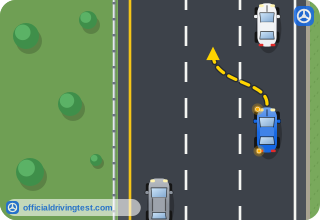
- 100 feet (10 car lengths)
- 150 feet (15 car lengths)
- 500 feet (50 car lengths)
- 300 feet (30 car lengths)
Show answer
Correct answer: 300 feet (30 car lengths)
Signal ahead 300 feet (30 car lengths) on highways or freeways before changing lanes.
Source: Nevada Driver's Handbook (March 2024 (DMV 700)), page 46 · Open this page in the manual (Manual page 46)
-
How far ahead should you signal before changing lanes on city streets?
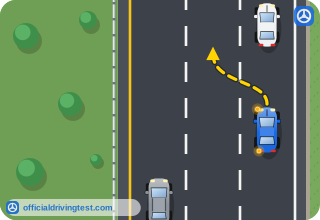
- 100 feet (10 car lengths)
- 300 feet (30 car lengths)
- 50 feet (5 car lengths)
- 200 feet (20 car lengths)
Show answer
Correct answer: 100 feet (10 car lengths)
Signal ahead 100 feet (10 car lengths) on city streets before changing lanes.
Source: Nevada Driver's Handbook (March 2024 (DMV 700)), page 46 · Open this page in the manual (Manual page 46)
-
Before changing lanes, how should you check your blind spots?
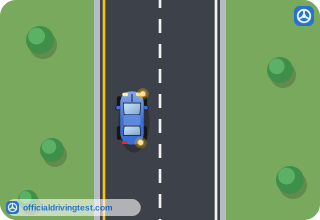
- Rely on your side-view mirrors and rear-view mirror alone
- Sound your horn and then move over at once
- Look over your shoulder and move when clear
- Glance at the rear-view mirror only, then move over
Show answer
Correct answer: Look over your shoulder and move when clear
Check blind spots by looking over your shoulder and change lanes when traffic is clear.
Source: Nevada Driver's Handbook (March 2024 (DMV 700)), page 46 · Open this page in the manual (Manual page 46)
-
Where should you avoid changing lanes?
- On a freeway
- In an intersection
- On a city street
- On a two-lane road in daylight
Show answer
Correct answer: In an intersection
The handbook says not to change lanes in an intersection.
Source: Nevada Driver's Handbook (March 2024 (DMV 700)), page 46 · Open this page in the manual (Manual page 46)
-
Which mirrors should you use to check traffic when you want to change lanes?
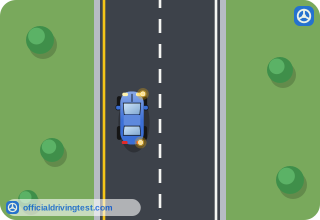
- Only the rear-view mirror
- Only the left side mirror
- Only the mirror on the side you are moving toward
- Your rear and side-view mirrors
Show answer
Correct answer: Your rear and side-view mirrors
Use your rear and side-view mirrors to check traffic when changing lanes.
Source: Nevada Driver's Handbook (March 2024 (DMV 700)), page 46 · Open this page in the manual (Manual page 46)
-
When passing on a two-lane road in business or residential areas, how far ahead should you turn on your left signal?
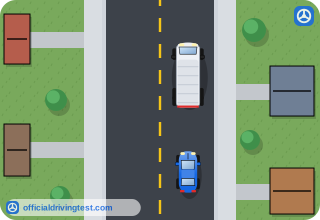
- 100 feet
- 50 feet
- 200 feet
- 300 feet
Show answer
Correct answer: 100 feet
Turn your left signal light on 100 feet ahead in business or residential areas.
Source: Nevada Driver's Handbook (March 2024 (DMV 700)), page 47 · Open this page in the manual (Manual page 47)
-
When passing on a two-lane road in areas other than business or residential areas, how far ahead should you turn on your left signal?
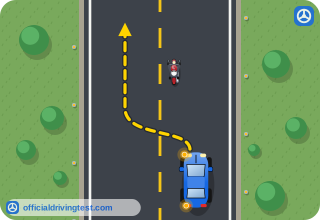
- 100 feet
- 200 feet
- 300 feet
- 500 feet
Show answer
Correct answer: 300 feet
Turn your left signal light on 300 feet ahead in other areas.
Source: Nevada Driver's Handbook (March 2024 (DMV 700)), page 47 · Open this page in the manual (Manual page 47)
-
What happens if you turn the ignition to the “lock” position while the vehicle is still in motion?
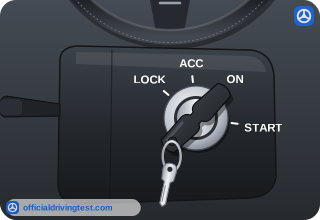
- The steering locks and you lose control
- The engine idles and the vehicle slows normally
- The brakes lock and the vehicle stops at once
- The steering becomes lighter and easier to turn
Show answer
Correct answer: The steering locks and you lose control
Turning the ignition to the lock position while moving causes the steering to lock if you try to turn the steering wheel, and you lose control of your vehicle.
Source: Nevada Driver's Handbook (March 2024 (DMV 700)), page 48 · Open this page in the manual (Manual page 48)
-
According to the handbook, what do Advanced Driver Assistance Systems (ADAS) do?
- Assist the driver but do not drive the vehicle by themselves
- Drive the vehicle so the driver does not need to pay attention
- Replace the need for mirrors and head checks
- Take over driving whenever the vehicle is moving slowly
Show answer
Correct answer: Assist the driver but do not drive the vehicle by themselves
ADAS technologies assist the driver but do not drive the vehicle by themselves.
Source: Nevada Driver's Handbook (March 2024 (DMV 700)), page 51 · Open this page in the manual (Manual page 51)
-
What is the primary purpose of vehicle warning systems technologies?
- To perform part of the driving function for the driver
- To brake automatically in every situation
- To provide warnings to the driver in specific circumstances
- To park the vehicle without driver input
Show answer
Correct answer: To provide warnings to the driver in specific circumstances
The primary purpose of vehicle warning systems technologies is to provide warnings to the driver in specific circumstances.
Source: Nevada Driver's Handbook (March 2024 (DMV 700)), page 51 · Open this page in the manual (Manual page 51)
-
How do vehicle warning systems technologies notify the driver that a crash is about to occur?
- By turning off the engine
- By sound, light, or vibration
- By shifting the vehicle into park
- By tightening the seat belts
Show answer
Correct answer: By sound, light, or vibration
Vehicle warning systems technologies notify the driver with a warning, by sound, light, or vibration, that a crash is about to occur.
Source: Nevada Driver's Handbook (March 2024 (DMV 700)), page 51 · Open this page in the manual (Manual page 51)
-
What does it mean that most vehicle warning technologies are passive?
- They automatically steer the vehicle away from a crash
- They only work when the driver turns them on manually
- They work only when the vehicle is parked or stopped
- They warn the driver but do not automatically prevent a crash
Show answer
Correct answer: They warn the driver but do not automatically prevent a crash
Passive means they warn the driver of a potential issue but do not automatically prevent a problem or crash.
Source: Nevada Driver's Handbook (March 2024 (DMV 700)), page 51 · Open this page in the manual (Manual page 51)
-
When does a back-up warning start scanning the area behind the vehicle?
- When the vehicle exceeds 25 mph
- When the driver turns on the headlights
- When the vehicle is parked
- When the driver shifts into reverse
Show answer
Correct answer: When the driver shifts into reverse
When the driver shifts into reverse, sensors scan the area behind the vehicle for the back-up warning.
Source: Nevada Driver's Handbook (March 2024 (DMV 700)), page 51 · Open this page in the manual (Manual page 51)
-
The driver should not become complacent and dependent on the back-up warning. What should the driver do while backing?
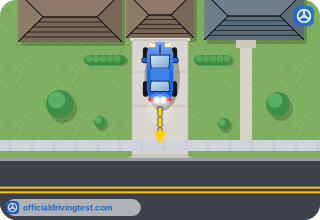
- Watch only the warning sounds and keep the wheel straight
- Check mirrors, look over the shoulder and use cameras if equipped
- Back up quickly so the sensors have less time to miss anything
- Rely on the sensors and look straight ahead through the windshield
Show answer
Correct answer: Check mirrors, look over the shoulder and use cameras if equipped
The driver should safely monitor and maneuver while backing, including checking side mirrors, rear-view mirror, over the shoulder (head checks), and camera(s), if equipped.
Source: Nevada Driver's Handbook (March 2024 (DMV 700)), page 51 · Open this page in the manual (Manual page 51)
-
How do blind spot monitors and warnings warn the driver of other vehicles in their blind spots?
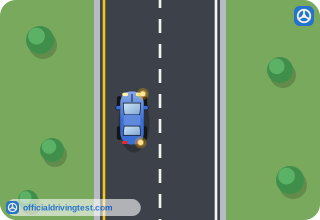
- Through display of a symbol, sound, or vibration
- Through the horn of the other vehicle
- By steering the vehicle back into its lane
- By flashing the brake lights
Show answer
Correct answer: Through display of a symbol, sound, or vibration
Blind spot monitors warn the driver of other vehicles in their blind spots through display of a symbol, sound, or vibration.
Source: Nevada Driver's Handbook (March 2024 (DMV 700)), page 51 · Open this page in the manual (Manual page 51)
-
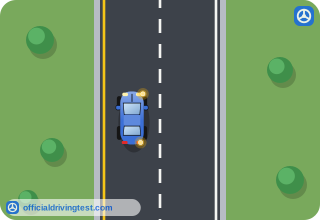
With a blind spot monitor, what should the driver always do before changing lanes?
- Wait for the monitor to display a warning symbol first
- Rely on the monitor's warning alone and skip head checks
- Check their mirrors and look over their shoulders
- Turn off the monitor and use only the turn signal
Show answer
Correct answer: Check their mirrors and look over their shoulders
The driver should always check their mirrors and look over their shoulders before changing lanes.
Source: Nevada Driver's Handbook (March 2024 (DMV 700)), page 51 · Open this page in the manual (Manual page 51)
-
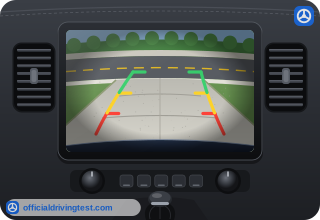
When does the rear camera activate to show the area behind the vehicle?
- When the vehicle slows below 25 mph
- When the driver shifts into reverse
- When the driver turns on the turn signal
- When the driver opens the door
Show answer
Correct answer: When the driver shifts into reverse
The rear camera engages when the driver shifts into reverse and shows the area behind the vehicle.
Source: Nevada Driver's Handbook (March 2024 (DMV 700)), page 52 · Open this page in the manual (Manual page 52)
-
When do sideview cameras show the driver an expanded view of a lane beside the vehicle?
- Only when the vehicle is traveling faster than 25 miles per hour
- Whenever the vehicle is shifted into reverse gear
- Only when the driver applies the brakes firmly
- When the turn signal is used or the feature is turned on
Show answer
Correct answer: When the turn signal is used or the feature is turned on
Sideview cameras show an expanded view of a lane beside the vehicle when the driver uses their turn signal or activates the feature manually.
Source: Nevada Driver's Handbook (March 2024 (DMV 700)), page 52 · Open this page in the manual (Manual page 52)
-
How should sideview cameras be used?
- Only when the vehicle is stopped at a traffic light
- Only when the vehicle is parked in a parking lot
- In conjunction with traditional mirrors and head checks
- Only on freeways, when changing lanes at high speed
Show answer
Correct answer: In conjunction with traditional mirrors and head checks
Sideview cameras should be used in conjunction with traditional mirrors and head checks (checking over the shoulders).
Source: Nevada Driver's Handbook (March 2024 (DMV 700)), page 52 · Open this page in the manual (Manual page 52)
-
What do surround-view or around-view monitor systems show drivers to help them park more easily?
- A virtual bird's-eye view of the vehicle's surroundings
- A close-up view of the engine compartment and tires
- A map showing the nearest available parking spaces
- A reading of the tire pressure and fuel level on screen
Show answer
Correct answer: A virtual bird's-eye view of the vehicle's surroundings
These systems help drivers park more easily by showing the vehicle’s surroundings through a virtual bird’s-eye view above the vehicle.
Source: Nevada Driver's Handbook (March 2024 (DMV 700)), page 52 · Open this page in the manual (Manual page 52)
-
In most vehicles with a surround-view monitor system, where is one camera placed?
- Inside the glove compartment
- On the roof above the windshield
- In the middle of the front bumper
- Inside each wheel well
Show answer
Correct answer: In the middle of the front bumper
In most vehicles, one camera is in the middle of the front bumper, with two more cameras looking down from the side view mirrors.
Source: Nevada Driver's Handbook (March 2024 (DMV 700)), page 52 · Open this page in the manual (Manual page 52)
-
Surround-view or around-view monitoring should be used in conjunction with what?
- Traditional mirrors and head checks
- Only the vehicle's display monitor
- Audio warnings alone
- Parking sensors instead of mirrors
Show answer
Correct answer: Traditional mirrors and head checks
Surround-View or Around-View Monitoring should be used in conjunction with traditional mirrors and head checks (checking over the shoulders).
Source: Nevada Driver's Handbook (March 2024 (DMV 700)), page 52 · Open this page in the manual (Manual page 52)
-
What does a curve speed warning alert the driver to?
- That the curve ahead has been closed to all traffic
- That the vehicle is drifting out of its lane too far
- That another vehicle is in the blind spot of the car
- That they are approaching a curve or exit at an unsafe speed
Show answer
Correct answer: That they are approaching a curve or exit at an unsafe speed
The vehicle alerts the driver through sound, vibration, or both that they are approaching a curve or exit at an unsafe speed.
Source: Nevada Driver's Handbook (March 2024 (DMV 700)), page 52 · Open this page in the manual (Manual page 52)
-
Even with a curve speed warning, what should the driver do when approaching curves or exits?
- Rely on the warning to set the speed
- Maintain a safe speed
- Slow down only after the alert sounds
- Keep a constant speed until alerted
Show answer
Correct answer: Maintain a safe speed
The driver should not become dependent on curve speed warnings and should maintain a safe speed while driving and approaching curves or exits.
Source: Nevada Driver's Handbook (March 2024 (DMV 700)), page 52 · Open this page in the manual (Manual page 52)
-
At about what speed do detection technologies generally alert the driver to a bicycle, pedestrian, or obstacle at low speeds?
- Around 25 mph
- Around 10 mph
- Around 45 mph
- Around 55 mph
Show answer
Correct answer: Around 25 mph
Detection technologies alert the driver while driving at low speeds, generally around 25 mph.
Source: Nevada Driver's Handbook (March 2024 (DMV 700)), page 52 · Open this page in the manual (Manual page 52)
-
Some detection systems can detect bicyclists, pedestrians, or obstacles only when they are:
- Behind the vehicle and moving in the opposite direction
- On either side of the vehicle and standing still
- Directly in front of the vehicle and moving in the same direction
- Anywhere within 25 feet of the vehicle
Show answer
Correct answer: Directly in front of the vehicle and moving in the same direction
Some systems can only detect bicyclists, pedestrians, or obstacles directly in front of the vehicle and moving in the same direction.
Source: Nevada Driver's Handbook (March 2024 (DMV 700)), page 52 · Open this page in the manual (Manual page 52)
-
What do some versions of obstacle detection do?
- Steer the vehicle around the obstacle
- Apply the vehicle's brakes automatically
- Turn the headlights toward the obstacle
- Sound the horn to warn the obstacle
Show answer
Correct answer: Apply the vehicle's brakes automatically
Some versions of obstacle detection will apply the vehicle’s brakes automatically.
Source: Nevada Driver's Handbook (March 2024 (DMV 700)), page 52 · Open this page in the manual (Manual page 52)
-
What should drivers do so they understand how they will be warned if a system detects a bicyclist, pedestrian, or obstacle?
- Ask a driving examiner
- Test it in a parking lot with a passenger
- Watch for the dashboard to turn red
- Read the owner's manual
Show answer
Correct answer: Read the owner's manual
Drivers should read the owner’s manual so they understand how they will be warned if the system detects a bicyclist, pedestrian, or obstacle.
Source: Nevada Driver's Handbook (March 2024 (DMV 700)), page 52 · Open this page in the manual (Manual page 52)
-
What may happen to the beeps from an obstacle detection system as the vehicle moves closer to the obstacle?
- They may become slower
- They may become quieter
- They stop completely
- They may become faster
Show answer
Correct answer: They may become faster
The beeps may become faster as the vehicle moves closer to the obstacle.
Source: Nevada Driver's Handbook (March 2024 (DMV 700)), page 52 · Open this page in the manual (Manual page 52)
-
What may it mean when the beeps from an obstacle detection system become continuous?
- The system has turned itself off
- A collision may be imminent
- The obstacle has moved away
- The system is ready to brake for the driver
Show answer
Correct answer: A collision may be imminent
A collision may be imminent when the beeps become continuous.
Source: Nevada Driver's Handbook (March 2024 (DMV 700)), page 52 · Open this page in the manual (Manual page 52)
-
Where does the handbook say drivers should be especially careful to check regularly for bicyclists, pedestrians, and obstacles, and not depend on detection systems?
- In urban areas
- On rural highways at night
- On freeway on-ramps
- In school zones only
Show answer
Correct answer: In urban areas
The driver should not depend on detection and should check regularly for bicyclists, pedestrians, and obstacles, especially in urban areas.
Source: Nevada Driver's Handbook (March 2024 (DMV 700)), page 53 · Open this page in the manual (Manual page 53)
-
Will a forward collision warning system alone automatically brake for the driver?
- Yes, it always brakes at any speed
- Yes, but only below 25 mph
- No, it only warns the driver
- Yes, but only on freeways
Show answer
Correct answer: No, it only warns the driver
The warning system alone will not automatically brake for the driver; it warns so the driver can brake or swerve in time.
Source: Nevada Driver's Handbook (March 2024 (DMV 700)), page 53 · Open this page in the manual (Manual page 53)
-
Forward collision warning systems warn drivers of impending collisions with what?
- Vehicles approaching quickly from behind in the adjacent lane
- Slower-moving or stationary vehicles or other objects ahead
- Pedestrians crossing at intersections on either side of the car
- Animals crossing the road at night on rural roads
Show answer
Correct answer: Slower-moving or stationary vehicles or other objects ahead
These systems warn drivers of impending collisions with slower-moving or stationary vehicles or other objects ahead so the driver can brake or swerve in time.
Source: Nevada Driver's Handbook (March 2024 (DMV 700)), page 53 · Open this page in the manual (Manual page 53)
-
What does a high speed alert do?
- Slows the vehicle when it is speeding
- Displays the posted speed limit only
- Flashes the brake lights when the driver speeds
- Sounds if the driver is speeding
Show answer
Correct answer: Sounds if the driver is speeding
High speed alerts will sound if the driver is speeding, helping drivers maintain a safe driving speed.
Source: Nevada Driver's Handbook (March 2024 (DMV 700)), page 53 · Open this page in the manual (Manual page 53)
-
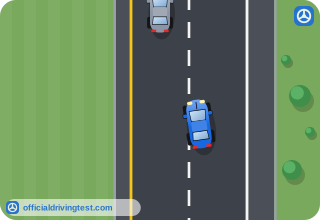
How do lane departure warning devices warn a driver who is drifting out of their lane?
- By steering the vehicle back automatically
- By applying the brakes on one side
- Using visual, vibratory, or sound warnings
- By switching on the hazard lights
Show answer
Correct answer: Using visual, vibratory, or sound warnings
Lane departure warning devices warn a driver drifting out of their lane using visual, vibratory, or sound warnings.
Source: Nevada Driver's Handbook (March 2024 (DMV 700)), page 53 · Open this page in the manual (Manual page 53)
-
What does a constant tone from parking sensors mean?
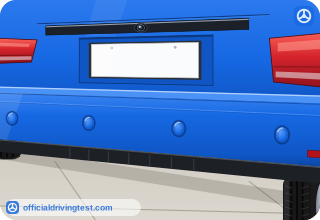
- The vehicle is too close to an object
- The parking space is large enough
- The sensors have stopped working
- The vehicle is parked correctly
Show answer
Correct answer: The vehicle is too close to an object
With parking sensors, a constant tone means the vehicle is too close to an object.
Source: Nevada Driver's Handbook (March 2024 (DMV 700)), page 53 · Open this page in the manual (Manual page 53)
-
What do rear cross-traffic alert systems do?
- Alert the driver to vehicles following too closely behind
- Alert the driver to pedestrians crossing in front of the car
- Alert the driver to vehicles about to enter the backing path
- Warn the driver when the trunk is not fully closed
Show answer
Correct answer: Alert the driver to vehicles about to enter the backing path
Rear cross-traffic alert systems alert the driver if one or more vehicles are about to enter the vehicle’s backing path.
Source: Nevada Driver's Handbook (March 2024 (DMV 700)), page 53 · Open this page in the manual (Manual page 53)
-
What is the primary purpose of vehicle driver assistance systems technologies?
- To perform part of the driving function in certain circumstances
- To warn the driver only, without ever adjusting the vehicle
- To remove the driver's responsibility for operating the vehicle
- To drive the vehicle in every circumstance without a driver
Show answer
Correct answer: To perform part of the driving function in certain circumstances
The primary purpose is to perform a component of the driving function in specific circumstances.
Source: Nevada Driver's Handbook (March 2024 (DMV 700)), page 53 · Open this page in the manual (Manual page 53)
-
What are safety critical technologies?
- Technologies that only provide conveniences for the driver
- Technologies that may prevent or reduce the severity of a crash
- Technologies that drive the vehicle in every situation
- Technologies that only warn the driver by sound
Show answer
Correct answer: Technologies that may prevent or reduce the severity of a crash
Safety critical technologies are technologies that may prevent or reduce the severity of a crash.
Source: Nevada Driver's Handbook (March 2024 (DMV 700)), page 53 · Open this page in the manual (Manual page 53)
-
What do automatic emergency braking systems do if the driver fails to respond to slow or stopped traffic or objects ahead?
- Urgently apply the brakes
- Sound the horn and flash the lights
- Steer into the next lane
- Turn off the cruise control only
Show answer
Correct answer: Urgently apply the brakes
These systems sense slow or stopped traffic or objects ahead and will urgently apply the brakes if the driver fails to respond.
Source: Nevada Driver's Handbook (March 2024 (DMV 700)), page 53 · Open this page in the manual (Manual page 53)
-
With automatic emergency braking, what should drivers continue to do?
- Rely on the system to keep a safe following distance
- Look only at the dashboard display for warnings
- Scan the road for hazards and maintain a safe following distance
- Stop watching the road ahead once the system has been switched on
Show answer
Correct answer: Scan the road for hazards and maintain a safe following distance
Drivers should continue to scan the road for hazards and maintain a safe following distance.
Source: Nevada Driver's Handbook (March 2024 (DMV 700)), page 53 · Open this page in the manual (Manual page 53)
-
What do automatic reverse braking systems do if an obstacle is detected while reversing and the driver does not react?
- Shift the vehicle into park
- Immediately apply the brakes
- Turn off the engine
- Turn the steering wheel away
Show answer
Correct answer: Immediately apply the brakes
If the driver does not react, the brakes are immediately applied to help avoid a potential crash.
Source: Nevada Driver's Handbook (March 2024 (DMV 700)), page 53 · Open this page in the manual (Manual page 53)
-
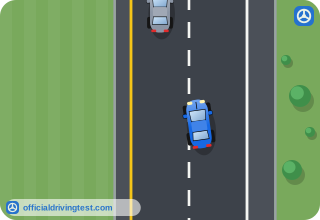
If a driver does not act when the vehicle drifts out of its lane, what may lane keeping assist do?
- Apply the brakes until the vehicle stops
- Shift the vehicle into neutral
- Turn on the hazard flashers
- Gently steer the vehicle into its lane
Show answer
Correct answer: Gently steer the vehicle into its lane
The driver should return to their lane, and if they do not act, lane keeping assist may gently steer the driver into their lane.
Source: Nevada Driver's Handbook (March 2024 (DMV 700)), page 54 · Open this page in the manual (Manual page 54)
-
How is lane keeping assist easily cancelled?
- By pressing the horn
- By applying the parking brake
- By turning on the wipers
- By nudging the wheel
Show answer
Correct answer: By nudging the wheel
Lane keeping assist is easily cancelled by nudging the wheel.
Source: Nevada Driver's Handbook (March 2024 (DMV 700)), page 54 · Open this page in the manual (Manual page 54)
-
When will a lane keeping assist feature not work?
- When the vehicle is traveling in the left lane on a freeway
- When lane lines are faint or covered with snow or dirt
- When the vehicle is carrying more than one passenger
- When the headlights are turned on during the day
Show answer
Correct answer: When lane lines are faint or covered with snow or dirt
The feature will not work when lane lines are faint or covered with snow or dirt.
Source: Nevada Driver's Handbook (March 2024 (DMV 700)), page 54 · Open this page in the manual (Manual page 54)
-
If the gap in traffic is too small to permit a left turn, what does the left turn assist system do?
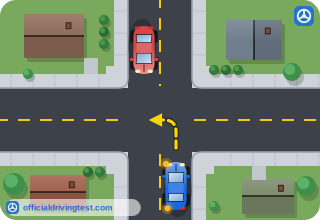
- Prevents the vehicle from moving forward
- Turns on the right turn signal
- Sounds the horn for oncoming traffic
- Shifts the vehicle into reverse
Show answer
Correct answer: Prevents the vehicle from moving forward
If the gap in traffic is too small to permit a turn, the system prevents the vehicle from moving forward.
Source: Nevada Driver's Handbook (March 2024 (DMV 700)), page 54 · Open this page in the manual (Manual page 54)
-
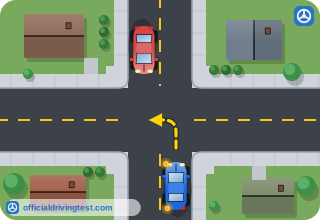
What should the driver do rather than depend on left turn crash avoidance?
- Wait for the system to confirm it is safe before turning left
- Turn quickly so the system has less traffic to monitor
- Safely scan the environment and decide when it is safe to turn
- Look only at the dash lights for warning signs
Show answer
Correct answer: Safely scan the environment and decide when it is safe to turn
The driver should not depend on left turn crash avoidance and should safely scan and monitor the driving environment ahead for hazards and determine when it is safe to turn in front of other traffic.
Source: Nevada Driver's Handbook (March 2024 (DMV 700)), page 54 · Open this page in the manual (Manual page 54)
-
What does adaptive cruise control (ACC) do?
- Keeps the vehicle centered in its lane with the steering
- Stops the vehicle automatically at every red light
- Warns the driver when another vehicle is in the blind spot
- Adjusts speed to keep a following distance the driver sets
Show answer
Correct answer: Adjusts speed to keep a following distance the driver sets
Adaptive cruise control increases or decreases speed to maintain a following distance set by the driver.
Source: Nevada Driver's Handbook (March 2024 (DMV 700)), page 54 · Open this page in the manual (Manual page 54)
-
While adaptive cruise control is working, what is the driver required to do?
- Keep both feet off the pedals
- Keep the vehicle in the right lane
- Remain aware of their surroundings
- Watch only the car ahead
Show answer
Correct answer: Remain aware of their surroundings
Sensors read the road ahead for traffic, but the driver is required to remain aware of their surroundings.
Source: Nevada Driver's Handbook (March 2024 (DMV 700)), page 54 · Open this page in the manual (Manual page 54)
-
What does the handbook advise about using adaptive cruise control in bad weather and other unsafe driving conditions?
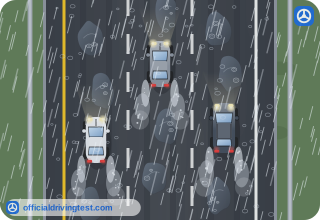
- It is advised not to use it
- Use it with a longer following distance
- Use it only on freeways
- Use it at the highest following-distance setting
Show answer
Correct answer: It is advised not to use it
In bad weather and other unsafe driving conditions, it is advised not to use ACC.
Source: Nevada Driver's Handbook (March 2024 (DMV 700)), page 54 · Open this page in the manual (Manual page 54)
-
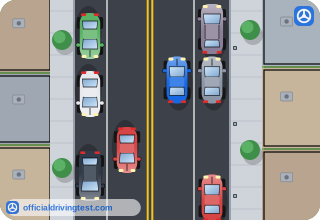
Who is responsible for braking when using automatic parallel parking?
- The vehicle's system
- The examiner
- The driver
- The parking sensor
Show answer
Correct answer: The driver
With automatic parallel parking, the driver is responsible for braking.
Source: Nevada Driver's Handbook (March 2024 (DMV 700)), page 54 · Open this page in the manual (Manual page 54)
-
Which of these may be among the prompts from a vehicle's automatic parallel parking feature?
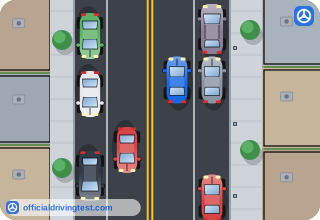
- Taking hands off the steering wheel
- Taking your foot off the brake
- Turning off the engine
- Opening the driver's door
Show answer
Correct answer: Taking hands off the steering wheel
The prompts may include pulling in front of the space, shifting into reverse, and taking hands off the steering wheel.
Source: Nevada Driver's Handbook (March 2024 (DMV 700)), page 54 · Open this page in the manual (Manual page 54)
-
At what levels of driving automation under the SAE J3016 standard does an autonomous vehicle function, according to the handbook's definition?
- Level 0, 1, or 2
- Level 1 only
- Level 2 only
- Level 3, 4, or 5
Show answer
Correct answer: Level 3, 4, or 5
An autonomous vehicle is equipped with an automated driving system designed to function at a level of driving automation of level 3, 4, or 5.
Source: Nevada Driver's Handbook (March 2024 (DMV 700)), page 55 · Open this page in the manual (Manual page 55)
-
What range of levels does the SAE classification system use for driving automation?
- One to three
- Zero to five
- One to ten
- Zero to ten
Show answer
Correct answer: Zero to five
The SAE levels range from zero to five (0-5).
Source: Nevada Driver's Handbook (March 2024 (DMV 700)), page 55 · Open this page in the manual (Manual page 55)
-
The SAE levels start with vehicles without this technology and end with what?
- Self-driving vehicles
- Vehicles with only warning systems
- Vehicles with adaptive cruise control
- Vehicles with automatic parking
Show answer
Correct answer: Self-driving vehicles
The levels start with vehicles without this technology and end with self-driving vehicles.
Source: Nevada Driver's Handbook (March 2024 (DMV 700)), page 55 · Open this page in the manual (Manual page 55)
-
Who developed the classification system that defines the degree of driving automation a car and its equipment may have to offer?
- The Nevada Department of Motor Vehicles
- The Nevada Highway Patrol training unit
- The Society of Automotive Engineers (SAE)
- The Nevada Legislature and the DMV
Show answer
Correct answer: The Society of Automotive Engineers (SAE)
The Society of Automotive Engineers (SAE) developed the classification system for the degree of driving automation.
Source: Nevada Driver's Handbook (March 2024 (DMV 700)), page 55 · Open this page in the manual (Manual page 55)
-
Headlights are legally required from when until when?
- From sunset until sunrise
- From one hour after sunset until one hour before sunrise
- From a half hour after sunset until a half hour before sunrise
- From 6:00 PM until 6:00 AM every day
Show answer
Correct answer: From a half hour after sunset until a half hour before sunrise
Nevada requires headlights from a half hour after sunset until a half hour before sunrise.
Source: Nevada Driver's Handbook (March 2024 (DMV 700)), page 56 · Open this page in the manual (Manual page 56)
-
Headlights are legally required whenever persons or vehicles cannot be clearly seen at what distance?
- 500 feet
- 1,000 feet
- 300 feet
- 100 feet
Show answer
Correct answer: 1,000 feet
Headlights are required whenever persons or vehicles cannot be clearly seen at a distance of 1,000 feet.
Source: Nevada Driver's Handbook (March 2024 (DMV 700)), page 56 · Open this page in the manual (Manual page 56)
-
Which of these is a time when headlights are legally required?
- Only when driving on a freeway
- Only when driving faster than 45 mph
- Only when another vehicle is following you
- When there is insufficient light
Show answer
Correct answer: When there is insufficient light
Headlights are legally required when there is insufficient light, among other times.
Source: Nevada Driver's Handbook (March 2024 (DMV 700)), page 56 · Open this page in the manual (Manual page 56)
-
Which of these situations requires you to use your headlights by law?
- When directed by a traffic control device
- When a vehicle is following you closely
- When you are driving below 25 mph
- When you are parked on a city street
Show answer
Correct answer: When directed by a traffic control device
Headlights are legally required when directed by an official traffic control device.
Source: Nevada Driver's Handbook (March 2024 (DMV 700)), page 56 · Open this page in the manual (Manual page 56)
-
It is advisable to use your headlights when driving in which conditions?
- Dry, sunny weather
- Light wind only
- Rain, snow or fog
- Heavy traffic only
Show answer
Correct answer: Rain, snow or fog
The handbook says it is advisable to use headlights in rain, snow or fog.
Source: Nevada Driver's Handbook (March 2024 (DMV 700)), page 56 · Open this page in the manual (Manual page 56)
-
Where does the handbook say to use high beams at night?
- In heavy city traffic
- In open country
- Behind another vehicle
- Near oncoming vehicles
Show answer
Correct answer: In open country
High beams are for open country at night; change to low beams near other vehicles.
Source: Nevada Driver's Handbook (March 2024 (DMV 700)), page 56 · Open this page in the manual (Manual page 56)
-
You are using high beams at night. How far before oncoming vehicles should you change to low beams?
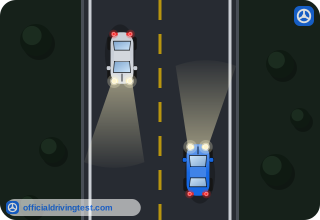
- At least 250 feet
- At least 100 feet
- At least 1,000 feet
- At least 500 feet
Show answer
Correct answer: At least 500 feet
Change to low beams when you are at least 500 feet before any oncoming vehicles.
Source: Nevada Driver's Handbook (March 2024 (DMV 700)), page 56 · Open this page in the manual (Manual page 56)
-
You are using high beams at night behind another vehicle. How far before that vehicle should you change to low beams?
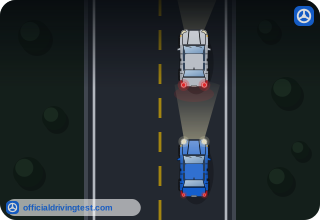
- At least 300 feet
- At least 100 feet
- At least 200 feet
- At least 800 feet
Show answer
Correct answer: At least 300 feet
Change to low beams 300 feet before any vehicle you are following.
Source: Nevada Driver's Handbook (March 2024 (DMV 700)), page 56 · Open this page in the manual (Manual page 56)
-
Why may drivers flash their headlights?
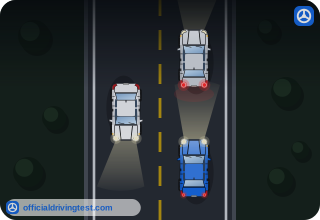
- To tell oncoming drivers to switch to low beams
- To signal that you are about to slow down
- To warn a driver ahead that you intend to pass
- To thank a driver who has let you merge ahead
Show answer
Correct answer: To warn a driver ahead that you intend to pass
The handbook says drivers may flash the headlights to warn a driver ahead that they intend to pass.
Source: Nevada Driver's Handbook (March 2024 (DMV 700)), page 56 · Open this page in the manual (Manual page 56)
-
A driver should not drive with just which lights on?
- The low-beam headlights
- The parking lights
- The high-beam headlights
- The headlights and tail lights
Show answer
Correct answer: The parking lights
The handbook says drivers should not drive with just the parking lights on.
Source: Nevada Driver's Handbook (March 2024 (DMV 700)), page 56 · Open this page in the manual (Manual page 56)
-
What is the gross vehicle weight (GVW)?
- The weight carried by one axle of a single vehicle
- The total weight of a single vehicle plus its load
- The weight a maker rates for a vehicle and trailer
- The weight of the empty vehicle without any load
Show answer
Correct answer: The total weight of a single vehicle plus its load
Gross vehicle weight is the total weight of a single vehicle plus its load.
Source: Nevada Driver's Handbook (March 2024 (DMV 700)), page 68 · Open this page in the manual (Manual page 68)
-
What is the gross combination weight (GCW)?
- The weight of the trailer tongue pressing on the hitch ball
- The most weight that one tire can safely carry at a set pressure
- The weight of one axle plus the tires and wheels on it
- The total weight of a powered unit plus trailer(s) plus the load
Show answer
Correct answer: The total weight of a powered unit plus trailer(s) plus the load
Gross combination weight is the total weight of a powered unit plus trailer(s) plus the load.
Source: Nevada Driver's Handbook (March 2024 (DMV 700)), page 68 · Open this page in the manual (Manual page 68)
-
What is the gross combination weight rating (GCWR)?
- The combined loaded weight the maker specifies for a vehicle and its trailing vehicle
- The total weight of a single vehicle plus its load, measured on a scale
- The weight that one axle or one set of axles transmits to the ground
- The most weight that a coupling device is able to pull or carry
Show answer
Correct answer: The combined loaded weight the maker specifies for a vehicle and its trailing vehicle
The GCWR is the weight specified by the manufacturer as the combined loaded weight of that vehicle and a trailing vehicle.
Source: Nevada Driver's Handbook (March 2024 (DMV 700)), page 68 · Open this page in the manual (Manual page 68)
-
What does the term axle weight mean?
- The total weight of the whole vehicle plus its load on the road
- The weight the manufacturer rates for a combined vehicle and trailer
- The weight transmitted to the ground by one axle or one set of axles
- The weight of the suspension springs and shock absorbers on a vehicle
Show answer
Correct answer: The weight transmitted to the ground by one axle or one set of axles
Axle weight is the weight transmitted to the ground by one axle or one set of axles.
Source: Nevada Driver's Handbook (March 2024 (DMV 700)), page 68 · Open this page in the manual (Manual page 68)
-
Where is the tire load rating stated?
- On the trailer tongue
- On the side of each tire
- On the fifth-wheel skid plate
- On the coupler safety latch
Show answer
Correct answer: On the side of each tire
The tire load rating, the maximum safe weight a tire can carry at a specified pressure, is stated on the side of each tire.
Source: Nevada Driver's Handbook (March 2024 (DMV 700)), page 68 · Open this page in the manual (Manual page 68)
-
What are coupling devices rated for?
- The number of axles they are able to connect
- The length of trailer they are able to join
- The speed at which a trailer may be towed
- The maximum weight they can pull and/or carry
Show answer
Correct answer: The maximum weight they can pull and/or carry
Coupling devices are rated for the maximum weight they can pull and/or carry.
Source: Nevada Driver's Handbook (March 2024 (DMV 700)), page 68 · Open this page in the manual (Manual page 68)
-
When loading a trailer, how should the load or cargo be distributed for safe handling?
- As low to the ground as possible
- As high as possible
- Piled up toward the top of the trailer
- Mostly at the very back of the trailer
Show answer
Correct answer: As low to the ground as possible
The higher the center of gravity, the more likely a vehicle is to overturn, so the load should be as low to the ground as possible.
Source: Nevada Driver's Handbook (March 2024 (DMV 700)), page 69 · Open this page in the manual (Manual page 69)
-
Where should the heaviest items be put when loading?
- On top of the lightest items so they are easy to reach
- In the highest storage compartments near the roof
- Under the lightest parts or in the lower storage compartments
- Along the front edge of the trailer roof
Show answer
Correct answer: Under the lightest parts or in the lower storage compartments
The heaviest items go under the lightest parts or in the lower storage compartments to keep the center of gravity low.
Source: Nevada Driver's Handbook (March 2024 (DMV 700)), page 69 · Open this page in the manual (Manual page 69)
-
What can too much weight on the steering axle do?
- Make the brakes work better on downhill grades
- Make steering difficult and damage the steering axle and tires
- Make the steering too light to turn the vehicle safely
- Improve traction on the drive wheels in bad weather
Show answer
Correct answer: Make steering difficult and damage the steering axle and tires
Too much weight on the steering axle can make steering difficult and cause damage to the steering axle and tires.
Source: Nevada Driver's Handbook (March 2024 (DMV 700)), page 69 · Open this page in the manual (Manual page 69)
-
What can happen when weight is shifted too far to the rear so the front axle is under-loaded?
- The steering becomes very stiff and heavy to turn at all
- The drive wheels always get much better traction on roads
- The trailer can no longer overturn at all in any curve
- The steering axle weight can be too light to steer safely
Show answer
Correct answer: The steering axle weight can be too light to steer safely
Under-loaded front axles, caused by shifting the weight too far to the rear, can make the steering axle weight too light to steer safely.
Source: Nevada Driver's Handbook (March 2024 (DMV 700)), page 69 · Open this page in the manual (Manual page 69)
-
What can too little weight on the driving axles cause?
- Poor traction and drive wheels that spin easily
- Shorter stopping distances on dry roads
- Better balance and handling in bad weather
- A lower center of gravity for the vehicle
Show answer
Correct answer: Poor traction and drive wheels that spin easily
Too little weight on the driving axles can cause poor traction, and the drive wheels may spin easily.
Source: Nevada Driver's Handbook (March 2024 (DMV 700)), page 69 · Open this page in the manual (Manual page 69)
-
What are the two things a driver can do to prevent a rollover with a trailer?
- Go quickly around turns and keep the heaviest cargo on top of the load
- Swerve early around every hazard and load the trailer evenly up high
- Go slowly around turns and keep the cargo as close to the ground as possible
- Brake hard in curves and keep the cargo toward the front of the trailer
Show answer
Correct answer: Go slowly around turns and keep the cargo as close to the ground as possible
To prevent a rollover, go slowly around turns and keep the cargo as close to the ground as possible.
Source: Nevada Driver's Handbook (March 2024 (DMV 700)), page 69 · Open this page in the manual (Manual page 69)
-
What is more likely on flatbed trailers than on other trailers?
- The trailer ball coming loose from the tongue
- The load shifting to the side or falling off
- The kingpin bending on every trip
- The trailer brakes locking by themselves
Show answer
Correct answer: The load shifting to the side or falling off
On flatbed trailers there is a greater chance that the load will shift to the side or fall off.
Source: Nevada Driver's Handbook (March 2024 (DMV 700)), page 69 · Open this page in the manual (Manual page 69)
-
What does a load-distributing hitch do?
- It moves all of the tongue load onto the rear axle of the tow vehicle only
- It replaces the need for safety chains between the vehicle and the trailer
- It locks the trailer brakes whenever the tow vehicle slows down a little
- It distributes the tongue load to all axles of both the tow vehicle and the trailer
Show answer
Correct answer: It distributes the tongue load to all axles of both the tow vehicle and the trailer
A load-distributing hitch spreads the tongue load over all axles of both the tow vehicle and the trailer, which helps stabilize the tow vehicle.
Source: Nevada Driver's Handbook (March 2024 (DMV 700)), page 69 · Open this page in the manual (Manual page 69)
-
When hitching a trailer with a ball-and-hitch coupling, how should the coupler safety latch be?
- Secured in the down position
- Left open in the up position
- Removed from the coupler
- Held by the safety chains only
Show answer
Correct answer: Secured in the down position
When hitching with a ball-and-hitch coupling, the coupler safety latch must be secured in the down position.
Source: Nevada Driver's Handbook (March 2024 (DMV 700)), page 69 · Open this page in the manual (Manual page 69)
-
When hitching a trailer with a ball-and-hitch coupling, what should be done with the safety chains?
- They are attached and laid straight
- They are left loose in the trailer
- They are attached and crossed
- They are wrapped around the tow ball
Show answer
Correct answer: They are attached and crossed
The safety chains should be attached and crossed.
Source: Nevada Driver's Handbook (March 2024 (DMV 700)), page 69 · Open this page in the manual (Manual page 69)
-
When hitching with a ball-and-hitch coupling, how should the ball be sitting in the coupler?
- Resting loosely
- Seated firmly
- Tilted to one side
- Held by the latch only
Show answer
Correct answer: Seated firmly
The ball should be seated firmly in the coupler.
Source: Nevada Driver's Handbook (March 2024 (DMV 700)), page 69 · Open this page in the manual (Manual page 69)
-
How is the ball attachment kept in the mounting attachment of the towing vehicle?
- It is held in only by the weight of the trailer tongue
- It is tied in place with the trailer safety chains
- It is held in place only by the electric lines
- It is locked in with the pin and clip or another locking device
Show answer
Correct answer: It is locked in with the pin and clip or another locking device
The ball attachment must be locked into the mounting attachment of the towing vehicle with the pin and clip or other locking device.
Source: Nevada Driver's Handbook (March 2024 (DMV 700)), page 69 · Open this page in the manual (Manual page 69)
-
Where is a fifth-wheel hitch mounted?
- On the bed of a truck
- On the front bumper of a car
- Under the trailer tongue
- On the roof of the vehicle
Show answer
Correct answer: On the bed of a truck
A fifth-wheel hitch is mounted to the bed of a truck and used with a fifth-wheel trailer.
Source: Nevada Driver's Handbook (March 2024 (DMV 700)), page 69 · Open this page in the manual (Manual page 69)
-
Which part at the front of a fifth-wheel trailer connects to the hitch?
- A ball
- A tongue
- A kingpin
- An A-frame coupler
Show answer
Correct answer: A kingpin
A fifth-wheel trailer has a kingpin at the end of the coupling unit on the front of the trailer.
Source: Nevada Driver's Handbook (March 2024 (DMV 700)), page 69 · Open this page in the manual (Manual page 69)
-
What is a disadvantage of a fifth-wheel hitch?
- It makes balance problems very likely to occur
- It takes up most of the space in the truck bed
- It cannot be used with a fifth-wheel trailer
- It spreads the load to every axle of the truck
Show answer
Correct answer: It takes up most of the space in the truck bed
A disadvantage of the fifth-wheel hitch is that it takes up most of the space in the truck bed and needs the space behind it kept clear for turning corners.
Source: Nevada Driver's Handbook (March 2024 (DMV 700)), page 69 · Open this page in the manual (Manual page 69)
-
What should you make sure of before backing your vehicle under a fifth-wheel trailer?
- That the trailer brakes are released
- That the safety chains are crossed
- That the release arm is open
- That the trailer brakes are locked
Show answer
Correct answer: That the trailer brakes are locked
Before backing under the trailer, make sure the trailer brakes are locked.
Source: Nevada Driver's Handbook (March 2024 (DMV 700)), page 69 · Open this page in the manual (Manual page 69)
-
On a fifth-wheel hitch, what does it mean if the locking lever is not locked after the jaws close around the kingpin?
- The coupling is not seated properly and should be fixed before driving
- The coupling is seated correctly and the unit is ready to drive
- The trailer brakes are now locked, so the coupling is just fine
- The kingpin has been greased and the platform is not cracked
Show answer
Correct answer: The coupling is not seated properly and should be fixed before driving
If the locking lever is not locked, the coupling is not seated properly and should be fixed before driving the coupled unit.
Source: Nevada Driver's Handbook (March 2024 (DMV 700)), page 69 · Open this page in the manual (Manual page 69)
-
When hitching a fifth-wheel trailer, how much space should there be between the upper and lower fifth-wheel coupling?
- A gap of a few inches
- A thin layer of sand
- None
- A small amount of slack
Show answer
Correct answer: None
There should be no space between the upper and lower fifth-wheel coupling.
Source: Nevada Driver's Handbook (March 2024 (DMV 700)), page 70 · Open this page in the manual (Manual page 70)
-
When hitching a fifth-wheel trailer, how should the trailer sit on the fifth-wheel skid plate?
- Tilted toward the rear
- Lying flat
- Raised on one side
- Hanging from the kingpin
Show answer
Correct answer: Lying flat
The trailer should be lying flat on the fifth-wheel skid plate.
Source: Nevada Driver's Handbook (March 2024 (DMV 700)), page 70 · Open this page in the manual (Manual page 70)
-
Why should the fifth-wheel plate be greased as required?
- To keep the electric lines tight
- To lock the trailer brakes
- To raise the trailer height
- To prevent steering problems
Show answer
Correct answer: To prevent steering problems
The fifth-wheel plate is greased as required to prevent steering problems.
Source: Nevada Driver's Handbook (March 2024 (DMV 700)), page 70 · Open this page in the manual (Manual page 70)
-
How do you unlock a fifth-wheel?
- Pull the release handle to the open position
- Push the release handle to the closed position
- Lock the trailer brakes and back up quickly
- Tighten the safety chains and pull forward
Show answer
Correct answer: Pull the release handle to the open position
To unlock the fifth-wheel, pull the release handle to the open position.
Source: Nevada Driver's Handbook (March 2024 (DMV 700)), page 70 · Open this page in the manual (Manual page 70)
-
What should be true of the electric lines when hitching a fifth-wheel trailer?
- They are spliced where they are too long
- They are wrapped tightly around the kingpin
- They are not chafed, spliced or worn
- They are left unconnected until the trip starts
Show answer
Correct answer: They are not chafed, spliced or worn
When hitching a fifth-wheel trailer, the electric lines should not be chafed, spliced, or worn.
Source: Nevada Driver's Handbook (March 2024 (DMV 700)), page 70 · Open this page in the manual (Manual page 70)
-
How can you test the truck and trailer connection for security during the pre-trip inspection?
- Back up quickly with the trailer brakes released and then check all the lights on the trailer
- Gently pull forward in low gear against the locked trailer brakes and then look at the connection
- Drive at highway speed for a mile and then listen for any noise coming from the hitch
- Lift the trailer tongue by hand and then look at the safety chains and the electric lines
Show answer
Correct answer: Gently pull forward in low gear against the locked trailer brakes and then look at the connection
The connection is tested by gently pulling forward in low gear against the locked trailer brakes and then looking at the connection.
Source: Nevada Driver's Handbook (March 2024 (DMV 700)), page 70 · Open this page in the manual (Manual page 70)
-
How should the electric lines and chains from the towing vehicle to the trailer be?
- Pulled as tight as possible
- Loose enough to drag on the road
- Removed during turns
- Secure but with enough slack for turns
Show answer
Correct answer: Secure but with enough slack for turns
The electric lines and chains should be secure but allow enough slack for turns.
Source: Nevada Driver's Handbook (March 2024 (DMV 700)), page 70 · Open this page in the manual (Manual page 70)
-
As part of the pre-trip inspection, what should you ensure about outside storage compartment doors?
- They are latched securely or locked
- They are removed before the trip
- They are left unlatched for quick access
- They are taped shut with the trailer lights on
Show answer
Correct answer: They are latched securely or locked
Part of the pre-trip inspection is to ensure all outside storage compartment doors are latched securely or locked.
Source: Nevada Driver's Handbook (March 2024 (DMV 700)), page 70 · Open this page in the manual (Manual page 70)
-
When should you inspect the trailer and load-securing devices again after beginning an extended trip?
- Within 5 miles
- Within 100 miles
- Within 50 miles
- Within 200 miles
Show answer
Correct answer: Within 50 miles
The trailer and load-securing devices should be inspected again within 50 miles after beginning an extended trip.
Source: Nevada Driver's Handbook (March 2024 (DMV 700)), page 70 · Open this page in the manual (Manual page 70)
-
After the 50-mile check on an extended trip, when should you inspect the trailer again?
- After you have driven for 1 hour or 25 miles
- After you have driven for 3 hours or 150 miles
- After you have driven for 6 hours or 400 miles
- Only when you reach your destination
Show answer
Correct answer: After you have driven for 3 hours or 150 miles
After making adjustments, inspect again after driving for 3 hours or 150 miles.
Source: Nevada Driver's Handbook (March 2024 (DMV 700)), page 70 · Open this page in the manual (Manual page 70)
-
Why should you signal your intentions when towing?
- It is a courtesy but it is not a legal requirement
- It is required only on freeways
- It is needed only when the trailer is empty
- It is important for safety and it is also the law
Show answer
Correct answer: It is important for safety and it is also the law
Other drivers cannot know what you will do until you tell them, and signaling is the law.
Source: Nevada Driver's Handbook (March 2024 (DMV 700)), page 70 · Open this page in the manual (Manual page 70)
-
When backing with a trailer, which way should you turn the steering wheel compared with backing a single vehicle?
- In the same direction
- Straight ahead only
- Half a turn toward the curb
- In the opposite direction
Show answer
Correct answer: In the opposite direction
When backing with a trailer you turn the steering wheel in the opposite direction from the way you turn it when backing a single vehicle.
Source: Nevada Driver's Handbook (March 2024 (DMV 700)), page 71 · Open this page in the manual (Manual page 71)
-
When backing with a trailer, how should you correct the trailer drifting off course?
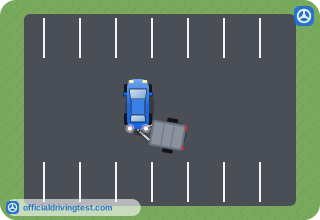
- Turn the top of the steering wheel in the direction of the drift
- Turn the top of the steering wheel away from the drift
- Brake hard and stop at once
- Speed up to straighten the trailer
Show answer
Correct answer: Turn the top of the steering wheel in the direction of the drift
As soon as you see the trailer getting off course, you correct it by turning the top of the steering wheel in the direction of the drift.
Source: Nevada Driver's Handbook (March 2024 (DMV 700)), page 71 · Open this page in the manual (Manual page 71)
-
When backing with a trailer, toward which side should you back and turn whenever possible?
- The passenger's side
- The side with more space
- The driver's side
- The side with the curb
Show answer
Correct answer: The driver's side
Back and turn toward the driver's side whenever possible, because backing toward the right side is very dangerous since you can't see as well.
Source: Nevada Driver's Handbook (March 2024 (DMV 700)), page 71 · Open this page in the manual (Manual page 71)
-
How fast should you back when backing with a trailer?
- At about the speed of traffic behind you
- As slowly as possible
- At a moderate speed to keep control
- Quickly, to clear the area sooner
Show answer
Correct answer: As slowly as possible
Always back as slowly as possible so you can easily correct any steering errors and stop quickly if necessary.
Source: Nevada Driver's Handbook (March 2024 (DMV 700)), page 71 · Open this page in the manual (Manual page 71)
-
When backing with a trailer, what do the mirrors help you see?
- Whether the trailer brakes are locked
- Whether the safety chains are crossed
- Whether the tires are properly inflated
- Whether the trailer is drifting to one side
Show answer
Correct answer: Whether the trailer is drifting to one side
The mirrors will help you see whether the trailer is drifting to one side.
Source: Nevada Driver's Handbook (March 2024 (DMV 700)), page 71 · Open this page in the manual (Manual page 71)
-
Before backing with a trailer, what should you do to check your path?
- Get out and walk around the vehicle, checking clearance to the sides and overhead
- Look only in the rear-view mirror from the driver's seat before moving
- Sound the horn, turn on your hazard lights, and start backing right away
- Ask the traffic behind you to move far away while you start to back up
Show answer
Correct answer: Get out and walk around the vehicle, checking clearance to the sides and overhead
Before you begin, look at your line of travel, get out and walk around the vehicle, and check clearance to the sides and overhead.
Source: Nevada Driver's Handbook (March 2024 (DMV 700)), page 71 · Open this page in the manual (Manual page 71)
-
When backing a trailer, what should you do to reposition your vehicle as needed?
- Back up farther
- Turn the wheel sharply and keep backing
- Pull forward
- Raise the trailer jacks
Show answer
Correct answer: Pull forward
When backing a trailer, pull forward to reposition your vehicle as needed.
Source: Nevada Driver's Handbook (March 2024 (DMV 700)), page 71 · Open this page in the manual (Manual page 71)
-
How should a helper who is guiding you while backing a trailer stand?
- Directly behind the trailer, out of your view
- Near the back of your vehicle where you can see them
- Beside the driver's door
- Far to the side of the trailer
Show answer
Correct answer: Near the back of your vehicle where you can see them
The helper should stand near the back of your vehicle where you can see them, and you should agree on hand signals, including one for STOP, before backing.
Source: Nevada Driver's Handbook (March 2024 (DMV 700)), page 71 · Open this page in the manual (Manual page 71)
-
What should you do with your helper before you begin backing a trailer?
- Agree to use only the horn as the signal for every message
- Agree that the helper will not give any signals while you back up
- Agree that the helper will drive the vehicle while you walk around
- Work out hand signals you both understand, including one for STOP
Show answer
Correct answer: Work out hand signals you both understand, including one for STOP
Before you begin backing, work out a set of hand signals that you both understand and agree on a signal for STOP.
Source: Nevada Driver's Handbook (March 2024 (DMV 700)), page 71 · Open this page in the manual (Manual page 71)
-
When parking with a trailer, how should you try to park?
- So you will be able to pull forward when you leave
- So you will have to back out when you leave
- So the trailer blocks the lane behind you
- So you can back into the traffic lane
Show answer
Correct answer: So you will be able to pull forward when you leave
When you park, try to park so you will be able to pull forward when you leave, because backing up is always dangerous.
Source: Nevada Driver's Handbook (March 2024 (DMV 700)), page 71 · Open this page in the manual (Manual page 71)