Nevada: Vehicle controls and equipment — Getting Ready to Drive, Tire Safety and ABS Practice Test
Questions in this part include: “What should you make sure of regarding the windshield and windows before you start the engine?” · “What are the two types of ABS?”
Independent educational site · not affiliated with any government agency or DMV
Ready? Test yourself
- Instant feedback with an explanation
- Every answer cites its source in the manual
- Your best score is saved on this device
- Keyboard: press 1 to 4 to answer and Enter for the next question
Questions are original and based on the official manual "Nevada Driver's Handbook" (March 2024 (DMV 700)), Nevada Department of Motor Vehicles.
All 20 questions in this practice test
Take the test above first, then use this list to study. Tap “Show answer” to see the correct answer and explanation.
Show the questions and answersHide the questions
-
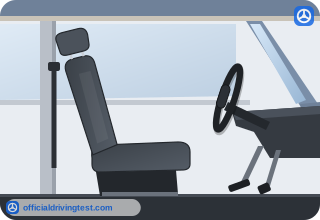
Before you start the engine, how should you adjust the driver’s seat?
- As far back as possible so you can stretch your legs fully
- High enough that your head touches the roof of the car
- Low enough that the dashboard blocks glare from the sun
- To improve visibility and so all controls can be comfortably reached
Show answer
Correct answer: To improve visibility and so all controls can be comfortably reached
The driver’s seat should be adjusted to improve visibility and so all controls can be comfortably reached.
Source: Nevada Driver's Handbook (March 2024 (DMV 700)), page 27 · Open this page in the manual (Manual page 27)
-
What should you make sure of regarding the windshield and windows before you start the engine?
- They are tinted
- They are clean
- They are fully open
- They are partly fogged
Show answer
Correct answer: They are clean
Before starting the engine, make sure the windshield and windows are clean.
Source: Nevada Driver's Handbook (March 2024 (DMV 700)), page 27 · Open this page in the manual (Manual page 27)
-
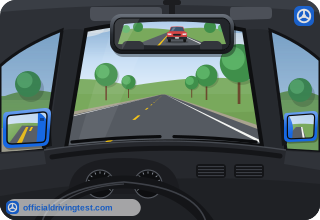
What should you check about the rear and side mirrors before you start the engine?
- That they are folded in against the car
- That they are properly adjusted
- That they are tilted down toward the road surface
- That they are covered to cut glare
Show answer
Correct answer: That they are properly adjusted
Before starting the engine, check the rear and side mirrors and make sure they are properly adjusted.
Source: Nevada Driver's Handbook (March 2024 (DMV 700)), page 27 · Open this page in the manual (Manual page 27)
-
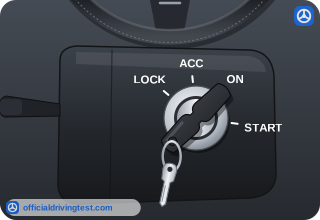
When you turn on the engine, what should you check?
- Oil filter and spark plug condition
- Brake fluid color and battery age
- Fuel level and warning lights
- Wiper blade wear and window tint
Show answer
Correct answer: Fuel level and warning lights
When you turn on the engine, check the fuel level and warning lights.
Source: Nevada Driver's Handbook (March 2024 (DMV 700)), page 27 · Open this page in the manual (Manual page 27)
-
When you turn on the engine, which of these should you turn on if needed?
- Hazard flashers, cruise control and rear defroster
- Headlights, turn signal and windshield wipers
- High beams, fog lights and the horn
- Parking brake, emergency lights and cruise control
Show answer
Correct answer: Headlights, turn signal and windshield wipers
When you turn on the engine, turn on headlights, turn signal and windshield wipers if needed.
Source: Nevada Driver's Handbook (March 2024 (DMV 700)), page 27 · Open this page in the manual (Manual page 27)
-
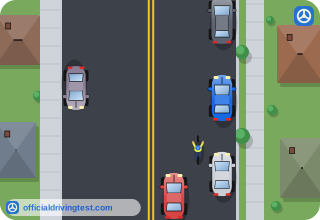
Before you move your vehicle, what should you do?
- Turn on the hazard flashers and wait for traffic to stop
- Check only the rear mirror and then pull out smoothly
- Stop, look and listen for traffic, bicyclists and pedestrians
- Sound your horn to warn bicyclists and pedestrians first
Show answer
Correct answer: Stop, look and listen for traffic, bicyclists and pedestrians
Before moving the vehicle, stop, look and listen for traffic, bicyclists and pedestrians.
Source: Nevada Driver's Handbook (March 2024 (DMV 700)), page 27 · Open this page in the manual (Manual page 27)
-
Where is the recommended tire pressure (psi) located?
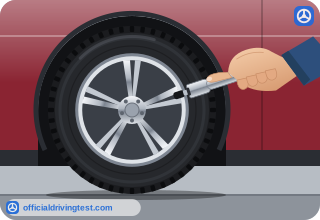
- The vehicle owner’s manual or the driver’s side door jamb
- The registration card or the insurance card kept in the glove box
- The dashboard warning light panel and the fuel gauge only
- The spare tire cover or the floor of the trunk compartment
Show answer
Correct answer: The vehicle owner’s manual or the driver’s side door jamb
Check tire pressure with a gauge using the recommended psi in the vehicle owner’s manual or on the driver’s side door jamb.
Source: Nevada Driver's Handbook (March 2024 (DMV 700)), page 27 · Open this page in the manual (Manual page 27)
-
How often should you check your tires for wear and damage problems?
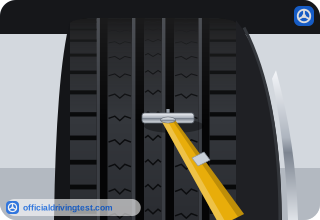
- Once every month, or before a long road trip
- Once every year, or at each oil change
- Only when a tire looks flat or a warning light comes on
- Once every three months, or after every long trip
Show answer
Correct answer: Once every month, or before a long road trip
Check tires for wear and damage once every month, or before you go on a long road trip.
Source: Nevada Driver's Handbook (March 2024 (DMV 700)), page 27 · Open this page in the manual (Manual page 27)
-
In the penny test for tire wear, where on the tire do you place Lincoln’s head into a groove?
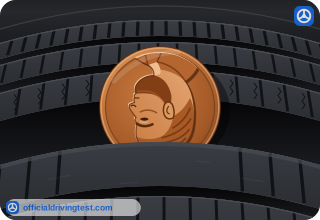
- At a point where the tread appears to be highest
- On the sidewall next to the tire’s rim
- At a point where the tread appears to be lowest
- Along the outer edge of the tire only
Show answer
Correct answer: At a point where the tread appears to be lowest
In the penny test, select the point on the tire where the tread appears to be lowest and place Lincoln’s head into one of the grooves.
Source: Nevada Driver's Handbook (March 2024 (DMV 700)), page 27 · Open this page in the manual (Manual page 27)
-
In the penny test, the tire has a safe amount of tread if what is true?
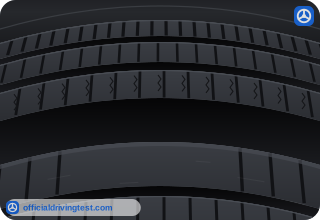
- None of Lincoln’s head is covered by the tread
- Any part of Lincoln’s head is covered by the tread
- Lincoln’s whole head can be seen above the tread
- The penny falls out of the groove when you let go
Show answer
Correct answer: Any part of Lincoln’s head is covered by the tread
If any part of Lincoln’s head is covered by the tread, the tire has a safe amount of tread.
Source: Nevada Driver's Handbook (March 2024 (DMV 700)), page 27 · Open this page in the manual (Manual page 27)
-
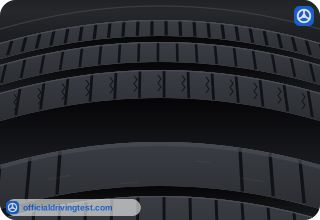
In the penny test, what happens when the tread goes below the safe level?
- The car’s fuel use rises, but its grip on the road is not affected
- The tire pressure rises until the car’s warning lights come on
- The tire’s wear is only cosmetic and the car handles the same
- The car’s grip on the road in adverse conditions is greatly reduced
Show answer
Correct answer: The car’s grip on the road in adverse conditions is greatly reduced
If the tread goes below the safe level, the car’s ability to grip the road in adverse conditions is greatly reduced.
Source: Nevada Driver's Handbook (March 2024 (DMV 700)), page 27 · Open this page in the manual (Manual page 27)
-
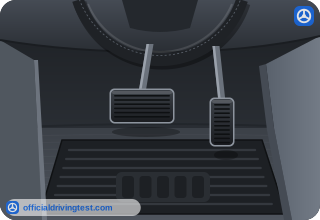
What does an anti-lock braking system (ABS) do?
- Lets the driver stop without pressing the brake pedal
- Prevents skidding and lets you steer during emergency braking
- Keeps the vehicle at a steady speed on slippery roads
- Warns the driver when the brake pads are worn out
Show answer
Correct answer: Prevents skidding and lets you steer during emergency braking
Anti-lock brakes prevent skidding and allow drivers to steer during an emergency braking situation.
Source: Nevada Driver's Handbook (March 2024 (DMV 700)), page 40 · Open this page in the manual (Manual page 40)
-
How can you find out whether your car has ABS?
- Check the tire sidewall for an ABS marking
- Press the brake pedal and listen for a clicking sound
- Ask the DMV office to check your car's registration
- Check for a lit ABS symbol just after starting the engine
Show answer
Correct answer: Check for a lit ABS symbol just after starting the engine
You can look for an illuminated ABS symbol on the dashboard right after starting the engine, check the owner's manual, or ask the dealer.
Source: Nevada Driver's Handbook (March 2024 (DMV 700)), page 40 · Open this page in the manual (Manual page 40)
-
How do you know your ABS is not working?
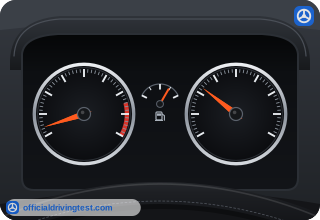
- The ABS symbol stays lit long after the engine has started
- The ABS symbol never lights up when you start the engine
- The brake pedal feels firm during every stop
- The brakes stop working completely
Show answer
Correct answer: The ABS symbol stays lit long after the engine has started
If the ABS symbol stays lighted on the dashboard long after the car has started, the ABS is not working.
Source: Nevada Driver's Handbook (March 2024 (DMV 700)), page 40 · Open this page in the manual (Manual page 40)
-
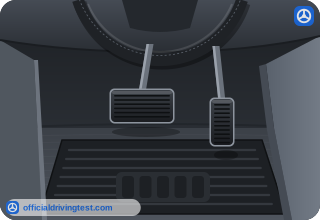
If your ABS stops working, what happens to your conventional brakes?
- They stop working as well
- They lock up every time you brake
- They continue to work
- They work only at speeds under 25 mph
Show answer
Correct answer: They continue to work
The conventional brakes continue to work even when the ABS does not.
Source: Nevada Driver's Handbook (March 2024 (DMV 700)), page 40 · Open this page in the manual (Manual page 40)
-
What are the two types of ABS?
- Front-wheel ABS and rear-wheel ABS
- Four-wheel ABS and rear-wheel ABS
- Four-wheel ABS and all-wheel ABS
- Front-wheel ABS and four-wheel ABS
Show answer
Correct answer: Four-wheel ABS and rear-wheel ABS
The handbook describes two types of ABS: four-wheel ABS and rear-wheel ABS.
Source: Nevada Driver's Handbook (March 2024 (DMV 700)), page 40 · Open this page in the manual (Manual page 40)
-
What does rear-wheel anti-lock braking prevent?
- The rear wheels from locking up, so the back end does not skid
- The front wheels from locking up when you brake hard in a turn
- The engine from stalling when you brake hard on slippery roads
- The vehicle from rolling backward when stopped on a steep hill
Show answer
Correct answer: The rear wheels from locking up, so the back end does not skid
Rear-wheel anti-lock brakes prevent the rear wheels from locking up so the back end of the vehicle does not skid sideways.
Source: Nevada Driver's Handbook (March 2024 (DMV 700)), page 40 · Open this page in the manual (Manual page 40)
-
On which vehicles is rear-wheel anti-lock braking found?
- On all passenger cars
- On all motorcycles and trailers
- Only on some light trucks
- On every vehicle sold in Nevada
Show answer
Correct answer: Only on some light trucks
Rear-wheel anti-lock brakes are found only on some light trucks.
Source: Nevada Driver's Handbook (March 2024 (DMV 700)), page 40 · Open this page in the manual (Manual page 40)
-
What happens to ABS if you pump the brakes or remove steady pressure from the brake pedal?
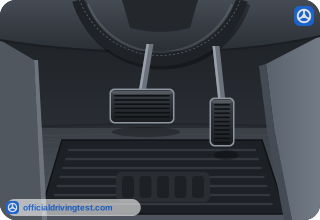
- It works faster
- It pumps harder
- It locks the wheels
- It turns off
Show answer
Correct answer: It turns off
Removing steady pressure from the brake pedal or pumping the brakes will disengage, or turn off, the ABS.
Source: Nevada Driver's Handbook (March 2024 (DMV 700)), page 40 · Open this page in the manual (Manual page 40)
-
What happens if you turn the ignition to the “lock” position while the vehicle is still in motion?
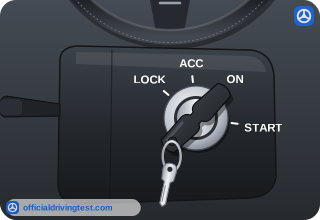
- The steering locks and you lose control
- The engine idles and the vehicle slows normally
- The brakes lock and the vehicle stops at once
- The steering becomes lighter and easier to turn
Show answer
Correct answer: The steering locks and you lose control
Turning the ignition to the lock position while moving causes the steering to lock if you try to turn the steering wheel, and you lose control of your vehicle.
Source: Nevada Driver's Handbook (March 2024 (DMV 700)), page 48 · Open this page in the manual (Manual page 48)