Montana: Signals and vehicle controls — Trailer Brakes, Clean Windows, Seat and Mirrors Practice Test
Questions in this part include: “A trailer, semi-trailer, or pole trailer with a gross weight in excess of how many pounds must have “break-away” brakes?” · “Which device may no vehicle be equipped with or use, except as permitted for authorized emergency vehicles?”
Independent educational site · not affiliated with any government agency or DMV
Ready? Test yourself
- Instant feedback with an explanation
- Every answer cites its source in the manual
- Your best score is saved on this device
- Keyboard: press 1 to 4 to answer and Enter for the next question
Questions are original and based on the official manual "Montana Driver Manual" (Revised April 2024), Montana Department of Justice, Motor Vehicle Division.
All 17 questions in this practice test
Take the test above first, then use this list to study. Tap “Show answer” to see the correct answer and explanation.
Show the questions and answersHide the questions
-
A trailer, semi-trailer, or pole trailer with a gross weight in excess of how many pounds must have “break-away” brakes?
- 1000 pounds
- 5000 pounds
- 8000 pounds
- 3000 pounds
Show answer
Correct answer: 3000 pounds
The manual says a trailer with air or vacuum brakes, or a gross weight in excess of 3000 pounds, must have break-away brakes.
Source: Montana Driver Manual (Revised April 2024), page 17
-
When are “break-away” brakes on a trailer activated?
- If the driver exceeds the posted speed limit
- If the trailer separates from the towing vehicle
- If the trailer’s lights stop working
- If the load on the trailer shifts
Show answer
Correct answer: If the trailer separates from the towing vehicle
The manual says break-away brakes are activated if the vehicle is separated from the towing vehicle.
Source: Montana Driver Manual (Revised April 2024), page 17
-
How must all brakes be adjusted?
- To operate on all wheels equally
- To operate on the rear wheels first
- To operate on the front wheels only
- So that the rear brakes lock first
Show answer
Correct answer: To operate on all wheels equally
The manual says all brakes must be adjusted to operate on all wheels equally.
Source: Montana Driver Manual (Revised April 2024), page 17
-
Which device may no vehicle be equipped with or use, except as permitted for authorized emergency vehicles?
- A horn
- A fog lamp
- A siren
- A muffler
Show answer
Correct answer: A siren
The manual says no vehicle may be equipped with or use any siren, whistle, or bell except as permitted for authorized emergency vehicles.
Source: Montana Driver Manual (Revised April 2024), page 17
-
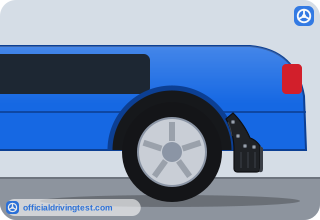
The fenders, splash aprons, or flaps on the rearmost wheels must extend down to a point not more than how many inches above the highway when the vehicle is empty?
- 10 inches
- 20 inches
- 30 inches
- 40 inches
Show answer
Correct answer: 20 inches
The manual says the flaps must extend down to a point not more than 20 inches above the surface of the highway when the vehicle is empty.
Source: Montana Driver Manual (Revised April 2024), page 17
-
What is the smallest diameter allowed for the safety chain or cable on the front of a trailer of 3000 pounds GVW or less?
- 1/8 inch
- 1/2 inch
- 3/4 inch
- 1/4 inch
Show answer
Correct answer: 1/4 inch
The manual says the chain or cable shall be no less than 1/4 inch in diameter.
Source: Montana Driver Manual (Revised April 2024), page 17
-
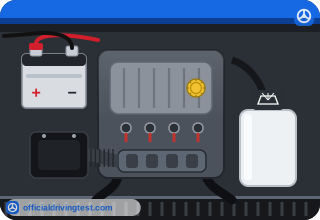
What should you use in the window washer bottle in areas where the temperature could fall below freezing?
- Plain water
- Window cleaner with wax
- Antifreeze wash
- Soapy water
Show answer
Correct answer: Antifreeze wash
The manual says to use antifreeze wash in the window washer bottle where temperatures could fall below freezing.
Source: Montana Driver Manual (Revised April 2024), page 18
-
Why should you keep the inside of your windows clean, especially if anyone has been smoking in the vehicle?
- Smoking leaves a film on the inside glass
- Smoke makes the windshield wipers stick
- Smoke fogs the outside of the headlights
- Smoke lowers the air pressure in the tires
Show answer
Correct answer: Smoking leaves a film on the inside glass
The manual says smoking causes a film to build up on the inside glass.
Source: Montana Driver Manual (Revised April 2024), page 18
-
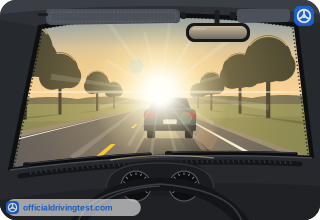
What makes it hard to see when bright sun or headlights hit your windshield?
- A tinted license plate
- A dirty windshield
- A clean rearview mirror
- A full washer bottle
Show answer
Correct answer: A dirty windshield
The manual says bright sun or headlights on a dirty windshield make it hard to see.
Source: Montana Driver Manual (Revised April 2024), page 18
-
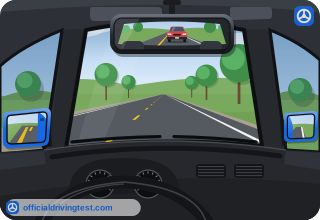
Why does the manual say not to hang things from your mirror or clutter up the windshield with decals?
- They could drain the battery
- They could jam the wipers
- They could break the mirror
- They could block your view
Show answer
Correct answer: They could block your view
The manual says things hung from the mirror and decals on the windshield could block your view.
Source: Montana Driver Manual (Revised April 2024), page 19
-
By how much can dirt on the lenses of your headlights, backup, brake, and taillights cut the lights’ effectiveness?
- 50%
- 10%
- 25%
- 75%
Show answer
Correct answer: 50%
The manual says dirt on the lenses can cut the lights’ effectiveness by 50%.
Source: Montana Driver Manual (Revised April 2024), page 19
-
If your seat does not put you high enough to clearly see the road, what does the manual suggest?
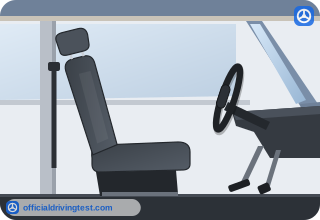
- Tilt the rearview mirror downward
- Move the seat as far back as possible
- Use a seat cushion
- Lean toward the steering wheel
Show answer
Correct answer: Use a seat cushion
The manual says to adjust the seat high enough to see the road clearly and, if necessary, use a seat cushion.
Source: Montana Driver Manual (Revised April 2024), page 19
-
What does the manual say about moving the seat forward?
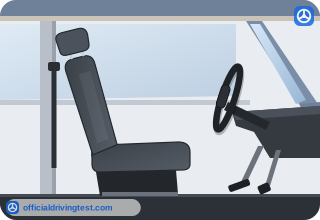
- Move it as far forward as it goes
- Move it forward until your knees touch the dashboard
- Do not move it so far forward that you cannot easily steer
- Seat position does not affect steering
Show answer
Correct answer: Do not move it so far forward that you cannot easily steer
The manual says not to move the seat so far forward that you cannot easily steer.
Source: Montana Driver Manual (Revised April 2024), page 19
-
What should you be able to see with the rearview mirror when it is adjusted properly?
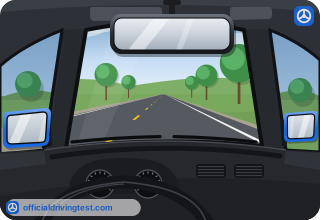
- Out the back window
- The side of your vehicle
- The lane to your left
- The hood of your vehicle
Show answer
Correct answer: Out the back window
The manual says you should be able to see out the back window with the rearview mirror, and to the sides with the side mirrors.
Source: Montana Driver Manual (Revised April 2024), page 19
-
What is a good adjustment for the side mirrors?
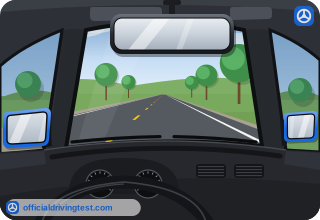
- Set so you cannot see any part of your own vehicle at all times
- Set so you see only the lane right next to your vehicle
- Set so you must turn your head to see any traffic
- Set so you see the side of your vehicle when leaning forward slightly
Show answer
Correct answer: Set so you see the side of your vehicle when leaning forward slightly
The manual says a good adjustment is to set the side mirrors so that when you lean forward slightly, you can see the side of your vehicle.
Source: Montana Driver Manual (Revised April 2024), page 19
-
How should head restraints be adjusted?
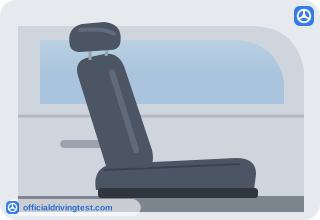
- So the head restraint touches only the neck
- So the head restraint contacts the back of the head
- So the head restraint is as low as it goes
- So the head restraint is a hand’s width behind the head
Show answer
Correct answer: So the head restraint contacts the back of the head
The manual says head restraints should be adjusted so they contact the back of the head.
Source: Montana Driver Manual (Revised April 2024), page 19
-
What are head restraints designed to prevent?
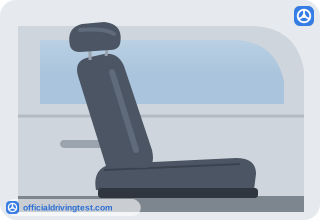
- Whiplash if you are hit from behind
- Windshield glare in bright sun
- Injury from the airbag
- Seat belt burns
Show answer
Correct answer: Whiplash if you are hit from behind
The manual says head restraints are designed to prevent whiplash if you are hit from behind.
Source: Montana Driver Manual (Revised April 2024), page 19