Montana: Signals and vehicle controls
Checking your vehicle before a trip, the lights and equipment Montana requires, starting and steering, mirrors, headlights at night, turn and hand signals and the horn. Split into 8 shorter tests so you're not stuck in one long quiz.
Independent educational site · not affiliated with any government agency or DMV
Choose a part
Signals and vehicle controls — Trip Planning and Vehicle Checks
Questions in this part include: “According to the manual, what is the best way to save on fuel and prolong the life of your car?”
StartSignals and vehicle controls — Exhaust, Headlights & Tail Lights, Brake Lights
Questions in this part include: “How quickly can fumes from a leaky exhaust cause death?”
StartSignals and vehicle controls — Required Equipment and Additional Lamps
Questions in this part include: “What does the manual say about license plate lighting that is not the original manufacturer’s equipment?”
StartSignals and vehicle controls — Trailer Brakes, Clean Windows, Seat and Mirrors
Questions in this part include: “A trailer, semi-trailer, or pole trailer with a gross weight in excess of how many pounds must have “break-away” brakes?”
StartSignals and vehicle controls — Starting, Steering, and Looking Behind
Questions in this part include: “How far before turning in town should you use a proper turn signal?”
StartSignals and vehicle controls — Changing Lanes, Pulling Away, and Backing Up
Questions in this part include: “When changing lanes, how long should you take your eyes off the road ahead?”
StartSignals and vehicle controls — Night Driving and Using Headlights
Questions in this part include: “During what hours does the manual say you shall turn on your headlights?”
StartSignals and vehicle controls — Horn, Turn Signals, and Hand Signals
Questions in this part include: “If there is no immediate danger, what should be all you need to do with your horn?”
StartAll 149 Signals and vehicle controls questions with answers
Choose a part above to take a practice test, or study every question and answer here.
Show the questions and answersHide the questions
-
According to the manual, what is the best way to save on fuel and prolong the life of your car?
- Use it as little as possible
- Warm it up for several minutes before each trip
- Drive it at a steady high speed on the highway
- Take only long trips instead of short ones
Show answer
Correct answer: Use it as little as possible
The manual says the best way to save fuel and prolong the life of a car is to use it as little as possible.
Source: Montana Driver Manual (Revised April 2024), page 12
-
Which trip-planning tip does the manual give to cut down on the number of trips you need to take?
- Run each errand as a separate trip
- Drive to the farthest place first every time
- Plan and combine your errands
- Skip the list of places you need to go
Show answer
Correct answer: Plan and combine your errands
The manual advises planning and combining errands, which cuts down on the number of trips.
Source: Montana Driver Manual (Revised April 2024), page 12
-
Why does the manual advise avoiding driving during heavy traffic?
- It always makes the trip shorter in distance
- It causes extra wear and tear on you and the vehicle
- It prevents the engine from warming up
- It lowers the air pressure in the tires
Show answer
Correct answer: It causes extra wear and tear on you and the vehicle
The manual says heavy traffic causes extra wear and tear on the driver and the vehicle.
Source: Montana Driver Manual (Revised April 2024), page 12
-
According to the manual, whose duty is it to make certain that the vehicles they drive are safe to operate?
- The duty of the vehicle dealer
- The duty of the county courthouse
- The duty of the nearest police officer
- The duty of drivers
Show answer
Correct answer: The duty of drivers
The manual states that it is the duty of drivers to make certain their vehicles are safe to operate.
Source: Montana Driver Manual (Revised April 2024), page 12
-
Which of these is a sign that you should have a mechanic check your brakes?
- The brake pedal feels firm and quiet
- The brake lights come on when you stop
- The brakes stop the vehicle smoothly
- The brake pedal goes to the floor
Show answer
Correct answer: The brake pedal goes to the floor
The manual says to have a mechanic check the brakes when they make a lot of noise, smell funny, or the pedal goes to the floor.
Source: Montana Driver Manual (Revised April 2024), page 12
-
From where should you check that your turn signals, brake lights, taillights, and headlamps are operating properly?
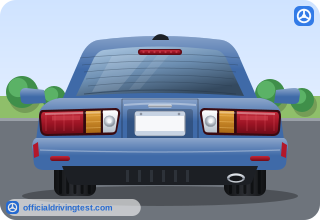
- From the driver seat while moving
- From outside the vehicle
- From the dashboard indicator lights only
- From a seat in the back of the vehicle
Show answer
Correct answer: From outside the vehicle
The manual says the lights should be checked from outside the vehicle.
Source: Montana Driver Manual (Revised April 2024), page 12
-
According to the manual, what does driving with headlights on all the time do?
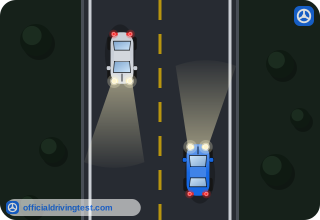
- Makes the headlight bulbs last much longer
- Lets you drive without using your turn signals
- Helps other drivers see your vehicle day and night
- Saves fuel during long trips on the highway
Show answer
Correct answer: Helps other drivers see your vehicle day and night
The manual says driving with headlights on all the time helps other drivers see your vehicle both day and night.
Source: Montana Driver Manual (Revised April 2024), page 12
-
What may an out-of-line headlight do?
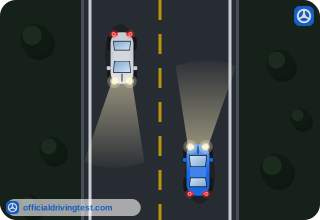
- Blind other drivers
- Turn off the brake lights
- Drain the battery faster
- Make the horn quieter
Show answer
Correct answer: Blind other drivers
The manual says an out-of-line headlight can shine where it does not help you and may blind other drivers.
Source: Montana Driver Manual (Revised April 2024), page 12
-
What does the manual say to do if other drivers are frequently flashing their headlights at you?
- Switch to your high beams
- Have a mechanic check your headlights
- Turn your headlights off
- Drive with only your parking lights on
Show answer
Correct answer: Have a mechanic check your headlights
The manual says that if other drivers flash their headlights at you frequently, a mechanic should check your headlights.
Source: Montana Driver Manual (Revised April 2024), page 12
-
What should you do if the glass of your windshield is damaged?
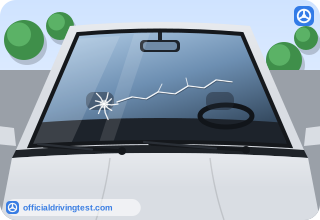
- Cover the damage with a decal
- Keep driving until the damage spreads
- Wipe the damage with a clean cloth
- Have the windshield replaced
Show answer
Correct answer: Have the windshield replaced
The manual says to have the windshield replaced if the glass is damaged, since damaged glass blocks your view and breaks more easily.
Source: Montana Driver Manual (Revised April 2024), page 13
-
What should you do about snow and ice on your vehicle before you drive?
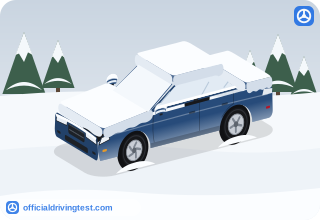
- Remove it from all windows
- Remove it from the windshield only
- Wait for it to melt as the engine warms
- Clear a small hole on the driver side
Show answer
Correct answer: Remove it from all windows
The manual says to remove snow and ice from all windows before you drive to clear your view of the road.
Source: Montana Driver Manual (Revised April 2024), page 13
-
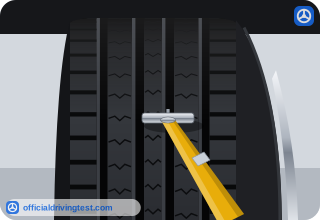
What can worn or bald tires increase?
- Your fuel economy
- Your braking power
- Your stopping distance
- Your steering control on wet roads
Show answer
Correct answer: Your stopping distance
The manual says worn or bald tires can increase stopping distance and make turning more difficult when the road is wet.
Source: Montana Driver Manual (Revised April 2024), page 13
-
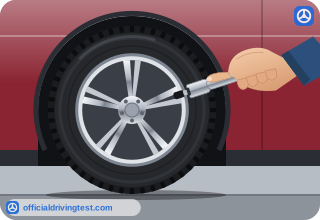
What do unbalanced tires and low tire pressure cause?
- Slower tire wear and better fuel economy
- Shorter stopping distance and easier steering
- Faster tire wear and reduced fuel economy
- Better traction on wet roads and ice
Show answer
Correct answer: Faster tire wear and reduced fuel economy
The manual says unbalanced tires and low pressure cause faster tire wear, reduce fuel economy, and make the vehicle harder to steer and stop.
Source: Montana Driver Manual (Revised April 2024), page 13
-
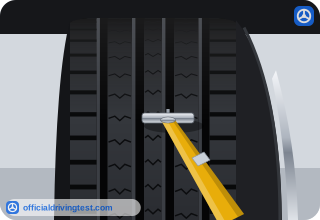
Worn tires increase the chance of having what during a trip?
- A blow out
- A dead battery
- A stuck horn
- A burned-out headlight
Show answer
Correct answer: A blow out
The manual says worn tires can cause hydroplaning and increase the chance of having a blow out during a trip.
Source: Montana Driver Manual (Revised April 2024), page 13
-
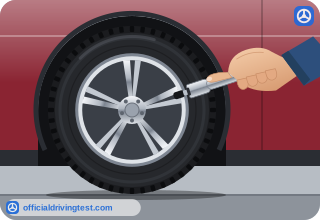
When should you check the tire air pressure with an air pressure gauge?
- Right after a long drive on the highway
- When the tires are hot
- Only when the tread looks worn
- When the tires are cold
Show answer
Correct answer: When the tires are cold
The manual says to check tire air pressure with a gauge when the tires are cold.
Source: Montana Driver Manual (Revised April 2024), page 13
-
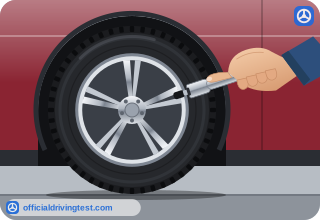
Where does the manual tell you to look for the proper tire pressure?
- On the side of the road sign
- In the vehicle owner’s manual
- On the license plate
- On the rearview mirror
Show answer
Correct answer: In the vehicle owner’s manual
The manual says to check the vehicle owner’s manual for the proper tire pressure.
Source: Montana Driver Manual (Revised April 2024), page 13
-
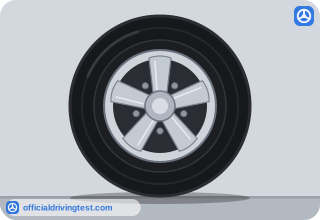
When you check tire tread with a penny, what shows that the tire is unsafe and must be replaced?
- The tread does not come at least to Lincoln’s head
- The tread covers all of Lincoln’s head
- The penny will not fit into the tread at all
- The tread is wet when you check it with a penny
Show answer
Correct answer: The tread does not come at least to Lincoln’s head
The manual says that if the tread does not come at least to Abraham Lincoln’s head, the tire is unsafe and must be replaced.
Source: Montana Driver Manual (Revised April 2024), page 13
-
What should you do if the vehicle bounces, the steering wheel shakes, or the vehicle pulls to one side?
- Drive faster to smooth the ride
- Wait to see if it goes away
- Have a mechanic check it
- Turn off the engine while moving
Show answer
Correct answer: Have a mechanic check it
The manual says to have a mechanic check the vehicle when it bounces, the steering wheel shakes, or it pulls to one side.
Source: Montana Driver Manual (Revised April 2024), page 13
-
What should you do if the vehicle is hard to turn or does not turn when the steering wheel is first turned?
- Have the headlight aim adjusted
- Have a mechanic check the steering
- Have the wiper blades replaced
- Have the exhaust system repainted
Show answer
Correct answer: Have a mechanic check the steering
The manual says to have the steering checked by a mechanic when the vehicle is hard to turn or does not turn at first.
Source: Montana Driver Manual (Revised April 2024), page 13
-
If the vehicle keeps bouncing after a bump or after you stop, what may you need?
- New wiper blades for the windshield
- A new muffler and exhaust pipe
- New brake lights and taillight bulbs
- New shocks or other suspension parts
Show answer
Correct answer: New shocks or other suspension parts
The manual says that a vehicle that keeps bouncing may need new shocks or other suspension parts, and a mechanic should check it.
Source: Montana Driver Manual (Revised April 2024), page 13
-
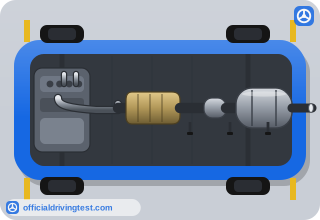
Which of these is a job of the exhaust system?
- Supplying fuel to the engine cylinders
- Charging the battery while driving
- Keeping the tires properly balanced
- Removing toxic gases from the engine
Show answer
Correct answer: Removing toxic gases from the engine
The manual says the exhaust system helps remove toxic gases from the engine, reduce engine noise, and cool the hot gases.
Source: Montana Driver Manual (Revised April 2024), page 13
-
How quickly can fumes from a leaky exhaust cause death?
- Only after several hours
- In a very short time
- Only after several days
- Never, they only smell bad
Show answer
Correct answer: In a very short time
The manual says fumes from a leaky exhaust can cause death in a very short time.
Source: Montana Driver Manual (Revised April 2024), page 13
-
Which of these does the manual say you should never do because of exhaust fumes?
- Park the car outdoors with the motor off
- Open a window while the motor runs
- Run the motor in your garage
- Have a leaky exhaust fixed
Show answer
Correct answer: Run the motor in your garage
The manual says to never run the motor in your garage, and never to sit in the car with the motor running without opening a window.
Source: Montana Driver Manual (Revised April 2024), page 13
-
What does the manual say about most exhaust problems?
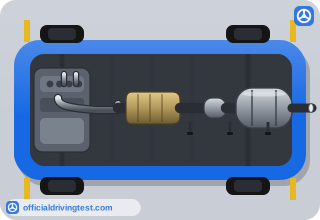
- They are leaks, which are easily heard
- They are blockages that cannot be heard
- They are caused by low tire pressure
- They appear only in cold weather
Show answer
Correct answer: They are leaks, which are easily heard
The manual says most exhaust problems are leaks, which are easily heard, and they should be fixed.
Source: Montana Driver Manual (Revised April 2024), page 13
-
Which of these may a poorly tuned engine do?
- Gain extra power needed for emergencies
- Lose power needed for driving and emergencies
- Improve your fuel economy on the highway
- Run quieter and start more easily
Show answer
Correct answer: Lose power needed for driving and emergencies
The manual says a poorly tuned engine may lose power needed for normal driving and emergencies, may not start, and gets poor fuel economy.
Source: Montana Driver Manual (Revised April 2024), page 13
-
Why should there be no objects on the floor of the vehicle?
- They could cover the speedometer dial
- They could make the horn sound off
- They could scratch the floor mats
- They could roll under the brake pedal
Show answer
Correct answer: They could roll under the brake pedal
The manual says objects on the floor could roll under the brake pedal so that you cannot slow or stop the vehicle.
Source: Montana Driver Manual (Revised April 2024), page 13
-
Why should there be no packages or other objects on the rear shelf or back seat?
- They could hit someone on the head
- They could block the heater vents
- They could drain the car battery
- They could change the tire pressure
Show answer
Correct answer: They could hit someone on the head
The manual says loose objects on the rear shelf or back seat could hit someone on the head in a sudden stop or crash.
Source: Montana Driver Manual (Revised April 2024), page 13
-
How should the horn be used?
- To greet other drivers
- To ask slower drivers to hurry
- Only as a warning to others
- To tell drivers they may go ahead
Show answer
Correct answer: Only as a warning to others
The manual says the horn is a warning device and should only be used as a warning to others.
Source: Montana Driver Manual (Revised April 2024), page 13
-
Vehicles manufactured after January 1, 1956, must emit what color of light to the front and to the rear, visible for 500 feet?
- Red or amber to the front, white or amber to the rear
- White to the front, green or amber to the rear
- White or amber to the front, red or amber to the rear
- Amber only to the front, white only to the rear
Show answer
Correct answer: White or amber to the front, red or amber to the rear
The manual says these vehicles must emit white or amber light to the front and red or amber light to the rear, visible for 500 feet.
Source: Montana Driver Manual (Revised April 2024), page 14
-
Headlights and tail lights may not be tinted or covered with colored material unless the tint is what?
- Original or optional equipment that meets federal regulations
- A tint no darker than the color of the vehicle’s body
- A tint approved in person by a law enforcement officer
- A tint used only when driving during the daytime
Show answer
Correct answer: Original or optional equipment that meets federal regulations
The manual allows tinting only if it is part of the original or optional equipment in compliance with federal manufacturers’ regulations.
Source: Montana Driver Manual (Revised April 2024), page 14
-
For what distance should headlights be capable of illuminating persons or vehicles on high beam?
- 100 feet
- 200 feet
- 1000 feet
- 350 feet
Show answer
Correct answer: 350 feet
The manual says headlights should illuminate persons or vehicles for 350 feet on high beam.
Source: Montana Driver Manual (Revised April 2024), page 14
-
For what distance should headlights be capable of illuminating persons or vehicles on low beam?
- 250 feet
- 100 feet
- 350 feet
- 500 feet
Show answer
Correct answer: 100 feet
The manual says headlights should illuminate persons or vehicles for 100 feet on low beam.
Source: Montana Driver Manual (Revised April 2024), page 14
-
At what distance must your high beam be dimmed when meeting other vehicles?
- 1000 feet
- 100 feet
- 350 feet
- 500 feet
Show answer
Correct answer: 1000 feet
The manual says the high beam must be dimmed when meeting other vehicles at 1000 feet.
Source: Montana Driver Manual (Revised April 2024), page 14
-
At what distance must your high beam be dimmed when overtaking other vehicles?
- 100 feet
- 1000 feet
- 500 feet
- 1500 feet
Show answer
Correct answer: 500 feet
The manual says the high beam must be dimmed when overtaking other vehicles at 500 feet.
Source: Montana Driver Manual (Revised April 2024), page 14
-
Between which times must headlamps be in use at all times?
- From one hour after sunset to one hour before sunrise
- From a half hour after sunset to a half hour before sunrise
- From sunset to sunrise
- From 6 p.m. to 6 a.m.
Show answer
Correct answer: From a half hour after sunset to a half hour before sunrise
The manual says headlamps are required at all times from a half hour after sunset to a half hour before sunrise.
Source: Montana Driver Manual (Revised April 2024), page 14
-
Besides the hours around night, when must headlamps be in use because of weather or blowing dust?
- When visibility is less than 1000 feet
- When visibility is less than 200 feet
- Whenever the road is wet or dusty
- When visibility is less than 500 feet
Show answer
Correct answer: When visibility is less than 500 feet
The manual says headlamps are required whenever, due to weather or blowing dust, visibility is less than 500 feet.
Source: Montana Driver Manual (Revised April 2024), page 14
-
A vehicle must be equipped with turn signals when the distance from the center of the steering post to the vehicle’s left outside limit is more than how many inches?
- 12 inches
- 36 inches
- 48 inches
- 24 inches
Show answer
Correct answer: 24 inches
The manual says turn signals are required when that distance is more than 24 inches.
Source: Montana Driver Manual (Revised April 2024), page 15
-
A vehicle must be equipped with turn signals when the distance from the steering post to the rear limit of the vehicle or load is more than how many feet?
- 8 feet
- 14 feet
- 10 feet
- 20 feet
Show answer
Correct answer: 14 feet
The manual says turn signals are required when the distance from the steering post to the rear limit of the vehicle or load is more than 14 feet.
Source: Montana Driver Manual (Revised April 2024), page 15
-
Brake lights on vehicles manufactured after January 1, 1956, must be visible for how far in normal sunlight?
- 100 feet
- 500 feet
- 300 feet
- 1000 feet
Show answer
Correct answer: 300 feet
The manual says brake lights must emit a red or amber light visible for 300 feet in normal sunlight.
Source: Montana Driver Manual (Revised April 2024), page 15
-
What do brake lights (stop lamps) indicate?
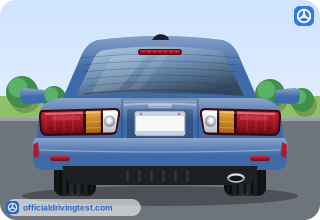
- That a vehicle is slowing or stopping
- That a vehicle is turning
- That a vehicle is parked
- That a vehicle is about to back up
Show answer
Correct answer: That a vehicle is slowing or stopping
The manual says brake lights (stop lamps) indicate a vehicle is slowing or stopping.
Source: Montana Driver Manual (Revised April 2024), page 15
-
The license plate lamp on a vehicle manufactured after January 1, 1956, must illuminate the license plate for how far to the rear?
- 25 feet
- 50 feet
- 100 feet
- 200 feet
Show answer
Correct answer: 50 feet
The manual says the lamp must emit white light to illuminate the license plate for 50 feet to the rear.
Source: Montana Driver Manual (Revised April 2024), page 15
-
What does the manual say about license plate lighting that is not the original manufacturer’s equipment?
- It is required on trucks
- It is allowed in any color
- It is allowed if it flashes
- It is prohibited
Show answer
Correct answer: It is prohibited
The manual says license plate lighting that is not original manufacturer’s equipment is prohibited.
Source: Montana Driver Manual (Revised April 2024), page 15
-
What must a vehicle’s muffler do?
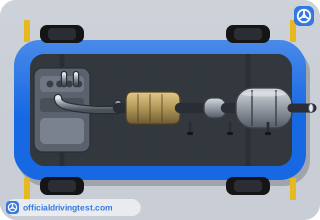
- Prevent excessive or unusual noise
- Increase the engine’s power
- Reduce the fuel the engine uses
- Warn other drivers of the vehicle
Show answer
Correct answer: Prevent excessive or unusual noise
The manual says a muffler must prevent excessive or unusual noise.
Source: Montana Driver Manual (Revised April 2024), page 15
-
Vehicles manufactured after January 1, 1956, must provide how much visibility to the rear of the vehicle through the mirror?
- 50 feet
- 100 feet
- 200 feet
- 500 feet
Show answer
Correct answer: 200 feet
The manual says vehicles made after January 1, 1956, must provide 200-foot visibility to the rear.
Source: Montana Driver Manual (Revised April 2024), page 15
-
What must the brakes and parking brakes of a vehicle be able to do?
- Stop the vehicle only when it is on level roads
- Hold the vehicle only when it is completely empty
- Control, stop, and hold the vehicle on any grade
- Stop the front wheels only, not the rear wheels
Show answer
Correct answer: Control, stop, and hold the vehicle on any grade
The manual says brakes and parking brakes must control the movement, stop, and hold of the vehicle under all conditions of loading and on any grade.
Source: Montana Driver Manual (Revised April 2024), page 15
-
A vehicle’s horn must provide a warning that can be heard for how far?
- 200 feet
- 50 feet
- 100 feet
- 500 feet
Show answer
Correct answer: 200 feet
The manual says the horn must provide warning audible for 200 feet.
Source: Montana Driver Manual (Revised April 2024), page 15
-
During the time headlamps are required, a vehicle parked or stopped on a roadway must display parking lights visible for how far?
- 100 feet
- 300 feet
- 1000 feet
- 500 feet
Show answer
Correct answer: 500 feet
The manual says parking lights must be visible for 500 feet when headlamps are required and the vehicle is parked or stopped on a roadway.
Source: Montana Driver Manual (Revised April 2024), page 15
-
Other than turn signals, which lights are prohibited on a vehicle except for emergency or authorized vehicles?
- Fog lamps and spot lamps mounted on the front
- Flashing, blinking, rotating, or pulsating lights
- Parking lights and brake lights of any color
- Headlights and tail lights on any vehicle
Show answer
Correct answer: Flashing, blinking, rotating, or pulsating lights
The manual prohibits flashing, blinking, sequential, rotating, or pulsating lights (other than turn signals) except on emergency or authorized vehicles.
Source: Montana Driver Manual (Revised April 2024), page 15
-
Which kind of glass is required in the front windshield of a motor vehicle manufactured after January 1, 1956?
- Safety glass
- Tinted glass
- Mirrored glass
- Plastic panels
Show answer
Correct answer: Safety glass
The manual says a front windshield with safety glass is required in motor vehicles manufactured after January 1, 1956.
Source: Montana Driver Manual (Revised April 2024), page 15
-
Which vehicle manufactured after January 1, 1956, is not required to have two tail lamps mounted on the rear?
- A passenger car
- A bus
- A trailer
- A motorcycle
Show answer
Correct answer: A motorcycle
The manual says vehicles made after 1956 need two tail lamps except motorcycles, motor-driven cycles, quadricycles, and truck tractors.
Source: Montana Driver Manual (Revised April 2024), page 16
-
What color light must clearance lamps on the front or side of a vehicle display?
- Red
- White
- Green
- Amber
Show answer
Correct answer: Amber
The manual says clearance lamps on the front or side of the vehicle display an amber light.
Source: Montana Driver Manual (Revised April 2024), page 16
-
How far must clearance lamps be visible when they are required?
- 100 feet
- 500 feet
- 300 feet
- 1000 feet
Show answer
Correct answer: 500 feet
The manual says all clearance lamps shall be visible for 500 feet when required.
Source: Montana Driver Manual (Revised April 2024), page 16
-
What must every vehicle, whatever its size, have on the rear in addition to the required clearance lamps?
- One reflector and two stop lights
- Two flags and a flare
- Two reflectors and a stop light
- A siren and a bell
Show answer
Correct answer: Two reflectors and a stop light
The manual says every vehicle must have two reflectors and a stop light on the rear in addition to the clearance lamps required.
Source: Montana Driver Manual (Revised April 2024), page 16
-
How far must a load extend beyond the body of a vehicle before a red light or red flag is required on it?
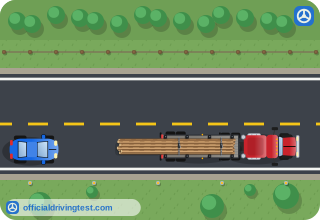
- Four feet or more
- One foot or more
- Two feet or more
- Six feet or more
Show answer
Correct answer: Four feet or more
The manual requires a red light or red flag when a load extends four feet or more beyond the body of the vehicle.
Source: Montana Driver Manual (Revised April 2024), page 16
-
A load extends four feet or more beyond the vehicle body at a time when headlamps are not required. What must be on the end of the load?
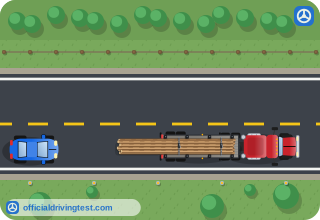
- A red light visible for 500 feet
- A red flag not less than 12 inches square
- A white flag not less than 6 inches square
- An amber light visible for 300 feet
Show answer
Correct answer: A red flag not less than 12 inches square
The manual says that at times other than when headlamps are required, a red flag not less than 12 inches square must be on the load.
Source: Montana Driver Manual (Revised April 2024), page 16
-
During the time headlamps are required, what must a farm tractor moved on the highway display?
- A red light to the front and a white light to the rear
- An amber light to the front and a green light to the rear
- A white light to the front only
- A white light to the front and a red light to the rear
Show answer
Correct answer: A white light to the front and a red light to the rear
The manual says a farm tractor must display a white light to the front and a red light to the rear, each visible for 500 feet.
Source: Montana Driver Manual (Revised April 2024), page 16
-
The lights on a farm tractor or implement of husbandry must be mounted to indicate which part of the vehicle?
- The extreme left projection
- The extreme right projection
- The center of the rear
- The highest point
Show answer
Correct answer: The extreme left projection
The manual says the lamps are mounted to indicate the extreme left projection of the vehicle.
Source: Montana Driver Manual (Revised April 2024), page 16
-
What is the greatest number of spot and/or auxiliary (fog) lamps any vehicle may be equipped with?
- One
- Three
- Two
- Four
Show answer
Correct answer: Two
The manual says any vehicle may be equipped with spot and/or auxiliary (fog) lamps, not to exceed two.
Source: Montana Driver Manual (Revised April 2024), page 16
-
What must you do with spot lamps when approaching another moving vehicle from either direction?
- Switch them to a lower beam
- Aim them at the road shoulder
- Turn them off
- Flash them twice
Show answer
Correct answer: Turn them off
The manual says spot lamps must be turned off when approaching another moving vehicle from either direction.
Source: Montana Driver Manual (Revised April 2024), page 16
-
Fog lamps may be used with lower head lamp beams if they do not project a beam stronger than what?
- The low beam head lamp
- The high beam head lamp
- The brake light
- The parking light
Show answer
Correct answer: The low beam head lamp
The manual says fog lamps may be used with lower head lamp beams if they do not project a beam stronger than the low beam head lamp.
Source: Montana Driver Manual (Revised April 2024), page 16
-
A trailer, semi-trailer, or pole trailer with a gross weight in excess of how many pounds must have “break-away” brakes?
- 1000 pounds
- 5000 pounds
- 8000 pounds
- 3000 pounds
Show answer
Correct answer: 3000 pounds
The manual says a trailer with air or vacuum brakes, or a gross weight in excess of 3000 pounds, must have break-away brakes.
Source: Montana Driver Manual (Revised April 2024), page 17
-
When are “break-away” brakes on a trailer activated?
- If the driver exceeds the posted speed limit
- If the trailer separates from the towing vehicle
- If the trailer’s lights stop working
- If the load on the trailer shifts
Show answer
Correct answer: If the trailer separates from the towing vehicle
The manual says break-away brakes are activated if the vehicle is separated from the towing vehicle.
Source: Montana Driver Manual (Revised April 2024), page 17
-
How must all brakes be adjusted?
- To operate on all wheels equally
- To operate on the rear wheels first
- To operate on the front wheels only
- So that the rear brakes lock first
Show answer
Correct answer: To operate on all wheels equally
The manual says all brakes must be adjusted to operate on all wheels equally.
Source: Montana Driver Manual (Revised April 2024), page 17
-
Which device may no vehicle be equipped with or use, except as permitted for authorized emergency vehicles?
- A horn
- A fog lamp
- A siren
- A muffler
Show answer
Correct answer: A siren
The manual says no vehicle may be equipped with or use any siren, whistle, or bell except as permitted for authorized emergency vehicles.
Source: Montana Driver Manual (Revised April 2024), page 17
-
The fenders, splash aprons, or flaps on the rearmost wheels must extend down to a point not more than how many inches above the highway when the vehicle is empty?
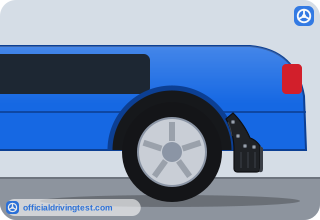
- 10 inches
- 20 inches
- 30 inches
- 40 inches
Show answer
Correct answer: 20 inches
The manual says the flaps must extend down to a point not more than 20 inches above the surface of the highway when the vehicle is empty.
Source: Montana Driver Manual (Revised April 2024), page 17
-
What is the smallest diameter allowed for the safety chain or cable on the front of a trailer of 3000 pounds GVW or less?
- 1/8 inch
- 1/2 inch
- 3/4 inch
- 1/4 inch
Show answer
Correct answer: 1/4 inch
The manual says the chain or cable shall be no less than 1/4 inch in diameter.
Source: Montana Driver Manual (Revised April 2024), page 17
-
What should you use in the window washer bottle in areas where the temperature could fall below freezing?
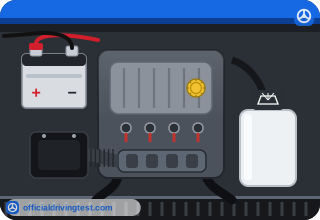
- Plain water
- Window cleaner with wax
- Antifreeze wash
- Soapy water
Show answer
Correct answer: Antifreeze wash
The manual says to use antifreeze wash in the window washer bottle where temperatures could fall below freezing.
Source: Montana Driver Manual (Revised April 2024), page 18
-
Why should you keep the inside of your windows clean, especially if anyone has been smoking in the vehicle?
- Smoking leaves a film on the inside glass
- Smoke makes the windshield wipers stick
- Smoke fogs the outside of the headlights
- Smoke lowers the air pressure in the tires
Show answer
Correct answer: Smoking leaves a film on the inside glass
The manual says smoking causes a film to build up on the inside glass.
Source: Montana Driver Manual (Revised April 2024), page 18
-
What makes it hard to see when bright sun or headlights hit your windshield?
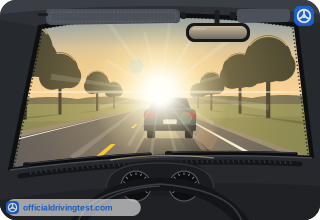
- A tinted license plate
- A dirty windshield
- A clean rearview mirror
- A full washer bottle
Show answer
Correct answer: A dirty windshield
The manual says bright sun or headlights on a dirty windshield make it hard to see.
Source: Montana Driver Manual (Revised April 2024), page 18
-
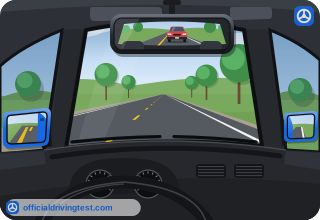
Why does the manual say not to hang things from your mirror or clutter up the windshield with decals?
- They could drain the battery
- They could jam the wipers
- They could break the mirror
- They could block your view
Show answer
Correct answer: They could block your view
The manual says things hung from the mirror and decals on the windshield could block your view.
Source: Montana Driver Manual (Revised April 2024), page 19
-
By how much can dirt on the lenses of your headlights, backup, brake, and taillights cut the lights’ effectiveness?
- 50%
- 10%
- 25%
- 75%
Show answer
Correct answer: 50%
The manual says dirt on the lenses can cut the lights’ effectiveness by 50%.
Source: Montana Driver Manual (Revised April 2024), page 19
-
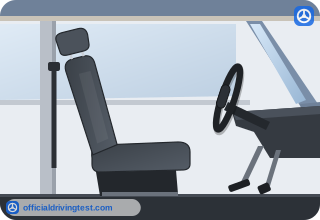
If your seat does not put you high enough to clearly see the road, what does the manual suggest?
- Tilt the rearview mirror downward
- Move the seat as far back as possible
- Use a seat cushion
- Lean toward the steering wheel
Show answer
Correct answer: Use a seat cushion
The manual says to adjust the seat high enough to see the road clearly and, if necessary, use a seat cushion.
Source: Montana Driver Manual (Revised April 2024), page 19
-
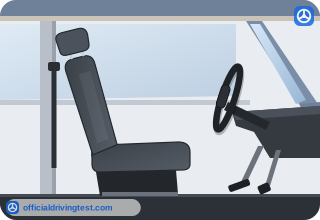
What does the manual say about moving the seat forward?
- Move it as far forward as it goes
- Move it forward until your knees touch the dashboard
- Do not move it so far forward that you cannot easily steer
- Seat position does not affect steering
Show answer
Correct answer: Do not move it so far forward that you cannot easily steer
The manual says not to move the seat so far forward that you cannot easily steer.
Source: Montana Driver Manual (Revised April 2024), page 19
-
What should you be able to see with the rearview mirror when it is adjusted properly?
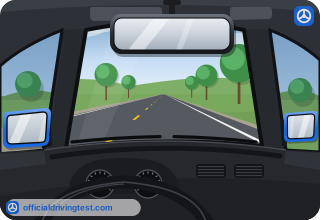
- Out the back window
- The side of your vehicle
- The lane to your left
- The hood of your vehicle
Show answer
Correct answer: Out the back window
The manual says you should be able to see out the back window with the rearview mirror, and to the sides with the side mirrors.
Source: Montana Driver Manual (Revised April 2024), page 19
-
What is a good adjustment for the side mirrors?
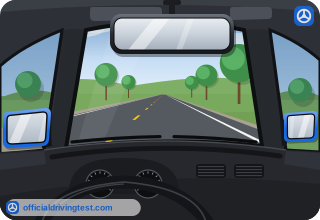
- Set so you cannot see any part of your own vehicle at all times
- Set so you see only the lane right next to your vehicle
- Set so you must turn your head to see any traffic
- Set so you see the side of your vehicle when leaning forward slightly
Show answer
Correct answer: Set so you see the side of your vehicle when leaning forward slightly
The manual says a good adjustment is to set the side mirrors so that when you lean forward slightly, you can see the side of your vehicle.
Source: Montana Driver Manual (Revised April 2024), page 19
-
How should head restraints be adjusted?
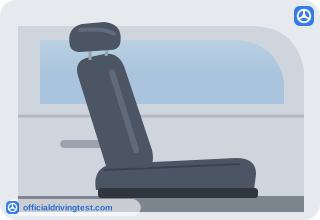
- So the head restraint touches only the neck
- So the head restraint contacts the back of the head
- So the head restraint is as low as it goes
- So the head restraint is a hand’s width behind the head
Show answer
Correct answer: So the head restraint contacts the back of the head
The manual says head restraints should be adjusted so they contact the back of the head.
Source: Montana Driver Manual (Revised April 2024), page 19
-
What are head restraints designed to prevent?
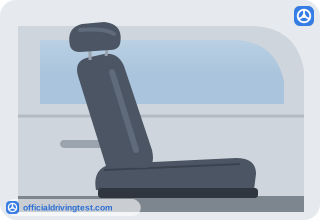
- Whiplash if you are hit from behind
- Windshield glare in bright sun
- Injury from the airbag
- Seat belt burns
Show answer
Correct answer: Whiplash if you are hit from behind
The manual says head restraints are designed to prevent whiplash if you are hit from behind.
Source: Montana Driver Manual (Revised April 2024), page 19
-
What does the manual tell you to do before backing up from where your car is parked?
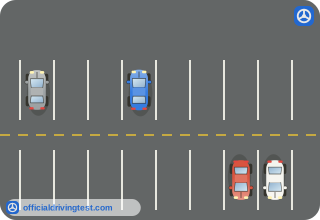
- Rely on your side mirrors only
- Lower all of the windows
- Walk around your parked car
- Turn off the radio and heater
Show answer
Correct answer: Walk around your parked car
The manual says to walk around your parked car before backing up, so you know nothing is in your path.
Source: Montana Driver Manual (Revised April 2024), page 37
-
How far before turning in town should you use a proper turn signal?
- 50 feet
- 200 feet
- 100 feet
- 500 feet
Show answer
Correct answer: 100 feet
Use a proper turn signal 100 feet before turning in town.
Source: Montana Driver Manual (Revised April 2024), page 37
-
How far before turning on a rural road should you use a proper turn signal?
- 300 feet
- 150 feet
- 200 feet
- 500 feet
Show answer
Correct answer: 300 feet
On rural roads, use a proper turn signal 300 feet before turning.
Source: Montana Driver Manual (Revised April 2024), page 37
-
Which lights must be on for vehicles in a funeral procession?
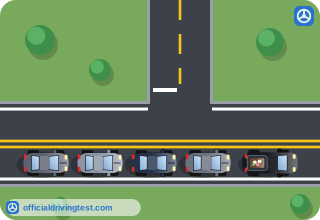
- Only the parking lights
- Headlights and taillights
- Only the fog lights
- Only the high beams
Show answer
Correct answer: Headlights and taillights
In a funeral procession, all headlights and taillights must be illuminated.
Source: Montana Driver Manual (Revised April 2024), page 42
-
Which vehicles in a funeral procession must have their turn signals flashing at the same time as warning lights?
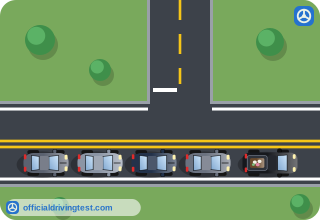
- Every vehicle in the procession
- Only the vehicle carrying the remains
- Only the funeral escort vehicle
- The first and the last vehicles
Show answer
Correct answer: The first and the last vehicles
Turn signals must flash simultaneously as warning lights on the first vehicle and on the vehicle believed to be the last in a funeral procession.
Source: Montana Driver Manual (Revised April 2024), page 42
-
Before you start the vehicle, what does the manual say you should make sure is on?
- The headlights
- The turn signal
- The parking brake
- The emergency flashers
Show answer
Correct answer: The parking brake
The manual says to make sure the parking brake is on before you start the vehicle.
Source: Montana Driver Manual (Revised April 2024), page 50
-
If a vehicle has a manual transmission, what does the manual say about its gear when you start it?
- It must be in first gear
- It must not be in gear
- It must be in reverse
- It must be in the highest gear
Show answer
Correct answer: It must not be in gear
For a manual transmission, the vehicle must not be in gear when you start it, and in some vehicles you must also depress the clutch.
Source: Montana Driver Manual (Revised April 2024), page 50
-
Where must the shift selector be to start a vehicle that has an automatic transmission?
- In "drive"
- In "reverse"
- In "low"
- In "park"
Show answer
Correct answer: In "park"
For an automatic transmission, the shift selector must be in "park" or the vehicle will not start.
Source: Montana Driver Manual (Revised April 2024), page 50
-
What can happen if you try to start too fast, particularly on slippery surfaces?
- The drive wheels can spin and the vehicle can slide
- The engine can overheat and the vehicle can shut off
- The brakes can lock up and the vehicle can stop at once
- The steering can lock and the vehicle can roll backward
Show answer
Correct answer: The drive wheels can spin and the vehicle can slide
The manual says that starting too fast can make the drive wheels spin and the vehicle slide, particularly on slippery surfaces.
Source: Montana Driver Manual (Revised April 2024), page 50
-
Why should the driver of a manual-shift vehicle practice using the clutch and the accelerator?
- So the vehicle can start without the parking brake being set
- So the vehicle can be started while it is still in gear
- So the engine does not over-rev or stall when shifting between gears
- So the tires do not wear out unevenly when stopping
Show answer
Correct answer: So the engine does not over-rev or stall when shifting between gears
The manual says to practice so that the engine does not over-rev or stall when shifting between gears.
Source: Montana Driver Manual (Revised April 2024), page 50
-
Where does the manual say both hands should be placed on the steering wheel?
- Close together at the top of the wheel
- On opposite sides of the wheel
- One on the wheel and one on the gear shift
- One hand at the very top of the wheel
Show answer
Correct answer: On opposite sides of the wheel
Both hands should be on opposite sides of the steering wheel, which gives comfort and may give better control in critical situations.
Source: Montana Driver Manual (Revised April 2024), page 50
-
In newer vehicles with airbags mounted in the steering wheel, which hand positions does the manual give as an example?
- The 10 and 2 o'clock positions
- The 11 and 1 o'clock positions
- The 7 and 5 o'clock positions
- The 8 and 4 o'clock positions
Show answer
Correct answer: The 8 and 4 o'clock positions
The manual gives the 8 and 4 o'clock positions for newer vehicles equipped with airbags mounted in the steering wheel.
Source: Montana Driver Manual (Revised April 2024), page 50
-
Which technique does the manual say to use to turn the steering wheel when turning corners?
- Turning with just the palm of one hand
- Holding the wheel at the bottom with one hand
- The "hand-over-hand" technique
- Letting the wheel slip through your fingers
Show answer
Correct answer: The "hand-over-hand" technique
The manual says to use the hand-over-hand technique; turning with just the palm of one hand could cause you to lose control.
Source: Montana Driver Manual (Revised April 2024), page 50
-
What does the manual say about letting the steering wheel slip through your fingers after you complete a turn?
- It is the safest way to straighten the wheel
- It could be dangerous; straighten the wheel by hand
- It is acceptable when you are driving slowly
- It gives better control on high-speed roads
Show answer
Correct answer: It could be dangerous; straighten the wheel by hand
After a turn you should straighten out the steering wheel by hand, because letting it slip through your fingers could be dangerous.
Source: Montana Driver Manual (Revised April 2024), page 50
-
What does the steering lock warning label in the manual say not to do while driving?
- Shift into neutral
- Use hand-over-hand steering
- Release the parking brake
- Turn or remove the ignition key
Show answer
Correct answer: Turn or remove the ignition key
The warning label says not to turn or remove the ignition key while driving because the steering locks.
Source: Montana Driver Manual (Revised April 2024), page 50
-
According to the manual, when do you need to check the traffic behind you more often?
- When traffic is light
- When traffic is heavy
- When the road is straight and level
- When you are driving slowly on side streets
Show answer
Correct answer: When traffic is heavy
The manual says you need to check behind you more often when traffic is heavy.
Source: Montana Driver Manual (Revised April 2024), page 53
-
Which of these is a time when the manual says it is very important to look behind for vehicles?
- When you are driving on a flat, straight road with little traffic
- When you are parked with the engine off
- When you are stopped at a light with no one behind you
- When you are driving down a long or steep hill
Show answer
Correct answer: When you are driving down a long or steep hill
The manual says it is very important to look behind when you change lanes, slow down, back up, or drive down a long or steep hill.
Source: Montana Driver Manual (Revised April 2024), page 53
-
Which of these does the manual include in "changing lanes"?
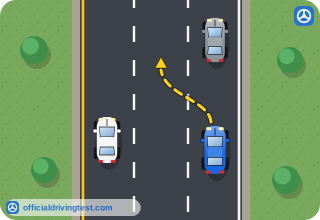
- Entering the roadway from the curb or shoulder
- Slowing down while staying in the same lane
- Stopping at a stop sign
- Following a vehicle in your own lane
Show answer
Correct answer: Entering the roadway from the curb or shoulder
Changing lanes includes changing from one lane to another, merging onto a roadway from an entrance ramp, and entering the roadway from the curb or shoulder.
Source: Montana Driver Manual (Revised April 2024), page 54
-
Before you change lanes, where must you check for traffic?
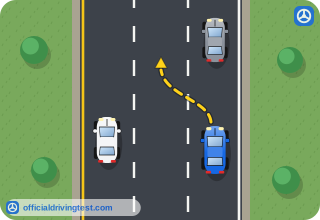
- Only ahead of your vehicle
- Only in your rearview mirror
- To the side and behind your vehicle
- Only in the lane you are leaving
Show answer
Correct answer: To the side and behind your vehicle
You must check that there are no vehicles in the lane you want to enter, which means checking to the side and behind your vehicle.
Source: Montana Driver Manual (Revised April 2024), page 54
-
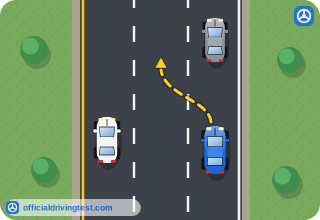
What does the manual say is the best way to alert other drivers that you will change or merge lanes?
- Flashing your headlights at drivers in the lane you will enter
- Using your turn signal to indicate which lane you will be entering
- Tapping your horn to warn the drivers in that other lane
- Moving partly over the lane line to show where you will go
Show answer
Correct answer: Using your turn signal to indicate which lane you will be entering
The manual says the best way to alert other drivers of a lane change or merge is to use your turn signal to indicate which lane you will be entering.
Source: Montana Driver Manual (Revised April 2024), page 54
-
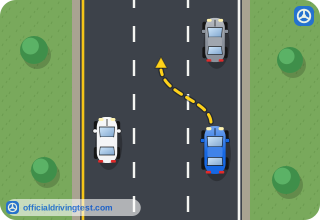
When you check your mirrors before a lane change, besides looking for vehicles in the lane, what should you make sure?
- That no vehicle is parked ahead
- That your headlights are on
- That your emergency flashers are off
- That nobody is about to pass you
Show answer
Correct answer: That nobody is about to pass you
The manual says to make sure there are no vehicles in the lane you want to enter and that nobody is about to pass you.
Source: Montana Driver Manual (Revised April 2024), page 54
-
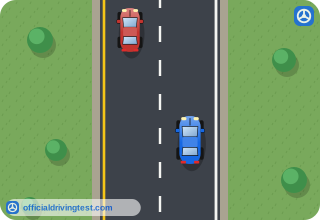
Why are the areas near the rear corners of your vehicle called "blind spots"?
- You cannot see them through your mirrors
- They are hidden by the roof of the vehicle
- They are too dark to see at night
- They are blocked by the front pillars of the vehicle
Show answer
Correct answer: You cannot see them through your mirrors
These areas are called blind spots because you cannot see them through your mirrors, so you have to turn your head and look.
Source: Montana Driver Manual (Revised April 2024), page 54
-
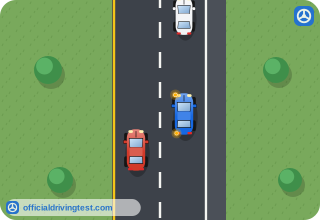
How do you check a blind spot before changing lanes?
- Look into your rearview mirror only, without turning your head
- Look into your side mirror only, without turning your head
- Look over your shoulder in the direction you plan to move
- Lean forward and look through the windshield at the road
Show answer
Correct answer: Look over your shoulder in the direction you plan to move
You must turn your head and look over your shoulder in the direction you plan to move, because mirrors do not show the blind spots.
Source: Montana Driver Manual (Revised April 2024), page 54
-
When changing lanes, how long should you take your eyes off the road ahead?
- As long as it takes to be sure the lane is clear
- No more than an instant
- Up to 10 seconds when the traffic ahead is light
- Up to 15 seconds when the road is straight
Show answer
Correct answer: No more than an instant
The manual says not to take your eyes off the road ahead for more than an instant, because traffic ahead could stop suddenly.
Source: Montana Driver Manual (Revised April 2024), page 54
-
When should you check over your shoulder for traffic in your blind spot?
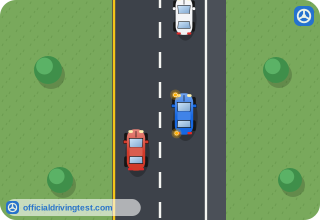
- As soon as you decide to change lanes, then not again
- Only after you have moved into the new lane
- Only if your mirrors show a vehicle
- Just before you change lanes
Show answer
Correct answer: Just before you change lanes
The manual says to check over your shoulder just before you change lanes for traffic in your blind spot.
Source: Montana Driver Manual (Revised April 2024), page 54
-
Why does the manual say to use your mirrors to check traffic while preparing to change lanes?
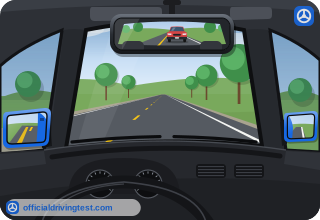
- So you can keep an eye on cars ahead of you at the same time
- So you do not have to use your turn signal when merging
- So you can drive faster while you are changing lanes
- So you do not have to look over your shoulder at all
Show answer
Correct answer: So you can keep an eye on cars ahead of you at the same time
Using your mirrors lets you check traffic while keeping an eye on the cars ahead of you at the same time.
Source: Montana Driver Manual (Revised April 2024), page 54
-
When changing lanes, what does the manual say about the far lane, if there is one?
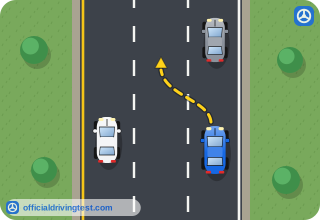
- Ignore it, because only the lane directly next to you matters
- Sound your horn to warn the drivers who are in that lane
- Check it, because someone there may plan to move into the lane you want
- Move into it quickly before the other driver can do so
Show answer
Correct answer: Check it, because someone there may plan to move into the lane you want
Be sure to check the far lane, as someone in that lane may be planning to move into the same lane you want to enter.
Source: Montana Driver Manual (Revised April 2024), page 54
-
When must you check behind your vehicle?
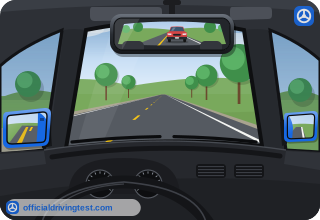
- Whenever you slow down
- Only when you slow down quickly
- Only when you stop at a stop sign
- Only when you slow down for a curve
Show answer
Correct answer: Whenever you slow down
The manual says you must check behind your vehicle whenever you slow down, especially when you slow down quickly or where a following driver would not expect it.
Source: Montana Driver Manual (Revised April 2024), page 54
-
What does the manual say to do when pulling away from the curb?
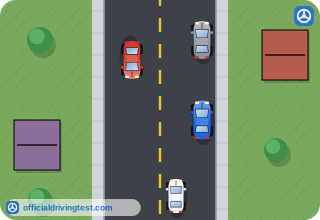
- Signal, look over your right shoulder, and pull out at once
- Signal, look over your left shoulder, and pull out when it is safe
- Sound your horn and pull out when the road is clear
- Look only in the rearview mirror and pull out
Show answer
Correct answer: Signal, look over your left shoulder, and pull out when it is safe
When pulling away from the curb, signal, look over your left shoulder, and pull out when it is safe to do so.
Source: Montana Driver Manual (Revised April 2024), page 54
-
What does the manual suggest in a shopping center to avoid backing up?
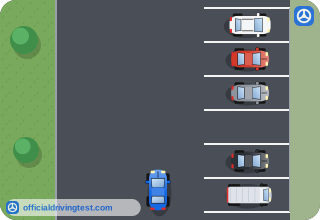
- Park as far from the building entrance as you possibly can
- Always back into a parking space as soon as you arrive
- Park at the end of a row of spaces close to an exit
- Find a space you can drive through so you leave going forward
Show answer
Correct answer: Find a space you can drive through so you leave going forward
The manual says to do as little backing up as possible and to look for a drive-through space so you can drive forward when you leave.
Source: Montana Driver Manual (Revised April 2024), page 55
-
Why does the manual say to check behind your vehicle before you get in?
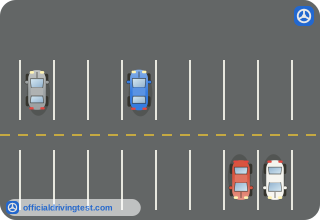
- Children or small objects cannot be seen from the driver's seat
- Mirrors do not work well while the engine is turned off
- The tires might be low on air from the previous trip
- You cannot see the license plate of the vehicle behind
Show answer
Correct answer: Children or small objects cannot be seen from the driver's seat
Children or small objects cannot be seen from the driver's seat, so check behind the vehicle before you get in.
Source: Montana Driver Manual (Revised April 2024), page 55
-
How does the manual say you should look when backing up?
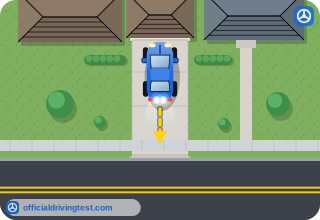
- Rely on your rearview and side mirrors to see behind you
- Look only through the side windows, without turning around
- Turn around and look directly through the rear window
- Watch only the right-side mirror while backing
Show answer
Correct answer: Turn around and look directly through the rear window
You should turn around and look directly through the rear window, because you cannot see directly behind your vehicle in your mirrors.
Source: Montana Driver Manual (Revised April 2024), page 55
-
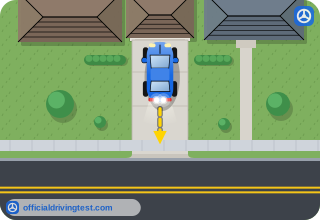
Why should you back up slowly?
- Your brakes work less well in reverse
- Your vehicle is much harder to steer while you are backing
- Your headlights do not light the road behind you at all
- Your engine can overheat in reverse
Show answer
Correct answer: Your vehicle is much harder to steer while you are backing
The manual says to back up slowly because the vehicle is much harder to steer while backing.
Source: Montana Driver Manual (Revised April 2024), page 55
-
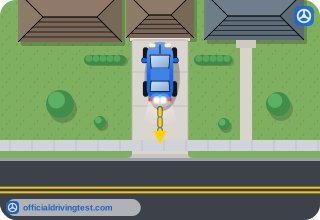
When backing up, what does the manual say to do whenever possible?
- Use only your rearview mirror to judge the distance
- Back up with the driver's door open to look behind
- Back up as quickly as you can to clear the space
- Use a person outside the vehicle to help you back up
Show answer
Correct answer: Use a person outside the vehicle to help you back up
The manual says to use a person outside the vehicle to help you back up whenever possible.
Source: Montana Driver Manual (Revised April 2024), page 55
-
During what hours does the manual say you shall turn on your headlights?
- From sunset to sunrise
- From one hour after sunset to one hour before sunrise
- From a half hour after sunset to a half hour before sunrise
- From two hours after sunset to two hours before sunrise
Show answer
Correct answer: From a half hour after sunset to a half hour before sunrise
The manual says that anytime from a half hour after sunset and a half hour before sunrise you shall turn on your headlights.
Source: Montana Driver Manual (Revised April 2024), page 55
-
You shall turn on your headlights any time persons or vehicles are not visible for how far?
- 100 feet
- 500 feet
- 250 feet
- 1000 feet
Show answer
Correct answer: 500 feet
The manual says to turn on your headlights anytime persons or vehicles are not visible for 500 feet because of insufficient light.
Source: Montana Driver Manual (Revised April 2024), page 55
-
In which light conditions does the manual say you should turn on your headlights even before dark?
- Only after the streetlights come on
- Only when it is fully dark
- At dusk or on overcast days
- Only when you leave the city
Show answer
Correct answer: At dusk or on overcast days
The manual says that at dusk or on overcast days you should turn on your headlights.
Source: Montana Driver Manual (Revised April 2024), page 55
-
Within what distance of meeting a vehicle should you dim your lights?
- 300 feet
- 1000 feet
- 500 feet
- 2000 feet
Show answer
Correct answer: 1000 feet
The manual says to dim your lights within 1000 feet of meeting a vehicle.
Source: Montana Driver Manual (Revised April 2024), page 55
-
Within what distance should you dim your lights when following another vehicle?
- 100 feet
- 200 feet
- 1000 feet
- 500 feet
Show answer
Correct answer: 500 feet
The manual says to dim your lights within 500 feet when following a vehicle.
Source: Montana Driver Manual (Revised April 2024), page 55
-
Why does the manual say you should NEVER drive with your parking lights?
- Oncoming traffic may think that you are stopped
- They do not light the road ahead of you
- They use too much battery power
- They are too bright for oncoming drivers
Show answer
Correct answer: Oncoming traffic may think that you are stopped
The manual says never to drive with parking lights because oncoming traffic may think that you are stopped.
Source: Montana Driver Manual (Revised April 2024), page 55
-
What does the manual say about using a spotlight?
- It may be used only on rural roads that have no oncoming traffic
- It may be used only when your high beams are turned off
- It may be used as long as you turn it off when approaching a motor vehicle
- It may not be used at all while you are driving a vehicle
Show answer
Correct answer: It may be used as long as you turn it off when approaching a motor vehicle
A spotlight may be used just as long as you turn it off when approaching a motor vehicle.
Source: Montana Driver Manual (Revised April 2024), page 55
-
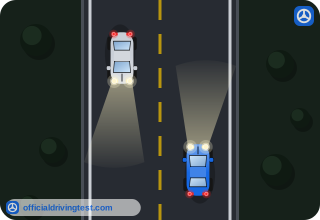
When meeting traffic at night, where does the manual say to look instead of directly at oncoming headlights?
- At the left edge of the roadway
- At the right edge of the roadway
- At the center of the road ahead
- At the dashboard lights
Show answer
Correct answer: At the right edge of the roadway
The manual says to avoid looking directly at oncoming headlights and instead watch the right edge of the roadway.
Source: Montana Driver Manual (Revised April 2024), page 55
-
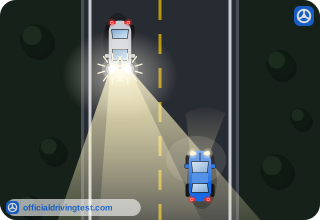
At night, what should you do if an oncoming driver flicks his lights at you?
- Turn off your headlights completely
- Flash your headlights back twice
- Switch to your parking lights
- Check to be sure you have dimmed yours
Show answer
Correct answer: Check to be sure you have dimmed yours
If an oncoming driver flicks his lights at you, check to be sure you have dimmed yours.
Source: Montana Driver Manual (Revised April 2024), page 55
-
What does the manual say about wearing sunglasses at night?
- They reduce your visibility dangerously
- They cut glare from oncoming headlights safely
- They help only if the lenses are not tinted
- They are fine if they are "photo gray" lenses
Show answer
Correct answer: They reduce your visibility dangerously
Sunglasses are a big help during the day but reduce visibility dangerously at night.
Source: Montana Driver Manual (Revised April 2024), page 55
-
Up to how much of your night vision can tinted and some "photo gray" lenses detract?
- Up to 10%
- Up to 50%
- Up to 30%
- Up to 75%
Show answer
Correct answer: Up to 30%
Even tinted and some "photo gray" lenses can detract up to 30% of your night vision.
Source: Montana Driver Manual (Revised April 2024), page 55
-
When does the manual say to turn on your headlights?
- Only when it is completely dark
- Only when a vehicle ahead has its lights on
- Only when oncoming drivers flash their lights
- Whenever you have trouble seeing others
Show answer
Correct answer: Whenever you have trouble seeing others
If you have trouble seeing others, they are having trouble seeing you, so turn on your headlights whenever you have trouble seeing others.
Source: Montana Driver Manual (Revised April 2024), page 56
-
What does the manual say to remember when you turn on your wipers?
- Turn on your headlights
- Turn on your emergency flashers
- Slow down to the minimum speed limit
- Turn off your high beams
Show answer
Correct answer: Turn on your headlights
The manual says that on rainy, snowy, or foggy days, if you turn on your wipers, turn on your headlights.
Source: Montana Driver Manual (Revised April 2024), page 56
-
For which vehicles does the manual say parking lights are meant?
- Cars driving in fog
- Cars driving at dusk
- Parked cars only
- Cars driving in light rain
Show answer
Correct answer: Parked cars only
The manual says that whenever driving and lights are necessary you should use your headlights, because parking lights are for parked cars only.
Source: Montana Driver Manual (Revised April 2024), page 56
-
When driving away from the rising or setting sun, what does the manual say to do?
- Use your parking lights
- Turn on your headlights
- Slow to the minimum speed limit
- Use your high beams
Show answer
Correct answer: Turn on your headlights
Drivers coming toward you may have trouble seeing your vehicle, so your headlights will help them see you.
Source: Montana Driver Manual (Revised April 2024), page 56
-
If there is no immediate danger, what should be all you need to do with your horn?
- Hold it down with a long steady blast
- Sound two sharp blasts
- Give it three short blasts
- Give it a light tap
Show answer
Correct answer: Give it a light tap
If there is no immediate danger, a light tap on the horn should be all you need.
Source: Montana Driver Manual (Revised April 2024), page 56
-
In which situation does the manual say to give your horn a light tap?
- When you are passing a driver who starts to turn into your lane
- When the driver ahead is slow to move at a green light
- When you want to greet a friend
- When you want another driver to hurry
Show answer
Correct answer: When you are passing a driver who starts to turn into your lane
A light tap is advised when you are passing a driver who starts to turn into your lane.
Source: Montana Driver Manual (Revised April 2024), page 56
-
At which of these places does the manual say to give your horn a light tap?
- Stopping at a red traffic signal in a busy downtown area
- Driving on a straight, open highway with a clear view ahead
- Coming to a steep hill or a sharp curve where you cannot see ahead
- Parking in a parking lot that has no other vehicles in it
Show answer
Correct answer: Coming to a steep hill or a sharp curve where you cannot see ahead
A light tap is advised when coming to a place where you cannot see what is ahead, like a steep hill, a sharp curve, or exiting a narrow alley.
Source: Montana Driver Manual (Revised April 2024), page 56
-
Which driver does the manual say to give a light tap on the horn?
- A driver who is driving slightly below the speed limit ahead
- A driver who is not paying attention or who may have trouble seeing you
- A driver who has made an error while driving in front of you
- A driver who is waiting at a stop sign at a clear intersection
Show answer
Correct answer: A driver who is not paying attention or who may have trouble seeing you
A light tap on the horn is advised when a driver is not paying attention or may have trouble seeing you.
Source: Montana Driver Manual (Revised April 2024), page 56
-
In which situation does the manual say to sound a SHARP BLAST on your horn?
- A friend you know is waiting at the curb and you want to greet them
- The vehicle ahead of you is slow to start at a green light
- Another driver ahead of you has made an error in traffic
- Another car is in danger of hitting you
Show answer
Correct answer: Another car is in danger of hitting you
If there is danger, such as another car in danger of hitting you, do not be afraid to sound a sharp blast on your horn.
Source: Montana Driver Manual (Revised April 2024), page 56
-
If you have lost control of your vehicle and are moving toward someone, what should you do with your horn?
- Sound a sharp blast
- Give a light tap
- Do not use it
- Honk only after you stop
Show answer
Correct answer: Sound a sharp blast
The manual says to sound a sharp blast when you have lost control of your vehicle and are moving toward someone.
Source: Montana Driver Manual (Revised April 2024), page 56
-
Which of these is an occasion when you should NOT use your horn?
- When a driver is not paying attention
- When passing a driver who starts to turn into your lane
- To encourage someone to drive faster or get out of the way
- When exiting a narrow alley
Show answer
Correct answer: To encourage someone to drive faster or get out of the way
The manual lists encouraging someone to drive faster or get out of the way as an occasion when you should not use your horn.
Source: Montana Driver Manual (Revised April 2024), page 56
-
Which of these is an occasion when you should NOT use your horn?
- When you cannot see what is ahead
- To greet a friend
- When another car is in danger of hitting you
- When you are coming to a sharp curve
Show answer
Correct answer: To greet a friend
The manual lists greeting a friend as an occasion when you should not use your horn.
Source: Montana Driver Manual (Revised April 2024), page 56
-
Around which pedestrians does the manual say you should not use your horn?
- Pedestrians in a crosswalk
- Pedestrians wearing dark clothing
- Pedestrians carrying packages
- Visually impaired pedestrians
Show answer
Correct answer: Visually impaired pedestrians
The manual lists around visually impaired pedestrians as an occasion when you should not use your horn.
Source: Montana Driver Manual (Revised April 2024), page 56
-
According to the manual, what often causes crashes?
- Drivers who follow the posted speed limit too closely in traffic
- Vehicles that have defective horns or worn-out tail lights
- One driver does not see another, or does what the other does not expect
- Drivers who use their turn signals too early before a turn
Show answer
Correct answer: One driver does not see another, or does what the other does not expect
Crashes often happen because one driver does not see another driver, or when one driver does something the other driver does not expect.
Source: Montana Driver Manual (Revised April 2024), page 56
-
What do other drivers generally expect you to do?
- Slow down when approaching intersections
- Keep doing what you are doing
- Move to the right lane whenever possible
- Stay in the left lane when passing
Show answer
Correct answer: Keep doing what you are doing
Other drivers generally expect you to keep doing what you are doing, so you must warn them when you are going to change direction or slow down.
Source: Montana Driver Manual (Revised April 2024), page 57
-
Which of these is a time when the manual says you should use your turn signal?
- While driving straight in your own lane
- When you start the engine
- When you drive through a green light going straight
- Before you merge into traffic
Show answer
Correct answer: Before you merge into traffic
The manual says to use turn signals before you change lanes, turn right or left, merge into traffic, pass on a highway or interstate, or park.
Source: Montana Driver Manual (Revised April 2024), page 58
-
Should you signal a lane change or turn when you do not see anyone else around?
- Yes, it is easy to miss someone who needs to know
- No, signals are needed only when other vehicles are visible
- No, signals are needed only when traffic is heavy
- No, only turns at intersections need a signal
Show answer
Correct answer: Yes, it is easy to miss someone who needs to know
The manual says to signal even when you do not see anyone else around, because it is easy to miss someone who needs to know what you are doing.
Source: Montana Driver Manual (Revised April 2024), page 58
-
There are streets or driveways between you and the street where you want to turn. When should you signal?
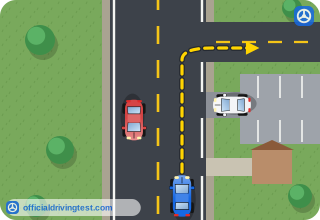
- As soon as you see the street you want
- Before the first driveway, to warn everyone
- Only when you reach the street
- After you have passed them
Show answer
Correct answer: After you have passed them
The manual warns not to signal too early: wait until you have passed streets, driveways, or entrances between you and your turn.
Source: Montana Driver Manual (Revised April 2024), page 58
-
Another vehicle is about to enter the street between you and where you plan to turn. Why should you wait until you have passed it to signal?
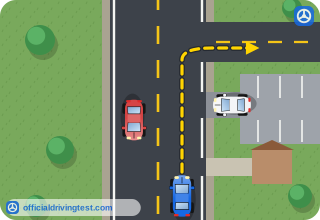
- Drivers behind the other vehicle would not be able to see your signal
- The other driver may think you plan to turn where they are
- Signaling that close to another vehicle is not allowed by law
- The other driver would have to stop and let you turn first
Show answer
Correct answer: The other driver may think you plan to turn where they are
If you signal earlier, the other driver may think you plan to turn where they are and might pull into your path.
Source: Montana Driver Manual (Revised April 2024), page 58
-
Why should you make sure your turn signal is off after a turn or lane change?
- Other drivers will not see your brake lights
- A signal left on can damage the turn lever
- Other drivers might think you plan to turn again
- The signal keeps your vehicle from slowing down
Show answer
Correct answer: Other drivers might think you plan to turn again
After small turns the signal may not turn off by itself, and if it stays on other drivers might think you plan to turn again.
Source: Montana Driver Manual (Revised April 2024), page 58
-
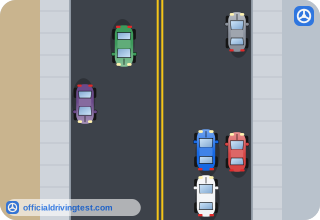
You are going to stop or slow down where another driver does not expect it. What does the manual say to do?
- Tap your brake pedal three or four times quickly
- Hold the brake pedal down firmly and stay on it
- Flash your high beams and keep your speed
- Sound your horn twice before you slow down
Show answer
Correct answer: Tap your brake pedal three or four times quickly
Tapping the brake pedal three or four times quickly lets those behind you know you are about to slow down.
Source: Montana Driver Manual (Revised April 2024), page 58
-
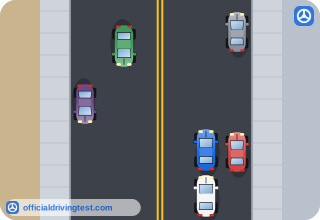
When should you begin to slow down for a turn or a stop?
- As late as possible to keep traffic moving
- As early as it is safe to do so
- Only when you see the brake lights ahead
- Just before you reach the intersection
Show answer
Correct answer: As early as it is safe to do so
The manual says to always slow down as early as it is safe to do so.
Source: Montana Driver Manual (Revised April 2024), page 58
-
Why should you signal when you slow down to park or turn just before an intersection?
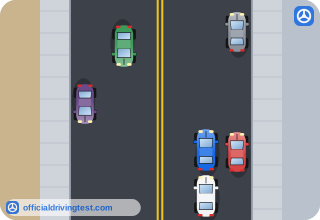
- Oncoming traffic expects you to stop before the intersection
- Pedestrians at the intersection expect you to turn first
- Turning drivers must always signal at least 300 feet ahead
- Following traffic expects you to continue through the intersection
Show answer
Correct answer: Following traffic expects you to continue through the intersection
Following traffic expects you to continue through the intersection, so a signal tells them you are slowing to park or turn.
Source: Montana Driver Manual (Revised April 2024), page 58
-
Even though vehicles are equipped with turn and brake lights, what else must you know?
- The basic hand signals
- How to replace a burned-out signal bulb
- The meaning of every horn pattern
- The locations of all rest areas
Show answer
Correct answer: The basic hand signals
The manual says that even with turn and brake lights you must know the basic hand signals as well.
Source: Montana Driver Manual (Revised April 2024), page 58
-
Which hand signal tells other drivers you are about to turn left?
- The driver’s arm bent upward at the elbow
- The driver’s arm held out and angled downward
- The driver’s arm held straight out to the side
- The driver’s arm raised straight up
Show answer
Correct answer: The driver’s arm held straight out to the side
The basic hand signal for a left turn is the arm held straight out to the side.
Source: Montana Driver Manual (Revised April 2024), page 58
-
Which hand signal tells other drivers you are about to turn right?
- The driver’s arm held straight out to the side
- The driver’s arm held out and angled downward
- The driver’s forearm bent upward at the elbow
- The driver’s arm waved back and forth
Show answer
Correct answer: The driver’s forearm bent upward at the elbow
The basic hand signal for a right turn is the arm bent upward at the elbow.
Source: Montana Driver Manual (Revised April 2024), page 58
-
Which hand signal tells other drivers you are stopping or slowing?
- The driver’s arm held out and angled downward
- The driver’s arm held straight out to the side
- The driver’s forearm bent upward at the elbow
- The driver’s arm raised straight up
Show answer
Correct answer: The driver’s arm held out and angled downward
The basic hand signal for stopping or slowing is the arm held out and angled downward.
Source: Montana Driver Manual (Revised April 2024), page 58