Maryland: Emergencies and crashes
Driving in fog, rain, snow and ice, skids and hydroplaning, roadside emergencies, and what to do after a crash. Split into 4 shorter tests so you're not stuck in one long quiz.
Independent educational site · not affiliated with any government agency or DMV
Choose a part
Emergencies and crashes — Part 1
Questions in this part include: “Which of these are the most common causes of reduced visibility?”
StartEmergencies and crashes — Part 2
Questions in this part include: “Which of these should you keep in an emergency kit in your car?”
StartEmergencies and crashes — Part 3
Questions in this part include: “What happens to your license if you are convicted of leaving the scene of a crash that results in a serious injury?”
StartEmergencies and crashes — Part 4
Questions in this part include: “After a crash with no injuries, what facts about the crash itself should you write down?”
StartAll 78 Emergencies and crashes questions with answers
Choose a part above to take a practice test, or study every question and answer here.
Show the questions and answersHide the questions
-
What does "visibility" mean when you drive?
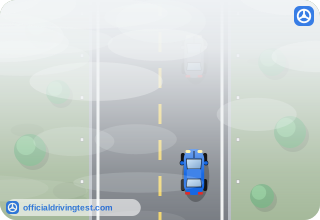
- Your ability to clearly see everything around you on the road
- How quickly your vehicle can start, stop, and change direction
- The distance you need to stop on a wet road
- How well other drivers can hear your vehicle
Show answer
Correct answer: Your ability to clearly see everything around you on the road
The manual defines visibility as your ability to clearly see everything around you on the road, such as vehicles, pedestrians, signs, signals, and pavement markings.
Source: Maryland Driver’s Manual (October 2025 Edition (DL-002 10-25)), page 27
-
Which of these are the most common causes of reduced visibility?
- Dust, smoke, wind, and glare
- Hills, curves, bridges, and tunnels
- Darkness, fog, heavy rain, and snow
- Parked cars, trucks, buses, and trailers
Show answer
Correct answer: Darkness, fog, heavy rain, and snow
The manual says the most common causes of reduced visibility are darkness, fog, heavy rain, and snow.
Source: Maryland Driver’s Manual (October 2025 Edition (DL-002 10-25)), page 27
-
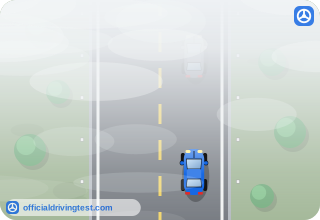
Compared with "normal" driving, driving when visibility is reduced requires:
- less concentration, because traffic moves slower
- more concentration and preparation
- the same attention as usual
- only a slower reaction time
Show answer
Correct answer: more concentration and preparation
The manual says driving in reduced visibility is more difficult than normal driving and requires more concentration and preparation.
Source: Maryland Driver’s Manual (October 2025 Edition (DL-002 10-25)), page 27
-
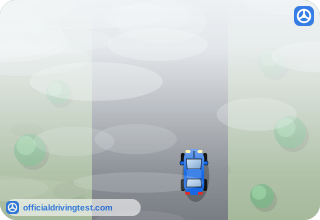
When visibility is reduced, what can you use as a guide?
- The headlights of the vehicles coming toward you
- The center of the road
- Signs and buildings beside the road
- The lines on the road edge or the right side of the road
Show answer
Correct answer: The lines on the road edge or the right side of the road
The manual advises using the lines on the edge of the road, or the right side of the road, as a guide in reduced visibility.
Source: Maryland Driver’s Manual (October 2025 Edition (DL-002 10-25)), page 27
-
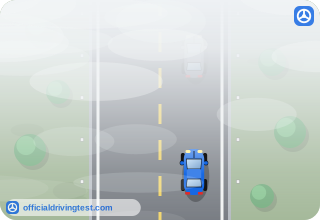
The fog is so thick that you cannot safely drive your vehicle. What does the manual say to do?
- Stop in your lane, turn on your high beams, and wait for the fog to clear
- Pull completely off the road to a safe location and use your emergency flashers
- Slow to a crawl and keep driving in your lane until the fog thins out
- Stop on the road and sound your horn
Show answer
Correct answer: Pull completely off the road to a safe location and use your emergency flashers
The manual says to pull completely off the road to a safe location and turn on your emergency flashers if the fog is too thick to drive safely.
Source: Maryland Driver’s Manual (October 2025 Edition (DL-002 10-25)), page 28
-
What is traction?
- The pressure of the air inside your tires
- The grip between your tires and the road
- The distance your vehicle slides when you brake
- The weight of your vehicle on its tires
Show answer
Correct answer: The grip between your tires and the road
The manual defines traction as the grip between your tires and the road that makes it possible for your vehicle to start, stop, and change direction.
Source: Maryland Driver’s Manual (October 2025 Edition (DL-002 10-25)), page 28
-
According to the manual, what should "good tread" on your tires be based on?
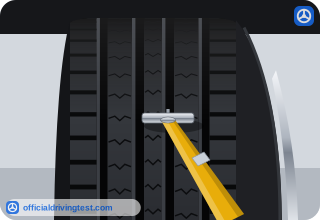
- What the tire maker recommends and the vehicle guidelines
- The age of the vehicle and the season of the year
- The speed limit of the road and the weather forecast
- The weight of the cargo you carry
Show answer
Correct answer: What the tire maker recommends and the vehicle guidelines
The manual says tires should have good tread, based on what the company that made the tires recommends and the guidelines for your vehicle.
Source: Maryland Driver’s Manual (October 2025 Edition (DL-002 10-25)), page 28
-
Why should you avoid slamming on your brakes in inclement weather?
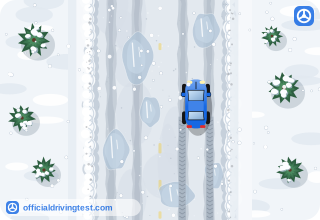
- It may damage your headlights
- It may cause your tires to freeze
- It may cause your vehicle to skid
- It may turn off your wipers
Show answer
Correct answer: It may cause your vehicle to skid
The manual says slamming on your brakes may cause your vehicle to skid.
Source: Maryland Driver’s Manual (October 2025 Edition (DL-002 10-25)), page 28
-
In inclement weather, if your vehicle does not have an anti-lock braking system, what should you do to prevent skidding?
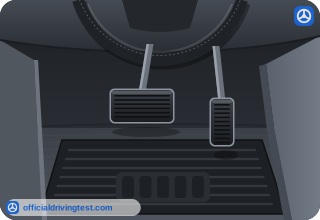
- Press the brake pedal as hard as possible
- Pump the brakes
- Shift into neutral
- Turn the steering wheel quickly
Show answer
Correct answer: Pump the brakes
The manual says that without an anti-lock braking system you should pump the brakes to prevent skidding.
Source: Maryland Driver’s Manual (October 2025 Edition (DL-002 10-25)), page 28
-
When driving in inclement weather, which of these should you avoid?
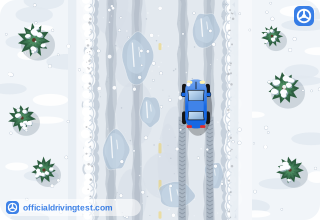
- Holding the steering wheel with both hands
- Changing speed slowly
- Keeping your hands at the sides of the wheel
- Jerking the steering wheel or quickly changing speed
Show answer
Correct answer: Jerking the steering wheel or quickly changing speed
The manual says to avoid jerking the steering wheel or quickly changing speed in inclement weather.
Source: Maryland Driver’s Manual (October 2025 Edition (DL-002 10-25)), page 28
-
Which of these freeze before other roads?
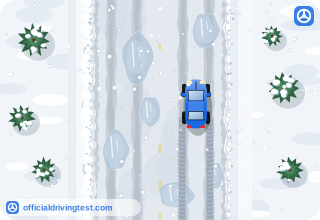
- Ramps and bridges
- Roads with a low speed limit
- Roads with a wide shoulder
- Roads in tunnels
Show answer
Correct answer: Ramps and bridges
The manual notes that ramps and bridges freeze before roads.
Source: Maryland Driver’s Manual (October 2025 Edition (DL-002 10-25)), page 28
-
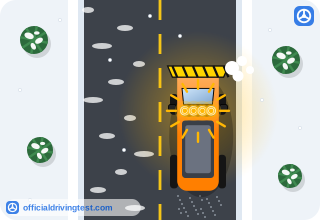
What does the manual say about ice on plowed roads in winter?
- Only on the shoulder, because plows clear the lanes completely
- Only on bridges
- They may refreeze at night or have icy patches from melted snow
- Nowhere, because plowing removes all ice
Show answer
Correct answer: They may refreeze at night or have icy patches from melted snow
The manual says plowed roads may refreeze at night or have icy patches from snow that melted during the day.
Source: Maryland Driver’s Manual (October 2025 Edition (DL-002 10-25)), page 28
-
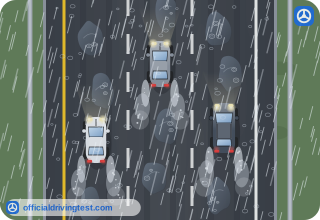
When driving in inclement weather, what does the manual say you should do instead of just reacting to what other drivers do?
- Follow the vehicle in front closely
- Think ahead and take action to stay safe
- Drive in the center of the road
- Wait for other drivers to act first
Show answer
Correct answer: Think ahead and take action to stay safe
The manual says it is important to think ahead and take action to stay safe, not just react to what other drivers do.
Source: Maryland Driver’s Manual (October 2025 Edition (DL-002 10-25)), page 28
-
Which of these does the manual say to make sure is working well in inclement weather?
- Your parking brake
- Your horn
- Your rear-view mirror
- Your windshield wipers
Show answer
Correct answer: Your windshield wipers
The manual says to make sure your windshield wipers are working well in inclement weather.
Source: Maryland Driver’s Manual (October 2025 Edition (DL-002 10-25)), page 29
-
What does the manual say about a "completely safe" speed on ice and snow?
- There is no such thing as a completely safe speed
- A speed of 25 miles per hour is completely safe
- Any speed under the limit is completely safe
- A completely safe speed is half the limit
Show answer
Correct answer: There is no such thing as a completely safe speed
The manual says there is no such thing as a "completely safe" speed on ice and snow.
Source: Maryland Driver’s Manual (October 2025 Edition (DL-002 10-25)), page 29
-
What is "black ice"?
- Oil that has spilled onto the road and then frozen
- Wet leaves and mud frozen to the pavement surface
- A thin layer of ice on blacktop roads that is hard to see
- A dark patch of fog that settles over the road
Show answer
Correct answer: A thin layer of ice on blacktop roads that is hard to see
The manual says it can be very hard or impossible to see a thin layer of ice on blacktop (asphalt) roads, and this is sometimes called black ice.
Source: Maryland Driver’s Manual (October 2025 Edition (DL-002 10-25)), page 29
-
What causes black ice?
- Rain falling on dry salt
- Ice or snow melting and re-freezing
- Tires heating the road surface
- Cold wind blowing across the road
Show answer
Correct answer: Ice or snow melting and re-freezing
The manual says black ice is caused by ice or snow melting and re-freezing.
Source: Maryland Driver’s Manual (October 2025 Edition (DL-002 10-25)), page 29
-
What does the manual say about four-wheel drive vehicles on ice and snow?
- They cannot slide on ice or snow because all four wheels are driven
- They can drive at normal speeds on ice and snow
- They need no extra care on ice and snow, unlike other vehicles
- They can also slide; driving on ice or snow is always dangerous
Show answer
Correct answer: They can also slide; driving on ice or snow is always dangerous
The manual says four-wheel drive vehicles can also slide on ice and snow, and driving on snow or ice is always dangerous and unpredictable.
Source: Maryland Driver’s Manual (October 2025 Edition (DL-002 10-25)), page 29
-
What does the manual suggest when driving on ice or snow-covered roads?
- Slow down, because nothing makes it safe to drive at normal speeds
- Drive at normal speeds if you have a four-wheel drive vehicle
- Follow a plow as closely as possible
- Use your high beams to see the ice
Show answer
Correct answer: Slow down, because nothing makes it safe to drive at normal speeds
The manual suggests slowing down, because nothing makes it safe to drive on ice or snow-covered roads at normal speeds.
Source: Maryland Driver’s Manual (October 2025 Edition (DL-002 10-25)), page 29
-
Before driving in snow or ice, what should you do with your windows and lights?
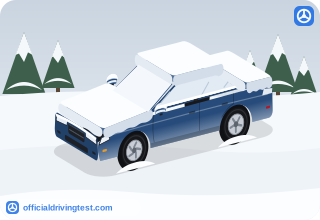
- Wipe only the windshield and leave the rest for later
- Clear them only after you start driving
- Keep them clear and remove all ice and snow from your vehicle
- Leave the snow on the roof for warmth
Show answer
Correct answer: Keep them clear and remove all ice and snow from your vehicle
The manual says to keep your windows and lights clear and to remove all ice and snow from your vehicle before driving.
Source: Maryland Driver’s Manual (October 2025 Edition (DL-002 10-25)), page 29
-
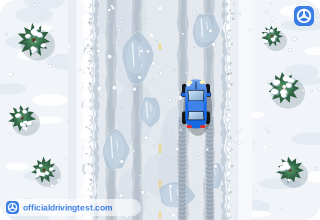
When you start driving on ice or snow, how should you test your brakes?
- Press them hard at normal speed
- Start very slowly, then test them gently
- Start at normal speed, then press them lightly
- Do not test them until you reach an intersection
Show answer
Correct answer: Start very slowly, then test them gently
The manual says to start very slowly, then test your brakes gently to find out how well you can stop.
Source: Maryland Driver’s Manual (October 2025 Edition (DL-002 10-25)), page 29
-
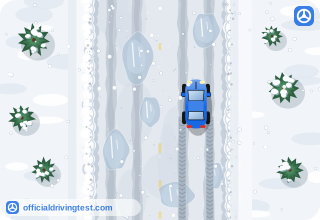
On ice or snow, when should you start slowing down for an intersection or turn?
- Only when you reach it
- Just after you enter it
- Only when other vehicles are close
- Long before you come to it
Show answer
Correct answer: Long before you come to it
The manual says to start slowing down long before you come to an intersection or turn.
Source: Maryland Driver’s Manual (October 2025 Edition (DL-002 10-25)), page 29
-
Which two things does the manual say to keep full in snow or ice?
- Your gas tank and windshield washer fluid
- Your engine oil and your brake fluid
- Your tire pressure and your coolant
- Your battery and your spare tire
Show answer
Correct answer: Your gas tank and windshield washer fluid
The manual says to keep your gas tank and windshield washer fluid full when driving in snow or ice.
Source: Maryland Driver’s Manual (October 2025 Edition (DL-002 10-25)), page 29
-
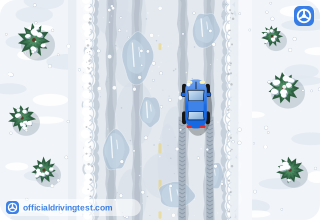
When does the manual say to use chains, snow tires, or radial tires?
- On every road throughout the whole winter season
- Only on roads that the state has not yet plowed
- On snow emergency routes when a snow emergency is declared
- Only on bridges and ramps that have already frozen
Show answer
Correct answer: On snow emergency routes when a snow emergency is declared
The manual says to use chains, snow tires, or radial tires on designated snow emergency routes when a snow emergency is declared.
Source: Maryland Driver’s Manual (October 2025 Edition (DL-002 10-25)), page 29
-
Which of these should you keep in an emergency kit in your car?
- Jumper cables
- A first aid kit
- A tow rope
- A road atlas
Show answer
Correct answer: A first aid kit
The manual lists flares, a flashlight and batteries, a first aid kit, a blanket, kitty litter or sand, and a small shovel and ice scraper for an emergency kit.
Source: Maryland Driver’s Manual (October 2025 Edition (DL-002 10-25)), page 29
-
Why does the manual list kitty litter or sand in an emergency kit?
- To soak up oil spills on the road
- To fill the gas tank
- To clean the windshield
- For traction on snow and ice
Show answer
Correct answer: For traction on snow and ice
The manual lists kitty litter or sand in the emergency kit for traction on snow and ice.
Source: Maryland Driver’s Manual (October 2025 Edition (DL-002 10-25)), page 29
-
Which of these decreases traction between your tires and the road?
- Water on the road
- Tires with good tread
- A dry, smooth road
- A clean windshield
Show answer
Correct answer: Water on the road
The manual says sand, gravel, uneven road surfaces, oil slicks or spills, increased speed, or water on the road decreases traction.
Source: Maryland Driver’s Manual (October 2025 Edition (DL-002 10-25)), page 29
-
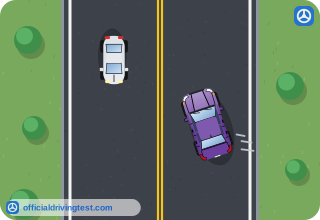
When does the possibility of skidding or sliding increase?
- When traction increases
- When your tires have good tread
- When traction decreases
- When your vehicle has anti-lock brakes
Show answer
Correct answer: When traction decreases
The manual says the possibility of skidding or sliding increases when traction decreases.
Source: Maryland Driver’s Manual (October 2025 Edition (DL-002 10-25)), page 29
-
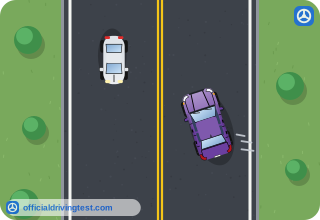
If your vehicle begins to skid, what should you do with the pedal you are using?
- Press harder on the brake pedal to stop sliding
- Release the gas pedal or the brake pedal you are using
- Press harder on the accelerator to drive out of it
- Shift the vehicle into reverse right away
Show answer
Correct answer: Release the gas pedal or the brake pedal you are using
The manual says to release the accelerator (gas pedal) or brake pedal, whichever one you are using, to regain control.
Source: Maryland Driver’s Manual (October 2025 Edition (DL-002 10-25)), page 29
-
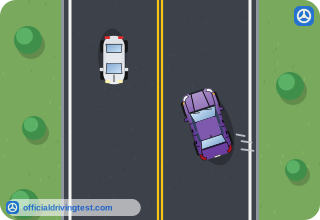
If your vehicle begins to skid, in which direction should you steer?
- Opposite to the direction you are skidding
- Toward the shoulder
- Straight ahead without moving the wheel
- In the direction you are skidding
Show answer
Correct answer: In the direction you are skidding
The manual says to steer in the direction you are skidding.
Source: Maryland Driver’s Manual (October 2025 Edition (DL-002 10-25)), page 29
-
If your vehicle begins to skid, where should you look?
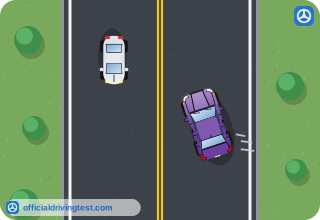
- Where you want your vehicle to go
- At the front wheels
- At the object you are afraid to hit
- At the dashboard
Show answer
Correct answer: Where you want your vehicle to go
The manual says to look where you want your vehicle to go.
Source: Maryland Driver’s Manual (October 2025 Edition (DL-002 10-25)), page 29
-
When should you press on the brake pedal during a skid?
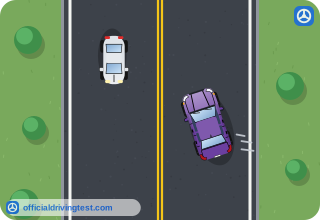
- Right away, as hard as you can
- Only after the vehicle has stopped
- Only after you have traction again
- Never during a skid
Show answer
Correct answer: Only after you have traction again
The manual says to press on your brake pedal only after you have traction again, when your tires are gripping the road again.
Source: Maryland Driver’s Manual (October 2025 Edition (DL-002 10-25)), page 29
-
Which action may help if your back wheels lose traction?
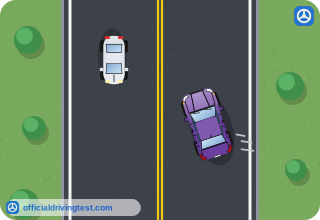
- Braking hard
- Slowly accelerating
- Turning the wheel sharply
- Shifting into neutral
Show answer
Correct answer: Slowly accelerating
The manual says slowly accelerating (pressing on the gas) may help if your back wheels lose traction.
Source: Maryland Driver’s Manual (October 2025 Edition (DL-002 10-25)), page 29
-
When your vehicle rides on a sheet of water and the tires lose contact with the road, what is this called?
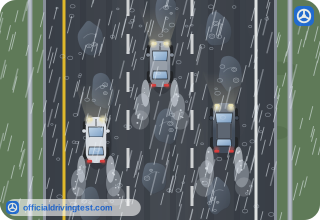
- Hydroplaning
- Skidding
- Fishtailing
- Brake fade
Show answer
Correct answer: Hydroplaning
The manual says that when tires lose contact with the road because the vehicle is riding on a sheet of water, it is called hydroplaning.
Source: Maryland Driver’s Manual (October 2025 Edition (DL-002 10-25)), page 30
-
How much control of your vehicle can hydroplaning make you lose?
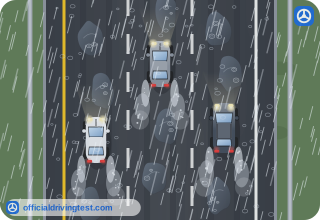
- Only steering control
- Only braking control
- Some or all of it
- None, if tires are new
Show answer
Correct answer: Some or all of it
Hydroplaning can cause you to lose some or all control of your vehicle.
Source: Maryland Driver’s Manual (October 2025 Edition (DL-002 10-25)), page 30
-
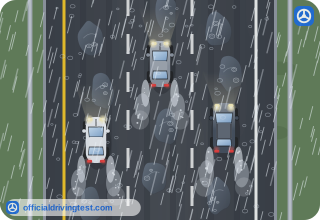
To help prevent hydroplaning, what should you keep in good condition?
- Your headlights
- Your tires
- Your brake lights
- Your wiper blades
Show answer
Correct answer: Your tires
The manual says to prevent hydroplaning you should keep your tires in good condition and lower your speed on wet roads.
Source: Maryland Driver’s Manual (October 2025 Edition (DL-002 10-25)), page 30
-
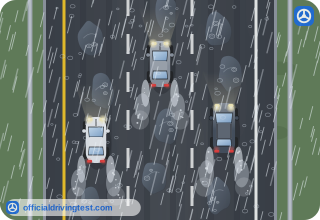
If you start to lose control of your vehicle on a wet road, what should you do with the gas pedal?
- Press it harder to regain traction
- Tap it repeatedly
- Hold it at a steady position
- Take your foot off the gas
Show answer
Correct answer: Take your foot off the gas
When you start to lose control while hydroplaning, the manual says to take your foot off the gas.
Source: Maryland Driver’s Manual (October 2025 Edition (DL-002 10-25)), page 30
-
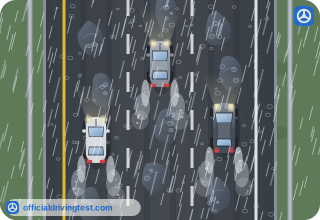
If your vehicle starts to hydroplane, what should you do with your brakes?
- Apply them firmly
- Do not apply them
- Press them gently and steadily
- Hold them down hard
Show answer
Correct answer: Do not apply them
The manual says not to apply your brakes if you start to lose control from hydroplaning.
Source: Maryland Driver’s Manual (October 2025 Edition (DL-002 10-25)), page 30
-
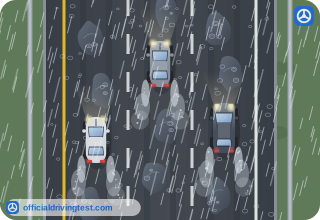
If you start to lose control from hydroplaning, how should you steer?
- Steer sharply toward the shoulder
- Turn the wheel quickly back and forth
- Keep your vehicle going straight
- Steer toward the center of the road
Show answer
Correct answer: Keep your vehicle going straight
The manual says to keep your vehicle going straight if you start to lose control from hydroplaning.
Source: Maryland Driver’s Manual (October 2025 Edition (DL-002 10-25)), page 30
-
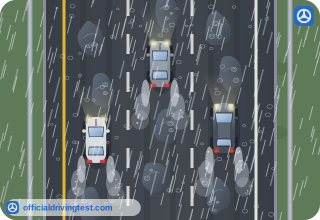
After you take your foot off the gas while losing control on a wet road, what should you do until you get control back?
- Slow down
- Keep the same speed
- Brake as hard as you can
- Turn the wheel sharply
Show answer
Correct answer: Slow down
The manual says to slow down until you get control back.
Source: Maryland Driver’s Manual (October 2025 Edition (DL-002 10-25)), page 30
-
What should you do whenever you are in a crash to warn other drivers?
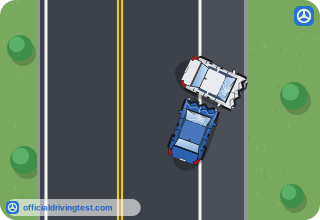
- Put on your emergency flashers or flares
- Sound your horn until help arrives
- Turn on your high beams
- Open your hood and trunk
Show answer
Correct answer: Put on your emergency flashers or flares
The manual says that whenever you are in a crash you should put on your emergency flashers or flares to warn other drivers.
Source: Maryland Driver’s Manual (October 2025 Edition (DL-002 10-25)), page 43
-
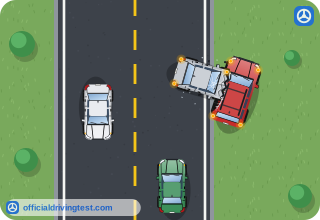
If you are involved in a crash where someone has been injured, including a pedestrian or bicyclist, what must you do?
- Drive to the nearest police station to report it
- Leave once someone else has called for help
- Remain at the scene
- Move on after giving your name to the injured person
Show answer
Correct answer: Remain at the scene
You must remain at the scene of a crash in which someone has been injured, including a pedestrian or bicyclist.
Source: Maryland Driver’s Manual (October 2025 Edition (DL-002 10-25)), page 43
-
After a crash in which someone is injured, what should you do immediately?
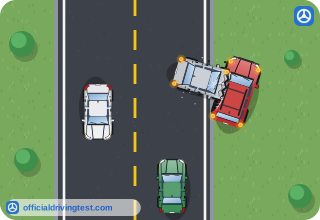
- Call your own insurance company
- Call 911
- Call the Motor Vehicle Administration
- Call a local tow truck company
Show answer
Correct answer: Call 911
You must call 911 immediately to get help from police, fire, and ambulance when someone has been injured.
Source: Maryland Driver’s Manual (October 2025 Edition (DL-002 10-25)), page 43
-
When you call about a crash with an injury, what should you report?
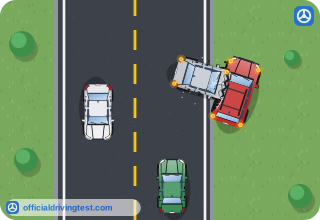
- Which driver you think caused the crash and how fast each car went
- The insurance company and policy number of each driver
- The make, model and color of every vehicle at the scene
- The number of people involved, the type of injury, and the location
Show answer
Correct answer: The number of people involved, the type of injury, and the location
After a crash with an injury you report the number of people involved, the type of injury, and the location of the crash.
Source: Maryland Driver’s Manual (October 2025 Edition (DL-002 10-25)), page 43
-
In a crash where someone has been injured, what should you do with the vehicles?
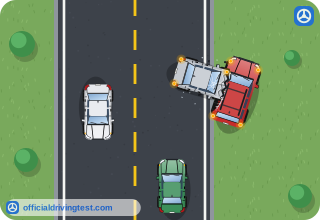
- Move them to the shoulder to clear traffic
- Move them to the nearest parking lot
- Move them only if they block a lane
- Do not move them
Show answer
Correct answer: Do not move them
When someone has been injured, you must remain at the scene and not move the vehicles.
Source: Maryland Driver’s Manual (October 2025 Edition (DL-002 10-25)), page 43
-
What happens to your license if you are convicted of leaving the scene of a crash that results in a serious injury?
- It will be suspended until you pay a fine
- It will be revoked
- It will be restricted to daytime driving
- It will be changed to a provisional license
Show answer
Correct answer: It will be revoked
The manual says your license will be revoked, so you will not be allowed to drive, if you are convicted of leaving the scene of a crash that results in a serious injury.
Source: Maryland Driver’s Manual (October 2025 Edition (DL-002 10-25)), page 43
-
What is the longest prison term you could face for leaving the scene of a crash that results in a serious injury?
- Up to 6 months
- Up to 1 year
- Up to 5 years
- Up to 2 years
Show answer
Correct answer: Up to 5 years
A conviction for leaving the scene of a crash with a serious injury can mean prison for up to 5 years.
Source: Maryland Driver’s Manual (October 2025 Edition (DL-002 10-25)), page 43
-
What is the largest fine you could face for leaving the scene of a crash that results in a serious injury?
- $5,000
- $500
- $1,000
- $2,500
Show answer
Correct answer: $5,000
A conviction for leaving the scene of a crash with a serious injury can mean a fine of up to $5,000.
Source: Maryland Driver’s Manual (October 2025 Edition (DL-002 10-25)), page 43
-
How does Maryland treat leaving the scene of a crash where someone dies?
- It is a misdemeanor
- It is a felony
- It is a civil infraction
- It is a warning-only violation
Show answer
Correct answer: It is a felony
Leaving the scene of a crash where someone dies is a felony.
Source: Maryland Driver’s Manual (October 2025 Edition (DL-002 10-25)), page 43
-
What is the longest prison term for leaving the scene of a crash where someone dies?
- Up to 2 years
- Up to 3 years
- Up to 15 years
- Up to 10 years
Show answer
Correct answer: Up to 10 years
Leaving the scene of a crash where someone dies is a felony that can bring prison for up to 10 years.
Source: Maryland Driver’s Manual (October 2025 Edition (DL-002 10-25)), page 43
-
What is the largest fine for leaving the scene of a crash where someone dies?
- $10,000
- $1,000
- $2,500
- $20,000
Show answer
Correct answer: $10,000
Leaving the scene of a crash where someone dies is a felony with a fine of up to $10,000.
Source: Maryland Driver’s Manual (October 2025 Edition (DL-002 10-25)), page 43
-
There are no injuries after a crash, but your vehicle cannot move. What should you do?
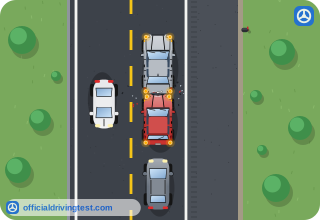
- Push the vehicle off the road yourself
- Walk across the road to find a nearby telephone
- Call 911 and ask for police assistance
- Stand in the lane and wave other drivers around
Show answer
Correct answer: Call 911 and ask for police assistance
You should call 911 immediately, give the location of the crash, and report that there are no injuries but you need police assistance.
Source: Maryland Driver’s Manual (October 2025 Edition (DL-002 10-25)), page 43
-
No one is hurt and your vehicle cannot move after a crash. What should you do while you wait for help?
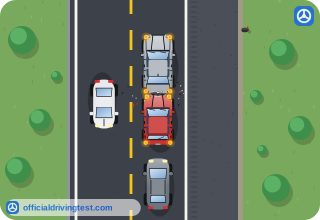
- Be patient and stay away from traffic
- Cross the road to speak with other drivers
- Stop traffic so the vehicle can be pushed
- Wait in the lane behind the vehicle
Show answer
Correct answer: Be patient and stay away from traffic
You should be patient, not try to cross the road or stop traffic, and make sure you stay away from traffic.
Source: Maryland Driver’s Manual (October 2025 Edition (DL-002 10-25)), page 43
-
No one is hurt and your vehicle can move after a crash. What should you do first?
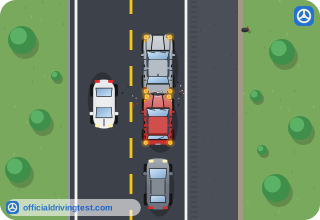
- Leave it where it stopped until the police arrive
- Drive it to the nearest police station
- Move it off the road, close to where the crash occurred
- Park it in the next lane to the right
Show answer
Correct answer: Move it off the road, close to where the crash occurred
Moving the vehicle off the road as close as possible to the crash helps keep you and others safe and prevents traffic backups.
Source: Maryland Driver’s Manual (October 2025 Edition (DL-002 10-25)), page 43
-
After a crash with no injuries, which of these should you get from the other driver?
- Social Security number
- Driver's license number
- Date of birth
- Employer's name
Show answer
Correct answer: Driver's license number
You should get information such as the other driver's name, address, phone number, license plate number and state, driver's license number, vehicle make and model, and insurance information.
Source: Maryland Driver’s Manual (October 2025 Edition (DL-002 10-25)), page 43
-
After a crash with no injuries, what should you give the other driver or drivers?
- Only your name, address and phone number
- Only your insurance information
- Nothing until the police arrive
- The same information you get from them
Show answer
Correct answer: The same information you get from them
You get important information from the other driver(s) and give the other driver(s) the same information.
Source: Maryland Driver’s Manual (October 2025 Edition (DL-002 10-25)), page 43
-
After a crash, what should you ask witnesses for?
- Their license plate numbers and insurance information
- Their driver's license numbers and ages
- Their opinions about who should pay
- Their names, addresses and phone numbers
Show answer
Correct answer: Their names, addresses and phone numbers
The manual says to ask witnesses for their names, addresses and phone numbers.
Source: Maryland Driver’s Manual (October 2025 Edition (DL-002 10-25)), page 43
-
Which of these should you remember and write down about a crash, if you can?
- The other driver's age and employer
- The weather conditions and road conditions
- The home addresses of all passengers
- The cost of repairs to each vehicle
Show answer
Correct answer: The weather conditions and road conditions
You should remember the location, date and time, number of vehicles involved, weather conditions, and road conditions, and write them down if you can.
Source: Maryland Driver’s Manual (October 2025 Edition (DL-002 10-25)), page 43
-
What should you do about damages to the vehicles after a crash, if you can?
- Repair them at the scene
- Ask the other driver to repair them
- Write them down and take pictures
- Sign a statement and leave the rest to the police
Show answer
Correct answer: Write them down and take pictures
You should remember any damages to the vehicles, write them down, and take pictures if you can.
Source: Maryland Driver’s Manual (October 2025 Edition (DL-002 10-25)), page 43
-
After a crash with no injuries, what facts about the crash itself should you write down?
- How the crash happened
- Who you think should be fined
- The other driver's past violations
- What each vehicle is worth
Show answer
Correct answer: How the crash happened
The manual tells you to write down the facts of how the crash happened.
Source: Maryland Driver’s Manual (October 2025 Edition (DL-002 10-25)), page 43
-
In which of these situations must you always call the police after a crash?
- The crash happened on a weekend afternoon in clear weather
- A driver appears to be under the influence of alcohol or drugs
- Only a bumper was scratched and nobody complained
- The other driver is a teenager
Show answer
Correct answer: A driver appears to be under the influence of alcohol or drugs
You must always call the police when a driver appears to be under the influence of alcohol or drugs.
Source: Maryland Driver’s Manual (October 2025 Edition (DL-002 10-25)), page 43
-
In which of these situations must you always call the police after a crash?
- The other driver is older than you
- The crash happened in a parking lot
- A passenger is not wearing a seat belt
- A driver does not have a license
Show answer
Correct answer: A driver does not have a license
You must always call the police when a driver does not have a license.
Source: Maryland Driver’s Manual (October 2025 Edition (DL-002 10-25)), page 44
-
In which of these situations must you always call the police after a crash?
- A driver tries to leave without giving you information
- The other driver gives you a different phone number
- The other driver wants to wait for a tow truck
- A witness refuses to give a statement
Show answer
Correct answer: A driver tries to leave without giving you information
You must always call the police when a driver tries to leave the scene without giving you insurance and other important information.
Source: Maryland Driver’s Manual (October 2025 Edition (DL-002 10-25)), page 44
-
In which of these situations must you always call the police after a crash?
- Your vehicle has a flat tire
- The other driver has no insurance card with them
- Public property has been damaged
- Traffic has slowed near the crash
Show answer
Correct answer: Public property has been damaged
You must always call the police when public property has been damaged.
Source: Maryland Driver’s Manual (October 2025 Edition (DL-002 10-25)), page 44
-
If you strike an unattended vehicle or other unattended property, what must you do first?
- Stop as close as possible to where the crash occurred
- Drive on and report it from your destination
- Move to the nearest parking lot before stopping
- Leave your vehicle and ask the police to come
Show answer
Correct answer: Stop as close as possible to where the crash occurred
You are required to stop your vehicle as close as possible to where the crash occurred, without blocking traffic more than necessary.
Source: Maryland Driver’s Manual (October 2025 Edition (DL-002 10-25)), page 44
-
After you strike an unattended vehicle, what must you try to do?
- Wait for the police to find the owner
- Ask a witness to contact the owner later
- Find the owner and tell them what happened
- Report the damage to the MVA
Show answer
Correct answer: Find the owner and tell them what happened
You are required to try to find the owner of the vehicle or property to tell them what happened and provide your information.
Source: Maryland Driver’s Manual (October 2025 Edition (DL-002 10-25)), page 44
-
You strike an unattended vehicle and cannot find its owner. What must you do?
- Leave without a note, since no one was hurt in the crash
- Leave a note with your contact information where it is easy to find
- Wait beside the vehicle for as long as it takes the owner to return
- Take pictures of the damage and then drive away
Show answer
Correct answer: Leave a note with your contact information where it is easy to find
If you cannot find the owner, you must leave a note about what happened with your contact information, where they can easily find it.
Source: Maryland Driver’s Manual (October 2025 Edition (DL-002 10-25)), page 44
-
What must you do if you hit and injure a domestic animal with your vehicle?
- Move the animal off the road and continue
- Drive on and report it later
- Take the animal to its owner's home
- Immediately call the police
Show answer
Correct answer: Immediately call the police
If you hit and injure a domestic animal with your vehicle, you must immediately call the police.
Source: Maryland Driver’s Manual (October 2025 Edition (DL-002 10-25)), page 44
-
Which of these is given as an example of a domestic animal?
- Deer
- Foxes
- Raccoons
- Horses
Show answer
Correct answer: Horses
The manual lists dogs, cats, horses, and cows as examples of domestic animals.
Source: Maryland Driver’s Manual (October 2025 Edition (DL-002 10-25)), page 44
-
Which of these is advice for responding to a roadside emergency?
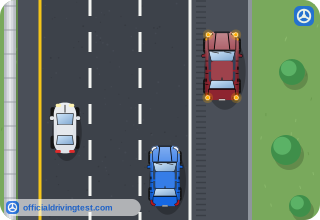
- Ignore other traffic until help arrives
- Assess the situation
- Leave your vehicle as quickly as possible
- Wait for a passing driver to take charge
Show answer
Correct answer: Assess the situation
The manual advises you to assess the situation and use good judgment in deciding how to respond.
Source: Maryland Driver’s Manual (October 2025 Edition (DL-002 10-25)), page 44
-
Why should you watch for other vehicles during a roadside emergency?
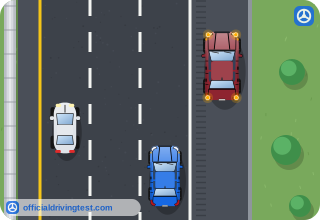
- Other drivers must stop and help you
- The police will ask what you saw
- Roadside emergencies can change in an instant
- Traffic always slows near a disabled vehicle
Show answer
Correct answer: Roadside emergencies can change in an instant
You should watch for other vehicles because roadside emergencies can change in an instant.
Source: Maryland Driver’s Manual (October 2025 Edition (DL-002 10-25)), page 44
-
If your vehicle becomes disabled, what should you do your best to do?
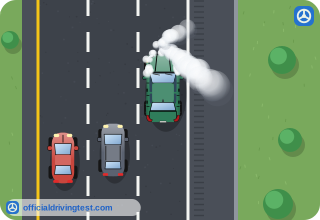
- Move it to the shoulder
- Leave it in the lane so others can see it
- Stop it beside the nearest sign
- Push it onto the grass
Show answer
Correct answer: Move it to the shoulder
If your vehicle becomes disabled, do your best to move it to the shoulder.
Source: Maryland Driver’s Manual (October 2025 Edition (DL-002 10-25)), page 44
-
If your vehicle is disabled and you can reach an off-ramp or parking lot, what does the manual say to consider?
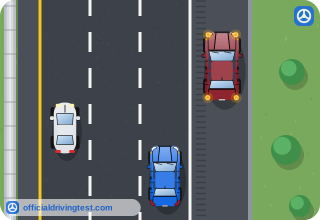
- Stopping in the lane to avoid damaging the vehicle
- Going there, even if you drive on a flat tire
- Waiting on the highway for a tow truck to reach you
- Backing up to the previous exit
Show answer
Correct answer: Going there, even if you drive on a flat tire
You can consider reaching an off-ramp or parking lot even if it means driving on a flat tire or damaging a rim, because the further you are from traffic, the safer you will be.
Source: Maryland Driver’s Manual (October 2025 Edition (DL-002 10-25)), page 44
-
Where must you never stop or park when your vehicle is disabled?
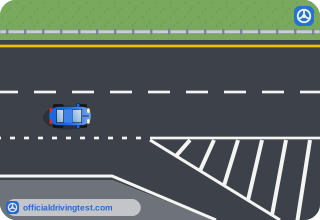
- On the shoulder of the road, away from the lanes
- In a parking lot off the road
- Behind a traffic barrier near the road
- In the triangular painted zones where ramps exit
Show answer
Correct answer: In the triangular painted zones where ramps exit
The manual says never to stop or park in the triangular shaped painted zones where a ramp exits the road.
Source: Maryland Driver’s Manual (October 2025 Edition (DL-002 10-25)), page 44
-
If you can remain in your vehicle after it is hit or disabled, what should you do?
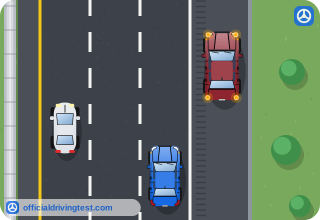
- Stay buckled and face forward
- Unbuckle so you can leave quickly
- Turn to face the rear to watch traffic
- Lie down across the seats
Show answer
Correct answer: Stay buckled and face forward
If you can remain in your vehicle, stay buckled and face forward, because vehicles have safety features that help protect you if another vehicle hits yours.
Source: Maryland Driver’s Manual (October 2025 Edition (DL-002 10-25)), page 44
-
If it is not safe or possible to remain in your vehicle, when should you get out?
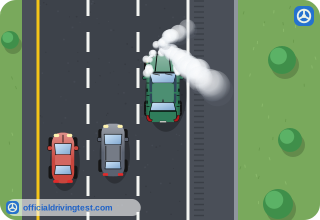
- As soon as the vehicle stops
- Only after the police arrive
- At the safest time for everyone
- After the next vehicle passes you
Show answer
Correct answer: At the safest time for everyone
You should watch what is happening around you and pick the safest time for everyone to get out.
Source: Maryland Driver’s Manual (October 2025 Edition (DL-002 10-25)), page 44
-
After you get out of a disabled vehicle, where should you go?
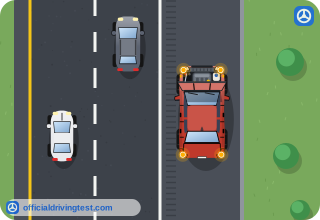
- Behind an embankment, traffic barrier, or guard-rail
- Beside the vehicle, on the side away from traffic
- Behind the vehicle, close to the lane
- In front of the vehicle, on the shoulder
Show answer
Correct answer: Behind an embankment, traffic barrier, or guard-rail
The manual says not to stand near the vehicle but to move quickly away from the road and get behind an embankment, traffic barrier, or guard-rail.
Source: Maryland Driver’s Manual (October 2025 Edition (DL-002 10-25)), page 44
-
When you have left a disabled vehicle and moved away from the road, which way should you face?
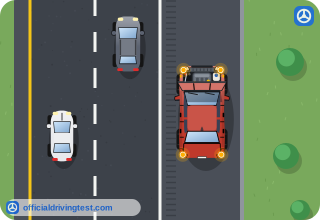
- Away from the road
- Toward your vehicle
- Toward oncoming traffic
- With your back to traffic
Show answer
Correct answer: Toward oncoming traffic
If possible, move to higher ground, face oncoming traffic, and remain alert in case a vehicle veers into your path.
Source: Maryland Driver’s Manual (October 2025 Edition (DL-002 10-25)), page 44