Washington, D.C.: Speed and following distance
Speed limits in the District, driving for conditions, following and stopping distances, and night driving. Split into 4 shorter tests so you're not stuck in one long quiz.
Independent educational site · not affiliated with any government agency or DMV
Choose a part
Speed and following distance — Part 1
Questions in this part include: “A person may be guilty of aggressive driving if they do which of the following?”
Speed and following distance — Part 2
Questions in this part include: “Which of these is one of the factors that stopping distance depends on?”
Speed and following distance — Part 3
Questions in this part include: “When must chains, snow tires or radial tires be used?”
Speed and following distance — Part 4
Questions in this part include: “When driving at night in fog, what should you use as a guide?”
Questions are original and based on the official manual "District of Columbia Driver Manual" (Updated January 2024), District of Columbia Department of Motor Vehicles (DC DMV).
All 66 Speed and following distance questions with answers
Choose a part above to take a practice test, or study every question and answer here.
Show the questions and answersHide the questions
1Part 117 questions
-
Aggressive driving is described in the manual as a form of:
- Negligent driving
- Drag racing
- Reckless driving
- Distracted driving
Show answer
Correct answer: Reckless driving
The manual states that aggressive driving is a form of reckless driving.
Source: District of Columbia Driver Manual (Updated January 2024), page 21
-
A person may be guilty of aggressive driving if they do which of the following?
- Signal your intention well before changing lanes
- Pass traffic lights with a steady red indication
- Yield the right-of-way at an intersection as required
- Leave extra space behind the vehicle ahead of you
Show answer
Correct answer: Pass traffic lights with a steady red indication
Passing traffic lights with a steady red indication is among the acts listed as possible aggressive driving.
Source: District of Columbia Driver Manual (Updated January 2024), page 21
-
How should you protect yourself from an aggressive driver?
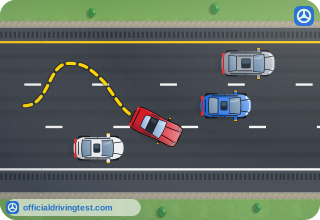
- Speed up to stay ahead of the driver
- Make eye contact to show you are not afraid
- Block the passing lane to slow the driver down
- Get out of the way and let the driver pass
Show answer
Correct answer: Get out of the way and let the driver pass
The manual advises letting an aggressive driver pass, not challenging them, and avoiding eye contact.
Source: District of Columbia Driver Manual (Updated January 2024), page 21
-
Which of these helps you avoid becoming an aggressive driver?
- Make up lost time with extra speed
- Follow slower vehicles closely
- Leave later and drive faster
- Identify alternative routes
Show answer
Correct answer: Identify alternative routes
Planning ahead and identifying alternative routes are listed as ways to avoid becoming an aggressive driver.
Source: District of Columbia Driver Manual (Updated January 2024), page 21
-
What does the manual say you should do to help prevent aggressive driving?
- Follow aggressive drivers home so police can find them
- Report incidents of aggressive driving to the police
- Flash your headlights at aggressive drivers to warn them
- Confront aggressive drivers at the next stop sign or light
Show answer
Correct answer: Report incidents of aggressive driving to the police
Reporting incidents to the police and setting an example for younger passengers are listed as ways to help prevent aggressive driving.
Source: District of Columbia Driver Manual (Updated January 2024), page 21
-
A person is guilty of reckless driving if he drives a motor vehicle:
- Without carrying a valid license in the vehicle at the time
- Only while racing another vehicle on a public roadway
- With a willful disregard for the safety of people or property
- At a speed that is below the minimum posted for the road
Show answer
Correct answer: With a willful disregard for the safety of people or property
Reckless driving is driving with a willful disregard for the safety of people or property.
Source: District of Columbia Driver Manual (Updated January 2024), page 21
-
A person is guilty of negligent driving if he or she drives a motor vehicle:
- In a careless or imprudent manner that endangers property or life
- Without proof of insurance kept inside the vehicle at all times
- With more passengers in the vehicle than it has seat belts
- Without a valid inspection sticker displayed on the vehicle
Show answer
Correct answer: In a careless or imprudent manner that endangers property or life
Negligent driving is driving in a careless or imprudent manner that endangers any property or the life of any individual.
Source: District of Columbia Driver Manual (Updated January 2024), page 21
-
Which of these must you not do on any public street, road, or highway?
- Pass a slower vehicle on a road where passing is clearly allowed
- Take part in a vehicle race, speed exhibition, or speed contest
- Drive in a carpool lane while carrying several passengers
- Park alongside a curb in a space where parking is legal
Show answer
Correct answer: Take part in a vehicle race, speed exhibition, or speed contest
The manual says you must not engage in any vehicle race, speed exhibition or speed contest, including drag races, on a public road.
Source: District of Columbia Driver Manual (Updated January 2024), page 21
-
You must slow down when coming to which of these?
- The crest of a hill
- A long straight road with no traffic
- A road with a wide shoulder
- A divided road with few turns
Show answer
Correct answer: The crest of a hill
The manual lists intersections, railroad grade crossings, curves and the crest of a hill as places where you must slow down.
Source: District of Columbia Driver Manual (Updated January 2024), page 23
-
You must slow down in which of these places?
- On a straight road with a wide shoulder
- Near playgrounds and schools
- On a road with no side streets
- On a road with no parked cars
Show answer
Correct answer: Near playgrounds and schools
The manual says you must slow down near playgrounds and schools, or where children are playing.
Source: District of Columbia Driver Manual (Updated January 2024), page 24
-
You must slow down when traveling upon which kind of road?
- Any road with two lanes in each direction
- Any road with a painted center line
- Any road with a paved shoulder
- Any narrow or winding roadway
Show answer
Correct answer: Any narrow or winding roadway
The manual says to slow down when traveling on any narrow or winding roadway.
Source: District of Columbia Driver Manual (Updated January 2024), page 24
-
What does the manual say about driving so slowly that you interfere with other vehicles moving at normal speeds?
- Never drive that slowly, because it can cause crashes
- It is safe as long as you stay in the right lane
- It is safe as long as you use your hazard lights
- It is safe on roads that have no posted speed limit
Show answer
Correct answer: Never drive that slowly, because it can cause crashes
Drivers who block or hinder other traffic by driving too slowly can cause crashes.
Source: District of Columbia Driver Manual (Updated January 2024), page 24
-
When is wet pavement particularly dangerous because of oil and water on the road?
- After several hours of heavy rain
- Just after the rain has stopped
- At the beginning of a light rain
- Only during a heavy downpour
Show answer
Correct answer: At the beginning of a light rain
Oil and other fluids have not yet washed away at the start of a light rain, so the mixture is especially slippery.
Source: District of Columbia Driver Manual (Updated January 2024), page 24
-
What should you watch out for on the pavement in the autumn?
- Wet leaves
- Loose sand
- Black ice
- Fresh tar
Show answer
Correct answer: Wet leaves
The manual says to watch out for wet leaves on pavement in the autumn.
Source: District of Columbia Driver Manual (Updated January 2024), page 24
-
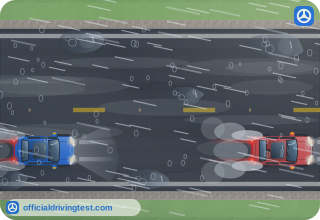
How does a wet road affect the distance you need to stop?
- You need about the same distance as on dry pavement
- You need a shorter distance because tires grip better
- You need a longer distance to stop
- You need a longer distance only on curves
Show answer
Correct answer: You need a longer distance to stop
Wet pavements are far more slippery, so it takes a longer distance to stop.
Source: District of Columbia Driver Manual (Updated January 2024), page 24
-
What are most rear-end collisions caused by?
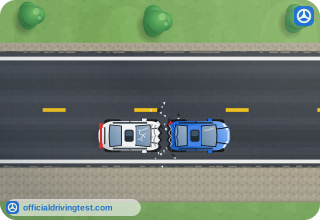
- Following too closely
- Driving too slowly
- Sudden lane changes
- Driving in bad weather
Show answer
Correct answer: Following too closely
The manual states that most rear-end collisions are caused by following too closely.
Source: District of Columbia Driver Manual (Updated January 2024), page 24
-
Which vehicles stop often and need more following distance than usual?
- Buses and post office vans
- Passenger cars and pickup trucks
- Ambulances and fire trucks
- Motorcycles and mopeds
Show answer
Correct answer: Buses and post office vans
The manual says to allow more following distance behind vehicles that stop often, such as buses and post office vans.
Source: District of Columbia Driver Manual (Updated January 2024), page 24
2Part 217 questions
-
Which of these is one of the factors that stopping distance depends on?
- The color and finish of the vehicle
- How many years the driver has been licensed
- The make and model of the vehicle radio
- The type and condition of the pavement
Show answer
Correct answer: The type and condition of the pavement
Stopping distance depends on pavement, grade, tire treads, shock absorbers, brakes, wind and the driver's reaction time.
Source: District of Columbia Driver Manual (Updated January 2024), page 25
-
Which of these is among the biggest culprits of road rage and aggressive driving?
- Using turn signals
- Yielding to merging cars
- Driving at the posted limit
- Tailgating
Show answer
Correct answer: Tailgating
The manual lists tailgating, unsafe lane changing, speeding, and running red lights and stop signs as the biggest culprits.
Source: District of Columbia Driver Manual (Updated January 2024), page 27
-
To reduce road rage and aggressive driving, you should not remain behind the wheel for more than:
- One hour at a time
- Three hours at a time
- Two hours at a time
- Five hours at a time
Show answer
Correct answer: Three hours at a time
The manual says not to remain behind the wheel for more than three hours at a time.
Source: District of Columbia Driver Manual (Updated January 2024), page 27
-
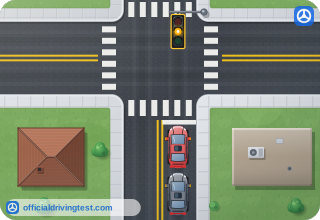
What does the manual say about yellow lights in its rules to reduce road rage?
- Speed up to clear them
- Run them when no police are around
- Do not run them
- Run them if traffic is light
Show answer
Correct answer: Do not run them
The manual says to always stop fully at red lights and stop signs and not to run yellow lights.
Source: District of Columbia Driver Manual (Updated January 2024), page 27
-
What does the manual say about the passing lane in its rules to reduce road rage?
- Do not block it
- Use it as your regular driving lane
- Drive in it at the speed limit at all times
- Stay in it when you plan to turn right
Show answer
Correct answer: Do not block it
The manual says not to block the passing lane.
Source: District of Columbia Driver Manual (Updated January 2024), page 27
-
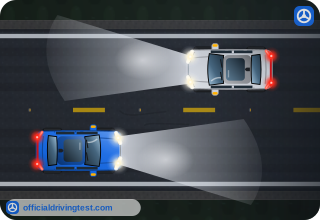
How should you look at the headlights of vehicles you are approaching at night?
- With a steady stare
- With quick glances
- With one eye closed
- Only in your mirror
Show answer
Correct answer: With quick glances
The manual says not to stare at their headlights but to use quick glances.
Source: District of Columbia Driver Manual (Updated January 2024), page 27
-
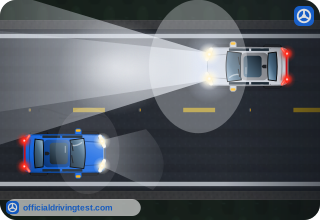
What does glare from oncoming headlights cause the pupils of your eyes to do?
- Widen
- Stay the same size
- Flicker
- Contract
Show answer
Correct answer: Contract
The glare makes the pupils contract, and it takes time for them to readjust to less intense light.
Source: District of Columbia Driver Manual (Updated January 2024), page 27
-
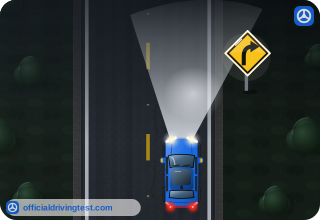
At night, you should keep your speed low enough to be able to:
- Stop within the distance you can see ahead
- Pass any vehicle you happen to meet ahead
- Keep up with the vehicle ahead
- Pass at about the same speed as oncoming traffic
Show answer
Correct answer: Stop within the distance you can see ahead
The manual says to keep your speed low enough to stop within the distance you can see ahead.
Source: District of Columbia Driver Manual (Updated January 2024), page 27
-
What does the manual say about wearing sunglasses when driving at night?
- Wear them to reduce glare
- Wear them only on lit roads
- Do not wear them
- Wear them only behind high beams
Show answer
Correct answer: Do not wear them
The manual says not to wear sunglasses at night.
Source: District of Columbia Driver Manual (Updated January 2024), page 27
-
At night, if there is no road edge line, what should you use as a guide?
- The center line
- The brake lights ahead
- The glow of nearby buildings
- The tops of the trees
Show answer
Correct answer: The center line
The manual says to use the road edge line as a guide, or the center line if there is no road edge line.
Source: District of Columbia Driver Manual (Updated January 2024), page 27
-
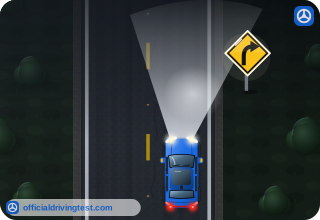
Why must you watch carefully for highway signs at night?
- They are smaller at night
- They are placed farther apart at night
- They are more difficult to see at night
- They are removed at night
Show answer
Correct answer: They are more difficult to see at night
The manual says highway signs are more difficult to see at night.
Source: District of Columbia Driver Manual (Updated January 2024), page 27
-
At night, what should you be especially watchful for?
- Loose gravel and deep potholes
- Pedestrians and stopped vehicles
- Wet leaves and deep puddles
- Slow bicycle racers
Show answer
Correct answer: Pedestrians and stopped vehicles
The manual says to be especially watchful for pedestrians and stopped vehicles at night.
Source: District of Columbia Driver Manual (Updated January 2024), page 27
-
What does the manual say about stopping on the roadway at night?
- Stop only if you are tired
- Stop if oncoming headlights glare
- Stop only if you turn your hazard lights on first
- Do not stop on the roadway for any reason
Show answer
Correct answer: Do not stop on the roadway for any reason
The manual says not to stop on the roadway for any reason when driving at night.
Source: District of Columbia Driver Manual (Updated January 2024), page 27
-
What should you carry for night stops alongside the roadway that are unavoidable?
- A white spotlight
- A set of extra headlight bulbs only
- A yellow flashing strobe light only
- A red warning light or flares
Show answer
Correct answer: A red warning light or flares
The manual says to carry a red warning light or flares for use when stops alongside the roadway are unavoidable.
Source: District of Columbia Driver Manual (Updated January 2024), page 28
-
What does the manual say to do about smoking in a vehicle with the windows closed?
- Smoke only at red lights
- Cut down on smoking
- Smoke only with the heater on
- Smoke only on the highway
Show answer
Correct answer: Cut down on smoking
The manual says to cut down on smoking when driving a vehicle with the windows closed.
Source: District of Columbia Driver Manual (Updated January 2024), page 28
-
Which does the most to improve traction and stopping on ice and in snow?
- Snow tires
- Radial tires
- Chains
- Four-wheel drive
Show answer
Correct answer: Chains
The manual says chains do the most to improve traction and stopping on ice and snow, but none of these makes it safe to drive at normal speeds.
Source: District of Columbia Driver Manual (Updated January 2024), page 28
-
Do chains, snow tires, or radial tires make it safe to drive on ice or snow-covered roads at normal speeds?
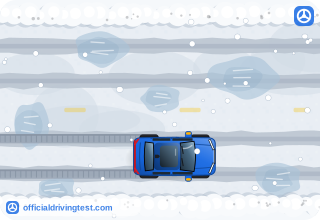
- No, you must still slow down
- Yes, if you have chains on all wheels
- Yes, if you drive in the right lane
- Yes, if you use your low beams
Show answer
Correct answer: No, you must still slow down
The manual says neither chains nor radial or snow tires make it safe to drive on ice or snow at normal speeds; you must slow down.
Source: District of Columbia Driver Manual (Updated January 2024), page 28
3Part 316 questions
-
When must chains, snow tires or radial tires be used?
- On every District road whenever the temperature falls below freezing
- On designated snow emergency routes when a snow emergency is declared
- On all bridges and ramps from sunset until sunrise in winter
- On any road where a layer of ice or snow is visible
Show answer
Correct answer: On designated snow emergency routes when a snow emergency is declared
The manual says they must be used on designated snow emergency routes when a snow emergency is declared.
Source: District of Columbia Driver Manual (Updated January 2024), page 28
-
What should you keep clear on your vehicle in winter driving?
- Only the windshield
- Only the hood and trunk
- Only the mirrors
- Windows and lights
Show answer
Correct answer: Windows and lights
The manual says to keep windows and lights clear, remove all ice and snow, and keep an ice scraper in the vehicle.
Source: District of Columbia Driver Manual (Updated January 2024), page 28
-
How can you find out how well you can stop on a slippery road?
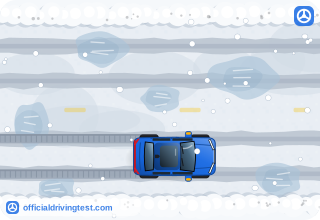
- Test your brakes gently
- Slam the brakes once
- Brake hard at full speed
- Skip testing them
Show answer
Correct answer: Test your brakes gently
The manual says to start out very slowly and then test your brakes gently to find out how well you can stop.
Source: District of Columbia Driver Manual (Updated January 2024), page 28
-
On ice and packed snow, the space you need between you and the car in front of you is:
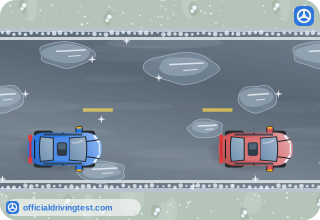
- Slightly smaller
- The same as on dry roads
- Much greater
- Half as much as on dry roads
Show answer
Correct answer: Much greater
The space needed is much greater on ice and packed snow, because even snow tires, radial tires and chains slide.
Source: District of Columbia Driver Manual (Updated January 2024), page 28
-
Which of these should you avoid on ice and snow?
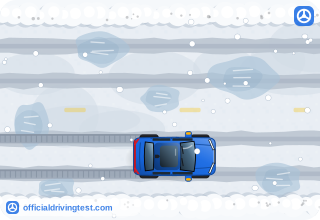
- Steering sharply or changing speed quickly
- Starting out very slowly and carefully
- Testing your brakes gently
- Slowing down long before you reach a turn
Show answer
Correct answer: Steering sharply or changing speed quickly
The manual says not to slam on the brakes and not to steer sharply or change speed quickly.
Source: District of Columbia Driver Manual (Updated January 2024), page 28
-
What is a thin layer of ice produced by melting and re-freezing on a blacktop road sometimes known as?
- Hard frost
- White ice
- Slush
- Black ice
Show answer
Correct answer: Black ice
Blacktop roads can hide a thin layer of ice from melting and re-freezing, sometimes known as black ice.
Source: District of Columbia Driver Manual (Updated January 2024), page 28
-
In winter, which freeze first before highways and roads?
- Tunnels and underpasses
- Parking lots
- Intersections
- Ramps and bridges
Show answer
Correct answer: Ramps and bridges
The manual says ramps and bridges freeze first before highways and roads.
Source: District of Columbia Driver Manual (Updated January 2024), page 28
-
What does the manual say about four-wheel drive vehicles on ice and snow?
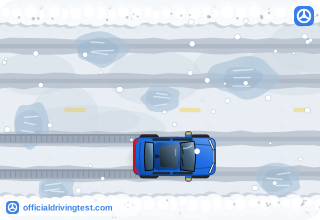
- They grip the road as well as vehicles do on dry pavement
- They slide too, so do not drive as on dry pavement
- They need no extra stopping distance on snow or ice
- They stop faster than any other vehicles on ice
Show answer
Correct answer: They slide too, so do not drive as on dry pavement
Four-wheel drive vehicles slide on ice and snow too, so you should not assume you can drive as you would on dry pavement.
Source: District of Columbia Driver Manual (Updated January 2024), page 28
-
What does the manual say about a safe speed on ice and snow?
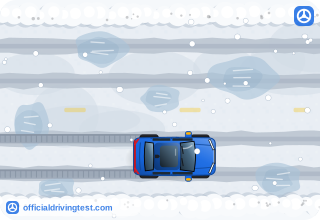
- Half the posted limit is safe
- Ten miles per hour is always safe
- No speed is completely safe
- The posted limit is safe with chains
Show answer
Correct answer: No speed is completely safe
The manual says there is no such thing as a completely safe speed on ice and snow.
Source: District of Columbia Driver Manual (Updated January 2024), page 28
-
What should you do to avoid having to rush when road conditions are bad?
- Leave earlier than you normally would
- Drive faster than usual
- Take the shortest route
- Leave later, once the roads have been cleared
Show answer
Correct answer: Leave earlier than you normally would
The manual says to leave earlier than normal when road conditions are bad so you do not have to rush.
Source: District of Columbia Driver Manual (Updated January 2024), page 29
-
On a curve posted for 35 miles per hour in good weather, what may a safe speed be on ice and snow?
- 10 mph
- 15 mph
- 5 mph or less
- 25 mph
Show answer
Correct answer: 5 mph or less
The manual says a safe speed may be only 5 miles per hour or less on ice and snow.
Source: District of Columbia Driver Manual (Updated January 2024), page 29
-
On a curve posted for 35 miles per hour in good weather, what may a safe speed be in wet weather?
- 10 miles per hour
- 20 miles per hour
- 25 miles per hour
- 30 miles per hour
Show answer
Correct answer: 20 miles per hour
The manual says a safe speed may be only 20 miles per hour in wet weather on such a curve.
Source: District of Columbia Driver Manual (Updated January 2024), page 29
-
On which surface should you be most cautious in curves?
- Wet pavement
- Snow
- Dry pavement
- Ice
Show answer
Correct answer: Ice
The manual says to be more concerned about curves in wet weather, even more cautious on snow, and most cautious on ice.
Source: District of Columbia Driver Manual (Updated January 2024), page 29
-
Fog can reduce visibility to how much or less?
- Half a mile
- One mile
- A quarter of a mile
- An eighth of a mile
Show answer
Correct answer: A quarter of a mile
The manual says fog can reduce visibility to 1/4 mile or less.
Source: District of Columbia Driver Manual (Updated January 2024), page 29
-
When it is foggy, what is best?
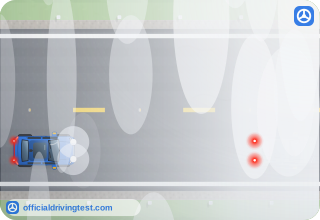
- To follow taillights closely
- Not to drive at all
- To use your high beams
- To drive faster out of the fog
Show answer
Correct answer: Not to drive at all
The manual says that when it is foggy it is best not to drive at all.
Source: District of Columbia Driver Manual (Updated January 2024), page 29
-
In fog, if you cannot go at least 10 mph, what should you do?
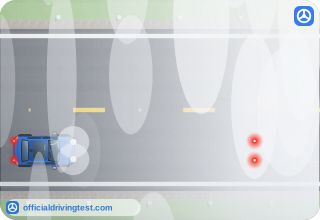
- Stop in the travel lane and wait
- Follow the vehicle ahead closely
- Use your high beams to see farther
- Pull completely off the highway
Show answer
Correct answer: Pull completely off the highway
The manual says that if the fog is so thick you cannot go at least 10 mph, pull completely off the highway or stop at a rest area, service station or parking area.
Source: District of Columbia Driver Manual (Updated January 2024), page 29
4Part 416 questions
-
Which headlights should you use in fog?
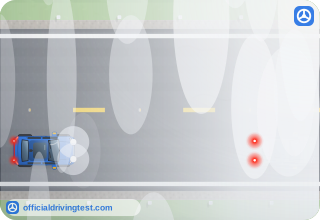
- Low beams
- High beams
- Parking lights
- Hazard flashers
Show answer
Correct answer: Low beams
The manual says to use low beams or special fog lights; high beams often reflect back into your eyes.
Source: District of Columbia Driver Manual (Updated January 2024), page 29
-
In fog, when should you reduce your speed even more?
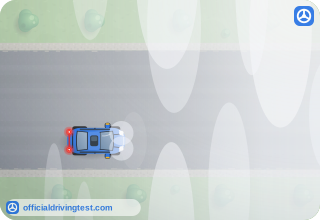
- When the road ahead curves to the right
- When you pass a sign along the roadside
- When you see headlights or taillights ahead
- When you approach a rest area or exit
Show answer
Correct answer: When you see headlights or taillights ahead
The manual says to reduce your normal speed in fog and to slow even more when you see headlights or taillights ahead.
Source: District of Columbia Driver Manual (Updated January 2024), page 29
-
When driving at night in fog, what should you use as a guide?
- The road edge lines
- The taillights ahead
- Oncoming headlights
- Your rearview mirror
Show answer
Correct answer: The road edge lines
The manual says to use the road edge lines or the right side of the road, because you may not see highway signs until too late.
Source: District of Columbia Driver Manual (Updated January 2024), page 29
-
Which of these should you do to lessen the chance of being hit from the rear when you are the driver being followed?
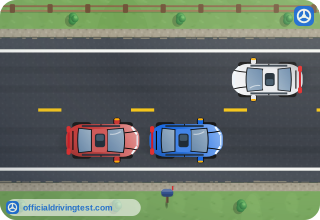
- Slow down gradually, not suddenly
- Slow down as sharply as you can so the driver behind notices
- Slow down only by shifting to a lower gear, never with the brake
- Stay close to the vehicle ahead so no one can squeeze in
Show answer
Correct answer: Slow down gradually, not suddenly
To reduce the chance of a rear-end crash, ease off gradually rather than stopping suddenly, which gives the driver behind time to react.
Source: District of Columbia Driver Manual (Updated January 2024), page 30
-
A vehicle is following your car too closely. What does the manual say you should do?
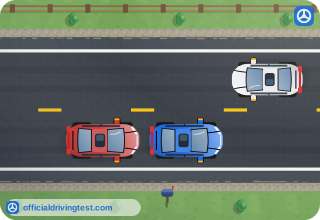
- Speed up to open a gap in front of it
- Stop on the roadway until it goes around
- Slow down and let it pass
- Brake sharply to warn the driver behind you
Show answer
Correct answer: Slow down and let it pass
Letting a tailgater pass removes the danger of being hit from behind, so the manual says to slow down and let the vehicle go by.
Source: District of Columbia Driver Manual (Updated January 2024), page 30
-
Which speed rules must you obey in the District of Columbia?
- Only the specific speed limits shown on signs along the road
- Both the general speed restriction and the specific speed limits
- Only the general speed restriction
- Whichever of the two is higher
Show answer
Correct answer: Both the general speed restriction and the specific speed limits
DC has a general speed restriction and specific speed limits, and you must obey both.
Source: District of Columbia Driver Manual (Updated January 2024), page 46
-
What does the general speed restriction say about how fast you may drive?
- At least as fast as the vehicles traveling around you
- No faster than 10 miles per hour below the posted limit
- No faster than the speed of the slowest vehicle ahead
- No faster than is reasonable under the existing conditions
Show answer
Correct answer: No faster than is reasonable under the existing conditions
No one should drive faster than is reasonable under the existing conditions, taking actual and potential hazards into account.
Source: District of Columbia Driver Manual (Updated January 2024), page 46
-
No one should drive so slowly that they impede the normal and reasonable movement of traffic, except when what applies?
- A reduced speed is necessary for the safe operation of the vehicle or to comply with the law
- The driver wants to save fuel and is traveling well below the posted speed limit
- The driver is unfamiliar with the road and wants extra time to read street signs
- The driver is in the left lane and wants other vehicles to stay behind
Show answer
Correct answer: A reduced speed is necessary for the safe operation of the vehicle or to comply with the law
Driving slowly enough to impede traffic is allowed only when needed for safe operation or to obey the law.
Source: District of Columbia Driver Manual (Updated January 2024), page 46
-
Up to the posted limit, what speed is safest to drive?
- The lowest speed that traffic allows
- Five miles per hour below the average traffic speed
- The average speed at which traffic is moving
- The highest speed you feel comfortable driving
Show answer
Correct answer: The average speed at which traffic is moving
Up to the limit, it is safest to drive at the average speed of traffic.
Source: District of Columbia Driver Manual (Updated January 2024), page 46
-
How does departing from the average traffic speed affect your chance of a crash?
- It increases only if you drive faster
- It increases it, whether you drive faster or slower
- It decreases when you drive slower
- It has no effect if you stay under the limit
Show answer
Correct answer: It increases it, whether you drive faster or slower
The more you depart from the average traffic speed, faster or slower, the greater your chance of a crash.
Source: District of Columbia Driver Manual (Updated January 2024), page 46
-
Unless otherwise posted, what is the speed limit on District of Columbia city streets?
- 20 miles per hour
- 15 miles per hour
- 25 miles per hour
- 30 miles per hour
Show answer
Correct answer: 20 miles per hour
The unposted limit on DC city streets is 20 miles per hour.
Source: District of Columbia Driver Manual (Updated January 2024), page 46
-
Unless otherwise posted, what is the speed limit in a District of Columbia alley?
- 10 miles per hour
- 20 miles per hour
- 15 miles per hour
- 25 miles per hour
Show answer
Correct answer: 15 miles per hour
The unposted limit in a DC alley is 15 miles per hour.
Source: District of Columbia Driver Manual (Updated January 2024), page 46
-
Unless otherwise posted, what is the speed limit in a District of Columbia school zone?
- 10 miles per hour
- 15 miles per hour
- 20 miles per hour
- 25 miles per hour
Show answer
Correct answer: 15 miles per hour
The unposted limit in a DC school zone is 15 miles per hour.
Source: District of Columbia Driver Manual (Updated January 2024), page 46
-
Unless otherwise posted, what speed limits apply on ordinary highways?
- 20 - 45 miles per hour
- 35 - 55 miles per hour
- 25 - 40 miles per hour
- 30 - 50 miles per hour
Show answer
Correct answer: 30 - 50 miles per hour
Ordinary highways have limits of 30 to 50 miles per hour unless otherwise posted.
Source: District of Columbia Driver Manual (Updated January 2024), page 46
-
Unless otherwise posted, what speed limits apply on divided highways?
- 30 - 55 miles per hour
- 20 - 45 miles per hour
- 30 - 50 miles per hour
- 45 - 65 miles per hour
Show answer
Correct answer: 30 - 55 miles per hour
Divided highways have limits of 30 to 55 miles per hour unless otherwise posted.
Source: District of Columbia Driver Manual (Updated January 2024), page 46
-
Does an advisory speed sign have the force of law?
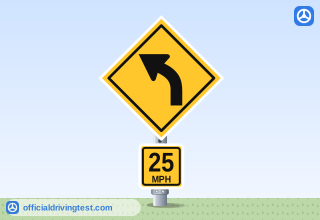
- Yes, exceeding it is always a ticketable offense
- Yes, but only in school zones
- No, but you may be ticketed if you exceed it and have a crash
- No, and it can never be used against you after a crash
Show answer
Correct answer: No, but you may be ticketed if you exceed it and have a crash
An advisory speed sign is not law, but exceeding it and then crashing may lead to a ticket for violating the general speed restriction.
Source: District of Columbia Driver Manual (Updated January 2024), page 46