Washington, D.C.: Seat belts and child safety Practice Test
Seat belts, child safety seats, air bags and head restraints.
Independent educational site · not affiliated with any government agency or DMV
Ready? Test yourself
Answer to start, or tap Start below:
In the District of Columbia, who must wear a seat belt in a passenger car?
- Instant feedback with an explanation
- Every answer cites its source in the manual
- Your best score is saved on this device
- Keyboard: press 1 to 4 to answer and Enter for the next question
Questions are original and based on the official manual "District of Columbia Driver Manual" (Updated January 2024), District of Columbia Department of Motor Vehicles (DC DMV).
All 15 questions in this practice test
Take the test above first, then use this list to study. Tap “Show answer” to see the correct answer and explanation.
Show the questions and answersHide the questions
-
In the District of Columbia, who must wear a seat belt in a passenger car?
- Only the driver
- The driver and all passengers
- Only the driver and front-seat passengers
- Only passengers under 16
Show answer
Correct answer: The driver and all passengers
DC law requires the driver and all passengers to wear seat belts.
Source: District of Columbia Driver Manual (Updated January 2024), page 47
-
Which vehicles does the District of Columbia seat belt law cover?
- Only passenger cars, trucks, and multi-purpose vehicles, but not buses or tractors
- Only passenger cars and trucks, but not tractors, buses, or multi-purpose vehicles
- Only passenger cars and passenger buses, but not trucks or tractors
- Passenger cars, trucks, tractors, multi-purpose vehicles, and passenger buses
Show answer
Correct answer: Passenger cars, trucks, tractors, multi-purpose vehicles, and passenger buses
The seat belt requirement applies in passenger cars, trucks, tractors, multi-purpose vehicles, and passenger buses.
Source: District of Columbia Driver Manual (Updated January 2024), page 47
-
May police in the District of Columbia stop a vehicle solely because its occupants are not properly buckled up?
- Yes, District law allows it
- No, police need another violation first
- No, only after a warning has been given
- Only if the driver is under 21
Show answer
Correct answer: Yes, District law allows it
District law allows police to stop a vehicle solely because the driver or passengers are not properly buckled.
Source: District of Columbia Driver Manual (Updated January 2024), page 48
-
How many points apply for not having your seat belt properly buckled?
- 1 point
- 3 points
- 2 points
- 4 points
Show answer
Correct answer: 2 points
Not wearing a seat belt properly carries 2 points (plus a fine).
Source: District of Columbia Driver Manual (Updated January 2024), page 48
-
Who is responsible for seat belt compliance for all passengers?
- Each passenger
- The driver
- The vehicle owner
- The front-seat passenger
Show answer
Correct answer: The driver
Drivers are responsible for seat belt compliance for all passengers.
Source: District of Columbia Driver Manual (Updated January 2024), page 48
-
What must a person who is exempt from seat belt provisions for a physical disability or other medical reason have in the vehicle?
- A note from a family member
- A signed statement from the driver
- A disability parking permit
- A certificate from a physician
Show answer
Correct answer: A certificate from a physician
A physician must certify in writing that a seat belt would prevent appropriate restraint, and the certificate must be carried in the vehicle.
Source: District of Columbia Driver Manual (Updated January 2024), page 48
-
What must a physician's certificate for a seat belt exemption state?
- The nature of the physical disability and why a seat belt is inappropriate
- The person's age, address, and the date of the last medical examination
- The physician's license number, office address, and weekly office hours
- The make, model, and license plate number of the vehicle the person rides in
Show answer
Correct answer: The nature of the physical disability and why a seat belt is inappropriate
The certificate must state the nature of the disability and the reason that a seat belt restraint is inappropriate.
Source: District of Columbia Driver Manual (Updated January 2024), page 48
-
Before you start to drive, where should you adjust the head rest on your seat?
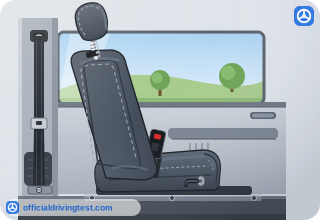
- To a position below your neck
- To the lowest position, for comfort
- To a position directly behind your head
- To a position behind your shoulders
Show answer
Correct answer: To a position directly behind your head
The head rest should be adjusted directly behind your head for maximum protection.
Source: District of Columbia Driver Manual (Updated January 2024), page 48
-
Head restraints are installed to protect from what kind of injury?
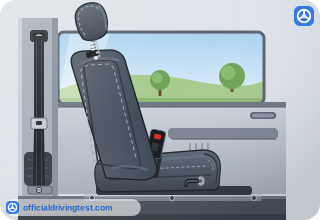
- Injuries to the chest and head when the vehicle is struck from the front
- Whiplash and spinal injury when the vehicle is struck from the rear
- Injuries to the legs and knees when the vehicle is struck from the side
- Burns and cuts when the vehicle is on fire or has a broken window
Show answer
Correct answer: Whiplash and spinal injury when the vehicle is struck from the rear
Head restraints protect from spinal injury and whiplash in a rear-end impact.
Source: District of Columbia Driver Manual (Updated January 2024), page 48
-
In the District of Columbia, a motor vehicle operator may not transport a child less than what age unless the child is properly secured in a child safety seat in the back seat?
- 1 year
- 5 years
- 8 years
- 3 years
Show answer
Correct answer: 3 years
A child under 3 years old must be secured in a child safety seat in the back seat.
Source: District of Columbia Driver Manual (Updated January 2024), page 48
-
Most air bags are designed to inflate in what kind of crash?
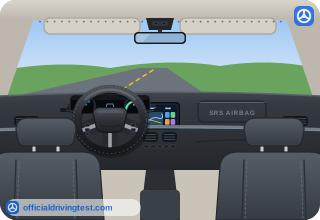
- A moderate-to-severe frontal crash
- Any crash at any speed
- A side-impact crash only
- A rear-end crash at low speed
Show answer
Correct answer: A moderate-to-severe frontal crash
Most air bags are designed to inflate in a moderate-to-severe frontal crash.
Source: District of Columbia Driver Manual (Updated January 2024), page 48
-
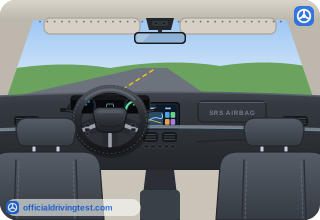
Should you use lap and shoulder belts in a vehicle that has air bags?
- Only on long trips
- No, the air bags protect you
- Yes, always
- Only in the back seat
Show answer
Correct answer: Yes, always
Lap and shoulder belts should always be used, even in vehicles with air bags.
Source: District of Columbia Driver Manual (Updated January 2024), page 48
-
Where should a pregnant woman place the lap portion of the safety belt?
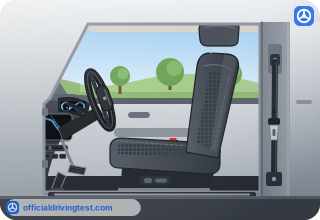
- Across the upper abdomen, just below the ribs, with the shoulder belt left off
- Under the abdomen as low as possible on the hips and across the upper thighs
- Over the abdomen at waist level and above the hips, snug against the stomach
- Across the middle of the abdomen, with the shoulder belt placed behind the back
Show answer
Correct answer: Under the abdomen as low as possible on the hips and across the upper thighs
The lap belt goes under the abdomen, low on the hips and across the upper thighs.
Source: District of Columbia Driver Manual (Updated January 2024), page 48
-
Where should infants never ride?
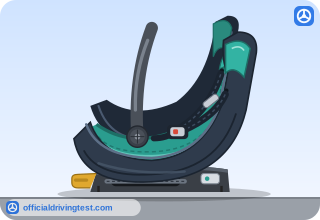
- In a rear-facing infant seat placed in the back seat
- In the rear seat of a vehicle that has a passenger side air bag
- In the front seat of a vehicle with a passenger side air bag
- In a child safety seat that is properly secured in a rear seat
Show answer
Correct answer: In the front seat of a vehicle with a passenger side air bag
Infants should never ride in the front seat of a vehicle with a passenger side air bag.
Source: District of Columbia Driver Manual (Updated January 2024), page 48
-
Who should consider installing an air bag on-off switch?
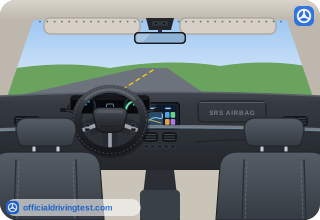
- Drivers who always wear lap and shoulder belts and sit as far back as practical
- Those who must transport infants in rear-facing infant seats in the front passenger seat
- Drivers who carry adult passengers in the back seat only
- Anyone who regularly drives long distances on freeways or in heavy traffic
Show answer
Correct answer: Those who must transport infants in rear-facing infant seats in the front passenger seat
People who must carry infants in rear-facing seats in the front passenger seat are in a risk group that should consider an on-off switch.
Source: District of Columbia Driver Manual (Updated January 2024), page 48