Washington, D.C.: Cheat Sheet
Key facts and numbers from the driver's manual, on two printable pages — free to print or save.
Independent educational site · not affiliated with any government agency or DMV
Driving Test Practiceofficialdrivingtest.com
Road signs
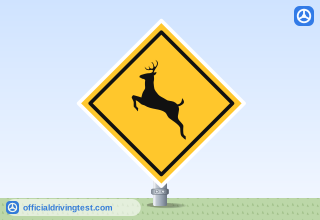 Animals crossing are most likely at dusk, dawn, and night-time hours.
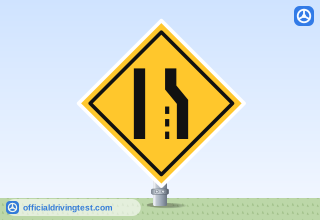 Drivers in the ending right lane must merge left when space opens up.
- State routes use black letters on a white rectangular background.
- Warning signs call for slowing down and watching for other signs and signals that may follow.
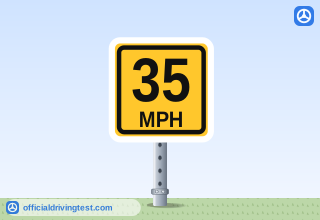 Advisory speed signs warn that conditions may often make driving faster unsafe.
- Regulatory signs state the speed limit and other laws and regulations that drivers must follow.
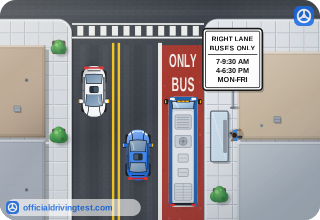 Posted signage shows the days and times the Bus Lane is in effect, because some lanes are managed for specific periods of the day.
Mature drivers
- The physician completes the Mature Driver section, certifying from a medical diagnosis that you can safely operate a motor vehicle.
Sign shapes and colors
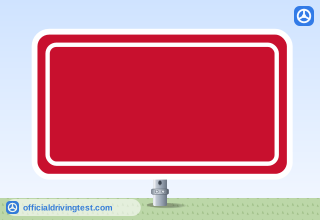 Red is the color for stop, yield, do not enter, and wrong way messages.
- The manual says diamond-shaped signs warn of pedestrian crossings.
Traffic signals
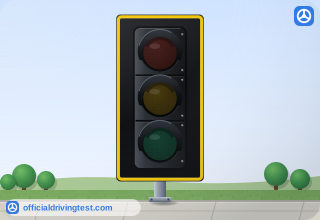 The law treats a dark or malfunctioning signal like a stop sign: you stop first.
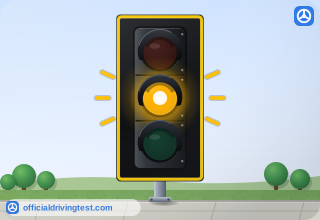 A flashing yellow signal means slow down and proceed with caution.
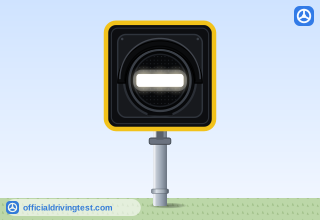 The horizontal bar ends the bus priority, so buses follow the normal traffic signals.
- The pedestrian instructions say it may take up to one minute for the signal to change.
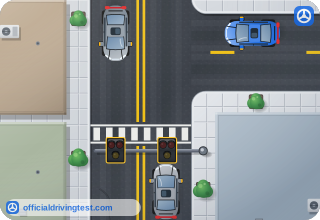 A side street at a HAWK signal continues to be controlled by a stop sign.
- An activated RRFB has yellow lights that flash with high frequency.
Right-of-way, turning and passing
- Near a hill top or on a curve you must not pass when you cannot see far enough ahead.
- You must yield to bicycles and buses in the lane before you turn.
- Safe turning includes looking behind you and to both sides and signaling before changing lanes.
- For a right turn you move into the lane furthermost to the right, well before the turn.
- You move forward slowly while turning the steering wheel to the left.
- Entering from a private road or driveway, you must first stop and give way to all vehicles and pedestrians.
- The right-of-way is the right to proceed lawfully ahead of another vehicle or pedestrian.
Alcohol and impaired driving
- Enrollment in the IID Program is mandatory for alcohol related offenses.
- Anyone guilty of impaired driving must enroll in and complete the Ignition Interlock Device (IID) Program.
- Program participants may only drive vehicles that are equipped with an IID.
- The minimum revocation is 2 years for a third or subsequent offense.
- The IID Program requires drivers to install IIDs on all of their registered vehicles.
- Impaired driving includes operating a vehicle while affected by alcohol, legal or illicit drugs, and sleepiness.
Speed and following distance
- An advisory speed sign is not law, but exceeding it and then crashing may lead to a ticket for violating the general speed restriction.
- The manual advises letting an aggressive driver pass, not challenging them, and avoiding eye contact.
- The manual says a safe speed may be only 20 miles per hour in wet weather on such a curve.
- Wet pavements are far more slippery, so it takes a longer distance to stop.
- The manual says to keep your speed low enough to stop within the distance you can see ahead.
- Stopping distance depends on pavement, grade, tire treads, shock absorbers, brakes, wind and the driver's reaction time.
- The manual says not to slam on the brakes and not to steer sharply or change speed quickly.
Licensing basics
- Besides proof of full legal name, date of birth and social security number, the applicant must submit two proofs of DC residency.
- You must have no pointable moving violations for 12 consecutive months.
- The manual states you commit a misdemeanor or felony when you disregard a traffic law or fail to do what it requires.
- A learner permit holder may not drive with other passengers in the vehicle.
Vehicle controls and signals
- High beams must be used whenever needed to see persons or vehicles ahead, except when meeting or closely following a vehicle.
- Hazard lights are for a vehicle that is stopped or disabled on the highway or shoulder in an emergency.
- At high speed you should signal for a much greater distance and a longer time than the minimum.
- The manual says to turn your head, look back out the rear window and check both side view mirrors, never depending on the one rearview mirror alone.
Pavement markings
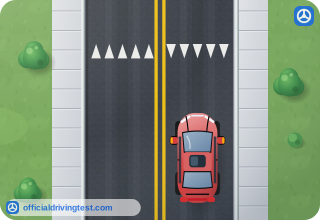 A yield line is a line of triangles across the roadway showing where you must yield or stop, if necessary.
- Two solid yellow lines mean you must not pass.
- The manual gives the lane markings, solid or broken, as the best way to tell whether passing is permitted.
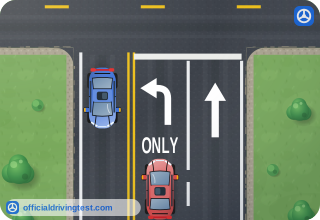 A lane marked with a curved arrow, with or without ONLY, requires you to turn in the arrow's direction.
Interstate and highway driving
- The manual says the solid painted lines dividing the entrance and the interstate should not be crossed.
- The manual says to stay with your vehicle and never walk along an interstate or other limited access highway.
- HOV lanes separated by a barrier are reversible, with traffic flowing one way at certain times and the other way at other times.
Parking and stopping
- The exception is temporarily loading or unloading merchandise or passengers.
- A following driver who stops should stay several lengths behind the parking vehicle.
- A streetcar could be coming as you open a door.
- You must not stop within 30 feet of the curb points opposite the ends of a safety zone unless signs or markings show another length.
Railroad crossings
- Flashing red signals at a crossing, possibly with bells, warn that a train is coming.
- At a railroad crossing with lowered gates or flashing lights you must stop.
Pedestrians
- A safety zone is a roadway area marked by signs for pedestrians only, and you must never drive through it.
- A driver must come to a complete stop for a pedestrian crossing in a crosswalk on the vehicle's half of the roadway.
- The pedestrian safety tips say it is safest to walk on a sidewalk.
Sharing the road
- When passing a stopped streetcar traveling in the same direction, use extreme caution, wait until it is safe and pass on the left side.
- A truck may drift back slightly when it starts to move.
- Drivers should look for bicyclists before opening doors because open doors are a serious threat to them.
- Motorists must yield to bicyclists at intersections when passing and when turning.
Seat belts and child safety
- Drivers are responsible for seat belt compliance for all passengers.
- The seat belt requirement applies in passenger cars, trucks, tractors, multi-purpose vehicles, and passenger buses.
- The lap belt goes under the abdomen, low on the hips and across the upper thighs.
Distracted and drowsy driving
- The manual lists not remembering driving the last few miles among the danger signs of drowsy drivers.
- Drowsy driving means operating a motor vehicle while being impaired due to lack of sleep.
- The manual says pets should be kept away from you and not allowed to sit on your lap or get fresh air from the driver's side window.
- The manual lists retrieving unsecured cargo or objects among the things that take attention away from driving.
Emergencies and crashes
- The comparison means avoiding abrupt changes in speed or direction.
- The manual says to stay as far away from the fire as possible while using the extinguisher.
- You hold the gas pedal to the floor while turning the key in short intervals.
Emergency vehicles and work zones
- Work-zone warning signs alert drivers to unusual or potentially hazardous conditions in or near the zone.
- Work zone traffic is usually stopped when opposing traffic must take turns on one lane, workers or equipment must enter the lane, or the work is dangerous to passing vehicles.
Insurance and documents
- Failure to comply may result in a fine and/or arrest.
- The manual says any motor vehicle crash in which you are involved should be reported to your insurance company.
Points and penalties
- The manual says points are given whether the violations occur in DC or in other states.
- DMV assesses points when you pay the ticket, because payment is an admission of liability.