Washington, D.C.: Speed and following distance — Part 2 Practice Test
Questions in this part include: “Which of these is one of the factors that stopping distance depends on?” · “At night, what should you be especially watchful for?”
Independent educational site · not affiliated with any government agency or DMV
Ready? Test yourself
Answer to start, or tap Start below:
Which of these is one of the factors that stopping distance depends on?
- Instant feedback with an explanation
- Every answer cites its source in the manual
- Your best score is saved on this device
- Keyboard: press 1 to 4 to answer and Enter for the next question
Questions are original and based on the official manual "District of Columbia Driver Manual" (Updated January 2024), District of Columbia Department of Motor Vehicles (DC DMV).
All 17 questions in this practice test
Take the test above first, then use this list to study. Tap “Show answer” to see the correct answer and explanation.
Show the questions and answersHide the questions
-
Which of these is one of the factors that stopping distance depends on?
- The color and finish of the vehicle
- How many years the driver has been licensed
- The make and model of the vehicle radio
- The type and condition of the pavement
Show answer
Correct answer: The type and condition of the pavement
Stopping distance depends on pavement, grade, tire treads, shock absorbers, brakes, wind and the driver's reaction time.
Source: District of Columbia Driver Manual (Updated January 2024), page 25
-
Which of these is among the biggest culprits of road rage and aggressive driving?
- Using turn signals
- Yielding to merging cars
- Driving at the posted limit
- Tailgating
Show answer
Correct answer: Tailgating
The manual lists tailgating, unsafe lane changing, speeding, and running red lights and stop signs as the biggest culprits.
Source: District of Columbia Driver Manual (Updated January 2024), page 27
-
To reduce road rage and aggressive driving, you should not remain behind the wheel for more than:
- One hour at a time
- Three hours at a time
- Two hours at a time
- Five hours at a time
Show answer
Correct answer: Three hours at a time
The manual says not to remain behind the wheel for more than three hours at a time.
Source: District of Columbia Driver Manual (Updated January 2024), page 27
-
What does the manual say about yellow lights in its rules to reduce road rage?
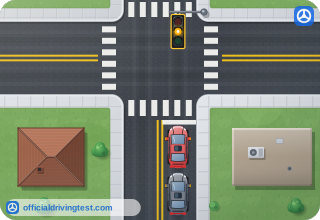
- Speed up to clear them
- Run them when no police are around
- Do not run them
- Run them if traffic is light
Show answer
Correct answer: Do not run them
The manual says to always stop fully at red lights and stop signs and not to run yellow lights.
Source: District of Columbia Driver Manual (Updated January 2024), page 27
-
What does the manual say about the passing lane in its rules to reduce road rage?
- Do not block it
- Use it as your regular driving lane
- Drive in it at the speed limit at all times
- Stay in it when you plan to turn right
Show answer
Correct answer: Do not block it
The manual says not to block the passing lane.
Source: District of Columbia Driver Manual (Updated January 2024), page 27
-
How should you look at the headlights of vehicles you are approaching at night?
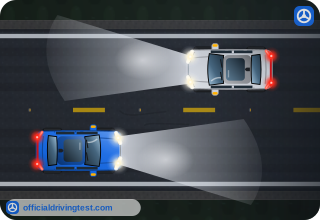
- With a steady stare
- With quick glances
- With one eye closed
- Only in your mirror
Show answer
Correct answer: With quick glances
The manual says not to stare at their headlights but to use quick glances.
Source: District of Columbia Driver Manual (Updated January 2024), page 27
-
What does glare from oncoming headlights cause the pupils of your eyes to do?
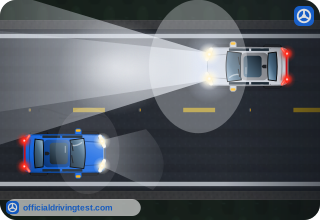
- Widen
- Stay the same size
- Flicker
- Contract
Show answer
Correct answer: Contract
The glare makes the pupils contract, and it takes time for them to readjust to less intense light.
Source: District of Columbia Driver Manual (Updated January 2024), page 27
-
At night, you should keep your speed low enough to be able to:
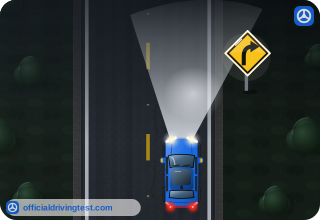
- Stop within the distance you can see ahead
- Pass any vehicle you happen to meet ahead
- Keep up with the vehicle ahead
- Pass at about the same speed as oncoming traffic
Show answer
Correct answer: Stop within the distance you can see ahead
The manual says to keep your speed low enough to stop within the distance you can see ahead.
Source: District of Columbia Driver Manual (Updated January 2024), page 27
-
What does the manual say about wearing sunglasses when driving at night?
- Wear them to reduce glare
- Wear them only on lit roads
- Do not wear them
- Wear them only behind high beams
Show answer
Correct answer: Do not wear them
The manual says not to wear sunglasses at night.
Source: District of Columbia Driver Manual (Updated January 2024), page 27
-
At night, if there is no road edge line, what should you use as a guide?
- The center line
- The brake lights ahead
- The glow of nearby buildings
- The tops of the trees
Show answer
Correct answer: The center line
The manual says to use the road edge line as a guide, or the center line if there is no road edge line.
Source: District of Columbia Driver Manual (Updated January 2024), page 27
-
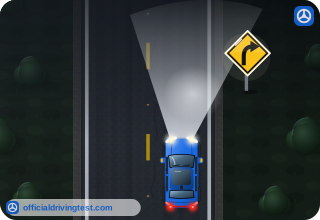
Why must you watch carefully for highway signs at night?
- They are smaller at night
- They are placed farther apart at night
- They are more difficult to see at night
- They are removed at night
Show answer
Correct answer: They are more difficult to see at night
The manual says highway signs are more difficult to see at night.
Source: District of Columbia Driver Manual (Updated January 2024), page 27
-
At night, what should you be especially watchful for?
- Loose gravel and deep potholes
- Pedestrians and stopped vehicles
- Wet leaves and deep puddles
- Slow bicycle racers
Show answer
Correct answer: Pedestrians and stopped vehicles
The manual says to be especially watchful for pedestrians and stopped vehicles at night.
Source: District of Columbia Driver Manual (Updated January 2024), page 27
-
What does the manual say about stopping on the roadway at night?
- Stop only if you are tired
- Stop if oncoming headlights glare
- Stop only if you turn your hazard lights on first
- Do not stop on the roadway for any reason
Show answer
Correct answer: Do not stop on the roadway for any reason
The manual says not to stop on the roadway for any reason when driving at night.
Source: District of Columbia Driver Manual (Updated January 2024), page 27
-
What should you carry for night stops alongside the roadway that are unavoidable?
- A white spotlight
- A set of extra headlight bulbs only
- A yellow flashing strobe light only
- A red warning light or flares
Show answer
Correct answer: A red warning light or flares
The manual says to carry a red warning light or flares for use when stops alongside the roadway are unavoidable.
Source: District of Columbia Driver Manual (Updated January 2024), page 28
-
What does the manual say to do about smoking in a vehicle with the windows closed?
- Smoke only at red lights
- Cut down on smoking
- Smoke only with the heater on
- Smoke only on the highway
Show answer
Correct answer: Cut down on smoking
The manual says to cut down on smoking when driving a vehicle with the windows closed.
Source: District of Columbia Driver Manual (Updated January 2024), page 28
-
Which does the most to improve traction and stopping on ice and in snow?
- Snow tires
- Radial tires
- Chains
- Four-wheel drive
Show answer
Correct answer: Chains
The manual says chains do the most to improve traction and stopping on ice and snow, but none of these makes it safe to drive at normal speeds.
Source: District of Columbia Driver Manual (Updated January 2024), page 28
-
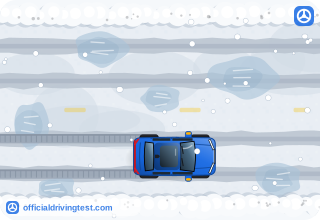
Do chains, snow tires, or radial tires make it safe to drive on ice or snow-covered roads at normal speeds?
- No, you must still slow down
- Yes, if you have chains on all wheels
- Yes, if you drive in the right lane
- Yes, if you use your low beams
Show answer
Correct answer: No, you must still slow down
The manual says neither chains nor radial or snow tires make it safe to drive on ice or snow at normal speeds; you must slow down.
Source: District of Columbia Driver Manual (Updated January 2024), page 28