Washington, D.C.: Sharing the road
Bicyclists, large trucks and their No-Zones, school vehicles, motorcycles, buses, bus lanes and streetcars. Split into 4 shorter tests so you're not stuck in one long quiz.
Independent educational site · not affiliated with any government agency or DMV
Choose a part
Sharing the road — Part 1
Questions in this part include: “What does Vision Zero represent for the District?”
Sharing the road — Part 2
Questions in this part include: “On multi-lane highways, which lane do tractor-trailers generally stay in?”
Sharing the road — Part 3
Bicyclists, large trucks and their No-Zones, school vehicles, motorcycles, buses, bus lanes and streetcars. — Part 3
Sharing the road — Part 4
Questions in this part include: “What are streetcars?”
Questions are original and based on the official manual "District of Columbia Driver Manual" (Updated January 2024), District of Columbia Department of Motor Vehicles (DC DMV).
All 72 Sharing the road questions with answers
Choose a part above to take a practice test, or study every question and answer here.
Show the questions and answersHide the questions
1Part 118 questions
-
What does Vision Zero represent for the District?
- Reducing traffic fatalities to zero
- Cutting parking tickets to zero
- Registering zero vehicles from outside
- Building zero new roads each year
Show answer
Correct answer: Reducing traffic fatalities to zero
Vision Zero is the city’s goal of reducing traffic fatalities to zero.
Source: District of Columbia Driver Manual (Updated January 2024), page 4
-
What does safe driving require, especially when approaching intersections and crosswalks?
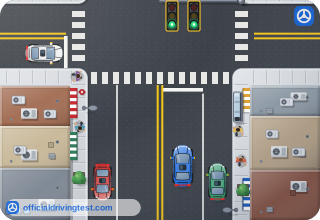
- Foreseeing danger and allowing for others’ mistakes
- Assuming other drivers will always yield first
- Driving faster than the surrounding traffic
- Relying on signals and signs to stop for you
Show answer
Correct answer: Foreseeing danger and allowing for others’ mistakes
Safe driving requires the ability to foresee danger and make allowances for the mistakes of others.
Source: District of Columbia Driver Manual (Updated January 2024), page 4
-
Which of these is a responsibility of drivers named in the Introduction?
- Keeping the radio off at all times
- Never driving with other passengers
- Being emotionally fit to drive
- Owning a newer vehicle model
Show answer
Correct answer: Being emotionally fit to drive
Drivers are responsible for being generally healthy, emotionally fit to drive, and sure the vehicle is in good operating condition.
Source: District of Columbia Driver Manual (Updated January 2024), page 4
-
Which two conditions does the manual call the major risk factors that threaten driver and public safety?
- Speeding and tailgating
- Distracted and impaired driving
- Night driving and rain
- Aggressive and slow driving
Show answer
Correct answer: Distracted and impaired driving
The manual names Distracted and Impaired Driving as the two major risk factors for driver and public safety.
Source: District of Columbia Driver Manual (Updated January 2024), page 4
-
Which of these is included in the manual’s expanded definition of drivers?
- Pedestrians on foot
- Trains on rails
- Wheelchair users
- Bicycles
Show answer
Correct answer: Bicycles
The expanded definition of drivers includes bicycles, buses, motorcycles, light trucks, commercial vehicles and any vehicle not operating on rails.
Source: District of Columbia Driver Manual (Updated January 2024), page 5
-
In the vehicle safety tips for bicyclists, how much space should drivers give bicycles?
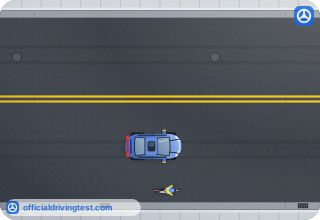
- At least 3 feet
- At least 1 foot
- At least 5 feet
- At least 10 feet
Show answer
Correct answer: At least 3 feet
The tips tell drivers to give bicycles at least 3 feet of space.
Source: District of Columbia Driver Manual (Updated January 2024), page 6
-
What does the manual say to do before opening a vehicle door?
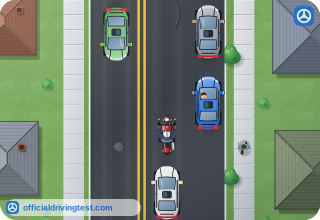
- Sound your horn twice
- Turn on your hazard lights
- Look for bicyclists
- Roll down the window
Show answer
Correct answer: Look for bicyclists
Drivers should look for bicyclists before opening doors because open doors are a serious threat to them.
Source: District of Columbia Driver Manual (Updated January 2024), page 6
-
What should a driver do about bicyclists when turning?
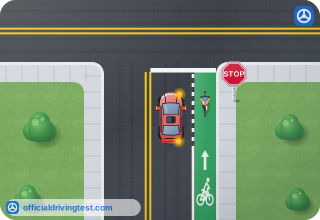
- Pass them before the turn
- Yield to them
- Sound the horn to warn them
- Speed up to clear the lane
Show answer
Correct answer: Yield to them
The tips say to yield to bicyclists when turning.
Source: District of Columbia Driver Manual (Updated January 2024), page 6
-
How do bicyclists’ roadway rights compare with those of vehicles?
- They have no roadway rights
- They have similar roadway rights
- They have greater rights than vehicles
- They have rights only in bike lanes
Show answer
Correct answer: They have similar roadway rights
Bicycles have similar roadway rights as vehicles, so bicyclists should follow the rules of the road.
Source: District of Columbia Driver Manual (Updated January 2024), page 6
-
What should bicyclists do at red lights and stop signs?
- Slow down and proceed
- Yield only to cars
- Proceed if no vehicle is near
- Stop
Show answer
Correct answer: Stop
Bicyclists should stop at red lights and stop signs.
Source: District of Columbia Driver Manual (Updated January 2024), page 6
-
What does the manual say bicyclists should always wear?
- A helmet
- A reflective vest
- Bright clothing
- Gloves
Show answer
Correct answer: A helmet
Bicyclists should always wear a helmet.
Source: District of Columbia Driver Manual (Updated January 2024), page 6
-
Where does the manual say bicyclists should not ride?
- In marked bike lanes
- On one-way streets
- On downtown sidewalks
- On streets with traffic lights
Show answer
Correct answer: On downtown sidewalks
The manual tells bicyclists not to ride on sidewalks in downtown areas.
Source: District of Columbia Driver Manual (Updated January 2024), page 6
-
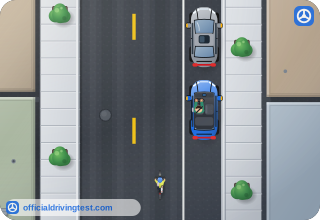
When opening a vehicle door with the Dutch Reach method, which hand should you use?
- The near hand, the one closer to the door
- The far hand, the one farther from the door
- Whichever hand is free
- Both hands together
Show answer
Correct answer: The far hand, the one farther from the door
The Dutch Reach means opening the door with the hand farther from the door.
Source: District of Columbia Driver Manual (Updated January 2024), page 6
-
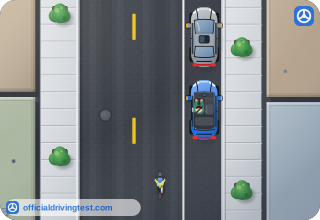
What are the first two checks the manual suggests before opening a door?
- Side-view mirror, then rear-view mirror
- Rear-view mirror, then seat belt
- Turn signal, then side-view mirror
- Rear-view mirror, then side-view mirror
Show answer
Correct answer: Rear-view mirror, then side-view mirror
The steps are to check your rear-view mirror, then your side-view mirror, then open the door with your far hand.
Source: District of Columbia Driver Manual (Updated January 2024), page 6
-
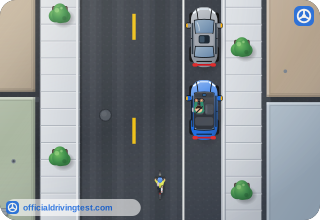
How does the Dutch Reach method help you see approaching bicyclists?
- It forces your body to turn
- It keeps your body facing forward
- It lets you open the door faster
- It makes you lean back in the seat
Show answer
Correct answer: It forces your body to turn
Reaching with the far hand forces your body to turn, which lets you see approaching bicyclists.
Source: District of Columbia Driver Manual (Updated January 2024), page 6
-
To be a safe driver, you must be alert, foresee danger and:
- Expect other drivers to give way to you
- Make allowances for the mistakes of others
- Assume other drivers obey every traffic law
- Trust other drivers to act as you would
Show answer
Correct answer: Make allowances for the mistakes of others
Because other drivers may not obey laws or be alert, you must make allowances for their mistakes.
Source: District of Columbia Driver Manual (Updated January 2024), page 22
-
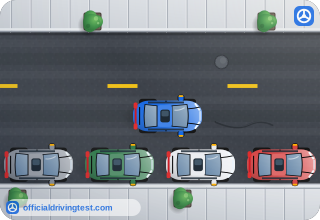
When driving past parked cars, what should you watch out for?
- Tires that need air
- Cars with alarms on
- Opening car doors
- Fuel leaking from cars
Show answer
Correct answer: Opening car doors
The manual says to watch for opening car doors, pedestrians stepping out from between cars and bicyclists.
Source: District of Columbia Driver Manual (Updated January 2024), page 23
-
If another driver's turn signal is flashing, you should:
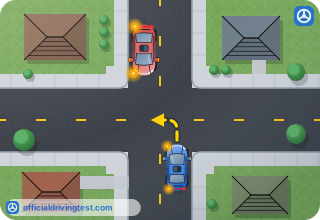
- Assume the driver will make the turn
- Speed up to pass the vehicle at once
- Sound your horn to warn the other driver
- Not assume the driver will make the turn
Show answer
Correct answer: Not assume the driver will make the turn
The manual says to plan ahead and decide what to do if the driver does not turn in the direction shown by the signal.
Source: District of Columbia Driver Manual (Updated January 2024), page 29
2Part 218 questions
-
Defensive drivers should not assume what about every driver at a stop sign or red traffic light?
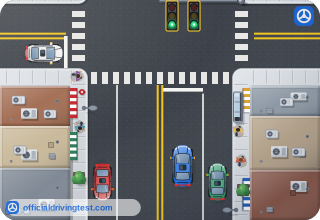
- That cyclists ride on the right
- That pedestrians use crosswalks
- That signs are hard to see
- That every driver will stop
Show answer
Correct answer: That every driver will stop
The manual says some drivers deliberately run stop signs and traffic lights.
Source: District of Columbia Driver Manual (Updated January 2024), page 29
-
What should you constantly be thinking of as you drive defensively?
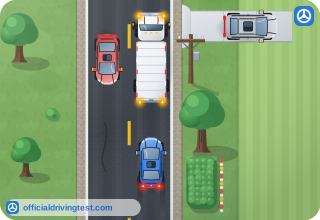
- A shortcut
- An escape route
- The next exit
- A parking space
Show answer
Correct answer: An escape route
The manual says to constantly think of an escape route so you have a plan of action if a sudden emergency arises.
Source: District of Columbia Driver Manual (Updated January 2024), page 29
-
If an approaching vehicle starts to pass and may not have room to get back into the proper lane, what should you do?
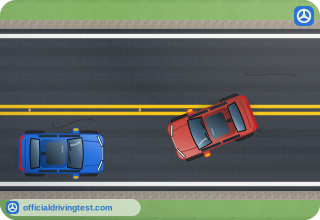
- Speed up to move out of its way
- Move toward the center line
- Slow down and check the shoulder and nearby area
- Stay in the center of your lane at the same speed
Show answer
Correct answer: Slow down and check the shoulder and nearby area
The manual says to slow down and check the shoulder and nearby area so you know where you can go if necessary.
Source: District of Columbia Driver Manual (Updated January 2024), page 29
-
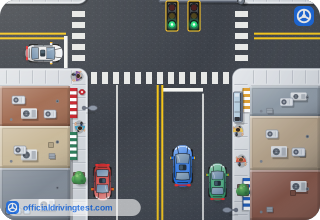
How far ahead does the manual say you should look?
- As far ahead as you can
- Only as far as the car ahead
- About one block ahead
- Only to the next intersection
Show answer
Correct answer: As far ahead as you can
Looking as far ahead as you can lets you see trouble developing in front of the vehicle ahead.
Source: District of Columbia Driver Manual (Updated January 2024), page 29
-
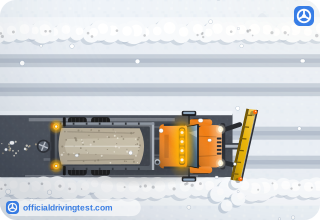
If you notice flashing red or yellow lights on a vehicle ahead, you should look for:
- A place to pass the vehicle
- Objects or people on the road
- A speed limit sign
- An exit to turn onto
Show answer
Correct answer: Objects or people on the road
The manual says to look for objects or people on the road when you see flashing red or yellow lights on a vehicle ahead.
Source: District of Columbia Driver Manual (Updated January 2024), page 29
-
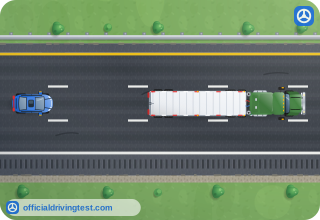
How does a large truck compare with a car in stopping and turning?
- It stops in a much shorter distance than a car does
- It has a much tighter turning radius than a car does
- It needs more distance to stop and a wider turning radius
- It accelerates faster than a car
Show answer
Correct answer: It needs more distance to stop and a wider turning radius
Trucks are not designed to be as maneuverable as cars.
Source: District of Columbia Driver Manual (Updated January 2024), page 36
-
On multi-lane highways, which lane do tractor-trailers generally stay in?
- The left lane
- The center lane
- The right lane
- The shoulder
Show answer
Correct answer: The center lane
Tractor-trailers stay in the center lane to help the flow of traffic on and off the highway.
Source: District of Columbia Driver Manual (Updated January 2024), page 36
-
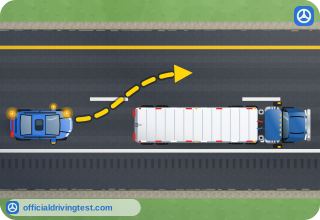
Before you move into the passing lane to pass a truck, what must be true?
- The truck is going below the speed limit and has signaled you
- The truck driver has sounded the horn to invite you
- You are at least one mile from an intersection
- It is clear to your front and rear, and you are in a legal passing zone
Show answer
Correct answer: It is clear to your front and rear, and you are in a legal passing zone
You must check front and rear and pass only in a legal passing zone.
Source: District of Columbia Driver Manual (Updated January 2024), page 36
-
How can you let a truck driver know you are passing, especially at night?
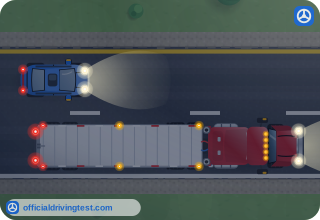
- By blinking your headlights
- By sounding your horn
- By turning on your high beams and keeping them on
- By flashing your brake lights
Show answer
Correct answer: By blinking your headlights
Blinking your headlights tells the truck driver you are passing.
Source: District of Columbia Driver Manual (Updated January 2024), page 36
-
On a level highway, how much longer does it take to pass a truck than a car?
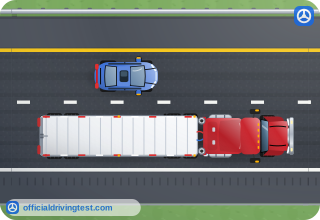
- About one minute longer
- Only one second longer
- Only three to five seconds longer
- About ten to fifteen seconds longer
Show answer
Correct answer: Only three to five seconds longer
On a level highway, passing a truck takes only three to five seconds longer than passing a car.
Source: District of Columbia Driver Manual (Updated January 2024), page 36
-
Why might you need to increase your speed when passing a truck on a downgrade?
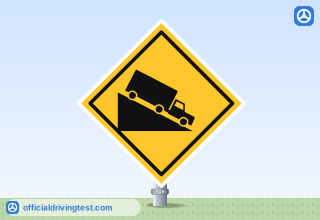
- The truck will stop and wait for the car to pass
- The truck’s momentum will cause it to go faster
- The truck will move to the shoulder
- The truck driver will brake
Show answer
Correct answer: The truck’s momentum will cause it to go faster
On a downgrade, a truck's momentum makes it go faster.
Source: District of Columbia Driver Manual (Updated January 2024), page 36
-
After you pass a truck, when should you move back in front of it?
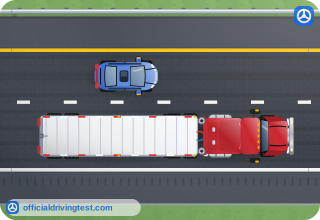
- As soon as your car’s rear bumper is past the truck’s cab
- As soon as you have passed the truck’s rear bumper
- When your speed is above the truck’s
- When you can see the front of the truck in your rear-view mirror
Show answer
Correct answer: When you can see the front of the truck in your rear-view mirror
Move back only when you can see the front of the truck in your rear-view mirror.
Source: District of Columbia Driver Manual (Updated January 2024), page 36
-
What should you do after you pass a truck?
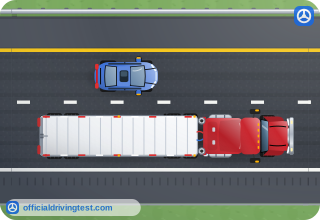
- Maintain your speed
- Slow down right away
- Stop at the next exit
- Move to the shoulder
Show answer
Correct answer: Maintain your speed
A quick lane change in front of a truck followed by slowing can leave the truck driver no time to react.
Source: District of Columbia Driver Manual (Updated January 2024), page 36
-
How far in front of the cab does a truck’s blind spot extend?
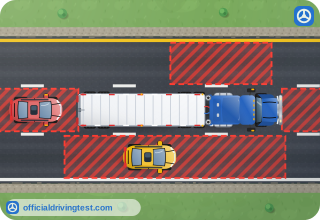
- Up to 5 feet
- Up to 50 feet
- Up to 20 feet
- Up to 200 feet
Show answer
Correct answer: Up to 20 feet
Truck blind spots extend up to 20 feet in front of the cab.
Source: District of Columbia Driver Manual (Updated January 2024), page 36
-
When you follow a truck at night, what should you always do?
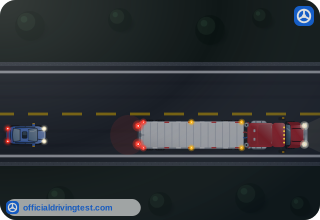
- Use your high beams
- Turn off your headlights
- Turn on your flashers
- Dim your headlights
Show answer
Correct answer: Dim your headlights
Bright lights from a vehicle behind will blind the truck driver when they reflect off the truck's large side mirrors.
Source: District of Columbia Driver Manual (Updated January 2024), page 37
-
If you are stopped behind a truck on an upgrade, what should you leave in front of you?
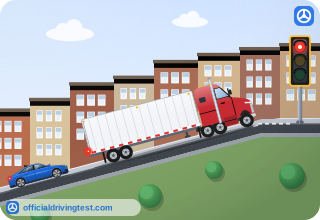
- Space, in case the truck drifts back slightly
- A car length of space on each side of the car
- No space, to stop it
- Enough space to pass it
Show answer
Correct answer: Space, in case the truck drifts back slightly
A truck may drift back slightly when it starts to move.
Source: District of Columbia Driver Manual (Updated January 2024), page 37
-
What does the manual say if you cannot see a truck’s mirrors?
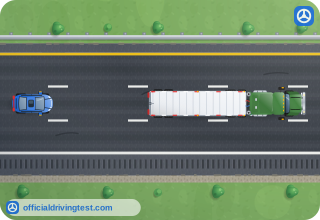
- The truck is about to turn
- The truck driver can see you in the mirror
- The truck driver cannot see you
- The truck is exceeding the limit
Show answer
Correct answer: The truck driver cannot see you
If you cannot see the truck's mirrors, you are in a blind spot.
Source: District of Columbia Driver Manual (Updated January 2024), page 37
-
What should you do about the unseen area directly behind a truck or bus (the rear no-zone)?
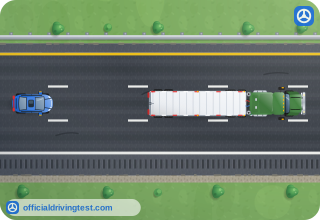
- Follow within one car length
- Avoid tailgating
- Pull up to the bumper at night
- Blink your headlights
Show answer
Correct answer: Avoid tailgating
Trucks and buses have huge no-zones directly behind them, so you should avoid tailgating.
Source: District of Columbia Driver Manual (Updated January 2024), page 37
3Part 318 questions
-
What is a front no-zone danger when you pass a truck or bus?
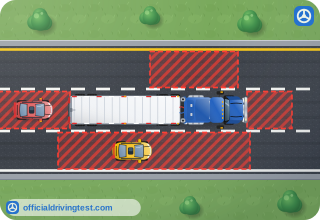
- Passing it in a legal passing zone on the left
- Staying behind the truck
- Keeping a steady speed
- Cutting in front too soon after passing it
Show answer
Correct answer: Cutting in front too soon after passing it
Cutting in front of a truck or bus too soon after passing it takes away the driver’s room to stop; look for its entire front in your rear-view mirror before you pull in front.
Source: District of Columbia Driver Manual (Updated January 2024), page 37
-
What should you never do around a truck that is backing up?
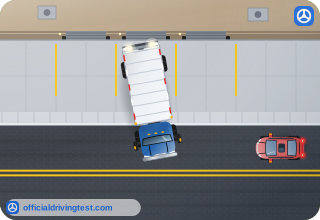
- Stop in front of it
- Wait beside it
- Cross behind it
- Pass it on the left
Show answer
Correct answer: Cross behind it
Truck drivers do not have a rear-view mirror and may not see you cutting in behind them.
Source: District of Columbia Driver Manual (Updated January 2024), page 37
-
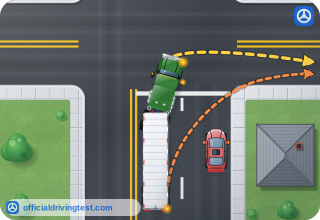
When a truck makes a right or left turn, when should you pass?
- Right after the truck driver signals
- During the turn
- Before the turn begins
- Not until the turning action is complete
Show answer
Correct answer: Not until the turning action is complete
Trucks make wide turns and sometimes use space from other lanes.
Source: District of Columbia Driver Manual (Updated January 2024), page 37
-
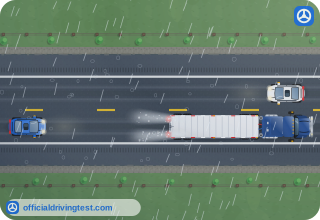
What can splash and spray from a truck’s wheels and trailer do in rain or snow?
- Reduce visibility to nearly zero
- Help you see the road more clearly
- Improve your tire grip
- Wash your windshield
Show answer
Correct answer: Reduce visibility to nearly zero
In rain or snow, following or passing a heavy truck can create visibility problems.
Source: District of Columbia Driver Manual (Updated January 2024), page 37
-
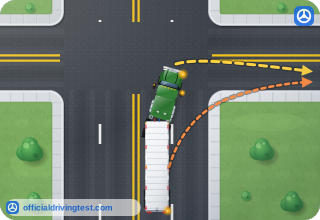
Why should you pay close attention to truck turn signals?
- Trucks signal when they plan to stop in the lane
- A truck's signals show when it is changing to a lower gear
- Trucks turn only after other drivers have signaled to pass
- Truck drivers cannot see cars squeezed in between them and the curb
Show answer
Correct answer: Truck drivers cannot see cars squeezed in between them and the curb
The manual says truck drivers cannot see cars squeezed in between them and the curb.
Source: District of Columbia Driver Manual (Updated January 2024), page 37
-
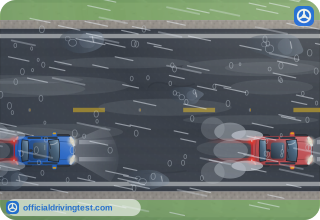
Whenever you drive in wet weather, what should you make sure of?
- Your wipers work, the washer reservoir has fluid and your headlights are on
- Your rear window defroster is on and your radio is turned off now
- Your tires are inflated above the recommended pressure for dry roads
- Your high beams are on and the wipers are off
Show answer
Correct answer: Your wipers work, the washer reservoir has fluid and your headlights are on
These checks help you see and be seen in the rain or snow.
Source: District of Columbia Driver Manual (Updated January 2024), page 37
-
Why should you not linger alongside a truck while passing?
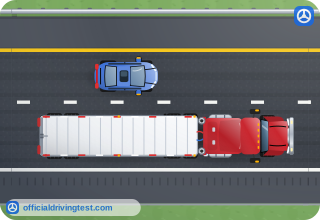
- It makes the truck driver slow down to let you pass
- It forces the truck driver to change lanes
- It lets the trucker see you in the mirrors
- It makes it impossible for the trucker to take evasive action
Show answer
Correct answer: It makes it impossible for the trucker to take evasive action
If you linger beside any vehicle while passing, the driver cannot dodge an obstacle in the road ahead.
Source: District of Columbia Driver Manual (Updated January 2024), page 37
-
Why does a tractor-trailer often appear to travel at a slower speed than it really is?
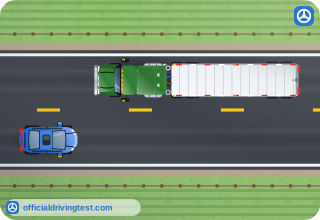
- Because of its large size
- Because trucks may not go faster than 25 mph
- Because of its bright lights
- Because it keeps to the right lane
Show answer
Correct answer: Because of its large size
Its size can mislead drivers about how close it is and how quickly it is approaching.
Source: District of Columbia Driver Manual (Updated January 2024), page 38
-
How far must vehicles stop from the front or rear of a school vehicle that is stopping or stopped on the roadway with its alternating flashing red lights operating?
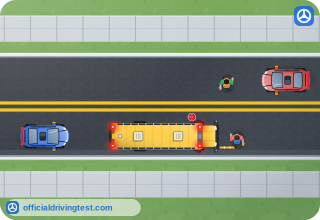
- At least 5 feet
- At least 10 feet
- At least 20 feet
- At least 50 feet
Show answer
Correct answer: At least 20 feet
All vehicles must stop at least 20 feet from the front or rear of the school vehicle.
Source: District of Columbia Driver Manual (Updated January 2024), page 38
-
How long must you stay stopped for a school vehicle with alternating flashing red lights?
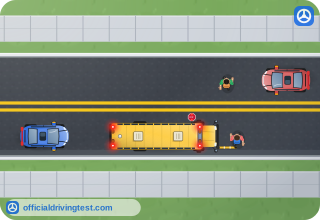
- Until the school vehicle begins to move away from the stop
- Until the alternating flashing red lights have been turned off
- For at least one minute
- Until the children are out of sight
Show answer
Correct answer: Until the alternating flashing red lights have been turned off
No one can proceed until the alternating flashing red lights have been turned off.
Source: District of Columbia Driver Manual (Updated January 2024), page 38
-
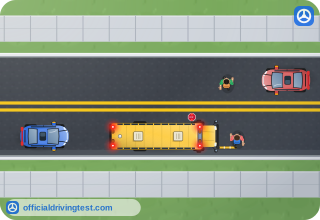
When are drivers of other vehicles not required to stop for a school vehicle’s alternating flashing red lights?
- When they are on a road that has four or more traffic lanes
- When the school vehicle has stopped at an intersection
- When no children can be seen anywhere near the school vehicle
- When they are on a divided highway and the school vehicle is across it
Show answer
Correct answer: When they are on a divided highway and the school vehicle is across it
The stop requirement does not apply on a divided highway when the school vehicle is on the other side.
Source: District of Columbia Driver Manual (Updated January 2024), page 38
-
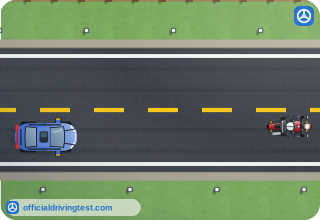
How much of its lane is a motorcycle entitled to use?
- The entire lane
- Half of the lane
- The left third of the lane
- The right half of the lane
Show answer
Correct answer: The entire lane
A motorcycle is entitled to use the entire lane, and its rider may move from side to side within it.
Source: District of Columbia Driver Manual (Updated January 2024), page 38
-
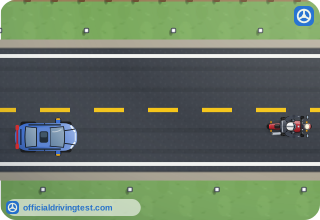
What does the manual say about passing a motorcycle within the same lane?
- It is allowed if you leave three feet of room beside the motorcycle
- It is allowed on a straight road
- It is against the law to overtake or pass a motorcycle within the same lane
- It is allowed if you signal first
Show answer
Correct answer: It is against the law to overtake or pass a motorcycle within the same lane
A motorcycle is entitled to the entire lane, so you must not pass it within that lane.
Source: District of Columbia Driver Manual (Updated January 2024), page 38
-
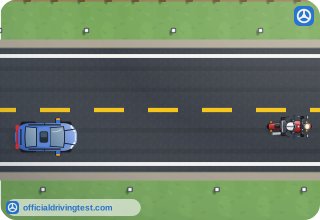
Why should you maintain a safe following distance behind a motorcycle?
- A motorcycle cannot be seen in the mirror
- A motorcycle can stop more quickly than a car
- A motorcycle is not allowed to brake suddenly
- A motorcycle always has to stay in the right lane
Show answer
Correct answer: A motorcycle can stop more quickly than a car
Motorcycles stop more quickly than cars, so tailgating one is dangerous.
Source: District of Columbia Driver Manual (Updated January 2024), page 38
-
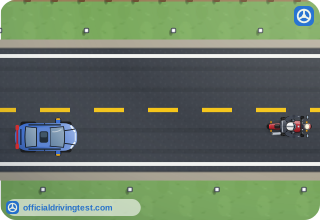
When should you be especially alert for motorcycles?
- Only on interstate highways and other limited access highways
- Only at night
- Only when it is raining
- When turning at intersections or pulling out from a side road or driveway
Show answer
Correct answer: When turning at intersections or pulling out from a side road or driveway
The size of a motorcycle makes it very difficult to see, especially at intersections and when pulling out.
Source: District of Columbia Driver Manual (Updated January 2024), page 38
-
How are bicycles treated in the District of Columbia?
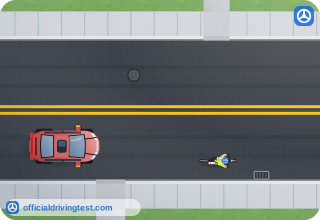
- As vehicles, with rights and duties like those of a motor vehicle
- As pedestrians, with the same rights as any person on foot
- As traffic that must stay off the roadway
- As vehicles that never have to yield
Show answer
Correct answer: As vehicles, with rights and duties like those of a motor vehicle
Bicycles are treated as vehicles in the District of Columbia, and bicyclists have rights and duties like those of a motor vehicle.
Source: District of Columbia Driver Manual (Updated January 2024), page 38
-
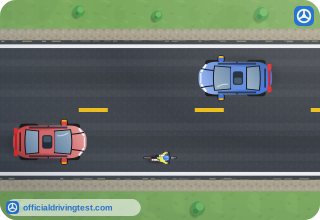
Where must motorists yield the right-of-way to bicyclists?
- Only in marked bike lanes
- Only at stop signs
- At intersections, when passing and when turning
- Only on streets with a speed limit under 25 mph
Show answer
Correct answer: At intersections, when passing and when turning
Motorists must yield to bicyclists at intersections when passing and when turning.
Source: District of Columbia Driver Manual (Updated January 2024), page 38
-
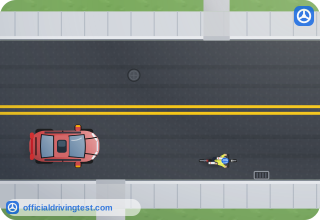
How do bicycle operators signal their intentions, since most bicycles have no turn signals?
- With horns and flashing lights
- With hand and arm signals
- With headlights
- With brake lights
Show answer
Correct answer: With hand and arm signals
Most bicycles do not have turn signals, so riders use hand and arm signals.
Source: District of Columbia Driver Manual (Updated January 2024), page 38
4Part 418 questions
-
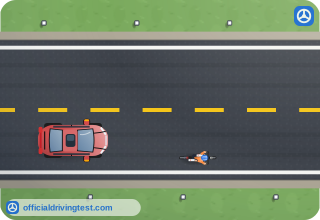
Why should you avoid using your horn as you approach a bicyclist?
- Bicyclists cannot hear a horn
- The horn is allowed only for a motorcycle
- The horn signals that the bicyclist has the right-of-way
- Loud noises can startle the bicycle operator and cause a crash
Show answer
Correct answer: Loud noises can startle the bicycle operator and cause a crash
Bicyclists can usually hear an approaching vehicle, and a loud noise can startle the rider.
Source: District of Columbia Driver Manual (Updated January 2024), page 38
-
Why should you not follow a bicycle closely?
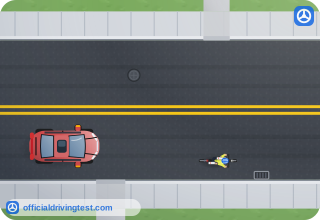
- Bicycles can stop and maneuver quickly, and bicyclists can swerve
- A bicycle always travels faster than a car on a street
- A bicycle can only travel in a straight line on the road
- A bicycle has no way to stop quickly
Show answer
Correct answer: Bicycles can stop and maneuver quickly, and bicyclists can swerve
A bicyclist can swerve or change speed quickly to avoid a road hazard.
Source: District of Columbia Driver Manual (Updated January 2024), page 38
-
After passing a bicyclist, when should you return to your lane?
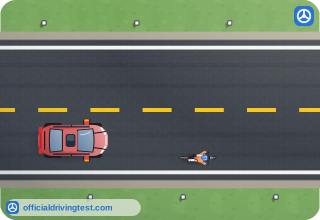
- As soon as your front bumper is past the bicyclist’s rear wheel
- When you can clearly see the bicyclist in your rear-view mirror
- After you sound your horn
- After the bicyclist signals
Show answer
Correct answer: When you can clearly see the bicyclist in your rear-view mirror
You return to your lane when the bicyclist is clearly in your rear-view mirror.
Source: District of Columbia Driver Manual (Updated January 2024), page 38
-
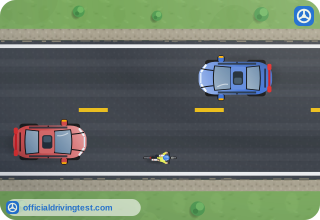
You are unable to pass a bicyclist safely. What should you do?
- Sound your horn to warn the rider, then pass on the left side
- Pass at once, before any other traffic arrives behind you
- Pass on the right at a high speed to clear the rider quickly
- Reduce your speed, follow the bicycle and wait for a safe chance to pass
Show answer
Correct answer: Reduce your speed, follow the bicycle and wait for a safe chance to pass
If you cannot pass safely, slow down and follow until you can.
Source: District of Columbia Driver Manual (Updated January 2024), page 38
-
What is the best way to avoid having vision blocks around a bus?
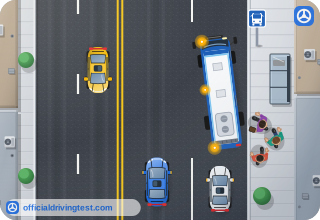
- Drive closely behind the bus so the driver can see you
- Leave a greater following distance between you and the bus
- Stay beside the bus
- Pass the bus on the right
Show answer
Correct answer: Leave a greater following distance between you and the bus
A larger gap lets you see around the bus and lets the driver see you.
Source: District of Columbia Driver Manual (Updated January 2024), page 39
-
Why is following a bus or other large vehicle too closely hazardous?
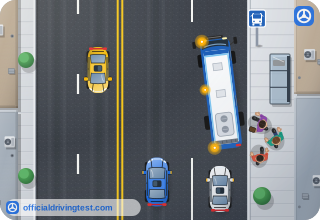
- The bus may drive in reverse at any moment
- The bus uses its horn to warn you
- You may be ticketed for passing too slowly
- You cannot see what is happening in front of it
Show answer
Correct answer: You cannot see what is happening in front of it
Following too closely hides the road ahead and may place you where the driver cannot see you.
Source: District of Columbia Driver Manual (Updated January 2024), page 39
-
What should you give buses when they are entering and exiting traffic?
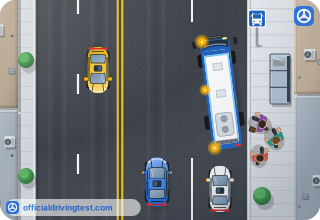
- The right-of-way
- A flash of your headlights
- A short following distance
- A signal with your horn
Show answer
Correct answer: The right-of-way
The manual says to always give buses the right-of-way when they are entering and exiting traffic.
Source: District of Columbia Driver Manual (Updated January 2024), page 39
-
Apart from turning, which of these may travel in a bus lane?
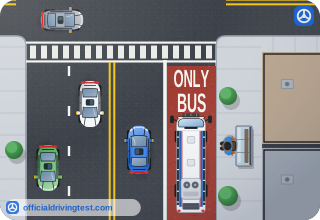
- A delivery truck
- A passenger car
- A motorcycle
- A school bus
Show answer
Correct answer: A school bus
A transit bus, tour bus, charter bus or school bus may use a bus lane; so may bicycles, paratransit and emergency vehicles.
Source: District of Columbia Driver Manual (Updated January 2024), page 39
-
What happens to unauthorized vehicles driving in bus lanes?
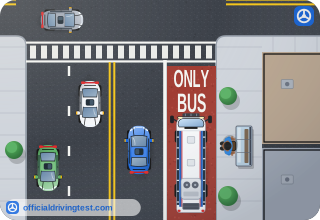
- They are allowed if traffic is heavy
- They are subject to ticketing and fines
- They are towed at once
- They get a warning only
Show answer
Correct answer: They are subject to ticketing and fines
Unauthorized vehicles in Bus Lanes can be ticketed and fined.
Source: District of Columbia Driver Manual (Updated January 2024), page 39
-
What are streetcars?
- Buses that run on a fixed schedule along a set route
- Passenger vehicles that operate on fixed rails on public streets
- Trucks that run only on public streets at night
- Cars that run on their own dedicated roadways, without rails
Show answer
Correct answer: Passenger vehicles that operate on fixed rails on public streets
Streetcars run on fixed rails on public streets, in mixed traffic or a separate right of way.
Source: District of Columbia Driver Manual (Updated January 2024), page 40
-
You are passing a stopped streetcar traveling in the same direction. On which side should you pass?
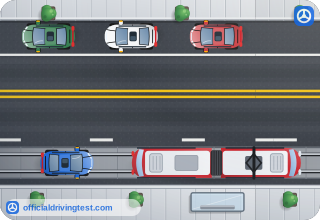
- On the right side of the streetcar
- On either side
- Do not pass it
- On the left side of the streetcar
Show answer
Correct answer: On the left side of the streetcar
When passing a stopped streetcar traveling in the same direction, use extreme caution, wait until it is safe and pass on the left side.
Source: District of Columbia Driver Manual (Updated January 2024), page 40
-
Why use extra caution when passing a stopped streetcar?
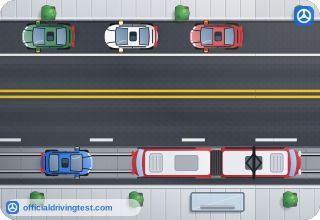
- Passengers may be entering or exiting
- The streetcar may reverse
- Streetcars have no brakes
- Streetcars must be passed at speed
Show answer
Correct answer: Passengers may be entering or exiting
Stopped streetcars may be loading or unloading passengers.
Source: District of Columbia Driver Manual (Updated January 2024), page 40
-
When passing a cyclist, what minimum clearance must you allow?
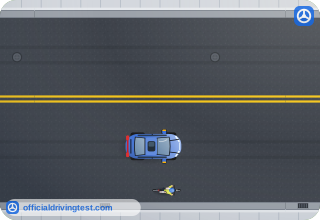
- One foot
- Two feet
- Five feet
- Three feet
Show answer
Correct answer: Three feet
You must leave at least three feet of clearance when passing a cyclist.
Source: District of Columbia Driver Manual (Updated January 2024), page 41
-
What should you not use when passing a cyclist?
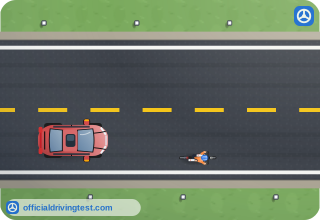
- Your horn
- Your turn signal
- Your low beams
- Your rear-view mirror
Show answer
Correct answer: Your horn
The manual says not to use your horn when passing a cyclist.
Source: District of Columbia Driver Manual (Updated January 2024), page 41
-
What do sharrows remind drivers to do?
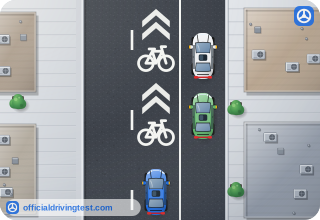
- Yield to buses
- Expect bicyclists on the road
- Stay out of the lane
- Slow to the advisory speed
Show answer
Correct answer: Expect bicyclists on the road
Sharrows clarify where bicyclists are encouraged to ride in the lane and remind drivers to expect bicyclists.
Source: District of Columbia Driver Manual (Updated January 2024), page 58
-
How are bicycle lanes indicated?
- A solid yellow line and a diamond shape in the lane ahead
- A broken yellow line along the curb of the street
- Double solid white lines and a bicycle sign mounted overhead
- A solid or dashed white line and a bicyclist symbol
Show answer
Correct answer: A solid or dashed white line and a bicyclist symbol
Bicycle lanes are marked with a solid or dashed white line and a bicyclist symbol.
Source: District of Columbia Driver Manual (Updated January 2024), page 58
-
When should drivers drive in a bicycle lane?
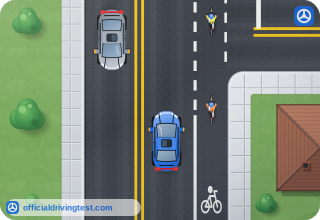
- Whenever the road ahead is crowded
- Whenever they need to pass a slower car
- Whenever no bicyclists are visible
- Only when necessary to turn left or right
Show answer
Correct answer: Only when necessary to turn left or right
A bicycle lane is for the preferential use of bicyclists; drivers should not drive in it except when necessary to turn.
Source: District of Columbia Driver Manual (Updated January 2024), page 58
-
Before turning across a bicycle lane, what should you do?
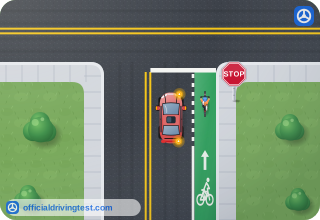
- Sound your horn and then turn right away across the lane
- Check your mirrors for bicyclists behind you and yield to bicycles
- Speed up to turn ahead of any bicyclist who is behind you
- Turn quickly so you are out of the lane first
Show answer
Correct answer: Check your mirrors for bicyclists behind you and yield to bicycles
Before turning, check mirrors for bicyclists behind you and yield to bicycles in the lane.
Source: District of Columbia Driver Manual (Updated January 2024), page 58