Washington, D.C.: Sharing the road — Part 1 Practice Test
Questions in this part include: “What does Vision Zero represent for the District?” · “How do bicyclists’ roadway rights compare with those of vehicles?”
Independent educational site · not affiliated with any government agency or DMV
Ready? Test yourself
Answer to start, or tap Start below:
What does Vision Zero represent for the District?
- Instant feedback with an explanation
- Every answer cites its source in the manual
- Your best score is saved on this device
- Keyboard: press 1 to 4 to answer and Enter for the next question
Questions are original and based on the official manual "District of Columbia Driver Manual" (Updated January 2024), District of Columbia Department of Motor Vehicles (DC DMV).
All 18 questions in this practice test
Take the test above first, then use this list to study. Tap “Show answer” to see the correct answer and explanation.
Show the questions and answersHide the questions
-
What does Vision Zero represent for the District?
- Reducing traffic fatalities to zero
- Cutting parking tickets to zero
- Registering zero vehicles from outside
- Building zero new roads each year
Show answer
Correct answer: Reducing traffic fatalities to zero
Vision Zero is the city’s goal of reducing traffic fatalities to zero.
Source: District of Columbia Driver Manual (Updated January 2024), page 4
-
What does safe driving require, especially when approaching intersections and crosswalks?
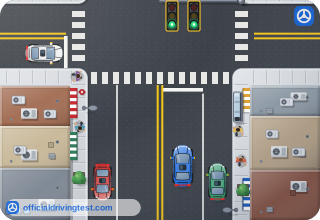
- Foreseeing danger and allowing for others’ mistakes
- Assuming other drivers will always yield first
- Driving faster than the surrounding traffic
- Relying on signals and signs to stop for you
Show answer
Correct answer: Foreseeing danger and allowing for others’ mistakes
Safe driving requires the ability to foresee danger and make allowances for the mistakes of others.
Source: District of Columbia Driver Manual (Updated January 2024), page 4
-
Which of these is a responsibility of drivers named in the Introduction?
- Keeping the radio off at all times
- Never driving with other passengers
- Being emotionally fit to drive
- Owning a newer vehicle model
Show answer
Correct answer: Being emotionally fit to drive
Drivers are responsible for being generally healthy, emotionally fit to drive, and sure the vehicle is in good operating condition.
Source: District of Columbia Driver Manual (Updated January 2024), page 4
-
Which two conditions does the manual call the major risk factors that threaten driver and public safety?
- Speeding and tailgating
- Distracted and impaired driving
- Night driving and rain
- Aggressive and slow driving
Show answer
Correct answer: Distracted and impaired driving
The manual names Distracted and Impaired Driving as the two major risk factors for driver and public safety.
Source: District of Columbia Driver Manual (Updated January 2024), page 4
-
Which of these is included in the manual’s expanded definition of drivers?
- Pedestrians on foot
- Trains on rails
- Wheelchair users
- Bicycles
Show answer
Correct answer: Bicycles
The expanded definition of drivers includes bicycles, buses, motorcycles, light trucks, commercial vehicles and any vehicle not operating on rails.
Source: District of Columbia Driver Manual (Updated January 2024), page 5
-
In the vehicle safety tips for bicyclists, how much space should drivers give bicycles?
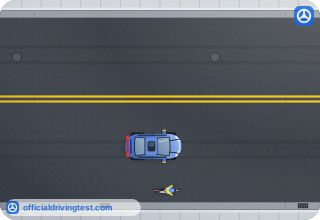
- At least 3 feet
- At least 1 foot
- At least 5 feet
- At least 10 feet
Show answer
Correct answer: At least 3 feet
The tips tell drivers to give bicycles at least 3 feet of space.
Source: District of Columbia Driver Manual (Updated January 2024), page 6
-
What does the manual say to do before opening a vehicle door?
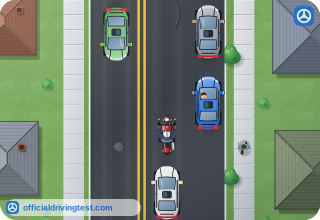
- Sound your horn twice
- Turn on your hazard lights
- Look for bicyclists
- Roll down the window
Show answer
Correct answer: Look for bicyclists
Drivers should look for bicyclists before opening doors because open doors are a serious threat to them.
Source: District of Columbia Driver Manual (Updated January 2024), page 6
-
What should a driver do about bicyclists when turning?
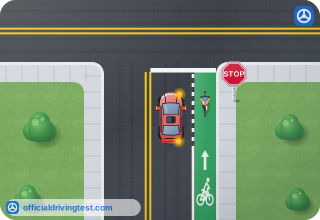
- Pass them before the turn
- Yield to them
- Sound the horn to warn them
- Speed up to clear the lane
Show answer
Correct answer: Yield to them
The tips say to yield to bicyclists when turning.
Source: District of Columbia Driver Manual (Updated January 2024), page 6
-
How do bicyclists’ roadway rights compare with those of vehicles?
- They have no roadway rights
- They have similar roadway rights
- They have greater rights than vehicles
- They have rights only in bike lanes
Show answer
Correct answer: They have similar roadway rights
Bicycles have similar roadway rights as vehicles, so bicyclists should follow the rules of the road.
Source: District of Columbia Driver Manual (Updated January 2024), page 6
-
What should bicyclists do at red lights and stop signs?
- Slow down and proceed
- Yield only to cars
- Proceed if no vehicle is near
- Stop
Show answer
Correct answer: Stop
Bicyclists should stop at red lights and stop signs.
Source: District of Columbia Driver Manual (Updated January 2024), page 6
-
What does the manual say bicyclists should always wear?
- A helmet
- A reflective vest
- Bright clothing
- Gloves
Show answer
Correct answer: A helmet
Bicyclists should always wear a helmet.
Source: District of Columbia Driver Manual (Updated January 2024), page 6
-
Where does the manual say bicyclists should not ride?
- In marked bike lanes
- On one-way streets
- On downtown sidewalks
- On streets with traffic lights
Show answer
Correct answer: On downtown sidewalks
The manual tells bicyclists not to ride on sidewalks in downtown areas.
Source: District of Columbia Driver Manual (Updated January 2024), page 6
-
When opening a vehicle door with the Dutch Reach method, which hand should you use?
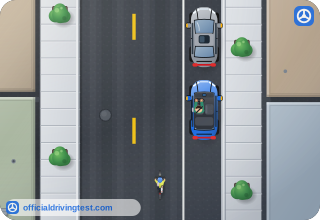
- The near hand, the one closer to the door
- The far hand, the one farther from the door
- Whichever hand is free
- Both hands together
Show answer
Correct answer: The far hand, the one farther from the door
The Dutch Reach means opening the door with the hand farther from the door.
Source: District of Columbia Driver Manual (Updated January 2024), page 6
-
What are the first two checks the manual suggests before opening a door?
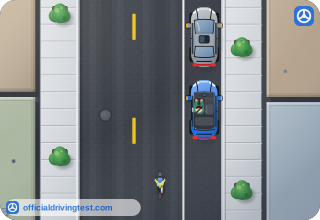
- Side-view mirror, then rear-view mirror
- Rear-view mirror, then seat belt
- Turn signal, then side-view mirror
- Rear-view mirror, then side-view mirror
Show answer
Correct answer: Rear-view mirror, then side-view mirror
The steps are to check your rear-view mirror, then your side-view mirror, then open the door with your far hand.
Source: District of Columbia Driver Manual (Updated January 2024), page 6
-
How does the Dutch Reach method help you see approaching bicyclists?
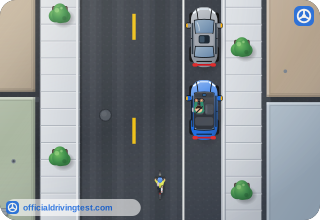
- It forces your body to turn
- It keeps your body facing forward
- It lets you open the door faster
- It makes you lean back in the seat
Show answer
Correct answer: It forces your body to turn
Reaching with the far hand forces your body to turn, which lets you see approaching bicyclists.
Source: District of Columbia Driver Manual (Updated January 2024), page 6
-
To be a safe driver, you must be alert, foresee danger and:
- Expect other drivers to give way to you
- Make allowances for the mistakes of others
- Assume other drivers obey every traffic law
- Trust other drivers to act as you would
Show answer
Correct answer: Make allowances for the mistakes of others
Because other drivers may not obey laws or be alert, you must make allowances for their mistakes.
Source: District of Columbia Driver Manual (Updated January 2024), page 22
-
When driving past parked cars, what should you watch out for?
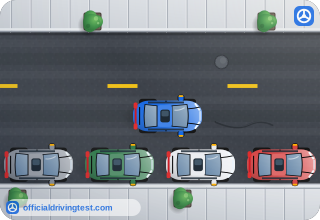
- Tires that need air
- Cars with alarms on
- Opening car doors
- Fuel leaking from cars
Show answer
Correct answer: Opening car doors
The manual says to watch for opening car doors, pedestrians stepping out from between cars and bicyclists.
Source: District of Columbia Driver Manual (Updated January 2024), page 23
-
If another driver's turn signal is flashing, you should:
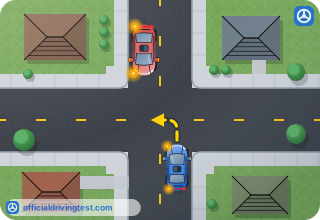
- Assume the driver will make the turn
- Speed up to pass the vehicle at once
- Sound your horn to warn the other driver
- Not assume the driver will make the turn
Show answer
Correct answer: Not assume the driver will make the turn
The manual says to plan ahead and decide what to do if the driver does not turn in the direction shown by the signal.
Source: District of Columbia Driver Manual (Updated January 2024), page 29