Warning and work zone signs in Washington, D.C.
The District of Columbia Driver Manual shows or names everything on this page: 39 in all, on pages 10, 31, 49, 52–55.
Independent educational site · not affiliated with any government agency or DMV
Warning signs
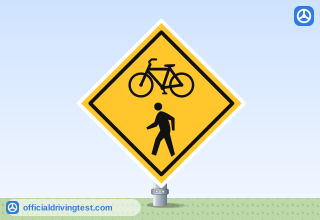
Bicycle and Pedestrian Crossing
RRFBs are placed on both sides of a crosswalk below the pedestrian crossing sign and above the arrow indication pointing at the crossing.
Manual page 10
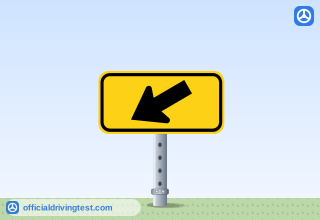
Arrow Plaque (Diagonal Down)
RRFBs are placed on both sides of a crosswalk below the pedestrian crossing sign and above the arrow indication pointing at the crossing.
Manual page 10
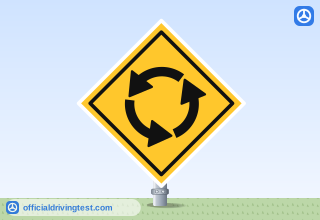
Circular Intersection (Roundabout Ahead)
Each road approaching the roundabout is marked with a yield sign and may also have yield line markings on the pavement. Drivers must pay attention and obey the signs. After entering the roundabout, drivers must travel in a counterclockwise direction.
Manual page 31
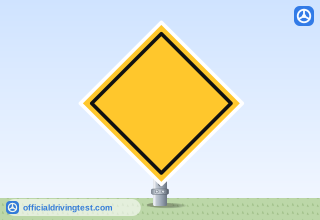
Warning Shape (Diamond)
These signs warn you of special conditions or hazards ahead. You may have to slow down, so be ready.
Manual page 52
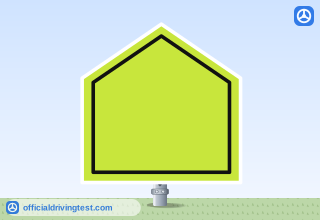
School Shape (Pentagon)
The pentagon (five-sided) shape warns you of school zones and marks school crossings.
Manual page 52
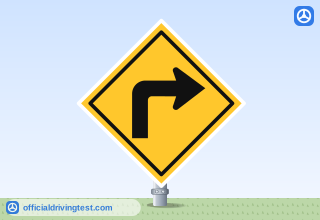
SHARP RIGHT TURN
There is a sharp turn to the right in the road ahead.
Manual page 53
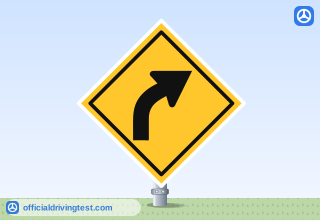
RIGHT CURVE
There is a curve to the right ahead.
Manual page 53
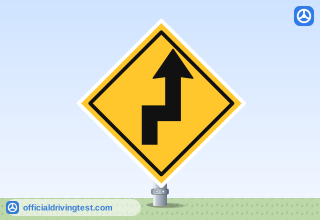
SHARP RIGHT AND LEFT TURNS
The road ahead turns sharply right, then left.
Manual page 53
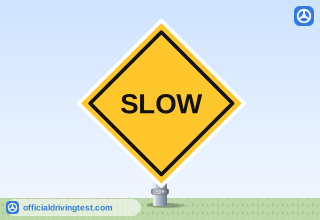
SLOW
Most warning signs are black and yellow, and most are diamond shaped. Slow down and watch for other signs and signals that may follow.
Manual page 53
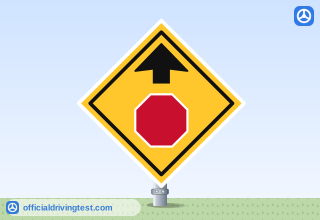
STOP SIGN AHEAD
Slow down and be ready to stop at the stop sign ahead.
Manual page 53
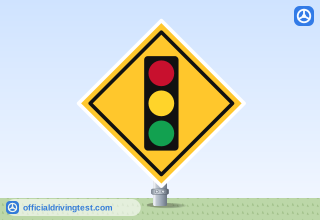
SIGNAL AHEAD
Slow down and be ready to stop at the signal ahead.
Manual page 53
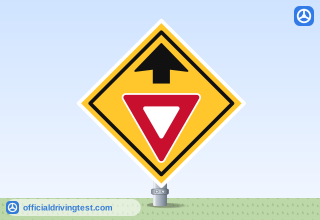
YIELD SIGN AHEAD
Slow down and be prepared to stop at the yield sign or adjust your speed to the flow of the traffic.
Manual page 54
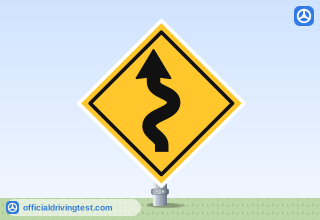
WINDING ROAD
The road ahead is winding with a series of curve or turns. Adjust your speed.
Manual page 54
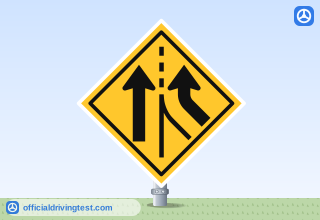
SIDE ROAD
A side road enters the highway from the right. Adjust your speed so you can see any vehicles entering or exiting from the side road.
Manual page 54
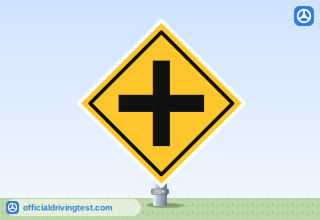
CROSSROAD
Another road crosses the highway ahead. Be alert for cross traffic and regulatory signs or signals.
Manual page 54
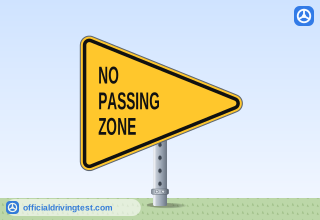
NO PASSING ZONE PENNANT
The pennant-shaped, no-passing sign supplements the regulatory DO NOT PASS sign. The pennant is located on the left side of a roadway and points to beginning of a no-passing zone.
Manual page 54
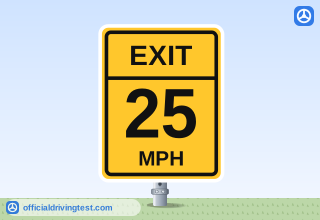
EXIT ADVISORY SPEED
The maximum safe speed for an entrance or exit.
Manual page 54
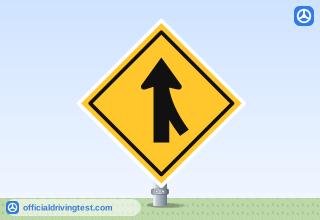
RIGHT MERGE
Merging traffic from the right is just ahead.
Manual page 54
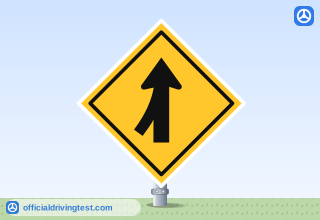
LEFT MERGE
Merging traffic from the left is just ahead.
Manual page 54
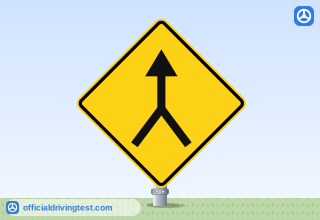
INTERSECTION MERGE
Two lanes of traffic moving in the same direction are about to become one. Drivers in both lanes are responsible for merging safely.
Manual page 54
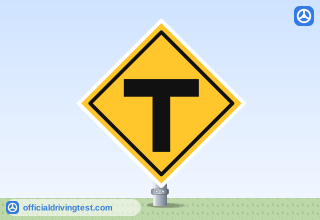
"T" INTERSECTION
The roadway ends ahead. Slow down and prepare to stop or yield before turning.
Manual page 54
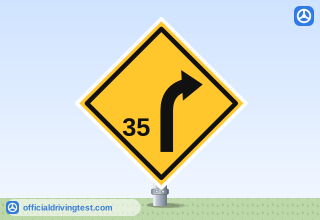
ADVISORY SPEED (Curve with 35)
This is the maximum safe speed for a certain stretch of highway and is posted under other warning signs. Slow down to the advisory speed shown.
Manual page 54
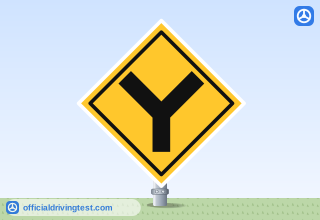
"Y" INTERSECTION
You must bear either right or left ahead. Slow down and stay alert to the flow of traffic.
Manual page 54
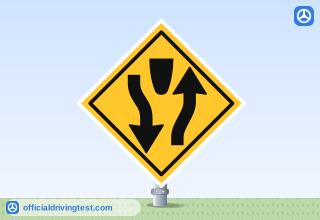
DIVIDED HIGHWAY BEGINS
The highway ahead is split into two separate roadways by a median or divider and each roadway is one-way. Keep right
Manual page 54
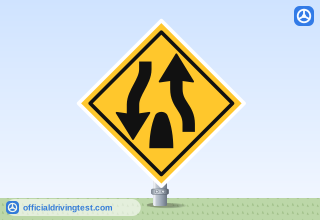
DIVIDED HIGHWAY ENDS AHEAD
The highway ahead no longer has a median or divider. Traffic goes in both directions. Keep right.
Manual page 54
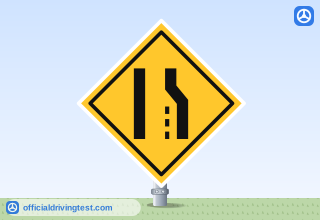
THE RIGHT LANE ENDS AHEAD
The right lane ends soon. Drivers in the right lane must merge left when space opens up. Drivers in the left lane should allow other vehicles to merge smoothly.
Manual page 54
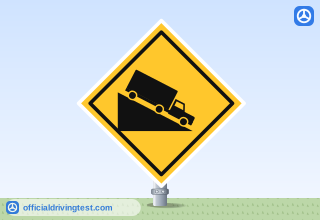
STEEP HILL AHEAD
A steep grade is ahead. Check your brakes.
Manual page 55
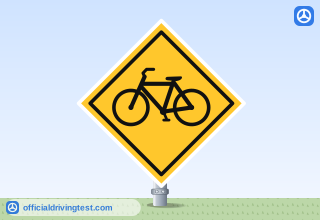
BICYCLE CROSSING / BIKE PATH
Bicycles regularly cross or ride beside traffic in this area.
Manual page 55
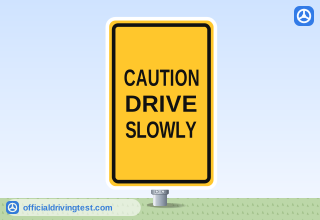
CAUTION DRIVE SLOWLY
Drive with caution. This Caution sign warns of Animals, Joggers, Bicyclists and Pedestrians that may be near the roadway.
Manual page 55
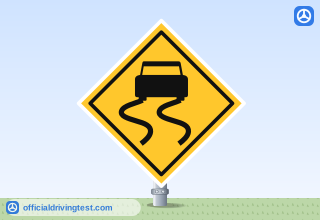
SLIPPERY WHEN WET
When pavement is wet, reduce your speed. Do not brake hard or change direction suddenly. Increase the distance between your car and the one ahead of you.
Manual page 55
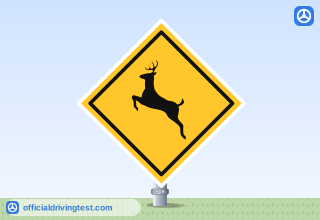
ANIMAL CROSSING
The animal pictured on the sign is common in this area; watch for this species crossing the road particularly during dusk, dawn, and night-time hours.
Manual page 55
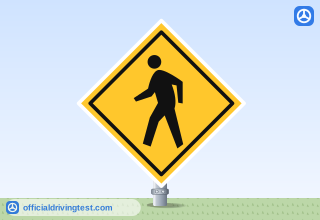
PEDESTRIAN CROSSING
Pedestrian Crossing: Look and be prepared to stop if pedestrians are present.
Manual page 55
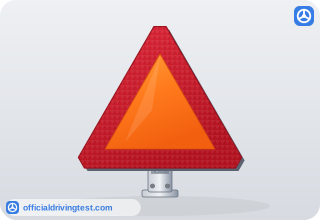
SLOW MOVING VEHICLE
Vehicles traveling at 25 MPH or less, such as farm equipment, horse-drawn vehicles, or highway work vehicles, must display these signs when using a public highway. Be prepared to adjust your speed or position when you see a vehicle with one of these signs.
Manual page 55
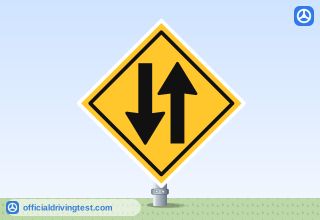
TWO-WAY TRAFFIC
Keep to the right because you are entering a two-way road. Traffic will travel in both directions.
Manual page 55
Work zone signs
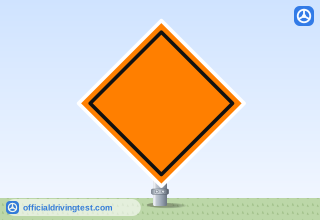
Work Zone Warning Sign (Orange Diamond)
Warning signs are used to alert drivers to unusual or potentially hazardous conditions in or near work zones. Most signs used in highway and street work areas are orange and diamond shaped.
Manual page 49
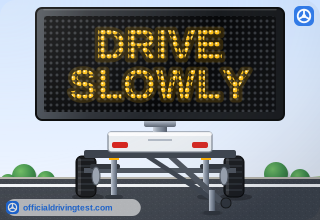
Changeable Message Sign
These electronic signs, which can display a variety of messages pertaining to road conditions, traffic problems, emergency situations, special events, etc., are often used to alert motorists to special conditions within work zones.
Manual page 49
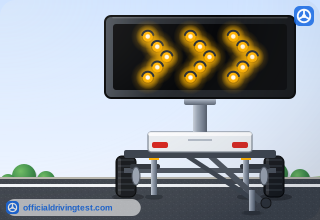
Arrow Panel
Arrow panels are used both during the day and at night to give advance warning and directional information to tell drivers where it is necessary to move into another lane to the right or left.
Manual page 49
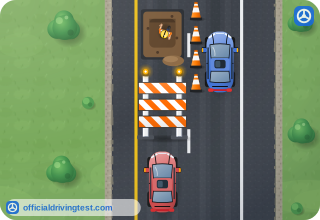
Channeling Devices (Barricades, Cones, Drums)
Barricades, cones, and drums are the most commonly used devices to guide drivers safely through work areas. At night they may be equipped with warning lights for improved visibility.
Manual page 49
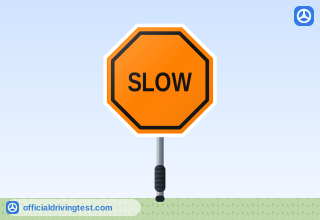
Flagger Paddle (STOP / SLOW)
More often, trained and certified flaggers with STOP/SLOW paddles are used to stop, slow, and/or direct traffic through work zones.
Manual page 49
Road sign library
- Regulatory signs
- Warning and work zone signs
- Guide signs and railroad crossings
- Traffic signals
- Pavement markings