Traffic signals in Washington, D.C.
The District of Columbia Driver Manual shows or names everything on this page: 24 in all, on pages 7–8, 10, 39, 50–51.
Independent educational site · not affiliated with any government agency or DMV
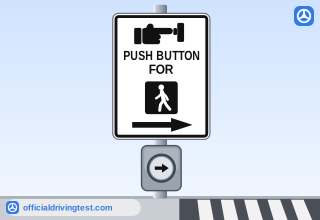
PUSH BUTTON FOR (pedestrian)
The manual does not state it
Manual page 7
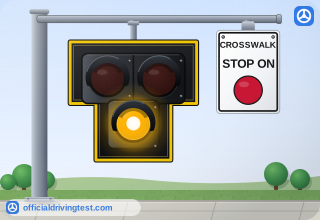
HAWK Signal: Solid Yellow
Slow down and prepare to STOP
Manual page 7
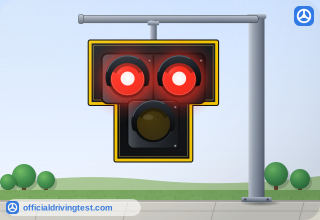
HAWK Signal: Solid Red
STOP!
Manual page 7
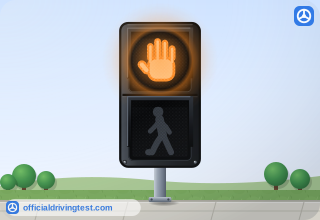
Pedestrian Signal: Raised Hand (DON’T WALK)
Push button to call for WALK signal (Some locations automatically detect pedestrians)
Manual page 8
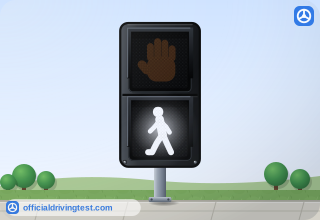
Pedestrian Signal: Walking Person (WALK)
Start crossing after you see the WALK signal (Be sure traffic has stopped)
Manual page 8
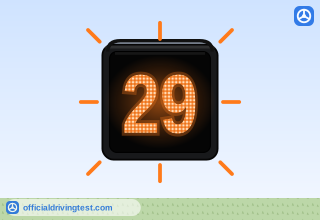
Pedestrian Countdown Signal
Continue Crossing (Countdown signal)
Manual page 8
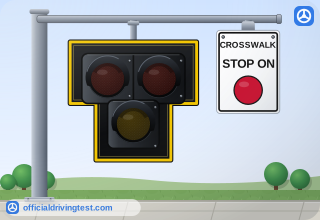
HAWK Signal: Dark
Proceed
Manual page 8
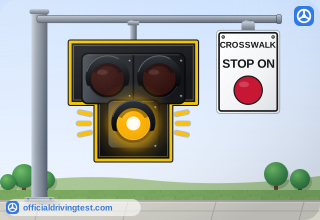
HAWK Signal: Flashing Yellow
Proceed with Caution (Signal has been activated)
Manual page 8
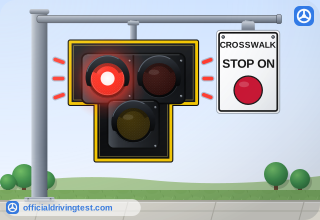
HAWK Signal: Flashing Red
STOP! Then proceed with caution if clear
Manual page 8
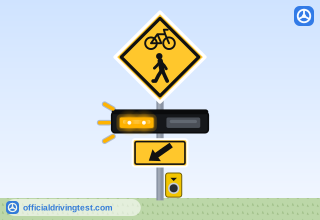
Rectangular Rapid Flashing Beacon (RRFB)
RRFB's have yellow lights that flash with high frequency when activated and are intended to help drivers more easily see pedestrians who are crossing. The flashing yellow lights will flash long enough to allow pedestrians to safely cross the street, and drivers should come to a full (and complete) stop for pedestrians crossing the roadway.
Manual page 10
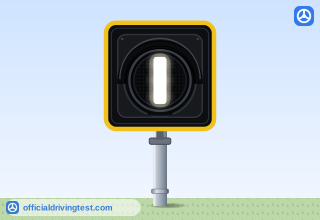
Bus-Only Signal: Vertical Bar
the bus-only traffic signal indicates when to proceed with a vertical bar, which serves as the green light for the bus.
Manual page 39
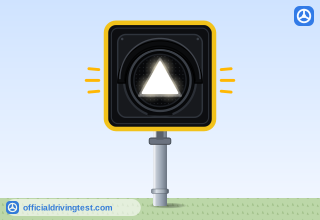
Bus-Only Signal: Flashing Triangle
After three seconds, a flashing triangle shows the priority signal is about to end
Manual page 39
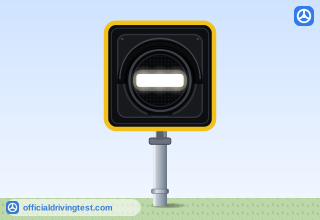
Bus-Only Signal: Horizontal Bar
followed by a horizontal bar that buses no longer have priority and must obey normal traffic signals.
Manual page 39
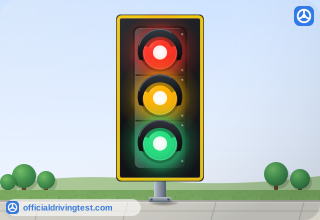
Traffic Signal Head (Red, Yellow, Green)
Traffic signals are usually red, yellow, and green from top to bottom, or left to right. At some intersections, there are single red, yellow, or green lights. Some traffic signals are steady, others flash. Some are circular, and some are arrows.
Manual page 50
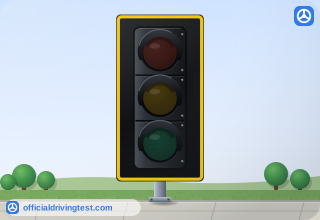
Traffic Signal Out of Service (Dark)
The law requires that if the traffic lights or controls are out of service or malfunctioning when you approach and intersection, you must come to a stop as you would for a stop sign. You must then proceed according to the rules of right of way unless you are directed to proceed by a traffic officer.
Manual page 50
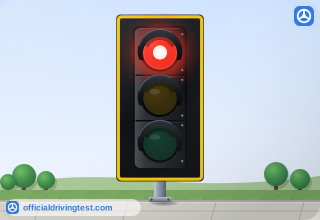
Steady Red Signal
Stop. Come to a complete stop before reaching the intersection, at the stop line, if there is one. If not, you must stop before entering the crosswalk and remain stopped as long as the signal is red. You may turn right at a red signal after coming to a complete stop, unless there are signs posted at the intersection, which reads, "No Turn on Red." When turning on a red signal, you must yield the right-of-way to pedestrians, bicyclists, and all other traffic. It is illegal in the District of Columbia to make a left turn on red.
Manual page 50
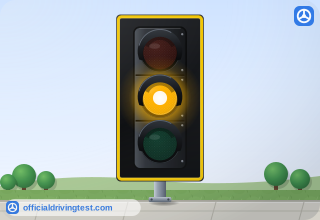
Steady Yellow Signal
This means that the signal is changing from green to red. Its purpose is to provide time for approaching traffic to stop safely and to clear other vehicles from the intersection before the light turns red.
Manual page 50
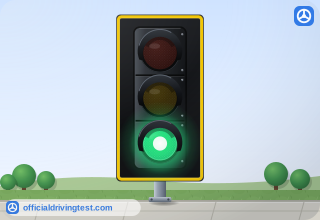
Steady Green Signal
Proceed with caution after you have checked first to see that other vehicles have cleared the intersection. When it is safe to proceed, you may enter the intersection to go straight ahead or turn unless a sign or additional signal prohibits the turn. You must yield to pedestrians and vehicles already in the intersection.
Manual page 50
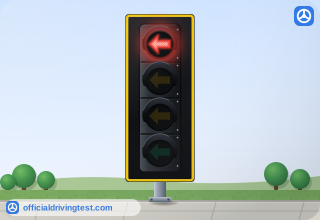
Steady Red Arrow Signal
Stop. Come to a complete stop before reaching the intersection, stop line or crosswalk for the direction indicated by the arrow. Remain stopped as long as the arrow signal is red.
Manual page 50
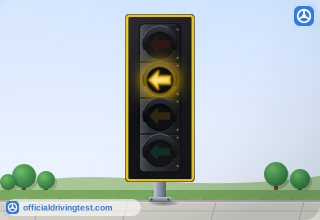
Steady Yellow Arrow Signal
Like the steady yellow signal, the yellow arrow means that the signal is changing from green to red. Its purpose is to provide time for approaching traffic to stop safely and to clear other vehicles from the intersection before the light turns red.
Manual page 51
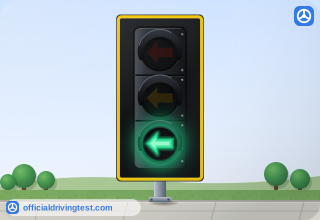
Steady Green Arrow Signal
Proceed with caution in the direction the arrow points. Remember that you must yield to all pedestrians and vehicles already in the intersection.
Manual page 51
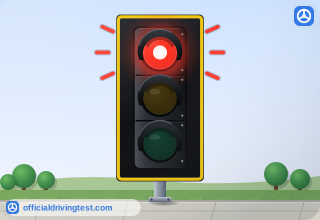
Flashing Red Signal
You must come to a complete stop, yield to all other traffic and to pedestrians. Proceed when the way is clear.
Manual page 51
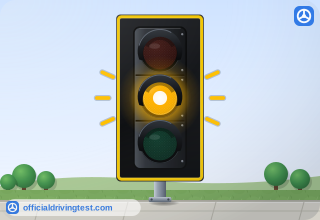
Flashing Yellow Signal
You must slow down and proceed with caution.
Manual page 51
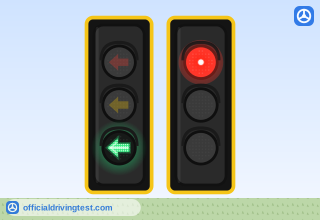
Multiple Signal Heads
The signals are used to allow traffic to make left turns with a green light.
Manual page 51