Washington, D.C.: Emergencies and crashes — Part 4 Practice Test
Questions in this part include: “When should you read the instructions printed on a fire extinguisher?” · “After running off the road, at what speed should you be before you try to get back on the roadway?”
Independent educational site · not affiliated with any government agency or DMV
Ready? Test yourself
Answer to start, or tap Start below:
When should you read the instructions printed on a fire extinguisher?
- Instant feedback with an explanation
- Every answer cites its source in the manual
- Your best score is saved on this device
- Keyboard: press 1 to 4 to answer and Enter for the next question
Questions are original and based on the official manual "District of Columbia Driver Manual" (Updated January 2024), District of Columbia Department of Motor Vehicles (DC DMV).
All 16 questions in this practice test
Take the test above first, then use this list to study. Tap “Show answer” to see the correct answer and explanation.
Show the questions and answersHide the questions
-
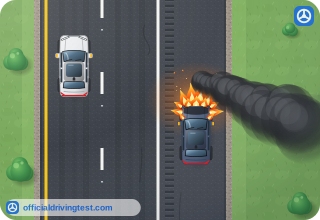
When can you stop using the extinguisher on a vehicle fire?
- As soon as you see no smoke or flame
- When whatever was burning has cooled
- After about thirty seconds
- When the fire department arrives
Show answer
Correct answer: When whatever was burning has cooled
The absence of smoke or flame does not mean the fire is completely out or cannot restart.
Source: District of Columbia Driver Manual (Updated January 2024), page 33
-
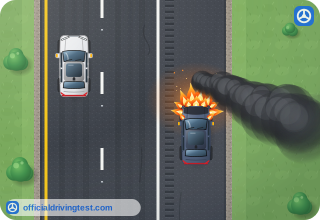
When should you try to put out a vehicle fire yourself?
- Always, because fires spread very fast in a vehicle
- Only when a police officer asks you to
- Only when it is a cargo fire
- Only if you know what you are doing and it is safe to do so
Show answer
Correct answer: Only if you know what you are doing and it is safe to do so
Fires have been made worse by drivers who did not know what to do.
Source: District of Columbia Driver Manual (Updated January 2024), page 33
-
When should you read the instructions printed on a fire extinguisher?
- Before you need it
- After the fire has started
- When the fire is already out
- Only when you buy it
Show answer
Correct answer: Before you need it
You should study the instructions before an emergency so that you know how it works.
Source: District of Columbia Driver Manual (Updated January 2024), page 33
-
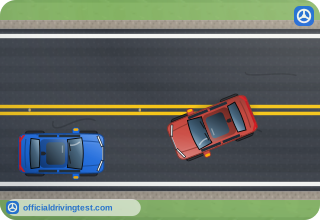
A vehicle is coming toward you in your lane. Which way should you pull?
- To the left
- Into the lane the vehicle left
- To the right
- Straight at it
Show answer
Correct answer: To the right
The manual says to pull to the right, slow down, sound your horn and flash your headlights.
Source: District of Columbia Driver Manual (Updated January 2024), page 33
-
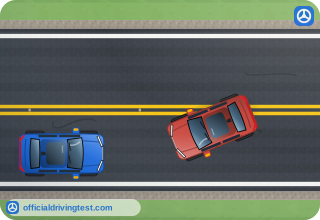
Why should you not turn into the lane that an oncoming vehicle has left?
- It is illegal to change lanes during an emergency situation
- The driver may realize the mistake and turn back into the proper lane
- That lane is always blocked by traffic from behind you
- Your horn and headlights will not be noticed there
Show answer
Correct answer: The driver may realize the mistake and turn back into the proper lane
The other driver may correct the mistake, so you could collide if you steer into the lane just left.
Source: District of Columbia Driver Manual (Updated January 2024), page 33
-
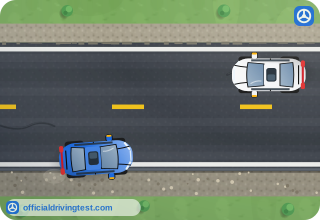
If you run off or are forced off the road, what should you do with your foot?
- Take it off the accelerator
- Press hard on the accelerator
- Jam it on the brake pedal
- Press the clutch and the brake together
Show answer
Correct answer: Take it off the accelerator
Taking your foot off the accelerator helps you to slow and regain control.
Source: District of Columbia Driver Manual (Updated January 2024), page 33
-
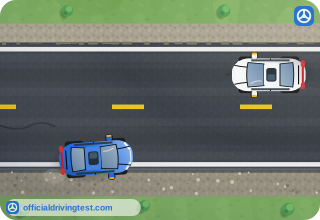
If you run off or are forced off the road, how should you use the brakes?
- Jam on the brakes
- Brake hard and steer back at once
- Brake carefully or not at all
- Hold the brakes down hard
Show answer
Correct answer: Brake carefully or not at all
Braking hard when a wheel is off the pavement could make you lose control.
Source: District of Columbia Driver Manual (Updated January 2024), page 33
-
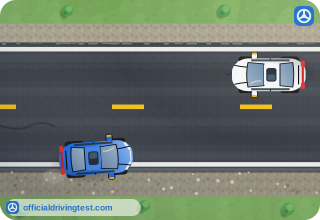
Why should you grip the steering wheel tightly if you run off the road?
- The wheel may lock if you let go of it suddenly
- Unusual stress on the wheel may twist it from your hand
- It stops the car faster
- The airbag may open
Show answer
Correct answer: Unusual stress on the wheel may twist it from your hand
The wheel can be pulled out of your hand when one side is off the pavement.
Source: District of Columbia Driver Manual (Updated January 2024), page 33
-
After running off the road, at what speed should you be before you try to get back on the roadway?
- 25 mph or less
- 30 mph or less
- 5 mph or less
- 15 mph or less
Show answer
Correct answer: 15 mph or less
Wait until you have control, your speed is reduced to 15 mph or less and you have checked traffic behind and beside you.
Source: District of Columbia Driver Manual (Updated January 2024), page 33
-
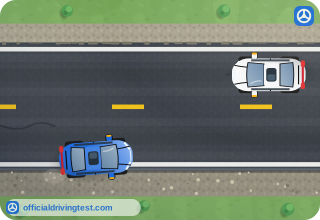
After you run off the road and get your vehicle under control, how should you steer back onto the roadway?
- Turn the wheels sharply toward the road, without crossing the center line
- Turn the wheels gently and cross the center line to straighten out
- Stop on the shoulder and wait for a break in traffic
- Turn the wheels away from the road until you are moving fast
Show answer
Correct answer: Turn the wheels sharply toward the road, without crossing the center line
The manual says to turn the wheels sharply toward the road and not to cross the center line or enter another lane.
Source: District of Columbia Driver Manual (Updated January 2024), page 34
-
If a tire blows out, what should you not do?
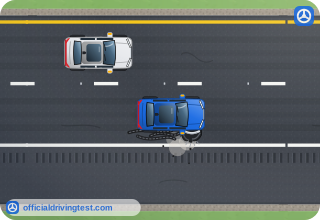
- Grip the steering wheel tightly
- Signal a turn to the right
- Look for a safe place to drive off the road
- Apply the brakes
Show answer
Correct answer: Apply the brakes
Braking would make you lose control, so the manual lists not applying the brakes first.
Source: District of Columbia Driver Manual (Updated January 2024), page 34
-
If a tire blows out, which turn signal should you give as you pull onto the shoulder?
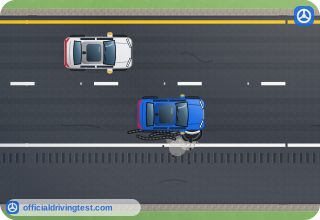
- A turn to the right
- A turn to the left
- The hazard flashers only
- None until the car is stopped
Show answer
Correct answer: A turn to the right
The manual says to signal a turn to the right and pull the vehicle safely onto the shoulder.
Source: District of Columbia Driver Manual (Updated January 2024), page 34
-
What should you do with the gas pedal to start a flooded engine?
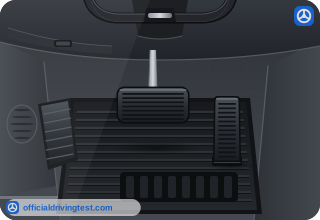
- Pump it up and down several times in a row
- Release it completely
- Press it to the floor and hold it down
- Tap it lightly
Show answer
Correct answer: Press it to the floor and hold it down
You hold the gas pedal to the floor while turning the key in short intervals.
Source: District of Columbia Driver Manual (Updated January 2024), page 34
-
When starting a flooded engine, how long should you keep the key turned in the ignition at a time?
- For about one minute at a time without a pause
- For short intervals of 10 – 15 seconds
- For 30 – 60 seconds
- Until the battery runs down
Show answer
Correct answer: For short intervals of 10 – 15 seconds
The manual says to turn the key and keep it there for short intervals (10 – 15 seconds).
Source: District of Columbia Driver Manual (Updated January 2024), page 34
-
If your vehicle is disabled, what does the manual say to do about the wheels, if possible?
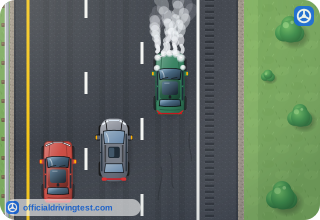
- Get all four wheels off the roadway
- Leave two wheels on the roadway
- Park with the left wheels on the line
- Leave it in the right lane
Show answer
Correct answer: Get all four wheels off the roadway
A disabled vehicle should be moved fully off the roadway when possible.
Source: District of Columbia Driver Manual (Updated January 2024), page 34
-
Which of these does the manual list for warning other drivers about a disabled vehicle?
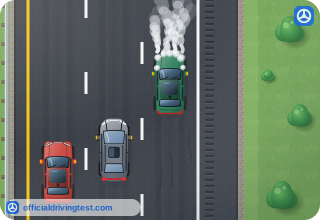
- Your high beams flashed and the horn sounded every few seconds
- The brake lights held on and the windshield wipers running
- Emergency flashing lights, plus flares or a reflective triangle
- Hand signals given out of the window to passing drivers
Show answer
Correct answer: Emergency flashing lights, plus flares or a reflective triangle
The manual lists lights and flares, blinking red lights or a reflective triangle to warn drivers.
Source: District of Columbia Driver Manual (Updated January 2024), page 34