Washington, D.C.: Emergencies and crashes
What to do at a crash, skids, brake failure, blowouts, fire, fog, winter driving and road rage. Split into 4 shorter tests so you're not stuck in one long quiz.
Independent educational site · not affiliated with any government agency or DMV
Choose a part
Emergencies and crashes — Part 1
Questions in this part include: “After a crash, how long must you remain at or as close as possible to the scene?”
Emergencies and crashes — Part 2
Questions in this part include: “Which item should a winter emergency kit include for traction on snow or ice?”
Emergencies and crashes — Part 3
Questions in this part include: “If there is a cargo fire in a van or box trailer, what should you do with the doors?”
Emergencies and crashes — Part 4
Questions in this part include: “When should you read the instructions printed on a fire extinguisher?”
Questions are original and based on the official manual "District of Columbia Driver Manual" (Updated January 2024), District of Columbia Department of Motor Vehicles (DC DMV).
All 65 Emergencies and crashes questions with answers
Choose a part above to take a practice test, or study every question and answer here.
Show the questions and answersHide the questions
1Part 117 questions
-
After a crash, how long must you remain at or as close as possible to the scene?
- Until a tow truck arrives to move your damaged vehicle
- Until the other driver has left the scene of the crash
- Until you have called your insurance company to report the crash
- Until you have aided any injured person and identified yourself
Show answer
Correct answer: Until you have aided any injured person and identified yourself
You must stay as close to the scene as possible until you have aided any injured person and identified yourself.
Source: District of Columbia Driver Manual (Updated January 2024), page 22
-
If possible, what should you do with your car after a crash?
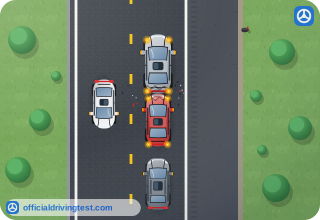
- Move it away from the line of traffic
- Leave it where it stopped, in the lane
- Move it onto the sidewalk
- Back it up toward the other vehicle
Show answer
Correct answer: Move it away from the line of traffic
The manual says to move your car away from the line of traffic if possible.
Source: District of Columbia Driver Manual (Updated January 2024), page 22
-
In most instances, how is assistance to a person injured in a crash accomplished?
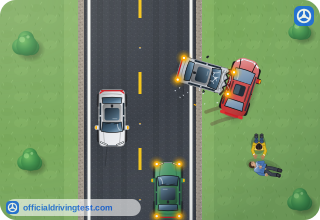
- By driving the person to a hospital yourself
- By moving the person to the side of the road
- By calling for an ambulance
- By waiting for another driver to stop
Show answer
Correct answer: By calling for an ambulance
Depending on the extent of the injury, assistance is in most instances accomplished by calling for an ambulance.
Source: District of Columbia Driver Manual (Updated January 2024), page 22
-
Normally, what should you not attempt to do with a person who is unconscious or seriously hurt?
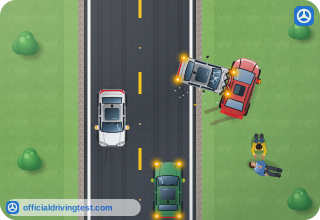
- Move the person
- Call for an ambulance for the person
- Give your name to other people involved
- Report the crash to the nearest police department
Show answer
Correct answer: Move the person
The manual says you should normally not attempt to move an unconscious or seriously hurt person.
Source: District of Columbia Driver Manual (Updated January 2024), page 22
-
Besides their name and address, what must drivers involved in a crash give about the vehicle they are driving?
- The date on which it was purchased new
- Its mileage reading at the time of the crash
- Its registration information
- Its most recent inspection date
Show answer
Correct answer: Its registration information
Drivers must give their name, address and the registration information of the vehicle they are driving.
Source: District of Columbia Driver Manual (Updated January 2024), page 22
-
Upon request, what must you show to the other person or persons involved in a crash?
- Your vehicle title
- Your driver license
- Your insurance card only
- Your work badge
Show answer
Correct answer: Your driver license
The manual says that, upon request, you must show your driver license to the others involved.
Source: District of Columbia Driver Manual (Updated January 2024), page 22
-
If no one in a crash is in condition to receive your information and no police officer is present, what must you do?
- Wait one day, then report it to your insurance company
- Keep the information and give it out only if someone asks later
- Leave a note on the other vehicle and then drive away
- Report it to the nearest police department as soon as possible
Show answer
Correct answer: Report it to the nearest police department as soon as possible
You must, as soon as possible, report the information to the nearest police department.
Source: District of Columbia Driver Manual (Updated January 2024), page 22
-
If you damage an unattended vehicle or other property and cannot find the owner, what must you leave in or on it?
- Your car keys
- A written notice
- A parking ticket
- A repair estimate
Show answer
Correct answer: A written notice
If the owner cannot be located, a written notice with your identifying information must be left in a conspicuous and secure place.
Source: District of Columbia Driver Manual (Updated January 2024), page 22
-
What should you do if you strike and injure a domestic animal with your vehicle?
- Notify the police department having jurisdiction in the area
- Drive away if the animal is still able to walk away
- Take the animal to a shelter or clinic on your own
- Wait beside the road for the animal to recover on its own
Show answer
Correct answer: Notify the police department having jurisdiction in the area
You should immediately notify the police department with jurisdiction; the police contact the proper agency to get medical care for the animal.
Source: District of Columbia Driver Manual (Updated January 2024), page 22
-
Up to what speed will most tires with tread "wipe" the road surface the way a windshield wiper cleans the windshield?
- 25 miles per hour
- 35 miles per hour
- 45 miles per hour
- 55 miles per hour
Show answer
Correct answer: 35 miles per hour
At speeds up to 35 miles per hour most tires with tread wipe the road; the wiping action gets less effective as speed increases.
Source: District of Columbia Driver Manual (Updated January 2024), page 24
-
What is it called when tires ride on a layer of water as speed increases?
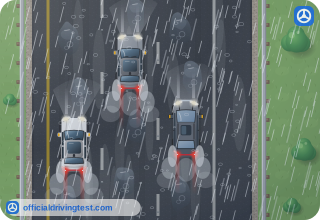
- Wiping
- Flooding
- Black ice
- Hydroplaning
Show answer
Correct answer: Hydroplaning
The manual calls tires riding on a layer of water, like a water ski, hydroplaning.
Source: District of Columbia Driver Manual (Updated January 2024), page 24
-
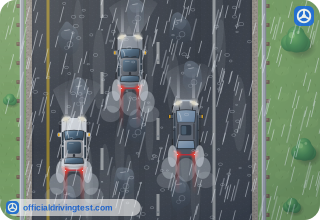
As soon as you feel a loss of control while hydroplaning, what should you do?
- Brake as hard as you can right away
- Turn the wheel sharply
- Accelerate to regain traction
- Take your foot off the gas pedal
Show answer
Correct answer: Take your foot off the gas pedal
The manual says to take your foot off the gas pedal, hold the wheel firmly in the direction you intend to go, and let your speed drop.
Source: District of Columbia Driver Manual (Updated January 2024), page 24
-
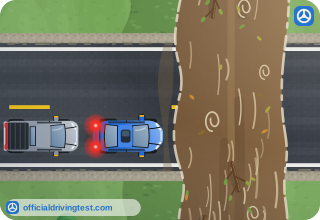
If you see a flooded roadway ahead, what should you do?
- Drive through slowly in a low gear
- Turn around and find another route
- Follow the car ahead through the water
- Cross if the water looks shallow
Show answer
Correct answer: Turn around and find another route
The manual says not to drive through flooded areas; turn around and find another route.
Source: District of Columbia Driver Manual (Updated January 2024), page 24
-
How much water reaching the bottom of a vehicle may cause loss of control or possible stalling?
- One inch
- Three inches
- Six inches
- One foot
Show answer
Correct answer: Six inches
The manual says six inches of water at the bottom of a vehicle may cause loss of control or stalling.
Source: District of Columbia Driver Manual (Updated January 2024), page 24
-
How much moving water can carry away most vehicles, including sports utility vehicles and pickup trucks?
- Two feet
- Four inches
- Ten inches
- One foot
Show answer
Correct answer: Two feet
The manual says two feet of moving water can carry away most vehicles, including SUVs and pickup trucks.
Source: District of Columbia Driver Manual (Updated January 2024), page 24
-
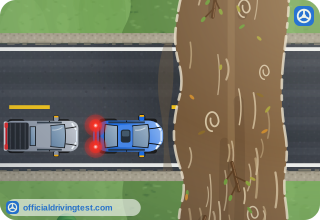
Floodwaters can damage a roadway by:
- Freezing the pavement surface overnight
- Washing away the underlying road surface
- Melting the paint of the lane markings
- Lifting the road surface off its base
Show answer
Correct answer: Washing away the underlying road surface
Floodwaters can wash away the underlying road surface, so you should not cross a flooded road even if the water looks shallow.
Source: District of Columbia Driver Manual (Updated January 2024), page 24
-
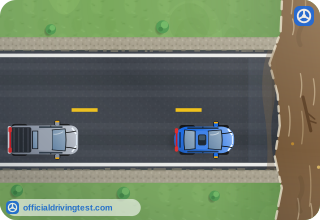
If there is no other route around a flooded road, what should you do?
- Drive through at a slow and steady walking pace only
- Wait in your vehicle right at the edge of the water
- Follow a larger truck or bus slowly through the water
- Proceed to higher ground and wait for the water to subside
Show answer
Correct answer: Proceed to higher ground and wait for the water to subside
The manual says that if there is no other route, you should go to higher ground and wait for the water to subside.
Source: District of Columbia Driver Manual (Updated January 2024), page 24
2Part 216 questions
-
Which item should a winter emergency kit include for traction on snow or ice?
- A tow rope
- A road atlas
- Kitty litter or sand
- A spare battery
Show answer
Correct answer: Kitty litter or sand
The manual lists kitty litter or sand for traction on snow or ice among the items for the emergency kit.
Source: District of Columbia Driver Manual (Updated January 2024), page 28
-
Which item should a winter emergency kit include?
- A spare tire cover
- A small shovel
- A pair of jumper cables
- A paper map
Show answer
Correct answer: A small shovel
The manual lists a small shovel in the emergency kit, along with flares, a first aid kit, a blanket and kitty litter or sand.
Source: District of Columbia Driver Manual (Updated January 2024), page 28
-
To avoid skids, the manual says to drive as though you have what between your foot and the gas or brake pedal?
- A glass of water
- A sheet of ice
- A tennis ball
- An egg
Show answer
Correct answer: An egg
The comparison means avoiding abrupt changes in speed or direction.
Source: District of Columbia Driver Manual (Updated January 2024), page 28
-
Where should you practice stopping and skid recovery before driving on packed snow or ice?
- In a safe area on private property at slow speed
- On a quiet residential street at moderate speed
- On an empty highway ramp at moderate speed
- On the shoulder of a limited access highway
Show answer
Correct answer: In a safe area on private property at slow speed
The manual advises practicing in a safe area on private property at slow speed.
Source: District of Columbia Driver Manual (Updated January 2024), page 28
-
If your wheels are locked and not turning, you:
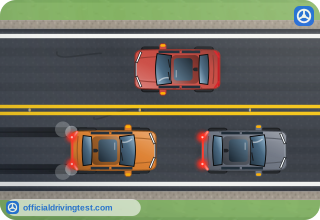
- Will stop in a much shorter distance
- Can still steer the vehicle normally
- Do not have control over the vehicle
- Have better traction on ice and snow
Show answer
Correct answer: Do not have control over the vehicle
The manual says that if the wheels do not turn, you have no control over the vehicle.
Source: District of Columbia Driver Manual (Updated January 2024), page 28
-
In a skid, if your rear wheels start going to the right, what should you do with your front wheels?
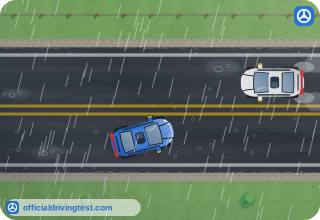
- Turn them to the left
- Hold them straight
- Turn them sharply back
- Turn them to the right
Show answer
Correct answer: Turn them to the right
The manual says to steer in the direction of the skid.
Source: District of Columbia Driver Manual (Updated January 2024), page 29
-
When recovering from a skid, what should you do with the gas pedal (accelerator)?
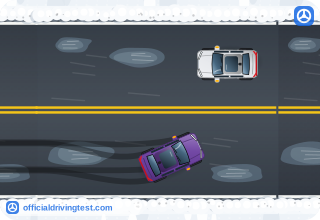
- Take your foot off it
- Press it harder
- Press it to the floor
- Tap it quickly
Show answer
Correct answer: Take your foot off it
Steer in the direction of the skid and take your foot off the gas pedal.
Source: District of Columbia Driver Manual (Updated January 2024), page 29
-
If a collision seems inevitable, how should you try to hit another vehicle or object?
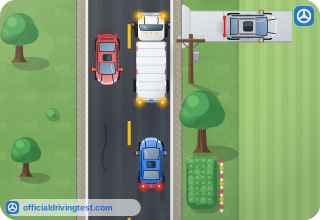
- Straight on with your brakes locked
- Head-on at the lowest possible speed
- Squarely from the rear only
- At an angle rather than head-on
Show answer
Correct answer: At an angle rather than head-on
The manual says to do anything to keep from hitting a vehicle or object head-on and to try to hit at an angle.
Source: District of Columbia Driver Manual (Updated January 2024), page 29
-
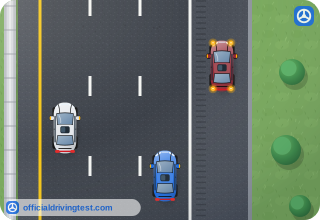
If your car won’t run on the shoulder of a highway, what does the manual say to do to signal for help?
- Stand on the shoulder beside your car and wave at the passing drivers
- Raise the hood, or tie a white cloth on the left door handle or radio antenna
- Leave the doors open and the engine running with the flashers on
- Walk along the highway to the nearest phone to call for help
Show answer
Correct answer: Raise the hood, or tie a white cloth on the left door handle or radio antenna
A raised hood or a white cloth on the left door handle or antenna shows that you need help.
Source: District of Columbia Driver Manual (Updated January 2024), page 31
-
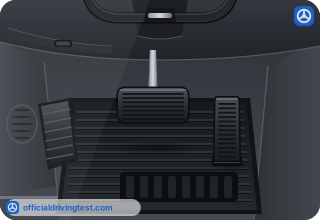
What will you notice when anti-lock brakes (ABS) engage?
- The brake pedal drops all the way to the floor and stays there
- The steering wheel locks and you cannot turn it at all
- A loud hiss from the engine and a burning smell in the cabin
- A rumble from the brakes, and the brake pedal vibrates under your foot
Show answer
Correct answer: A rumble from the brakes, and the brake pedal vibrates under your foot
When the ABS engages, you hear a rumble from the brakes and feel the pedal vibrate.
Source: District of Columbia Driver Manual (Updated January 2024), page 32
-
When ABS engages, what does the driver have to do?
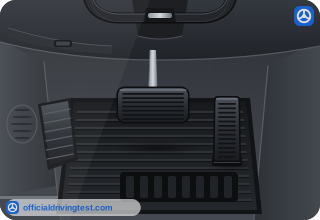
- Press down hard on the brake pedal, hold it, and steer where you want to go
- Pump the brake pedal quickly while you steer to where you want to go
- Take your foot off the brake and steer where you want to go
- Press the pedal lightly and shift to neutral while you steer
Show answer
Correct answer: Press down hard on the brake pedal, hold it, and steer where you want to go
The ABS computer controls the individual wheels, so you keep steady pressure and steer.
Source: District of Columbia Driver Manual (Updated January 2024), page 32
-
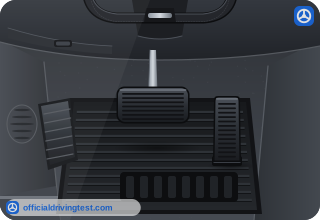
What happens if you pump the brakes or remove steady pressure from the pedal while ABS is engaged?
- It makes the ABS work harder
- It locks the steering wheel
- It disengages or turns off the ABS
- Nothing, because the ABS keeps working
Show answer
Correct answer: It disengages or turns off the ABS
Steady pressure keeps the ABS working; pumping or letting up switches it off.
Source: District of Columbia Driver Manual (Updated January 2024), page 32
-
Where does the manual say is the best place to practice using ABS?
- A busy road during rush hour
- An empty parking lot
- A narrow country road
- An interstate on-ramp
Show answer
Correct answer: An empty parking lot
You can learn how your vehicle reacts to sudden braking by practicing in an empty parking lot.
Source: District of Columbia Driver Manual (Updated January 2024), page 32
-
After driving through deep water, what should you do?
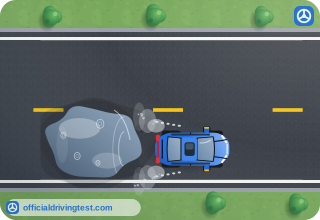
- Turn the heater on high
- Shift to neutral and coast
- Turn the headlights off
- Test your brakes
Show answer
Correct answer: Test your brakes
Wet brakes may pull to one side or not hold at all, so test them after deep water.
Source: District of Columbia Driver Manual (Updated January 2024), page 32
-
How do you dry wet brakes?
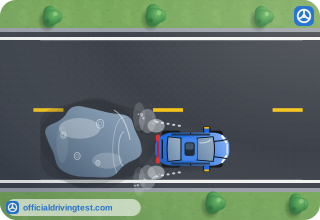
- Put the car in low gear, drive slowly and apply the brakes lightly
- Drive fast in high gear and press the brakes hard several times
- Park and wait for an hour with the brakes released
- Shift to neutral and coast with the brake off
Show answer
Correct answer: Put the car in low gear, drive slowly and apply the brakes lightly
Light braking while driving slowly in low gear dries the brakes.
Source: District of Columbia Driver Manual (Updated January 2024), page 32
-
While drying wet brakes, how often should you test them?
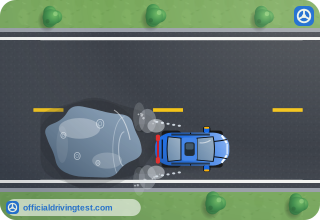
- Every 20 feet, until the brakes stop pulling to one side
- Every mile, until the brakes are cool
- Every 200 feet, until braking action returns to normal
- Only once, at the end of the trip
Show answer
Correct answer: Every 200 feet, until braking action returns to normal
You test every 200 feet and continue until the braking action is normal again.
Source: District of Columbia Driver Manual (Updated January 2024), page 32
3Part 316 questions
-
What does the manual say to do if your windshield wipers fail during inclement weather?
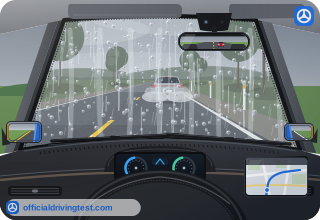
- Slow down and keep driving carefully to your destination
- Open the window, put your head out, drive off the roadway and stop
- Stop in the traffic lane and turn on the flashers
- Wipe the windshield by hand while driving
Show answer
Correct answer: Open the window, put your head out, drive off the roadway and stop
The manual tells you to leave the roadway and stop when the wipers fail.
Source: District of Columbia Driver Manual (Updated January 2024), page 32
-
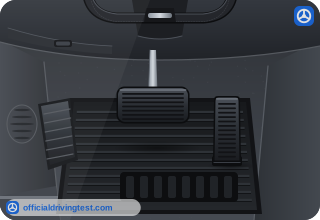
If the accelerator pedal sticks, what is the first action listed?
- Turn the ignition to the lock position at once
- Shift into reverse and release the pedal
- Pull the pedal up by hand
- Slap the accelerator pedal hard with your foot
Show answer
Correct answer: Slap the accelerator pedal hard with your foot
The manual lists slapping the pedal hard first, then shifting to neutral, braking and pulling off the road.
Source: District of Columbia Driver Manual (Updated January 2024), page 32
-
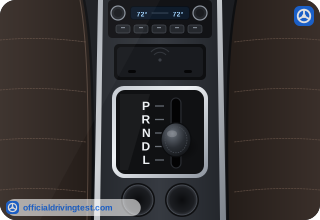
If the accelerator pedal sticks and slapping it does not help, what gear should you shift to?
- Neutral
- Park
- Reverse
- A lower gear
Show answer
Correct answer: Neutral
The manual says to shift to neutral, apply the brakes, then pull off the roadway and stop.
Source: District of Columbia Driver Manual (Updated January 2024), page 32
-
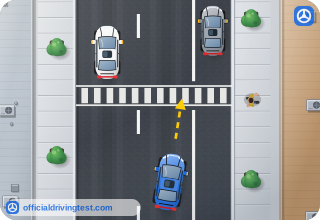
If you suddenly lose steering control, what should you do first?
- Brake as hard as you can
- Turn the key to the lock position
- Ease up on the accelerator
- Shift into reverse
Show answer
Correct answer: Ease up on the accelerator
You first ease up on the accelerator and, if the car keeps its lane, wait until it slows before braking gently.
Source: District of Columbia Driver Manual (Updated January 2024), page 32
-
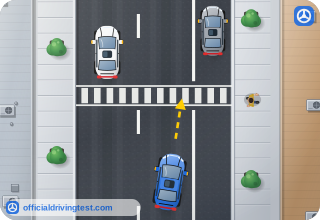
When steering fails and your vehicle starts off the road or toward a pedestrian or another vehicle, what should you do?
- Ease up on the accelerator and wait for the car to stop
- Apply the brakes quickly, using maximum pressure
- Apply the brakes gently
- Shift into reverse
Show answer
Correct answer: Apply the brakes quickly, using maximum pressure
If the vehicle is heading toward danger, the manual says to brake quickly with maximum pressure.
Source: District of Columbia Driver Manual (Updated January 2024), page 32
-
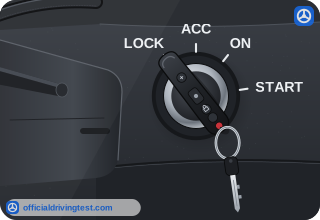
What happens if you turn the ignition to the “lock” position while the vehicle is still moving?
- The engine keeps running but all of the brakes stop working
- The headlights turn off but you keep control
- The vehicle slows down gradually
- The steering locks, and you lose control if you try to turn the wheel
Show answer
Correct answer: The steering locks, and you lose control if you try to turn the wheel
The steering locks, so turning the wheel will make you lose control.
Source: District of Columbia Driver Manual (Updated January 2024), page 32
-
If your headlights fail and the highway is dark, what should you try?
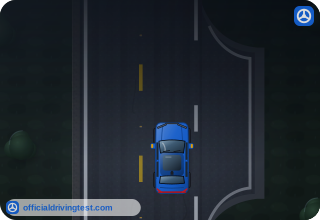
- Your parking lights, directional signals or emergency flashers
- Your high beams, and stay in the traffic lane to slow down
- Your dome light and interior lamps, and keep driving
- Nothing, and stop in your lane
Show answer
Correct answer: Your parking lights, directional signals or emergency flashers
On a dark highway you try other lights you have and get off the roadway.
Source: District of Columbia Driver Manual (Updated January 2024), page 33
-
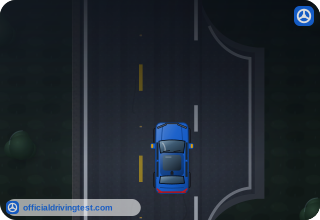
If all your lights fail, what does the manual say to do?
- Stop immediately where you are and turn on your flashers
- Turn off the engine and coast to a stop in your own lane
- Stay on the roadway and slow down enough to pull off the roadway safely
- Pull onto the shoulder as fast as you can, without slowing down
Show answer
Correct answer: Stay on the roadway and slow down enough to pull off the roadway safely
Without any lights you slow down enough to be able to pull off safely.
Source: District of Columbia Driver Manual (Updated January 2024), page 33
-
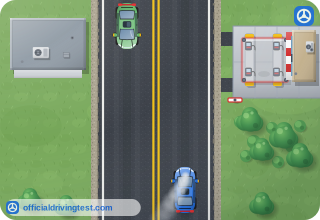
When your vehicle is on fire and you pull off the road, where should you park?
- At a nearby service station, where fuel and help are available
- In an open area, away from buildings, trees, brush and other vehicles
- Beside a building where firefighters can reach it
- Under trees away from traffic
Show answer
Correct answer: In an open area, away from buildings, trees, brush and other vehicles
The fire must not spread to anything that could catch fire.
Source: District of Columbia Driver Manual (Updated January 2024), page 33
-
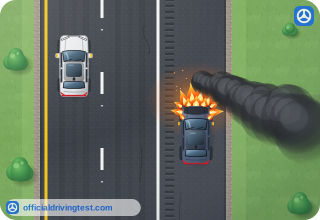
If your vehicle is on fire, what should you not do?
- Use your cellular phone to notify police
- Stop the vehicle off the road
- Know how the fire extinguisher works
- Pull into a service station
Show answer
Correct answer: Pull into a service station
A fire near fuel pumps is far more dangerous, so the manual says not to pull into a service station.
Source: District of Columbia Driver Manual (Updated January 2024), page 33
-
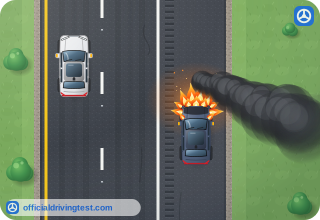
With an engine fire, what should you do as soon as you can?
- Turn off the engine
- Rev the engine
- Open the hood fully
- Drive on until the fire goes out
Show answer
Correct answer: Turn off the engine
Shutting off the engine is the first step to keep the fire from spreading.
Source: District of Columbia Driver Manual (Updated January 2024), page 33
-
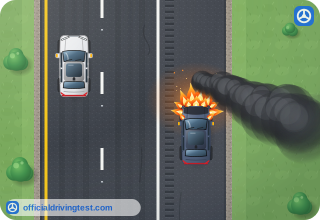
With an engine fire, where does the manual say to shoot the fire extinguisher?
- Through the open hood, standing directly in front of the car
- Through the passenger window
- Through the louvers or radiator, or from the underside of the vehicle
- Into the exhaust pipe
Show answer
Correct answer: Through the louvers or radiator, or from the underside of the vehicle
You should not open the hood if you can avoid it, so you shoot through the louvers or radiator or from below.
Source: District of Columbia Driver Manual (Updated January 2024), page 33
-
If there is a cargo fire in a van or box trailer, what should you do with the doors?
- Open them wide to let the smoke out
- Keep them shut
- Open them one at a time
- Open only the rear doors
Show answer
Correct answer: Keep them shut
Opening the doors would supply the fire with oxygen and make it burn faster.
Source: District of Columbia Driver Manual (Updated January 2024), page 33
-
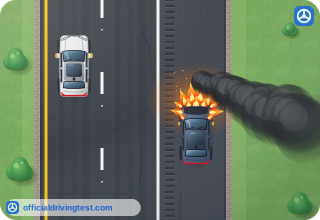
When you use a fire extinguisher, where should you aim?
- Up in the flames
- At the smoke
- At the nearest object that is burning
- At the source or base of the fire
Show answer
Correct answer: At the source or base of the fire
Aiming at the source or base of the fire puts out what is burning.
Source: District of Columbia Driver Manual (Updated January 2024), page 33
-
Where should you position yourself when using a fire extinguisher?
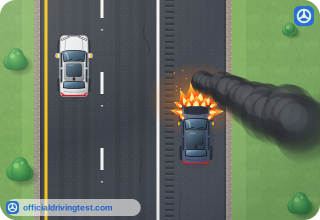
- Upwind, so the wind carries the contents to the fire
- Downwind, so the wind pushes the flames away
- Directly above the fire
- As close to the flames as possible
Show answer
Correct answer: Upwind, so the wind carries the contents to the fire
Standing upwind lets the wind carry the extinguisher's contents to the fire instead of carrying flames to you.
Source: District of Columbia Driver Manual (Updated January 2024), page 33
-
How close should you be to the fire when using the extinguisher?
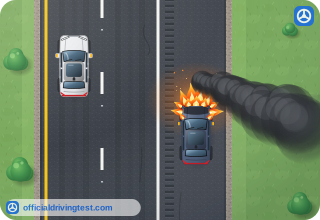
- Within arm's reach
- About one foot away
- As far away as possible
- Close enough to feel the heat
Show answer
Correct answer: As far away as possible
The manual says to stay as far away from the fire as possible while using the extinguisher.
Source: District of Columbia Driver Manual (Updated January 2024), page 33
4Part 416 questions
-
When can you stop using the extinguisher on a vehicle fire?
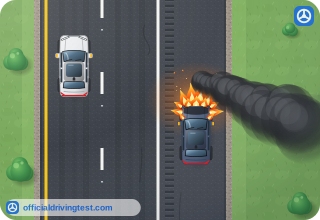
- As soon as you see no smoke or flame
- When whatever was burning has cooled
- After about thirty seconds
- When the fire department arrives
Show answer
Correct answer: When whatever was burning has cooled
The absence of smoke or flame does not mean the fire is completely out or cannot restart.
Source: District of Columbia Driver Manual (Updated January 2024), page 33
-
When should you try to put out a vehicle fire yourself?
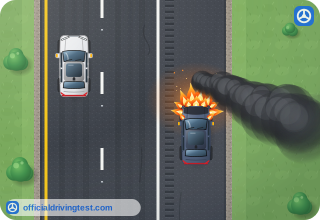
- Always, because fires spread very fast in a vehicle
- Only when a police officer asks you to
- Only when it is a cargo fire
- Only if you know what you are doing and it is safe to do so
Show answer
Correct answer: Only if you know what you are doing and it is safe to do so
Fires have been made worse by drivers who did not know what to do.
Source: District of Columbia Driver Manual (Updated January 2024), page 33
-
When should you read the instructions printed on a fire extinguisher?
- Before you need it
- After the fire has started
- When the fire is already out
- Only when you buy it
Show answer
Correct answer: Before you need it
You should study the instructions before an emergency so that you know how it works.
Source: District of Columbia Driver Manual (Updated January 2024), page 33
-
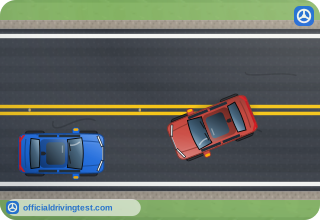
A vehicle is coming toward you in your lane. Which way should you pull?
- To the left
- Into the lane the vehicle left
- To the right
- Straight at it
Show answer
Correct answer: To the right
The manual says to pull to the right, slow down, sound your horn and flash your headlights.
Source: District of Columbia Driver Manual (Updated January 2024), page 33
-
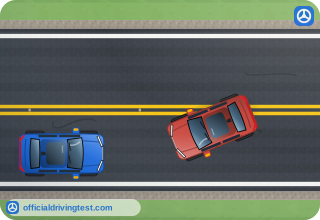
Why should you not turn into the lane that an oncoming vehicle has left?
- It is illegal to change lanes during an emergency situation
- The driver may realize the mistake and turn back into the proper lane
- That lane is always blocked by traffic from behind you
- Your horn and headlights will not be noticed there
Show answer
Correct answer: The driver may realize the mistake and turn back into the proper lane
The other driver may correct the mistake, so you could collide if you steer into the lane just left.
Source: District of Columbia Driver Manual (Updated January 2024), page 33
-
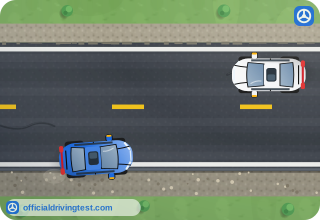
If you run off or are forced off the road, what should you do with your foot?
- Take it off the accelerator
- Press hard on the accelerator
- Jam it on the brake pedal
- Press the clutch and the brake together
Show answer
Correct answer: Take it off the accelerator
Taking your foot off the accelerator helps you to slow and regain control.
Source: District of Columbia Driver Manual (Updated January 2024), page 33
-
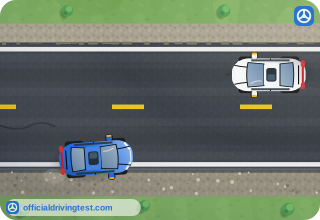
If you run off or are forced off the road, how should you use the brakes?
- Jam on the brakes
- Brake hard and steer back at once
- Brake carefully or not at all
- Hold the brakes down hard
Show answer
Correct answer: Brake carefully or not at all
Braking hard when a wheel is off the pavement could make you lose control.
Source: District of Columbia Driver Manual (Updated January 2024), page 33
-
Why should you grip the steering wheel tightly if you run off the road?
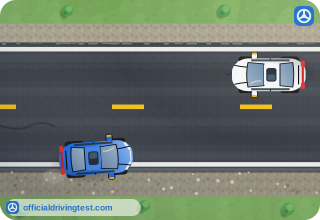
- The wheel may lock if you let go of it suddenly
- Unusual stress on the wheel may twist it from your hand
- It stops the car faster
- The airbag may open
Show answer
Correct answer: Unusual stress on the wheel may twist it from your hand
The wheel can be pulled out of your hand when one side is off the pavement.
Source: District of Columbia Driver Manual (Updated January 2024), page 33
-
After running off the road, at what speed should you be before you try to get back on the roadway?
- 25 mph or less
- 30 mph or less
- 5 mph or less
- 15 mph or less
Show answer
Correct answer: 15 mph or less
Wait until you have control, your speed is reduced to 15 mph or less and you have checked traffic behind and beside you.
Source: District of Columbia Driver Manual (Updated January 2024), page 33
-
After you run off the road and get your vehicle under control, how should you steer back onto the roadway?
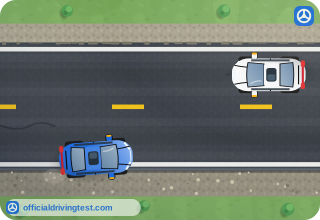
- Turn the wheels sharply toward the road, without crossing the center line
- Turn the wheels gently and cross the center line to straighten out
- Stop on the shoulder and wait for a break in traffic
- Turn the wheels away from the road until you are moving fast
Show answer
Correct answer: Turn the wheels sharply toward the road, without crossing the center line
The manual says to turn the wheels sharply toward the road and not to cross the center line or enter another lane.
Source: District of Columbia Driver Manual (Updated January 2024), page 34
-
If a tire blows out, what should you not do?
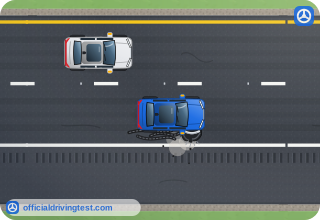
- Grip the steering wheel tightly
- Signal a turn to the right
- Look for a safe place to drive off the road
- Apply the brakes
Show answer
Correct answer: Apply the brakes
Braking would make you lose control, so the manual lists not applying the brakes first.
Source: District of Columbia Driver Manual (Updated January 2024), page 34
-
If a tire blows out, which turn signal should you give as you pull onto the shoulder?
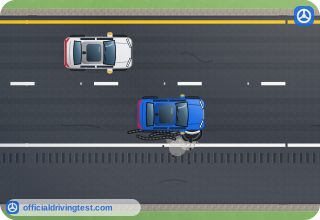
- A turn to the right
- A turn to the left
- The hazard flashers only
- None until the car is stopped
Show answer
Correct answer: A turn to the right
The manual says to signal a turn to the right and pull the vehicle safely onto the shoulder.
Source: District of Columbia Driver Manual (Updated January 2024), page 34
-
What should you do with the gas pedal to start a flooded engine?
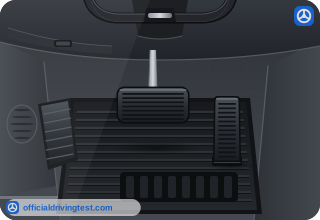
- Pump it up and down several times in a row
- Release it completely
- Press it to the floor and hold it down
- Tap it lightly
Show answer
Correct answer: Press it to the floor and hold it down
You hold the gas pedal to the floor while turning the key in short intervals.
Source: District of Columbia Driver Manual (Updated January 2024), page 34
-
When starting a flooded engine, how long should you keep the key turned in the ignition at a time?
- For about one minute at a time without a pause
- For short intervals of 10 – 15 seconds
- For 30 – 60 seconds
- Until the battery runs down
Show answer
Correct answer: For short intervals of 10 – 15 seconds
The manual says to turn the key and keep it there for short intervals (10 – 15 seconds).
Source: District of Columbia Driver Manual (Updated January 2024), page 34
-
If your vehicle is disabled, what does the manual say to do about the wheels, if possible?
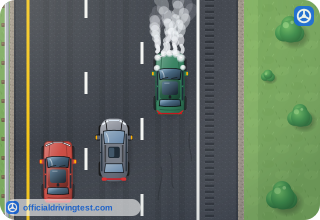
- Get all four wheels off the roadway
- Leave two wheels on the roadway
- Park with the left wheels on the line
- Leave it in the right lane
Show answer
Correct answer: Get all four wheels off the roadway
A disabled vehicle should be moved fully off the roadway when possible.
Source: District of Columbia Driver Manual (Updated January 2024), page 34
-
Which of these does the manual list for warning other drivers about a disabled vehicle?
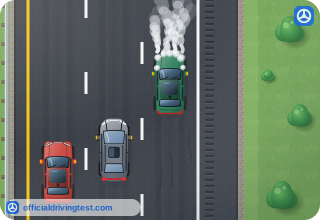
- Your high beams flashed and the horn sounded every few seconds
- The brake lights held on and the windshield wipers running
- Emergency flashing lights, plus flares or a reflective triangle
- Hand signals given out of the window to passing drivers
Show answer
Correct answer: Emergency flashing lights, plus flares or a reflective triangle
The manual lists lights and flares, blinking red lights or a reflective triangle to warn drivers.
Source: District of Columbia Driver Manual (Updated January 2024), page 34