Washington, D.C.: Emergencies and crashes — Part 3 Practice Test
Questions in this part include: “If there is a cargo fire in a van or box trailer, what should you do with the doors?”
Independent educational site · not affiliated with any government agency or DMV
Ready? Test yourself
Answer to start, or tap Start below:
If there is a cargo fire in a van or box trailer, what should you do with the doors?
- Instant feedback with an explanation
- Every answer cites its source in the manual
- Your best score is saved on this device
- Keyboard: press 1 to 4 to answer and Enter for the next question
Questions are original and based on the official manual "District of Columbia Driver Manual" (Updated January 2024), District of Columbia Department of Motor Vehicles (DC DMV).
All 16 questions in this practice test
Take the test above first, then use this list to study. Tap “Show answer” to see the correct answer and explanation.
Show the questions and answersHide the questions
-
What does the manual say to do if your windshield wipers fail during inclement weather?
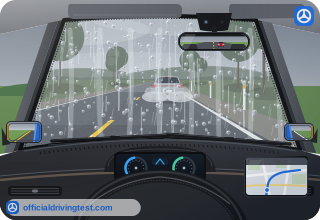
- Slow down and keep driving carefully to your destination
- Open the window, put your head out, drive off the roadway and stop
- Stop in the traffic lane and turn on the flashers
- Wipe the windshield by hand while driving
Show answer
Correct answer: Open the window, put your head out, drive off the roadway and stop
The manual tells you to leave the roadway and stop when the wipers fail.
Source: District of Columbia Driver Manual (Updated January 2024), page 32
-
If the accelerator pedal sticks, what is the first action listed?
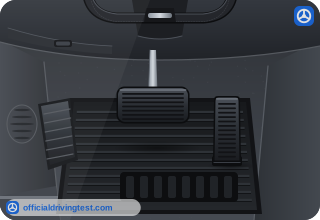
- Turn the ignition to the lock position at once
- Shift into reverse and release the pedal
- Pull the pedal up by hand
- Slap the accelerator pedal hard with your foot
Show answer
Correct answer: Slap the accelerator pedal hard with your foot
The manual lists slapping the pedal hard first, then shifting to neutral, braking and pulling off the road.
Source: District of Columbia Driver Manual (Updated January 2024), page 32
-
If the accelerator pedal sticks and slapping it does not help, what gear should you shift to?
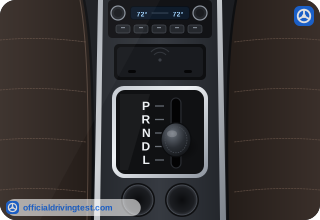
- Neutral
- Park
- Reverse
- A lower gear
Show answer
Correct answer: Neutral
The manual says to shift to neutral, apply the brakes, then pull off the roadway and stop.
Source: District of Columbia Driver Manual (Updated January 2024), page 32
-
If you suddenly lose steering control, what should you do first?
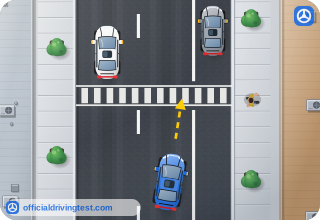
- Brake as hard as you can
- Turn the key to the lock position
- Ease up on the accelerator
- Shift into reverse
Show answer
Correct answer: Ease up on the accelerator
You first ease up on the accelerator and, if the car keeps its lane, wait until it slows before braking gently.
Source: District of Columbia Driver Manual (Updated January 2024), page 32
-
When steering fails and your vehicle starts off the road or toward a pedestrian or another vehicle, what should you do?
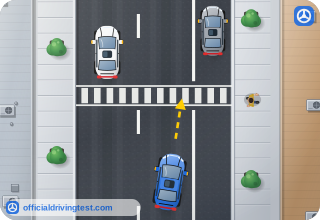
- Ease up on the accelerator and wait for the car to stop
- Apply the brakes quickly, using maximum pressure
- Apply the brakes gently
- Shift into reverse
Show answer
Correct answer: Apply the brakes quickly, using maximum pressure
If the vehicle is heading toward danger, the manual says to brake quickly with maximum pressure.
Source: District of Columbia Driver Manual (Updated January 2024), page 32
-
What happens if you turn the ignition to the “lock” position while the vehicle is still moving?
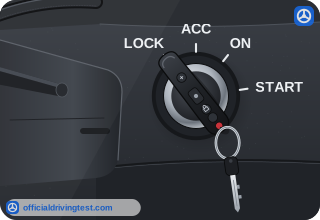
- The engine keeps running but all of the brakes stop working
- The headlights turn off but you keep control
- The vehicle slows down gradually
- The steering locks, and you lose control if you try to turn the wheel
Show answer
Correct answer: The steering locks, and you lose control if you try to turn the wheel
The steering locks, so turning the wheel will make you lose control.
Source: District of Columbia Driver Manual (Updated January 2024), page 32
-
If your headlights fail and the highway is dark, what should you try?
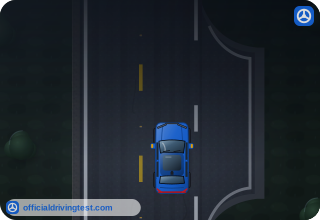
- Your parking lights, directional signals or emergency flashers
- Your high beams, and stay in the traffic lane to slow down
- Your dome light and interior lamps, and keep driving
- Nothing, and stop in your lane
Show answer
Correct answer: Your parking lights, directional signals or emergency flashers
On a dark highway you try other lights you have and get off the roadway.
Source: District of Columbia Driver Manual (Updated January 2024), page 33
-
If all your lights fail, what does the manual say to do?
- Stop immediately where you are and turn on your flashers
- Turn off the engine and coast to a stop in your own lane
- Stay on the roadway and slow down enough to pull off the roadway safely
- Pull onto the shoulder as fast as you can, without slowing down
Show answer
Correct answer: Stay on the roadway and slow down enough to pull off the roadway safely
Without any lights you slow down enough to be able to pull off safely.
Source: District of Columbia Driver Manual (Updated January 2024), page 33
-
When your vehicle is on fire and you pull off the road, where should you park?
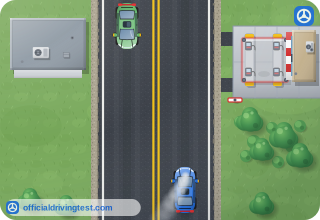
- At a nearby service station, where fuel and help are available
- In an open area, away from buildings, trees, brush and other vehicles
- Beside a building where firefighters can reach it
- Under trees away from traffic
Show answer
Correct answer: In an open area, away from buildings, trees, brush and other vehicles
The fire must not spread to anything that could catch fire.
Source: District of Columbia Driver Manual (Updated January 2024), page 33
-
If your vehicle is on fire, what should you not do?
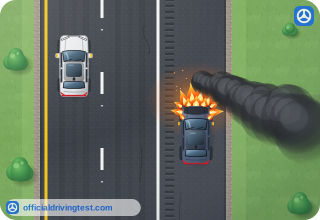
- Use your cellular phone to notify police
- Stop the vehicle off the road
- Know how the fire extinguisher works
- Pull into a service station
Show answer
Correct answer: Pull into a service station
A fire near fuel pumps is far more dangerous, so the manual says not to pull into a service station.
Source: District of Columbia Driver Manual (Updated January 2024), page 33
-
With an engine fire, what should you do as soon as you can?
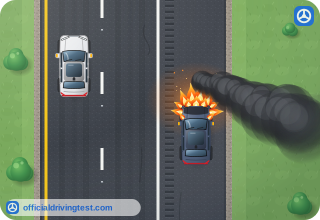
- Turn off the engine
- Rev the engine
- Open the hood fully
- Drive on until the fire goes out
Show answer
Correct answer: Turn off the engine
Shutting off the engine is the first step to keep the fire from spreading.
Source: District of Columbia Driver Manual (Updated January 2024), page 33
-
With an engine fire, where does the manual say to shoot the fire extinguisher?
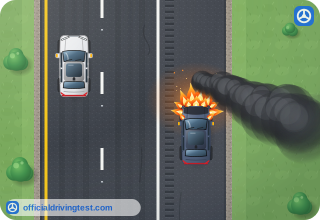
- Through the open hood, standing directly in front of the car
- Through the passenger window
- Through the louvers or radiator, or from the underside of the vehicle
- Into the exhaust pipe
Show answer
Correct answer: Through the louvers or radiator, or from the underside of the vehicle
You should not open the hood if you can avoid it, so you shoot through the louvers or radiator or from below.
Source: District of Columbia Driver Manual (Updated January 2024), page 33
-
If there is a cargo fire in a van or box trailer, what should you do with the doors?
- Open them wide to let the smoke out
- Keep them shut
- Open them one at a time
- Open only the rear doors
Show answer
Correct answer: Keep them shut
Opening the doors would supply the fire with oxygen and make it burn faster.
Source: District of Columbia Driver Manual (Updated January 2024), page 33
-
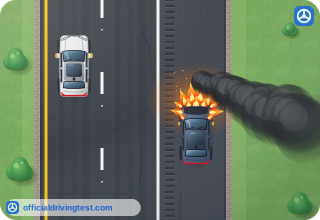
When you use a fire extinguisher, where should you aim?
- Up in the flames
- At the smoke
- At the nearest object that is burning
- At the source or base of the fire
Show answer
Correct answer: At the source or base of the fire
Aiming at the source or base of the fire puts out what is burning.
Source: District of Columbia Driver Manual (Updated January 2024), page 33
-
Where should you position yourself when using a fire extinguisher?
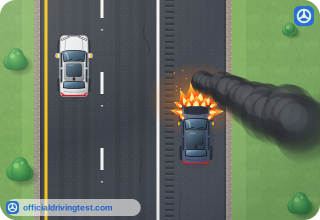
- Upwind, so the wind carries the contents to the fire
- Downwind, so the wind pushes the flames away
- Directly above the fire
- As close to the flames as possible
Show answer
Correct answer: Upwind, so the wind carries the contents to the fire
Standing upwind lets the wind carry the extinguisher's contents to the fire instead of carrying flames to you.
Source: District of Columbia Driver Manual (Updated January 2024), page 33
-
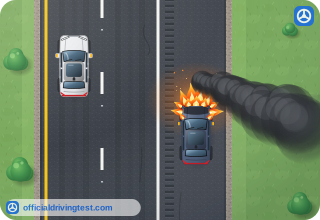
How close should you be to the fire when using the extinguisher?
- Within arm's reach
- About one foot away
- As far away as possible
- Close enough to feel the heat
Show answer
Correct answer: As far away as possible
The manual says to stay as far away from the fire as possible while using the extinguisher.
Source: District of Columbia Driver Manual (Updated January 2024), page 33