Vermont: Hazardous conditions and crashes — Part 2 Practice Test
Questions in this part include: “What does the manual advise for winter travel routes?” · “What is the least amount of gas the manual says to always have in your vehicle in winter?”
Independent educational site · not affiliated with any government agency or DMV
Ready? Test yourself
- Instant feedback with an explanation
- Every answer cites its source in the manual
- Your best score is saved on this device
- Keyboard: press 1 to 4 to answer and Enter for the next question
Questions are original and based on the official manual "Vermont Driver's Manual" (2025 edition (VN-007 07/2024)), Vermont Department of Motor Vehicles.
All 18 questions in this practice test
Take the test above first, then use this list to study. Tap “Show answer” to see the correct answer and explanation.
Show the questions and answersHide the questions
-
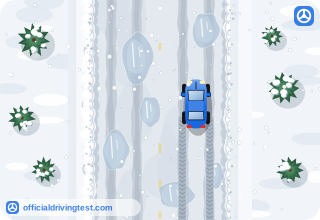
During ice or snow storms, especially when a traveler's advisory is issued, when should you drive?
- Only on back roads
- Only if absolutely necessary
- Only with the heater on high
- Whenever you have snow tires
Show answer
Correct answer: Only if absolutely necessary
The manual says not to drive during ice or snow storms unless absolutely necessary.
Source: Vermont Driver's Manual (2025 edition (VN-007 07/2024)), page 47 · Open this page in the manual (Manual page 47)
-
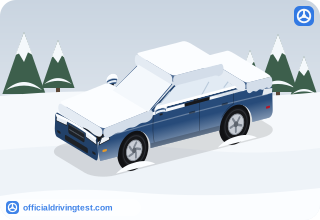
If you must drive after an ice or snow storm, how much of the ice and snow should you clear from your vehicle?
- Only the windshield glass
- Only the windows and the mirrors
- Only the snow on the roof
- All of it, from the entire vehicle
Show answer
Correct answer: All of it, from the entire vehicle
The manual says to completely clear the ice and snow from your entire vehicle and to keep your wipers clear of ice.
Source: Vermont Driver's Manual (2025 edition (VN-007 07/2024)), page 47 · Open this page in the manual (Manual page 47)
-
What should the inside of your windows be, in winter?
- Free of moisture
- Covered with a thin layer of fluid
- Open slightly at all times
- Cleaned only once a week
Show answer
Correct answer: Free of moisture
The manual says the inside of the windows should also be free of moisture.
Source: Vermont Driver's Manual (2025 edition (VN-007 07/2024)), page 47 · Open this page in the manual (Manual page 47)
-
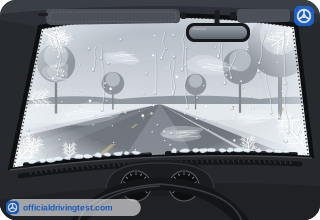
When sleet, freezing rain or snow start to fall, what can quickly form that you may not be able to see?
- Fog
- Hydroplaning pools
- Black ice
- Gravel
Show answer
Correct answer: Black ice
Black ice can form quickly when sleet, freezing rain or snow start to fall, and it may be invisible.
Source: Vermont Driver's Manual (2025 edition (VN-007 07/2024)), page 47 · Open this page in the manual (Manual page 47)
-
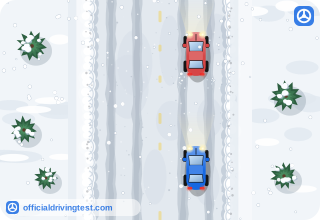
Which road locations are likely to freeze first?
- Straight rural roads
- Bridges, ramps and overpasses
- Parking lots
- Roads with two or more lanes
Show answer
Correct answer: Bridges, ramps and overpasses
Bridges, ramps and overpasses are likely to freeze first.
Source: Vermont Driver's Manual (2025 edition (VN-007 07/2024)), page 47 · Open this page in the manual (Manual page 47)
-
How well do vehicles with four wheel or all wheel drive grip on ice?
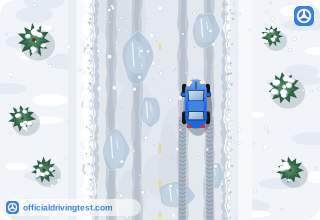
- They do not have good traction on ice
- They have excellent traction on ice
- They stop faster than other vehicles on ice
- They need no extra following distance
Show answer
Correct answer: They do not have good traction on ice
Even four wheel or all wheel drive vehicles lack good traction on ice.
Source: Vermont Driver's Manual (2025 edition (VN-007 07/2024)), page 47 · Open this page in the manual (Manual page 47)
-
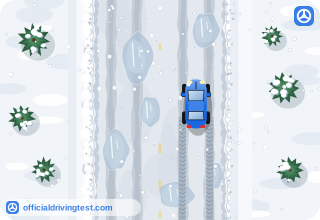
On winter roads, what do all vehicles have difficulty doing?
- Starting the engine on very cold mornings
- Using the horn on a winter road
- Stopping, going through curves and changing lanes
- Driving in a straight line on ice
Show answer
Correct answer: Stopping, going through curves and changing lanes
All vehicles have difficulty stopping, going through curves and changing lanes on winter roads.
Source: Vermont Driver's Manual (2025 edition (VN-007 07/2024)), page 47 · Open this page in the manual (Manual page 47)
-
Why should you be especially careful near snowplows?

- They always travel faster than other cars
- They are hard to see in the snow they blow up
- They are narrower than other vehicles
- They always stop without any warning
Show answer
Correct answer: They are hard to see in the snow they blow up
Snowplows are hard to see because of blowing snow, are wider than other vehicles and often move more slowly.
Source: Vermont Driver's Manual (2025 edition (VN-007 07/2024)), page 47 · Open this page in the manual (Manual page 47)
-
What does the manual advise for winter travel routes?
- Take back roads to avoid heavy traffic jams
- Travel alone so you can move faster
- Travel at night when roads are empty
- Stay on main roads and avoid back road shortcuts
Show answer
Correct answer: Stay on main roads and avoid back road shortcuts
The manual says to travel in the day, not alone, to tell others your route and schedule, and to stay on main roads.
Source: Vermont Driver's Manual (2025 edition (VN-007 07/2024)), page 47 · Open this page in the manual (Manual page 47)
-
What is the least amount of gas the manual says to always have in your vehicle in winter?
- At least a half tank
- At least a quarter tank
- At least a third of a tank
- At least a full tank
Show answer
Correct answer: At least a half tank
The manual advises always having at least a half tank of gas.
Source: Vermont Driver's Manual (2025 edition (VN-007 07/2024)), page 47 · Open this page in the manual (Manual page 47)
-
Which item is on the manual’s list of things to keep in your vehicle for winter?
- A bag of road salt
- A tow rope
- Kitty litter or sand
- Spare wiper blades only
Show answer
Correct answer: Kitty litter or sand
Kitty litter or sand is on the manual's list of items to keep in your vehicle in winter, along with a scraper, shovel and flashlight.
Source: Vermont Driver's Manual (2025 edition (VN-007 07/2024)), page 47 · Open this page in the manual (Manual page 47)
-
If you are caught in a blizzard or stranded, what should you do?
- Walk along the highway to look for help from others
- Pull off the highway, use hazard lights, hang a flag
- Keep driving until you find a shelter
- Leave the vehicle and wait by the road
Show answer
Correct answer: Pull off the highway, use hazard lights, hang a flag
The manual says to pull off the highway, turn on hazard lights and hang a distress flag from the door handle, an antenna or a window.
Source: Vermont Driver's Manual (2025 edition (VN-007 07/2024)), page 47 · Open this page in the manual (Manual page 47)
-
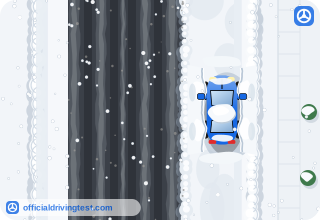
If you are stranded in a blizzard, where should you remain?
- Beside the road, away from the vehicle
- Walking along the road for help
- Under a tree or other natural cover
- Inside your vehicle
Show answer
Correct answer: Inside your vehicle
Stay in your vehicle because rescuers are most likely to find you there, and do not set out on foot unless a building is clearly close.
Source: Vermont Driver's Manual (2025 edition (VN-007 07/2024)), page 47 · Open this page in the manual (Manual page 47)
-
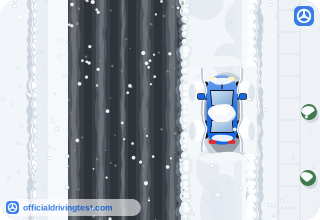
Why is it risky to set out on foot for a building that seems close during a blizzard?
- Blowing snow distorts distances, so it may be too far
- Buildings in a blizzard are usually locked
- Rescuers only search for people near a highway
- Cold air is much worse outside a vehicle
Show answer
Correct answer: Blowing snow distorts distances, so it may be too far
Blowing snow distorts distances, and a building that seems close may be too far to walk to in deep snow.
Source: Vermont Driver's Manual (2025 edition (VN-007 07/2024)), page 47 · Open this page in the manual (Manual page 47)
-
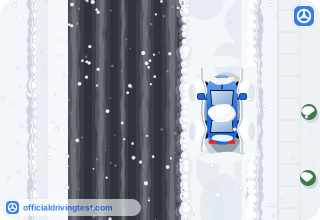
When stranded in a blizzard, how long should you run the engine and heater to keep warm?
- Continuously
- About 10 minutes every day
- About 10 minutes each hour
- About 45 minutes each hour
Show answer
Correct answer: About 10 minutes each hour
The manual says to run the engine and heater about 10 minutes each hour.
Source: Vermont Driver's Manual (2025 edition (VN-007 07/2024)), page 47 · Open this page in the manual (Manual page 47)
-
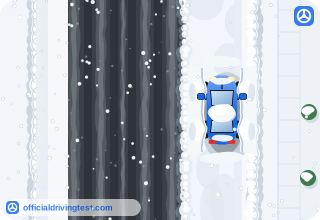
When the engine is running in a blizzard, what should you do for ventilation?
- Close all windows tightly
- Open a downwind window slightly
- Open all windows fully
- Open an upwind window fully
Show answer
Correct answer: Open a downwind window slightly
Opening a downwind window slightly provides ventilation while the engine runs.
Source: Vermont Driver's Manual (2025 edition (VN-007 07/2024)), page 47 · Open this page in the manual (Manual page 47)
-
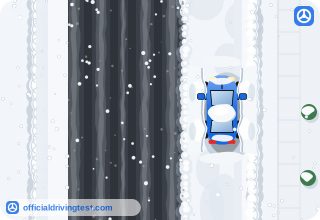
Why should you keep snow clear of the exhaust pipe when the engine is running in a blizzard?
- To keep the engine from overheating
- To keep the tires from freezing solid
- To make the vehicle easier to see
- To help protect against carbon monoxide
Show answer
Correct answer: To help protect against carbon monoxide
A blocked exhaust pipe can lead to carbon monoxide poisoning, so keep snow clear of it.
Source: Vermont Driver's Manual (2025 edition (VN-007 07/2024)), page 47 · Open this page in the manual (Manual page 47)
-
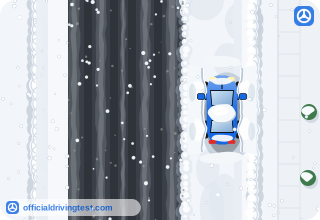
When several people are stranded in a vehicle in a blizzard, how should they sleep?
- Take turns, with one person always awake
- Everyone sleeps at once to save energy
- Only the driver is allowed to stay awake
- Everyone stays awake until it is light
Show answer
Correct answer: Take turns, with one person always awake
One person should stay awake at all times to look for rescue crews while the others take turns sleeping.
Source: Vermont Driver's Manual (2025 edition (VN-007 07/2024)), page 47 · Open this page in the manual (Manual page 47)